
The value of charter services is never so visible as in a crisis, as proven by a series of Air Charter Service (ACS) operations taking place in Asia recently. It has operated nigh on 100 charters following the closure of the land border between Thailand and Cambodia in late JUN25. In total, over 5,000 tons of cargo have been transported – crucial support to ensuring that supply chains remain unbroken.

Brendan Toomey, CEO of ACS Singapore, commented: “The closure of the Thailand-Cambodia border meant that all road transport stopped immediately, leading to significant logistical disruptions across multiple industries which rely heavily on the cross-border supply chain. Just-in-time manufacturers especially started to run up costs, meaning they needed to find alternative solutions quickly to maintain operations and prevent shutdowns. It was at this point that several customers came to us for cargo charter flights as a solution to the headache. At first there was a lot of automotive cargo that needed to move, sometimes 100 tons at a time, but soon after we started receiving requests for consolidated cargo flights consisting of goods from multiple industries. To date we have arranged almost 100 charter flights between the two countries, carrying over 5,000 tons of cargo in total. The flights, which were loaded in both directions, ran between Bangkok in Thailand and either Siem Reap or Phnom Penh in Cambodia. This is another example of aircraft charters really proving their worth in extreme situations.”
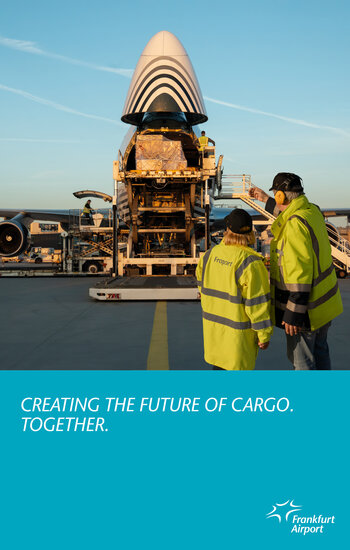
In another urgent situation, recently, where a piece of gold mining equipment and other cargo was urgently required for essential repairs in Calgary, Canada, Air Charter Service (Canada) teamed up with ANTONOV Airlines, to transport the exclusively produced item from Istanbul, Türkiye. It required a bespoke frame and onboard cranes to carefully load it through the rear door of an AN-124-100.
Olha Danylova, Commercial Executive, Antonov Airlines, explained: “What began as a routine AN-124-100 flight, quickly presented unexpected technical challenges. The cargo’s attachment points did not comply with the aircraft’s lashing standards, and no immediate solution was available. Through close coordination with the manufacturer’s engineers and the determination of our team, a compliant solution was developed under time pressure. The cargo was ultimately secured to meet all safety and operational requirements. The mission was completed successfully, ensuring uninterrupted operations for the client – and providing our team with valuable operational insight.”