
Home Blog Page 101

Air Charter Service has a USD 200,000 heart for charity

Top of the world for a good cause. Image: Air Charter Service

2024 saw Air Charter Service reach a new record in its fundraising activities over the year. The global aircraft charter broker’s branches (it has 35 international offices on six continents) managed to raise over USD 200,000 last year, through a very varied series of charitable initiatives, supporting many different charities. It has been involved in fundraising since 2009, when its co-founder, Tina Leach (now retired), created the first official charity committee in London and kicked off charitable activities. Since then, the organization’s efforts have been expanded with the implementation of Regional Charity Committees in 2022 (all volunteer-led), and the formal regulation of according every employee 2 days paid leave each year to engage in community volunteering or charity events. It has, in the past, also matched funds raised by employees for its chosen charity partners. From volunteering through to raffles and challenges such as the one pictured, or unusual events such as wing walking challenges, bake-offs, skydiving, dragon boat racing, plank challenges, or curry-themed evenings, the company’s employees’ creativity knows no limits.
Lloyd Robinson, ACS’s Director of CESR, praised: “The worldwide team has really outdone themselves this year, with a range of physical challenges, including 5 km races, half and full marathons, the UK Three Peaks challenge, climbing Kilimanjaro and a ‘virtual’ run covering the full distance from one side of the USA to the other (around 3,000 miles/4,700 kms). The raffles held at our Christmas parties raised a record amount (USD 42,000) and combined with various bake sales, and other fundraising initiatives, helped to raise a total of over USD 200,000. I’d like to take this opportunity to thank each and every one that put in the effort and their hands in their pockets to help to reach this fantastic total. On top of the money-raising activities, we have also been busy organizing other charity events – from staff in our New York office helping out in a Long Island soup kitchen, to our Australian team filling empty leg charter flights in Australia with donations of clothing and toys and flying into rural Aboriginal and Torres Strait Islander communities.”
In other Air Charter Service news this week: The aircraft charter specialist announced the opening of a second office in Canada – this time in Montreal, Quebec, in addition to its existing Toronto branch. It now operates 36 international offices. Gary Hopkins, CEO of ACS Canada, commented: “We have been serving the whole of Canada from our Toronto office since opening there 15 years ago, but we’ve been looking at Montreal as a second location for a while now, to better serve Quebec. The city is an important center of commerce, finance, industry and technology and the new operation means that we can be closer to our French-speaking clients in the province.” ACS employee, Adila Djerrar has been appointed to head the Montreal branch. She said: “I can’t wait to get started here and continue the work that my team and I have been doing over the past few months in preparation, and the expansion that we have planned to make Montreal another successful Canadian ACS office.”
Jettainer and Air Astana renew their partnership

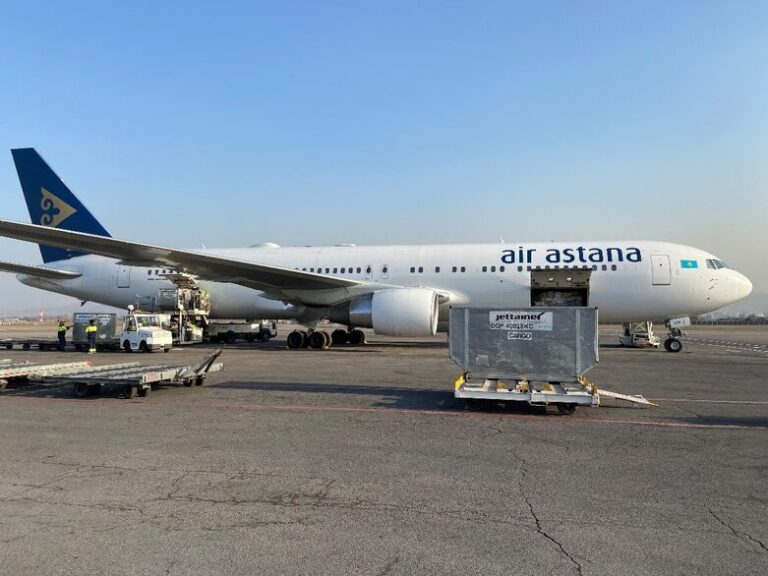
The ULD heart will go on… Image: Air Astana/Jettainer

Jettainer and Air Astana have communicated that their partnership has just been renewed once more. No surprise there, if everything runs smoothly as it apparently has done since 2007, which is then the ULD management provider and Kazakhstan’s national carrier first inked an agreement. The press release does not state the length of the contract renewal, simply that it is long-term, but does point out that the Almaty-based airline is modernizing its fleet and will therefore require more and a wider range of ULDs in future. Its fleet will grow from 60 to 80 aircraft in the next 3 years, and it will be welcoming Boeing 787 Dreamliners in that time. Hence, “Jettainer will continue to partner closely with the airline as it takes this step and supports it with customized solutions,” the release emphasizes. The ULD management company will assist during the transition, continuing to ensure that the right containers are available in the right place at the right time.
Berik Abdrakhmanov, Director Ground Services at Air Astana, said: “We have been working very well and closely with Jettainer for more than 18 years. We are confident that Jettainer’s team of experts will continue to help us achieve our growth plans with the innovative and customized ULD services we need to make them happen.”
Dr. Jan-Wilhelm Breithaupt, Jettainer’s CEO, commented: “Air Astana’s decision to extend our joint contract is evidence of the trust and satisfaction that the company places in our services. Our customized solutions offer Air Astana the flexibility and reliability it needs to meet increasing requirements and undertake its planned fleet expansion with three Boeing 787s.”

17 Bongo Antelopes fly from Florida to Kenya

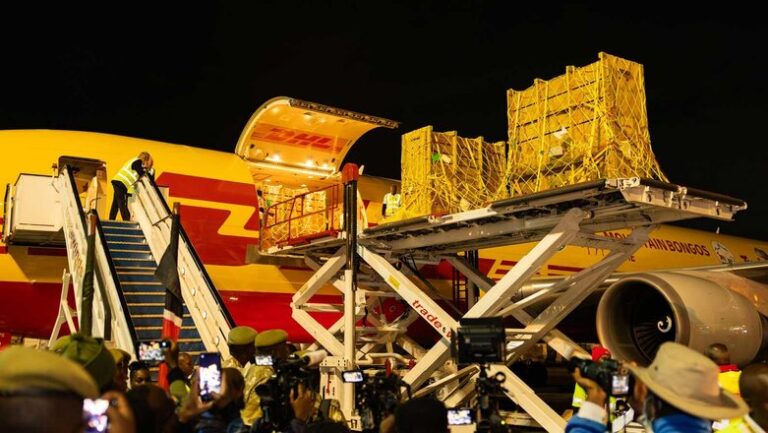
DHL loads its delicate cargo. Image: DHL Express

DHL Express, in collaboration with conservation charity, Tusk, successfully transported 17 critically endangered mountain bongo antelopes from Florida to Kenya. The herd of 12 females and 5 males, bred at the Rare Species Conservatory Foundation (RSCF), was flown 7,146 nautical miles aboard a dedicated DHL aircraft from Palm Beach International Airport to Jomo Kenyatta International Airport. Fewer than 100 mountain bongos now exist in the wild due to poaching and habitat loss through deforestation and fragmentation. Custom-built crates were used to ensure that the bongos travelled safely, along with six tons of pelleted feed, two bongo specialists and a veterinarian. Upon arrival, the bongos were released into a 20-acre sanctuary on Mount Kenya prepared by the Kenya Forest Service and managed by the Meru Bongo & Rhino Conservation Trust. This sanctuary will serve as a breeding ground, with plans to gradually reintroduce their offspring into Mount Kenya’s forests after a 40-year absence. This initiative is part of Kenya’s national recovery plan for the species and involves partnerships with organizations like Lewa Wildlife Conservancy and local communities. The project not only aims to restore the bongo population but also supports local education and employment opportunities, underscoring the importance of collaborative conservation efforts.
Mike Parra, CEO DHL Express Europe, said: “The logistics of moves such as this are incredibly complex, with the welfare of the animals being everyone’s top priority. A huge thank you to our partners at Tusk, the Lewa Wildlife Conservancy, and everyone involved in making this important conservation mission a success.”
Mike Watson, CEO of Lewa Wildlife Conservancy, stated: “Bringing the bongos back to Kenya is a great moment in the restoration of the country’s natural heritage. For decades, these animals have been largely absent from the very forests where they belong, and this project will be crucial in reversing that loss.”
Dr. Paul Reillo, RSCF Founder and President, added: “There is simply no higher calling for humanity than to protect what remains of nature. […] The bongo’s resilience is a story of hope for wildlife and people alike, merging elevated partnerships, proven expertise, vital resources and amazing courage.” Charlie Mayhew, Founder and President of Tusk, concluded: “[This] is a significant step in restoring this critically endangered species to its native habitat, and demonstrates the conservation progress that can be made through collaboration. We are hugely grateful to our global partner DHL Express […].”

SAS Cargo is going live on cargo.one in APR25

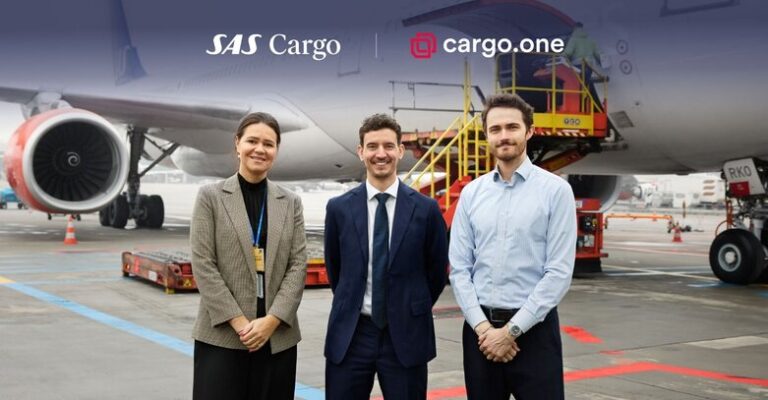
Two digitally-active companies form a partnership. Image: cargo.one

SAS Cargo, Scandinavian Airlines’ air freight division, has partnered with cargo.one, to enhance its global sales reach. From APR25, freight forwarders using cargo.one and based in EMEA, North America or Asia, will be able to scan real-time rates and capacity, and book general and temperature-controlled shipments up to 10,000 kg on SAS Cargo’s flights. In addition to booking, the collaboration enables the tracking of shipments to over 135 destinations across 31 countries, including major hubs such as Frankfurt, London, New York, Tokyo, and Seoul. More markets will follow soon.
SAS Cargo operates a strong network out of its hubs in Copenhagen, Oslo, and Stockholm, making use of SAS’ belly capacities and deploying a modern wide-body Airbus fleet to provide efficient and sustainable cargo solutions. It carries around 60,000 tons of cargo every year. SAS Cargo is no stranger to digitalization having launched its own direct booking portal in 2015. To date, more than 80% of bookings on SAS Cargo are done online. Now, with its additional move onto cargo.one, that is set to increase even further, since the digital platform has a user base of some 25,000 forwarders across the globe.
Markus Ek, CEO of SAS Cargo, commented: “Partnering with cargo.one will deliver added convenience to customers in many markets worldwide. Freight forwarders will enjoy a seamless booking experience and an even stronger ability to utilize SAS Cargo capacity as a winning element of their daily work.” Moritz Claussen, Founder & Co-CEO of cargo.one, stated: “SAS Cargo stands out as having a strong alignment with cargo.one’s vision and ambition for digital procurement. It makes every sense for SAS Cargo to broaden its access to forwarding teams globally with the platform that is relied upon the most for daily quoting and booking. Our combined teams will apply cargo.one technology and sales best practices to ensure SAS Cargo remains fully responsive in the market.”

CargoTech steers the industry through volatility

Two digitally-active companies form a partnership. Image: cargo.one

Navigating the increasingly volatile air cargo market requires speed, precision, and clarity – principles that underpin CargoTech’s growing portfolio of digital solutions. Michael Teoh, Head of Strategy at CargoTech, explains: “The air cargo market has always faced volatility. Inflation, regulations, interest rates, consumer demand, and trends all affect the flow of goods. Where human experience and intuition were once relied upon, growing data histories and technological developments now enable fast, effective digital solutions to predict and react to shifting variables.”
Since 2022, CargoTech has aimed to mitigate unpredictability in the sector caused by factors such as capacity constraints, geopolitical uncertainties, and evolving trade regulations. Cédric Millet, President of CargoTech, highlights its mission: “CargoTech set out as a one-stop-tech-shop to unite and digitally fortify the air cargo industry at a time of global upheaval.” By investing in specialized technology providers across the supply chain, CargoTech empowers stakeholders with tools for better decision-making.
Key innovations include Rotate’s fleet and sales steering software, which enables airlines to optimize their networks and generate actionable sales leads using market data. Wiremind Cargo deploys AI to translate complex datasets into tailored recommendations for capacity and revenue management. “AI can quickly react to volatile environments and provide impactful recommendations,” CargoTech emphasizes.
Aerios addresses challenges in the air cargo charter niche by streamlining carrier responses to fluctuating demand through its app. Meanwhile, CargoAi delivers real-time data on airline capacity, pricing, and disruptions via API integrations. This ensures users adapt swiftly to changing market conditions with tools for instant quoting, booking, payment, and tracking. Millet concludes: “With the wide range of AI-enhanced, data-powered digital solutions our CargoTech members offer, we’ve pretty much become a one-stop-digital-crystal-ball—constantly polished for better clarity and decision-making.” By integrating advanced technologies across the air cargo ecosystem, CargoTech equips businesses to thrive amid volatility while fostering innovation and resilience.

CargoAi announces partnership with Qantas Freight

Bringing in innovation to tame the chaos. Image: CargoTech

Qantas Freight has opted to publish its capacity on CargoAi’s digital marketplace in what is another key win for the booking platform, as the airline is Australia’s biggest air freight provider. The airline gains too – from greater booking efficiency and channel choice of its customers, and a larger network of forwarders seeking capacity. Selected Qantas and Jetstar flights are now available on CargoAi’s CargoMART and CargoCONNECT solutions, providing capacity access on major trade lanes between Australia and the United States (US), United Kingdom (UK), and South Africa (ZA). More destinations will be published in due course. For now, the benefits for e-bookers are access to more global air freight space on flights to and from Australia, improved response times, real-time rate information, and an overall simpler, more streamlined and efficient booking process.
With CargoAi, the airline now offers a selection of four booking channels to choose from. The others being its own website, WebCargo by Freightos and cargo.one.
Igor Kwiatkowski, Executive Manager Qantas Freight, said: “We’re proud to partner with CargoAi to digitize and simplify the air cargo procurement process for our customers and expand our global reach to CargoAi’s growing community of 18,000 freight forwarders. The platform’s innovative model will give our customers instant access to many of our international passenger and freighter services in and out of Australia and real-time visibility of our schedules, capacity and rates for a more streamlined booking experience.” Matt Petot, CEO of CargoAi, stated: “Having Qantas Freight on board is a tremendous milestone for CargoAi. This partnership not only adds significant value and reach to our users globally but also demonstrates Qantas Freight’s commitment to leveraging digital solutions to deliver the best possible service to its customers. The integration will ensure an easy transition for current Qantas Freight customers while offering easy access to its extensive network in critical markets like the US, UK, and South Africa.”

Air freight: The biggest Roller Coaster on Earth

0

Stability in air freight is hoped for by many, but will it ever exist? Very doubtful, was the majority opinion among the participants of the Nordic Air Cargo Symposium, which took place on 25-26MAR25 in Copenhagen, organized by the Swedish event manager, Euroavia International. So most likely, the cargo industry will remain trapped in a roller coaster loop reminiscent of biblical times with seven good years followed by seven critical ones. However, besides risks, this also entails a variety of new opportunities. They just need to be identified and used, was a key takeaway.

Gabriela Hiitola of Finnair Cargo and Achim Martinka, DSV, delivered food for thought at the Nordic Air Cargo Symposium – among others  –  photo: CFG/hs

Achim Martinka, VP Global, Air Freight, Commercial and Sustainability at Danish logistics giant DSV, illustrated the volatility in the industry. He referred to the COVID-19 pandemic, which acted like a blood transfusion on air freight and catapulted the industry to unimagined heights, with margins that many players had not dared to dream of before. It was followed by a still lucrative aftermath characterized by a cycle of minor ups and downs. Yet in the midterm, the curve is now tending downwards.

Orange elephant
So where does the cargo industry stand today? Is the glass half full or half empty? This was the focal point of many debates and panel presentations at the Copenhagen Trade Show. In the end, there was no clear guide for action as a takeaway for companies looking to weather the current storm. Instead, industry experts delivered a kaleidoscope of practical examples to help airlines, forwarders, airports, handling agents and other actors to keep their heads above water, despite mounting geopolitical tensions and supply chain hiccups.

It quickly became clear who was in the industry’s dock. The greatest uncertainties in world trade are caused by the erratic tariff policy of the “orange elephant in the white house,” as Steven Verhasselt pointed out, Founder and CEO of the Belgian consultancy firm, FB Cargo Strategy, alluding to the disruptive policies of the Washington autocrat. However, DSV’s Achim Martinka also noted that the truth is that many countries have long levied higher tariffs on U.S. products than vice versa. Nevertheless, since Trump is in office, U.S. customs policy is completely unpredictable, which makes international trade more volatile and puts a huge strain on supply chains. This was the general consensus among the roughly 120 cargo and logistics experts attending the Copenhagen meeting.

At Finnair, the glass is half full…
In her presentation, Gabriela Hiitola, SVP Finnair Cargo, recommended that the only remedy turning pessimism into optimism is more intensive and productive cooperation between all players involved in the supply chain. This must stretch from A to Z, driven by data exchange and process transparency, high product quality and by combining customer insights with human experience. “We have been following this path for some time, and not just at Finnair. Perhaps this has also contributed to the fact that, according to the UN World Happiness Report, we are home to the happiest people in the world.” Hence, Gabriela’s and Finnair’s glasses are certainly more than half full.

… as it is at SAS Cargo
This also applies to SAS and its Cargo Division, as its CEO, Markus Ek, highlighted. The new ownership structure with AF-KLM and the Danish state on board has opened up completely new perspectives for the airline. “Instead of splitting traffic between Oslo, Stockholm and Copenhagen, CPH is developing into the airline’s central intercontinental hub, with a large number of regional connections. The success of traffic centralization is already measurable. For example, SAS is now the second most punctual airline in the EU after Iberia,” said Ek. And he announced two new routes for this year: Seattle and Seoul. “The connection between CPH and ICN in particular will give SAS’s cargo business a further boost.” The future cooperation with AF-KLM will also open up the Latin American market for SAS, which was previously a blank spot in the airline’s passenger and cargo network.

Carriers criticize Airbus’ decision on H2 powered aircraft
Asked by CargoForwarder Global what she thought of the Airbus Group’s decision to postpone the construction of hydrogen aircraft from the originally announced first flight in 2035, by probably ten years, Gabriela Hiitola said: “In terms of aviation’s net zero target and our own efforts to reduce CO2, this is a very disappointing setback for the entire industry.”

Finally, the panelists debated the Trump administration’s announced penalties for shipping companies whose fleets include vessels built in China. “Perhaps as a countermeasure, China should charge tariffs for U.S. built aircraft landing in Shanghai, Beijing or Guangzhou,” an executive signaled to Beijing and Washington, giving their governments some food for thought.

Exclusive – CPH lifts status of key northern Cargo Hub

0

Copenhagen Airport (CPH) celebrates its 100th anniversary this year. And it is doing well. The freight division reported a 16% increase in cargo traffic in 2024. According to the Senior Air Cargo Managers, Michael Giese and Lars Gotfredsen, the Danish Airport plans to develop additional cargo facilities in the coming years.

Lars Gotfredsen (left) and Michael Giese manage jointly Copenhagen’s cargo business – photo: CFG/hs  

Copenhagen Airport sees an increasing interest of forwarders and carriers seeking to use the airport as a Nordic gateway for import and export. This requires new facilities around the airport for storage, handling and parking, to be aligned with demands and national and EU regulations. That perspective was exclusively unveiled during the 10th Nordic Air Cargo Symposium, held at the Clarion Hotel Copenhagen Airport from 25-26MAR25.

Ground handling agents benefit…
New cargo facilities will support key operators alongside several smaller service providers. The main player is Spirit Air Cargo Handling. A household name in Copenhagen, as the company is part of the SAS Group. It manages the Scandinavian airline’s ground handling activities in Kastrup as it does for Thai Airways, LOT Cargo, Finnair Cargo, Air Serbia and some other small actors. “Only last week, we received request from five different companies,” states Spirit Managing Director, Peter Plambech, referring to the high demand for his company’s services.

The building of new cargo facilities is important for two key reasons, management emphasized. Firstly, tonnage is growing rapidly. In 2024, a total of 325,000 tons were handled in Kastrup: an increase of 16% compared to 2023. If SAS becomes majority-owned by Air France-KLM, as signaled by the Franco-Dutch carrier, the synergy effect is expected to give the cargo business at CPH an additional push.

And secondly, the central SAS warehouse managed by Spirit has seen better days. It was inaugurated in 2000, which is clearly visible in the interior, despite constant maintenance efforts. The participants of the Nordic Air Cargo Symposium, including the author, were able to see this for themselves during an exclusive tour.

…so does the pharma and life-science business
A state-of-the-art freight terminal is also essential to manage the rapidly growing pharma business. The non-profit organization, Medicon Valley Alliance, confirms this need. It is a leading European player with 330 member companies from the life sciences sector. Of these, 40% are based in Denmark (building a cluster in the Copenhagen area), 40% come from Sweden and 20% from other neighboring countries. According to Medicon’s CEO, Anette Stenberg, around 80,000 people are employed by one of the member companies. For CPH, this means that the airport aims to focus even more on these high-quality and high-priced products.

This also applies to fresh fish, which mainly comes from Norway and is flown from Oslo but also travels from Copenhagen to the global target markets. In addition, CPH has put a new focus on the thriving e-commerce business, which the airport has decided to support.

Customs was part of the cargo project from day one
Customs is heavily involved in these plans, as Charles Bo Volkersen Conrad, Deputy Director Trade and Commerce, Danish Customs, confirmed to CargoForwarder Global: “We don’t want to put any unnecessary barriers on e-commerce. On the other hand, we have responsibilities to ensure that only legal goods cross the Danish borders. That’s why we are in close dialogue with airport management on what is needed tomorrow and thereafter, to enable customs to keep up with developments, standing as a guard to guarantee security to society.” The official went on to say: “We need not only strong Danish national customs but the EU bodies responsible for customs must also pull together in this regard.”

The following comparison, unveiled at the Symposium, illustrates just how complex the day-to-day business is: 20 tons of general cargo, stowed in the lower deck of a passenger flight, translates into roughly 40 different air waybills. In the case where the carrier’s belly compartments are filled with e-commerce goods, 40,000 to 50,000 different AWBs are mandated by law, due to the multitude of goods. Despite all digital data transmission, it is a Herculean task for the responsible customs authorities to check this avalanche of shipments in a reasonable amount of time. This can only be done by means of selected spot checks. Companies that provide false information about the content of their shipments and are caught, will have to expect much higher fines in future.

Community system on the horizon

Finally, Gotfredsen and Giese announce that CPH is planning to facilitate a community platform in order to connect the various cargo players, especially forwarders, more closely with each other and to act collectively. Truck slots that allow shipments to be delivered and picked up without truckers being thwarted by waiting times, are part of the masterplan. The aim is also to determine which goods pass through the airport every day and in what quantities. “This data helps us a lot in the dialogue with our customers,” reasons Mr. Gotfredsen.

Munich’s CargoFest is coming JUN25

0

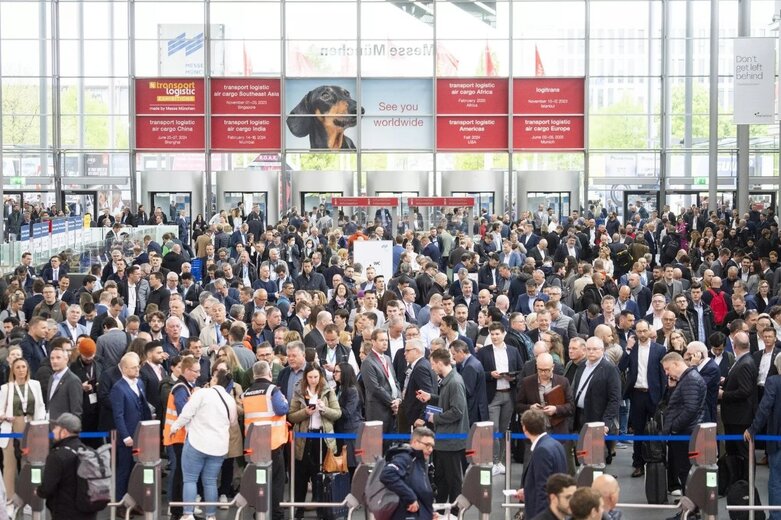
Ok – you know it as the transport logistic and Air Cargo Europe, but this being Munich and the hometown of the Oktoberfest, it is almost a slight disappointment that the event doesn’t actually carry the name CargoFest. Particularly since it is the largest gathering of freight afficionados in the world – maybe not quite the roughly 7 million beer and lederhosen lovers that the Oktoberfest welcomes each year, but at a possible 80,000 visitors this year, it could well set a new record for itself. Robert Schönberger, Global Industry Lead transport logistic exhibitions, recently invited the press to a webcon to give an overview of what attendees could expect.

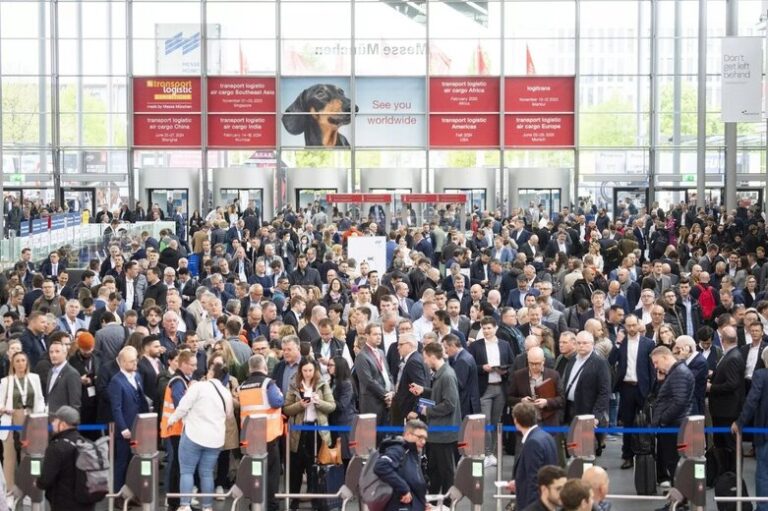
Between 75,000 – 80,000 visitors are expected. Image: Messe München

So, the basic facts are that the world’s leading logistics and air cargo event, ‘transport logistic/Air Cargo Europe 2025’, is set to take place from 02-05JUN25, at Messe München in Munich, Germany. The 2025 version of this biennial trade fair is poised to be the largest in its history, and – as always – will offer fantastic networking opportunities, showcase the latest in logistics innovations (on all levels since it is multimodal, featuring air, road, sea, rail, freight forwarders and other logistics stakeholders), and will host many discussions on the future of logistics.

This year’s transport logistic in figures
The trade show is growing. The industry is growing,” Robert Schönberger says, opening the webcon. This year’s transport logistics is preparing for a number of records to be broken, he points out. With over 150,000 m² of exhibition space – “equivalent to 21 soccer fields”, Caroline Thiemt, Exhibition Director transport logistic at Messe Muenchen GmbH, throws in – the event will host more than 2,500 exhibitors from 70 countries. Around 65% of exhibitors are from outside Germany, with a few new countries joining for the first time. You will need to attend to find out which ones, as I failed to note them down but do seem to remember them as being in the Eastern Hemisphere, which may help to narrow it down just slightly. Anyway, the growth in exhibitors reflects the industry’s rapid growth, says Schönberger, and reveals that Messe München expects to surpass the previous attendance of 75,000 visitors, with hopes of possibly reaching a record 80,000 attendees this year.

Air Cargo Europe expansion
Air Cargo Europe, integrated into Transport Logistic, has also grown significantly from its original 1.25 halls, to now occupying 2 dedicated halls and officially being “largest air cargo gathering worldwide”.

As highlights of the transport logistic and Air Cargo Europe, Schönberger points to a dedicated area called the Campus Plaza. Here nine companies will converge for a single day to spotlight vital topics such as AI, Sustainability, and other forward-looking themes. This initiative, which proved highly successful in its last iteration, underscores the event’s commitment to addressing the most pertinent issues facing the logistics sector today. “People in logistics are problem solvers,” he states. “One major topic in JUN25 will be discussing the challenges being faced, the unpredictable things people in the world are doing, and defining new opportunities. It is more important than ever to come to transport logistics,” he stresses.

Exhibitor Stage and key themes
Another area highlighted in the webcon, was the Exhibitor Stage, which will feature 20 to 40-minute presentations in an arena format, complete with cool LED displays and a dynamic setup. These sessions will offer attendees a deep dive into the latest trends, technologies, and innovations in logistics, providing valuable insights and fostering a spirit of collaboration and knowledge sharing. The event will focus on addressing pressing challenges such as cost pressures, bureaucratic hurdles, labor shortages, and sustainability. Despite economic uncertainties in Europe, industry sentiment remains optimistic, he reports, citing a recent survey carried out among 1,800 industry professionals: 9 out of 10 respondents expressed confidence in the future. “The sentiment is generally good to moderate, with more positive outlooks observed the further away one moves from Germany. However, no respondents rated the outlook as ‘Very Good’,” he admits.

Sustainability Efforts
CargoForwarder Global asked about sustainability in organizing the event. Sustainability played a significant role in the organization of the event, Schönberger emphasizes, listing several initiatives aimed at reducing the environmental impact. These include the elimination of carpets in the halls, the introduction of a ‘Go Green’ ticket option to offset the carbon footprint of attending the trade show, and the integration of public transport into the event tickets. Additionally, sustainable stand construction and consulting services are offered to exhibitors, reflecting a comprehensive approach to sustainability.

Conference Program Highlights
The conference program is packed with exciting sessions and speakers, he promises. Highlights include the opening ceremony on Monday morning, which will be attended by the Federal Ministry of Transport’s new minister (as yet unknown), making their premier appearance before the industry. A broad scope of topics will be on offer, ensuring a comprehensive exploration of the issues and opportunities within logistics.

Tradeshow virus?
No – not a negative one or the threat of another pandemic. Instead, Schönberger feels that there is something uniquely infectious about the atmosphere of the transport logistics event. “The moment the halls open and you walk through and meet familiar faces – that international atmosphere is great!” he enthuses. A key takeaway from this event will be gaining a better understanding of the current mood within the industry and selecting the right topics to address, he underlines and sees this as crucial to his role in ensuring that the event remains relevant and valuable to its attendees, helping them navigate the evolving landscape of logistics.

The communal spirit he mentions is what makes the transport logistics event in Munich an unparalleled experience, and one that continues to draw participants from around the world year after year. CargoForwarder Global, too, will see you there!

Spotlight on… Mario Arnold, Head of Global Public Relations & Media Spokesperson, DB Schenker

0

Each week, CargoForwarder Global’s ‘Spotlight On…’ looks at a different segment of the air cargo industry and brings the huge variety of careers to life through the individuals working in them. World trade would not be moving very far without the support of global logistics service providers or freight forwarders as they are also termed. Most of these are not limited to only air freight. DB Schenker, for example, also deals with land and ocean transport as well as contract logistics. Today, Mario Arnold (MA), DB Schenker’s Head of Global Public Relations and Media Spokesperson takes us through his responsibilities, thoughts, and experiences.

Making the industry tangible to the outside world. Image: DB Schenker/Sophie Labyk

CFG: What is your current function and company? And what are your responsibilities?

MA: My role is Head of Global Public Relations and Media Spokesperson at DB Schenker. As part of a small and dedicated team, I have the honor of overseeing the media relations of the global logistics service provider. This includes shaping our corporate messaging to ensure that our brand remains a trusted voice in the industry while staying aligned with our current owner, Deutsche Bahn. Working closely with our executive teams, we develop strategic communication initiatives that support our business objectives and strengthen our market reputation. As the link between our company and the public, one part of my role is to handle a lot of media inquiries – primarily from business and trade press – which is why I also receive regular calls from your editorial team at CargoForwarder Global. I am based at our company’s global headquarters in Essen in Germany.

CFG: What does a normal day look like for you?

MA: The size, business diversity, and global reach of DB Schenker guarantee that no two days are ever the same – I am constantly learning about new topics or issues. The sheer range of matters is immense. As the global press office, we streamline, standardize and review all PR communication materials across our markets. A typical workday might include refining an ESG wording in a press release from Australia or the U.S., deciding on a new global workflow alignment in light of our current M&A process, reviewing a reactive media statement from one of our European markets, consulting with my team about a customer’s announcement in India, and providing interview guidance to one of our global executives. I very much enjoy the geographical diversity of my job.

CFG: How long have you been in the air cargo industry, and what brought you to it?

MA: Actually, my background is less in the belly hold and more in the passenger cabin of an aircraft. As a PR consultant at the renowned Munich-based communications agency Wilde & Partner, I managed several aviation accounts, including Emirates Airline. While much of my work revolved around the famous A380 onboard showers and aircraft deliveries, I also had the chance to work on projects for their air freight division, Emirates SkyCargo. That experience sparked my interest in the fascinating world of logistics. Now, after more than five years with DB Schenker, I have broadened that logistics horizon, communicating across all business units and transport modes. But I must admit – air freight remains one of my greatest passions.

CFG: What do you enjoy most about your job?

MA: Relevance! The logistics business is highly complex, fast-moving, and deeply connected to global events – yet it often operates behind the scenes. As a PR professional, I get to bring more transparency, build trust, and tell the stories that make our industry more tangible to the outside world. In a way, my PR job is a lot like logistics itself – when everything runs smoothly, most people don’t even notice it. But the moment something goes wrong, suddenly everyone has questions. Covid put us more in the public spotlight. My job is to make sure the supply chain industry gets the recognition it deserves – not just for disruptions, but for the resilience, problem-solving attitude, and innovation that keep global trade moving. Logistics matters.

CFG: What do you see as the greatest challenges in our industry?

MA: One of the biggest challenges in the air cargo industry is balancing efficiency, resilience and the urgent need to accelerate sustainability initiatives despite an increasingly unpredictable world. From a communications perspective, the challenge lies in making these complexities understandable to the public and key stakeholders.

CFG: What advice would you give to people looking to enter into the air cargo industry? Any particular training they should aim for?

MA: First of all: Stay curious – especially about geopolitics and the economic landscape. Everything in air cargo is interconnected, from trade policies and economic shifts to fuel prices and regulatory changes. Understanding the bigger picture will help you anticipate developments and make better decisions. Whenever you read or watch the news, ask yourself: How could this impact supply chains? Secondly, I highly recommend looking beyond air freight to other modes of transport. Ocean, rail, road – they all have their own dynamics. A solid grasp of the entire logistics ecosystem will help you think more strategically about air cargo’s role. The more perspectives you have, the better you can navigate this fast-moving industry.

CFG: If the air cargo industry were a film/book, what would its title be?

MA: Well, if we are going for a bit of drama, the title could be “The Invisible Backbone”! Because air cargo is essential, yet one of those industries that people rarely think about.

Many thanks, Mario!

If you would like to share your personal air cargo story with our CargoForwarder Global readers, feel free to send your answers to the above questions to cargoforwarderglobal@kopfpilot.at We look forward to shining a spotlight on your job area, views, and experiences.