WestJet Cargo has demonstrated its compassion for rescue animals by officially partnering with The Beagle Alliance as its preferred carrier. The Canadian nonprofit company is dedicated to rescuing animals from research facilities, and the most commonly used breed in laboratory testing happens to be the beagle. The Beagle Alliance saves former research animals who would otherwise face euthanasia, and helps them adjust to life in loving homes. Though the organization’s founder, Lori Cohen, was initially apprehensive about using air transport given the animals’ traumatic backgrounds, she changed her stance after a successful flight from Vancouver to Winnipeg, involving her own dog, Poppy. Thanks to WestJet Cargo’s experience in securely and comfortably transporting pets, Cohen also saw that air transport to be quicker and less stressful for the dogs than long road journeys.
A better life for a number of Beagles. Image: WestJet Cargo
As the organization’s official transport provider, WestJet Cargo leverages its expertise in pet travel to ensure rescued beagles are safely flown to their forever homes across Canada. The airline plans to help rehome 50 former research dogs in 2025 and will also support The Beagle Alliance by raising awareness and promoting its mission.
In the past three years, WestJet Cargo has so far transported eight beagles to new families in Canada, with the latest dog recently flying from Winnipeg to Vancouver. The initiative, driven by the motto “LAB to LOVE,” aims to give these dogs a fresh start in caring, permanent homes and WestJet Cargo, too, is committed to advancing animal welfare through this partnership.
Lori Cohen, Founder and Executive Director of The Beagle Alliance, stated: “Canada is a large country, and ground transport is simply not always feasible. When our first rescue, Poppy, was flown via WestJet Cargo, we realized that this was a reliable and compassionate option for our animals. It is both a blessing and an honor to work with WestJet Cargo in getting these beautiful dogs to their forever homes kindly and with the utmost care.”
Kirsten de Bruijn, Executive Vice President, Cargo, confirmed: “At WestJet Cargo, safety and care are at the core of everything we do. Our expertise in animal transportation has made us the trusted airline for pets. Working with The Beagle Alliance aligns perfectly with our values, and we are proud to play a role in giving these animals a new lease on life.”
Unilode Aviation Solutions has been chosen by Magma Aviation to manage its 3,500-strong ULD fleet across its extensive international network. The contract began last month and has been signed for an unspecified number of years. In addition to the airline’s day-to-day ULD requirements, the contract also includes complete operational management planning, Unilode’s comprehensive digital service, track-and-trace coverage, and maintenance and repair services.
A well-managed ULD fleet is crucial in air cargo. Image: Magma Aviation
Peter Kerins, Chief Executive Officer of Magma Aviation, said: “As we embark on our new partnership with Unilode Aviation Solutions, we are confident that it will propel our growth. By transitioning to Unilode, we will not only have access to the world’s largest ULD fleet, but we will also benefit from improved ULD visibility through Unilode’s innovative digital management systems. This agreement is not just about numbers and resources, it is about building on our operational efficiencies to further enhance our services. With Unilode’s support, we can streamline our processes, optimise our logistics, and continue to be proud of the flexible and comprehensive services we deliver to our customers.”
Ross Marino, Unilode’s Chief Executive Officer, said: “We are proud and delighted to welcome Magma Aviation to Unilode. Our partnership for full ULD management will support Magma’s exciting growth journey. We are well-positioned to support Magma’s daily operations with our groundbreaking digital services. Our commitment to innovation, combined with the world’s most extensive tag and reader network—complemented by in-house developments like the eULD app and customer portal—ensures Magma benefits from the most advanced technology of its kind. We remain grateful to Magma Aviation for their trust in making such a transformational change to Unilode.”
Spanish carrier, Air Europa, is the latest airline to opt for WebCargo by Freightos’ platform, which now displays almost 70% of the world’s air cargo capacity to its freight forwarding users. With Air Europa, the platform offers greater opportunities for those looking to book on major Spain-Latin America trade lanes. The airline’s network includes 15 domestic destinations within Spain and 40 international routes across Europe, North America, and Latin America. In a stepwise rollout, the focus will first be on Spanish export routes – connecting Madrid with Barcelona, Bilbao, Valencia with all of Air Europa’s global network. Major international origins in Europe will follow, then the Americas, Asia Pacific, and perishable cargo capacity from Latin America. As always, users will be able to see real-time capacity in rate information, and benefit from more efficient, digital booking processes. “WebCargo by Freightos has a dominant Spanish presence, extending over 15 years back,” the press release emphasizes, and again points out the “instant access to Air Europa’s extensive Spain-Latin America network”, along with “enhanced route options utilizing Air Europa’s hub at Madrid-Barajas Airport,” as major benefits of the newest partnership.
Air Europa is the latest new kid on the digital block. Image: WebCargo by Freightos
Wayne Tyndall, SVP Commercial – Forwarders & Airlines at WebCargo by Freightos, commented: “Bringing Air Europa onto the WebCargo by Freightos platform marks another important milestone in air cargo’s digital transformation in the Spanish and Latin American markets. This partnership gives forwarders the ability to instantly secure shipments through Air Europa’s extensive network, offering much-needed supply chain resilience while strengthening the critical Spain-Latin America corridor.”
Jordi Pique, General Cargo Manager at Air Europa, stated: “Air Europa is committed to innovation and digital optimization across our operations. Joining WebCargo by Freightos is a natural extension of this strategy, allowing us to make our capacity more accessible to freight forwarders while streamlining our booking processes. This partnership enhances our ability to serve the growing cargo demand between Europe and Latin America, providing our customers with the efficiency and transparency that modern supply chains require.”
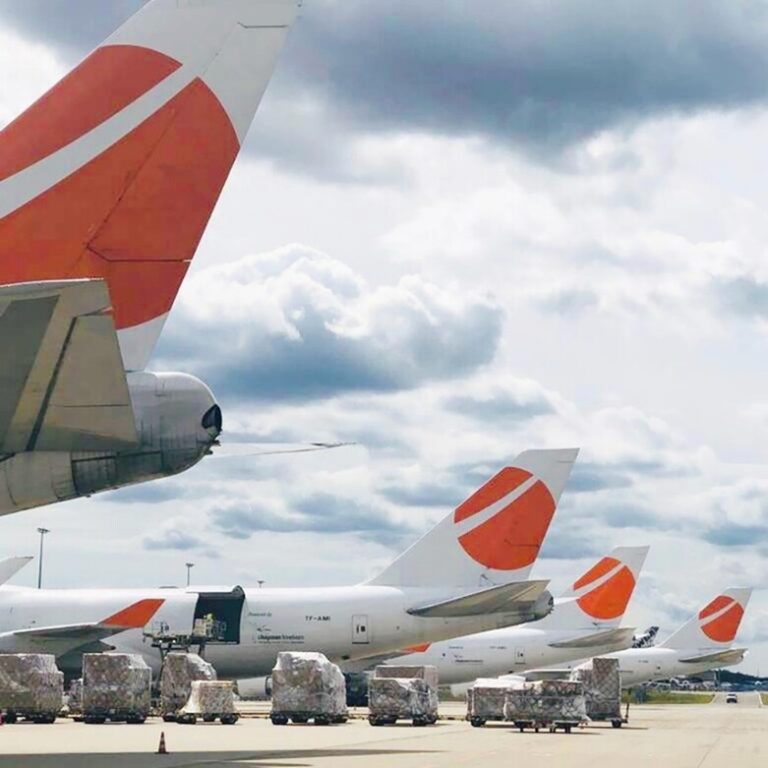
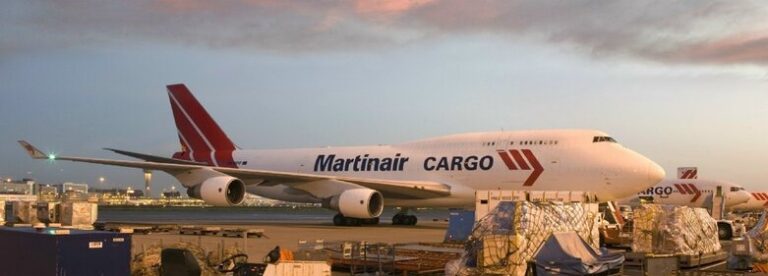
Since the start of this year’s summer schedule, KLM/Martinair Cargo has sharply reduced its Africa freighter offer. While Johannesburg (JNB) and Nairobi (NBO) are down from five to three weekly flights, Harare (HRE) in Zimbabwe which was served by Martinair’s B747 freighters, has completely been taken out of the carrier’s Africa network.
HKG instead of HRE – some of Martinair‘s B747 freighters were pulled out of Africa and Latin America to capitalize on the thriving e-Com business between China and Europe – photo: Company courtesy
The decision to stop serving HRE is the result of unstable cargo volumes out of Zimbabwe, a lack of maintenance and technical facilities at HRE, and an overall alignment of the carrier’s global freighter network. Managing Director, Pim de Wit, of Zimbabwe-based Tiger Freight, added that frequent 48-hour delays, flight cancellations, and rescheduling severely impacted the Dutch airline’s HRE operations.
Imbalances in capacity usage The carrier’s move is part of broader capacity challenges affecting the entire East African region. Limited southbound demand into South Africa has impacted the viability of freighter operations, while increased demand for perishable exports to the Middle East has further constrained available capacity to Europe, argues Gerard Roelfzema, Cargo Press Relations Officer at Air France-KLM-Martinair Cargo. He went on to say: “Despite these challenges, we remain committed to serving Africa through our optimized freighter routes via Johannesburg and Nairobi, supported by ample belly capacity on Air France and KLM passenger flights.”
Freighter flights to Hong Kong via Dubai (DWC), which are now offered six times a week, are benefitting from the downscaled African services. The main reason for this route adjustment is the booming e-commerce business on routes between the Far East and Europe.
Looking for viable solutions Harare’s Tiger Freight Management assured clients that the company is exploring measures to mitigate the impending disruption. Solutions may come in the form of alternative routes, where capacity remains available for airfreight goods. This includes partnering with Ethiopian Airlines to provide direct connections from Harare to Addis Ababa, supplemented by freighter flights to Europe.
In contrast to the Amsterdam network of KLM and MP, there are no changes to Air France’s freighter flights compared to the winter flight schedule.
Mondial Airline Services, and AEGEAN Airlines have signed an agreement making the GSA responsible for the Greek carrier’s cargo business in Germany. Thanks to the collaboration, shippers and forwarders will gain full access to the Greek cargo market, including 80+ international destinations, serviced by the Athens-based Star Alliance member. CargoForwarder Global (CFG) spoke with Ismail Durmaz (ID), Chairman of Global GSA Group, about the implications of this partnership.
AEGEAN Cargo is the next big name standing on GSA Mondial’s partner list – photo: Ismail Durmaz
CFG:How much (total) belly hold capacity does AEGEAN offer weekly to/from the German market?
ID: AEGEAN Airlines offers a weekly belly hold capacity of around 80 tons or approximately 500 cubic meters between Germany and Greece. The airline operates 80 weekly flights from Germany to Greece, connecting multiple German cities with Athens (ATH) and Thessaloniki (SKG), with even more flights expected during the busy summer season.
CFG: Which German airport stands at the top of AEGEAN’s cargo operations list, and which is ranked second?
ID: Frankfurt Airport (FRA) is the leading hub for AEGEAN’s cargo operations in Germany, offering daily flights to both Athens and Thessaloniki. Hamburg (HAM) and Dusseldorf (DUS) rank second, with strong and growing connections. The presence in these strategic locations enables AEGEAN to maximize reach across Germany and seamlessly link shipments to Greece and beyond.
CFG: Does AEGEAN fly imports into Germany?
ID: Negative. Currently, AEGEAN Airlines focuses exclusively on export cargo from Germany to Greece and beyond. The airline specializes in transporting general cargo, ship spare parts, and machinery components – commodities that are vital for the shipping, manufacturing, and industrial sectors. These products are critical to the industries served by AEGEAN’s German-Greek network. They are either delivered to Greek importers or transited through Greek hubs to other important markets. AEGEAN’s reliable and frequent flight schedule ensures that these time-sensitive and high-value goods reach their destinations quickly and efficiently.
CFG: Which are the three most utilized final destinations for cargo transiting Athens or Thessaloniki?
ID: The top three destinations for cargo transiting through Greece are: Yerevan (EVN), Larnaca (LCA), and Tbilisi (TBS).
CFG: Why should a Germany-based forwarder or shipper choose AEGEAN to transport its goods and not AF-KLM, Lufthansa Cargo or Swiss WorldCargo, to name but three?
ID: AEGEAN’s reliable and frequent flight schedule ensures that these time-sensitive and high-value goods reach their destinations quickly and efficiently. Germany-based forwarders and shippers benefit from AEGEAN’s high-frequency, reliable, and flexible services. With double daily flights from Frankfurt (FRA) to Athens and Thessaloniki, AEGEAN offers excellent recovery options in case of offloads, minimizing delays and disruptions. Additionally, AEGEAN’s use of a modern and efficient fleet ensures high service quality and optimized cargo handling. Supported by Mondial GSA’s strong market presence and expert cargo management, AEGEAN is uniquely positioned to offer personalized, responsive, and efficient airfreight solutions that major global carriers cannot always match.
CFG: Which special and targeted service can Mondial offer AEGEAN and its customers, that stands out compared to contributions delivered by others?
ID: Mondial GSA offers a unique combination of experience, market expertise, and innovation that sets it apart in the air cargo industry. With over 30 years of experience as a leading General Sales and Services Agent (GSSA), Mondial has built a powerful reputation for excellence in cargo sales and operational support. Now, as the newly appointed GSA for AEGEAN Airlines in Germany, Mondial brings unmatched market connectivity and extensive industry know-how to the partnership. The team’s deep-rooted relationships with German freight forwarders and shippers ensure a strong commercial performance from day one. In addition to its sales strength, Mondial leverages the extensive global network and advanced digital tools of Global GSA Group, offering real-time data analytics, booking optimization, and digital transparency. These tools not only make cargo management more efficient but also give AEGEAN Airlines a competitive edge in customer service, responsiveness, and market reach. Through this collaboration, Mondial guarantees a dynamic, reliable, and innovative cargo operation, helping AEGEAN Airlines to strengthen its brand and expand its footprint in one of Europe’s key cargo markets. Its commitment to outstanding service delivery, combined with strategic vision and digital innovation, makes Mondial a partner that goes far beyond traditional GSSA services.
CFG: Ismail, thank you for your time and the information shared.
Gabriela Hiitola’s words seem to have echoed from Copenhagen to 1,600 km distant Toulouse. Or she has a huge influence on Airbus, because following her harsh criticism at the recent Nordic Air Cargo Symposium in CPH, of the frame maker’s decision to put H2 aircraft on the backburner, the aircraft manufacturer made a U-turn. Instead of being built in the 2040s, as announced only two months ago, the first H2-powered aircraft is now set to enter service in the second half of the coming decade.
Four engines, zero greenhouse gas emissions. Image of H2 Airbus, company courtesy
A remarkable volte-face in favor of CO2-free flying, instantly applauded by the international aviation industry and environmental organizations. This also applies to the members of the BSR HyAirport Group, which includes well-known airports such as Gothenburg, Hamburg, Helsinki, Stockholm, Tallinn and Vilnius in the Baltic States. The group’s mission is to prepare the airports located in the Baltic Sea region to handle hydrogen-powered aircraft according to high security standards, including the storage and delivery of green hydrogen as clean energy source in aviation. In other words, these airports are paving the way for providing the necessary ground infrastructure for H2-propelled aircraft as soon as they enter commercial air traffic, whether as passenger or cargo variants.
Revised ZEROe concept Contrary to the recent statement by Airbus CEO, Guillaume Faury, this is now set to take place between 2035 and 2039. This new timeline was announced at the 2025 Airbus Summit in Toulouse. At the meeting, the aircraft manufacturer provided a revised ZEROe project roadmap to mature the technologies. It includes building a framework of key technologies enabling the construction of a fully electric, fuel-cell powered commercial aircraft – a pathway which stands out as the most promising, following years of research into H2 aviation.
At the Summit, Airbus Head of Future Programs, Bruno Fichefeux stated, “While we’ve adjusted our roadmap, our dedication to hydrogen-powered flight is unwavering. Just as we saw in the automotive sector, fully electric aircraft powered by hydrogen fuel cells have the potential in the longer term to revolutionize air transport for the better, complementing the sustainable aviation fuel pathway.”
Still much to do To get the aircraft airborne, the engineers opt for four props driven by a fuel cell system that converts hydrogen and oxygen into electrical energy. The four fuel cell systems, each with an output of 2,000 kW, would be supplied by two liquid hydrogen tanks. This concept will be further refined in the coming years, as additional tests will help to develop the technologies for hydrogen storage and distribution as well as for the propulsion systems, Airbus management illustrated. The company’s Head of the ZEROe Project, Glenn Llewellyn adds, “We explored multiple hydrogen-propulsion concepts before down-selecting this fully electric concept. We are confident it could provide the necessary power density for a hydrogen-powered commercial aircraft and could evolve as we mature the technology. In the coming years, we will concentrate on advancing the storage, distribution and propulsion systems, while also advocating for the regulatory framework needed to ensure these aircraft can take flight.”
H2 ecosystem needed To address liquid hydrogen handling and distribution challenges in flight, Airbus, in collaboration with Air Liquide Advanced Technologies, has developed the Liquid Hydrogen BreadBoard (LH2BB) in Grenoble, France. Integrated ground testing is planned for 2027 at the Electric Aircraft System Test House in Munich, combining the propulsive bench and hydrogen distribution system for comprehensive system validation.
Beyond the aircraft technologies, Airbus will continue to foster the emergence of a hydrogen aviation economy and the associated regulatory framework, which are also indispensable enablers to usher in the hydrogen age of aviation.
CargoForwarder Global’s ‘Spotlight On…’ brings a different section of the air cargo industry to the fore each week, illustrating the broad choice of careers available. One core segment in the industry is the role of General Sales Agents (GSA) or Cargo Sales Agents (CSA), who promote and sell cargo capacity on behalf of airlines that would otherwise not have a local sales presence. GSAs offer market expertise, local insights, and cost-effective, faster market penetration. This week, Victor Vladovich takes us through his role as Business Development Director at Far East Aviation, his view of the air cargo industry and advice for those looking to enter it.
Air cargo blends business, culture and cross-border collaboration. Image: Victor Vladovich
CFG: What is your current function and company? And what are your responsibilities?
VV: I am the Business Development Director at Far East Aviation JSC (FEA), a trusted GSA/CSA in Vietnam’s air freight market. My responsibilities include developing airline partnerships and identifying new business opportunities for Vietnamese exporters to go global.
Vietnam is strongly export-oriented, with a growing demand for cargo capacity in the U.S. and European markets. After living and working in Vietnam for over 18 years, I am proud to contribute to the global reach of products “Made in Vietnam”, supporting the country’s economic momentum through reliable, strategic air cargo solutions.
CFG: What does a normal day look like for you?
VV: No two days in air cargo are the same – and that’s what keeps it exciting. A typical day involves engaging with airline partners, analyzing market opportunities, and coordinating with freight forwarders and key players in the logistics chain. I’m often balancing multiple time zones and priorities while focusing on building relationships, solving problems, and exploring new ways to add value for our partners.
It’s a fast-paced, people-driven environment that constantly challenges me to think globally and act with precision.
CFG: How long have you been in the air cargo industry, and what brought you to it?
VV: I joined the air cargo industry over a year ago through my current role at FEA. However, I bring over 20 years of experience in business development across various sectors in Vietnam and internationally.
What drew me to this industry was its global impact, logistical complexity, and fast-moving nature. It was a strategic transition where I could apply my strengths in partnership-building, market expansion, and multilingual communication to a field critical to international trade and economic growth. Air cargo perfectly blends my passion for business, culture, and cross-border collaboration.
CFG: What do you enjoy most about your job?
VV: What I enjoy most is creating meaningful connections and driving long-term value. Whether opening new trade lanes, matching airline capacity with market demand, or aligning the goals of multiple stakeholders, I find satisfaction in turning complexity into clarity – and ideas into action.
I’m also passionate about working with people from different cultures and backgrounds. The global nature of air cargo keeps me learning and evolving every day.
CFG: What do you see as the greatest challenges in our industry?
VV: The air cargo industry faces several key challenges today:
Managing capacity volatility in response to shifting global demand
Accelerating digital transformation while dealing with outdated systems
Balancing sustainability goals with cost-effective operations
Attracting and developing new talent who can lead the next phase of growth
As the world becomes more interconnected, our industry must remain agile, collaborative, and forward-thinking to stay competitive.
CFG: What advice would you give to people looking to enter into the air cargo industry? Any particular training they should aim for?
VV: Start with curiosity and a willingness to learn. The air cargo industry offers endless opportunities for adaptable, proactive, and solution-oriented people.
I recommend gaining knowledge in logistics and supply chain management while also building communication and negotiation skills – both are crucial. Certifications like IATA’s air cargo programs are valuable, but real-world experience, relationship-building, and cultural awareness are just as necessary.
CFG: If the air cargo industry were a film/book, what would its title be?
VV: “The World in Motion: Stories Behind the Shipments”
Air cargo is often unseen, yet it plays a vital role in connecting people, markets, and industries. Behind every shipment is a story – of urgency, trust, and collaboration. It’s a global system constantly in motion, where timing and reliability make all the difference.
Thank you, Victor, for those insights!
If you would like to share your personal air cargo story with our CargoForwarder Global readers, feel free to send your answers to the above questions to cargoforwarderglobal@kopfpilot.at We look forward to shining a spotlight on your job area, views, and experiences.
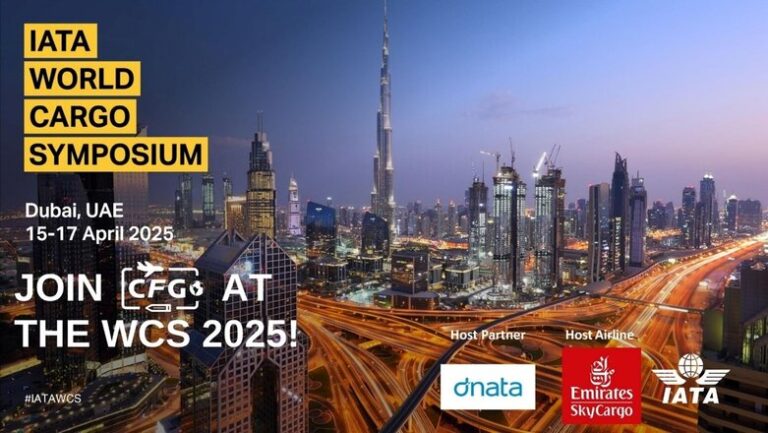
A year ago, the IATA air cargo world was enjoying Dragon Dances and a visit to HACTL’s SuperTerminal1 over in Hong Kong. Now, the 2025 World Cargo Symposium (WCS) returns to Dubai for the second time in 8 years, where its attendees can look forward to Arabian nights and conference days at the Dubai World Trade Centre. The well-established International Air Transport Association (IATA) event, hosted this time by Emirates SkyCargo and dnata, will run from 15-17APR25. And CargoForwarder Global will be right there, listening to the thousand-and-one air cargo stories, ready to report the highlights.
Brigitte Gledhill will see you there. Image: IATA/CFG
When IATA’s press release went out, earlier last month, it carried the title ‘World Cargo Symposium 2025: Navigating Geopolitical Shifts with Technology & Innovation.’ It will be highly interesting to see what technological solutions will help the air cargo logistics world cope with this week’s incredulous US tariff announcements. Willie Walsh, IATA’s Director General’s included quote read: “Air cargo demonstrated its resilience in adapting to the post-pandemic world. In 2024, more cargo was transported by air than ever before. But the world is moving at an even faster pace with technological advancements, geopolitical shifts, evolving risks, and changing customer needs. At WCS in Dubai, we’ll collectively take stock of what’s next for air cargo, focusing on digitalization, sustainability, safety/security, and e-commerce. The growing demand for air cargo underscores its critical role.”
This year’s themes True – the air cargo industry always finds a way forward in the face of evolving risks and uncertainty, and the WCS is an excellent breeding ground for ideas and partnerships, so we can expect good discussions. As in previous years, these will take place during the opening and closing plenary sessions, the specialized tracks focusing on the four main themes of the conference, and specific workshops such as one regarding the Future Air Cargo Executives Summit (FACES) aimed at fostering new talent in the industry.
So, what are the four main themes? They are familiar staples of most cargo conferences these past few years. First off, is Digitalization which will look, in particular, at the role AI and automation play in shaping the future of air cargo operations. Next up, Sustainability (which is little conflicting to AI: while AI can help to save energy resources, did you know that it is also a huge source of energy consumption? And that, for example, training a single AI model can produce carbon dioxide emissions equivalent to 300 round-trip flights between New York and San Francisco? Or that a single ChatGPT query already uses 500mls of water? These negative points are rarely talked about.) Anyway, the Sustainability stream will discuss strategies for decarbonization, reducing single-use plastics, and improving ESG reporting, amongst other points.
Safety and e-commerce The third stream tackles Safety and Security. This is where today’s geopolitical uncertainties, regulatory shifts, and supply chain disruptions will be discussed. And finally, the latest evergreen: e-Commerce with a particular focus on enhancing collaboration between e-retailers and cargo operators to improve efficiency. Again, there will no doubt also be a loop back to Safety on this topic, given the risks certain e-commerce commodities pose. A ULD Forum as well as a ONE Record Forum round the agenda off for the majority of attendees. A select audience also participate in workshops on, for example, IATA’s CEIV programs for compliance and safety, on 14APR25, the day prior to the official WCS start.
See you there? Almost 2,000 people attended last year’s event. The turnout this year looks to be a more moderate 1,400 ‘industry leaders and decision-makers’ from the industry’s many different business sectors: airlines, airports, freight forwarders, ground handlers, solution providers, and government regulators. As always, the three days which include a Gala Dinner on the Wednesday evening, and exclusive side events, will offer excellent networking opportunities with the industry’s top management and leading experts. It will bring everyone up to date on how the industry is progressing, what the trends are in digitalization and sustainability, and what best-demonstrated-practises are out there.
And all that, in the location that will soon see the world’s largest airport opening within the next decade. With that in mind, perhaps the number of attendees will be higher in the end. CargoForwarder Global will let you know. And if you’d like to share your cargo story with us, be sure to message Brigitte Gledhill on LinkedIn, this week.
The Great Depression between 1929 and 1932, which saw hundreds of thousands of people become unemployed, mass bankruptcies, and social misery, happened just four generations ago. In the U.S., it resulted in a 30% contraction in GDP. Worldwide, the gross domestic product fell by roughly 15%.
The global economic downturn began with tariffs and protectionism. The political result was the end of democracies in many countries around the world – with Hitler, Mussolini, Franco and Stalin taking power.
Trump proudly presents his toxic tariff list – courtesy: The Independent
President Donald Trump and his hard-core followers are well on their way to repeating history. Punishing the countries of the world with tariffs – notable exceptions are Russia, Belarus, and North Korea [sic!] – does not seem to be a very brilliant idea as leading business experts object.
Villains applaud Why is Washington imposing a 46% tariff on products from Vietnam? Why 10% on Ukrainian goods – a country that has been resisting the Russian invaders for more than three years? Why tariffs of no less than 50% on exports from the small African state of Lesotho? Particularly bizarre: an island whose only inhabitants are penguins, is also being taxed. In his furor, the autocrat is waging a trade war against the entire world, save for the above-mentioned exceptions. No surprise then that his move is applauded by villains such as Putin, Kim Jong-un, Netanyahu, his tech billionaire buddies: Mark Zuckerberg, Jeff Bezos or Peter Andreas Thiel, as well as his devout Republican guard at home in the USA.
Trump’s step provokes retaliations Globalization? That was once a source of prosperity for many. Now the world is falling apart like the pieces of a jigsaw puzzle. In the end, no one is likely to benefit from Trump’s tariff stampede, not the disruptive USA, nor any other nation. Because most will react with targeted punitive countermeasures, such as Canada, China, the EU and others have already announced. The producers of export goods based in Republican-governed states are likely to suffer most. For example, Caterpillar, Tesla or Dell from Texas, or the bourbon producers, Jack Daniel’s and George Dickel from Tennessee, to name but a few.
According to Denmark-based Scan Global Logistics, a leading expert in the freight forwarding industry, the U.S. tariff’s mid and long-term impact on global trade can include factors such as increased inflation levels, a broader U.S. economic recession slowing down consumer demand, and nearshoring of production gaining traction. It is already obvious that in the short term, the impact will be profound. Worsened by retaliatory duty tariffs imposed by China, Canada, Mexico, and the EU. Hence, there is a significant risk that the current situation spirals into a global trade war.
The rich will benefit, but the vast majority will not This will, in turn, impact trading patterns and consumer demand, potentially pushing down rate levels further as carriers struggle to fill their transport capacities, estimates Scan Global Logistics.
The so-called Liberation Day will also have dire consequences for the U.S. aviation industry which Trump wants to protect from foreign competition through tariffs. This is because this industry is highly interconnected internationally and depends on functioning supply chains. For example, Boeing receives cockpit instruments, components for wings and fuselage sections from manufacturers based in Europe or in Mexico and Canada. The punitive tariffs will make these imports more expensive, which will drive up the price of Boeing aircraft and weaken their market position.
COMAC is likely to overtake Boeing – in the medium term Industry leader, Airbus, will continue to consolidate its pole position to make up ground quickly, including in the cargo sector with its newbuilt A350F. Freighters have been Boeing’s domain for many years. However, this might soon end. In addition, the erratic tariff barriers are likely to increase demand for the aircraft manufactured in Shanghai by newcomer, COMAC, for which the Trump tariffs represent a veritable economic stimulus program. In addition to carriers serving the Chinese domestic market and Cathay Pacific from Hong Kong, other airlines, particularly from the East Asian region, will grow their fleets with COMAC’s C919, as Airbus’ order books are full. The C919 offers space for up to 168 passengers and, according to the manufacturer, can cover 4,075 km nonstop. COMAC management speaks of 820 orders from 28 customers received so far. This number is likely to increase quickly. In the medium term, there are signs of a changing of the guard, with third placed COMAC likely to take Boeing’s position as second largest manufacturer of civil aircraft.
It is highly doubtful as to whether workers’ unions were aware of the industrial implications caused by a Trump presidency. Now they will have to pay the bill once consumer goods climb to new heights, and entire industries will lose their competitiveness. As it stands, the U.S. aviation sector, in particular, is facing strong headwinds.
The Dutch right-wing government recommends cutting up to 15% of all slots at Amsterdam Schiphol. This translates into a reduction of 22,000 take-offs and landings per year, from 500,000 down to 478,000. The scheme aims to protect residents from noise emissions and pollution caused by aircraft in general, argue the rulers in The Hague. Should the current plans not be altered, judges might have the last say.
Under pressure: Dutch Infrastructure Minister, Barry Madlener – courtesy: government NL
EU questions The Hague’s traffic decisions Moreover, the EU Commission is also involved in the case. In a statement, it supports the plans of Infrastructure Minister, Barry Madlener, in principle. At the same time, however, it gives the Dutch politician a resounding slap in the face. This is because his traffic scheme lacks alternative actions to lower noise emissions, argues Brussels. In particular, the minister did not take into account the fleet renewal of KLM and its subsidiary Transavia, which would have contributed to a measurable reduction in noise levels. In this respect, Madlener’s calculations are based on incorrect data, the EU watchdogs claim.
The tunes from Brussels are music to the ears of the two Dutch airlines, who see their arguments strengthened by the EU Commission. They point out that 46 brand-new aircraft stationed in AMS were not included in the minister’s noise and air traffic considerations. This also applies to orders that will enter service in the coming years and further reduce the noise footprint.
No room for altering traffic decisions, Madlener In response to the objection from Brussels, Madlener claimed that the fleet modernization of KLM and Transavia has indeed been considered by his experts in the planned reduction of air traffic at Schiphol. He added that, contrary to Brussels’ assertion, further noise abatement measures had already been ordered and that there was no more room for maneuvering. He therefore stands by his decision to further cut take-off and landing rights come the next winter flight schedule.
Noise reduction through new aircraft In an initial reaction, KLM spoke of an inappropriate response from Madlener to Brussels. In contrast to the politician, the airline assumes that the noise values, which have already been reduced because of the modernization of the fleet, have not been included in his slot decisions, as also criticized by Brussels. The airline has so far left open whether it will take legal action to have the basis of the decisions made reviewed and, if necessary, revised by a court.
IATA speaks up KLM is also supported by the airline association, IATA. The organization objects the slot cut intended by the Dutch government because it is not in line with the EU Commission’s “measured approach”. Hence, IATA demands that The Hague stops its slot cutting policy. This will have to be done by 08MAY25, because the flight rights for the coming winter flight schedule will be determined beginning that date.
Should Madlener fail to meet this deadline, take-off and landing rights could only be reduced again in MAR26, i.e. at the start of the summer flight itinerary.
Things are complicated by a looming conflict with the U.S., should Schiphol traffic rights be cut. This is because airlines from the U.S. that use AMS, feel negatively affected by a slot reduction. First and foremost, KLM SkyTeam partner, Delta Air Lines would be most affected, but also American Airlines, United and JetBlue. Their association, Airlines for America (A4A), has announced that it will go to court to stop the Dutch government’s traffic interventions. Should the judges substantiate A4A’s claims, dire consequences for KLM’s U.S. flights cannot be excluded.