Not quite swipe right to match but making it a whole lot easier to interline. Image: CargoAi
CargoAi has introduced CargoMART Interline to “revolutionize airline connectivity”, as the press release states. The feature automates interline cargo bookings for airlines, replacing manual processes – historically reliant on emails and phone calls – with instant digital capacity checks and e-bookings. This innovation eliminates operational bottlenecks and unlocks significant revenue potential by streamlining interline partnerships. CargoMART Interline allows airlines to instantly check and book interline capacity, eliminating the need for time-consuming email or phone confirmations. This seamless integration optimizes revenue by unlocking additional capacity with minimal effort, making it easier for airlines to scale their operations efficiently. The platform, used by a number of airlines including Emirates SkyCargo which was heavily involved in its development and testing, makes optimum use of existing APIs, ensuring rapid adoption without the need for heavy IT investments. Furthermore, it prepares airlines for the next step: enabling direct interline booking for freight forwarders on pre-approved lanes, which expands their reach and operational flexibility. CargoMART Interline is universally compatible with over 107 API-connected airlines. Integrated into CargoMART’s existing suite, which includes features like Promote and Loadboard, the Interline feature enhances visibility, reduces operational inefficiencies, and maximizes revenue within a unified platform. By digitizing a traditionally fragmented process, CargoMART Interline sets a new standard for scalability and operational efficiency, positioning airlines to meet evolving logistics demands effectively. Matt Petot, CargoAi’s CEO, declared: “As an industry, we can no longer afford the inefficiencies of traditional interline booking. With CargoMART Interline, airlines can scale their partnerships effortlessly, maximize revenue, and prepare for a new era where forwarders can directly book interline capacity. Emirates SkyCargo has been instrumental in the development of this tool, and we are excited to extend its benefits to the entire air cargo community.” Matthew Scott, Vice President of Pricing, Airline Partnerships and Distribution, Emirates SkyCargo, commented: “Our digitalization strategy is to deploy tools that drive tangible impact, so partnering with CargoAi on this pioneering solution was a natural fit. During testing, CargoMART Interline streamlined our operations, minimized manual tasks, and provided more flexible and direct access to our world-class product and service. We look forward to its expansion across the industry.”
Marketing Abu Dhabi’s pharma plans at LogiPharma in Lyon. Image: Etihad Cargo
Etihad Cargo, Abu Dhabi’s Department of Health (DoH), and RAFED convened at the LogiPharma 2025 in Lyon, this week, to showcase the emirate’s ambition to become a global pharmaceutical and life sciences distribution hub. This collaboration, aligned with the Abu Dhabi Economic Vision 2030, emphasizes healthcare innovation, infrastructure development, and public-private partnerships aimed at positioning the UAE capital as a leader in medical logistics. Etihad Cargo’s IATA CEIV Pharma-certified PharmaLife product ensures secure transport of temperature-sensitive pharmaceuticals through real-time monitoring, thermal mapping, and dedicated cool chain facilities. The airline has seen a 49% year-on-year growth in pharmaceutical shipments and expanded its global trade lanes. Its partnership with DoH and RAFED, the region’s leading healthcare procurement platform, strengthens Abu Dhabi’s logistics ecosystem. Recent initiatives, such as the MoU with AD Ports Group, focus on local manufacturing, packaging, and distribution to meet regional healthcare demands. RAFED streamlines procurement, while DoH’s regulatory frameworks attract global biotech investments. Together, they aim to enhance patient access to advanced therapies, foster Emirati talent in healthcare logistics, and solidify Abu Dhabi’s role in global pharmaceutical supply chains. Stanislas Brun, Chief Cargo Officer, stated: “Leveraging Abu Dhabi’s strategic location at the gateway to the MENA region, we are offering advanced infrastructure with easy access to regional and global markets. We’re not just offering air freight, Etihad Cargo has deepened its focus on creating a smarter, more responsive cold chain for pharma customers worldwide, enabling an end-to-end, temperature-controlled ecosystem in collaboration with regulators, manufacturers and supply chain partners.” Faisal Haji, Division Director Health Sector Innovation Department at the Department of Health – Abu Dhabi, added: “Through our collaboration with Etihad Cargo and RAFED at LogiPharma 2025, we are reinforcing DoH’s commitment to reshaping the region’s healthcare landscape. Our ambition is to cultivate a healthcare ecosystem where patients can benefit from the most advanced treatments and innovations in medical technology. By developing a dynamic hub for healthcare and life sciences distribution, we aim to improve patient outcomes and elevate the standard of care across the region.” Samer Al Zamil, Chief Commercial Officer at RAFED, concluded: “Together with Etihad Cargo and the Department of Health, we are building a trusted supply chain that supports not just the UAE, but the broader region and global healthcare community. LogiPharma is a platform for showcasing what true collaboration across public and private sectors can achieve.”
CargoForwarder Global’s ‘Spotlight On…’ showcases a different segment of the air cargo industry every week and the many career paths it offers. General Sales and Service Agent (GSSA) companies specializing in managing cargo sales, logistics, and operational support for airlines, come in all shapes and sizes. ECS Group is the largest of these to date, with worldwide operations, hence its organizational structure is split into global regions. This ensures a focused execution of regional strategies, operational oversight for the area’s subsidiaries, and targeted market adaptation. Sharad Khuller (SK) is the Regional Director for APAC at ECS Group, and illustrates what his function entails, offering advice to those interested in entering the industry.
The air cargo world offers a unique pace, energy, and connections. Image: Sharad Khuller
CFG: What is your current function and company? And what are your responsibilities? SK: I’m the Regional Director APAC at ECS Group. My role centers around ensuring that our airline partners receive not only excellent service but also solutions specifically tailored to their needs. I am responsible for pitching for airline tenders and for designing customized commercial protocols that reflect each airline’s unique requirements and ambitions. Once awarded, I closely monitor the performance of our subsidiaries, always with a focus on adding value to our airline partners and helping them succeed in a competitive market.
CFG: What does a normal day look like for you? SK: The beauty – or perhaps the challenge – of my day lies in its unpredictability. No two days are ever the same. As a GSA, we operate as the vital link between the airline and the freight-forwarders, ensuring that both sides’ needs are fully understood and met. One moment we are strategizing with an airline partner to optimize their cargo performance, the next we are solving urgent operational issues for freight forwarders. Our role is to anticipate needs, adapt quickly, and constantly balance commercial goals with outstanding service delivery. It’s this dynamic environment – and the opportunity to create real value for our customers every day – that makes the work so rewarding.
CFG: How long have you been in the air cargo industry, and what brought you to it? SK: You could say I’ve come full circle. I began my career in air freight with KLM over 30 years ago. Initially, it was the strength of the brand that attracted me more than the industry itself. However, as I advanced through a variety of roles and regions over 14 years in cargo, I developed a genuine passion for the business. I later transitioned to the passenger side of aviation, where I spent another 14 years broadening my skills and experience. Each chapter significantly shaped my professional journey and allowed me to build invaluable relationships across the industry. Yet throughout my time in the passenger sector, I found myself missing the unique pace, energy, and connections that only the cargo world offers. In 2023, through a long-standing relationship in the cargo community, I returned to the sector – and it truly feels like coming home.
CFG: What do you enjoy most about your job? SK: There are too many reasons to list, but if I had to sum it up: it makes me feel ALIVE every single day. The energy, the people, the challenges – they all keep me motivated and inspired.
CFG: What do you see as the greatest challenges in our industry? SK: One of the greatest challenges in our industry today is navigating the rapid evolution of digitalization, the growing demands of e-commerce, and increasingly complex operational requirements – all while maintaining commercial performance. Here in Asia, we face these challenges daily. What gives us a real edge is the strength of ECS Group’s global network and the tools we have access to. Internally, we use Apollo, a powerful market forecasting tool that helps us steer our commercial efforts in the right direction. We also rely on Quantum, our quoting platform, to streamline our processes and improve reactivity. On top of that, we work closely with external digital booking platforms and partners like CargoAi to maximize visibility and offer seamless access to capacity for our airline partners. But beyond the tools, the real differentiator is the commercial strength of ECS Group’s subsidiaries worldwide. Being part of this ecosystem means we can align quickly, share best practices, and offer solutions that are both global and locally adapted. Our partners feel it – our proposals are sharper, more dynamic, and more efficient than what many local or independent players can provide. That’s the power of being local with global backing.
CFG: What advice would you give to people looking to enter into the air cargo industry? Any particular training they should aim for? SK: While hands-on experience remains critical in the air cargo industry, training plays an equally important role in building a successful career. It’s not just about learning on the job – it’s about continuously developing the right skills to stay competitive in a fast-changing market. At ECS Group, we strongly believe in investing in our people. Through our dedicated online training platform, Discovery, employees across the Group have access to continuous learning opportunities throughout their careers. Discovery allows our teams to regularly update and expand their skills, ensuring they are well-equipped to adapt to industry shifts and customer demands. For anyone looking to enter the air cargo industry, my advice is this: bring resilience, curiosity, and a willingness to learn. Formal training and technical skills will follow. Be prepared for the unexpected, and know that with the right mindset and support, you will be ready to handle it.
CFG: If the air cargo industry were a film/book, what would its title be? SK: Planes, Trains & Automobiles (1987) – chaotic, unpredictable, and at times hilarious… but always moving forward, no matter what.
Thank you, Sharad!
If you would like to share your personal air cargo story with our CargoForwarder Global readers, feel free to send your answers to the above questions to cargoforwarderglobal@kopfpilot.at We look forward to shining a spotlight on your job area, views, and experiences.
Until now, the government in Mexico City has focused most of its attention on the USA, particularly in economic matters. Now a rethink is beginning, which is being greatly pushed by the Trump administration’s erratic tariff policy. As a consequence, Mexico is accelerating its search for new markets and allies, benefitting the state of Veracruz, among others.
This fundamental change in strategy was confirmed by Ernesto Pérez Astorga, Minister of Economic Development and Ports, Gobierno del Estado de Veracruz, who spoke of a shocking ‘wakeup-call’ trumpeted by Trump. “We will develop a new view by shifting our focus from north to south and east across the Atlantic to the EU,” stated the politician during a presentation of Veracruz State at the Hamburg Chamber of Commerce last week. “Our infrastructure is first class; new rail lines connect the port of Veracruz at the Gulf of Mexico with Salina Cruz at the Pacific Ocean,” he stressed, capturing some of the tonnage passing through the Panama Canal today with an annual toll generating USD 2 billion in revenue. His government expects that, by 2028, 300,000 containers will be transported on this new Mexican Interoceanic Railway Line stretching 227 km coast to coast. This equals the transport capacity of 12 mega container ships of the MSC Michel Cappellini class (24,346 TEU). In 2024, the Panama Canal recorded a total of 11,240 transits by ocean-going and small merchant vessels transporting 210 million tons of cargo. These figures illustrate the central role of the Canal in global trade and that freight trains such as those between Veracruz and Salina Cruz can only complement it slightly.
Ernesto Pérez Astorga, Minister of Economic Development and Ports, Gobierno del Estado de Veracruz – photo: CFG/hs
On its way to becoming a logistical hotspot The politician emphasized that 14% of all exports from the EU to Mexico are handled at the Caribbean port of Veracruz. They are addressed to Volkswagen, Audi, Stellantis or BMW, that operate plants in Mexico, as do GM, Tesla and Ford. Other buyers of European goods are the pharmaceutical and petrochemical industries as well as mechanical engineering companies and manufacturers of semiconductors, a fast-growing sector in Mexico. Exports are dominated by agricultural items such as avocados, oranges, lemons, pineapples and the meat industry (beef, chicken, pork). “With our product variety, our strong domestic market and thanks to the developed infrastructure, we could replace Florida as the most important transshipment point for fresh produce from Central and South America to Europe in the future,” says Ernesto Pérez Astorga. An exciting vision and a realistic one, he stresses: “We are attempting to turn the state of Veracruz into a worldclass logistics hub.”
Lacking airport capacity The implementation of this objective will be accelerated by the turmoil caused bythe Trump tariffs, which has greatly shaken the international markets and shocked Mexico, Canada and most countries south of the Rio Grande, increasingly spurring the trend towards deglobalization, the official said. Yet to seriously compete with Miami as the most important hub for Latin American products traveling northbound or to Europe, Veracruz lacks an efficient international airport. VER only has a runway measuring 2400 m × 45 mb – a dwarf compared to Miami International and its four runways. However, thanks to Veracruz’s deep-water port, it could at least work out in terms of maritime transport supported by convenient hinterland connections.
cargo-partner ups air freight services in Mexico At the same time as the Veracruz delegation’s stay in Hamburg, the Austrian logistics company, cargo-partner (belonging to the Japanese Nippon Express Group), announced the expansion of its air freight activities to and from Mexico. The cargo flights started last year, when cargo-partner launched a consolidation service from Frankfurt to Mexico City. The service has since been strengthened with regular air consolidations services from Hungary and Austria to the Central American state. It has now added regular air services between Mexico and Asia, including China and Hong Kong, which help support the growing needs of international trade by providing end-to-end air freight solutions abroad.
Three product offers In a release, cargo-partner emphasizes that customers can choose between three different service levels and price categories when booking air freight transportation: economy, priority and emergency. Luis Gomez, Managing Director of cargo-partner Mexico, explained: “We’ve launched new air cargo connections to give our customers more flexibility and reliable freight capacities at competitive rates. Our expanded air freight services are designed to help businesses trading in Mexico streamline their supply chains and meet critical delivery deadlines.”
Trade prevents conflicts In an analysis of Trump’s tariff policy, Courtney Miller, of Aviation Week, draws a negative conclusion. “Today, the costs are the focus of the U.S. administration. It will take 15-20 years for any benefits of deglobalization to be materially felt by way of a sufficient manufacturing base being constructed in the U.S., while the loss of benefits and economic slowdown are already being felt and will continue to be for the next 15 years. Given relatively rapid administration changes in the United States, it is increasingly unlikely that the public opinion will hold out long enough for the benefits to (potentially) materialize.” Miller went on to say that tariffs hardly cause conflict, instead, “history has shown that trade is one of the key factors in preventing conflict.” Even if the die has not yet been cast regarding the tariffs that Washington will ultimately impose on Mexico for imported goods, for Ernesto Pérez Astorga one issue is beyond doubt: “We must gradually decouple ourselves from our northern neighbor and create new alliances in Central America and strengthen our ties with the EU.”
“With our product variety, our strong domestic market and thanks to the developed infrastructure, we could replace Florida as the most important transshipment point for fresh produce from Central and South America to Europe in the future,” says Ernesto Pérez Astorga. An exciting vision and a realistic one, confirmed Rocio Nahle García, Governor of Veracruz. “He is very enthusiastic concerning the future role of Veracruz as a center for multi-modal transports.”
The air cargo industry is undergoing a seismic digital transformation. e-booking platforms like cargo.one, WebCargo by Freightos, CargoAi, and CargoBooking are emerging as key players, promising streamlined operations, cost reductions, and faster, more efficient booking processes. But despite these bold claims, some crucial questions remain: Are these platforms truly the revolution they are touted to be? Do they offer all available booking options? Why do many forwarders use multiple platforms despite the promises of all-in-one solutions? And most importantly: Can the data be trusted?
Online booking of air freight shipments is gaining momentum. But the services offered by the platforms differ. Courtesy: cargo.one
Accessibility and global reach of e-booking platforms The global accessibility of e-booking platforms is a major concern. Although platforms like cargo.one have expanded their network by partnering with major carriers such as SAS Cargo, Delta Cargo and lately Polish carrier, LOT Cargo, full worldwide reach is still work in progress. Freight forwarders must ensure the platforms they choose cover the regions and airlines they operate with. Integrating these platforms into existing workflows can also be a challenge for companies that have long relied on traditional booking methods and charge booking options and prices by email or phone.
Why forwarders use multiple platforms Despite the allure of a single platform offering everything a business needs, many freight forwarders choose to work with multiple e-booking platforms. The reason is simple: no platform is a one-size-fits-all solution. While cargo.one excels in providing instant quotes and payment security, it might not offer the multimodal services larger forwarders require. Similarly, WebCargo by Freightos is a powerful tool for managing air, ocean, and land freight but may be overly complex for businesses focused solely on air cargo. Using multiple platforms allows forwarders to tap into a variety of features, rates, and carriers, optimizing their booking processes to suit their specific needs.
76% Carriers representing global capacity digitized compared to only 9% in 2020 – source: WebCargo by Freightos
Ensuring data accuracy: understanding rate fluctuations in e-booking platforms One of the biggest concerns when using e-booking platforms is the reliability of data. Some may question whether the rates displayed on these platforms are accurate and up to date. The answer lies in understanding the process behind these platforms. The rates shown on these platforms are updated in real-time, but there can be delays in the time it takes for a rate to be confirmed by the freight forwarder. By the time the rate reaches the forwarder, it may no longer be the same due to changes in airline availability or market fluctuations. This is not an issue of manipulation but rather a result of irregular updates. In other words, rates can fluctuate between the time they are first displayed and when they are confirmed, which is a normal aspect of the dynamic nature of the air cargo market.
$100m in booking revenue driven for a top 10 global airline from low-cost online sales – source: WebCargo by Freightos
e-booking platforms as the industry’s smartest investment The promise of increased efficiency, cost savings, and faster transactions makes e-booking platforms a tempting investment for many in the air cargo industry. But do these platforms live up to their claims? Let’s break down what each major player offers:
cargo.one: speed and security cargo.one’s platform offers real-time quotes and a global payment protection program, securing transactions and reducing the risk of payment defaults. This can be a game-changer for companies dealing with international transactions. While the ability to reduce quotation turnaround from hours to minutes is undoubtedly valuable, the necessity of payment protection depends largely on the frequency of payment disputes in the industry. The platform’s widespread adoption and ease of use make it a strong choice for many, though integrating it into established workflows may require additional training and adjustment.
WebCargo by Freightos: multimodal power WebCargo stands out with its ability to handle air, ocean, and land freight, making it a go-to solution for large forwarders dealing with multimodal logistics. The platform’s real-time rate access allows forwarders to instantly compare prices from airlines and ocean carriers, slashing the time spent on manual quotes and price negotiations. However, this wealth of features can be overwhelming for smaller companies that only need air cargo solutions. Additionally, WebCargo’s integration with transport management systems (TMS) helps streamline booking processes but may increase training costs and complexity for businesses not already using TMS.
CargoAi: flexibility and customization CargoAi’s platform offers a highly flexible approach to booking, with tools like CargoMART, which allows forwarders to compare rates and book directly with airlines, and CargoGATE, a customizable white-label solution for a tailored booking experience. While this flexibility is a significant advantage, it comes with a downside: implementing these tools requires solid IT infrastructure and technical know-how. Forwarders with limited digital capabilities may find the integration process challenging, making it harder for them to fully take advantage of the platform’s potential.
CargoBooking: AI-driven efficiency CargoBooking sets itself apart with its AI-powered tool, eMagic, which automates data extraction and booking processes, reducing the chances of manual errors. This means faster quote processing and fewer mistakes in the booking process. However, the platform’s reliance on AI poses its own challenges. The quality of the data it processes is crucial – if the input data is incomplete or inconsistent, the AI may not perform optimally, and manual corrections could still be required. Despite these hurdles, CargoBooking represents a significant step toward automation in air cargo logistics.
The key to long-term efficiency lies in choosing the right digital solution The digitalization of air cargo booking presents both opportunities and challenges. Each platform offers distinct advantages, from real-time booking and payment security to multimodal capabilities and AI-driven automation. For freight forwarders, the key lies in evaluating their specific operational needs and selecting the platform that aligns best with their business model. However, adopting these platforms is not without its hurdles. Integration costs, training expenses, and the compatibility of platforms with existing systems must all be considered before making an investment. While these platforms promise efficiency and cost reductions, forwarders must carefully evaluate whether the benefits outweigh the costs and challenges in the context of their business needs. In the end, the right e-booking platform could revolutionize air cargo operations – if chosen wisely. The industry is clearly embracing the digital shift, but it’s important for forwarders to find the platform that best aligns with their long-term goal.
I shared an image on LinkedIn recently, of a Boeing 787 Dreamliner, showing the international provenance of all its parts, along with the caption someone had added: “They say a picture is worth a thousand words. How are the tariffs going work?” When I then read that Boeing had communicated a positive order month in MAR25, including a further 11 Boeing 777F orders, bringing the total orders for the freighter variant to 400 (according to Cargo Facts), I asked myself how the APR25 tariffs will affect its production going forward? Because the Boeing 777F is just as international a product as the Boeing 787.
Meanwhile, those tariffs have been put on hold again – at least for the next three months, but they continue to loom and cause instability. Something the Boeing 777F program with its history of issues, really does not need in addition. Coming out of the pandemic where supply chain disruptions caused various component bottlenecks (not least an ongoing engine shortage), last year then saw a month-long strike in OCT-NOV24, where 33,000 IAM workers laid down their tools, halting assembly lines and reducing deliveries in NOV24 to just two 777Fs. Out-of-sequence assembly and parts cannibalization further exacerbated production problems, as did the communication that Boeing would be reducing its workforce by 10%. The result? Delayed B777F deliveries leading to unexpected costs for Boeing and thus financially straining production resources, as well as a push-back for the launch of the B777-8F to 2028. Add to this, the end of the B767F production in 2027 plus ongoing component shortages, and B777F production continues to be under pressure.
AI’s response when asked to draw a B777F and the international provenance of its parts… Image: Microsoft Designer/CFG
Impact of Tariffs on Cost Structures The last thing it needs, then, is the imposition of tariffs. Aside from flight decks, wings, tails, engine nacelles that are all produced in the United States (and where final assembly occurs), the construction of a B777F involves parts from several countries. Here are a few examples: Alenia in Italy manufactures parts of the fuselage, and the UK’s Bombardier Shorts supplies parts for the fuselage and other systems. Mitsubishi Heavy Industries in Japan, contributes to wing structures, whilst ASTA over in Australia, provides various structural components. Brazilian Embraer contributes to smaller components. South Korea’s Korean Air manufactures certain parts, and Singapore Aerospace provides additional systems. Last, but definitely not least, since it is the only country currently not spared from the tariffs reprieve, China’s AVIC Shenyang Commercial Aircraft (SACC) has in the past been a component provider for Boeing. In 2021, Global Times reported that “China has played an important role in Boeing, as more than 10,000 Boeing aircraft are equipped with world-class parts made in China, and one out of every four civilian aircraft produced by Boeing has been delivered to China.”
Fifth largest U.S. export Worth mentioning at this point: According to Tradeimex, ‘Aircraft, Spacecraft, and Parts Thereof’ make up the fifth largest export group for the United States, amounting to a value of USD 30.92 billion in 2024. Boeing exports around 80% of its planes to airlines and leasing companies in over 150 of the world’s countries – among which China is a large contender – also for the B777F. How the currently escalating tariff tennis game between the two countries will pan out, remains to be seen. Coming back to the aircraft’s production, however, it is clear that tariffs pose a serious threat to the B777F’s cost structures, since an estimated 60-70% of its components are sourced internationally, and that therefore exposes the production process to a vulnerability. Particularly in the case of retaliatory tariffs.
Aluminum and steel tariffs One of the most pressing issues facing the 777F program is the imposition of 25% tariffs on Canadian and Mexican aluminum and steel, as these are important components for aircraft structures such as skins, landing gear, and aircraft engines. These parts undergo multiple cross-border processing stages during manufacturing, which amplifies the costs associated with the tariffs. Additionally, composite materials for the empennage and cabin floors are sourced from global suppliers, further complicating the supply chain. The consequence of these tariffs would be a significant increase in freighter prices
Rising Production Costs Production costs for the program are already rising due to USD 2.6 billion in delays for 777X certification. These escalating costs could strain relationships with key freight carriers, such as Qatar Airways and Emirates, which operate 40% of the active 777F fleet. Rising costs could result in U.S.-built freighters becoming less competitive – and airlines operating older freighters will face higher maintenance costs, compounded by tariff-driven price increases for replacement parts. The plan of action therefore would need to be to negotiate tariff exemptions or subsidies to mitigate cost increases. Whether Boeing can actually reduce its reliance on internationally produced parts, is questionable, since that would require production infrastructure on a large scale.
Long-term? While there appears to be an optimistic outlook with regard to continued B777F orders (because many freighters in the industry are coming to the end of their lifespan), the Boeing 777F program definitely faces significant challenges from supply chain complexities, and production delays, and the tariffs will add to these. Boeing needs to negotiate favorable trade terms and work on streamlining its production to cushion the impact of these challenges and maintain strong demand for its freighters in the global market.
On 03MAR25, SWISS’ cargo arm, Swiss WorldCargo and handling partner, FIEGE Air Cargo Logistics celebrated the official opening (complete with ribbon-cutting ceremony pictured above), of a new mail handling facility at Zurich Airport. The two companies have entered into partnership in order to vastly improve mail handling in Zurich. While Swiss WorldCargo is responsible for reliably flying the mail in and out as its experience in time-critical shipments has shown, FIEGE ensures that all ground handling of the commodity is carried out smoothly and quickly as possible. The press release emphasizes that the two partners are committed to providing “efficient, trustworthy, and flexible services” to their customers. With the redesigned mail handling facility and a strong partner at its side, “Swiss WorldCargo is boosting the quality and reliability of its SWISS Mail product across multiple key aspects”, it underlines.
(L to R) Florian Egner (FIEGE), Konrad Gastpari (SWC), Mathijs van der Lei (FIEGE), Massimiliano Ferro (SWC), Benjamin Looser (FIEGE), Christian Wyss (SWC), Vinko Castrogiovanni (FIEGE), Alan Fischer (SWC), Jannis Kumbrink (FIEGE), Ionut-Gabriel Bostinariu (FIEGE). Image: Swiss WorldCargo
Optimized workflows thanks to the new partnership, result in three main benefits for Swiss mail customers, starting with extended service hours. The facility now operates daily from 05.00 to 21:00 CET, enabling uninterrupted processing of incoming mail throughout that time. Secondly, SwissWorld Cargo offers a faster transit with its six-hour minimum connection time, and thirdly, same-day delivery to European destinations or international flight connections is possible for all shipments arriving in Zurich before 17:00 CET.
Alain Chisari, Head of Swiss WorldCargo, explained: “Collaborating with reliable and innovative partners is one way to make progress possible. We are very enthusiastic to be partnering with FIEGE Air Cargo Logistics to further enhance our mail handling procedures. By combining our strengths, we are not only developing our services further but also creating new opportunities to deliver greater value to our customers.”
Benjamin Looser, Managing Director at FIEGE Air Cargo Logistics, said: “We are very grateful for the trust Swiss WorldCargo has placed in us and look forward to taking the next step in our expansion strategy with this new partnership. With our expertise in air cargo handling, automation and digitalization, we will jointly develop airmail handling in Zurich and create added value for Swiss WorldCargo’s customers.”
The images of the devastating 7.7-magnitude earthquake that hit just 20 miles away from Mandalay, the second largest city in Myanmar, on 28MAR25, and affected parts of Thailand and even south-west China, showed the shocking damage that had occurred. Many lives have been lost and many more are suffering the loss of their homes and infrastructure. Not-for-profit organization, Air Charter Service, immediately began mobilizing cargo flights to deliver essential supplies to both countries. Since then, a number of cargo charters have delivered urgent aid supplies to Yangon and Bangkok.
Bringing help to where it is needed. Image: Air Charter Service
Ben Dinsdale, Air Charter Service’s Director for Government and Humanitarian Services, commented: “With Mandalay’s main airport currently unavailable, and many of the local airports in the country unable to accept large aircraft, we have been having to use Yangon to fly the bulk of the aid in, with the possibility of ferrying into regional airports on smaller aircraft, or by road, from there. Over the weekend we chartered two aircraft into Yangon carrying more than 40 tons of aid, with another landing in Bangkok on Monday with almost 30 tons of medical supplies from the Middle East We have several more scheduled into Myanmar over the next few days and our offices around the world are continuing to receive calls with requests to get aid to the affected areas. Our thoughts go out to all those impacted by this terrible disaster, and we will continue to work around the clock to support the aid agencies involved in the relief operation.”
Raz Brod, Managing Director, Wings on Board. Image: Meantime Communications
Good tech will increase work efficiency and the Dutch On Board Courier (OBC) company, Wings on Board (or Wings, for short) recently confirmed this following its experience. Since implementing a specially customized app called ‘My Wings’, developed by Awery Aviation Software, the OBC provider has registered a 25% increase in its productivity. When your company collaborates with more than 3,2000 couriers across over 150 countries, and you provide 24/7/365 OBC services, then that’s a considerable and welcome efficiency gain. ‘My Wings’ was developed in collaboration between Awery and the Wings team, with the aim of providing seamless and clear communication between customers, couriers, and the Wings team. Enhanced customer experience, real-time tracking and visibility were intended results. “The solution digitalizes Wings’ day-to-day operations from request and quotation handling to mission and courier management, allowing the Wings team to win more business with the same number of staff,” the release states, going on to reveal that it is also built using both eMagic, Awery’s AI-powered feature that processes and extracts important information such as customer details, cargo specifications, routing, and special handling requirements from digital communication methods, and Awery’s Enterprise Resource Planning (ERP) system, along with custom-designed track-and-trace software. The result is a comprehensive OBC service solution that ticks all the concept’s boxes.
Vitaly Smilianets, Founder and Chief Executive Officer, Awery, underlined: “Every logistics provider has unique operational requirements, so it is essential that we work together to create digital solutions that address each client’s specific pain points. For Wings on Board, we developed a solution that automates previously manual tasks, and provides secure access to critical operational data, allowing for communication between all parties involved in the shipment.”
Raz Brod, Managing Director, Wings, concluded: “In recent years, the OBC industry has changed drastically, especially since disruptions during the pandemic, meaning that we have had to fundamentally change the way we do business. We realized the need for a technology partner who could develop a solution to eliminate the time-consuming manual processes that were slowing down our operations, and since implementing Awery’s software, we have seen a significant increase in efficiency.”
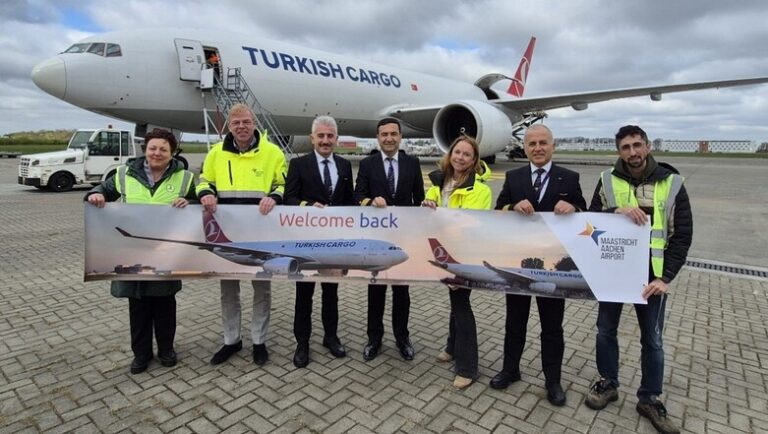
While Schiphol Airport (AMS) still faces its ongoing slot-reduction threats, Maastricht Aachen Airport (MST), has no such restriction and because it is located right next to the highway and offers minimal dwell times, it is just as quick a connection to the world’s largest flower auction in Aalsmeer, as AMS. Flowers landing at MST are sent on their way by truck within just two hours of arrival. MST also enjoys the same investor as AMS since 2023, as that was the year that the Royal Schiphol Group bought a 40% stake in the airport. Given its flexibility and great connections, it will naturally continue to attract cargo customers. One of the first this year, is Turkish Cargo, which returns following a five-year break in services. The airline now offers a twice-weekly Quito-Miami-Maastricht-Istanbul flight, which is set to carry flowers, other perishable goods and general cargo. It states the reasons for its return as being “MST’s excellent ground handling and efficiency” and since MST is certified as an Authorized Economic Operator (AEO), cargo can move more swiftly through its customs while adhering to strict security procedures.
Maastricht Aachen Airport Team welcome back Turkish Cargo. Image: Meantime Communications
Dean Boljuncic, Head of Commercial Development, MST, revealed: “Our specialized in-house cargo hub was chosen for its fast and efficient service, a one-stop shop model that bolsters our handling capacity and customized provisions. We are proud of our team’s efforts to earn this reputation for excellent handling that is seeing Turkish cargo return to Maastricht; to be competitive we rely on our dedicated team of cargo specialists to offer flexibility and high-quality service. Our customer-orientated approach along with our cooperation and operational excellence are qualities that we pride ourselves in and we are proud that these qualities have encouraged Turkish Cargo to rejoin. Two years ago, we received the excellence award from Turkish Airlines and its amazing to see the airline return because of our operational excellence.”