Due to the new tariffs imposed by the Trump government on imports, an avalanche of documentation is required when importing goods worth more than USD 800. The comprehensive documentation and associated checks require additional time and significantly increase costs, states DHL. To complete the formal import procedure, both the sender and recipient must fill out numerous documents including commercial invoices, packing lists, proof of origin, customs tariff numbers and other similar requirements. In reaction, the integrator has decided to stop the business altogether – at least temporarily.
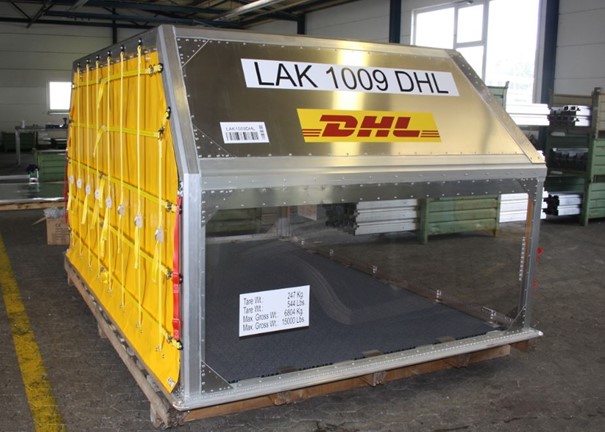
Fewer DHL ULDs are likely to fly to the USA in the near future, company courtesy
Beginning today (21APR25), integrator DHL Express is halting all business-to-consumer shipments exceeding a customs value of USD 800, to individuals in the United States. DHL cites new customs regulations in the States as the reason for this measure. Washington’s regulatory changes have significantly lengthened clearance processes despite the efforts of the employees. In addition, DHL declared that business-to-business shipments could face delays but would not be suspended. Shipments under USD 800 to either businesses or consumers, are not affected by the changes.
New threshold value The move is a temporary measure, the company emphasized in its statement.
DHL blamed the announced halt on new U.S. customs rules which were decided on 05APR25, requiring formal entry processing on all shipments worth over USD 800.
Formerly, the minimum value per shipment was USD 2,500 until regulations were changed on 05APR25. “This change has caused a surge in formal customs clearances which we are handling around the clock. While we are working diligently to scale up and manage this increase, shipments over USD 800 – regardless of origin – may experience multi-day delays,” reads a DHL press release.
DHL told agency Reuters, last week, that it would continue to process shipments from Hong Kong to the United States “in accordance with the applicable customs rules and regulations” and would “work with our customers to help them understand and adapt to the changes that are planned for 02MAY25.”
Imposing tariffs abusively The statement is a reaction to Hong Kong Post’s decision to stop handling packages coming from or going to the United States,accusing the Trump government of “bullying”after Washington canceled tariff-free trade provisions for packages from China and Hong Kong. The city’s government cited U.S. President Donald Trump’s decision last week to eliminate the so-called de minimis exception for items posted from the city to the U.S. The exemption applied to international shipments worth USD 800 or less entering the U.S.
“Bullying act” “The U.S. is unreasonable, bullying, and imposing tariffs abusively,” the Hong Kong government said in its release. “The public in Hong Kong should be prepared to pay exorbitant and unreasonable fees due to the U.S.’s unreasonable and bullying acts.”
Meanwhile, Hong Kong Post has stopped accepting packages transported by sea and will stop taking airborne shipments starting from 27APR25. Other postal items containing only documents such as letters, for example, will not be affected.
A DHL spokesman told media people that the integrator will continue to process shipments to the US, monitor the situation, and work with customers to help them keep up with latest changes. FedEx and UPS were not available for comment.
The Who’s Who in Air Cargo descended upon Dubai last week, for IATA’s 18th World Cargo Symposium. A total of 1,864 people from 88 different countries arrived to network, discuss and exhibit at Dubai’s World Trade Centre, and a good majority (c. 1,300) also attended the Gala Dinner on the evening of 16APR25, at the famous Atlantis The Palm. With a core focus on the usual three streams: Safety, Digitalization, and Sustainability, the question is: were there any new insights?
Did you also know that IATA turned 80 on 19APR25? Image: CFG/bg
Not many air cargo events begin with Royalty. The impressive and promising lightshow opening plenary on Day 1, was held in the presence of H.H. Sheikh Ahmed bin Saeed Al Maktoum who is also Chairman and Chief Executive of Emirates Airline and Group. Emirates SkyCargo and dnata were the main sponsors of this WCS edition. His Highness remained for the key notes in the opening plenary by Badr Abbas, Divisional Senior Vice President, Emirates SkyCargo, H.E. Abdulla Bin Touq Al Marri, Minister of Economy, UAE Government, and Paul Griffiths, CEO of Dubai Airports, who all emphasized Dubai’s place as a significant global hub, hosting more than 100 airlines, (“air cargo powers economies”, the Minister of Economy reminded the audience), mentioned the world’s largest airport due to open within the next decade, and spoke of Dubai Airport’s focus on sustainability initiatives such as its SAF Roadmap and Digitalization efforts. Where money and focus goes, implementation flows. Or does it?
Recycling goes beyond Sustainability While the stories used to illustrate the three key conference streams were well-chosen and aptly localised, and many of the panel candidates spoke well and to a full house, the overall sentiment in the Digitalization stream, at least, was still that of cycling on the spot. As one consultant put it, when CFG asked for opinions: “I feel that I could have pulled out a presentation on digitalization from 2010, and I wouldn’t really have had to change anything.” Similarly, buzzwords such as Collaboration or Labor Shortages, Change Management, Adaptability, Flexibility, continued to pepper people’s presentations as they have done over the years. Accelya’s Chief Revenue Officer, Andrew Wilcock, told the audience what has long been known: “Digitalization is not an option. It is essential [and] legacy systems are holding back innovation”.
From old records to ONE Record And yet one way around legacy systems could be the shift to IATA’s ONE Record, since what CFG had not understood until that point was that it is not one single server, but an ecosystem of ONE Record-capable servers that can make this happen. ONE Record, which featured heavily in the agenda this time, has the potential to truly change the industry, if only that message and the growing number of convincing use case results were made public and brought to those smaller and medium-sized stakeholders that are needed in order to really make this work. Currently, not even all air cargo IT software providers appear to be clued up. There were blank faces on one stand in the exhibition hall right next door, when CFG walked around and asked if they supported ONE Record.
Managing Director Cargo Operations & Transformation Air Canada, Janet Wallce, pointed out in the Fireside Chat on the topic, that there was still a lot of work to be done to encourage data sharing among the stakeholders, and also revealed that “The biggest thing that ONE Record can do is for ecommerce”, since it offers a quicker, standardized fashion for data transfer. Surely a single convincing use-case in itself? Alongside others that mention customs, and truly granular shipment tracking in more real-time. LATAM Cargo’s CEO, Andres Bianchi, summed it up: “Adoption is underwhelming. ONE Record allows us to connect better and position the industry better as a solution provider to world, without losing competitiveness. One reason we are failing to gain traction, is too much focus on the tool rather than the problems it solves.” It could be a real driver of efficiencies for the industry as a whole. The ONE Record workshop, offered in the morning of the final day, saw around 100 attendees, all engaged and interested in the topic. The question remains, however: how can IATA reach and get all the smaller and medium-sized companies on board in time for IATA’s 01JAN26 implementation deadline?
Elephants and tariffs “Why is no one talking about the elephant in the room?!” was the WCS feedback often heard by CFG. It was felt that no true focus had been put on the hot tariff topic, though Maja Marciniak, Senior Economist at IATA had addressed the impact on the first day, dedicating a slide titled ‘Tariffs will undoubtedly affect aviation – both through direct and indirect impacts’. Her opinion was that despite the recent dynamics, so far, the global economy has been performing well, with an ever-rising average distance of goods transported (now almost at 5000 km now). Interregional trade has decreased by around 50%. “A trade war is unfolding in front of our eyes,” she said, pointing to the uncertainty it was causing. “If you are a business trying to produce, invest in infrastructure, ship… this landscape is very unpredictable. Perhaps companies will sit back and wait, so this may slow down business.” On the other hand, she felt that it could be a driver for better efficiencies within the industry as a whole. The panel on Air Cargo Market Factors later that same day concluded that the tariffs were dampening growth in ecommerce, but that it was still growing, that deglobalization was happening as a result, which was creating shockwaves, and that some of these changes would be permanent, and that shifts were happening, “but not as quickly as news reels would have us believe,” according to Mattieu Casey, Managing Director, Commercial – Cargo at Air Canada. Alina Fetisova, Project Manager and International Trade Professional/International Trade Centre at United Nations, said: “The system is stretched but not broken. It is still functioning.” Her opinion was that countries that are agile and open to free trade agreements such as China, South Korea, Japan, or UAE, will benefit most. De minimis might be the bigger problem, was one angle.
The highlights and requests for next time Regarding the ‘elephant in the room’, tariffs were mentioned in the one or other panel over the course of the event, yet WCS attendees felt that the fact that the audience could not ask questions during the panels and thus create a larger discussion, was limiting and gave the feel of a “scripted” event. Perhaps that flexibility is something to take on for the next WCS – though the current set-up did mean that schedule was well adhered to.
Highlights of the event were the fact that “Cargo is in good shape”, as Willie Walsh declared at the World Cargo Symposium press conference on 15APR25, and indeed, the atmosphere at the event was a positive one, with the general feedback that it remains one of the best networking possibilities in the industry. Most stands reported good footfall, even though it is more an information gathering rather than signing any large deals on the whole. CFG’s biggest learning was in the presentations on Waste Management, which were unfortunately only attended by a very small group and suffered from being scheduled just before the transfers to the Gala Dinner that evening. These offered very tangible and inspiring best demonstrated practices and deserved a greater audience, room, and placing. Given the layout of the event area, the Sustainability stream was hidden away in a corner to the left of the main hall.
Another absolute highlight and hopefully a more permanent one for next time, was Unilode’s special guest cameo: “The Airport Guy” or Mohammad Taher as he is really known. With ‘Attracting Talent’ being an ongoing problem in the industry, he, too, should be given a keynote of his own on the larger stage, next time.
Where to next? From geopolitical challenges to regulatory complications through to sustainability limitations and a whole host of other topics, the general conclusion was that – particularly over the past 5 years – the industry has become more agile and resilient, with faster, more determined responses to crises. Stay calm, be prepared with flexible plans, and maintain a clear, courageous approach to keeping goods and the world moving, was the closing message. And as for the question where the WCS is moving to next year? The answer is that it will be held in South America for the first time ever. From 10-12MAR26, the WCS in Lima, Peru, will highlight South America’s growing role in global logistics, and in particular, Peru’s strategic position as a regional trade hub. So, save the dates!
A court hearing in the Netherlands last week dealt with the question of how many flights may take place in Amsterdam in future. Currently, 500,000 takeoffs and departures are permitted per year. However, Transport Minister Barry Madlener and the government in The Hague favor cutting 22,000 slots. Besides passenger traffic, cargo flights would be severely affected by the step as well. Should the governmental scheme become law, this would lower noise emissions and benefit local residents, representatives emphasized during the hearing.
Both sides were asked by the court to present their differing positions to the controversial slot reduction scheme tabled by the Dutch government weeks ago. At the end, the judges showed a tendency in favor of The Hague’s opinion. On 28APR the court will announce its final decision on this matter.
Less air traffic lowers the Netherlands’ attractivity If the impression gained by participants at the hearing is not misleading, KLM, in combination with its low-cost subsidiary Transavia, will probably have to do without 6,000 slots. There will also be considerable cuts in cargo flights, which Madlener wants to reduce by 5,000 per year. However, some of these slots are currently not used since carriers have shifted some of their AMS traffic to other airports. It was particularly interesting that KLM’s planned fleet modernization, which will lead to a considerable reduction in noise for the residents of Schiphol, was largely brushed aside by the judges. It involves 61 of the latest generation aircraft, which will be based in Schiphol and whose noise emissions are significantly lower than those of current generations. At the hearing, the government conceded that only 15 of these 61 new aircraft were included in the calculations for the future slot regime. Observers see the Dutch government’s ignoring of EU provisions as an affront to Brussels.
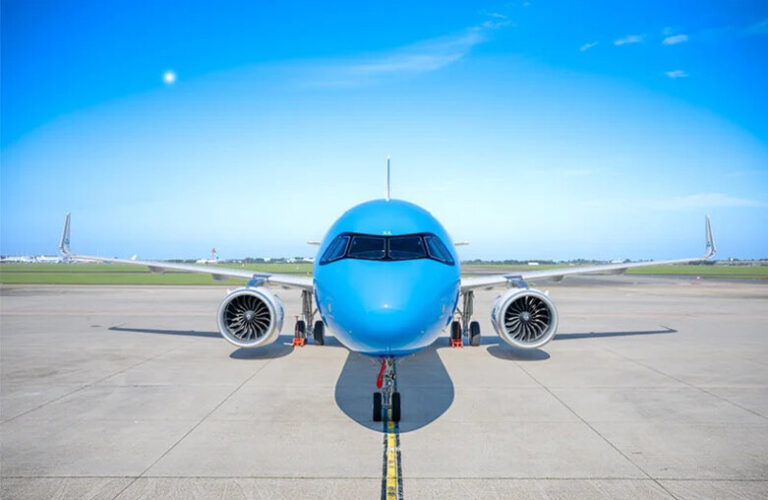
This brand new KLM operated A321neo is one of the 61 cleaner and quieter aircraft lowering the noise level in the vicinity of AMS – courtesy KLM
KLM demands a balanced approach “We expect the Ministry of Infrastructure and Water Management to take the European Commission’s decision to heart and follow the recommendations before implementing capacity restrictions. This way, the sector retains a future perspective while maintaining a balance with the environment, keeping the Netherlands connected to the rest of the world,”argues KLM.
Slot decision could trigger broader consequences Provided the judgessupport the Dutch government’s view in their final slot decision on 28APR25,repercussions by the U.S. administrationand judiciary are expected to follow immediately. American Airlines, Delta Air Lines, FedEx, Jetblue, United Airlines and the integrators FedEx and UPS are also affected by the proposed slot cuts. The U.S. airlines’ argument: the slot reduction is an arbitrary interference in free air traffic between the two traffic regions, as contractually agreed between Washington and Brussels.
Due to its dense route network the dense route network, the Netherlands is one of the best-connected countries in the world. “This is crucial as our economy relies on international trade,” argues KLM. National measures have a direct impact on the position of the airline and the Netherlands, especially now that surrounding countries in Europe are discussing the expansion of their airports. “What is dismantled now cannot be regained,” reasons the airline.
KLM was founded on 07OCT1919. This makes it the oldest commercial airline in the world that is still flying today.
The trade war between the US and China is becoming increasingly bizarre. As a countermeasure against Trump’s tariffs of up to 145% on Chinese exports, Beijing has now instructed its own state airlines to suspend purchases of Boeing-built aircraft and stop buying components from the U.S. aircraft manufacturer. This is exactly what CargoForwarder Global predicted on 06APR: The Trump tariffs are an economic stimulus program for China’s own aviation industry, especially the Comac model series C919.
And the winner of Trump’s China tariff hike is … Shanghai-built COMAC C919
Boeing’s expulsion from China is likely to be an economic stimulus program for the state-owned Chinese aircraft manufacturer COMAC. Unintentionally, the USA is now providing active development aid for the newcomer, especially for its flagship, COMAC C919. This was already predicted by CargoForwarder Global in a report aired on 06APR. The aircraft can accommodate 168 passengers and is able to fly 4,075 km non-stop. This makes the jetliner a serious competitor for the B737 series, but also for the Airbus A320 family. The COMAC management speaks of 820 orders from 28 customers received so far. Supposedly, the numbers will increase quickly.
Stock exchange is not amused Following Beijing government’s announcement of their Boeing boycott, the share price of the manufacturer fell by USD 2.79%. It had already gone south during the past three weeks falling from USD 182 on 25MAR to USD 156 on 15APR. However, the share prices of Chinese airlines also fell notably, as many Boeing variants belong to their fleets. The basic idea of Trump’s tariff policy is to motivate industries to produce in the U.S. and not abroad. What seems to be a smart idea at first glance encounters in practice mounting hurdles demonstrated by Beijing’s embargo of rear earths exports or the EU’s threat to impose hard countermeasures hurting key U.S. products. In the meantime, Trump has exempted the import of electronic products such as smartphones or laptops from the China tariffs, most of which are produced in Chongqing, Chengdu or Zhengzhou.
A policy guided by irrationality Specifically, China’s Boeing boycott is likely to hit the autocrat in the White House hard. After all, this retaliatory move threatens to position the U.S. aircraft manufacturer further behind its European arch-rival Airbus in terms of both sales figures and order volume. At the same time, Beijing’s bold Boeing expulsion is likely to further unsettle the crisis-ridden employees of the U.S. aircraft manufacturer, who were lately confronted with negative headlines such as the crash of two B737 MAXs casing hundreds of victims, the loss of a cabin door during an Alaska Airlines flight and recurring technical defects on many aircraft. These and other mishaps have severely damaged the reputation of the aircraft manufacturer, which the aviation industry once valued for its outstanding reliability and advanced safety architecture.
The support is crumbling In the meantime, Trump’s zig-zagging tariff policy provokes increasing resistance, not least triggered by falling government bonds, the harbingers of a recession, worrying even his hard-core followers. According to Boeing’s 2024 Commercial Market Outlook, China Southern, Air China, Hainan Airlines et alia account for around 20% of the global demand for passenger and freighter newbuilds over the next two decades with roughly 50% made by Boeing. The U.S. airframer could not initially be reached for comment.
Hong Kong stops mail services to the U.S. Meanwhile, the Hong Kong Post Office has announced that it will no longer send shipments by sea to the United States. As of April 27, the airmail service to the United States will also be discontinued. The reason given for this is the “harassing” U.S. tariffs. When sending goods to the U.S., Hong Kongers must be prepared to pay exorbitant fees due to the “unreasonable and tyrannical measures” taken by the U.S., said Hong Kong Post in a statement. Other mail items containing only documents would not be affected.
Last week, the freight division of Frankfurt Airport staged a three-day roadshow at four Indian cities: Mumbai, Hyderabad, Bangalore, and Delhi. The reason for the Fraport manager’s trip is the fast ascent of the southeast Asian country’s economy, which turns it into an increasingly attractive market for air freight.
Through the events, Frankfurt wanted to raise the local actors’ awareness of its role as a central European hub for air freight and demonstrate the airport’s abilities in handling complex cargo processes. Conversely, the better understanding of the complexity of the Indian air freight ecosystem, the customs clearance procedures and the framework conditions for the business was also an important part of the information exchange.
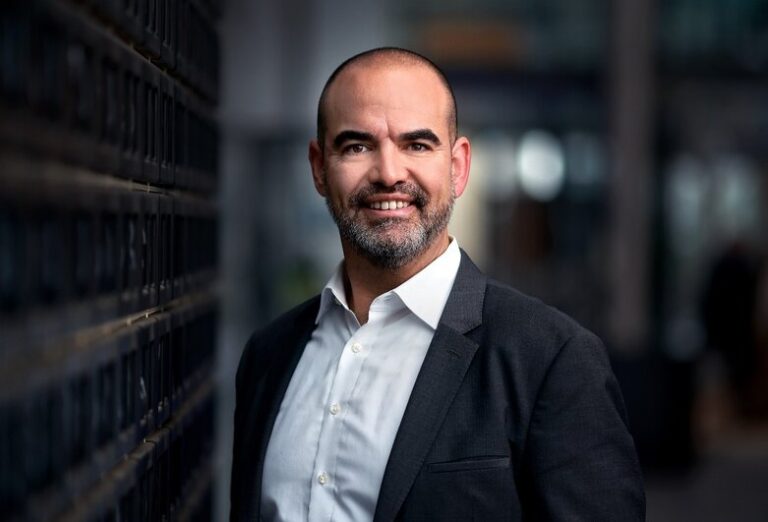
Denis de Farias Duarte heads Fraport’s Cargo Development team since 01JAN25 – courtesy: Fraport.
Deepening the mutual understanding The meetings, including many bilaterals, enabled the Fraport delegation to better understand the current needs and challenges in the Indian market. “This information helps us to better tailor our own services to the requirements of Indian exporters and logistics partners,” stated Denis de Farias Duarte, Vice President Cargo Development at Fraport. This applies in particular to pharmaceuticals which play a leading role in the country, but also to perishable goods, high-tech products and the courier services sectors. These goods are top of the list of goods flown from India to Europe. In the reverse direction, it is machinery, tools, automotive, instruments and, increasingly, airparts. “We were able to see for ourselves and got a better understanding of the air freight market through discussions with our Indian hosts, the great prospects for some of the key products made in India. In Mumbai and Hyderabad, pharmaceuticals and perishables dominate, while the local Bangalore and Delhi economies are strong performers in the high-tech and fashion sectors,” summarizes Denis de Farias Duarte. “India continues to be a critical market for global trade, and we are excited to engage with key players from the region to explore how Frankfurt Airport can further support India’s ambitions in becoming a global logistics powerhouse,” said Simone Schwab, Senior Vice President Aviation & Cargo Development, Frankfurt Airport. She emphasized that the roadshow will not only highlight the airport’s state of the art infrastructure but also underline its commitment to building stronger ties with India’s dynamic cargo ecosystem.
Special cargo is fast outperforming standard goods Similarly, the Indian participants were informed about the broad range of services offered to customers by companies doing business at Frankfurt Airport. More than 250 companies are based there, ensuring smooth cargo flows. Of particular interest to the Indian air freight managers and governemnt officials, was the information on the rapidly growing importance of special products for Frankfurt Airport. Ten of the world’s 20 largest pharmaceutical manufacturers are located within a 250-kilometer radius of Frankfurt Airport. Fraport offers users 22,000 square meters of cool rooms for the handling of temperature-controlled shipments, with differing temperature ranges depending on the respective product segment.
CargoHub Masterplan: FRA’s new USP The presentation of the CargoHub masterplan by the Fraport delegates was probably also new to most of the Indian attendees. Fraport expects air freight volumes of over three million tons to be flown by 2040. This is an increase of around 50% compared to the previous peak in 2021. In order to enable the smooth handling of these volumes, freight forwarding facilities with up to 150,000 square meters of hall space on an area covering 250,000 square meters, are currently being developed and will be available from 2028 onwards. In addition to the development of space and the expansion of the ground infrastructure, Fraport’s master plan highlights the fields of digitalization and process innovation. To round it off: Thee roadshows have shown how important it is to know the specific needs of a market, to respond to the needs of customers and to be in close contact with local companies. These insights will also be useful for future events in other markets, summarized Fraport Cargo in a release.
Air Cargo Europe has been the leading platform for international networking in the air freight industry since 2003. This year, however, together with its sister trade fair, transport logistic, it is taking place under special circumstances. The reason: the tariffs imposed by the Trump administration and their impact on global supply chains. They are likely to be the dominant topic among exhibitors and visitors – including at Air Cargo Europe, which will be held from 02-05JUN25. CargoForwarder Global (CFG) spoke to Robert Schönberger (RS), Global Industry Lead transport logistic & air cargo exhibitions, about this and other current industry issues.
Air Cargo Europe is growing. For the first time, exhibitors will have two halls at their disposal, says Robert Schönberger from the Munich trade fair company. Courtesy: Messe München
CFG: Robert, have the recently announced U.S. tariffs already found their way into the trade fair program of transport logistic / Air Cargo Europe? RS: The recently announced U.S. tariffs are certainly an issue of great importance within the global logistics and air cargo community. While they were not part of the initial planning phase of the trade fair program, we are continuously adapting our content to reflect current developments. Given the potential impact of these tariffs on international supply chains, we are already in discussions with key industry stakeholders and experts to ensure that the issue is addressed – be it through panel discussions, expert forums, or exhibitor presentations. Our goal is to provide a platform, where pressing global trade issues such as these can be analyzed and discussed in real time.
CFG: Besides the tariff issue, what are the major differences this time compared to the 2023 Air Cargo Europe? RS: First, we are proud to announce for the first time ever, we have been successful in allocating two complete halls for exhibitors from the air cargo industry and their customers. This means that the total area has increased to approximately 22,000 square meters or 220,000 square feet of exhibition space. This increase in space is also necessary because the number of exhibitors has grown by 20% compared to the 2023 trade fair. We see this high demand as further proof of the great attractiveness of Air Cargo Europe as an independent event within the transport logistics sector.
CFG: And what exciting topics are on Air Cargo Europe’s agenda? RS: Compared to the previous trade fair, Air Cargo Europe participants will offer attendees four dedicated and highly engaging sessions. In a nutshell, these are the growing influence of AI, cyber threats and phishing attacks, latest sustainability efforts, and steps to protect the digital infrastructure and therefore the supply chain. Our survey of exhibitors and visitors, with over 1,800 responses, showed that the manufacturing industry is very concerned about cybersecurity. At the same time, however, many logistics companies have some catching up to do. That is why we found a certain amount of reluctance. However, electronic interfaces in particular harbor vulnerabilities and gateways for paralyzing the digital infrastructure. Through the panels, we hope to raise awareness of this risk that the transportation industry is increasingly facing.
CFG: Messe München runs a growing number of trade shows, including air cargo fairs, be it in China, Africa, India, Singapore or USA. Are there any spillover effects benefiting Air Cargo Europe in Munich? RS: First and foremost, all of these exhibitions raise the profile of transport logistic & Air Cargo Europe. However, each of the regionally organized trade fairs is initially attractive to interested parties from the respective market environment. At the same time, they motivate exhibitors and trade visitors to take a closer look at the Munich-based transport logistic, which offers a wide range of multimodal topics, from air freight to ocean freight, road and rail services, as well as a large number of presentations on topics such as security, supply chain management, artificial intelligence and more, and is therefore well worth a visit. Our increased internationalization also has another important side effect: it compensates for the decline in exhibitors and visitors whose companies have disappeared from the map due to takeovers, such as Panalpina of Switzerland, the Austrian freight forwarder, cargo-partner or soon DB Schenker, which is being taken over by the Danish company DSV.
CFG: The trade fair management has always been open to suggestions and innovations. How about this format: speed dating. Five or six experts from different air freight sectors and products such as eTrade or pharmaceuticals answer questions from just as many trade journalists. After 15 minutes, the media representatives move on to the next interviewee. This would all take just under two hours, but should provide thematic impetus and lead to closer contacts between the press and industry. Would such a format be conceivable from the trade fair company’s point of view? RS: As you rightly say, we are always open to new suggestions. The question would be who organizes such a speed dating event, because it requires a lot of preparation and coordination. Secondly, most company leaders will probably be busy meeting with customers at their booths and will not be available. But it would be worth a try provided that someone takes responsibility for managing the format.
CFG: Messe München is profitable. Who exactly earns money from transport logistic & Air Cargo Europe? RS: Our trade fairs are a major economic driver for the region: the many visitors dine in restaurants, take taxis, stay in hotels, or book flights to get to Munich. This means that numerous companies and individuals earn money from the events we organize. We at Messe München also benefit – first and foremost as a trade fair organizer. But the money we earn is also needed and reinvested. Our exhibition center is 25 years old, and anyone who owns property knows that this is the point when major modernization work becomes necessary. This is being done step by step. Our company is publicly owned – by the City of Munich and the Free State of Bavaria. If there is a surplus at the end of the year, it is paid out to the shareholders – ultimately benefiting the local population.
CFG: Back to our initial question: Has the tariff conflict triggered by the USA had any impact on the number of participants at transport logistic & Air Cargo Europe so far? RS: We have not seen any changes in booking behavior.
CFG: Thank you for this interview and good luck with the upcoming trade show in early June.
The GSA represents Air Premia in Cambodia and Myanmar. Image: Lemon Queen
Globe Air Cargo Cambodia has been chosen to represent Air Premia in Cambodia and Myanmar as its GSSA. The ECS Group subsidiary will be routing cargo originating in the two countries, via Bangkok (BKK) to major international destinations such as Seoul (ICN)/Korea, Tokyo Narita (NRT)/Japan, and Los Angeles (LAX), San Francisco (SFO), and Newark (EWR) over in the United States. Air Premia operates a Boeing 787 service ex Bangkok, thus providing the market with around 15 to 18 tons of cargo uplift per flight. “Interline connections will ensure efficient cargo feed into the BKK gateway for onward international distribution,” the press release explains. Commodities being exported from Cambodia include ready-made garments and electronic parts. Similarly, Myanmar exports a mix of textiles and agricultural goods. Air Premia expects that its incoming flights will carry perishables – mangoes, in particular. Through its new local GSSA, the airline gains access to ECS Group’s CargoTech suite which offers full digital support when it comes to dynamic pricing, data analytics, booking optimization, and real-time performance tracking. This enables more streamlined processes, enhanced visibility, greater speed and efficiency, which all translate into a better customer experience. For ECS Group, the new contract is fully in line with its expansion strategy – particularly in emerging air cargo markets – and strengthens its Southeast Asian market presence. “This appointment marks another milestone in ECS Group’s mission to deliver flexible, reliable, and sustainable cargo solutions worldwide,” the release concludes. Jean Ceccaldi, CEO of ECS Group, said: “This partnership with Air Premia highlights our ability to deliver agile, market-specific solutions in rapidly growing regions. Our team at Globe Air Cargo Cambodia is fully aligned with Air Premia’s goals, and we are confident of achieving strong commercial results across both markets.” Noor Azizah, Regional VP Asia Pacific (excluding China) at ECS Group, added: “Cambodia and Myanmar are high-potential, export-driven markets. Air Premia’s network gives local customers the long-haul reach they need. We’re excited to unlock new opportunities and further reinforce ECS Group’s footprint in Asia.”
SolitAir CEO & Founder, Hamdi Osman in a new Boeing 737-800. Image Courtesy: SolitAir
Dubai-based cargo airline SolitAir has officially obtained its Air Operator Certificate (AOC) from the UAE’s General Civil Aviation Authority (GCAA), marking a significant milestone in its operational readiness. The certification, governed by stringent UAE Civil Aviation Regulations (CAR) Part V, Chapter 4, required compliance with rigorous safety, financial, and operational standards, and underlines SolitAir’s capabilities in providing safe and reliable logistics. Together with the AOC announcement, the airline also announced the expansion of its fleet, which currently includes three Boeing 737-800 BCF freighters (one under dry lease) and one 737-400 BCF. By the end of this year, SolitAir will have taken delivery of a further four aircraft as it ramps up on its plans of operating a fleet of 20 by 2027. The company also aims to integrate electric aircraft into its network by 2030 as part of its sustainability strategy. The airline founded in 2024 by CEO Hamdi Osman, a former FedEx Express executive, runs a circa 20,500 m² (220,000 ft²) logistics facility at Dubai World Central (DWC). It caters to freight forwarders, integrators, and e-commerce businesses, and aims to offer efficient airport-to-airport logistics, focusing on middle-mile cargo services and connecting Dubai to high-demand trade routes including destinations in the Middle East, Africa, the Indian Subcontinent, and Central Asia. Its fleet is optimized for specialized cargo such as pharmaceuticals, e-commerce shipments, perishables, and hazardous materials. Hamdi A. Osman, Founder & CEO of SolitAir, commented: “Receiving the AOC from the UAE’s competent authority is a testament to our operational excellence and readiness to drive innovation in air cargo transportation. Our focus is on delivering agile, express, reliable and sustainable solutions to bridge the high growth, developing markets of the Global South with Dubai, one of the world’s most sophisticated and hyperconnected trade hubs. SolitAir is instrumental in advancing Dubai’s vision to expand its industrial footprint and solidify its position as a global leader in air cargo transportation. With our cargo operations soon linking Dubai to 50 key markets across Africa, South Asia, Central Asia and the Middle East, we are poised to drive trade efficiency and foster economic growth throughout the Global South.”
“No holds barred” when it comes to belly cargo. Image: WestJet
WestJet Cargo’s belly business did very well in 2024, driven by increased belly cargo demand, network expansion, and digital transformation. The airline reported a 60% year-over-year revenue surge in belly cargo operations, with growth on key routes such as Narita-Calgary and Incheon-Calgary. While phasing out its four dedicated freighters due to operational complexities, WestJet Cargo will focus on expanding belly cargo capacity aligned with its passenger fleet growth. A Block Space Agreement with Virgin Atlantic on the Toronto-London route enhances connectivity to Europe, Africa, the Middle East, and Asia via London Heathrow. The carrier also launched a revamped website and integrated with platforms like cargo.one and CargoAi, streamlining booking, tracking, and product offerings. New services such as Campus’Air for academic and research shipments underscore its commitment to providing efficient solutions to its customers, and it aims to sustain growth through network capacity expansion and partnerships. Julius Mooney, WestJet Director of Commercial Cargo, announced: “As WestJet welcomes more aircraft to its passenger fleet, WestJet Cargo will grow alongside. Supported by a strong logistics and operations team, WestJet Cargo is poised to continue its successful growth in the competitive belly cargo sector.” Kirsten de Bruijn, WestJet Executive Vice President, Cargo, added: “WestJet’s belly cargo business has emerged as a key driver of success for WestJet Cargo, with a 60% year-over-year increase in revenue. We’ve seen strong performance on key routes like Narita-Calgary Incheon-Calgary.” While its belly business is flourishing, the airline’s freighter fleet has been shelved, and Kirsten de Bruijn has announced that she will be leaving WestJet. She explained: “Building out this important growth opportunity for WestJet was very rewarding. Unfortunately, the freighter business came with timing delays and additional complexity that no longer made it the right commitment for WestJet.”
It is an historic achievement for the Czech manufacturer, Primoco UAV, as it is the first drone operator and manufacturer to secure both NATO military certification and European Union Aviation Safety Agency (EASA) civil authorization for its One 150 unmanned aircraft. The dual certification, announced on 17MAR25, follows a rigorous five-year process involving over 170 test flights, 50 ground tests, and 200 technical verifications, positioning the company as a global leader in medium-sized UAV innovation. The One 150 is now the only UAV in its 150 kg class certified under NATO’s STANAG 4703 standard, enabling immediate deployment across member states without country-specific approvals. This certification ensures compliance with stringent airworthiness requirements for shared airspace operations with manned military aircraft, streamlining defense and security missions. With the EASA Light UAS Operator Certificate (LUC) at SAIL III level, Primoco is also authorized to perform urban operations in areas with up to 5,000 people per square kilometer – a figure that surpasses its homebase, Prague’s density of 2,800. This certification supports critical civilian roles, including emergency response during blackouts or natural disasters, and cost-effective calibration of airport navigation systems. The One 150 boasts a 15-hour flight endurance, 30 kg payload capacity, and automated takeoff/landing features. Its dual certification unlocks military reconnaissance, surveillance, and civilian applications like infrastructure monitoring, with a focus on operational safety and cost efficiency compared to manned alternatives. Ladislav Semetkovský, Founder and CEO of Primoco UAV, said: “Nearly 40 engineers, designers, verification experts, and pilot-operators dedicated five years to demonstrating that our aircraft meets the most stringent requirements for operations in shared airspace with manned military aircraft and other certified UAVs. We compiled 28,000 pages of documentation, recorded 500 hours of video footage, and 123 GB of data. This illustrates both the challenge of obtaining this certification and the competitive advantage it provides our company. This certification is the seal of approval for our high-tech level capabilities and ability to meet the highest regulatory standards. Such skills allow us to develop advanced UAV solutions for environments where most unmanned aircraft are prohibited or require complicated exemptions. It also enables us to operate in shared airspace alongside manned aircraft, offering operational versatility.”