Home Blog Page 102

DHL goes electric – possibly

0

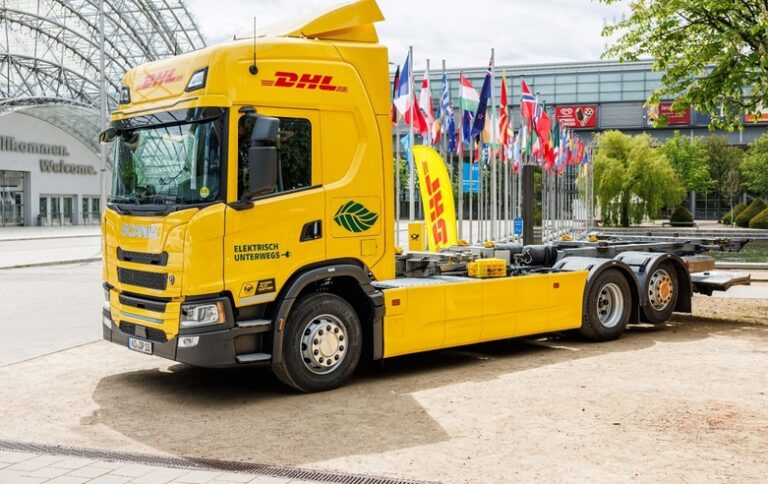
The test drives on the Hamburg-Berlin route lasted exactly 100 days (280+ km), and covered a total of 22,000 km. The trials were carried out using a new Scania-built e-truck which contains a built-in range extender – the only of its kind worldwide. The unique vehicle has now been presented to a specialist audience at the International Transport Forum in Leipzig. It increases the performance reliability of the integrator’s road network. However, Brussels has the last say.

DHL calls it a “bridging technology”. The ‘Extended Range Electric Vehicle’ (EREV), which has now been presented to the public under this unwieldy name, has proven its suitability for everyday use on the above route between Germany’s two largest cities. Scania speaks of a turnkey solution since the vehicle enhances operational flexibility by providing an additional energy reserve when no charging station is available. This increases its usability for operators, in contrast to a fully e-powered truck.
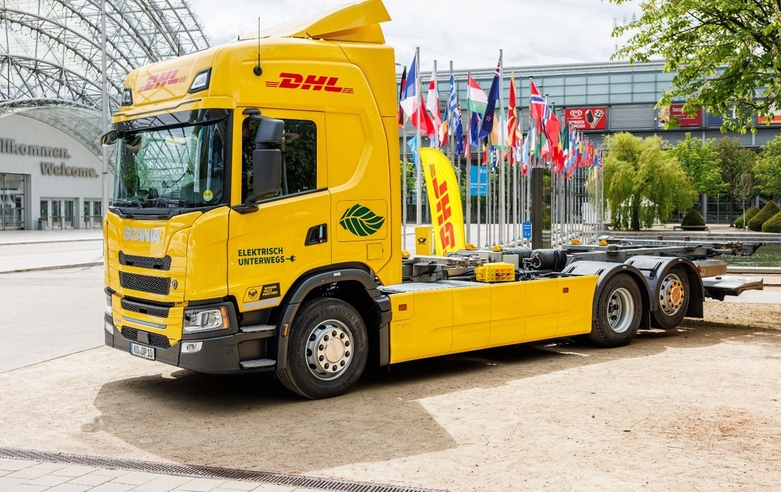
The Scania truck’s utilization by DHL depends on a new emission category to be introduced by the EU, photo: DHL

New CO2 category is needed
EREV represents a novel concept with great potential to support the transition to electrified transport. It saves more than 90% of CO2 emissions compared to a conventional diesel truck, the testing phase has proved. Critics may object that greenhouse gases still account for 10% of emissions. Scania counters the argument by stressing that 10% is an enormous CO2 saving rate compared to common diesel-powered trucks.
However, there are legislative stumbling blocks, as EU law does not currently include an emissions category to which this type of truck can be assigned. Hence, DHL is urging policymakers to introduce an additional emissions class that recognizes proportional CO2 emissions under road toll legislation, based on certified emissions data. This even more since practical tests of the EREV have evidenced that the vehicle’s environmental performance comes close to that of a full electric truck.

Pragmatic concepts are required
That said, DHL expressly welcomes the new German government’s coalition agreement, which includes support for EREVs, as a step in the right direction, and calls for timely implementation in applicable EU regulations.
‘We all, businesses, politics, and society – want fewer emissions through increased e-mobility in freight transport. At the same time, all experts know that the transition to fully electric trucks will take many years, primarily because the grid and charging infrastructures are still inadequate,” Tobias Meyer, CEO of DHL Group, said. Instead of waiting for a perfect technical solution, pragmatic concepts like the EREV are needed, flanked by quick political decisions, he stated. “We want to decarbonize the transport sector now and regulation should not hinder but support us to do so.”

Main novelty: the range extender
Since February, the EREV has been used in DHL’s Post & Parcel Germany division for transport between the parcel centers in Berlin and Hamburg. On colder days or when facing unpredictable charging difficulties (such as charging stations being occupied or malfunctioning) that led to requiring an additional range, the range extender was turned on. It serves as a backup, enabling additional miles. This facilitates reliable route planning – something that is indispensable in logistics.
In the trials, the EREV operated 92% on grid-charged energy, with only 8% of the power provided by the built-in range extender. Going forward, emissions could be further reduced by using fuel from renewable sources such as biodiesel, for the small share of energy provided through the generator.

Next steps
The energy of the 10.5-meter-long truck currently comes from a 416 kWh battery and a fuel-powered 120 kW generator. The next version is expected to feature a larger battery with 520 kWh. The truck’s maximum speed is limited to 89 km/h, and it has a capacity of about 1,000 packages, resembling the volume of a swap body. Additionally, the truck can tow a trailer with another swap body.
Whether DHL will acquire more EREV units depends on the recognition and support of the vehicle in the relevant European and national regulations such as the road toll legislation. The test results have been very positive and promising – the technology is fully ready, and so is DHL, the integrator stresses in a press release. Scania is one of the largest suppliers of heavy trucks in Europe (68.4% of all deliveries) and South America (19.3%). The Swedish company is part of the Volkswagen Group.
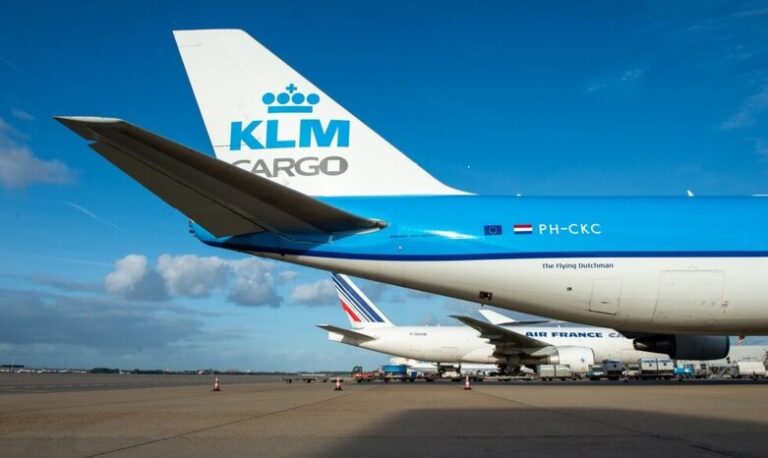
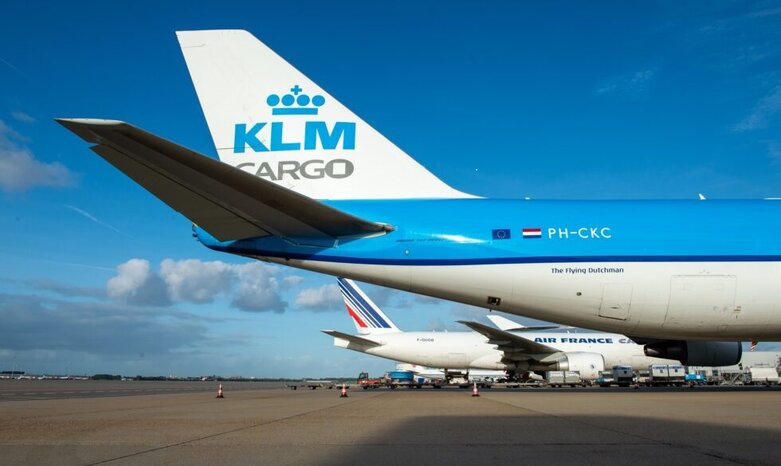
AFKLMP Cargo’s myCargo allows allotment customization

The airline’s customers can manage their business anytime, anywhere. Picture: courtesy KLM Cargo

In response to growing demand for a seamless, flexible, and fully digital cargo experience, Air France KLM Martinair Cargo has added an allotment customization feature to its myCargo platform. This is a “significant update” because it allows customers to have complete control over their allotment bookings. The release speaks of bringing “the autonomy of spot bookings to contracted capacity”.
The company is focused on facilitating the entire cargo experience, it says: “from quotation and booking through to tracking.” In giving authority to customers to customize their allotment bookings so that they meet contractual requirements, does away with manual intervention via a customer service representative, and is therefore a far quicker and more efficient process. The new feature allows users to select their own Air Waybill (AWB) numbers as well as define specific origin and destination points for shipments, ensuring routing requirements are met. Further, detailed cargo and handling information can be entered and shippers designated according to the respective contract terms and agreements. These enhancements deliver substantial benefits – mostly speed and control. Customers gain enhanced flexibility to manage complex contracts, including those involving multiple origins, destinations, or product groups. They are not bound by the limitations of pre-assigned AWBs, since choosing their own means accelerated booking and handling processes. And finally, a fully digital, self-managed booking experience brings convenience and independence. GertJan Roelands, SVP Commercial at Air France KLM Martinair Cargo, stated: “Empowering our customers to manage their business anytime, anywhere lies at the heart of our digital strategy. The new allotment customization option in myCargo is a game-changer, giving users full control over their allocations 24/7. This launch marks a key milestone in our commercial transformation and reaffirms our commitment to customer-centric innovation.”

CargoTech talks of digital capacity win-win for airlines

CargoTech’s Cédric Millet and Michael Teoh. Image: CargoTech

In today’s world with freighter delivery delays, limited capacities and aging fleets, partnerships are more important than ever, says CargoTech. Strategic partnerships can help to ensure that capacities are used more efficiently, since these have become increasingly constrained in the past five years. The lack of capacity is pitted against a massive increase in e-commerce business, but also maintenance, repair, and overhaul (MRO) bottlenecks. CargoTech’s digital solutions offer support to airlines when it comes to analyzing and sourcing available capacity, expanding interline networks, and optimizing space and load factors in real time – particularly since different partners often operate very different digital systems. Its press release illustrates three of its members and their tools: Rotate is first up. Its solution is capable of analyzing different scenarios regarding fleet, network, and partnership strategies. CargoAi’s Interline module enables airlines to cross-book capacities and combine offers from different carriers, simplifying the booking process and ensuring real-time data for all parties. Wiremind’s CARGOSTACK then optimizes all available capacity, manages rates, highlights exceptions, and supports efficient inventory management.
Cédric Millet, President of CargoTech, commented: “Any form of partnership or interline agreement looks good on paper but can pose large operational challenges since often more than one ground handler is involved in addition to the airlines’ own digital systems, and therefore differing software solutions need interfacing. Also, the cargo market seeks long-term capacity stability, and yet airline schedules, negotiations and allotments are usually done on a seasonal basis, which can be difficult to balance. Three points are important when it comes to optimizing available assets and delivering better revenue: smooth digital interaction, easy access to partner capacity, and ensuring optimum use of all available space. Three of our CargoTech members offer precisely those solutions.”
Michael Teoh, Head of Strategy at CargoTech, said: “Capacity optimization requires reliable, real-time information, excellent IT interfacing, and useful scenarios suggestions on which to base quick, commercial decisions. CargoTech delivers the digital framework and human expertise to fully support partnering airlines in maximizing on available capacities in the market. Our aim is an agile, responsive, and profitable air cargo industry – one with a future, despite its current space limitations.”

CEIV Pharma awarded to GSSA for first time: Kales Airline Services

Sebastiaan Scholte (left) and Brendan Sullivan at the certificate handover. Image: Kales

Kales Airline Services announced this week that it is the world’s first General Sales & Service Agent (GSSA) to secure the strict, industry-recognized quality stamp that is the IATA CEIV Pharma certificate. This was awarded for its operations in Italy, Belgium, and Switzerland following a long and structured audit by an independent validator. By achieving this certification, Kales has proven its ability to meet the most rigorous international standards for quality, safety, compliance, and operational efficiency – all crucial steps in a supply chain catering to the pharmaceutical industry, as failure to meet standards can have very costly if not fatal consequences. The GSSA is committed to top-quality handling of temperature-sensitive pharmaceutical shipments and the CEIV Pharma gives peace of mind to customers as they can trust that Kales is compliant, reliable, and understands their requirements and the relevant regulations around pharmaceutical transport. With the ever-increasing volumes of pharma being transported, those companies that can demonstrate their standards will be in a better position when it comes to tenders. How soon will other GSSAs follow?
Sebastiaan Scholte, CEO of Kales Airline Services, commented: “This is an important milestone as the first GSSA ever to certify for CEIV Pharma. Pharmaceutical shipments are increasing, and it is important not only to have the certification, but also the knowledge and the right mindset to handle these shipments properly. We are proud to lead the way in raising the standards for GSSAs globally.” Brendan Sullivan, head of cargo for IATA underlined: “Pharmaceuticals are among the most sensitive and time-critical cargo we transport, and CEIV Pharma helps ensure they are handled to the highest global standards. We congratulate Kales Airline Services on becoming the first GSSA to achieve certification. Their achievement is a notable step that reflects the growing recognition of quality across all parts of the air cargo supply chain.”

PLAY Selects Nordic GSA and Globe Air Cargo France as GSSAs

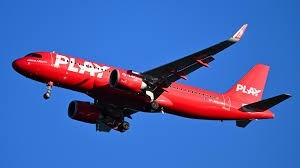
ECS Group subsidiaries to grow PLAY’s cargo business. Image: PLAY

Icelandic low-cost carrier PLAY has chosen ECS Group subsidiaries Globe Air Cargo France and Nordic GSA (Denmark) as its General Sales & Service Agents (GSSAs) for France, Denmark, and additional European markets. They will expand PLAY’s cargo operations using CargoTech digital tools, supporting its fleet of 10 A320neo/A321neo aircraft. PLAY launched in JUN24 and serves 37 destinations in 18 countries across North America, Europe, and Africa. Each flight offers up to 4.5 tons/10 m³ of bulk cargo space for general cargo, aircraft and ship parts, or vegetables. The airline’s Keflavík hub in Iceland connects to Europe, Africa, and North America – an attractive network for ECS Group’s forwarding customers.
Jean Ceccaldi, CEO of ECS Group, said: “Word of mouth is the best business card, especially in a people-centric industry like ours. Globe Air Cargo France and Nordic GSA won the tender for PLAY because of ECS Group’s success with one of PLAY’s partners. Our teams proved that they have the local expertise and advanced digital tools needed to support this new and ambitious leisure airline in building a stable and expanding belly cargo business almost from scratch. Paris Charles de Gaulle is currently PLAY’s leading destination by frequency, followed by Copenhagen, so our teams were a logical geographical choice for European GSSA headquarter operations. ECS Group welcomes PLAY to its customer portfolio and will be following its expansion with great interest.”
Franck Tordjman, Managing Director of Globe Air Cargo France, commented: “The potentials for cargo growth with such a young airline – PLAY began operating just four years ago – are very appealing and Globe Air Cargo is thrilled to be its first French GSSA and to develop a successful network together. We have devised a clear strategy that includes digital process enhancements and a vision to securely place PLAY and Iceland on the map, and fly cargo to and from as many of PLAY’s destinations as possible.” Thomas Frederiksen, Managing Director of Nordic GSA in Denmark, stated: “We already have regular flows of cargo on PLAY flights from Denmark to Tenerife (TFS) and Gran Canaria (LPA) in the Canary Islands. While these are primarily highly popular holiday destinations for passengers, Nordic GSA’s mission is to equally promote opportunities for cargo business on board of PLAY, and to generate excellent baseload revenue for the airline. Not just for these destinations, but also others within its network that may have never seen cargo before. We’re fortunate, as part of ECS Group, to have state-of-the-art digital support at our fingertips when it comes to reading and acting on market trends and establishing new cargo revenue streams.”

Coyne opts for Mondial in Germany

Mondial Airlines Services GmbH wins Coyne Airways’ Germany GSA tender. Image: Coyne Airways

Mondial Airline Services GmbH, a Global GSA Group subsidiary, has secured the GSA contract to represent Coyne Airways in Germany as of 17APR25. The agreement centers on Coyne’s scheduled B767 freighter operations from Frankfurt via Liège to the Caspian region (serving Tbilisi, Georgia, and Yerevan, Armenia), with flexible connections to the Middle East and Africa.
Mondial manages the road feeder services between Frankfurt and Liège for the regular shipments of automotive parts, healthcare products, pharmaceuticals, medical equipment, and foodstuffs. The contract also covers Coyne’s Gulf network, offering access to over 30 destinations across the Middle East and Africa via Sharjah (SHJ) and Dubai (DWC) hubs – including otherwise rarely served destinations such as Kabul (KBL), Baghdad (BGW), Basra (BSR), Erbil (EBL), Sulaimaniyah (ISU), Asmara (ASM), Juba (JUB), and Ndjamena (NDJ).
Larry Coyne, Chief Executive Officer of Coyne Airways, commented: “Local market expertise is the foundation for business success. With its offices in Frankfurt, Dusseldorf, Munich, Stuttgart and Hamburg, and proven sales excellence, we are confident that Mondial will deliver the high quality response times and customer service levels that our customers at Coyne Airways expect and deserve. And, as we continue to expand, Mondial will be able to provide the additional resources necessary to meet the increasing demand for our freighter services to the Caucasus region, the Middle East and Africa.”
Zafer Aggunduz, Chief Commercial Officer, Global GSA Group, said: “To count such an established and unique airline model as Coyne Airways as our latest partner is both an honor and an inspiration for us at Global GSA Group and Mondial Airline Services GmbH, in particular. Our GSA teams across Germany pride themselves in the entrepreneurial spirit, agility and product knowledge required to act as a perfect extension of Coyne Airways in their local markets. We look forward to contributing to Coyne Airways’ continued success.” Aytekin Saray, Chief Executive Officer of Global GSA Group, stated: “Coyne Airways is an outstanding example of how flexibility and reliability can be perfectly in tune. Its service covers the entire spectrum of cargo commodities from pharma to dangerous goods, and connects many of the more challenging and lesser-served destinations, so processes need to be expertly organized and all eventualities considered to ensure the quality expected by its customers. Mondial Airline Services GmbH is always ready to make the seemingly impossible effortlessly possible, in line with its airline partner’s philosophy.”

ATC gains Pfaff as advisor

Florian is back in business, photo: Courtesy ATC

The long-time Lufthansa Cargo executive, J. Florian Pfaff has become external advisor to ATC Aviation Services AG. As an independent consultant operating under the brand J. Florian Pfaff – Aviation Consulting, he will support ATC going forward with his expertise in the general sales agent’s business development. Ingo Zimmer, CEO ATC Aviation Services states: “We are more than happy that Florian is joining forces with ATC. We are confident that his in-depth market knowledge and global network will make a valuable contribution to the continued growth of our activities.” With 35 years of international experience in the air cargo industry, Pfaff a real airfreight veteran.
Throughout his career, he has been responsible for the markets Asia, Germany, Europe, Africa, as well as parts of North and Central America. On 01MAR25 the former Singapore-based head of Asia Pacific exited LH Cargo due to age reasons. Shortly before his retirement, he told CargoForwarder Global that although his career at Lufthansa Cargo was over, his professional activities in the airfreight industry were not. This has now been realized through the partnership with ATC. On the occasion, Pfaff stated: ”I am extremely excited to work with ATC – the leading GSSA worldwide. I look forward to supporting their business and growth.” Frankfurt-based ATC Aviation Services AG is one of the biggest and most experienced GSSAs worldwide. Approximately, 75+ cargo airlines belong to the agent’s overall portfolio. The list includes numerous well-known names like, ANA Cargo, Avianca Cargo, China Airlines, Ethiopian Cargo, Korean Air, Sichuan Airlines, Turkish Airlines, to name but a few. It runs 52 offices in 30 countries.

WestJet Cargo happy with TCE’s customs support

Florian is back in business, photo: Courtesy ATC

WestJet Cargo outsourced its customs processes to TCE on 18NOV24, citing TCE’s resource efficiency and expertise. TCE quickly developed a tailored customs monitoring and reporting solution for all WestJet Cargo’s international movements. Within just six weeks, TCE analyzed workflows, identified optimizations, and established a system for customs messaging, accessing WestJet’s SmartKargo ACMS and CHAMP portals to manage and action all customs communications. It now delivers comprehensive customs reporting, supporting all Advance Cargo Information (ACI) processes, including AMS, ACAS, PLACI, PACT, VUCEM, and ICS2. The dedicated customs team covers three key areas: Monitoring and Documentation (ensuring accurate, compliant data submissions), Reporting and Communication (providing timely updates and liaising with stakeholders), and Investigation and Corrective Action (analyzing penalties, investigating causes, and managing appeals). WestJet has already noticed reduced fixed costs, optimized resource use, and improved customer service.
Sarah Scheibe, Managing Director of TCE, described: “We tailored a bespoke solution for WestJet Cargo that aligns with the airline’s unique requirements and system configurations, ensuring seamless messaging synchronization. Following the setup phase, we conducted trial runs in a test environment to identify and address any potential gaps before going live shortly after these were successfully completed. We now have a dedicated TCE WestJet Cargo customs monitoring team in operation 24/7, with two main targets: to manage and maximize customs compliance, and to minimize customs fines.” Julius Mooney, Director – Cargo Commercial at WestJet Cargo, explained that the decision to outsource customs processes, to alleviate pressure on its Operations Control Center and allow them to focus on core responsibilities, had been taken in NOV24: “Given the increasing complexity the air cargo industry has seen in this area over the past four months, our decision could not have come at a better time. Customs training and understanding are a challenge for any airline as the rules often change and we are constantly working against the clock to ensure that our aircraft leave as scheduled, with all cargo correctly and safely declared and stowed on board. […] Judging by the money we have saved so far in customs fines, by the end of this year, we could be looking at having to pay out less than a fifth of what was paid in 2024. They say ‘money talks’: I can’t think of a better example to prove TCE’s efficiency and expertise, and would like to thank Sarah Scheibe and her amazing team, at this point. As far as I am concerned, the C in TCE stands for Total Customs Expertise – which I can ‘declare’ to be a total success for WestJet Cargo.”

Spotlight on… Nicole Moraes Sarno, Head of Freighter Marketing, Embraer Commercial Aviation

Every Sunday, CargoForwarder Global’s ‘Spotlight On…’ showcases a different element of the air cargo industry to illustrate the many diverse career options it provides. There is no air cargo without aircraft and, with e-commerce on the rise, demand for flexible and efficient regional aircraft is also increasing. Embraer, widely recognized for its E-Jet family, expanded its presence in the air cargo sector three years ago when it announced full freighter conversion programs of its popular E190 and E195 passenger jets. The E190F has since been tested and certified by major aviation authorities, and is now ramping up for commercial deliveries. This week, Nicole Moraes Sarno, Head of Freighter Marketing at Embraer Commercial Aviation, takes us through her responsibilities and shares her thoughts on the industry.

Enjoying the mix of technical, creative and interpersonal skills. Image: Nicole Sarno

CFG: What is your current function and company? And what are your responsibilities?
NS: Head of Freighter Marketing at Embraer Commercial Aviation. My activities range from market analysis, product development and marketing strategy to interactions with customers.

CFG: What does a normal day look like for you?
NS: When I work from home, my job is spent in analytical activities and online meetings.
At the company, I’m always close to the jets and also make the most of my time by meeting with the team in person. During my corporate travels, it is always very busy, with many hours spent at airports, events and dinners.

CFG: How long have you been in the air cargo industry, and what brought you to it?
NS: I started in aviation when I joined Embraer in 2018, but the last couple of years has been a steep learning curve into the air cargo industry. Embraer launched the Passenger-To-Service conversion program in 2022, and I joined Product Strategy at that time. Since then, I have had the opportunity to be involved in the whole E-Freighter development cycle.

CFG: What do you enjoy most about your job?
NS: It is a great opportunity to make the most of my skills. As an engineer by training, I get to be very technical if needed, but at the same time, I get to use my creative side and personal skills to go and talk to people around the world and learn about their cultures.

CFG: What do you see as the greatest challenges in our industry?
NS: Air cargo is a fundamental part of global trade and our daily lives. It is a vital service that provides aid relief, food, medicines, machinery and much more. This industry is challenged every day with thousands of different goods being transported worldwide, which have to arrive in time and at a competitive price.
Despite its resilience, air cargo is also being challenged by the lack of innovation, so much can still be done such as the digitalization of its systems and better integrations, as well as taking the opportunity to optimize fleets with more modern and sustainable aircraft.

CFG: What advice would you give to people looking to enter into the air cargo industry? Any particular training they should aim for?
NS: This industry is highly integrated and complex, filled with many different opportunities, whether you are working with airlines, OEMs, freight forwarders, airports, ground handling, logistics, and so on. The first step is to understand well how the ecosystem works. Doing that will help anyone to navigate this industry and find the right opportunity.

CFG: If the air cargo industry were a film/book, what would its title be?
NS: This question reminded me of a book I love, called “World Without End”. It tells the history of very resilient people, like the people that work in this industry. There is no end or distance to where this industry wouldn’t go to deliver goods to people.

Thank you, Nicole!


If you would like to share your personal air cargo story with our CargoForwarder Global readers, feel free to send your answers to the above questions to cargoforwarderglobal@kopfpilot.at We look forward to shining a spotlight on your job area, views, and experiences.

QCS grows from big to bigger

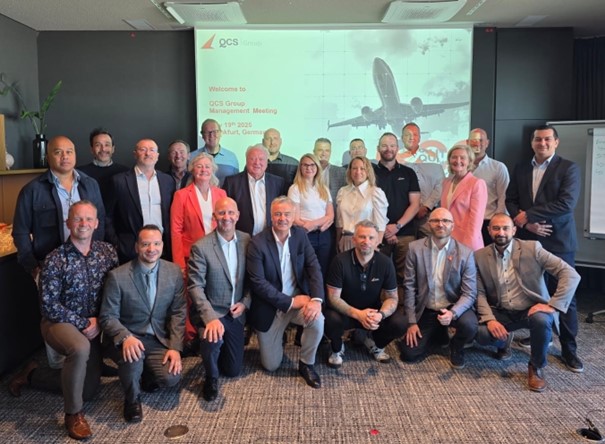
Frankfurt Airport has something to look forward to. The logistics company, Quick Cargo Service (QCS) is planning to consolidate cargo shipments there, in future, and set up its first air freight hub. This was announced at the company’s annual meeting in Frankfurt last week, which was attended by representatives from all stations.

The forthcoming move is the result of the agent’s Europe-wide expansion, which includes 35 stations in 15 countries. Meanwhile, QCS, founded 1974 by Dieter Haltmayer, has become the third-largest family-owned logistics service provider in Europe. Further branches are being planned.

Annual meeting of the Haltmayer’s with their country managers  –  courtesy: QCS

Truck shuttles
According to QCS management, all stations in Europe will contribute air freight shipments to the upcoming consol services. The service will be kicked off very soon with road feeder shuttles between Bratislava, Slovakia, and Rhine-Main Airport. Further routes will soon be added to the network, announced CEO and Managing Director, Stephan Haltmayer. Due to the company’s recent expansion and the resulting increase in market presence, the decision to offer consolidation services was almost an inevitable consequence, said the manager. QCS plans to hire sub-contractors to carry out the operational business, instead of investing in its own trucking fleet.

Black figures
However, another aspect is more important to QCS than the number of offices: “All stations were in the black in Q1/2025,” said Stephan Haltmayer. And his father, Dieter Haltmayer, added: “Thanks to our expansion in Europe, we have not only created and maintained jobs in our core German market, but also in a large number of countries between Romania and the UK.” The logistics specialist is benefiting from near-shoring, i.e. the relocation of production from China to countries such as Mexico, Vietnam, Indonesia or the Eastern European region. “We recognized this trend early on and initiated a European expansion accordingly,” stated Stephan Haltmayer.

Decentralized sales concept
New nodes recently added to the existing network, are branches in Italy, Bulgaria, Austria, and the UK. In London, for example, QCS runs its own business after splitting from its former franchise partner. And local staff in Berlin moved into a larger office in the very spacious Segro Logistics Park, which is located 2 km from BER Airport.
Each station must set up its own sales department, is the Frankfurt-based management’s guideline. The Bratislava branch, under the guidance of Lubos Lukác, CCO QCS Group and Regional Managing Director Central Eastern Europe, is responsible for managing and evaluating data flows.

New product
In addition, Lubos also manages the new air freight product, ‘Time Definite’, for which 3 employees have been hired. “We will offer this transportation service to the market 24/7/365,” Lubos explained. It complements the product portfolio which includes a wide range of services such as Express Shipments, Temperature-Controlled air freight, Dangerous Goods Transports, Charter Flight solutions, customs clearance services or shipment tracking. According to Stephan Haltmayer, air freight accounts for 60% of sales, followed by Ocean Freight, Handling Services and Customs Clearing. Come 2026, the network will be further extended, the executive told CargoForwarder Global. Branches are then to be established in Belgium and France. However, he made it clear that France is a special candidate for any investor, due to official regulations. “But we are optimistic that we will soon be able to offer our logistics services to the market there, too,” he concluded.