Home Blog Page 103

Hapag-Lloyd presents mixed annual result

0

The good news first: In fiscal 2024, the shipping company achieved the third-best result in its 178-year history. The transport volume increased by 4.6% to a total of 12.4 million TEU (2023: 11.9 million). And the punctuality rate of its own fleet of 300 vessels rose to an impressive 88%, which is just below the proclaimed target of 90%. Critically from the Group’s perspective, however, is that profit fell by around 20% year-on-year to USD 2.6 billion. Management estimates EBITDA for 2025 to vary between EUR 2.4 and 3.9 billion. Regarding EBIT, Hapag-Lloyd expects a maximum of EUR 1.5 billion.

During the presentation of the annual results at the company’s headquarters in Hamburg, CEO Rolf Habben Jansen forecasted an increase in transport volumes of 4% to 4.5% for 2025, as indicated by the strong growth in Q1, 2025. However, management warned that the full-year result is likely to be significantly lower than in the previous year, due to volatile freight rates and the growing challenge posed by looming geopolitical risks. “The economic and geopolitical environment remains fragile. Against this backdrop, we expect earnings in 2025 to be lower than in 2024,” the CEO stated.

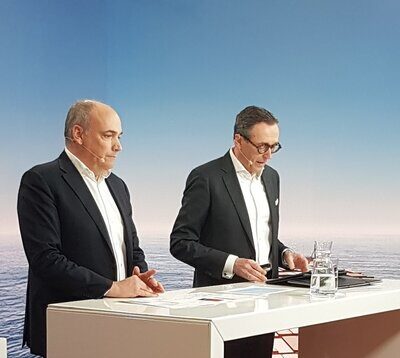
CEO Rolf Habben Jansen (left) and CFO Mark Frese presented the 2004 results of the Hapag-Lloyd Group  –  photo: CFG/hs

Challenges will tend to increase in 2025
The crisis in the Red Sea in particular, triggered by the hostile shelling of merchant ships by the Yemeni Houthi regime, continues to have a negative impact on container shipping. Due to the risk to vessels and crews, the major shipping lines continue to avoid the Suez Canal, instead bypassing Africa on their voyages between the Far East and Europe. This extends transport times by 10 to 12 days, which increases costs and pushes freight rates up.
CFO Mark Frese stated that in fiscal 2025, EBITDA is estimated at EUR 2.4 to 3.9 billion, compared to EUR 4.6 billion in 2024. EBIT is expected to be somewhere between zero and EUR 1.5 billion, vs. EUR 2.6 billion in the previous year.
Habben Jansen warned that the financial forecast is subject to considerable uncertainty due to fluctuating freight rates and major geopolitical hiccups. In view of these circumstances, investors could expect further pressure on the revenue, despite the attractive long-term prospects for the box carrier.  

Hub strategy
When asked about Trump’s threats to levy high fines on shipping companies with Chinese-built cargo vessels in their fleets should they call a U.S. port, the executive reacted very coolly, saying: “We will wait and see what comes out of it at the end.” At the same time, he confirmed routing adjustments as a result of the “Gemini” cooperation agreed with Maersk, which runs since 01FEB25. This had got off to a good start, as evidenced by the significant improvements in punctuality rates, he lauded. He added to this that Hapag-Lloyd will only deploy its own large vessels with a loading capacity of 23,000+ TEU in easy to reach maritime hubs such as Rotterdam, Antwerp, Wilhelmshaven and Bremerhaven.
From there, goods destined for other destinations, such as Scandinavia or the Baltic states, will be transported onwards by feeder ships but their number will be reduced to secure schedule reliability. This strategy also affects the carrier’s home port Hamburg, which consequently could lose between 10% and 15% of its Hapag-Lloyd shipped cargo volume to the north range ports of Wilhelmshaven and Bremerhaven.

Terminal unit is expanding
The Rotterdam-based subsidiary, Hanseatic Global Terminals, which has been in existence since JUN23, is driven by solid growth, but is still in the ramp-up phase. Currently, the infrastructure division manages the operation of 21 marine terminals, with more to follow, Hapag-Lloyd’s CEO announced. “We concentrate on assets that we can control ourselves,” said Habben Jansen at the annual press conference, illustrating the liner’s acquisition strategy.

Spotlight on… Yulia Celetaria, Senior Vice President, CargoCrew GSSA

0

CargoForwarder Global’s ‘Spotlight On…’ series showcases the huge choice of careers within the air cargo industry. And anyone starting out in one corner of the industry and then transitioning to another, is able to draw on experience and different perspectives – two factors are invaluable when it comes to performing air cargo services on behalf of different companies – such as in the case of a General Sales and Service Agent (GSSA). Yulia Celetaria, Senior Vice President at CargoCrew GSSA, shows us her responsibilities, and shares experience and advice on joining the industry.

The closer to the ‘metal’, the greater the stress! Image: Yulia Celetaria

CFG: What is your current function and company? And what are your responsibilities?

YC: In the current role as Senior Vice President at CargoCrew GSSA, I oversee the strategic direction and overall operations of our global network of air cargo services. My responsibilities include managing key client relationships, optimizing cargo operations, ensuring compliance with industry standards and regulations, and leading the team to execute high-quality service delivery. I work closely with airlines, freight forwarders, and other stakeholders to drive growth, efficiency, and innovation across our services. Additionally, my responsibility is expanding our market presence and exploring new business opportunities in the air cargo sector.

CFG: What does a normal day look like for you?

YC: I’m sure everyone in the aviation industry would answer this question similarly, but in aviation, there is no such thing as a ‘normal’ day. With my background in the cargo airline sector, followed by experience in the pharmaceutical industry, and now transitioning into the GSSA segment, I’ve come to realize that the closer you are to the ‘metal’ – the planes – the more stress and troubleshooting you face.
In my current role, my days are typically filled with engaging with stakeholders, understanding their needs, and building solid relationships. I also spend a lot of time refining our existing approaches to ensure we’re meeting the ever-evolving demands of the market. A significant portion of my day is spent in meetings – whether it’s discussing strategies with my leadership team, negotiating with airline partners, or working with clients to explore new opportunities. While troubleshooting is a constant part of my role, it’s the fast-paced, hands-on nature of the work that makes it both challenging and rewarding.

CFG: How long have you been in the air cargo industry, and what brought you to it?

YC: I’ve been in the air cargo industry for over 17 years, and my entry into it was actually quite random. After graduating from university, I sent out my resume and ended up landing a role at AirBridgeCargo Airlines. At the time, I had no idea this would be the industry I’d stick with, but as they say, “once an airliner, always an airliner.”
For me, this ‘airliner DNA’ has been a constant throughout my career. It’s the unique approach that comes from having an airline mindset—the pace, the precision, the drive to ensure everything runs smoothly under tight time constraints. It’s not just about moving cargo; it’s about delivering on promises, ensuring reliability, and adapting quickly to challenges. Whether I was working directly at the airline or later transitioning to the shipper’s side, that ingrained sense of urgency and focus on quality service has remained with me. Starting as a Customer Service agent, I had the chance to grow within the company, eventually becoming the Director of Healthcare and Humanitarian for the entire group of companies. This journey has shaped my deep passion for air cargo, and the ‘airliner DNA’ continues to guide me as I navigate the industry.

CFG: What do you enjoy most about your job?

YC: The GSSA role is a relatively new setup for me, and what I enjoy most is the opportunity to learn the nuances of this side of the air cargo industry. I’m enjoying the challenge of refining strategies, optimizing operations, and building new business opportunities. I also have the chance to leverage my cargo airline experience to shape the GSSA product, bringing a fresh perspective and enhancing the services we offer by integrating the operational insights and efficiency I’ve gained over the years.

CFG: What do you see as the greatest challenges in our industry?

YC: It’s probably balancing the increasing demand for faster, more efficient services with the need for safety and compliance on one side of the supply chain. On the other side, fragmented data access hinders the industry’s ability to achieve full visibility, making it difficult to optimize operations and maintain seamless service. Addressing these issues while keeping up with evolving customer expectations will be key moving forward.

CFG: What advice would you give to people looking to enter into the air cargo industry? Any particular training they should aim for?

YC: There are multiple training options available, like IATA courses or in-house programs, which are certainly valuable. However, they can never replace live, hands-on experience. The best way to learn is through practical, real-world exposure. If you start at an airline – especially a cargo airline – make sure to go outside to the ramp and observe how load masters and ground crews work (regardless if you are joining as a customer service, sales or revenue management). Seeing the operations up close gives you a much deeper understanding of the complexities of air cargo and will give you an invaluable perspective that training alone can’t provide.

CFG: If the air cargo industry were a film/book, what would its title be?

YC: “Fast & Furious & Slightly Chaotic!”

Many thanks for your answers, Yulia!


If you would like to share your personal air cargo story with our CargoForwarder Global readers, feel free to send your answers to the above questions to cargoforwarderglobal@kopfpilot.at We look forward to shining a spotlight on your job area, views, and experiences.

Nominate leading women in air cargo

0

The world has just seen its 114th International Women’s Day take place on 08MAR25, and CargoForwarder Global (CFG) congratulates all those companies and individuals truly upholding and ensuring equal opportunities and equal pay*. The fact remains however, that on the face of things if you take any random panel setup at most air cargo conferences, women are still the minority, worst case: non-existent. Yet, there are many women out there shaping the future of our industry and leading by example. And our industry needs more of them. Hence, the CAAS/Eva International “Top 100 Women in Air Cargo” initiative, and CFG’s call for nominees.

Open up LinkedIn and it is, on the one hand, encouraging to see ever-improving creative and educational coverage of efforts to ensure equal pay, equal opportunities, fair representation and role models in all walks of career life. On the other hand, the destruction and negativity that the Trump administration has attached to DEI (Diversity, Equity and Inclusion) programs, the false accusations that these are to blame for recent aviation accidents, along with the highly worrying U.S. cancel culture that is taking place where references to women, people of color, or LGBTQ have systematically been removed from digital archives, and – worse still – many people have been made redundant under the thin guise of “efficiency”, has made it more important than ever to ensure correct narrative.

Shedding a spotlight on the many women defining air cargo. Image: CAAS Int

Not DEI, but gender imbalance is detrimental
DEI is certainly not to blame for any shortcomings in any company. If anything, statistics will prove to you that the greater the diversity within a company, the better the commercial output and the healthier and more resilient the company culture. IATA’s own 25by2025 (minimum 25% female employees by 2025) initiative, [sparked by the male CEO of Air New Zealand, who after winning the Diversity & Inclusion Team in 2019, asked the predominantly male audience and IATA “How can we do more to change the gender balance in our industry?”], showcases some of those statistics:
https://www.iata.org/contentassets/cd7f1170cbf447c7824f63e8d138e5d0/gender-in-aviation-final.pdf (It will be interesting to see how many of the 261 signatory companies will have achieved their goals this deadline year.)
Do away with DEI programs, and Unconscious Bias is given free rein – which ensures far from fair outcomes, however blue-eyed (pun cynically intended) the intention may be.

Let’s get Air Cargo Specific
IATA’s 25by2025 is a welcome move – as is ICAO’s longer-standing Gender Equality Resolution which aims to have 50/50 male/female industry representation by 2030. Yet, we really need something air cargo specific to increase the number of women in our historically highly male-dominated industry. The greater the visibility of women as aspiring role models, the better the chance we have of attracting new talent. As they say, “You can’t be what you can’t see!”
Earlier this year, I came across Matthew Higa’s initiative ‘TOP 100 Women in Aerospace & Aviation to Follow on LinkedIn 2025’, and shared his post on my LinkedIn page, openly wondering if we could have an equivalent ‘Top 100 Women in Air Cargo’. (After all: copy with pride, when it comes to great ideas!)
Eva International’s Parveen Raja immediately took up the challenge and Cargo Airports & Airline Services soon published a cargo-focused nomination page.

Nominate air cargo’s inspiring women
Our aim with the Top 100 Women in Air Cargo initiative, is to acknowledge and celebrate women throughout the year, not just on International Women’s Day. We want to recognize the remarkable contributions women make to the air cargo industry, showcasing their leadership, innovation, and dedication. We want to share inspiring stories and spotlight those influential trailblazers driving meaningful change within the industry.
CAAS will be publishing a Top 100 Women in Air Cargo supplement with information on all the nominees, and CargoForwarder Global will continue to ‘Spotlight On…’ inspiring individuals in its weekly column. With the industry facing skilled labor shortages, you have more than just one reason to inspire and encourage the next generation to join the air cargo sector by nominating those women who serve as role models in air cargo.

Click on the link and nominate now!
You have until 30JUL25 to nominate women in our industry who do a fantastic job, who pioneer innovation and industry change, who mentor, encourage and motivate. Click on the link NOW and let us know who inspires you! (There are no limits to the number of women you can nominate).
To honor these outstanding women and celebrate their achievements, Eva International will also host an exclusive awards ceremony at the ACHL 2025, which takes place 14-16OCT25, at the Clarion Hotel Copenhagen Airport. We look forward to your nominations!


*That official date was finally adopted in 1921, a decade after the first International Women’s Day on 19MAR11. International Men’s Day, by the way, is on 19NOV25.

** Is your company one of those? Care to tell CargoForwarder Global more and showcase what your company does? Write to cargoforwarderglobal@kopfpilot.at

Stargo: Pushing Data to the Limits of Innovation

Stargo, based in Israel, is remodeling the landscape of data optimization with its novel platform, Stardox. The company is dedicated to transforming unstructured and semi-structured data – such as information sourced directly from email inboxes – into structured, actionable insights, catering to a wide range of use cases in procurement, sales, operations, finance, compliance, and beyond. CargoForwarder Global met CEO, Joel Sellam and board member, Daniel Clayman during their joint business trip to Hamburg.

Daniel Clayman (left) and Joel Sellam  photo: CFG/ak

Mastering Data Optimization with Stardox
Stargo’s Stardox solution is specifically designed to tackle the complexities of data management, CEO Sellam explains. By emphasizing pricing automation, data security, and seamless integrations, Stardox has enabled the data manager to achieve an impressive 70% year-on-year growth, solidifying its place among the leading providers of data-driven business solutions.

AI-Powered Pricing: Redefining Business Strategies
At the heart of Stardox is an AI-driven pricing model that streamlines how businesses approach pricing strategies. Leveraging large language models (LLMs), Stargo automates the procurement, pricing and booking process, significantly reducing manual workloads and enhancing speed in client responses. Board member, Daniel Clayman articulates this vision: “Our solution is designed to enhance efficiency by automating intricate processes, giving clients quicker access to pricing proposals.” This approach has resulted in a notable 30% conversion rate for booking offers, showcasing the platform’s effectiveness in improving operational outcomes, illustrates the executive.

He adds to this that the ability of Stardox to process diverse data formats ensures that businesses from various sectors can fully harness its capabilities, driving substantial productivity gains.

Robust Data Security: Safeguarding Business Integrity
In an era where data security is paramount, Stargo prioritizes the protection and integrity of its clients’ information, assures management. This is achieved through a robust cloud storage solution that features nine layers of security. CEO Joel Sellam illustrates: “We’ve designed our cloud storage with rigorous protection measures to secure customer data. Our systems not only ensure safety but also possess exceptional AI computing power.”

According to Sellam, Stargo’s integrations with leading platforms like Cargowise and Web Cargo, facilitate smooth operational workflows, demonstrating the platform’s adaptability across various industries. Looking ahead, the company is exploring API integrations and plans to incorporate voice analysis capabilities, further innovating how data can be utilized within booking and pricing frameworks, he forecasts.

A Vision Beyond Freight Logistics & Supply chain
While Stargo has made significant strides in the freight industry, its expansion ambitions are vast. Currently, diversifying into industries such as FinTech and Insurtech, Stargo aims to broaden its customer base and influence. With a strong track record of 30% conversion rates in air freight bookings, the company is confident in its ability to address the pressing need for modernization in logistical systems.

Joel Sellam notes: “We’re focusing on the entire freight industry, given the industry’s urgent need for innovative solutions.” While customers from the air freight industry dominate, Stargo is also increasingly involved in the ocean freight sector. “Our technology is poised to bridge critical gaps in maritime transport, enhancing efficiency through intelligent data processing,” states the executive.

With USD 40 million raised in investments over the past six years, Stargo management feels well-equipped to scale the company’s operations and continuously develop its platform to meet diverse industry demands.

Join the Journey: Pushing Data to New Heights
Currently, the company concentrates on refining its technology and expanding its services to capture a seat in the first row when it comes to data optimization and AI innovation across multiple industrial sectors.

Focused on rapid expansion into Western Europe and North America, the company plans to establish a new office in Frankfurt this April, followed by a subsequent location in Delaware, USA. “Our future looks bright as we continue to innovate and enhance our offerings,” CEO Selam summarizes Stargo’s outlook.

Exclusive – BRU kicks off PTLG project

0

Brussels Airport is a key partner in a project for the development of a standardized Precision Therapy Logistics Gateway (PTLG). Over the weeks to come, trial consignments will be forwarded from Brussels to Dallas.

The first consignment was sent off from the Science Park University of Antwerp – courtesy: POM Antwerp

The project was initialized by Pharma.Aero and developed by Air Cargo Belgium, Brussels Airport Company (BAC) and at.las ATMP, a platform for the development of advanced therapies. “This is a further step in advanced pharma and healthcare logistics,” says Pharma.Aero Secretary-General, Frank Van Gelder. “It is being developed for therapies linked to malign diseases.”
Diseases such as cancer and the like are increasingly becoming dependent on personalized specialized treatments. This poses tremendous challenges on the logistics side, notes Mr. Van Gelder. “First of all, there is temperature integrity, putting high demands on packaging. Furthermore, there is a huge time-critical factor, sometimes of a few days only. The consignments also have to be defined as ‘unique’. You cannot afford them being stuck at Customs.”

Frank Van Gelder, Secretary-General of Pharma.Aero – credit: Pharma.Aero

Trials
Van Gelder stresses that, as the volumes are very small, no full freighters will be needed. “We need a very reactive network – of narrowbodies mostly. From the airline that will demand solid network control; from the airport, a center or platform of expertise, operational 24/7 and 365 days a year. The degree of expertise must be significant, and the consignments have to be monitored permanently through a control tower.”
In a first phase, Pharma.Aero set out the framework for the project. Today, in the second phase, 162 (3 x 54 shipments) consignments are being tested and flown between The Science Park University of Antwerp in the Antwerp suburb, Niel, and Biolabs, Pegasus Park in Dallas. The Antwerp Science Park, which houses various companies involved in cell and gene therapy, is close to Brussels Airport. The project is financially supported by the Belgian provinces of Antwerp and Flemish Brabant.
The products sent through the trials are genuine, says Frank Van Gelder. “Otherwise, we would not be able to test their condition and where deviation may have occurred. The products are tested in both locations, not on the quality level however, but they will not be used on patients. The results of these trials will be mapped to ascertain where things go both well and wrong. There will be no finger pointing. The aim is to uncover the obstacles and put them right.”
Apart from the air leg, the second phase also concentrates on the logistic challenges door-to-door. Eventually, the trials are supposed to provide a basis for the creation of both a standardized protocol and an internationally recognized label.
A pharma corridor was set up years ago between Brussels Airport and Dallas Fort Worth, within the framework of the IATA CEIV Pharma concept. Frank Van Gelder: “So, the connection is already there. Another corridor may be Brussels to Abu Dhabi, which has excellent connections to the Far East as well as Africa.”

Transfer needed
The fact that, at the moment, there are no direct flights between Brussels and Dallas, is not much of a problem, says Mr Van Gelder. “We transfer in Frankfurt or somewhere in the U.S. The impact of this transshipment will also be checked in the trials.”
‘Air Cargo Belgium is also in the lead of the project, says the umbrella organization’s Director, Freek De Witte. “We will study protocols, standard operating procedures and a specific code for these products. Together with Brussels Airport Company, we look into the feasibility of a dedicated facility not unlike the existing Animal Care and Inspection Centre.”

Freeing up space
Unrelated to this project, BAC has also begun the demolition of the former Schenker premises at Brucargo East. According to BAC, the space will be developed into new facilities, but so far, the plans are not yet concrete.

CMA CGM puts out its feelers towards Air Belgium Cargo

0

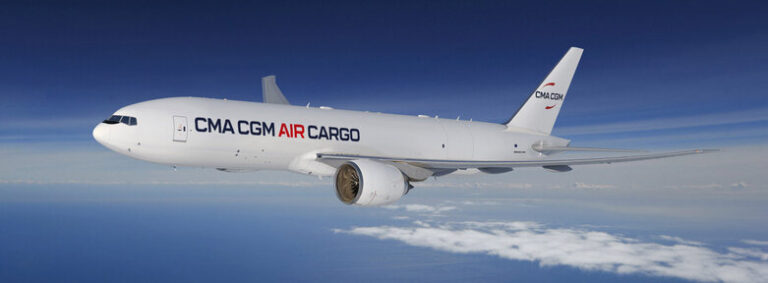
The Marseille-based logistics heavyweight has filed a bid to acquire Air Belgium’s cargo unit. Its advance follows the decision of a Belgian court that turned down the bid of Dutch Group Air One International Holdings and Peso Aviation headed by Dutch entrepreneur, Peter Scholten. According to local sources, the Walloon Brabant Business Court will review CMA CGM’s proposal on 27MAR25. It can be assumed that CMA CGM will emerge as the winner of the bidding competition.

Air Belgium Cargo’s freighters will probably soon be flying in the colors of CMA CGM – photo: company courtesy

CMA CGM confirmed that it has submitted its bid to the Enterprise Court of Brussels. It therein focuses solely on the Belgian carrier’s cargo activities, including its aircraft. The step comes after the 06MAR25 ruling of the Nivelles Business Court that had revoked Air One Belgium’s bid to take over the ailing Belgian carrier. Right after the ruling, the Netherlands-based Air One consortium lodged an objection questioning the court decision. On this occasion, the competent court has scheduled a hearing, which will take place in two weeks.  

CMA CGM offers attractive conditions, observers say
According to local sources, CMA CGM’s bid includes the takeover of Air Belgium’s cargo unit and operations. Secondly, it guarantees the retention of the Belgian carrier’s name and brand. And finally, it includes the integration of Air Belgium’s four freighter aircraft into its own freighter fleet of four units (one A330-200F, three B777F), thus doubling its transport capacity.   

In case CMA CGM wins the bid, it is unclear how many of the current 400 employees will be taken on by the French group. Bidder Air One Belgium had promised to retain almost 200 jobs. However, 130 employees were laid off weeks ago due to the airline’s grave financial problems.

Next steps
The hearing scheduled for 27MAR25, will only take a preliminary decision on the fate of Air Belgium’s cargo division. This is followed by a court ruling on 03APR25, when the judges will decide on Air One Belgium’s appeal. According to people close to the case, Peter Scholten’s legal objection has little chance of success.

Scholte had offered EUR 800,000 for the takeover of a controlling stake of 51% of the carrier. A bargain at first glance. Yet, the company is heavily indebted and the aircraft, two A330-200P2Fs and two B747-8Fs, are leased. Should cargo veteran Scholten, who has held leading positions at Martinair and Saudia Cargo, be out of the game, he still has a second professional mainstay: adventure tours with SUVs in Oman, Kenya, and Central Asia.

So far, the founder of Air Belgium, former TNT executive, Nicky Terzakis, still has a small hope of regaining control. The court has given him three weeks to find new investors to rescue the ailing airline. However, there are currently no signs that he will succeed.

HACTL and Hungary Airlines sign handling contract

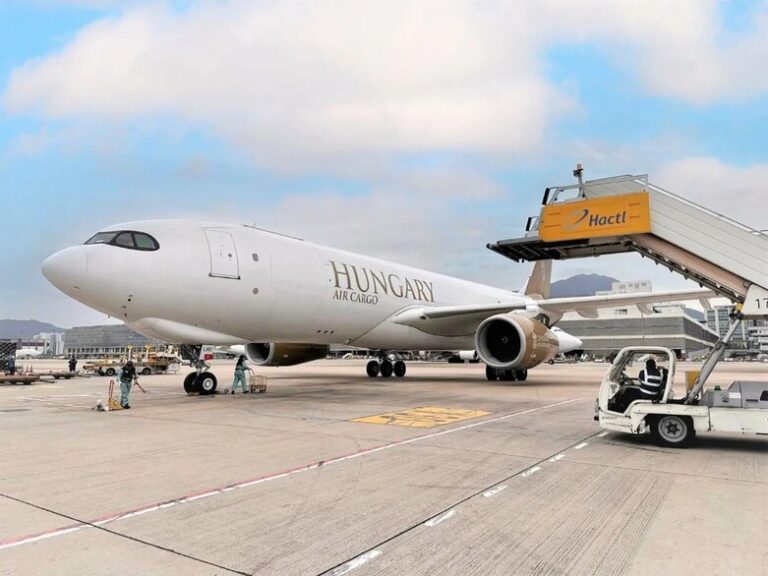
An A330F is deployed between BUD and HKG. Image: Hungary Airlines

The new year started out with a new handling contract for Hong Kong Air Cargo Terminals Limited (Hactl). The cargo handler was the winner of the handling tender for Hungary’s newest cargo airline: Hungary Airlines (see CFG’s article on the occasion of its AOC award in JAN25:
https://cargoforwarder.eu/2025/01/12/newcomer-hungary-airlines-receives-aoc/ ).
Hungary Airlines began thrice-weekly operations between its Budapest (BUD) base and Hong Kong (HKG) on 05FEB25. It operates an A330-200F on the route, offering a 62-ton upload on every flight. The contract signed with Hactl is a ‘one-stop-shop service’ for its Hong Kong flights, according to the press release issued last week. It covers cargo terminal operations, aircraft loading and unloading, and documentation.

Budapest is a growing e-commerce hub for Eastern Europe. Hungary Airlines is strategically placed to capitalize on the airport’s potential, using its new Hong Kong flights as a link between Greater China and the EU. As more aircraft are added to the Hungary Airlines fleet, the carrier plans to add services to the USA and Middle East markets,” the release explains.

Hactl’s CEO, Wilson Kwong, commented: “We welcome Hungary Airlines to the Hactl carrier family; their new services further enhance Hactl’s global connectivity. We look forward to supporting their establishment and growth as an e-commerce specialist, which ties in well with our own focus on this important business area.” One fun fact, given that the airline’s ICAO code is HUA and there is some consternation over the fact that it appears to be more Chinese than European owned: HUA in Mandarin actually means ‘China/Chinese’. (It can also mean prosperous or magnificent, among other things, depending on its inflection.)

Silk Way West Airlines presents B777 simulator to NAA

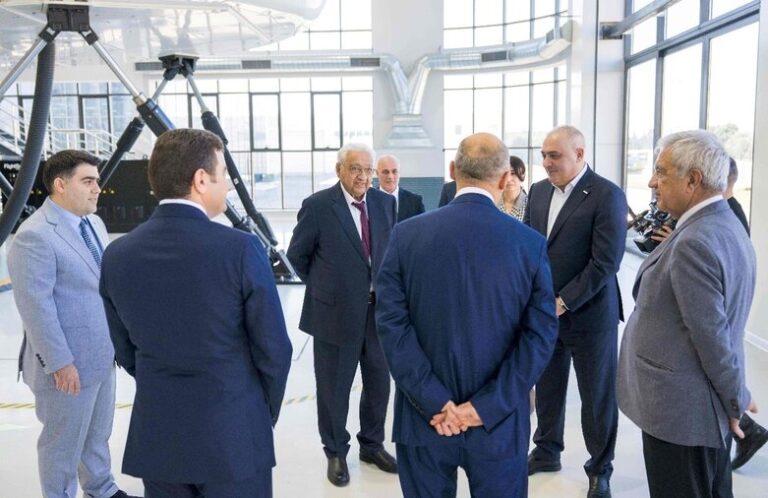
Greater efficiency when it comes to pilot training in Azerbaijan. Image: Silk Way West Airlines

Silk Way West Airlines recently transferred its state-of-the-art Boeing 777 Full-Flight Simulator (FFS) to Azerbaijan’s National Aviation Academy (NAA), thus bolstering the country’s status as a prominent aviation training center. The handover ceremony, held on 10MAR25, was attended by key figures from the aviation industry and government. The advanced simulator, manufactured by L3Harris Commercial Aviation Solutions, incorporates three Boeing 777 variants: the 777-F, 777-200LR, and 777-300ER. It offers an immersive training environment with cutting-edge visualization and flight simulation technologies, enabling a comprehensive range of pilot assessments and certification programs that adhere to international aviation standards. The European Aviation Safety Agency (EASA) carried out a strict audit on the FFS in FEB25, and is expected to issue certification if successful, which will then be passed to local authorities for recognition. Once this accreditation is complete, Azerbaijan will gain international recognition and be able to offer training also to international carriers operating Boeing 777 aircraft. As it is, Silk Way West Airlines and Azerbaijan Airlines pilots will no longer have to travel abroad for their training, therefore saving time and expenses, and improving convenience.

NAA’s training facility manages simulator bookings, and offers technical support, and simulator maintenance. This initiative aligns with the growing worldwide demand for Boeing 777 pilots and shows Silk Way West Airlines’ commitment to advancing aviation training. The project not only benefits local aviation professionals but also positions Azerbaijan as a regional hub for pilot education, attracting trainees from neighboring countries and solidifying its role in international aviation training.

The National Aviation Academy Rector, Prof. Arif Pashayev, underlined: “The simulator will not only play a crucial role in training students at the Academy in the relevant discipline, but will also serve as a key asset in the training of pilots and aviators from Silk Way West Airlines, Azerbaijan Airlines, and other carriers operating Boeing 777 aircraft worldwide. It will enhance their skills and ensure compliance with the highest aviation safety standards.” Zaur Akhundov, President of Silk Way Group, declared: “This initiative reflects our commitment to fostering aviation excellence both in Azerbaijan and globally. By equipping the National Aviation Academy with state-of-the-art training capabilities, we are investing in the future of aviation professionals and strengthening Azerbaijan’s role in international pilot education. This simulator will serve not only our pilots but also the global aviation community, setting a new benchmark in training quality and accessibility.”

HACTL and Hungary Airlines sign handling contract

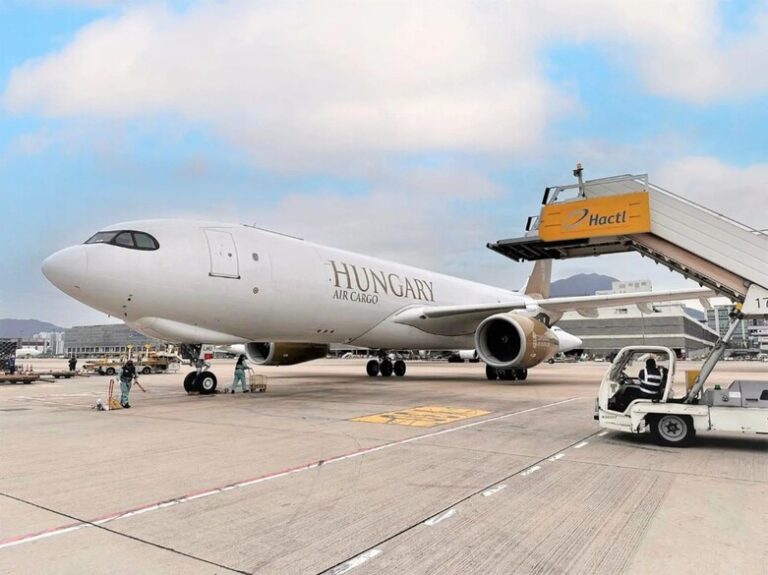
The new year started out with a new handling contract for Hong Kong Air Cargo Terminals Limited (Hactl). The cargo handler was the winner of the handling tender for Hungary’s newest cargo airline: Hungary Airlines. Hungary Airlines began thrice-weekly operations between its Budapest (BUD) base and Hong Kong (HKG) on 05FEB25. It operates an A330-200F on the route, offering a 62-ton upload on every flight. The contract signed with Hactl is a ‘one-stop-shop service’ for its Hong Kong flights, according to the press release issued last week. It covers cargo terminal operations, aircraft loading and unloading, and documentation.

An A330F is deployed between BUD and HKG. Image: Hungary Airlines

Budapest is a growing e-commerce hub for Eastern Europe. Hungary Airlines is strategically placed to capitalize on the airport’s potential, using its new Hong Kong flights as a link between Greater China and the EU. As more aircraft are added to the Hungary Airlines fleet, the carrier plans to add services to the USA and Middle East markets,” the release explains.

Hactl’s CEO, Wilson Kwong, commented: “We welcome Hungary Airlines to the Hactl carrier family; their new services further enhance Hactl’s global connectivity. We look forward to supporting their establishment and growth as an e-commerce specialist, which ties in well with our own focus on this important business area.”

One fun fact, given that the airline’s ICAO code is HUA and there is some consternation over the fact that it appears to be more Chinese than European owned: HUA in Mandarin actually means ‘China/Chinese’. (It can also mean prosperous or magnificent, among other things, depending on its inflection.)

Sin-Kung Logistics gearing up for air cargo later this year

Sin-Kung Logistics Berhad MD, Alan Ong. Image: Sin-Kung Logistics

Alan Ong, Managing Director of Sin-Kung Logistics, has every reason to smile. His company has just completed the acquisition of Malaysian company Prima Air Sdn Bhd (Prima Air for short) for a total of RM 20.7 million – roughly USD 4.6 million. With that, Sin-Kund Logistics Bhd now has a 100% stake in Prima Air and is preparing to start up its own air cargo services in the third quarter of this year. Until now, Prima Air was involved in air cargo, private jet charter services, aircraft maintenance, and the sale and leasing of aircraft. The family-run business has been loss-making over the past three to four years. It holds an Air Service Permit (valid until 31MAR25) and an Air Operator Certificate (valid until 31DEC25), enabling it to conduct non-scheduled commercial air transport operations. Looking forward, Sin-Kung Logistics plans to lease three aircraft this year. The first of these is planned for delivery in MAY25/JUN25, in good time for its official air cargo lift-off in Q3/25. Initially looking to carry out flights across Peninsular Malaysia for regionally based aerospace, pharmaceuticals, perishables, semiconductor, and oil and gas industries, Sin-Kung is also planning on offering air feeder services and establishing cargo interline partnerships on certain routes.

Alan Ong, Sin-Kung Logistics’ Managing Director, said: “The next phase of growth for Sin-Kung Logistics will be the air cargo services. With the addition of the air cargo services, the Company will now be able to offer full supply chain solutions for local and international freight forwarders from trucking services to cross-border air logistics services. The expansion of such services and network complements Sin-Kung Logistics’ current airport-to-airport road feeder services offered to our customers, thus further strengthening its competitive position in the logistics industry in Malaysia and Singapore. All in all, it would be an exciting and busy year for Sin-Kung Logistics.