Building on a business relationship that already exists since 12 years, CACC Cargolinx and Hermes Logistics Technologies (HLT) recently signed a new, five-year agreement that will see the software provider roll out its newest, cloud-based cargo management system (CMS) – Hermes 5 SaaS Ecosystem – across CACC Cargolinx’s operations at Cairo International Airport in time for summer 2024. Prior to this move, the two companies collaborated closely to establish requirements so that the delivered solution is customer-specific and designed to grow with the organization. This upgrade will bring about even greater process efficiencies and digital progress for CACC Cargolinx, which is also set to benefit from a number of integrations and solutions from the Hermes pay-as-you-go Ecosystem, such as Hermes Business Intelligence, Hermes Track & Trace and Hermes Integration (API). With Hermes 5, CACC Cargolinx gains transparency on areas of improvement: “The upgrade will […] address all existing process gaps, and implement best-practice approaches to address anticipated future needs for its operations in Cairo and beyond.”
Cloud-based upgrade for greater efficiency. Image: CACC Cargolinx
Yuval Baruch, Chief Executive Officer (CEO), HLT, commented: “We have undertaken a very thorough scoping study with CACC Cargolinx, deploying our air cargo experts to uncover not only the company’s existing requirements but also those expected in the future, and we have tailored our solution, ensuring it is future-proofed. This project demonstrates our commitment to collaborating with our customers and our detailed approach to SaaS migrations, particularly when it comes to factoring in future innovation – it all comes down to delivering greater operational efficiency that will support business growth for the longest possible term.”
Ahmed Fahmy, Chief Technology Officer, CACC Cargolinx, said: “CACC Cargolinx is committed to delivering advanced logistics operations at Cairo International Airport, and our investment in the Hermes Ecosystem represents a significant step forward in our digitalization roadmap. We are committed to providing our customers with the most efficient and reliable cargo handling services possible […] HLT’s cloud-based SaaS ecosystem will allow us to drive even greater efficiencies for our airline customers both here in Cairo and beyond. The end-to-end solution integrates easily with both our existing and planned systems and we expect the Business Intelligence add-on to provide a more robust foundation for us to take another step forward with our predictive capacities on operational and commercial matters.”
Joern Roehl, Head of Products, Quality and Transformation, MSC Air Cargo. Image: MSC Air Cargo
The Cool Chain Association (CCA) continues to grow. MSC Air Cargo became its latest member, recently. The CCA was set up to offer a platform where member companies can collaborate to improve the temperature-controlled supply chain. MSC Air Cargo, part of the Swiss, 1970-incepted MSC Mediterranean Shipping Company, which is meanwhile present in 155 countries across the world, offering a strong network of road, rail, air, and sea transport, will thus work together with CCA members to drive quality and innovation in the temperature-controlled supply chain. The end result: reducing food loss/wastage and improved pharmaceuticals transport. “The Association has recently launched a best practice video for perishables based on key findings from recent trials by CCA Board member the Perishable Products Export Control Board (PPECB), and is planning to pilot similar trials in the pharmaceutical sector,” the release states.
Joern Roehl, Head of Products, Quality and Transformation, MSC Air Cargo, explained: “As a member of CCA, we are partnering with leaders in the cold chain to collaboratively address challenges and drive innovation. MSC Air Cargo will be contributing to the community surrounding quality and value in the temperature-controlled supply chain.”
Stavros Evangelakakis, Chairman, CCA, and Head of Global Healthcare, Cargolux, said: “CCA members continue to work together to find new ways to improve the temperature-controlled supply chain, and MSC Air Cargo brings immense knowledge and experience to help us achieve those goals. We are confident that we will benefit, not only from MSC Air Cargo’s great insight but also its high profile to encourage others collaborate with the CCA in its pursuit of greater efficiencies throughout the cool chain.”
The Challenge Group doubles the number of weekly flights between India and Europe, announced Challenge Group’s CCO, Or Zak – photo: company courtesy
Challenge Group recently announced the launch of scheduled services between Liège (LGG) and Mumbai (BOM). Its second converted B767 freighter will be deployed on the route, twice a week, providing a 52-ton cargo uplift per take-off. Rainbow Aviation, Challenge Group’s GSSA partner in India, manages the bookings out of India and serves as the customer contact for the entire Indian freight forwarding community. The newly instated direct connection offers sought-after capacity between Europe and India, with opportunities to onforward to and from the U.S. Pharmaceuticals and electronics will form most of the baseload, though Challenge Group is known for transporting large and complex main deck cargo shipments, thus these will also be frequently carried.
Or Zak, Chief Commercial Officer of Challenge Group, revealed: “Given that India is striving to become the factory of the world, and the production of key verticals has significantly increased during the past few years, our strategic decision to now launch a regular and direct India-Europe service goes some way towards satisfying the intense customer demand on this route. In fact, after the inaugural flight, we are already adding a second weekly frequency from April onwards.” Extensive market preparation was carried out over the past year as the airline arm operated a growing number of consistent charter operations across Indian airports including DEL, HYD, and BLR. This was followed by a targeted roadshow in BOM and DEL in JUN23, where discussions were held with key logistics stakeholders to establish their needs. “Our participation in the recent Air Cargo India event in FEB24, further solidified our presence and network within the sector, paving the way for the successful introduction of our Mumbai freighter service,” Or Zak concluded.
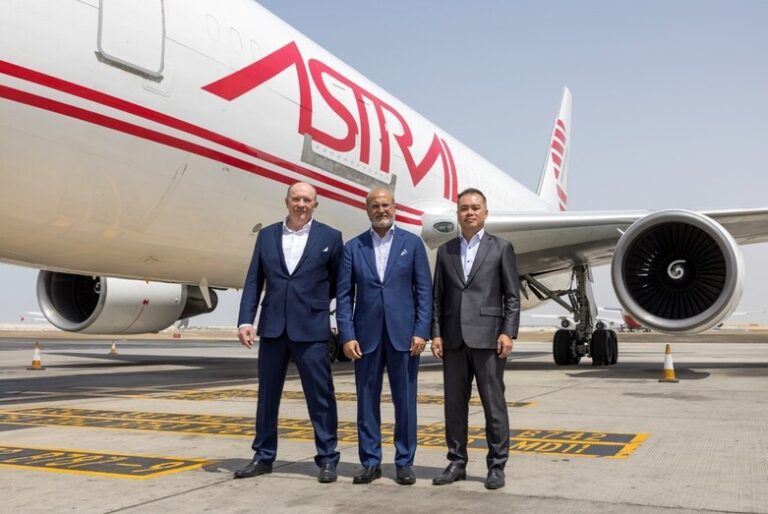
It started with a Memorandum of Understanding detailing partnership expansion between Etihad Cargo and Astral Aviation, and was sealed with the inaugural Nairobi-Abu Dhabi flight on 21MAR24. That flight opened the schedule that sees regular services between Nairobi and Abu Dhabi starting with effect 28MAR24. “As part of the capacity sharing agreement, Etihad Cargo’s partners and customers will benefit from capacity on board Astral Aviation’s weekly flights from Nairobi to Abu Dhabi,” the release states.
Two cargo experts have come together to support Etihad Cargo’s footprint within Africa, and enhance freight opportunities between the UAE and Africa. “The inaugural flight was strategically timed to accommodate the increased demand for flowers, demonstrating the synergy between Etihad Cargo’s global reach and Astral Aviation’s strong African network. The successful operation underscored the partnership’s potential to enhance cargo capacity and offer efficient logistics solutions, particularly for time-sensitive shipments such as perishable goods,” it goes on to say. Not only do Etihad Cargo’s customers benefit from the weekly codeshare with Astral Aviation, Etihad Cargo will also offers additional belly capacity on board of the airline’s daily passenger flights to Nairobi, starting 01MAY24. Plus, it operates a weekly freighter service ex Nairobi to Amsterdam via its Abu Dhabi hub.
Stanislas Brun, Vice President Cargo of Etihad Cargo, said: “The successful inaugural flight from Nairobi to Abu Dhabi is just the beginning […] Together, Etihad Cargo and Astral Aviation will offer air cargo solutions that cater to the dynamic needs of partners and customers, especially in the fast-growing African market.”
Wilson Chan, Senior Vice President – Freezone Cargo & Logistics of Abu Dhabi Airports, commented: “This inaugural flight, and the commencement of weekly flights to Nairobi, is further evidence of the important commercial and business ties Abu Dhabi Airports, and our partners Etihad Airways and Astral Aviation, are helping to facilitate.”
Sanjeev Gadhia, CEO of Astral Aviation, stated: “The partnership between Etihad Cargo and Astral Aviation marks a significant milestone in trade between Africa and Abu Dhabi, as the new flight will enable the efficient transportation of perishables including flowers, fresh fruits, vegetables, and meat from Astral’s hubs in Nairobi and Johannesburg into Etihad’s Abu Dhabi hub and onto their network. On the return, the freighter will carry cargo from Etihad Cargo’s network in Asia, the USA, and Europe into Astral’s Intra African network, which will result in new opportunities for our respective clients.”
Though the name “GWcycles” doesn’t quite roll off the tongue, the idea is a good one as it is for a good cause – and Gebrüder Weiss’ international cycling competition is meanwhile in its third season. Whilst last year, competitors were cycling around the world, and managed 15 laps of the earth, the target this year, which participants have until 30SEP24 to reach, is to cycle to the moon and back. In other words: a full 768,800 kilometers. The competition opened on 25MAR24, and the company has pledged to plant a further 7,000 trees in Nicaragua if the kilometers are achieved. They will add to the 13,000 trees Gebrüder Weiss had planted in the past two competitions, in Togo and, again, Nicaragua. Referred to as “corporate forests”, Gebrüder Weiss is thus contributing to environmental protection. So, the climate benefits on the one hand. The best 300 cyclists benefit, too, since they are competing for a gravel bike (which is basically a kind of racing bike that can compete off-road, too), and “other attractive prizes for seven different challenges,” the press release promises. The competition is open to everyone (details are on Gebrüder Weiss’ website), and participants log their completed kilometers in a cycling app.
Frank Haas, Head of Corporate Brand Strategy & Communications at Gebrüder Weiss, detailed: “At Gebrüder Weiss, we believe in sustainable mobility, and as a global logistics company, we are enthusiastic about moving things together. So far, our cycling community has accomplished spectacular results each year; they enjoy exercising and actively contributing to environmental protection. We are looking forward to this year’s competition.”
Since Western companies have been reconsidering their involvement in China (keyword: China Plus One), the Eastern European region has become increasingly attractive for foreign capital, alongside Mexico and countries in Southeast Asia. The top EU candidates attracting the most investments are the Czech Republic, Poland, Romania, Hungary, and Austria. This strategy of sourcing products from more than one country by diversifying the supply chain to reduce economic risks, is echoed by event providers such as World of Freight (WOF).
The aim of this organizer is to offer the Eastern European air freight and logistics market a forum for exchanging ideas, networking opportunities, and initiating business relationships. This also includes the involvement of Eastern European scientists and logistic experts in international dialog.
WOF’s upcoming Vienna Summit is the event manager’s 6th B2B gathering since its founding in early 2020 – courtesy: WOF
Unknown experts are given the floor At mammoth events such as the World Cargo Symposium recently held by IATA Cargo in Hong Kong, the Air Cargo Americas trade show, or Intermodal in Brazil, they are hardly ever seen on stage: logistics and air freight experts from Eastern Europe, speaking on behalf of their companies or educational institutions. For example, scholars from the renowned NAUT Trade Universe, which is equally represented in the Czech Republic, Slovakia and Hungary, or the Pannonia University of Veszprém in Hungary.
Never heard of them? No wonder. Scientists from these institutions have so far been sought in vain on the program pages of major air freight and logistics events.
Bringing them increasingly onto the stages of congresses and giving them the floor is the credit of trade show organizer, World of Freight. This is evidenced by the list of specialists and speakers standing on the program of WOF’s Vienna Summit which will take place from 18-19SEP24.
Impressive list of speakers The following names are probably largely unknown in the transportation industry in Western Europe, North and Latin America or the Far East:
Petr Nejedlý, CEO NAUT Trade Universe, Gábor Kovács, Managing Director Hungary & CEE, Scan Global Logistics, Nikolay Kurbanov, MD Avem Aero, an Estonian cargo charter operator, Martin Polakovič – Head of Global Logistics Procurement, Lenovo, Zsolt István – Head of Innovation Management, University of Miscolci, Hungary. Concentrated expertise that will surely deliver plenty of food for thought to the participants at the upcoming Vienna gathering.
Hot topics And this is exactly where WOF comes into play. The Group has created a platform, rotating between Bratislava, Prague, Vienna, and Budapest, where international industry professionals from the entire supply chain come together to exchange knowhow, insights, and innovative ideas. Following the Budapest event in 2023, the trade show again moves to Vienna this year. The vibrant Austrian capital serves as ideal fertile ground for international gatherings due to its excellent transport links and geographical location right in the heart of the EU. There, WOF plans to touch the industry’s hottest logistics topics and issues, such as Environment, Social and Governance (ESG) compliance in the process of international freight movement, AI and Big Data utilization, risk mitigation through multimodality, meeting customer satisfaction in e-commerce. A special appetizer is also the offer to engage in discussion with logistics experts from companies like Alza.cz, IKEA, Lenovo, RHI Magnesita, and event host, Vienna Airport.
Risking dents Beyond Vienna, the trade fair organizer intends to expand WOF’s geographical footprint by planning events in Slovenia (port of Koper) and Antwerp-Bruges (Belgium). However, when penetrating established markets, it risks facing fierce competition. After all, ports such as Rotterdam, Antwerp, Koper, and Hamburg, or airports like Charles de Gaulle, Amsterdam or Frankfurt stand high on the customer list of leading logistics trade fair organizers such as Messe München, the by far largest organizer worldwide. To cross swords with such players could lead to dents.
63 years ago, on 01SEP1961, and at the instigation of the German government, Deutsche Post (DP) launched an overnight airmail network in Germany. Lufthansa B737 quick change passenger aircraft were deployed. Their seats were removed at night to accommodate as many letters and postcards as possible in the aircraft cabin. After more than six decades, this era came to an end on Thursday (28MAR24).
An intra-German postal night flight service lasting over six decades ended last week – photo: courtesy DP
The last routes served (both ways) were Stuttgart-Berlin, Hanover-Munich, and Hanover-Stuttgart. The final flight took off from Berlin Airport at 00:20 local time and arrived an hour later in Stuttgart. On board of the A320 operated by Eurowings Airlines, were approximately 270,000 letters, estimates Deutsche Post speaker, Alexander Edenhofer. He announced to CargoForwarder Global that small farewell events would be held at all stations that had been part of the network, to honor and thank the employees for their outstanding commitment.
Lufthansa and Pan Am were responsible for the transports At the beginning, during the so-called Cold War, Lufthansa operated all domestic airmail routes except for the air corridor to Berlin, which was controlled by the Western Allies and served by the legendary former U.S. airline, PanAm, until the reunification of Germany in 1990. Over the years, additional carriers were added to operate the network, with Lufthansa terminating its night flights in 2008. Frankfurt airport served as the network hub for decades, but lost this role in 2005, due to the ban on night flights there.
As late as 1996, Deutsche Post was still transporting some 430 metric tons of letter mail with partner airlines operating 26 aircraft each night to 45 domestic destinations. However, since then, volumes successively declined, lately dropping to just 53 metric tons on average each night. The number of aircraft required fell accordingly, with only 6 still in operation until now.
Mixed feelings The end of these postal services is regrettable but an inevitable step, states Marc Hitschfeld, Chief Operations Officer of DHL Group’s Post & Parcel Germany division. “We conclude the era of overnight letter airmail with mixed feelings. In times of climate change, airmail for domestic letters within Germany can no longer be justified – also because there is no longer the same urgency associated with letter mail as in decades past. So, on the one hand, the end of domestic airmail is good news for the environment. On the other hand, it closes a chapter of postal history which many Deutsche Post employees have identified with for decades.”
Mail volumes are constantly decreasing Nostalgic sentiments are understandable, but on closer inspection there is no longer any need for night flights on routes of between 500 and 1000 km. This is due to several reasons: The volume of letters sent within Germany, has been on the decline since years, as confirmed by the latest figures presented at the Group’s annual conference on 06MAR24 ( https://cargoforwarder.eu/2024/03/06/dhl-declines-schenker-takeover/ ). According to these figures, revenue in the letter mail business within Germany fell by 4.9% in 2023, compared to 2022. Email, WhatsApp and other electronic channels have largely replaced letters. This trend, which has been ongoing for some time, continued seamlessly in Q1/2024, due to increased digitalization, and will not stop here, forecasts predict.
Climate considerations Another key reason for no longer flying mail at night within Germany, is based on ecological considerations. Shifting the services from air to road means 80% fewer CO2 emissions on affected routes. Marc Hitschfeld: “In times of climate change, airmail for domestic letters within Germany can no longer be justified.”
Thirdly, there is a decision by the Berlin government, according to which a letter traveling within the country does not necessarily have to land in the recipient’s postbox the next day. The Scholz administration also considers a running time of two days to still be tolerable.
After the end of air services, Deutsche Post assures that it will continue to deliver fast letter mail transports between northern and southern Germany, for example by using Sprinter vans, among other modes. This is also made possible by reduced letter mail volumes and sorting times. Train solutions are not an option for Deutsche Post, states speaker, Edenhofer.
…, speeds up the throughput of shipments, and reduces costs mid-term, claims cargo veteran and intralogistics expert, Olaf Oczkos (OO). The concept, exclusively presented to CargoForwarder Global, guides the reader through the confusing jungle of multiple offers marketed by warehouse automation solution providers, and illustrates which criteria best fit a buyer’s specific needs. The term ‘automation solution providers’ used in the interview, is better known in the industry as ‘systems integrators’.
Olaf Oczkos is a proven warehouse management expert – photo: private
CFG: You just released the Buyer’s Guide to Warehouse Automation. Please explain the concept and how it differs from the current landscape of warehouse operations.
OO: As neutral intralogistics experts, we compare a typical manual warehouse with numerous automation solutions available in Germany, other European countries and the USA. The solutions we offer are for bins not pallets.
The concept is very simple: we want to help buyers to focus on solutions that make sense for the customer. We’ve noticed that customers are lost or uncertain when it comes to shopping for warehouse automation. Automation solution providers all praise their own solutions. When customers talk to 10 of them, each company claims the same thing: “buy my stuff”. Thanks to the Buyer’s Guide we just released, our customers can get an individual report tailored to their needs within 10 days. The report contains an approximate cost of the warehouse automation, the suggested solutions, and the payback time.
CFG: How do you manage to generate customer centric propositions?
OO: Automation solution providers have a self-interest to sell their automation, no matter what. Because we are not on the payroll of any of the automation solutions providers, we can objectively determine the right solutions by entering a few key numbers. Numbers don’t lie. Warehouse automation is not an art, it’s a science. In the end, it’s math – done very quickly because we have a special comparison tool. This is more affordable than hiring a warehouse planner who needs more time in figuring out a fitting solution compared to our approach.
Prequalification tool At the recent Logimat Expo in Stuttgart, we met warehouse planners who need at least 6 to 9 months to tell the customer what automation they might need. I must underline that we do not want to eliminate the warehouse planner from the warehouse automation landscape. On the contrary, we want them to focus on 2 to 3 solutions which we identified, not the 10 or 12 that they usually analyze. The Buyer’s Guide for Warehouse Automation is a prequalifying tool. This concept enables the customers to speed up the decision-making process and presents viable solutions.
CFG: It needs a lot of money to automate warehouse operations. And the payback time is lengthy. It is therefore understandable, is it not, that companies are cautious about the topic and prefer to carry on doing their job as before, shying away from expenditure?
OO: That depends on each individual customer. The overall trend in Germany or other high wage countries, is to automate warehouse operations. Automation is key to master growing volumes. Each company should ask the Hamletian question: ‘to automate or not to automate?’ This is where our Buyer’s Guide can be of help in figuring out how to automate.
Picking errors in air freight are costly Many 3PL contract logistics providers serve the air freight industry. These Logistics Service Providers usually work on 3-to-5-year contracts, so they are reluctant to invest in warehouse automation. Instead they ‘solve’ their problems with volume growth by adding more staff. However, warehousers are scarce and those who are available make mistakes when it comes to picking. A picking mistake in the air freight industry probably costs 100x more than in land transport, where the product can be returned the next day. We exemplify three real-life scenarios with a payback time of 3, 2, and 1.1 years. We try to break free from the mythology that warehouse automation is expensive. A commonly repeated argument used is that companies need to wait 5 to 8 years to see a return on investment. That is why it is so important to educate the customer on today’s options when it comes to the warehouse automation industry.
CFG: Your approach is based on data availability. How do you obtain the information and identify areas of improvement in daily ops?
OO: Nobody knows the business better than the customer. We interview the customer using our self-developed SALT Method, asking him what he wants to improve: Space, Accuracy, Labor, Throughput. In addition to the first letters making up the acronym, we ask the customer about some hard data such as: building size, bin sizes and weights, needed storage locations, and desired systems performance. We need up to 10 pieces of data to perform our task.
Preventing buyer’s remorse We also ask about growth prospects. Customers who don’t account for volume growth end up buying the wrong automation technology. We are there to prevent buyer’s remorse. For example, when we help companies in the USA, which has different labor markets, we adjust the cost of a manual warehouse with local wages for warehousers and supervisory staff. Someone in Southern California will demand higher pay than a worker somewhere in the Midwest or in Texas. Same rule applies to building rents or warehouse buying pricing. We are offering a customer individual reports, so we can use our standard values or take the values from the customer, who knows better what the local prices are for labor or building rent.
Providing transparency CFG: Which main processes forming the basis of a warehouse’s performance do you target with your approach?
OO: The warehouse automation is called ASRS in the industry, which means ‘automated storage and retrieval systems’. As the name suggests, we provide transparency in storing the goods and retrieving them for shipping. We cover the orders for goods in and goods out processes. If a customer has a warehouse with electronics or fashion products, we first need to receive the goods, store them, and wait until an order appears that needs to be picked. In a manual warehouse, the person walks over to the goods and picks from the shelf. In an automated warehouse, the system is called goods to person. The machine brings the goods for picking to the warehouser. The intralogistics industry uses different performance terms for this: order lines per hour or bins per hour. An order is not always comparable because each industry is different. For example, in a grocery shopping e-commerce setting, one order can contain 25 items (juice, cereal, eggs, etc.), which is very time consuming. An order for a fashion e-commerce retailer can have 10 items, such as socks, pants, or shirts. Another one can be an order for electronics with 2 items: one HDMI cable and one headphone set. Each customer has a special set of challenges, where we can help identify the bottlenecks.
CFG: Is missing or intransparent information the biggest obstacle to further optimizing intralogistics processes? Or is it human inertia? How can these hurdles be overcome to lift the performance of a freight terminal to a higher level?
OO: This is a very good question because today’s customers spend millions on sophisticated warehouse management software and yet are blind when it comes to complete and full data. I’ve never met a customer who had perfect data, so we always had to make assumptions that the customer then had to sign off on. I also met customers who had warehousers who needed 6 months before they were familiar with the facility. During that time, these workers were underperforming or making mistakes in the storage and retrieval processes.
Human labor is still not replaceable As a rule of thumb, manual warehouses have low productivity because the worker spends a great deal of time travelling to pick the goods. Switching a manual warehouse to a so-called goods-to-person system (GTP), reduces the labor and increases warehouse performance because the machine transports the bins with the product. Let’s not forget: for each forklift driver we replace with a machine – either a shuttle or a robot – we gain additional productivity. We still need people for picking the goods from the bin, because the human hand is still not replaceable. Some piece-picking robots claim to be better than a human picker. However, most customers are not ready to be lab rats because such high-end robots cost up to 4 yearly salaries of a typical warehouse worker and have limited weight-lifting capabilities.
CFG: Under certain parameters, customers achieve payback within a year. What are the prerequisites for this and to what degree does the automation of logistics processes help to achieve this aim?
OO: In our Buyer’s Guide, we show a customer with 400 bins per hour as a base. In subsequent scenarios, we show automation solutions and their respective payback times when the volume doubles to 800 bins per hour and quadruples to 1600 bins per hour. In consequence, these three scenarios demonstrate that, at the slowest performance, automation pays itself back after 3 years. In the middle scenario this happens after 2 years, and in the high performance, it is within a year. This groundbreaking epiphany reveals how wrong most customers were about warehouse automation. The common locker room talk told us that automation is expensive and only interesting when a 3PL has a 10-year contract. Numbers don’t lie, so we open new avenues for all who want to stop window shopping.
Automation reduces errors CFG: Is your Warehouse Automation Guide also a contribution to error prevention and, if practiced correctly, does it eliminate safety weak spots in air cargo ops?
OO: In our Buyer’s Guide, we are not automatically preventing errors. We are saying how much the system will cost, how much space it will require, and how long it takes to see a decent return on investment. Compared to manual warehouses, automated warehouses have less errors due to higher accuracy improvements. This is an area we would like to research with the air freight industry. Let me explain: when a picker makes a mistake by selecting the wrong item, this package will trigger a return to the warehouse. Shipping and handling costs are doubled, making a big impact on the company’s image. Items that are air lifted overseas have enormous freight costs. Implementing a smart warehouse automation system can help reduce human error. Maybe we can agree that your readers give us feedback on how much a single package sent costs them when it comes to reversing a mistake. We could use this data to improve the overall SALT method we’ve mentioned in one of the answers above.
Time plays against manual solutions CFG: Where will customers have an operational and monetary advantage when organizing their warehouse processes according to your recommendations? Please illustrate.
OO: Each customer can have a before and after comparison, with or without warehouse automation, using our report. Each automation is lucrative in comparison to a manual warehouse. Some automation solutions need 1 year, some need 6 years. In the end, time plays against manual warehouse operations because they are labor intensive and prone to errors. A car parts distributor will need a different warehouse automation system with way more storage locations than a customer from the fashion industry. Why? Because car parts are stored longer than t-shirts, trousers, or jackets. In short, our report offers investment cost analysis, total cost of ownership analysis and a comparative systems analysis for customers from all industries where bin storage is needed. We provide insights for each CEO or VP to make a sound decision based on their individual business needs. We highly encourage readers to review the Guide slide by slide, and reach out to me over Linkedin: https://www.linkedin.com/in/olaf-oczkos-4b1a8382/
CFG: Olaf, thanks for your time and these explanations.
Testimonials: Gernot Nestler, Owner GEARELLI GmbH, Austria
Gernot Nestler – photo: GEARELLI GmbH
The ‘Warehouse Automation Buyer’s Guide’ with its SALT approach is not just a tool, but a turning point for intralogistics: It makes the first step towards automation clearer than ever before, but the real value lies in the hands of the experts, that turn this direction into reality.
It’s impressive how it transforms complex intralogistics operations into simple, manageable decisions, a step the industry has long desired. However, as promising as this method may be, we must not forget that it relies on the quality of the underlying data and is ultimately only a first guide. The irreplaceability of personal contacts and detailed analyzes remains, because behind every data point lie human needs and specific challenges. This tool guides us, but our critical thinking and expertise light the way.
CargoForwarder Global’s ‘Spotlight On…’ series takes a look at the many different functions in the air cargo industry and talks to people involved in those jobs. For a shipment to travel from A to B by air, a huge network of operations, regulations, assets, and resources are required. Much more goes on behind the scenes than the General Public is aware of. This week, Olga Blaut (OB), Country Head of Sales – Pharma & Healthcare at JAS, details her function, talks about what brought her to our industry, and gives advice to those considering a career in air cargo.
A passion for showing others what the industry is about. Image: Olga Blaut
CFG: What is your current function? And what are your responsibilities?
OB: I am the Country Head of Sales – for the Pharma & Healthcare Vertical at JAS USA
CFG: What does a normal day look like for you? Or is there such a thing?
OB: Every day brings its own unique set of challenges and opportunities, making each one distinct from the last. Usually there are some commercial activities related to supporting existing and future Pharma and Healthcare customers and their patients, developing and presenting customer solutions, and collaborating internally with various departments on bringing value to our customers’ supply chain and enhancing the outcomes for the patients. Although I’m based in Los Angeles, I oversee pharma and healthcare commercial activities nationwide, which keeps me well acquainted with the endless blue skies across the country.
CFG: How long have you been in the air cargo industry, and what brought you to it?
OB: Around 20 years. I started my career with the world’s biggest ocean carrier in Moscow, Russia, after a university internship. However, very soon, I switched to the forwarding business to have an opportunity to fly higher. I moved to the US in 2011 with one of my employers.
CFG: What do you enjoy most about your job?
OB: JAS has a global presence, so it offers the opportunity to be in touch with the whole world every day and make an impact on getting critical medications into the hands of patients.
CFG: Where do you see the greatest challenges in our industry?
OB: There are a few, however, I would mention the limited pipeline of young and emerging talent entering the industry due to a lack of awareness of the industry and its opportunities. And CO2 emissions!
CFG: What advice would you give to people looking to get into the air cargo industry? Any particular training they should aim for?
OB: This is a very multicultural and quickly evolving environment that has a need for people of many skills depending on where they want to be. It’s a fascinating and fast paced industry for everyone, and there are a lot of exciting opportunities!
CFG: If the air cargo industry were a film/book, what would its title be?
OB: “The Skyway Chronicles: Tales of Cargo and Commerce”
Thank you for your input, Olga!
If you would like to share your personal air cargo story with our CargoForwarder Global readers, feel free to send your answers to the above questions to cargoforwarderglobal@kopfpilot.at We look forward to shining a spotlight on your job area, views, and experiences.
Logistics service provider DB Schenker has launched onboard courier services, this way enhancing its product portfolio offered to the market. Schenker reacts to the rapidly increasing global demand for fast and personalized transport of extremely urgent goods. Demand comes primarily from companies in the automotive, electronics, high-end fashion and healthcare industries.
For medium-sized freight forwarders such as Quick Cargo Service, OBC services have long been part of their repertoire. Not to mention specialists such as time:matters, Air Partner or brokers like Chapman Freeborn, to name just a few who are active in this segment. Now Schenker has jumped on the bandwagon to secure a slice of the business. The conditions are ideal. Schenker is actively represented in 130 countries with 1,850 stations, so it has its own dense global network enabling the company to integrate its local personnel into the new OBC product offering.
Thorsten Meincke expects arapid rise in demand for the new OBC product – photos: credit DB Schenker.
Three central bases of operations The launch of OBC services was preceded by a trial phase in which Schenker set up an OBC service team that operates on a stand-by basis from three different continents to guarantee customers 24/7 availability for urgent OBC requests. The couriers are based in Hong Kong, Frankfurt and Vancouver, this way enabling coverage of key trade lanes. On the occasion of the product launch, Thorsten Meincke, Global Board Member for Air & Ocean Freight, DB Schenker stated: “With our new OBC service, we are taking air freight to new heights. Whether urgent automotive parts need to be shipped from Germany to China to prevent a line stoppage, or a medical device from Canada is instantly needed in a hospital in South Africa – we are now able to take care of any unforeseeable and very short-term requirements of our customers. Through the new white glove service, we address new market opportunities for us as a global logistics solution provider.”
A classic OBC case The press release cites this case, which occurred during the trial phase, as an example of the urgent need for OBC services: A healthcare customer was asking for the urgent delivery of a few artificial hip joints from the United States to the UK and the Netherlands to conduct some important surgeries before the weekend. Within minutes, three different options were presented, including pick-up times, flight schedule and expected time of arrival at the final destinations. Two couriers were arranged to fly the precious cargo to Europe. While the couriers were still inflight, DB Schenker arranged stand-by vehicles for the fastest way from the arrival airports to the respective hospitals.
Full shipment visibility is provided by real time tracking, says Stefan Pargfrieder.
Each OBC deployment is unique DB Schenker’s new OBC service is characterized by a rapid response time, and includes insurance coverage and customs clearance, if required. It is available for all types of shipments except dangerous goods (DG). Final word from Stefan Pargfrieder, Vice President Global Air Freight Strategy & Development, DB Schenker: “We understand that every shipment is unique. As a fully integrated logistics service provider, we want to be problem solvers for our customers. Sometimes the high value of an item is not related to its purchase price but rather to the costs adding up for every minute the item is not available. While we have already taken care of individual OBC customer requests in the past, we are now rolling out a standardized product offering across all continents.” Transparency is provided via real-time tracking, resembling shipment visibility known from e-commerce deliveries, states DB Schenker in its release.