Home Blog Page 202

Customer centricity is Qatar Airways Cargo’s guidepost

0

With this in mind, the cargo airline has created the position of Vice President Customer Experience. Faisal Karamat (FK), who comes from Canada, was entrusted with this position. Thanks to his leadership role and the commitment of Qatar Airways Cargo’s entire headcount, the course has been set to ensure that customer-centricity remains at the forefront of the carrier’s operational and strategic priorities. CargoForwarder Global (CFG) spoke with the executive at the fringes of the 8th ONE Record Hackathon that took place in Doha at the end of NOV23.

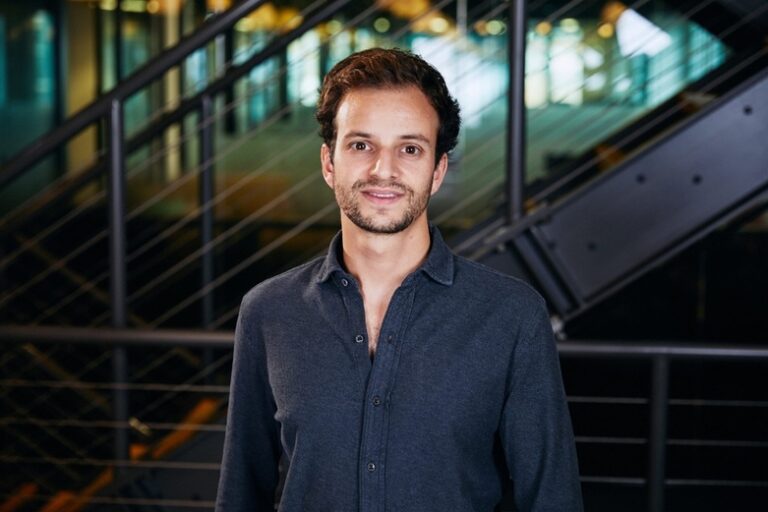
In his role as VP Customer Experience Faisal Karamat is responsible for a wide range of tasks  –  credit: Qatar Airways

CFG: To our knowledge, there is no VP Cargo Customer Experience at any cargo airline worldwide. Why did Qatar Airways Cargo create this position?

FK: Qatar Airways Cargo created this position to underscore our commitment to elevating customer experience standards within the air cargo sector.

Recognizing the pivotal role customer experience and customer satisfaction plays in the success of our operations, the establishment of the VP Cargo Customer Experience position demonstrates our proactive approach to enhancing services, addressing unique customer needs, and setting a new benchmark for excellence in the air cargo industry.

The goal is to create a more customer-centric approach that aligns with our commitment to innovation, efficiency, and delivering unparalleled value to our clients.

CFG: What influence do you have on a) the operational activities of Qatar Airways Cargo and b) the airline’s relationship with its customers, i.e. the carrier’s global credibility and reputation? Any illustrative examples?

FK: a) In the realm of operational activities at Qatar Airways Cargo, the influence of my role extends to optimizing processes and workflows to enhance overall efficiency. By closely aligning with operational teams, we aim to implement customer-centric strategies that not only meet but exceed expectations.

One key example is the Next Generation approach which I was a part of creating. This strategy induces a corporate mindset shift through digital enhancements, new products, a new website, and a new business approach in perfect alignment with today’s requirements.

b) Regarding the airline’s relationship with customers and its global credibility, the team who work under me play a crucial role in shaping and maintaining strong relationships with customers. By addressing feedback, and proactively resolving issues, we contribute to building trust and credibility.

One illustrative example is The Digital Lounge, our intuitive cargo customer portal which provides customers a host of online booking features at their fingertips. In 2022, we launched The Digital Lounge. This cargo customer portal is built on the Salesforce platform and provides Qatar Airways Cargo’s customers with a seamless digital experience, leveraging Salesforce Customer 360 features integrated with its native Experience and Analytics platform. The Digital Lounge will give customers full access to a broad range of activities with a single access. The platform offers instant confirmation for General Cargo bookings subject to availability and required validations. The airline’s customers can book free sale and allotments with dimensions (excluding BUP).

CFG: Basically, isn’t every Qatar Airways Cargo employee responsible for customer satisfaction and positive feedback from the market in his or her day-to-day work, i.e. ongoing customer loyalty? If so, it brings up the question why Qatar Airways Cargo needs a VP Customer Experience in addition?

 FK: Customer-centricity is embedded in our culture and DNA, and each team member plays a crucial role in ensuring ongoing customer loyalty. The presence of a VP Cargo Customer Experience enhances this commitment by providing strategic oversight and dedicated focus on elevating the overall customer journey.

The role of the VP Customer Experience goes beyond individual interactions and operational aspects. It involves shaping a holistic, organization-wide approach to customer satisfaction, implementing long-term strategies, and fostering a culture that prioritizes continuous improvement in customer experience. This leadership position ensures that customer-centric initiatives are integrated into the broader organizational strategy, driving innovation and setting industry benchmarks for excellence.

In essence, while every employee contributes to customer satisfaction in their respective roles, the VP Customer Experience provides overarching leadership, strategic direction, and a dedicated focus on evolving and optimizing the entire customer experience landscape. This ensures that customer-centricity remains at the forefront of our operational and strategic priorities.

CFG: From 24 to 26NOV23, the 8th IATA Cargo #Hackathon took place in Doha with strong support from Qatar Airways Cargo, and 117 attendees coming from a variety of countries. How would you rate the ‘yield’ of this event from Qatar Airways Cargo’s point of view?

FK: IATA’s ONE Record Hackathon event took place for the first time in the Middle East, hosted by a Middle Eastern carrier, and this edition hosted the second largest number of participants. The hackathon attracted a diverse pool of talent and perspectives. This global participation suggests that the event had a broad reach and was successful in bringing together professionals from different parts of the world.

Hosting an IATA Cargo Hackathon indicates our commitment to fostering collaboration and innovation within the air cargo industry. The participation of developers, and exposure to the IATA data sharing standard ONE Record, demonstrates commitment to industry standards and digital leadership. Our commitment to digitalization and operational efficiency aligns with the strategic goals of IATA and the ONE Record Hackathon.

CFG: 2024 is just around the corner. What are the priorities on the agenda of Qatar Airways Cargo’s VP Cargo Customer Experience for the coming year?

FK: We will continue to enhance the overall customer experience by streamlining processes. We will also focus on bringing the expertise of our employees to new heights through training and development programs to enhance their skills in customer service, communication, and problem-solving, ensuring a high standard of service across all touchpoints. Additional enhancements are being added to our online booking platform, Digital Lounge, and investments are being made to digitalize many of our processes, all for the benefit of our customers.

CFG: Faisal, thank you for your time and this input.
Cargo at Air New Zealand is going to get BETA

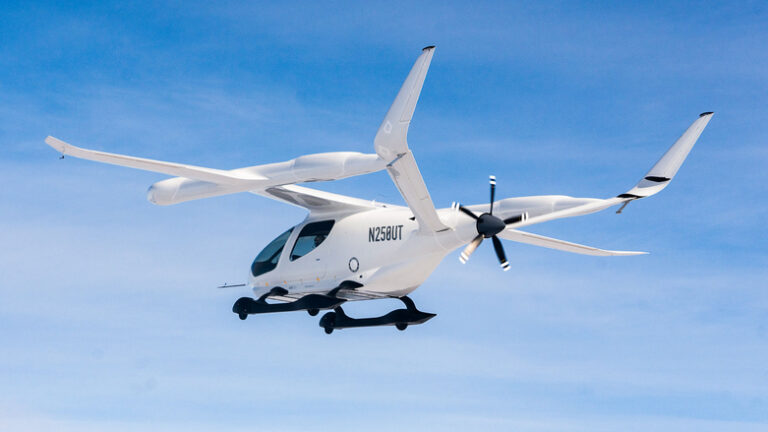
… As in BETA Technologies’ all electric aircraft, ALIA. LinkedIn is buzzing with the news published on 06DEC23, that Air New Zealand has placed a firm order for one conventional take-off and landing (CTOL) version of the ALIA aircraft, with options for an additional two aircraft, and rights for a further 20 aircraft, reaching a solid milestone in its Mission Next Gen Aircraft.

An all-electric powered ALIA CTOL cargo aircraft will be put into operation in 2026 by Air NZ in partnership with New Zealand Post – photo:  Beta Technologies

The airline’s Chief Sustainability Officer, Kiri Hannifin, was refreshingly honest in her LinkedIn announcement regarding the initial non-decarbonization, where she thanked the entire team involved in the 18-month-long project thus far: “I am very proud and pleased to announce that today Air NZ confirmed the purchase of our first lower emissions aircraft – the battery powered all electric ALIA CTOL by the amazing heroes at BETA TECHNOLOGIES. We are aiming to have this aircraft flying cargo in 2026. While this aircraft will add to our fleet and therefore not remove any carbon, it’s the aircraft we will use to demonstrate that next generation aircraft is possible for Aotearoa and Air NZ. In terms of being key to the transition we need to undertake, and getting the aviation eco system ready, this special aircraft will do so much heavy lifting. So, while a very small step – its task is immense.

It already has a huge place in the hearts of the Air NZ team who’ve been working so hard to get it across the line. Working with Beta has also been humbling. It’s companies like this who will change the world.”

[Beta also works very closely with UPS, for example, who expect their first aircraft next year: CFG reported]

Commercial demonstrator for cargo
What is also refreshing, is the fact that the ALIA CTOL has been purchased first and foremost for cargo. Considerations to also use it for passenger transport began appearing in the media a couple of days later, but the initial commercial demonstrator project is one between Air New Zealand and NZ Post, with more details promised in early 2024 as to which two frontrunner airports will be home to the next generation aircraft. “Air New Zealand will initially operate the aircraft as a cargo only service in partnership with New Zealand Post, on a route being selected through an expressions of interest (EOI) process with airports across Aotearoa,” the release states, adding that the battery-powered all-electric aircraft is planned to join Air New Zealand’s fleet in 2026. Considerable deliberation went into the selection of partners with which to venture into next generation air logistics, as the release reveals: “The [purchase] announcement follows an 18-month period of evaluation and diligence by Air New Zealand. Through the airline’s Mission Next Gen Aircraft program, it sought and received ideas and insights from 30 organizations, selecting four partners to work closely with on its goal of launching commercial flights using next generation aircraft in 2026. BETA’s ALIA is the first commercial order in the program.”

Greg Foran has been appointed Chief Executive Officer of Air New Zealand on 03FEB20 – picture: courtesy Air NZ

One small, but significant step
Air New Zealand Chief Executive Officer Greg Foran commented on his company’s commitment to flying lower-emissions aircraft in New Zealand: “This is a small but important step in a much larger journey for Air New Zealand. There is a lot of work ahead of us, but we are incredibly committed, and this purchase marks a new chapter for the airline. Decarbonizing aviation isn’t easy, and we have a lot of work to do. We need to accelerate the pace of change in the technology, infrastructure, operations, and regulation. While this aircraft will add to, not replace our existing fleet, it is a catalyst for that change. By flying the ALIA, we hope to advance our knowledge and the transformation needed in the aviation system in Aotearoa for us to fly larger, fleet replacing, next generation aircraft from 2030.”

Many stakeholders needed to make it work
With great exuberance in his LinkedIn post, Jacob Snelgrove, Next Generation Aircraft and Sustainability at Air New Zealand, mentioned the many stakeholders involved in bringing the project thus far: “That’s a wrap – a huge week I’ll treasure forever. Air New Zealand has ordered its first next gen aircraft from BETA TECHNOLOGIES! We’re lucky to be working with the incredible team at BETA Technologies. Patrick Buckles, Ryan Barta, Blain Newton and Jake Goldman, you have made the last two years of working together fun, inspiring and full of many laughs, you guys rock. Kyle Clark, thanks for agreeing to build us this epic new aircraft – you’re a true pioneer,” going on to thank his contacts at the Civil Aviation Authority for the positive outlook to 2026, and NZ Post “for agreeing to be the ‘commercial’ in our commercial demonstrator, you are real leaders pushing the transport sector to decarbonize and we’re lucky to be partnering with you. We have much to learn!” closing with: “While this is an important milestone, the reality is that the hard work starts now, and many challenges lay ahead. This is only one small plane, flying short distances, carrying cargo [but] we have to start somewhere, and I would rather be learning from doing than sitting on the side lines wondering what if.”

Bringing new technologies to scale
BETA Chief Executive Officer, Kyle Clark, commented: “Air New Zealand is hyper focused on bringing technologies to scale as quickly as possible, both to meet its own ambitions to decarbonize and to change the broader aviation landscape. Over the past year plus of partnership, collaboration, and diligence, we’ve seen Air New Zealand’s forward-thinking, yet pragmatic and methodical approach to innovation. We are gratified by the airline’s confidence in our technology as a solution that will meet their operational needs and look forward to continuing to work hand-in-hand as we bring the ALIA to market for 2026.”

The current 3-ton, 12-meter-long ALIA has achieved a test range of more than 480kms in one flight, which is more than sufficient for the 150 km routes planned for Air New Zealand’s first flights. The airline will also fly at a lower altitude of between 1500 to 3000 meters. The aircraft can fly at speeds of up to 270kms an hour and its battery will take around 40-60 minutes to fully charge. “Aviation has a rigorous safety and risk management culture. The aircraft will only be brought into service once it has passed testing and is certified as safe to fly by the New Zealand Civil Aviation Authority,” the release emphasizes.

Earlier this year, DHL Express had ordered 12 all-electric freighter aircraft from Seattle-based newcomer Eviation.

According to the producer, its “Alice” named aircraft can fly 815 km with a single battery charge and carry 1.2 tons of cargo. The zero-emission turboprop is ideal for feeder routes and requires less investment in ground infrastructure, notes DHL.

Chennai Airport is inundated

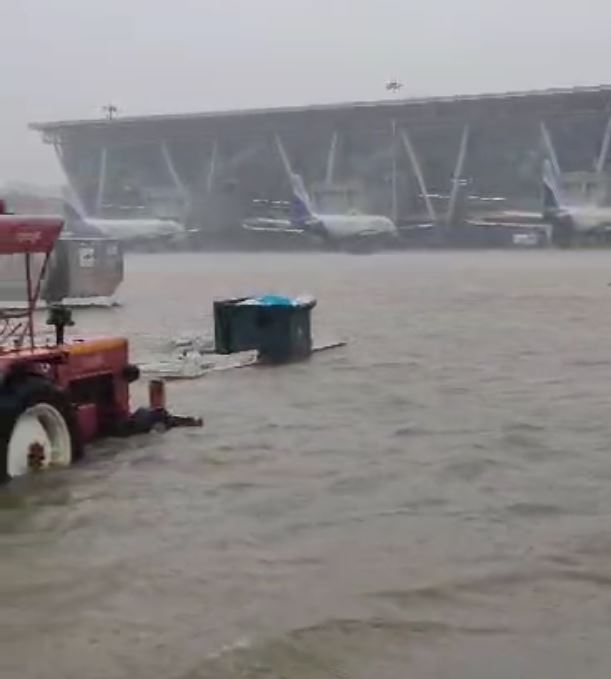
The airport, India’s third busiest after Delhi and Mumbai, was flooded at the beginning of this week when Cyclone Michaung hit the southern Indian state of Andhra Pradesh. Chennai Airport (MAA) was forced to halt operations as heavy rain submerged its runways, and strong winds whipped up. Airport authorities cancelled 70 flights and diverted many others to Kempegowda airport in neighboring Bengaluru City.

The masses of water that brought flight operations to a standstill are the fourth severe weather event in just a few weeks to hit a major airport and massively impact flight operations. This was previously the case in Nairobi and Dubai which both battled flooding, internally (NBO) and externally (DXB), CargoForwarder Global reported. Meanwhile, over in Europe, Munich has been struggling with the onset of heavy snow, leaving passengers stranded for almost one week. Winter should not have come as such as surprise, however, in this case.

Clogged drains
The flooding of MAA was caused by the blockage of the sewage system in parts of the city that is home to 12 million inhabitants. This caused rainwater to mix with dirty water, resulting in feces and waste flooding the airport. The clogging of the drains was caused by mountains of garbage that usually lie on the sides of the streets and which were washed into the city’s sewage system as a result of the massive rainfall.

Severe cyclonic storm
Cyclone Michaung was categorized as a “severe cyclonic storm”, with sustained winds of 90-100 km/h (56-62 mph) and gusts of up to 110 km/h. Thousands of people had to leave the coastal areas and were brought to relief camps on higher ground.

The warm waters of the Bay of Bengal have spawned several deadly cyclones over the past few years, causing massive destruction in both India and Bangladesh.

In 2020, Cyclone Amphan killed at least 80 people in India and left thousands homeless. In 2019, Cyclone Fani claimed at least 89 lives and displaced millions in Odisha, another coastal Indian state. In 1999, a super cyclone killed about 10,000 people when it struck Odisha.

Putting the brakes on global warming?
Delegations from over 200 countries are currently discussing ways to reduce or partially stop global warming at the climate conference in Dubai. The United Arab Emirates, together with other Gulf states such as Saudi Arabia, but also India, Russia, and China, are opposed to phasing out the burning of fossil fuels. According to scientific findings, this is the main cause of the climate crisis heating up the globe.

Niger Air Cargo is in business again

0

After the military took power last July in Niger, the new rulers embargoed flight activities, including cargo services. However, meanwhile the new rulers have lifted the ban partially. An opportunity used by the Paris-headquartered general sales and service agent ECS in close collaboration with its Niamey-based Group member Niger Air Cargo to resume cargo flights to the landlocked African country (www.cargoforwarder.eu ….. 12NOV23). 

Adrian Thominet heads the ECS Group  –  picture: Company courtesy.

The ECS Group is a household name within the wider air freight community of Niger. This primarily because already a decade ago ECS obtained an AOC from the authorities in Niamey – the only one provided to a company whose parent is headquartered in Europe.

The first flight following the seizure of power by the local militia, took place on 08OCT. Since then, a B747-400F belonging to the fleet of UK lessor Allied Aviation, is connecting Liège in Belgium with Niger’s capital Niamey once a week.

Niche product
Although the aircraft is capable of accommodating up to 120 tons per flight, the Niamey-bound capacity is limited to max 40 tons because the freighter continues its journey to Nigeria and Kenya unloading exports there before returning to Europe filled with Kenya harvested flowers. 

“Our Niamey service is a niche product,” admits ECS CEO Adrien Thominet frankly. But one that is highly attractive “due to the current rate level of cargo consignments traveling from Western Europe to Central African destinations.” The agent’s flights are almost unrivaled, with only Azeri cargo carrier Silkway West serving Niger twice weekly, primarily for supplying relief goods to the local Red Cross and alike humanitarian organizations. “We are happy about the re-start of the weekly freighter link between Liege Airport and Niamey. This regular service is another important step to further grow the African network from LGG,” comments Torsten Wefers, VP Sales and Marketing,Liège Airport.

Foreigners keep exiting Niger
Following the lifting of the embargo, a couple of airlines from neighboring Arabian states like Morocco or Algeria also resumed their flight activities.  But their contribution to cargo services is only marginal due to limited space for freight consignments offered by their passenger aircraft’s lower deck compartments. However, keeping supplies of medicines, technical equipment, food or consumer goods running to a certain degree is essential for keeping life going in one of the earth’s poorest countries. Since the generals seized power, the EU policymakers and many businessmen are circumventing the country. French and German soldiers, based on UN mandate to prevent the spread of Islamic terrorism, are pulling out with Russian mercenaries from the notorious Prigozhin force stepping in helping the new military regime to stay in power. This worsened the situation for a large number of local people who are exploited and deprived of any political and civilian rights.

To call Niger’s situation challenging is an understatement
Despite this rather gloomy situation it is instrumental to keep the lifeline running by supplying technical items, medicines, food and other crucial produce to Niger by air, emphasizes Mr. Thominet. And the executive mentions another rather social consideration that should be rated high: “The local team of our group member Air Cargo Niger engages for long in social activities, establishes new business relations or fortifies existing ones. Also, they organize reliable onforwarding solutions for goods that travel by road from Niamey Airport to remote locations.” Particularly the latter aspect is a daily challenge for many in a state where peace has become an almost unknown word.

Qaptis decarbonizes truck rides

While many heads of state are currently haggling over concepts on how to limit global warming on the global stage at the climate conference in Dubai, resourceful companies are silently working on revolutionary, practical concepts to reduce greenhouse gas emissions. This is the case, for example, with Qaptis; a spin-off from the Ecole Polytechnique Fédérale de Lausanne (EPFL) in Switzerland. Its experts have developed a mechanism that can capture up to 90% of a freight truck exhaust’s emission and store the gases as liquid CO2 whilst the vehicle is en route.

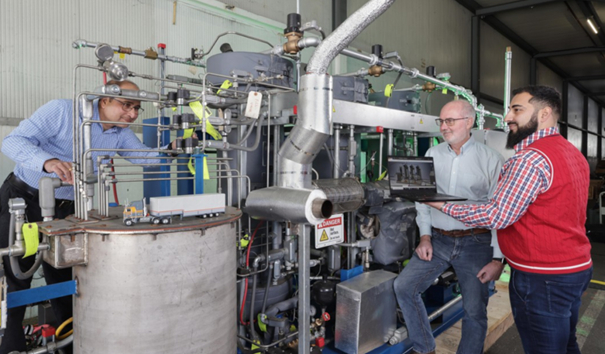
Research facility for collecting CO2 emissions from trucks – company courtesy

In 2022, according to official figures provided by the Swiss Federal Statistical Office, trucks operating in Switzerland emitted over one million tons of CO2. In the long term, this will likely go down as electric trucks will replace diesel-powered ones. Today, however, the number of electric trucks on the road is still very limited. In the first quarter of this year, a mere 600 e-trucks weighing more than 16 metric tons were registered in the entire EU, compared to 86,455 diesel vehicles.

From gas to liquid…
And this is where the start-up Qaptis comes into play. Its experts have developed a new decarbonizing mechanism which traps carbon gases coming out of the exhaust pipe and stores them in a liquid state. Following collection, the CO2 is cooled and separated from other gases such as nitrogen and oxygen, by passing over an absorbent powder. Once full, it is heated using the heat from the combustion engine. This releases the CO2, which high-speed turbochargers then compress into a liquid so that it takes up less volume. “We’ve finally completed the first step, which was transferring our core technology from the lab to industry,” says Théodore Caby, Qaptis Co-Founder and COO. “Now, we’ll focus on developing a device that can be installed directly in trucks.”

This said, much research and work are still to be done before conventional trucks are able to operate more sustainably and contribute to capping CO2 emissions. The first milestone was achieved in spring 2023, when a prototype produced the first drops of liquid CO2. The next technical challenge is to reduce the size of the device and shape it to fit different types of trucks. Once this has been accomplished, which is not a too herculean task, say the Qaptis experts, the liquid CO2 will be stored in a tank behind the cab, that can be drained when the truck returns to its starting point. “We initially plan to target local freight carriers that want to reduce their environmental impact,” says Caby.

… to fertilizer or carbon-neutral e-fuels
Next on the agenda is a recovery system allowing drivers to empty their CO2 tanks at gas stations, so that the technology can be employed more broadly. Industries in a variety of countries are currently developing and adopting carbon-capture technology, while others are concentrating on finding solutions for smart carbon utilization and storage. For instance, captured CO2 has applications in the production of food, fertilizer, energy, building materials and synthetic fuels.

Qaptis raised CHF 1.3 million (USD 1.5 million) from business angels and venture-capital funds in a successful funding round in spring. This has enabled the start-up to embark on its next phase of development. “We’re currently in talks with a large local freight carrier that would like to implement our technology soon,” says Caby. “We’ve also been contacted by businesses in Asia; but for now, we’re focused on the Swiss, German and Austrian markets.” One day, Qaptis’ technology could be used for other types of vehicles too, such as ocean vessels, he indicates.

Hellmann partners with shipzero
Meanwhile, 900 km north of Lausanne, the logistics company, Hellmann, based in northern Germany, has signed a partnership agreement with shipzero. That company specializes in measuring and reducing CO2 emissions in global freight transport. As part of the co-operation, shipzero supports the entire data management process and determines the CO2 emissions for Hellmann’s global road transportation. In doing so, shipzero also includes primary data from external logistics partners in the calculation, thus ensuring that the CO2 measurements are based on actual consumption data and not simply on extrapolations and average values, as has been customary in the market to date.

In order to determine precise emission volumes, data is exchanged between Hellmann and its transport partners via the shipzero platform. Consequently, exact Scope 3 emissions are collected per customer, shipment, and route selected. These are then integrated into the calculation of the corporate carbon footprint, external audits, and sustainability reports, thus supporting compliance with new regulatory requirements that will come into effect from 2024. The data-based processing and analysis of transport data enables Hellmann to identify specific decarbonization projects within the supply chain and implement them together with its partners.

Pledge co-hosts COP28 table to accelerate change

Around 80,000 [!] people have registered for the COP28 in Dubai, which began on 30NOV23 and runs through to 12DEC23. This will make it the largest COP summit yet in a host state that also happens to be one of the world’s top 10 fossil fuel exporters. However, leaving the recent controversy uncovered by independent journalists at the Centre for Climate Reporting aside, this COP28, attended by almost 200 heads of state, will be the first one to undergo a “Global Stocktake”, and take a serious look at how far the world has come in tackling the climate crisis and how much of a course correction is needed.

Encouraging industry discussion – Pledge Co-Founder David de Picciotto – Image: Pledge

It will also be the first time that climate tech specialist, Pledge, will co-host a round table with Smart Freight Centre (an international non-profit organisation focused on reducing greenhouse gas emissions from freight transportation), inviting shippers, freight forwarders, and carriers to share best practices and exchange ideas that can help accelerate the pace of decarbonisation in the industry. CargoForwarder Global (CFG) asked David de Picciotto (DdP), CEO and Co-Founder, of Pledge, to expand.

“The OECD has predicted that global logistics emissions are set to increase 42% by 2050 – the same year the Paris Agreement has tasked the EU to achieve net zero carbon. If we’re going to meet this challenging goal, the industry needs to come together and collaborate.” – David de Picciotto, Chief Executive Officer (CEO) and Co-founder, Pledge.

CFG: I believe this is the first time that Pledge and Smart Freight Centre are hosting a table at COP28 on 06DEC23. What motivated the idea?

DdP: Indeed, this marks the first collaboration between Pledge and the Smart Freight Centre (SFC) in hosting a table at this prestigious event.

The motivation behind this initiative is rooted in our commitment to driving impactful change in the freight industry’s sustainability landscape. COP28 provides an opportune platform, bringing together public and private sector players to engage in meaningful discussions and collaborative efforts aimed at decarbonising logistics supply chains.

CFG: And how did the Pledge / Smart Freight Centre partnership come about? Have you collaborated before?

DdP: This collaboration between Pledge and the Smart Freight Centre (SFC) has evolved through a shared commitment to advancing sustainability in the logistics and freight industry. It initially stems from Pledge’s accreditation as a vendor adhering to the Global Logistics Emissions Council (GLEC) framework, promoted by the SFC. This framework has formed the basis of the recently published ISO 14083, a standard for the quantification and reporting of greenhouse gas emissions arising from transport chain operations.

The GLEC framework is a cornerstone in the industry’s efforts to standardise and enhance the measurement and reporting of logistics emissions. Pledge’s commitment to and compliance with this framework aligns seamlessly with the SFC’s mission to drive sustainable practices in global freight and logistics.

While this marks our first joint initiative in co-hosting an Executive Roundtable at COP28, our collaboration extends beyond this event. As an accredited vendor, Pledge has actively engaged with the SFC, contributing to the ongoing dialogue and efforts to promote sustainable practices within the industry.

CFG: How do you feel air cargo was positioned in previous COPs until now?

DdP: In previous COPs, the positioning of air cargo in the sustainability discourse has grown increasingly prominent, with a notable emphasis on addressing the environmental impact of aviation. The industry has recognised the imperative to navigate towards a more sustainable future, acknowledging its role in global emissions.

One significant aspect that has gained traction is the discussion around sustainable aviation fuel (SAF) and book & claim mechanisms to account for its use and reporting. Sustainable aviation fuel has emerged as a pivotal component in the industry’s commitment to mitigating its environmental footprint.

As the demand for air travel and cargo services continues to rise, SAF presents a tangible solution to reduce carbon emissions. Industry stakeholders, including carriers, are increasingly investing in, and exploring the integration of sustainable aviation fuels into their operations, both for freight and passenger transport. This shift signifies a collective commitment to fostering a more sustainable and environmentally responsible air cargo sector.

CFG: What will your main topics be for the table?

DdP: By bringing together key stakeholders, including industry leaders, policymakers, and experts, we aim to foster a dynamic dialogue focused on pressing topics such as data-driven sustainability, emission calculation methodologies, and the path forward for the decarbonisation of the industry. Our goal is to create a space where participants can share experiences, discuss challenges, and explore innovative solutions that contribute to a more sustainable future.

CFG: What do you hope will be the outcomes of the COP28?

DdP: From a business perspective, I hope to see elevated commitments from nations and industry stakeholders to prioritise sustainable practices that impact the freight sector, acknowledging its significant role in global emissions, particularly as freight is set to become the highest emitting sector by 2050 (20% of global emissions) – source: https://climate.mit.edu/explainers/freight-transportation#:~:text=Even%20as%20other%20energy%20sectors,highest%20emitting%20sector%20by%202050.

Additionally, I hope to see advocacy for policy advancements that specifically address the fossil fuel transition, incentivise climate action, support the adoption of innovative solutions, and foster the development of technologies and practices that reduce environmental impact in the freight industry.

CFG: Where do you see the biggest challenges for the air cargo industry with regard to Sustainable Development Goals?

DdP: Identifying and addressing challenges is crucial for the air cargo industry to align with Sustainable Development Goals (SDGs).

Mitigating carbon emissions remains a significant challenge, as achieving ambitious reduction targets while meeting the increasing demand for air cargo services will require innovative solutions over time. While innovations including alternative fuels as well as electric and hybrid aircraft pose challenges in terms of feasibility, scalability, and infrastructure development, it will be interesting to monitor their developments over the years.

CFG: Standardising data collection methods for emissions reporting is pivotal and indispensable. This not only ensures accuracy but also fosters alignment with Sustainable Development Goals across diverse industries, contributing to a unified and transparent approach to sustainability efforts.

DdP: Establishing consistent metrics and methodologies industry-wide is challenging but crucial for meaningful progress. This will necessitate collaboration across borders, aligning diverse stakeholders, including governments, carriers, and logistics providers.

Note that these points touch mostly on the environmental SDGs; besides these, the air cargo industry is also impacting social SDGs amongst others.

CFG: Smart Freight Centre does not seem quite so well-known in the air cargo industry – is this because it is mostly focused on road and sea? What are air cargo initiatives that we could highlight, or where we could encourage more involvement?

DdP: The GLEC framework does cover air as a mode of transport. Additionally, see the latest initiative: https://www.smartfreightcentre.org/en/our-programs/clean-air-transport/

CFG: What will Pledge and SFC be doing with the outcomes of the discussions at the table?

DdP: You’ll see soon enough! [Smiles]

Intriguiging. Thank you, David de Picciotto.

One outcome already, is Pledge’s latest data solution: Developed in accordance with Smart Freight Centre (SFC) guidance and launched on 30NOV23, its Accuracy™ feature furnishes forwarders with accurate Data Quality Indicator (DQI) emissions levels that they can share with shippers, so that these can make informed emissions-based supply chain decisions.

André Mohamed, Chief Product Officer and Co-Founder, Pledge, explained: “Shippers are looking for freight partners who can offer transparent and actionable insights into their supply chain emissions, and it’s becoming increasingly common for shippers to compare forwarders based on their ability to provide quality sustainability data when putting business up for tender. We’re the first accredited vendor to include a feature that helps forwarders and their clients understand the quality of their supply chain emissions calculations by providing SFC DQI levels for every multimodal end-to-end shipment.”

IAM becomes part of ECS Group

0
Another GSA joins the ECS Group family. Image: Lemon Queen

IAM is the acronym for Ireland’s largest GSSA: International Airline Marketing – a family business that was founded in Dublin, back in 1989, by Sean McCool. Now run by his son, Ian McCool, the GSSA is responsible for more than 25% of Ireland’s annual air cargo exports. Its central office is located in Stoneybatter, 15 minutes away from Dublin Airport, and near to Dublin’s main freight agents. IAM has Senior Sales Representatives in Cork (serving Cork & Shannon), and Belfast, and over the years has grown to include a trucking division (since the mid-1990s), as well as handling support and air cargo dangerous goods training (since early 2000’s). It began as an Air Canada representative and now serves more than 15 international carriers. IAM has well established connections to all freight agents across Ireland.

On 16OCT23, ECS Group and IAM signed an acquisition agreement, bringing IAM into the world’s leading GSSA network, and increasing ECS Group’s Irish market share to 30%. The press release emphasizes “The familiar faces that have been the bedrock of IAM’s success will remain at the forefront, ensuring a seamless continuation of relationships with both customers and suppliers, with the added bonus now of a direct link into a truly international and highly respected partner network offering new opportunities, products and services.”

Adrien Thominet, Executive Chairman of ECS Group, commented: “IAM is the absolute leader in the Irish market, with more than 30 years of experience and an outstanding reputation. It is the perfect example of a family business that has remained true to its founding credo of ‘Service excellence and continuous improvement through innovation and professionalism’ – one that very much aligns with our ECS Group philosophy. We share commercial synergies too, in the companies represented across our network, and similar business acumen. When two winners join forces, everyone wins – in this case, our joint customers.”

Ian McCool, Managing Director of IAM, stated: “Our rapidly changing air-cargo industry landscape demands a solid global presence and innovative and flexible service solutions. In ECS Group, IAM sees a partner with an international reputation as a market leader, and one that recognizes the importance of growing its global business via a network of well-established local market representative offices. We are proud to become part of a group that is forward-looking, technologically advanced, and known to be a highly supportive business partner that is committed to promoting sustainability in the industry.”

Menzies Aviation becomes IATA CEIV Pharma accredited… again

0
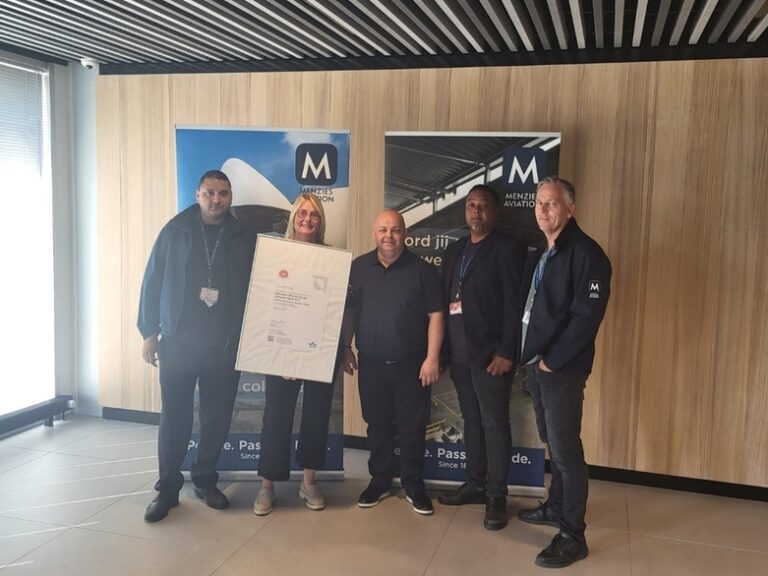
AMS is certified cool to IATA CEIV Pharma standard. Image: Menzies

Again, because this time it is the service partner’s cargo facility at Amsterdam Airport Schiphol (AMS) that was awarded the IATA Center of Excellence for Independent Validators in Pharmaceutical Logistics (CEIV Pharma) standards. certification on 28NOV23. AMS is now the fifth facility within Menzies’ international network to become IATA CEIV accredited. The other airport locations are: Sydney (SYD), Melbourne (MEL), London Heathrow (LHR) and Budapest (BUD) airports. All five locations have proven themselves capable of meeting the rigorous requirements outlined in the audit paper, that ensure the professional handling of high-value, time-sensitive, and temperature-controlled pharmaceutical products, thus ensuring their integrity and quality along Menzies’ responsibility within the overall supply chain.

AMS operates a team of 250 employees at its 37,000 m² airport cargo warehouse, and annually handles around 300,000 tons of cargo. As per CEIV Pharma, training, compliance to processes, and adequate equipment/facilities must be available and documented. “Prior to being awarded the certification, Menzies implemented a series of IT upgrades to ensure all relevant pharmaceutical checklists were digitized and correct handling was guaranteed. This ensures all Menzies operations meet the industry’s need for compliance, standardization, accountability, and transparency across the air transport supply chain,” the press release underlines.

Miguel Gomez-Sjunnesson – Executive Vice President Europe, Menzies Aviation, said: “Receiving the IATA CEIV Pharma accreditation is testament to our unwavering commitment to excellence in air cargo services, and recognition of our dedication to ensuring the utmost quality and integrity in every step of the supply chain journey. We’re delighted that Amsterdam joins the list of Menzies’ CEIV Pharma approved facilities. At a time when our cargo network is expanding globally, it’s important that our facilities and processes meet the high standards of pharmaceutical handling that this accreditation demands.”

More Maersk – this time over in the UK

0
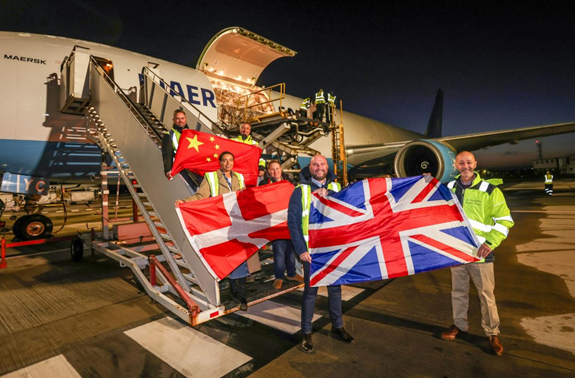
Maersk Air Cargo chooses Bournemouth for China-UK route trial. Image: Cargo First – Bournemouth Airport

… At the UK’s boutique airport, Bournemouth, that is working on carving a name for itself in the world of air eCommerce. And that is precisely the focus of Maersk Air Cargo’s China-UK flights. The carrier has opted for Bournemouth Airport (BOH) as its UK gateway in a pilot route from China, that will initially run until the end of 2023, and has been created to cover the seasonal peak, for now. Should it go well, the press release points to the “potential to continue thereafter”. Bournemouth, referred to informally as London’s seventh airport (after Heathrow, Stansted, Gatwick, Luton, Southend, and London City airport), given that it is located just 160 km southwest of the capital, has the benefit of not suffering the saturation that its larger international peers face. And it is this flexibility that the airport is seeking to exploit as it focuses on building up its cargo operation, marketing itself as an alternative gateway outside London. Together with Cargo First, which operates the Cargo First Logistics Park (set on a site that offers 93,000 m² of warehousing development potential) at the airport, Bournemouth Airport is part of the UK’s privately-owned Regional and City Airports (RCA) group.

Maersk Air Cargo has already begun operating weekly flights from Hangzhou Xiaoshan International Airport (HGH) in Zhejiang province to Bournemouth (BOH), deploying a Boeing 767-300 freighter which offers 45 tons of cargo capacity. It collaborates with BOH’s in-house air freight business Cargo First. “For Copenhagen-based Maersk, the route is part of its growing air freighter network between mainland China, Southeast Asia, Europe and the US,” the release states. A Hangzhou connection to Billund Airport (BLL) in Denmark was established in MAR23, followed by a Hangzhou to Chicago Rockford International Airport (RFD), US, service in APR23.

Gary Jeffreys, Managing Director of Maersk Area UK & Ireland, stated: “It’s fantastic to see Maersk Air Cargo landing in the UK. This represents our integrator strategy and demonstrates our product offering and capabilities across all modes of transport. Whether it be time critical, capacity challenges or product launches we have the capabilities to meet our customers’ demands.”

Steve Gill, Managing Director of Bournemouth Airport, said: “We’re delighted that Maersk has chosen Bournemouth for this new route as we grow our ambition to become the UK’s number one entry and exit point for time critical cargo. We now have 500 tons of weekly import capacity operating between China and Bournemouth as more customers take advantage of our location, lack of slot constraints and ‘One Team’ integrated approach across all airport and cargo handling operations.”

dnata wins Maersk Air Cargo business for CGN

0
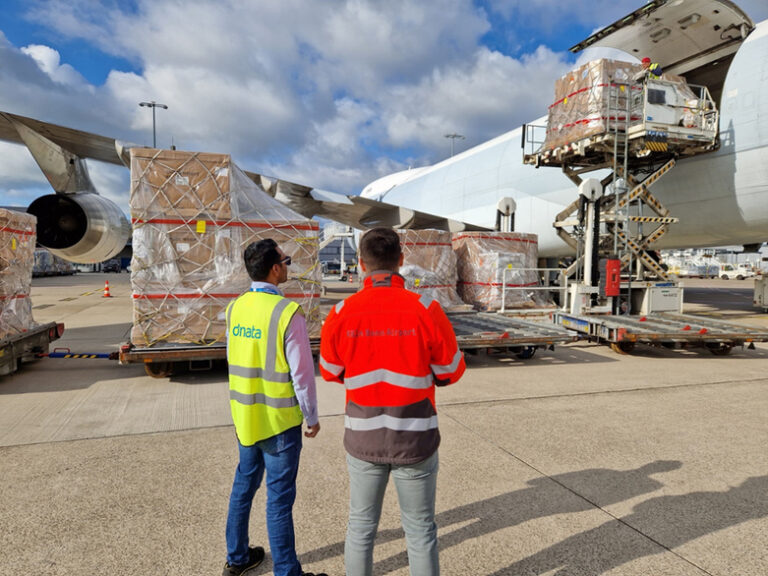
Serious shipping over in Cologne from a neo air cargo sea-freight giant. Image: dnata

Who would have imagined, back in 2019, that a sea freight giant would begin operating its own cargo airline at some point? And yet, here we are in 2023, and Maersk Air Cargo has been actively flying since just over a year and has now selected dnata to handle its cargo over at Cologne Bonn Airport (CGN). The multi-year cargo contract wherein dnata agrees to provide quality and safe cargo handling services to the airline at CGN, was signed on 30NOV23. Maersk foresees around 6000 tons of cargo on board of its weekly flights between Cologne and Greenville (GSP) in the USA. They are operated using a Magma Boeing 747-400F aircraft and are set to increase in frequency and thus also available market capacity, soon. No problem for dnata, which already handles around ten times that amount at CGN Airport, where it exclusively manages the 12,000 m² Cologne Bonn Cargo Centre. dnata acquired the center’s operator in 2022, and now employees a team of 100 staff to serve its 20 airline customers. Maersk will be served by its own dedicated dnata team at Germany’s third largest cargo airport. Like Maersk Air Cargo, the airport, too, has potential for growth and the good fortune to be allowed to operate 24 hours a day, offers a good road connection and is conveniently located (Northwest Europe) to serve a number of key markets.

Stef van Binst, Managing Director, dnata Belgium and Germany, said: “We are proud that Maersk has chosen dnata as its trusted provider for safe, reliable, and efficient cargo handling services. This significant contract win is a testament to our Cologne team’s hard work and unwavering commitment to service excellence. We look forward to a successful partnership with our newest customer in Germany.”