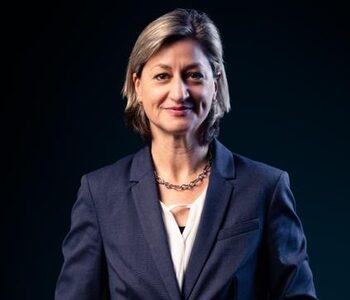
Niklas Wilmking will be new Global Board Member for Contract Logistics. Image: DB Schenker
All change on 01JAN24 over at DB Schenker. Its current Global Board Member for Contract Logistics and Supply Chain Management, Hessel Verhage (51) is stepping down on his own volition to return to his family in the USA. The release points out that Verhage is due to soon take up a new position, there, outside the logistics sector. The baton is now being handed to the company’s current CEO Asia Pacific, Dr. Niklas Wilmking (49) as the new member of the Global Board of Management for Contract Logistics and Supply Chain Management with the start of the coming year. Having joined the company in 2002, Dr. Niklas Wilmking brings 21 years of internal and international experience in a number of management positions across Germany and Asia, leading up to his current role as CEO Asia Pacific since JAN21. His extensive air cargo knowledge is underpinned by a PhD in Logistics from the Technical University of Berlin, following on from a Business/Economics degree from the University of Bayreuth.
Dr. Levin Holle, Chairman of the Supervisory Board of DB Schenker, commented: “In more than 20 years at DB Schenker, Niklas has impressed in every position and is an exemplary leader. We are delighted to be able to harness his many years of in-depth expertise and his great understanding of the needs of our global customers for the Management Board of DB Schenker.”
Jochen Thewes, Global CEO of DB Schenker, stated: “As Global Head of Air Freight and CEO Asia Pacific, Niklas has led his teams with outstanding expertise and prudence. He brings positive energy and the will to make the best of DB Schenker every day. We are proud that he has now been appointed to the Management Board from our own ranks.”
Dr. Levin Holl thanked Hessel Verhage for his work at DB Schenker over the past four and a half years, initially as Chief Executive Officer Americas Region from AUG19, and then taking over his current position in SEP22: “We regret this very much and thank him for his successful work in outstanding positions for DB Schenker, most recently as Board Member for Contract Logistics and Executive Vice President Global Strategy.”
Jochen Thewes added: “With his work, Hessel has made a significant contribution to consolidating DB Schenker’s market position as one of the Top 5 global logistics service providers through strategic adjustments and to continuously improving the company’s performance. We wish him all the best for his future professional development.”
Diana Schöneich: Stronger together in an often over-looked segment. Image: GEORGI
Germany’s Association of Air Cargo Handlers – VACAD – (founded in Frankfurt/Main, in 2007), is another member stronger – this time industry heavyweight, GEORGI Handling. The air cargo handling company which has bases in Frankfurt and Leipzig, is the third big-name handler to join the organization this year, following in the footsteps of dnata and CHI Aviation Handling, and bringing VACAD’s member numbers up to 17.
GEORGI Handling currently handles around 130,000 tons of freight per year at its Frankfurt (Cargo City South) and Leipzig/Halle sites, employing around 150 employees to work at its 35,000 m² facilities. In addition to the DHL subsidiary European Air Transport Leipzig, its counts customers such as Vietnam Airlines and Air France-KLM.
Diana Schöneich, Managing Director of GEORGI Handling, commented: “VACAD gives a voice to the process segment of the supply chain that is relevant to us – air freight handling – and represents the industry in a solution-oriented and sustainable way. This is extremely important, because air freight handling plays a key role in the execution of the entire process chain and is still too often overlooked and undervalued in its importance due to the contractual constellations between forwarder and airline. Like all air freight handlers, we are constantly faced with the task of having to implement new legal requirements and, as a member of VACAD, we hope to be able to help shape the corresponding framework conditions in a practical way, but also to escalate and intervene at necessary points via the association. We are convinced that only together can we succeed in making the logistics export and import processes in Germany smart, transparent, affordable, and therefore attractive in commercial and procedural terms compared to other countries.”
Claus Wagner, Chairman of VACAD, said: “Whether it’s the duration of the background check, software problems with the Import Control System 2, or the discontinuation of the so-called special control procedure: our members all struggle with similar problems. Problems that we are working hard to solve. As an association, we want to and can make a difference. We are happy about every new member, and see our work confirmed by the addition of several new members this year.”
Atlas Air partner Repsol advocates switching from linear to circular economy to establish a more sustainable production and consumption model – chart: courtesy Repsol
The global multi-energy company, Repsol, has been contracted by Atlas Air and Inditex to supply SAF for their cargo flights operating out of Zaragoza Airport in Spain. This is particularly notable news since not only is Atlas Air the first cargo airline to regularly deploy SAF in its freight transport flights out of Spain, but also Repsol is starting up its first plant dedicated exclusively to the production of advanced biofuels – one of the first plants of its kind in Europe – at its industrial complex in Cartagena (Spain). It has invested over 200 million euros in the project and aims to eventually produce around 250,000 tons of SAF and renewable diesel per annum, using old cooking oil and agricultural waste. That represents a CO2 reduction of around 900,000 tons/year. While Repsol already began supplying sustainable aviation fuel (SAF) to Atlas Air for use in all its Inditex flights since November (Atlas Air is initially incorporating 5% SAF in all its flights), the new plant is necessary to ensure adequate amounts of SAF in the coming years. “In 2022, total SAF production worldwide was 240,000 tons, according to the IATA. In 2025, approximately 120,000 tons will be needed in Spain to cover the 2% obligation of RefuelEU Aviation. Production of the new plant will be able to cover all the SAF demand in the Iberian Peninsula, complying with the obligation until the European mandate rises to 3%,” the release explains, point to that figure increasing to 6% in 2030 and 70% by 2050.
Óliver Fernández, Director of International Aviation at Repsol, commented: “With this agreement, we take another step in the decarbonization of aviation. We show that SAF is the future, but also the present. With the upcoming launch of our new advanced biofuels plant in Cartagena (Spain), we are ready to supply the sector with the SAF it needs to realize its decarbonization ambitions.”
Richard Broekman, Chief Commercial Officer and Head of Sustainability for Atlas Air Worldwide, said: “We are committed to contributing to the sustainability of the aviation sector and appreciate this opportunity to work with our valued partners at Inditex and Repsol. It is critical for our sector to work together in driving wider adoption and availability of SAF, which ultimately will have a positive impact on our industry and the environment.”
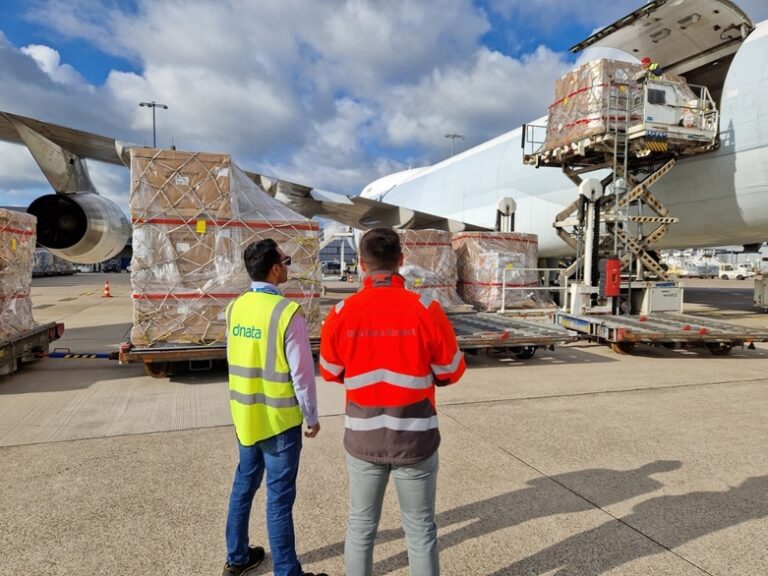
Well trained staff can be the difference between life and death in air cargo. Image: dnata
When it comes to dangerous goods (DGR), there is no leeway for error as this can have serious effects on flight and human safety. dnata continuously invests in the training of its employees, as well as works to improve its daily airport operations processes. Its DGR global training program was recently awarded the International Air Transport Association’s (IATA) Corporate Certification for competency-based training and assessment (CBTA) for Dangerous Goods. A dedicated dangerous goods working group from across the company’s organization, spent 18 months reviewing exactly how dnata assesses and delivers all dangerous goods training requirements in order to comply with IATA’s framework approach. Its findings and solutions were implemented in JAN23, to ensure consistent quality and competency across the global dnata network. dnata was subsequently subjected to a formal and comprehensive IATA audit from MAR23-AUG23, which looked at all aspects of its Training Management Systems and how the Dangerous Goods CBTA program was being applied. This latest certification is another milestone in a longer improvement process. For example, in 2021, dnata became the first global air services provider to adopt IATA’s Dangerous Goods Autocheck (DG Autocheck) platform for the acceptance of dangerous goods shipments.
Steve Allen, CEO of dnata Group, said: “We are proud to continue to lead the way in the handling of dangerous goods across our operations. We persistently invest in our training program and implement the latest global best practices to deliver the highest standards of safety and quality. We will continue to work closely with IATA and our partners to consistently provide best-in-class services to our customers and their customers.”
Frederic Leger, IATA Senior Vice President Commercial Products and Services, stated: “The safe transport of dangerous goods is a priority for the industry, with training being a foundational element. We congratulate dnata on achieving IATA’s CBTA Center certification for Dangerous Goods across their entire network. This achievement underscores dnata’s dedication to upholding the highest standards in dangerous goods training and assessment. It also stands as a testament to their unwavering commitment to excellence. dnata’s customers can now have even more confidence, that their products are being handled with the utmost safety and expertise at every touchpoint.”
Without the logistics support of specialist Rockin’-It many concerts by world-famous musicians would not take place – company courtesy
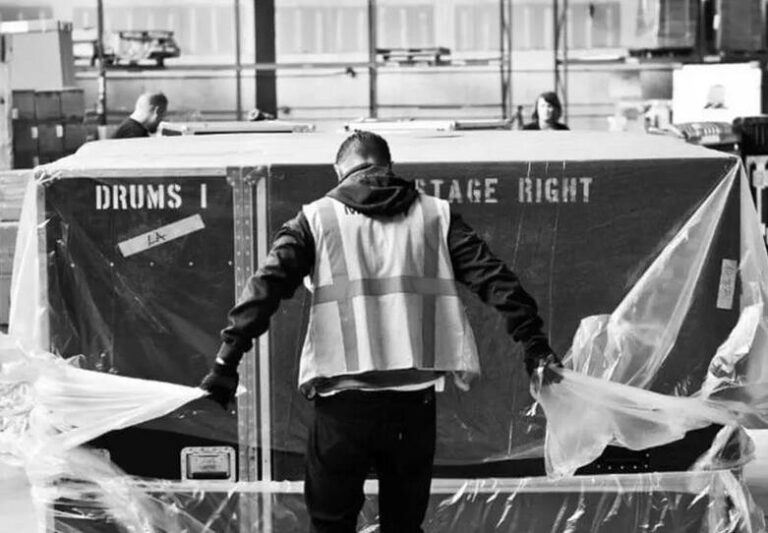
Long-standing logistics groupie, Rock-It Global, recently celebrated its 45th anniversary at a Welcome Party held on 06DEC23, during THE Conference Live at Lititz in Pennsylvania where it revealed it was rebranding back to its original Rock-it Cargo name. Rock-It is specialized in transporting equipment for huge music tours, sporting events, motor sports or theatrical productions. A lot has happened in 45 years, and the company took the occasion to reminisce on all the iconic events that were able to take place because of its logistical efforts. “Since 1978, Rock-it Cargo’s team has pulled together the logistical operations to make the world’s largest concerts possible – from Live Aid and Bruce Springsteen to Madonna and Lady Gaga. Whether it be bringing Billy Joel’s tour to the former Soviet Union in 1987, or helping Metallica become the first band to play all seven continents, Rock-it Cargo has been the logistical powerhouse keeping rockstars on-the-go,” the press release proudly gave as examples. Whilst its beginnings are rooted in Rock’n’Roll, its logistics portfolio has increased over the years to include live sporting events, motor sports, arena spectacles, and theatrical sets. Harry Potter and the Cursed Child, Cirque du Soleil, Walking with Dinosaurs, and Les Misérables, are just a small selection of theatre examples. The release continues: “Today, Rock-it Cargo has grown into a worldwide network of live event specialists that is growing in size and strength, with offices and boots on the ground across six continents.”
Daniel Rosenthal, Chief Executive Officer, Global Critical Logistics, said: “Over the past 45 years, Rock-it has created a legacy rooted in excellence and passion for the customer. We felt it was fitting that we should mark the occasion by going back to our roots and taking the best that Rock-it has to offer. This includes re-embracing the original name of the company, and relaunching a visual mark that so many employees and clients alike have fond memories and nostalgia for. For more than four decades, Rock-it has created a storied legacy growing to more than 600 employees operating on six continents and serving 7,500+ customers annually. Our team members are what differentiates us amongst our competition and what will take us to new heights as we look to the future.”
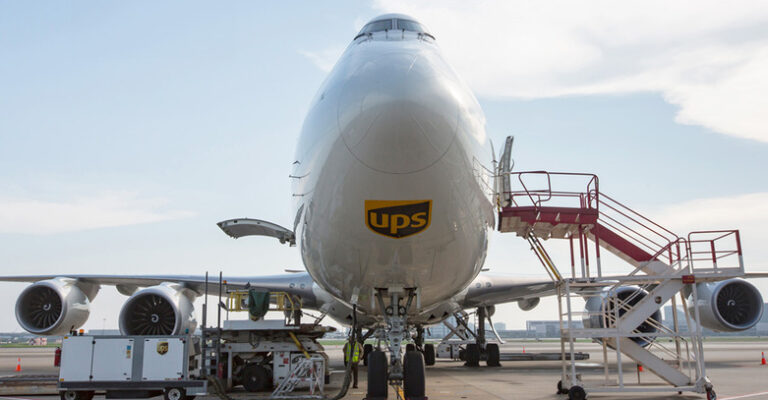
UPS and the HKAA enhancing UPS services. Image: UPS
20,000 m², direct access to aircraft, capable of handling 1 million tons of cargo per year, and ready to go into operation in 2028: Those are the key points around a brand-new hub that UPS announced it will be creating over at Hong Kong International Airport. It signed an agreement with Hong Kong Airport Authority last week, designed to “to boost global trade with enhanced operations” at this new hub. Located at the airport and also close to the Hong Kong-Zhuhai-Macau Bridge, for improved and more reliable connectivity to Hong Kong, the Greater Bay Area1, the new hub facility is planned to become UPS Hong Kong’s main processing location for the growing Asia Pacific consumer market, handling all imports, exports, and transshipments to and from Europe, the U.S., as well as other parts of Asia. It will enable UPS to optimize its existing operations in Hong Kong (founded some 35 years ago) by streamlining some smaller and separately located facilities. Naturally, as is the case with most new-builds these days, the hub will be fully automated and include state-of-the-art sorting and scanning technology, alongside sustainable, environment-friendly features.
The release promises further growth and investment: “UPS will continue to invest in Asia Pacific to serve its customers with stronger cross-border connectivity, greater capacity, and an industry-leading customer experience. In recent years, UPS has made numerous network and facility enhancements across Asia, including Singapore, Japan, China, Vietnam, South Korea, and the Philippines. UPS also launched UPS Premier, a ‘white glove’ shipping service targeted at healthcare customers who require precision logistics for patient-critical, time- and temperature-sensitive products. UPS Premier is now available in seven countries in Asia, including Hong Kong, with more locations planned for launch next year.”
Daryl Tay, President of UPS North Asia District, stated: “Hong Kong continues to be an engine of growth and a critical part of UPS’s global smart logistics network. This new hub, along with our existing operations at Shenzhen Bao An Airport, demonstrate our continued commitment to Asia. We will continue to invest in areas of our network that bring unique value to our customers and create additional growth opportunities for UPS.”
Cargolux announced last week that its subsidiary, Luxcargo Handling S.A. (LCH), had won the tender to carry out Luxair’s ramp and warehouse handling activities at Luxembourg Airport. It was awarded a license to also allow it to handle third party airlines.
Will the Luxcargo Handling operation start on time? Image: Cargolux
Richard Forson, Cargolux President & CEO, explained: “The takeover of Luxair’s ramp and warehouse handling services by LCH, is a great opportunity for Cargolux to strengthen its position in the air cargo industry and to further enhance its service offering to its customers. LCH also looks forward to continuing the relationship Luxair had with other airlines besides Cargolux. We look forward to commencing operations in 2024. Cargolux’ and Luxair’s cargo ramp and warehouse handling teams have been working hand in hand for decades and I am confident that the transition will proceed smoothly.”
Interestingly, whilst Forson is convinced the transition will be smooth, the Luxembourg Times warned on the same day, of a possible delay in transition, since it was still not clear what would happen to Luxair staff. “Unions concerned after ministry awards cargo ground handling licenses,” was the title of the article, summarizing: “Transportation Minister Yuriko Backes has given licenses to Luxcargo Handling SA, a six-month-old subsidiary of state-owned freight airline Cargolux, and Goldair Handling SA [whilst] unions say some 1,200 employees at the [Luxair] cargo center continue to be completely in the dark about their future.” Should the situation continue, there is a risk that employees will strike [again]. The unions therefore want Beckes to intervene, since the State holds a share in both Luxair and Cargolux. Trouble has been brewing ever since SEP23, when Luxair stated that it would not be tendering for the for new ground handling cargo licenses, this time. Its staff are therefore waiting for answers as to their fate once the transfer of ground handling operations to Luxcargo Handling is complete.
Due to formal restrictions, LATAM Cargo was not able to offer the market its FRESH and FRESH Active product on westbound flights taking from Europe to Latin America. However, the hurdles have been set aside now so the embargo is history, illustrates Jorge Carretero (JC), Sales Director Central Europe, LATAM Cargo. Hence, both products can now be booked on transatlantic flights operated by the Santiago, Chile-based cargo carrier.
Jorge Carretero, Sales Director Central Europe, LATAM Cargo, welcomes the rebranding of FRESH and FRESH ACTIVE. It increases transparency, he states – picture: courtesy of LATAM Cargo
CFG: Jorge, what was the problem with your Fresh product in Europe?
JC: We have offered FRESH in the past. But mentioning precise temperature data on the Air Waybill for perishables and other critical goods flying westbound was not permitted. Hence, in Europe we accepted and transported the consignments under the product name KEEP Cool.
But since 27NOV, customers can specify the required temperatures for their product on the AWB, i.e. 2C-8C or 15C-25C. This creates transparency and simplifies the processes for everyone involved. In line with this change, we have decided to rebrand this product segment, i.e. FRESH and FRESH Active.
CFG: What exactly is the difference between FRESH and FRESH ACTIVE? For outsiders, this double freshness sounds a bit confusing.
JC: The reason for the availability of two FRESH care options is because each of them caters to different needs. Also, they differ in the types of packaging that is required, comparable to shipments from the pharmaceutical and healthcare industries. To better explain this: When cargo is tendered in passive packaging, we provide FRESH 2C-8C or FRESH 15C-25C. This way, we offer a robust solution within the temperature range requested. Secondly, we minimize the times in which temperature sensitive cargo shipments may be placed outside of cool chambers or temperature-controlled areas, when processed on tarmacs, for instance.
However, when it comes to FRESH ACTIVE, the product requires that our clients ship their perishables on active temperature-controlled containers to ensure an uninterrupted cold chain. This we enable through our agreements with international container suppliers such as Envirotainer, DoKaSch, and CSafe.
CFG: Can pharma shipments be booked as FRESH or FRESH Active respectively, or only in combination with Express?
JC: No, our FRESH care is specialized for the transportation of perishable cargo, following the IATA recommendations in the perishable cargo regulations (PCR). For the transportation of pharmaceutical and healthcare products, we offer our CEIV Pharma certified care options of PHARMA and PHARMA ACTIVE.
CFG: Understood. So FRESH Active shipments require a special container for transportation to ensure a constant climate during the entire trip. Does LATAM Cargo intend to purchase cool boxes, managing the ULD fleet on its own, or is leasing, implying additional fees, the preferred option fitting individual transport needs?
JC: In the case of FRESH Active, at LATAM Cargo we offer the alternative of managing the container lease by collaborating with the above-mentioned providers of cool boxes. The cost of the lease itself depends on the type of container and duration of the lease. These specifics are fully clarified with our clients before booking. So they can sit back and relax knowing that their product fits the cool box it requires for safe air transportation.
CFG: Are all international stations currently serviced by LATAM Cargo capable of managing the demanding FRESH Active product? After all, the ULD’s temperatures have to be monitored, batteries recharged, local handling personnel must be trained and certified, tarmac times must be held extremely limited etc.
JC: We offer this service at most of our stations within our international network. This depends on the local infrastructure, the capacity and the personnel whether they have been trained and certified for handling this demanding commodity. Hence, it depends on various factors as to whether we activate a station for the FRESH product. After all, we don’t compromise on safety and performance because we ensure our customers that we deliver a reliable and scalable transportation solution. To avoid mistakes, it is recommendable to visit the FRESH section on our website, where the stations are listed that handle the product.
CFG: In case of hiccups, active communication with customers is key. Is LATAM Cargo setting up a dedicated team always monitoring the transport of the cool boxes to prevent errors, mismanagement, and claims?
JC: At LATAM Cargo we strive to reduce temperature changes jeopardizing the integrity of a sensitive FRESH shipment to the best of our ability. In the case of contingencies, we have clearly defined processes to handle the hiccups right on the spot, this way limiting the time the goods are exposed to heat or frost. It goes without saying that in such a case the consignment is stored in a proper cooler while the contingency is resolved. Let me emphasize that our warehouses are technically also equipped to monitor any temperature deviations. This assures to keep the storage temperature within the required ranges and allows immediate action in case of deviations.
CFG: Cargo shipments travel one way. RAP or RKN cool containers must be brought back following a mission. How does LATAM Cargo organize the timely return of the boxes?
JC: Right at the booking process, the return of a cool box is taken care of by a dedicated team within LATAM Cargo. The client is informed about the estimated time the return process needs, so that he knows when the container is available again after the box has been thoroughly cleaned upon arrival. The entire return process is coordinated by our ULD team, whose experts are monitoring all container movements within our network. It is them who organize the return process of leased DoKaSch, Envirotainer or CSafe cool boxes utilized by LATAM Cargo for our FRESH products.
CFG: Jorge, thank you for your time and the information provided.
The world’s largest ACMI provider, the Avia Solutions Group, has translocated some of its cargo flights from Hahn Airport to nearby Cologne-Bonn Airport. This means that the virtual carrier now uses two airports in Central Europe that are both licensed to operate 24/7. The contractor is Danish shipping giant, Maersk, and its freight arm, Maersk Air Cargo. The Cologne flights fly to Greenville-Spartanburg (GSP), South Carolina, to supply parts and component to the U.S. production plant of car maker BMW.
dnata handles all shipments flown on behalf of Maersk Air Cargo from Cologne to Greenville/Spartanburg – credit dnata
The cargo flights ex Cologne-Bonn, scheduled on Thursdays and Sundays, are operated either by Air Atlanta Icelandic or ASL Airlines Belgium. While Cologne-Bonn airport is responsible for the operational processes, dnata’s local station is contracted to handles the cargo shipments (See: dnata wins Maersk Air Cargo business for CGN).
“We are proud that our freight sales team, led by Andrea Tony Geslao, has gained a strong new partner for Cologne/Bonn Airport in Maersk,” says Tobias Lyssy, Head of Sales and Marketing, Cologne-Bonn Airport.
Tobias Lyssy heads the marketing and Sales division of CGN Airport – courtesy: LinkedIn
Final decision on the CGN flights is still pending, HHN maintains When asked about the loss of the two transatlantic flights, Hahn Airport Head of Sales, Roger Scheifele, said that Maersk and the Avia Solutions Group would initially only operate test flights in Cologne. To his knowledge, no final decision had yet been made regarding the migration. Although CGN is significantly more expensive for airlines than HHN, Magma has a maintenance base at CGN, which is supportive for flight operations, admitted Scheifele. At the same time, he pointed out that six to seven B747 cargo flights a week would continue to take off from HHN to GSP on behalf of Magma / Maersk.
The airport is located in a scenically attractive but very sparsely populated area. HHN was bought out of insolvency in MAY23 by the nearby located company, Triwo AG. On the occasion of the change of ownership, Triwo owner, Peter Adrian announced that he would invest 20 million euros by mid-2024, to bring the airport up to the latest technical standards and renovate the apron areas.
Andrea Tony Geslao heads the Cargo Sales unit of CGN – courtesy: CGN
More Maersk flights expected at CGN According to information obtained by CargoForwarder Global, Maersk/Magma are now planning to set up a third weekly frequency between CGN and GSP. However, it is still unclear as to when this will happen. Maersk’s air division is already active at CGN for some time, seen by the local maintenance station and a CGN-based B767F that flies within integrator, UPS’ network. The U.S. package giant uses Cologne-Bonn as its central European hub. According to the CGN management, Maersk is also looking into expanding its commitment by serving other routes to and from CGN. This was the outcome of a meeting between both sides that took place last Wednesday (06DEC23). “In our opinion, serving another destination in the USA would be a feasible option,” says Andrea Tony Geslao, Head of Sales CGN, without naming a specific airport. In his opinion, feeder flights between CGN and Billund in central Denmark are also an option, as road feeder transports on the approximately 550 km long route are a lottery due to permanent building sites around the Hamburg Elbe Tunnel. However, large freighters such as the B747 or the future B77 ordered by Maersk Air Cargo would be too big for this. Instead, the smaller B767F could be a very practical solution, says the manager.
Maersk wants to transport 1/3 of all shipments with its own freighters Currently, the freighter fleet of Maersk Air Cargo is still in the process of being established. The unit’s vision is that roughly one third of its total annual tonnage will be carried by its own freighters and within its own controlled cargo network. This the newcomer aims to achieve by combining leased and self-owned assets.
The remaining capacity will be provided by commercial airlines and charter flight operators, says Maersk.
Back to Cologne-Bonn and the airport’s 2023 performance. Its management estimates a throughput of 875,000 tons in the current year, which would be slightly above 2019 pre-pandemic results. CGN is the third-largest cargo airport in Germany after Frankfurt and Leipzig-Halle. Its excellent freeway access, highly industrialized environment, and approval for 24/7 operations, make it attractive for cargo airlines and integrators, as evidenced by newcomers such as Maersk but also existing customers like UPS, FedEx and DHL Express.
The Lufthansa Group made headlines in the past week with 3 reports.Firstly, Lufthansa Cargo announced the acquisition of another A321 freighter. It is the fourth in the carrier’s short and medium-haul fleet.This was followed by a release in which the Lufthansa Group informs of its joining Airbus’ ‘Carbon Removal’ initiative which benefits the climate but is technically highly ambitious.Finally, a Memorandum of Understanding was signed by Lufthansa and eVOL provider, Lilium, to better feed passengers into the carrier’s major hubs using electrically powered aircraft.CargoForwarder Global sheds light on all three topics:
Lufthansa Cargo’s 4th A321F bears the name ‘¡Hola España!’ on the fuselage. It can accommodate up to 28 tons per flight – courtesy LH Cargo
Fourth A321-P2F added to Lufthansa Cargo’s fleet Lufthansa Cargo took delivery of its first A321 freighter on 15MAR22. It is operated by Munich-based Lufthansa City Line, but marketed by the Frankfurt-headquartered cargo carrier. Just 8 months later, at the end of November, the carrier welcomed its fourth leased A321P2F: ‘¡Hola España!’ (reg: D-AEUJ) arrived and has already commenced commercial operations within the carrier’s regional network.
With now four A321 freighters in its fleet, each capable of accommodating up to 28 tons per flight, “we will serve 18 destinations in the short- and medium-haul network on more than 32 weekly flights” says Ashwin Bhat, CEO of Lufthansa Cargo. The executive added to this that high demand coupled with positive customer feedback confirms the carrier’s strategy to further expand its transport capacity. Since the start of the winter flight schedule, three new destinations have been added to the A321 fleet’s flight program: Amman, Jordan / Stockholm Arlanda, Sweden / and Stavanger, Norway. “We are constantly evaluating our network to create and adapt new capacities,” states Mr. Bhat.
There are currently no plans to acquire any further conversions of this Airbus variant, stated Lufthansa Cargo Head of Communications and Marketing, Nicole Mies, in response to an inquiry.
Instead, the carrier’s intercontinental fleet of Boeing B777F is expected to grow from 16 to 18 units during Q1, 2024. The expansion of the feeder network shortens the transit times of shipments addressed to customers in North or Latin America, or the Far East.
Lufthansa joins Airbus’ carbon capture initiative Two further trailblazing announcements have come from the headquarters of the Frankfurt-based Lufthansa Group. Firstly, Lufthansa and its affiliates, Swiss, Austrian Airlines, Lufthansa Cargo, Eurowings, and others, have joined the ‘Direct Air Carbon Capture and Storage’ (DACCS) project pushed forward by aircraft manufacturer, Airbus. In this process, CO2 is filtered out of the air and then deposited to neutralize its climate-harming effects. One option is to use the carbon gas to scale up the production of much needed Sustainable Aviation Fuels.
However, the technology is still in its infancy. This is demonstrated by tests conducted in Iceland. The biggest obstacle: an enormous amount of energy is needed to operate a large plant. This is not a major problem for Iceland, as the volcano-ridden country has plenty of geothermal springs that can be utilized. In contrast, Europe and most other regions do not possess these geothermal resources. So, they have to siphon off energy from other sources to capture greenhouse gases on a large scale. Hence, it cannot be ruled out that the net result of carbon capture is rather sobering if major plants are powered with energy based on conventional sources, i.e. oil or gas.
The devil is in the details Another unsolved issue is the storing of the captured gases. In an Airbus presentation, they are pressed into the spoil. An option is to store them in saline reservoirs or in cavities under the seabed. But this requires approval from the authorities and, above all, social acceptance.
Taken together, there are still many technical, infrastructural, and social issues that have to be straightened out before the first ton of captured CO2 can be deposited. Airbus partner, 1PointFive, names 2025 as the target year. The Houston, Texas-based company is currently building a large demonstration plant in the U.S., in close cooperation with another partner.
The entire process will be financed by carbon credits. “A carbon credit is issued for every single ton of CO2 that is saved or removed from the atmosphere. By purchasing these certificates, a company can offset unavoidable CO2 emissions,” Lufthansa spokesperson, Anne Hahn, illustrates the financial pillar of the project.
The Lufthansa Group has signed a contract with Airbus on the pre-purchase of verified and durable carbon-removal credits of 40,000 tons of CO2. The carbon-removal credits will be issued by Airbus through its Airbus Carbon Capture Offer (ACCO) service. In addition, the Lufthansa Group has secured additional carbon-removal credits of 10,000 tons of CO2 for four years. “We do not provide any financial details,” said Ms. Hahn when being asked by CargoForwarder Global.
What looks simple on the graphic is highly complex in reality – courtesy Airbus
Lufthansa partners with Lilium The third news from Lufthansa forwarded last week, was the signing of a MoU with eVTOL provider, Lilium. The aim is to use the Vertical Take-Off and Landing (eVTOL) aircraft developed by Lilium for passenger shuttles to and from major airports. In doing so, both companies intend to explore innovation opportunities in aviation, discussing areas such as ground and flight operations, future aircraft maintenance, as well as crewing and flight training. In a possible strategic partnership, Lilium and Lufthansa also want to analyze the opportunities for collaboration with third parties such as airports and regional partners, for instance on the advancement of infrastructure such as vertiports, airspace integration and the definition of required operation processes.
Lufthansa does not provide any information on the financing of this project either.