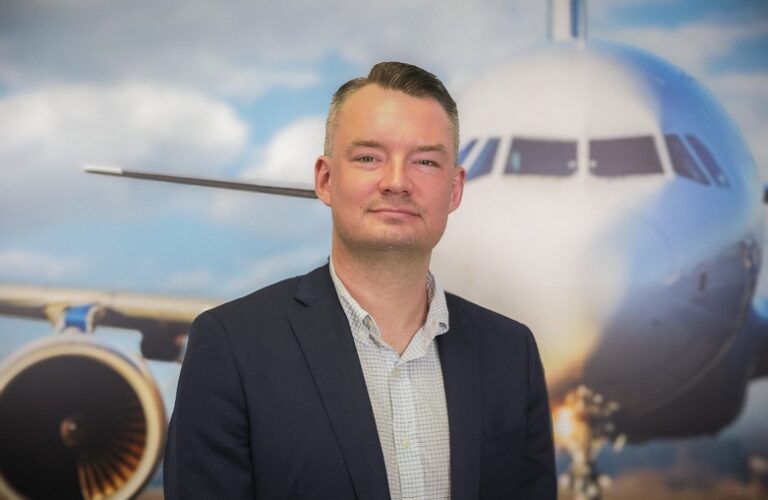
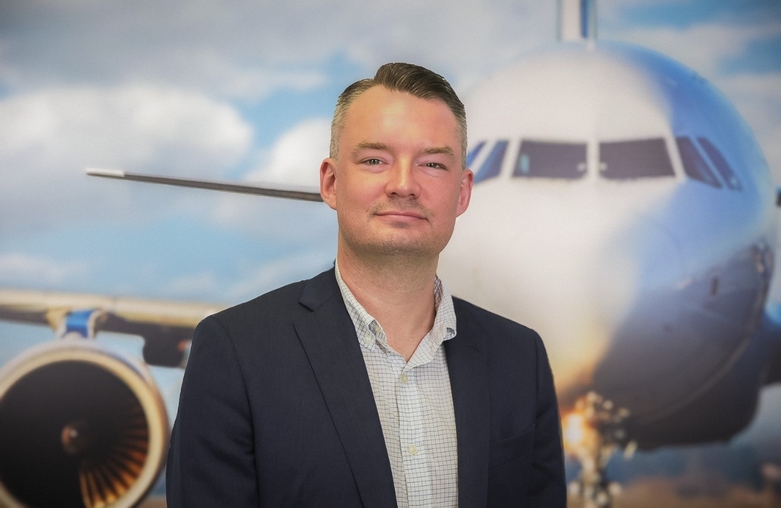
Robert Alleman, CEO of ACS Time Critical. Image: Air Charter Service
Air Charter Service’s Time Critical division revealed a major surge in demand for its Next Flight Out (NFO) service over the last year, as shippers turned to urgent, schedule‑based airfreight to navigate supply‑chain volatility and geopolitical disruptions. The NFO offering, which books cargo on the next available scheduled flight without a courier, grew around 175% year‑on‑year, reflecting its appeal for larger, pallet‑size consignments where cost‑efficiency still matters. That growth sits alongside an 85% rise in On‑Board Courier (OBC) jobs, and a 53% increase in U.S. ground‑transport bookings.
Robert Alleman, CEO of ACS Time Critical, said: “We enjoyed a very successful 12 months last year – with all three of our services seeing large increases. The biggest of those came in our NFO division, with almost three times the amount of work compared to 2024. We brought in the experienced Ash McCook a little under 18 months ago, who has a background in urgent logistics, which started in the armed forces more than 15 years ago – his focus on the NFO offering and team has really paid dividends. NFO provides a more versatile and cost-effective solution than OBC, as it allows for larger shipments that are unaccompanied by a passenger. With recent geopolitical situations, tariffs, supply chain disruptions and rapid market changes, NFO has become an invaluable resource for a wide array of industries. Having the IATA Cargo Accreditation affords us direct access to securing cargo capacity on virtually any airline, significantly increasing the speed at which we can book NFOs – increasing our efficiency, benefitting not only our team, but also our customers. Our Onboard Courier (OBC), or hand-carry, team increased their jobs by 85% last year, making it the most that they have dealt with in a year since we launched the division 10 years ago. We have a ground transportation department in the U.S., who often help to arrange trucking for our customers’ cargo and, with the increased workload, theirs has also grown, with 53% more bookings last year.” Dan Morgan-Evans, Group Cargo Director of ACS, added: “We restructured our TCS leadership team last year, with Robert as the new Head, and Andreas Spies promoted to COO, and it has really paid off. The future for ACS Time Critical is bright, following the huge strides the they made last year and the team expansion we are currently undergoing.”
Unsurprisingly, the recent survey carried out among The Airforwarders Association’s members revealed that the current Middle East conflict is translating into widespread operational disruption and rising costs for air cargo. Many carriers have rerouted around hotspots, lengthening flight times and reducing sector capacity, while energy‑price spikes and insurance surcharges have pushed up per‑ton costs. This is squeezing margins for U.S: forwarders already grappling with softening general‑cargo demand. More than half of the forwarders have said that they face cost increases amid ongoing global uncertainty. 65+% pointed to measurable cost increases. These were judged as significant increases by 27% of respondents, while 41% spoke of moderate increases. Over 75% of freightforwarding AfA members stated some level of disruption, which 29% classed as having significant impact, while 38 % reported moderate impact.
“Members identified rate volatility, flight cancellations, capacity constraints, and longer transit times as the most common issues, alongside growing customer service pressures and space embargoes,” the press release underlines, going on to emphasize the need for “a resolution to the shutdown of the Department of Homeland Security, which has been ongoing since 13FEB26, and for policymakers to prioritize payment of Transportation Security Administration personnel to avoid further disruption to aviation operations.” AfA promises continued operational updates and support in pushing for greater supply chain stability and predictability. Brandon Fried, Executive Director, Airforwarders Association, commented: “This data shows a sector under sustained pressure from global events beyond its control, with disruption, cost inflation, and uncertainty compounding daily operational challenges. Forwarders are adapting in real time, but they need a stable operating environment to keep goods moving efficiently. Ending uncertainty, whether operational or regulatory, is critical to maintaining the resilience and reliability of the air cargo sector.”
David Yokeum is Chairman of WCAworld – photo: courtesy WCAworld
WCAworld is expanding its global footprint with the launch of the WCAworld China International Logistics conference, the rebranded 22nd edition of the longstanding SINO Conference in Shanghai (20–23JUN26). The shift aims to open the event to a broader international audience while maintaining WCA’s signature high‑quality format of structured one‑on‑one meetings, networking, and partnership development. The conference remains a key platform for Chinese logistics firms to reach global partners and for international forwarders to source reliable counterparts in China, with the China International Freight Forwarders Association (CIFA) continuing its central role. Crucially, the event is open to the entire industry, not just WCAworld members, reinforcing its position as a major, accessible global networking hub in China’s evolving supply‑chain landscape.
Dan March, WCAworld CEO, revealed: “We’re revamping the conference, not just changing the name, to raise the bar – bringing more of the right partners into the room, especially from China, while presenting the same standards and experience that define every WCAworld event.”
Chairman of WCAworld, David Yokeum, commented: “When we started the SINO conference over twenty years ago, we were one of the first to bring international logistics networking into the country and many of our members have enjoyed fruitful business as a result. These changes allow us to keep that impetus going for the next twenty years and drive even more partnerships in the industry.”
Earlier this month, WCA reported strong success of its WCA Worldwide Conference 2026, which was held in Singapore 9-13MAR26. Despite the huge disruption and fall-out caused by U.S. operations on 28FEB26, the conference still saw 4388 freight forwarding attendees from 109 countries, 230 exhibition booths, and more than 80,000 one-on-one business meetings.
WCS Chairman, David Yokeum, stated: “Once again it was truly a privilege to see the resilience and adaptability of independent forwarders. Seeing thousands of the world’s best logistics companies overcome such difficulties and create millions of dollars of new business was awe-inspiring and a testament to the quality and can-do attitude that typifies our community. If COVID taught us anything it’s that even if the world stops, global trade doesn’t and providing the best platform for SME companies to thrive is always our goal.” CEO, Dan March, added: “The response from members was truly humbling as they pulled out all the stops to be in Singapore. Thanks to their incredible ability to adapt to every challenge, the Conference was again a resounding success with almost 90% of those booked able to attend. Thousands of our members from over 100 countries, with different politics and religions, came together as business partners and friends during the week providing a stark contrast to events elsewhere in the world.”
GAL Aviation implements Kale’s ACS Platform to optimize cargo appointment scheduling at El Dorado International Airport. Image: Meantime Communications
GAL Aviation has rolled out Kale Logistics’ Airport Cargo Community System (ACS) as the official platform for cargo appointment scheduling and delivery management at Bogotá’s El Dorado International Airport. The move aims to improve efficiency, transparency, and coordination among exporters, freight forwarders, and other stakeholders. By standardizing appointment booking and information exchange, ACS is expected to cut waiting times, enhance predictability, and streamline cargo flows between terminals and delivery areas. The platform also boosts shipment visibility and traceability, supporting better planning across the airport’s cargo ecosystem. GAL Aviation is urging all exporters, shippers, and logistics partners to register on the system to ensure a smooth transition in line with airport and industry standards.
Juan Pablo Luchau, Chief Executive Officer (CEO) of the airline GAL, remarked: “With the implementation of the ACS platform, we reinforce our commitment to modernization and greater efficiency within Colombia’s air cargo ecosystem. This initiative will help improve coordination throughout the logistics chain while strengthening the sector’s overall performance and competitiveness. We have already begun pilot testing at Bogotá’s El Dorado Airport, where a tool of this technological caliber is indispensable given the complexity of the station. Our commercial and operational teams remain fully committed to supporting our partners during the implementation phase, ensuring a smooth and successful transition to the new system.” Amar More, President and CEO of Kale Info Solutions, added: “Today, airports require smarter digital ecosystems to manage growing cargo volumes and complex interactions among multiple stakeholders. We are proud to support GAL Aviation and Bogotá’s logistics ecosystem with a solution that enhances coordination, increases cargo visibility, and facilitates more efficient cargo flows throughout the airport supply chain.”
ERA, AURA AERO’s hybrid-electric aircraft that will decarbonize regional aviation. Image: AURA AERO
French, private airline, Pan Européenne Air Service (PEAS) placed its first firm order for AURA AERO’s 19‑seat hybrid‑electric ERA aircraft, earlier this month, marking a key step toward decarbonizing regional aviation. The ERA combines eight electric motors (ENGINeUS, developed by Safran and the world’s first certified electric aircraft engine) and two SAF‑compatible turbogenerators, alternating between hybrid and electric modes to cut CO₂ emissions by up to 80% versus conventional aircraft in its class, while offering a 900 NM (1,500 km) range. Crucially, the design is versatile enough for passenger, business‑aviation, special‑mission and light cargo configurations, hinting at future niche‑cargo roles on regional routes where emissions and noise are under scrutiny. Pan Européenne, already a long‑standing regional operator, aims to be among the first carriers to run paying passengers on a hybrid‑electric aircraft, positioning ERA as both a sustainability showcase and a potential template for low‑impact, point‑to‑point air‑cargo feeder networks in Europe and beyond. “To date, the order book for ERA includes nearly 700 Letters of Intent from 16 international airlines and fleet operators, valued at USD 12 billion,” the press release reveals.
Antoine Foessel and Clément Jacquot, co-CEOs and owners of Pan Européenne’ joint statement reads: “AURA AERO’s ambition and values are perfectly aligned with our vision of the aviation of tomorrow. The technological and industrial choices made in the design and production of ERA since the launch of the company have always proved extremely relevant, and it was only natural that we chose this aircraft in order to be able to offer the first decarbonized air transport service in history.” Jérémy Caussade, President and co-founder of AURA AERO, said: “Pan Européenne is much more than a launch customer; it is a trusted partner that has been with us since the beginning of the ERA program. We are very proud to have the commitment of a company that has chosen to support a French manufacturer, because we share the same values and vision.”
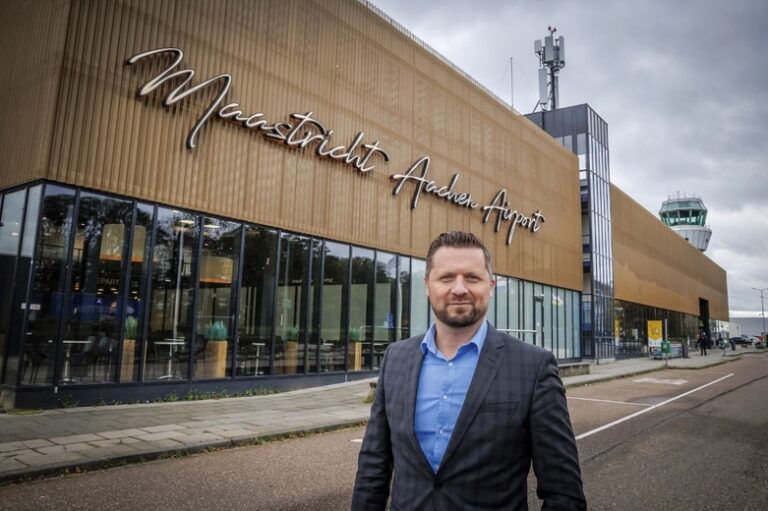
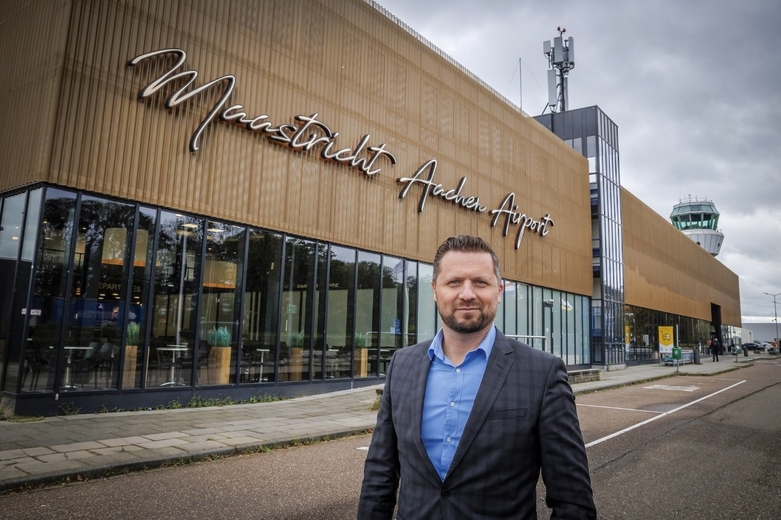
Dean Boljuncic, Head of Commercial Development at Maastricht Aachen Airport Image: MST
Speed is everything, when it comes to perishables – every minute saved, is a minute gained in shelf-life and saleable wares. And if you’re unhampered by congestion and blessed with great infrastructure, you’re in with a winning chance. But to actually perform up to twice as fast as your European peers, that is quite the badge of honor and a serious selling point when it comes to attracting new customers. No wonder, then, that Maastricht Aachen Airport (MST) published its findings last week, based on data it had collected over the course of 2025. A total of around 5,000 temperature measurements revealed that MST “is among Europe’s most efficient airports for handling perishable and sensitive goods”. By ‘most efficient’, it means pretty much acting at double the speed: “Data collected in 2025 shows that flowers entering Europe via MST reach their final destination in half the time, on average, compared to similar shipments travelling through other European airports”. The results showed that the average handling time required for flower shipments at MST, is around 3 hours. Other EU airports take between 3.5 to 6.5 hours for the same shipment types. “Even during peak periods, the Netherlands’ second-largest cargo airport achieves stable, short handling times of 2 to 4 hours. In comparison, the longest handling times at other European cargo airports range from 7 to 10 hours,” the release states, putting MST’s success down to its heavy investment, last year, in advanced monitoring technology to improve the quality and lifespan of the sensitive cargo passing through it. It also cites MST’s fortunate geographical location and direct access to the motorway for immediate onforwarding, which means that 4 out of 5 shipments make it to the Aalsmeer auction on the same day, before it closes.
Dean Boljuncic, Head of Commercial Development at Maastricht Aachen Airport, underlined: “Handling time is a decisive factor in the quality and shelf life of flowers. Every minute flowers are exposed to higher temperatures shortens their lifespan. This data shows that MST consistently needs less time to process delicate cargo, thereby reducing value loss across the supply chain. These results show that we are not only fast, but above all remarkably consistent. For perishables such as flowers, time is literally money. With these insights into the entire chain, we can reduce waste, increase quality, and offer our customers a reliable transport network.”
The two airlines have announced that they are offering joint cargo services on two intercontinental routes: Luxembourg–Narita and Narita–Chicago. Both routes will be served twice weekly starting 01APR26. The trans-Pacific route will be operated by cargo aircraft from the U.S. company, Kalitta Air. The collaboration is initially limited until 30SEP26.
Standing in the glaring spotlight of the media is not where Cargolux CEO, Richard Forson, and his CFO, Maxim Straus, like to be. This is evident, among other things, by the number of press releases published by the airline, that cite both executives. Since MAY25, there has been a total of just three new releases – which is extremely uncommon for a freight airline claiming to be Europe’s largest by fleet size. In its most recent communication, issued on 25MAR26, the company announced its intention to collaborate with the cargo division of the Japanese capacity provider, JAL.
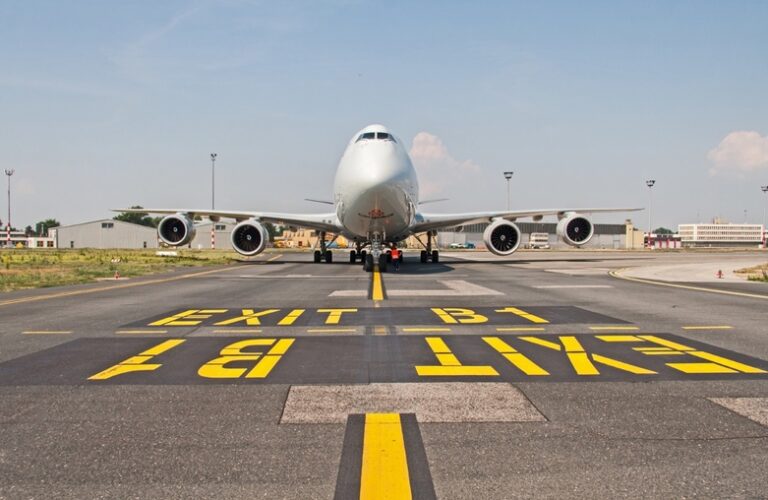
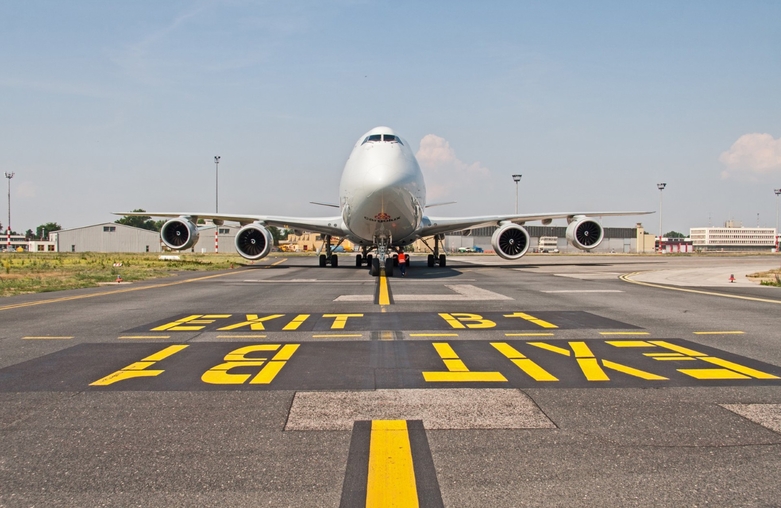
Kalitta steps in The agreement stipulates that the Narita–Luxembourg route will be offered every Wednesday and Saturday, with return flights departing the respective following day. The codeshare flights will be operated by the U.S. carrier, Kalitta Air, using a B747-400F. Its larger variant, a B747-8F aircraft, belonging to the Cargolux fleet, will be used on the Luxembourg–Tokyo sector. Departure days from Luxembourg are Tuesday and Friday, with return flights departing from Narita every Wednesday and Saturday. Both routes are integrated into the broader network of the two cargo airlines, which combines their respective networks to offer enhanced air cargo services to a wider range of customers across Asia and Europe. Reason for the move: JAL and Cargolux are committed to meeting the robust cargo demand on the Asia-Europe and Asia-North America routes. By doing so, they are contributing to the development of logistics infrastructure and creating new market value across continents, thanks to their capacity offering.
“More robust and stable cargo network,” Kito Yuichiro Kito, Executive Officer, Cargo and Mail Division, JAL, explained: “With the launch of this cooperation with Cargolux, we have secured scheduled freighter space on key European routes, allowing us to build an even more robust and stable air cargo network across the vital arteries of global commerce linking Asia with both the Americas and Europe. In addition to JAL’s passenger flights and freighter network connecting Asia and the Americas, we will leverage this partnership with Cargolux to deliver JAL’s high-quality cargo handling services to customers across an even broader area of Europe, centered around Luxembourg. Parent company, Cargolux, has not specified what role – if any – its subsidiary, Cargolux Italia, has in this arrangement. Cargolux Italia has served the Narita route for years, deploying Jumbo -400 freighters. That there is no specific mention of this, is particularly surprising since Pierandrea Galli, EVP, Commercial Planning, Cargolux Airlines, who took part in the JAL-Cargolux-signing ceremony, also plays an important part at Cargolux Italia’s executive management level.
Recited manager Instead, Galli said this: “Japan has long been a cornerstone market for Cargolux, and this partnership with Japan Airlines represents an important step forward for both carriers. These new transpacific routes will complement our existing services from Asia to North America. By combining our complementary networks and operational strengths, we can extend our reach into strategic global markets and deliver an expanded, high‑quality offering to our customers – built on the trusted standards of excellence shared by Cargolux and Japan Airlines.” In 2025, Cargolux closed the fiscal year with a profit of USD 448 million after tax and generated revenues of USD 3,324 million. Operationally, fiscal 2025 was marked by geopolitical tensions, with the ongoing war in Ukraine forcing Cargolux to avoid Russian airspace due to Western sanctions and increasingly hampered by escalating hostilities in the Middle East. These conflicts and their impact on global trade, affected both operational costs and efficiency as well as customer confidence. Founded in 1970, the cargo airline operates at more than 85 stations worldwide, in over 50 countries. Its shareholders are Luxair (35.10%), China’s HNCA (35.00%), the financial institutions BCEE (10.90%) and SNCI (10.67%), and the State of Luxembourg (8.32%).
The Netherland’s Council of State has overturned a former decision to downsize flight numbers at Amsterdam Airport due to inadequate justification. The vote annuls the former decision made by Barry Madlener, the minister responsible for aviation in the previous right-wing populist government, to limit flight movements to max 478,000 per year. According to the Council of State, his ministry did not take the decision with sufficient care and failed to provide adequate justification.
For example, when determining the maximum level of noise pollution, the ministry did not sufficiently take into account that quieter aircraft, emitting limited noise pollution, are also operating at Schiphol. This fact should have been included in the underlying emissions calculations. Since this did not happen, the rigid limit of 478,000 takeoffs and landings per year set by the Madlener administration is invalid, argues the Council. In addition their members claim that the Minister did not sufficiently substantiate his decision. According to the Council, not every aircraft produces the same amount of noise, so a simple addition of flights alone does not adequately reflect the total amount of noise that may be produced in a year.
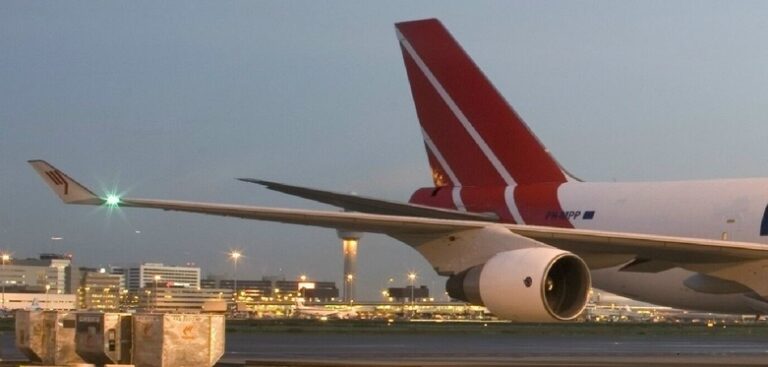
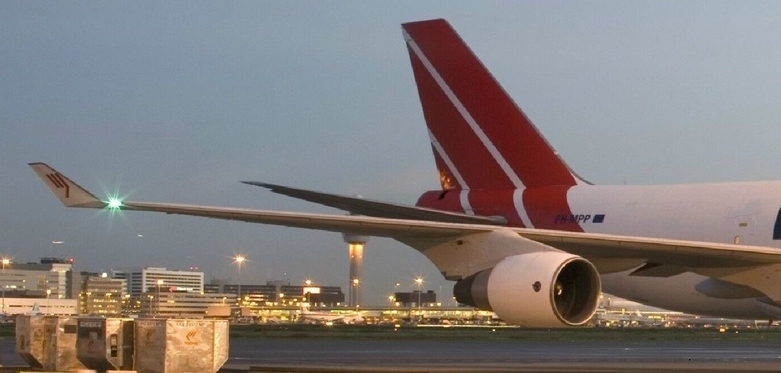
Martinair operated B747-400 freighter aircraft land in Almaty, Kahzakhstan, avoiding Dubai – company courtesy
(Almost) back to the starting point With the Council’s vote, the ball is now back in the Dutch government’s court. In practical terms, the search for sustainable solutions for future-proof flight management in Amsterdam can begin anew. The current situation is essentially similar to the conditions in 2004, when the first Airport Traffic Decree was adopted. Since then, the issue has been going in circles – despite mounting uncertainty in aviation circles and growing unrest among residents of communities adjacent to Schiphol the airport.
No influence on cargo traffic at AMS At least for the cargo sector in Amsterdam, the Council’s vote is unlikely to have any impact. The number of movements between 11 p.m. and 7 a.m. had already been reduced from 32,000 to 27,000 per year. However, according to traffic forecasts, this number of cargo flights is unlikely to be reached in the long term. To round it off: Following the Council of State’s decision, the Dutch government, Amsterdam Airport management, cargo airlines and Schiphol employees are just as wise – or rather, just as at a loss – as they were before.
Almaty replaces Dubai As for Air France-KLM Group member Martinair Cargo, the flight schedule for the coming summer season listed stopovers at Dubai World Central for a number of B747-400F services between Amsterdam and Hong Kong. Instead, all eastbound flights operated by MP to the APAC region are turned into nonstop services. Due to Dubai’s negative security outlook, MP Cargo decided to scrap all tank stops in until the Gulf Emirate further notice. Further to this, the carrier announced the upping of cargo flight frequencies to Hong Kong from 5/7 to 6/7. Three of these services will include landings in Incheon. A new routing, voiced earlier this year by the carrier. In addition to this, MP Cargo leaves open if the airline will return to Dubai DWC in the coming months. All depends on the security situation in the Gulf region, sys management. If not, Almaty will continue to be used for technical stops on westbound legs.
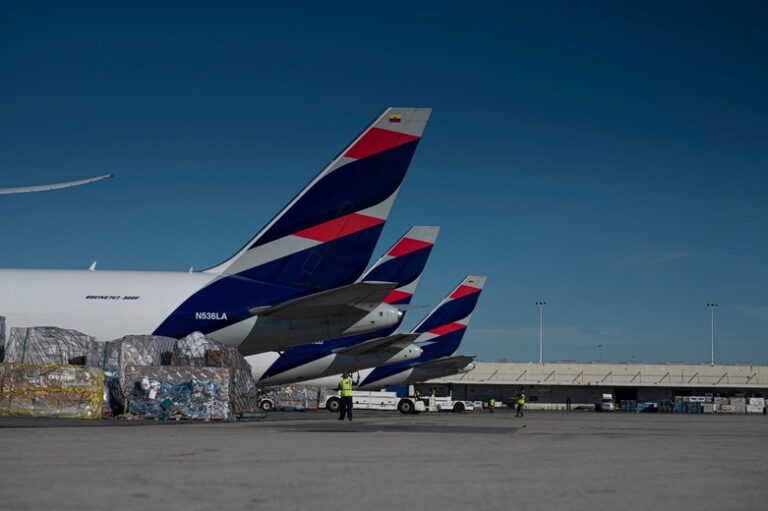
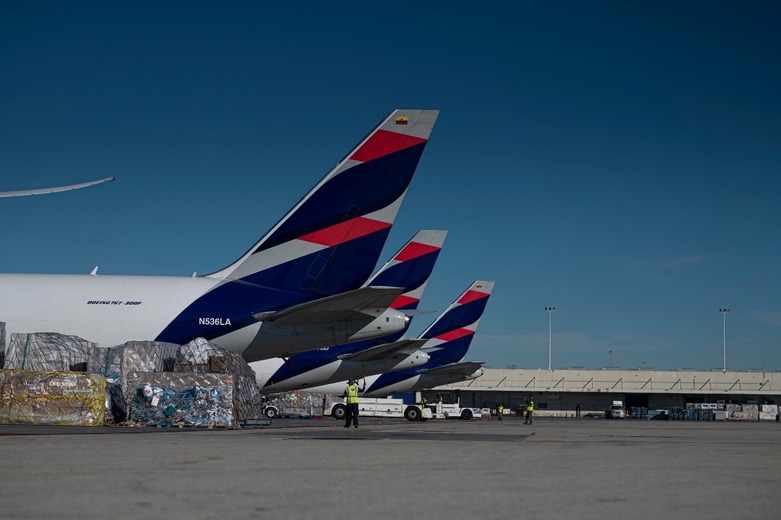
LATAM Cargo has consolidated its leadership role on Europe-South America routes, achieving a 30% market share despite aggressive cut-throat competition. Currently, the carrier operates approximately 90 weekly passenger (PAX) flights offering 1,300 tons of cargo capacity in the aircraft’s lower decks. This is complemented by 15 dedicated freighter flights per week, connecting Europe with key strategic Latin American cargo hubs providing an additional 800 tons per week. In an exclusive with CargoForwarder Global, Jorge Carretero, Sales Director Cargo, Central Europe (JC), announced intentions to scale up operations triggered by the upcoming EU-Mercosur agreement on free trade.
“The Europe-South America Corridor offers attractive transport and market conditions!” Jorge Carretero, LATAM Cargo
CFG:What impact does LATAM Cargo expect the pact to have on its business between South America and the EU? JC: LATAM Cargo sees the EU–Mercosur pact as a structural catalyst for long-term trade growth between South America and Europe. By reducing trade barriers and improving market access, the agreement is expected to accelerate cargo flows and unlock new business opportunities across key industries. From a strategic perspective, this reinforces the importance of the Europe–South America corridor as a core market for LATAM Cargo. We anticipate sustained demand growth, particularly in high-value and time-sensitive segments, and will continue to align our network, capacity, and product offering to capture these opportunities.
CFG: Which air cargo and consumer goods do your market analysts believe will benefit most from this treaty? JC: Perishables will remain a key growth driver, particularly exports from South America such as fresh fruits, vegetables, and flowers, where improved market access directly translates into higher volumes. At the same time, pharmaceuticals, high-value goods, and industrial cargo, including automotive and manufacturing components, are expected to see increased flows in both directions. LATAM Cargo is well positioned to support these segments through its specialized solutions, reliability, and extensive regional coverage.
CFG: On which specific routes can tonnage growth be expected (both import/export) triggered by the EU-Mercosur deal? JC: Our main gateway is São Paulo/Guarulhos (GRU), which concentrates the largest share of tonnage and serves as a key distribution hub for the region. We are further strengthening our footprint by adding new passenger routes from Amsterdam (AMS) and Brussels (BRU), while maintaining our established operations to Santiago (SCL) and Lima (LIM). Complementing this are our 15 weekly freighter operations between both key markets, providing a balanced combination of belly and freighter capacity to capture growth on both import and export flows across the EU–South America trade lane.
LATAM Cargo operates a fleet of 20 freighter aircraft
CFG: Which destinations does LATAM Cargo serve with freighter aircraft on routes between Europe and the four Mercosur member states? JC: Currently, we operate 15 dedicated freighter flights each week, connecting Europe with key strategic cargo hubs in South America, including:
Viracopos (VCP)
Curitiba (CWB)
Florianópolis (FLN)
Santiago (SCL)
Buenos Aires (EZE)
Montevideo (MVD)
Lima (LIM)
This dual-capacity model – combining extensive passenger belly space with a robust freighter network – allows LATAM Cargo to offer both scale and flexibility. As a result, we are strongly positioned as a preferred partner for customers operating between Europe and South America, particularly within the Mercosur region.
CFG: Jorge, thank you for your input.
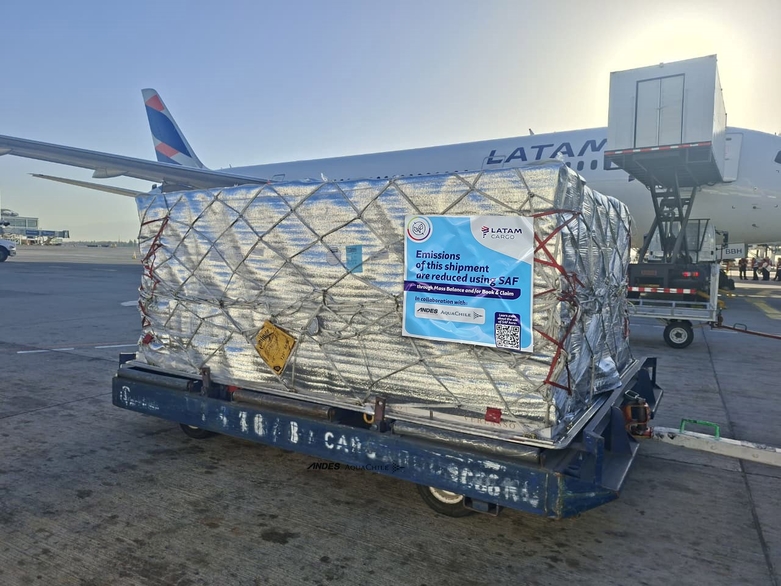
Salmon fly (almost) CO2-neutral In a separate announcement, LATAM Cargo and Andes Integración Logística jointly informed that they have completed the first premium salmon air shipment with a sharply reduced carbon footprint, on behalf of the Chilean salmon exporter, AquaChile. The shipment consisted of more than 3 tons of premium salmon from Chile to the United States.
Salmon travelling (almost) emissions free on board a LATAM jetliner from the fishing farms in southern Chile to the U.S. consumer markets – all pictures: courtesy LATAM Cargo
The SAF utilized – produced from animal waste residues – enables emissions reduction of 74.7% compared to conventional fossil fuels, according to the calculation methodologies employed. “This shipment demonstrates that the decarbonization of air cargo is possible when the entire logistics chain works in tandem,” commented Cristina Oñate, Product Sustainability Manager at LATAM Cargo Group. “Our goal is to continue expanding access to concrete, traceable, and verifiable solutions based on the use of SAF, so that more South American exporters can reduce the carbon footprint of their international shipments”. For his part, Jan-Henrik Hertel, Director of Processes at Andes Integración Logística, noted: “This agreement reinforces our role as a strategic freight forwarder. We do not just manage transport from origin to destination; we accompany our clients in fulfilling their sustainability goals. Furthermore, we are proving that the logistics chain can be an active tool for greenhouse gas reductions.”
Every week, CargoForwarder Global’s ‘Spotlight On…’ highlights a specific aspect of the air cargo industry as an illustration of just how many functions are involved in global air freight logistics. Aside from the physical aspect of building up and moving shipments, there are also a multitude of regulatory frameworks influencing the flow of global cargo. The International Air Transport Association, IATA for short, is the global trade association representing a major segment of the aviation/air cargo industry and works to establish global standards and provide guidance on making cargo transportation safer, more efficient, and able to travel more smoothly across borders. The latter part in particular, falls under the responsibility this week’s Spotlight candidate, Christian Piaget (CP), Head of Cargo Border Management at IATA.
Without clarity on the direction of travel, the industry is navigating with a blurred windscreen. Image: Christian Piaget
CFG: What is your current function and company? And what are your responsibilities? CP: I am Head of Cargo Border Management at IATA, the global trade association representing the world’s airlines. In this role, I oversee efforts to ensure the smooth and secure movement of air cargo across borders. This includes leading work on customs and security issues affecting air freight, driving regulatory compliance and advocacy, and guiding the development and implementation of international standards. I also supervise the IATA industry groups dedicated to these customs and security matters. In addition, I am responsible for cargo claims – not for resolving individual cases (as a trade association, IATA does not intervene in or influence legal disputes), but for developing best practices and guidance to help the industry enhance its claims management processes.
CFG: What does a normal day look like for you? CP: My days are an exciting mix of urgencies that require immediate attention and long‑term strategies to shape and execute. Urgencies are situations where international standards and industry best practices are challenged and require action which can range from informal recommendations to formal escalations with national governments or international bodies such as the European Commission, the World Customs Organization, ICAO, etc. There seems to be always a place in the world where such challenges occur. In parallel, I work on long‑term priorities: improving or developing new industry standards, maintaining IATA publications and training, and preparing for meetings with regulators worldwide.
CFG: How long have you been in the air cargo industry, and what brought you to it? CP: I have been in air cargo for almost 13 years now and in international transport for almost three decades. After a Master in Law in Switzerland, where I developed a keen interest in international rules, I began my career in Geneva in international road transport, which introduced me to the central role of Customs in cross‑border trade. After 10 years, I joined the maritime sector in Brussels, where I contributed to shaping the security provisions of the EU Customs Code and the WCO SAFE Framework of Standards. During that work, I regularly interacted with IATA, as our interests often aligned. When I decided to return to my hometown of Geneva, the opportunity to join IATA Headquarters felt like a natural next step.
CFG: What do you enjoy most about your job? CP: The people – without hesitation. Every morning, I still find it amazing to be able to have a coffee with colleagues literally originating from every corner of the world. I also love the opportunity to work with a wide variety of professionals: government officials from the 5 continents, compliance experts from 360 airlines and other supply chain actors, lawyers, technology providers, etc. Such cultural exposure to the rest of the world is something I had not even dreamed of when starting my career.
CFG: Where do you see the greatest challenges in our industry? CP: In this industry in general, there are many challenges: supply-chain constraints and aircraft availability, decarbonization, geopolitical volatility, cybersecurity, etc. But specifically in my field, I see two main challenges: resistance to change and policy fragmentation. Concerning resistance to change, we must remain agile as regulatory expectations evolve rapidly. The rise of e‑commerce, for example, has profoundly reshaped traditional supply chain structures. Adapting without diluting responsibilities or legal liabilities is essential. As for policy fragmentation, I find the growing lack of regulatory alignment across countries and the disregard of international governance deeply concerning. Rules and principles that I thought were a given when I started my career, are now thrown away without any second thought. Air cargo depends on predictable, harmonized rules. Agility is important, but without clarity on the direction of travel, the industry is navigating with a blurred windscreen.
CFG: What advice would you give to people looking to get into the air cargo industry? CP: My entry into air cargo was not planned. It unfolded naturally through my interest in international trade. For those passionate about aviation, my advice is to stay curious and connected. Keep up with industry developments and seek real‑world exposure whenever possible. Specifically on training, IATA offers a wide array of training programs across aviation disciplines, which are excellent entry points for networking, learning, and identifying your niche. It can also help make yourself known. Again, this industry is above all about people. Finally, initiatives such as the IATA Future Air Cargo Executives (FACE) program can also serve as valuable springboards. Fundamentally, choose the field that resonates most with you. For me, it was trade facilitation, but for others it could be sustainability, digitalization, etc. Finally, do not get fixated on one specific sector: I enjoyed working for road and maritime as much as I do for air, now.
CFG: If the air cargo industry were a film/book, what would its title be? CP: I love the WCO motto “Borders divide, Customs connect”. So, in the same spirit, I propose “Between Borders and Horizons”. This speaks to the dual nature of my work: navigating regulatory borders while connecting distant parts of the world.
Thank you, Christian!
If you would like to share your personal air cargo story with our CargoForwarder Global readers, feel free to send your answers to the above questions to cargoforwarderglobal@kopfpilot.at We look forward to shining a spotlight on your job area, views, and experiences.