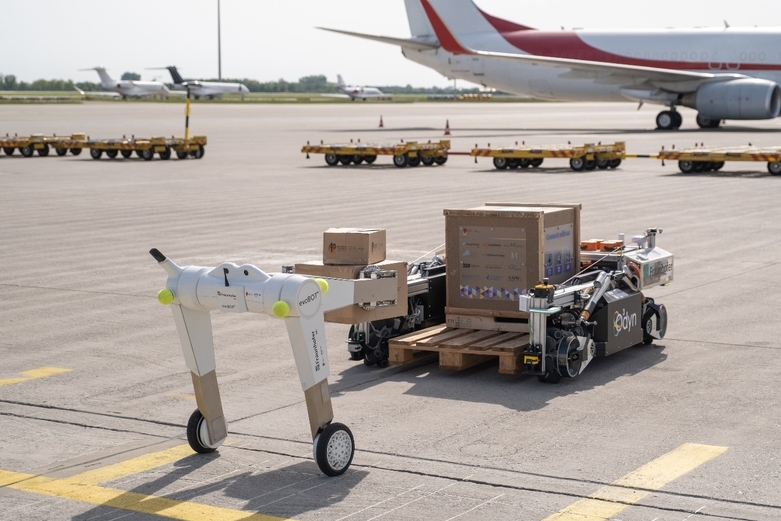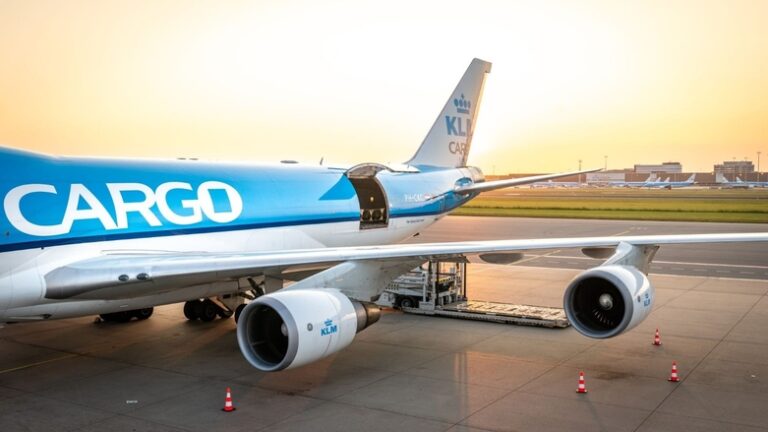

Royal Air Maroc Cargo celebrates 35 years of operations at Brussels Airport. Image: Royal Air Maroc
35 years of interrupted service definitely deserves cake to celebrate since it speaks of dedication and great cooperation – in this case between Royal Air Maroc Cargo, Brussels Airport Company, Globe Air Cargo GSA, and industry partners who all came together on 22OCT25 to mark this achievement. Congratulations on your milestone! From its inaugural flight to Brussels in 1990, Royal Air Maroc Cargo’s service has grown to today’s thrice-weekly flights between Casablanca (CMN) and Brussels (BRU), operating a Boeing 767 freighter. It now carries over 4,300 tons annually and boasts an 85% load factor. Imports to Casablanca and beyond – as the Moroccan airport acts as a key gateway to Africa – are largely industrial machinery, automotive parts, and pharmaceuticals. Brussels has long established itself as a central hub for cargo connecting Europe with African destinations such as Dakar, Ouagadougou, and Bamako, with 74% of Royal Air Maroc Cargo shipments from Brussels bound for the continent. As the airline strengthens its European network, it also continues to invest in digital modernization through platforms like cargo.one (since 2024) and CargoAi (since this year), improving transparency, booking access, and customer experience while sustaining operational excellence at Brussels Airport. Yassine Berrada, Vice-President Cargo at Royal Air Maroc, commented: “Thirty-five years at Brussels Airport is a testimony to the trust built with our customers, partners, and the Belgian logistics community. This route is essential to our network, and we remain fully committed to delivering the reliability, efficiency, and customer care that our partners expect. Together with Brussels Airport, we will continue connecting Africa to its principal European market for many years to come.”
At the recent Aviation Connect/ACHL, one panel generated much discussion. It bore the title ‘Cargo Handling Landscape: Corporate Giants and Independent Players’, and was moderated by HACTL’s CEO, Wilson Kwong. Three airlines, two corporate giants and two independent players took to the stage to exchange viewpoints, highlight their requirements and services, and touch on the ongoing challenges in that segment of the air cargo industry.
Wilson Kwong in the red ‘hot seat’ moderating the panel on 15OCT25. Image: CFG
Industry expert, Wilson Kwong, who emphasized more than once during the discussion “I’m here in my function as a moderator, this time,” introduced his panel made up of LUG’s MD & CEO, Patrik Tschirsch, Delta Cargo’s MD – Operations, Vishal Bhatnagar, Emirates SkyCargo’s SVP Cargo Operations Worldwide, Robert Fordree, Cargolux’s SVP Global Logistics, Johannes Bruijs, dnata’s Chief Cargo Officer, Guillaume Crozier, Swissport’s CEO CEMEAI & Global Cargo Chair, Dirk Goovaerts, and CHI’s CEO, Kai Domscheit.
Corporate Giants vs. Independent Players “What do you think about the panel topic?”, was Wilson Kwong’s opening question to each of his panelists. Robert Fordree stated that Emirates holds contracts with a blend of global, independent, and regional handlers worldwide. “One size does not fitall,” he said, “but we prefer to work with smaller amounts of handlers who really understand our requirements.” He emphasized the need for specialized solutions and warned that “it will get harder for smaller handlers to compete in future.” That sentiment was echoed by LUG’s Patrik Tschirsch, who observed that expanding giants make it harder for independent handlers to secure meaningful business at major hubs – but also pointed to the threat of potential monopolies: “At stations above a certain size, it is hard to get what you want from the handler.” His independent counterpart, CHI’s Kai Domscheit, passionately championed the role of independents, emphasizing their “true ownership” of operations, agility, and close customer alignment as strengths that corporate giants cannot easily replicate. “We move according to the customer’s heartbeat,” he underlined.
Mission to make an airport community tick Guillaume Crozier picked up on the heartbeat comment: “A GHA, whether we are independent or global, has to ensure that our ecosystem [the airport community] ticks as it should. Our responsibility is down and upstream,” he explained, “It’s all down to leadership.” Johannes Bruijs pointed out “Sometimes we go beyond destinations, where there is no coverage by giants”, and that quality in any case depended on local leadership: “Some stations perform better than others.” Vishal Bhatnagar agreed that there was no one size, fits all solution, and that there is room both for giants and independent operators. What it all comes down to is how quickly an airline’s partner reacts to customer needs.
Complementary set-ups Dirk Goovaerts reminded the audience that even today, corporate giants address only about half of global cargo handling needs. The vast industry, he argued, demands both types of players. “We need to come together and lift the industry,” he urged, listing the benefits that global networks offer: standardized, centrally governed processes and technology, complemented by local knowledge. “We are centrally governed, locally executed.” Standardized digitization – such as one common systems spanning 300 airports – is another benefit that giants bring. “We are complementary to independent operators,” he repeated.
What airlines want: quality first and foremost “When airlines choose GHAs – what matters most?”, Wilson Kwong wanted to know: “What do airlines look for?” Johannes Bruijs emphasized: “Three things: Quality, quality, quality!” And that at an acceptable, not necessarily lowest, cost. He cited the importance of training, handling processes, and company culture. Points that were similarly put by Robert Fordree, who admitted that Emirates will first look for a global provider at the new station, due to it being familiar with the airline’s Master Services Agreement. And then ensuring that the local set-up has the capacity to handle the airline without requiring additional labor or facilities. “Best quality and best price wanted,” he said. Vishal Bhatnagar underlined that cost was the last consideration when it came to choosing a GHA. “Reliability is the most important,” he commented. “No service, no discussion!” Service, safety and trust are key, he said, followed by innovation. “Cost is last, because innovation should be able to take out cost,” he explained.
Future workforce… Following an audience question from KLM Cargo’s Kester Meijer “What is the profile of a cargo employee in 2035?”, the panel anticipated profound shifts in the nature of cargo handling work. Automation will erase much of the paperwork and manual documentation, and the industry will need to find a way to be relevant for the next generation of employees – that means increasing the speed of innovation and ensuring that all the experience and knowledge in the currently aging and retiring workforce is captured and transmitted to new employees via AI systems. Dirk Goovaerts said: “The new generation needs access to knowledge quickly – they are less interested in books.” Everyone agreed on the need for passion, adaptability, and problem-solving skills. Guillaume Crozier summarized: “The expectation is always Attitude plus Data-Driven Skills.” The panel imagined careers increasingly focused on process management, innovation, and sustainability – the latter being a crucial value for younger workers.
… and the path ahead The consensus was that, going forward, the global giants will take a bigger share of the network business, and that the dependency of global carriers on global giants will increase. However, Kai Domscheit said that success will hinge not on size but on adaptability: “Fast eats slow, not big eats small.” The industry will remain a hybrid landscape, with the best independents potentially becoming tomorrow’s giants and non-performing operators falling by the wayside. “In some places, there are too many global or independent players,” Guillaume Crozier reasoned: “The market will regulate this. Data-wise, I hope we will be in a much better place in 5 years’ time.”
The panel agreed that lasting quality, adaptability, and commitment to customer needs are universal. Both giants and independents have distinct strengths, and often, the best outcomes arise via partnership, not rivalry. Wilson Kwong brought the panel discussion to a close with his conclusion: “We are all very passionate and want to serve with high quality. Let’s work together. There is more room to cooperate than to compete!”
Wolfgang Meier’s core message at the German Air Cargo Association (acd) in Frankfurt last Tuesday (28OCT25), was that Baku is increasingly becoming a central hub for air freight and land transport between the Far East and Europe.
Wolfgang Meier in full action at the acd meeting – courtesy: acd
His participation at the acd event, attended by roughly 40 members of the air cargo industry, was like a homecoming for Wolfgang Meier. The 62-year-old hails from Frankfurt and is an enthusiastic supporter of the local first division soccer club, Eintracht Frankfurt. His professional career to date is impressive. After holding management positions at the former logistics player, Panalpina, and Russian carrier, AirBridge Cargo, he has been at the helm of Silk Way West Airlines since 01JAN18.
Azerbaijan benefits from traffic shifts His main message to the attendees was centered around the increasing shift in traffic flows between the Orient and the Occident, from the northern corridor via Russia and Belarus to the Middle Corridor across the Caucasus, Central Asia, and Anatolia. These rail and air freight routes south of Russia are fostering the rapid development of an economic area with nearly 110 million consumers, boosting the hunger for efficient transport solutions, Meier emphasized.
Azerbaijan, in particular, benefits from this development, as the core routes of the Middle Corridor intersect there.
ALAT will drive economic development, predicts Meier Silk Way West responded very early to the apparent shift in traffic flows by growing its own cargo fleet and launching the ALAT Cargo project.
This foresight is evident in the construction of the airline’s new cargo hub, called ALAT Cargo Airport. It is owned and managed by Silk Way West, with dnata responsible for ground handling activities. The construction will cover an area of 750 hectares. ALAT Cargo Airport is located near the shores of the Caspian Sea, about a 1.5-hour drive south of Azerbaijan’s capital, Baku. Due to its advantageous geographical location, ALAT will become a multi-modal hub for air, surface, and sea transport, hence an attractive freight gateway for the entire greater region, enthused the manager. Initiated three years ago, the project is now taking shape. CargoForwarder Global recently outlined its current status.
Operational in the second half of 2026 Meier pointed out that the 4,000-meter runway is largely complete, while work on the buildings of the adjacent Cargo Village and logistics center is running according to plan. The first cargo aircraft is scheduled to land there in the second half of 2026. It doesn’t take much guessing that it will be a Silk Way West B777 freighter.
During the recent Caspian Air Cargo Symposium (22-24SEP25), the executive emphasized that environmental criteria were given high priority in the project. “We are building a green airport with solar panels on the roof of the facilities, providing power to run the e-vehicles used for ground processes.” He also confirmed that his airline would receive ten additional freighters by 2032, including four A350F alongside Boeing Triple Sevens. “We go for production freighters, not conversions, due to their higher efficiency, lower operational costs and fewer greenhouse gas emissions compared to P2F aircraft. In the recent past, we have seen a market trend in favor of production freighters,” Meier concluded.
Thinking beyond regional boundaries, Richter acd Vice President, Ingo Richter, emphasized that the Middle Corridor is animportant addition to existing and future trade routes: “It offers an alternative connection between Europe and Asia, ensuring long-term stability and diversification. Projects such as ALAT, exemplify that the industry must think beyond regional boundaries and seek new ways of collaboration,” the official echoed.
Silk Way West Airlines currently serves over 40 destinations in Asia, Europe, the Middle East, India, and North America. In addition, the cargo carrier offers the market charter options. In 2024, more than 500,000 tons of air cargo passed through its current Baku hub, Heydar Aliyev International Airport. Once ALAT Cargo Airport is fully operational, Silk Way West Airlines will move its entire traffic to its new gateway.
The Belgian Tulpin Group has been in the strawberry business for 44 years now. As a result, it has built up enormous expertise and made a name for itself as a major importer of these and other temperature-sensitive goods. Egypt is one of the main farming countries supplying European markets. There, the first strawberries will be harvested on 15NOV25 and flown on board of freighter aircraft to Ostend and Frankfurt Hahn, on behalf of importer, Tulpin. The upcoming season is reason enough for an interview with group chief, Alain Tulpin, about his expectations and why he avoids Heathrow as destination airport.
Logistics veteran Alain Tulpin knows the strawberry business in and out – photos: TulpionGroup.
CFG: Alain. You’ve just returned from a flight to Egypt, because the strawberry season is just around the corner. What are the harvest forecasts of local producers for the 2025/26 season?
AT: The forecasts are encouraging and a similar quantity to what was exported in 2024/25 can be expected. However, you always need to be cautious because the weather can negatively influence the quantities harvested. Also, after mid-January, it also depends on the situation in Morocco and Spain which, alongside Egypt, are also major exporters of strawberries to Europe. Last season they were late to the market, of which Egypt took advantage.
CFG: In 2024/25 your company, the Tulpin Group, imported 16,000 tons of strawberries by air; 95% of which came from Egypt and 5% from Jordan. What is your forecast for the coming season, and which role does Egyptair play in the supply of these perishables?
AT: As said, we expect to handle similar quantities in the months ahead, provided the weather does not affect the crop. Another point is the available transport capacity. Should U.S. President Trump impose extra fees on China, as originally announced but temporarily withdrawn after talking to Xi Jinping in South Korea on 29OCT, it might benefit our business indirectly since more widebody freighters might be available for lease because stiffer fees will most likely scale down transpacific cargo traffic between China and the U.S. During the previous season, this was disastrous as China took all widebodies for e-commerce reasons.
Additional capacity provided by large freighters would supplement Egyptair’s scheduled cargo flights taking off from Cairo to Ostend in Belgium and Hahn in Germany. If the market offers large main deck capacity, we will operate charters to Ostend Airport.
Strawberries are a sweet temptation.
CFG: Formerly, Egyptair Airbus A330 freighters used to land in Cologne/Bonn, but meanwhile they serve Frankfurt-Hahn and Ostend in Belgium. What’s behind this route swop?
AT: We quitCologne for two reasons: Firstly, because the quality of ground handling continuously deteriorated. This did not correspond with what perishable products need. Secondly, the local phytosanitary services at Cologne were available during weekdays only. This made product inspections at weekends by the authorities in charge completely impossible. So, we couldn’t obtain any clearance for the dispatch and onward transport of the strawberries.
CFG: Touching product quality: Do Hahn on the one hand and Ostend on the other, meet the packing and onforwarding requirements you expect?
AT: Both airports perform well. In Ostend, we cooperate with a local ground handler and some third-party service providers. Based on a concession, we established our own second line handling company in OCT24. It utilizes our own cold room of 4,200 ft², respectively 390 m².
CFG: Approximately 70% of the strawberries imported by the Tulpin Group are delivered to supermarkets in the UK. This brings up the question as to why Egyptair freighters land in Ostend and Hahn, and do not serve one of the UK airports directly?
AT: Flying from Cairo to the UK takes 45 minutes extra time in comparison to the two airports on the European mainland that we utilize. Also, there is hardly any cargo to Egypt on the way back from the UK, as Egyptair serves London daily with one widebody pax jetliner complemented by a narrowbody aircraft. Another important reason is that the ground handling of cargo at London Heathrow is a nightmare. In comparison, our Ostend and Hahn shipments reach London faster than strawberries that land at Heathrow, as we use the Eurotunnel for onforwarding them to the UK. These road feeder services are provided by our sister company, OSTENDFRESH. It runs a fleet of 45 refrigerated trailers with daily full truck services from mainland Europe to the UK, from 15NOV25 to 08MAR26, when the strawberry season in Egypt ends.
CFG: London announced that it will impose a 10% import fee on products from Egypt come January 2026. Would this affect the trade volumes in strawberries?
AT: Duties always affect sales, as both Spain and Morocco are exempt from these import fees. Consequently, the yields of the Egyptian growers will decline.
CFG: What percentage of your group’s turnover is accounted for by strawberries?
AT: Strawberries account for 60 % of our total turnover.
CFG: And finally: Do you personally still enjoy eating strawberries after having been in this business for many years?
AT: For sure, strawberries are a delicious fruit, sweet and low in calories, so a nice delicacy at any time of the year.
CFG: Alain, thank you very much for this interview.
Every week, CargoForwarder Global’s ‘Spotlight On…’ tells what it’s like to have a career in the air cargo industry by showcasing the experiences and opinions of an individual working in one of its many segments. Getting a shipment from A to B smoothly and without disruption requires diligent supervision and planning. An airline’s cargo agents are its eyes, brain, and interface – liaising with various stakeholders to ensure that shipments are processed efficiently and in compliance with regulations. This week, Quazi Mohammad Jalal Uddin (QU) takes us through his responsibilities and shares his views and advice for those looking to join the industry.
Air cargo, where teamwork, time, and precision all come together. Image: Quazi Mohammad Jalal Uddin
CFG: What is your current function and company? And what are your responsibilities?
QU: I am currently working as a Senior Cargo Agent with Emirates SkyCargo at Dhaka station (DAC). My main responsibilities include handling export and import operations, dangerous goods, and pharma acceptance, claims handling and safety coordination, and ensuring smooth daily operations in compliance with Emirates and IATA standards. I also support administrative and documentation work, assist the team during peak operations, and help in solving any on-spot challenges to maintain service quality and efficiency.
CFG: What does a normal day look like for you?
QU: Honestly, in air cargo, no two days are ever the same. My day starts early with a review of the flight schedule and pending shipments. I check on the export acceptance process, coordinate with the warehouse and ramp teams, and make sure shipments are handled safely and on time. During the day, I often deal with customer queries, system updates, and last-minute operational changes. Every day brings something new to learn – and that’s what I enjoy most.
CFG: How long have you been in the air cargo industry, and what brought you to it?
QU: I’ve been in this industry for over 10 years, all with Emirates SkyCargo. What brought me here was my deep interest in aviation and logistics – I always wanted to understand how global trade moves so precisely through the air. Over the years, I’ve grown to love the rhythm of cargo operations, where teamwork, time, and precision all come together to make things happen.
CFG: What do you enjoy most about your job?
QU: I enjoy the dynamic environment and the teamwork it demands. Every day is a mix of challenges and achievements. Solving operational issues on the spot gives me great satisfaction, and it feels rewarding to be part of an airline that maintains such high standards in safety and service. Also, the trust and support within our team make the work environment truly motivating.
CFG: Where do you see the greatest challenges in our industry?
QU: The main challenges are in meeting the growing demand while maintaining safety, efficiency, and sustainability. The rapid rise of e-commerce, pharma, and time-critical cargo means the industry must continuously adapt through technology and training.
I’m proud that Emirates SkyCargo has always been ahead in this journey – leading in digital transformation, product innovation, and strict safety compliance. The company’s continuous investment in people, systems, and infrastructure sets a strong example of how to face these challenges while maintaining service excellence.
CFG: What advice would you give to people looking to get into the air cargo industry?
QU: My advice would be to start with a strong focus on learning and discipline. Air cargo is not just about moving goods – it’s about responsibility and precision. For training, I’d recommend IATA courses in Dangerous Goods Regulations, Cargo Introductory, and Safety Management Systems. But most importantly, keep your curiosity alive and be ready to work as part of a team – that’s where real experience builds.
CFG: If the air cargo industry were a film/book, what would its title be?
QU: I’d call it “Sharing Culture – Globally.”
Because behind every shipment, there’s a team of people working silently around the clock to connect lives, businesses, and economies – and I’m proud to be a small part of that network.
Thank you very much, Quazi.
If you would like to share your personal air cargo story with our CargoForwarder Global readers, feel free to send your answers to the above questions to cargoforwarderglobal@kopfpilot.at We look forward to shining a spotlight on your job area, views, and experiences.
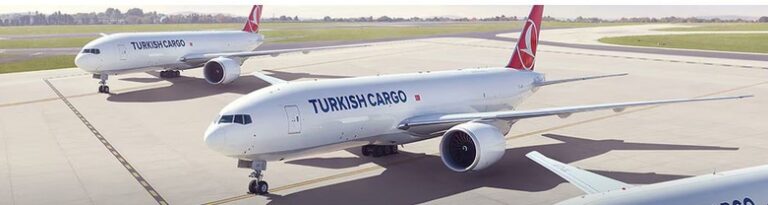
BlueLight claims to be the world’s first airline focusing on humanitarian aid, not on profits. Its noble motto: Supporting human dignity in a world where no call goes unanswered and no life is beyond reach regardless of skin color, religion or geopolitical stance. Its mission: Providing unparalleled air transport for humanitarian efforts across the globe.
The airline’s tail fin is adorned with a stylized Swiss cross – but in blue, matching the newcomer’s name.– company courtesy
These are honorable, almost selfless goals that BlueLight’s management has set itself. It is headed by Pierre Bernheim and Waleed Rawat. While Pierre Bernheim, a former pilot and Chairman of Geneva Airport, acts as President and CFO, his partner, Waleed Rawat serves as VP and Chief Growth Officer. Together, these two philanthropists incepted BlueLight in Geneva. Their project is supported by seasoned professionals from aviation, medicine, humanitarian aid, global logistics, and the medical organization Médecins Sans Frontières.
Starting with two aircraft On its website, the newcomer states that it intends to operate a fleet of three Airbus A340-300 and three Airbus A321P2F. The assets also include UAV drones that can carry payloads of up to 500 kg over distances of more than 800 km to supply remote areas. However, initially only two aircraft will be used: an A321 for destinations in crisis areas in the Middle East or Africa, while the larger A340-300 will be converted into a flying hospital and, as a combi version, can also be utilized to carry nutrition or relief supplies to crisis and disaster areas wherever needed.
The two jetliners will be based in Liège and Geneva respectively. According to reports in local Swiss media, further stations are to be set up in North America and Asia. Management states that BlueLight will be on standby 24/7, requiring 72 hours to get its aircraft airborne. In terms of transport prices, the company speaks of stable rates at a level of 30% below market average.
Each donation translates into missions accomplished According to management, process transparency and environmental aspects play a central role. For this reason, BlueLight has entered into a partnership with Verdeo, a well-known name in traceability and carbon offsetting technology. “Together, we are developing a tailor-made, real-time dashboard, powered by Verdeo’s proprietary platform, giving all stakeholders full visibility on how each dollar received translates into missions flown, lives saved, critical supplies delivered, and carbon emissions offset. This innovative tool ensures end-to-end accountability, reinforcing our promise to deliver measurable, credible, and transparent humanitarian impact,” is stated on the carrier’s website.
Encouraging Endorsements Meanwhile, the project has attracted interest from local politicians and authorities, as these two endorsements show: “As a dedicated non-profit humanitarian airline, BlueLight’s initiative would align with Switzerland’s commitment to fast and principled humanitarian emergency relief. By addressing logistical gaps in emergency aid delivery systems, BlueLight envisages timely, cost-efficient and effective support for vulnerable communities,” applauds Dominik Stillhart, Deputy Director General Swiss Department for Development and Cooperation and Head of Swiss Humanitarian Aid Unit.
And Beatrice Ferrari, Director of International Affairs for the Republic and Canton of Geneva, confirms her organization’s support for the project: “Given the funding difficulties currently faced by many humanitarian organizations, BlueLight would enable them to reduce some of their transportation costs and thus optimize the use of their funds for activities in fragile contexts.
Following several meetings, the Department of International Affairs was able to ascertain the relevance of the BlueLight project, as well as the professionalism and competence of its team. That is why the Department of International Affairs wishes to express its support for BlueLight and encourage the implementation of its project, which will have a beneficial impact on the international community’s ability to respond to global crises.”
Miami-based Aeronautical Engineers, Inc. (AEI) has launched a new B737-900ERSF Passenger-to Freighter conversion program. AEI is a Boeing licensed third-party provider of Supplemental Type Certificates and the new B737-900ERSF program is covered under this STC licensing arrangement. The granting of flight approval by Washington’s FAA is scheduled for 2029, with European regulator EASA and China’s CAAC due to follow suit shortly after.
B737-900 Passenger-to Freighter conversions stand next on AEI’s retrofitting program – company courtesy
Although it is still a long way to go until the first B737-900 P2F freighter takes to the skies, AEI management does not reveal whether the retrofitter already has a launch customer for its first B37-900 conversion, and if so, which operator it is.
Boeing’s preferred retrofitter Instead, AEI emphasizes the merits and performance data of the future B737-900 Extended Range Special Freighter (ERSF). It will be the very first passenger-to-cargo converted B737-900ERSF and become AEI’s largest and most capable narrowbody conversion freighter. The B737-900ERSF offers unmatched volume and payload advantages over existing B737 freighter platforms, the company emphasizes in a release. AEI is well placed to judge, as it is Boeing’s preferred converter, having already turned many other Boeing B737 passenger variants into freighter aircraft, giving them a second life in service to air cargo.
First flight is scheduled for 2029 According to the company, the first B737-900ERSF will offer the cargo industry a loading capacity of 26,173 kg (57,700 lbs.) per take-off- or, in the case of volume cargo, 207 m³ (7,273 ft³). The aircraft offers twelve 88”x125” main deck pallet positions and is equipped with a reinforced floor structure to support high-density freight and e-commerce packages.
AEI is aiming to achieve FAA Supplemental Type Certification (STC) in 2029, with EASA and CAAC approvals scheduled to follow.
“This is a strategic move to address the increasing demand for higher capacity narrowbody freighters,” said Robert T. Convey, AEI Senior Vice President of Sales and Marketing. “With the global e-commerce and express markets continuing to grow, the B737-900ERSF will provide operators with the right blend of payload, volume, and economics.”
Broad customer base With over 625 freighter conversions delivered to date, the vast majority of which are Boeing aircraft, AEI continues to set the standard in conversion reliability, program performance, and customer service – especially regarding the different narrowbody variants of the B37 series.
In addition to Boeing jetliners, aircraft from Canadian manufacturer, Canadair, are also included in the retrofitter’s portfolio, such as the CRJ900 and CRJ200.
Customers include well-known names in air freight as well as niche providers such as Allied Air from Nigeria, Serve Air from the Democratic Republic of Congo, and Bulgaria’s CargoAir.
Boeing’s archrival, Airbus, has its own converter for retrofitting the group’s jetliners: Dresden, Germany-based Elbe Flugzeugwerke (EFW). ST Aerospace from Singapore holds a majority stake in the company (55%), while 45% capital share belong to frame maker Airbus.
From 26OCT25 on, FlyUs Aviation Group (FlyUs) is Riyadh Air’s GSA for the UK and Ireland as well as covering offline services to forwarders in the Benelux. The start of the agreement, which includes sales, customer support, and capacity management, also signifies the start of the new airline’s daily Boeing 787-9 services to London’s Heathrow Airport (LHR). The Saudi airline is on a fast-track to growth and set to connect Riyadh (RUH) with 100 global destinations within the next five years. This is in line with the Kingdom’s Vision 2030 which looks to facilitate international trade and logistics.
From left: Vincent Coste, CCO, Riyadh Air, and Carlo de Haas, President and CEO, FlyUs Aviation Group. Image: Meantime Communications
Carlo de Haas, President and Chief Executive Officer, FlyUs, said: “It is rare to see a new airline commence daily widebody operations into Heathrow, so being involved from the first departure is a real privilege. This appointment is a testament to FlyUs’s proven track record in cargo sales and our commitment to delivering market-leading representation. This partnershipoffers the market direct and reliable access into Saudi Arabia, a market of growing importance for manufacturing, e-commerce, perishable, and high-value logistics.
FlyUs owns and operates its own trucking fleet, providing daily temperature-controlled services to and from the Benelux and the UK. For our forwarder clients in Europe, this means they will be able to benefit from Riyadh Air’s new route to Heathrow via our road feeder services.”
Pravin Singh, Head of Cargo at Riyadh Air, added: “The appointment of FlyUs marks the beginning of a strong partnership built on shared ambition and operational excellence. Their local expertise and proven track record will help us deliver Riyadh Air’s promise of dependable, customer-focused cargo solutions across the UK and Ireland.”
In other news: FlyUs won Air Cargo News’ GSSA of the Year Award for the sixth time running, last week. James Gidlow, Group Commercial Director, FlyUs, accredited this to the strength of its global business partnerships, saying: “Our teams consistently go above and beyond for our customers, and it’s their commitment that keeps FlyUs at the forefront of this industry. As the market evolves, so does FlyUs; we’re continually investing in smarter processes and customer-focused solutions to ensure our customers receive true long-term value, and this award is a testament to that.”
Menzies Aviation, TAAG Angola Airlines, and Sociedade Gestora de Aeroportos (SGA) have signed a new strategic agreement to launch Menzies Aviation Angola, Lda., reinforcing Angola’s position as a rising aviation hub in Africa. The partnership is set to deliver quality ground handling, cargo, and airport services across Angola, and fuel operational excellence at the newly opened Dr. António Agostinho Neto International Airport in Luanda.
Menzies Aviation, TAAG Angola Airlines and SGA to boost Angola’s Aviation Sector. Image: Menzies
Menzies will bring high safety and service standards to the Angolan market. TAAG’s involvement as a shareholder signals strong national commitment to long-term, sustainable aviation growth. SGA contributes key infrastructure and local expertise as Angola’s main airport network operator. Operating under the new company, the partners aim to offer efficient services for airlines, cargo operators, and passengers, supporting Angola’s expanding aviation market and economic ambitions. Building on a prior joint venture with SGA since 2023, the latest agreement underscores collaboration with government and industry players to develop a modern, competitive aviation ecosystem and lasting value for the country.
Charles Wyley, Executive Vice President – MEAA, Menzies Aviation, explained: “By uniting Menzies’ global expertise with TAAG’s national significance and SGA’s local leadership, Menzies Aviation Angola is well positioned to deliver world-class safety, service and innovation while supporting the economic ambitions of Angola. We are proud to deepen our partnership in Angola and contribute to a new era of aviation services across the country.”
Clóvis Rosa, Chairman of TAAG Angola Airlines, added: “TAAG’s entry as a shareholder in Menzies Aviation Angola reflects our strategic vision for the future of aviation in Angola. By combining Menzies’ global operational excellence with TAAG’s deep understanding of the domestic and regional market, we are investing in growth and strengthening Angola’s role as a key aviation gateway in Africa.”
Silk Way Group and dnata have launched a joint venture to develop comprehensive ground handling and cargo operations at the upcoming Alat International Airport in Azerbaijan. The partnership marks a major step in the country’s plan to become a regional logistics powerhouse.
Silk Way Group and dnata launch JV to create aviation services hub in Azerbaijan. Image: Silk Way Group
Set to begin operations in APR27, the new venture draws on dnata’s global expertise in air services and Silk Way Group’s strong foothold in regional aviation and logistics. The new airport will be equipped with state-of-the-art cargo facilities capable of handling more than 400,000 tons annually, with projected growth of 5% per year. To begin with, the partnership will be centered around cargo and ground handling, with plans to expand into catering, freight forwarding, de‑icing, and other services, effectively creating a one‑stop aviation services hub for airlines and airport customers. Around 1,000 new jobs will be created, and the project will foster long‑term workforce development in Azerbaijan’s aviation sector. dnata already supports Silk Way West Airlines in five countries, handling 1,150 flights and 85,000 tons of cargo each year.
Steve Allen, CEO of dnata, stated: “Our joint venture with the Silk Way Group is an important step in expanding dnata’s global footprint and supporting the Caucasus region’s rapid growth. Baku’s new airport will be a critical hub for cargo flows in the region, and our investment ensures that airlines and logistics partners have access to safe, quality, and reliable services from day one. Beyond operational excellence, this venture reflects our long-term strategy to provide integrated aviation solutions in high-potential markets. We look forward to continuing our successful partnership with Silk Way Group to support Azerbaijan’s aviation and logistics industries, businesses and wider communities.”
Zaur Akhundov, President of Silk Way Group, commented: “Our partnership with dnata marks a new milestone in the development of Azerbaijan’s aviation industry. Together, we are shaping a modern ecosystem that will connect the Alat Free Economic Zone with the global aviation and logistics network. This joint venture represents not only an investment in infrastructure but also in people — creating new jobs, developing professional skills, and building a foundation for sustainable growth. The establishment of aviation services at Alat International Airport is a strategic step toward realizing our vision of transforming Azerbaijan into a leading regional hub.”