
Home Blog Page 110

ELTETE pioneers new packaging solutions

0

Eltete’s pallets are lighter than conventional pallets, more durable and cost-effective. Also, their production and practical use in the transportation sector reduce CO2 emissions, management claims. The combination of these criteria makes the Finnish supplier’s products particularly interesting for usage in air freight.

Cardboard pallets beat wooden pallets in many ways, states Eltete’s Nina Lökfors  –  company courtesy

First, a brief review of the recent World Cargo Symposium in Ostend, Belgium: At her company’s stand, Nina Lökfors (NL), Executive Vice President of Eltete-Packprofil, explained the design of the packaging products on display. The carton pallets that are made of honeycomb board and recycled carton, she says, can replace the usual industrial wooden pallets, whose worldwide triumph began shortly after the Second World War and has continued to this day. Yet, now the time has come for new, innovative solutions CargoForwarder Global (CFG) interviewed the ELTETE executive.

CFG: Nina, why is a Finnish company using cardboard pallets instead of wooden products? After all, Finland is full of trees and so are the surrounding countries in Scandinavia and the Baltic states.

NL: Cardboard pallets are a good complementary option to wooden and plastic pallets. As I see it, all variations are needed and you must always consider which pallet is most suitable for your needs, keeping environmental and cost-effective issues in mind.

The production of a cardboard pallet requires less wood, and the process causes around 50% fewer emissions than when making a wooden pallet. Thanks to their light weight, cardboard pallets also mean less fuel consumption is required during transport, making them a viable option for air freight.

A cardboard pallet is mainly recommended for export, in B2C sales or when delivering outside areas that have collection systems for reusable wooden or plastic pallets. The pallet is easy to handle and easy to recycle.

The cardboard pallet is a hygienic alternative and is ISPM compliant so it can be used for overseas deliveries or, for example, in the food or pharma sector.

CFG: Eltete’s motto is: Reduce, Replace, Recycle. First, what exactly is to be reduced in comparison with conventional packaging solutions? Material and greenhouse gas emissions?

NL: Yes, material, greenhouse emissions and costs.

Production of cardboard transport packaging solutions requires fewer raw materials and causes fewer CO2 emissions. Thanks to their lightweight, they also lower CO2 in transport and reduce warehouse and freight costs. They are easy to handle and do not require any tools to be built or treatments to be compliant.

CFG: And as far as replacement is concerned, airlines and forwarding agents might want to know how stable Eltete’s cardboard solutions are compared to conventional ULDs made of wood or plastic?

NL: As it happens with cardboard solutions and other materials, there are cases where they might not apply. In air cargo, it is no different. We would need to go through the needs of the customer and together evaluate the best solution. When it comes to strength capabilities, we do have results of, for example, our AirCargoRunner withstanding a weight of over 10,000kg.

CFG: Touching on recyclability: can clients utilize the AirCargoRunner multiple times or is it rather a one-way product that must be disposed of after use?

NL: Our experience is that our customers prefer reusing the AirCargoRunners and they ensure multiple use by printing a “return to” text on the runner. Still, if they are not reused, they are easy to recycle with other carton waste

CFG: “Slip sheets” is another product Eltete offers forwarders, airlines and shipping companies. How do these work and what are the advantages over existing transport solutions?

NL: The slip sheet is used to replace the traditional pallet during transport, saving space, and reducing raw material, costs and emissions.

The slip sheet requires an additional push-pull device for the forklift. After the goods have been placed on the slip sheet, the push-pull device grips one of the lips of the sheet and pulls it onto the forklift. Then the forklift pushes the load onto its place in the trailer, rail wagon or container, leaving out the pallet which means more space to load and less extra weight from pallets.

Production of a slip sheet requires much less raw material than a pallet, and the production process causes much fewer emissions. You can store 1,500 slip sheets using the same space as needed for 10 pallets. A slip sheet costs only a fraction compared to a pallet and is easy to recycle with other carton waste.

CFG: Where are the Eltete products manufactured and what after-sales support does your company offer the market?

NL: Eltete has production sites in Finland, Poland, and several locations in Asia. In addition to that, we have strategically placed a sales network that is always ready to assist and serve our customers on time.

Final question: Suppose I was a freight forwarder and had weekly air freight shipments of machine parts weighing a total of 400 kg, flying – say – from Copenhagen to Mumbai. What would be the advantages over traditional packaging solutions if I chose the “AirCargoRunner” as an option – also financially?

NL: The total advantage depends on several factors.

First, the goal should be to fit as much as possible on a ULD plate. With the help of the AirCargoRunner, you can fit around 35% more load on the plate compared to existing solutions.

Of course, this could also be done with wooden beams. Wooden beams weigh around 80% more than the AirCargoRunner, so the undeniable advantage that you can get with the AirCargoRunner, is weight saving.

We know that producing a wooden beam requires more raw materials and causes around 54% more emissions than producing a carton beam. Additionally, we know that less weight causes less fuel consumption and thus fewer emissions and costs. 

Since I do not have the latest prices of aviation fuel, different plane model consumptions and emissions, I must leave the final cost advantage calculations of this example to professionals in the air cargo industry. However, I think the comparison will be in favor of our products.

CFG: Nina, thank you for your time and the insights.

EMO Trans Germany: Air freight grows above market average

EMO Trans Germany, by far the strongest national organization of the logistics provider within the EU, reports an average air freight volume growth of 5%. This applies to 2024 and the first weeks of the current year. Although the market environment has become more demanding, the policy of product diversification is now paying off, says Norman Klinkhammer (34), Managing Director/Head of Freight based at EMO’s Hamburg branch and responsible for logistic company’s air freight business.

Personalized one-stop shop services are a key factor for EMO’s global success, states Norman Klinkhammer  –  picture: CFG/hs

amounted to 15,000 tons in 2024, while 6,500 tons of imports arriving by air were handled by EMO Trans in the German market. So far, automotive used to play the most prominent role, however commodities such as machinery parts, medical products, and consumer goods, have been growing faster for some time, “although our automotive business is still going strong,” emphasizes Klinkhammer. Ocean freight keeps also increasing. This is particularly true for temperature-sensitive products such as meat from South America, which arrives by vessel at the seaport of Hamburg, from where these shipments are onforwarded to their final local or EU-wide destinations.

All-inclusive product demanded
Regarding customers’ expectations of supply chains and their logistics service providers, the demand has increased compared to the past. “They expect a full-service product from their business partners,” says the manager, describing the mounting market pressure. “In the past, it was all about value-added services, now the market expects these services to be fully integrated into the respective products.”

Asked why the industry should choose EMO Trans as its logistics partner, he states: “We go the extra mile. We have a specific contact person for each of our customers, who is very familiar with their business and, like the big boys, we have access to a global network, so we offer a personalized one-stop shop solution.” This specific aspect is the most significant difference to the structures of large corporations, which are often anonymous for customers, he says.

Continuity of personnel
“We are small enough to be able to design processes very flexibly when framework conditions change, but large enough to keep up with the world’s leading companies in the logistics sector.”

One particular asset that sets EMO Trans apart from many of its competitors, is the consistency of the company’s personnel. Fluctuation is very low, which at the same time means that experience and expertise stay inhouse. However, the company is currently undergoing a rejuvenation process, the results of which include Norman Klinkhammer and Ercan Ince (Commercial Managing Director). The generation that made EMO great is approaching retirement, so younger managers are taking over the baton, moving into key positions.

Ideally positioned in Africa
Touching on growth markets besides North America and Asia, Klinkhammer describes India, in particular, which stands high on his list of Germany produced exports. Another interesting region from his company’s perspective are the sub-Saharan African countries. Thanks to the pact with EMO’s Johannesburg-based South African partner, the Bidvest Group, “we are ideally positioned there,” he concludes.

In addition, EMO is constantly stepping up its business activities in Latin America: particularly Mexico and Chile. This is done in close coordination between EMO Trans Germany and EMO Trans USA.

Safer skies: Using biomimetics to prevent bird strikes

0

The devastating image of the Jeju plane crash on 29DEC24 at Muan International Airport in South Korea, is not easily forgotten. 179 passengers and crew lost their lives, and initial investigations confirmed that bird strikes had played a role in the accident. As a result, all South Korean airports have now been ordered to install bird detection cameras and thermal imaging radars for better bird detection and response. But is there a better way to safeguard against bird strikes? One that uses the nature of birds to help naturally deter them from airport airspace, and protect them from harm? Ece Ciğerli, a Mechanical Engineer from Türkiye and researcher into Bird Strike Prevention, believes biomimetics could hold the answer. She is CargoForwarder Global’s guest author, this week.

Adopting biomimetics for safer skies. Image: Ece Ciğerli

Biomimetics Innovation & Engineering in Aviation

Bird strikes and their impact on aviation
A bird strike refers to a collision between an aircraft and one or more birds during flight. Bird strikes impose significant financial costs on the aviation industry worldwide. The total annual cost is estimated to exceed USD 3.3 billion globally, with USD 1.1 billion in the U.S. alone. These costs include direct expenses such as aircraft repairs and indirect costs like delays and cancellations, which account for nearly 90% of the total. The risk is not limited to airplanes either, as wind turbines, drones, and UAVs also face bird strike hazards, especially at altitudes of up to 6,000 feet (1,828 meters).

There have been significant advancements in modern aircraft technology, but bird strikes remain a serious concern. Although birds and airplanes may seem fundamentally different, they share striking similarities in flight mechanics. Both follow the same principles for take-off, stable flight, and landing. Birds have long served as an inspiration for scientific research, environmental design, and structural engineering. Throughout history, numerous scientists and engineers — such as Leonardo da Vinci — have studied the connection between avian flight and aerodynamics.

Birds and aircraft: a shared airspace
Although birds have been flying for millions of years and possess remarkable intelligence, for the past 100 years or so, they have increasingly been having to navigate the skies alongside modern aircraft*. Birds and airplanes must coexist in this vast airspace without interfering with each other, especially during migration seasons. Unfortunately, thousands of birds die every year due to bird strikes near airports.

The highest bird strike ever recorded, occurred at 37,000 feet on November 29, 1973, when a commercial jet collided with a Rüppell’s Griffon Vulture over Abidjan, Ivory Coast. However, the majority of bird strike incidents happen at height of less than 500 feet, usually upon take-off or landing. According to reports from an ICAO seminar in Singapore, 38% of bird strikes occur during take-off, while 41% happen during landing, resulting in over 1,000 accidents per year. A Japanese survey in 2013 revealed that nearly 2,000 bird strike accidents had occurred at Japan’s civil and military airports, with 39% happening at night and 61% during the day. The most critical months for bird strikes are March, July, and October. A study in the U.S. revealed that seagulls alone account for 30% of bird strike incidents, followed by pigeons, ducks, storks, and flamingos.

Various solutions but a growing problem
To mitigate the problem of bird strikes, airports employ ornithologists and wildlife experts who use various deterrent techniques such as sonic repellent systems, traditional firearms, high-frequency sound waves, and even birds of prey.

Yet, despite technological advancements, bird strikes continue to rise, endangering both aircraft safety and bird populations. A collaborative effort is needed to reduce bird-related aviation hazards while protecting migratory and local bird species.

A biomimetic approach to bird strike prevention:
Before exploring solutions, let’s define ‘biomimetics’. It is a term that remains relatively unknown on a global level. Biomimetics, also known as biomimicry, is the practice of emulating nature’s models, systems, and elements to solve problems. The term originates from the Greek words ‘bios’ (life) and ‘mimesis’ (to imitate). It refers to the development of technologies inspired by nature, commonly used in engineering fields such as aerospace, automotive, and high-speed trains. Nature serves as a blueprint for many technological innovations, particularly in aircraft design, wing structures, and blade mechanics.

Incidentally, one notable example of biomimetics in architectural design is a mosque in Türkiye known as Kuşkonmaz Mosque, which translates to “Birds Don’t Perch Mosque”. Due to its unique architectural design inspired by nature, birds have never landed on it since the day it was built.

What references do birds use for navigation?
I am a mechanical engineer and innovative entrepreneur from Istanbul, Turkey. For the past five years, I have been researching bird strike incidents and bird flight dynamics. The goal of my project is to develop a bird deterrent system that prevents birds from entering critical flight zones without harming them. The system would operate at a range of 1 km (3,000 ft) both vertically and horizontally.

My research indicates that birds rely on multiple natural references while flying over the sea and land, including stars, the sun, oceans and bodies of water, and the Earth’s magnetic field. Additionally, scientific studies suggest that birds possess chemical proteins in their retinas that help them detect magnetic fields, assisting their navigation. The question is: If we can replicate these natural cues artificially, could we then guide birds away from high-risk zones?

The need for a prototype
This hypothesis needs to be tested through an experimental system that simulates low-intensity magnetic fields to observe bird behavior. If successful, this innovation could offer a non-invasive solution and prevent bird strikes without harming wildlife.

To advance this project, I have presented my proposal to leading aviation companies such as Turkish Airlines, Airbus, Lufthansa, Bird Strike Associations, and Wildlife Preservation Societies. While many organizations have expressed interest, they require a prototype or Minimum Viable Product (MVP) before committing further support.

Call for collaboration
Extensive research indicates that bird deterrent systems must be tested under controlled conditions to assess their effectiveness. Experiments should be conducted in both indoor and outdoor environments, with collaboration between electronics and aviation experts.

To move forward, I seek technical and financial support to develop a prototype that can demonstrate the feasibility of this concept. By investing in this research, we can enhance global flight safety while protecting millions of birds from unnecessary harm.

Would you be interested in joining this initiative? Let’s work together to create a safer and more sustainable aviation future.

Thank you, Ece Ciğerli.

*[BG note:] According to Reuters, the first recorded bird strike took place on 03 April 1912, “when Calbraith Perry Rodgers, who was piloting a Wright Flyer, flew into a flock of seagulls over Long Beach, California, killing him”.

If you are interested in collaborating with Ece Ciğerli on this Bird Strike Prevention initiative, please contact her via private message on LinkedIn.

Airbus puts H2 program on the backburner

Airbus’ first hydrogen-powered aircraft was due to enter service in 2035. Three different variants were presented to the public. Yet, none will be built as the Airbus management in Toulouse has announced the end of the current H2 journey and its postponement to an uncertain later date. The industry leader’s full stop is a serious setback for the entire industry and aviation’s ambitions to fight global warming. Airbus CEO, Guillaume Faury did not give a new timeline for the project.

Will it ever fly? Airbus conceptual H2  aircraft  –  illustration: company courtesy

At the Hydrogen Technology Expo trade fair in Hamburg at the end of OCT24, less than six months ago, Airbus managers announced the approaching age of hydrogen aviation. Surrounded by eye-catching aircraft models, they promoted the European aircraft manufacturer’s role as the world’s pioneer in clean aviation. The only open question then was which of the three Airbus variants on display would ultimately be selected and constructed by the frame maker.

Full stop – until further notice
Yesterday (09FEB25), management announced an emergency stop. The construction of a hydrogen Airbus will be delayed by a decade, leading executives told the French trade union, Force Ouvrière. At the same time, they announced plans to cut H2 R&D spending by 25%.

Hydrogen has the potential to be a transformative energy source for aviation,” Airbus declared in a statement. “However, we recognize that developing a hydrogen ecosystem – including production, ground infrastructure, supply, distribution and regulatory frameworks – is a huge challenge requiring global collaboration and investment.”

SAF demand will soar
In terms of environmental consequences, the European frame maker acknowledged that a hydrogen-powered plane – most likely a turboprop variant accommodating 100 passengers – would only make a marginal contribution to the sector’s goal to reach net zero emissions by 2050. But it would pave the way for greater adoption of H2 powered aircraft in future, management admitted.

The ZEROe project has been key for Airbus in recent years to take the lead in decarbonizing aviation. After its postponement by ten or more years, airlines have no choice but to rely on Sustainable Aviation Fuel (SAF) to lower their greenhouse gas emissions. However, production of SAF is very limited and difficult to scale due to a lack of supply. Plus, it is 3 to 4 times more expensive than conventional kerosene.

DHL Express ordered 12 DHL Eviation “Alice” freighters, ready for delivery in 2027 – photo: DHL

Now others might blaze the greentrail
Against this backdrop, the Net Zero target set by the airline association, IATA, for passenger and cargo traffic in 2050, is unlikely to be achievable. It will now depend on the pioneering work of up-and-coming niche providers to develop electric and/or hydrogen-powered aircraft to market maturity and to create the regulatory, infrastructural and operational conditions for this. There are already promising newcomers that could exploit this niche. For example, the e-powered “Alice” passenger and cargo model produced by the Israeli-U.S. company, Eviation Aircraft, which DHL and United Airlines have already ordered, the “Hy4” from German provider, H2FLY or APUS Zero Emission’s built “Mira” model, and last but not least the H2 powered “Integral E” from French developer, AURO AERO.

Nothing has been heard from Boeing on this subject. The U.S. manufacturer, which is struggling with a multitude of problems, has no plans to develop hydrogen or electric powered aircraft. At least not so far.

Hong Kong Air Cargo swaps e-commerce for whisky

0

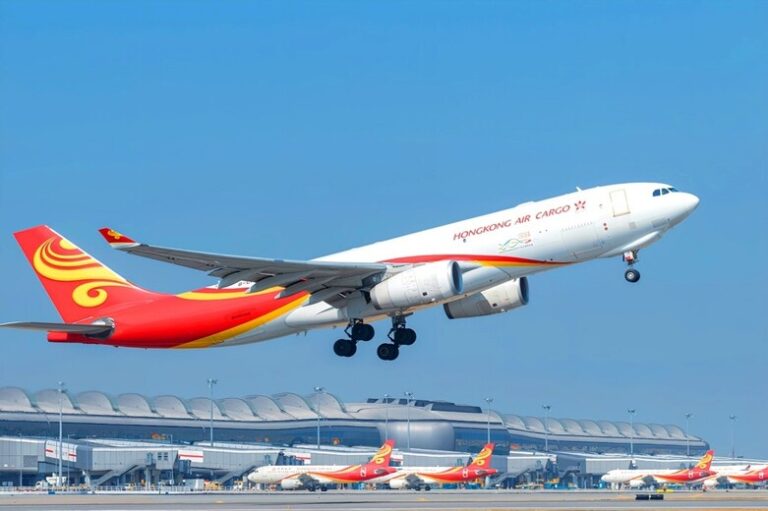
The news is that Hong Kong Air Cargo (HKAC) is starting up direct flights between Hong Kong (HKG) and Glasgow Prestwick Airport (PIK) on 11FEB25. It is the first Far East airline to serve the Scottish airport and will do so with an Airbus A330-200F, which offers a cargo payload of 60 tons. Two further flights are already scheduled as a potential weekly operation: they will arrive on 18FEB25 and 25FEB25. They are set to bring e-commerce from SHEIN, Temu, and TikTok (all of which operate out of Hong Kong), which will be processed and sorted at PIK, ready for Royal Mail Group and EVRI to take over final mile delivery. PIK’s Business Development team is looking to fill the return flights with favored Scottish exports such as salmon and whisky, selling the point that PIK is a good alternative to trucking these goods to London Heathrow Airport.

e-commerce comes in, Scottish water of life going out. Image: HKAC

Nico Le Roux, Business Development Director, PIK, commented: “The arrival of Hong Kong Air Cargo’s flights is a clear sign that our efforts to develop Prestwick as a leading e-commerce hub are delivering results. We have made significant investments over the past year to improve our cargo handling capabilities and attract traffic from the Far East, with new equipment and the appointment of a dedicated airport representative based in Greater China. This comes on top of expansion based on our recently announced partnerships with Royal Mail Group and Chicago Rockford Airport in the US. The next step is ensuring that the return flights to Hong Kong are fully utilized, presenting a major opportunity for Scottish exporters. Scottish salmon and whisky are highly sought-after in Asia, and this new route provides a direct and efficient means of getting these premium products to the Hong Kong and mainland Chinese market.”

Tony Ma, Chairman, Hong Kong Air Cargo, revealed: “PIK is our first new destination for 2025, and is the ideal choice to support our growing operations into the UK as we will benefit from fast turnaround times and an experienced cargo team. The hub’s location is ideal for our e-commerce flights, with easy access to road and rail connections, as well as by sea to Ireland, and we are looking to fill our return leg with two of the UK’s biggest exports to the Far East by weight. We look forward to working closely with the team at Prestwick to develop this new route.”

Atlas Air takes pole transport position at Formula One®

0

Formula One® is all about performance and innovation, Atlas Air Worldwide and the Aston Martin Aramco Formula One® team emphasize. It is also about careful planning, speed, and correct implementation. For the race to take place on the track, the same preparation needs to take place in advance. Only with well-organized logistics can the even go ahead as planned. Atlas Air Worldwide has been chosen to carry out the transportation for the event. Aston Martin Aramco’s Formula One® Team announced that the two companies have signed a new, multi-year partnership agreement wherein Atlas is named as the team’s Official Logistics Partner. Its fleet of 747 nose-loading freighters will serve to ensure that all the required equipment flown by air, makes it to the respective Formula One® events around the world, on time and in pristine condition. The airline is no stranger to providing logistical expertise to sports event coordinators, and under the agreement, it will also collaborate with Aston Martin Aramco to improve its logistics efficiency, bringing in advanced technology and greater sustainability. “To mark this partnership, Atlas branding will debut on the AMR25, as well as on the race suits of drivers and mechanics, when they are launched ahead of the 2025 Formula One® season. This collaboration marks the first appearance of Atlas branding on an F1 car and team uniforms, highlighting the significance of the partnership,” the press release states.

Could that be an Atlas Air flying carpet under that car? Image: Atlas Air Worldwide

Michael Steen, Chief Executive Officer, Atlas Air Worldwide, stated: “We are proud to expand our relationship within Formula One® through our partnership with Aston Martin Aramco. This marks the beginning of an exciting journey alongside an organization that thrives on a global stage, driven by precision, performance, and innovation. Both of our companies share an unwavering commitment to excellence and a bold vision to push the boundaries of what’s possible.”

Ben Fitzgerald, Chief Operating Officer, Aston Martin Aramco Formula One® Team, said: “We are delighted to welcome Atlas Air Worldwide as our Official Logistics Partner ahead of the 2025 season. Logistics is the lifeblood of a Formula One® team, and the ability to transport freight seamlessly as we race across the globe is critical to our success. Atlas’ leadership in aviation logistics and forward-thinking approach align perfectly with our core values of innovation, performance, and excellence.”

Astral Aviation expands global reach with new GSAs

0

Kenyan cargo airline, Astral Aviation has appointed Network Aviation Group and HIT Cargo Asia as its General Sales Agents (GSAs) for key markets, with effect FEB25. Network Aviation Group will represent Astral in Europe and the United States, while HIT Cargo Asia will serve as the GSA for mainland China. These appointments aim to expand Astral Aviation’s presence and service capabilities in these regions. Network Aviation Group’s established network in Europe and the USA is expected to strengthen Astral’s cargo operations and customer engagement. The GSA and the airline have previously worked together. Their last collaboration ended on 31DEC22. This time round, it is tasked with providing forwarders with customized cargo solutions and seamless access the airline’s African network.

Astral is growing its footprint in key global markets. Image: Astral Aviation

HIT Cargo Asia will provide market knowledge and operational expertise in mainland China, which is a rapidly growing cargo market for Astral and the industry. Astral hopes for efficient and reliable service delivery to customers in China, through HIT Cargo Asia’s representation.

Sanjeev Gadhia, CEO of Astral Aviation, announced: “We are delighted to partner with Network Aviation Group as our GSA for Europe and the USA. Their deep understanding of the air cargo industry and their commitment to excellence make them the ideal partner to represent our interests and serve our customers in these key markets. Mainland China is a vital market for our global operations, and we are excited to work with HIT Cargo Asia. Their reputation for reliability and excellence aligns perfectly with our mission to provide world-class cargo solutions to our clients.”

Andy King, Group Sales Director for the Network Aviation Group, added: “We are very pleased to be working with East Africa’s leading all-cargo airline again, we have over 40 years of experience, in providing air freight solutions for clients in the East African region and look forward to growing this business together with Astral.”

ECS Group bring AXA Climate School to DISCOVERY

0
Jean Ceccaldi, CEO of ECS Group. Image: ECS Group

DISCOVERY is the name of ECS Group’s dedicated, in-house learning system which is the online source for all kinds of training and information on the skills and topics required as a GSSA. Sustainability is one of ECS Group’s four strategic pillars and alongside its sustainability program, which is published on the company website, ECS Group has now also come together with AXA Climate School and drawn up the Sustainability modules now available in DISCOVERY. “The training program provides information and initiatives for change, empowering employees to act today for a better tomorrow. The science-based training is aimed at educating and empowering ECS Group employees to engage in sustainable transition – as individuals and as part of the company,” the press release reveals. AXA Climate School is an established, recognized platform for raising awareness on climate change and environmental issues, and its training portfolio is used by all kinds of leading companies. Through DISCOVERY, ECS Group employees now have access to a number of videos and interactive courses regarding environmental responsibility. The modules include: ‘Acting on Your Own Footprint,’ ‘Acting Towards Energy Sufficiency,’ and ‘The Low Carbon Transition.’ They formed part of the group’s 2024 training objectives and received very positive feedback. Hence, additional modules will be incorporated this year to continue encouraging change. “The learning modules are designed to educate, promote understanding and offer practical actions that can be implemented into everyday routines to bring about positive change,” the release concludes.

Jean Ceccaldi, CEO of ECS Group, explained: “As the leading GSSA in our industry, our responsibility to our ECS Group customers and employees goes beyond high quality transportation management. The air cargo industry has an impact on our environment, as do we all in our daily life choices – how we travel to work, how we carry out our work, how we use resources, for example. Building on ECS Group’s pioneering ‘Future Now!’ strategy as a core element of our Augmented Sustainability business pillar, we have embedded AXA Climate School in our DISCOVERY online training platform. The more we all know and understand about our impact on the planet, the better we can shape a sustainable, reliable, and cleaner tomorrow, starting now.

Jettainer and Oman Air Cargo agree contract extension

0

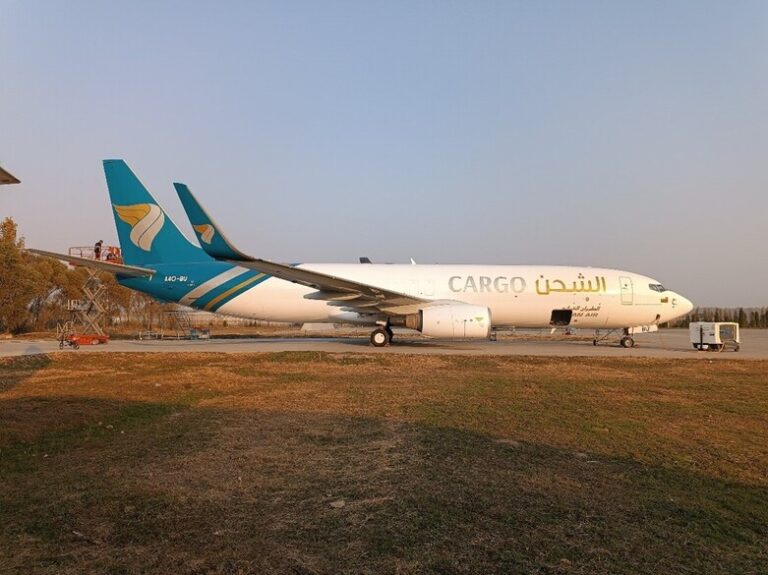
If it works, it deserves to continue, is likely the byline to Oman Air Cargo’s decision to extend its cooperation with Jettainer. The airline first entrusted the Unit Load Device (ULD) management company with the supply of its containers back in 2017. That partnership has just now been extended again by another four years, which will take the two companies through to the year 2029. What is so significant about 2029? That’s the year in which Oman Air expects to have taken delivery of a further twelve aircraft to complement its B737-800 (BCF) freighter from 2023 and last year’s Boeing B787-9 and first B737 Max 9. More planes mean more need for ULDs. The press release hints at continued future collaboration too, mentioning that “Jettainer ensured well-organized support for the introduction and expansion of cargo flight operations. In the future, the ULD fleet will continue to be adjusted to the airline’s needs and further optimized with new innovative developments and services.”

Signed up for a further four years with Jettainer. Image: Oman Air

For now, the contract extension is for a further four years during which Jettainer will continue to manage the airline’s current fleet of roughly 2,000 ULDs. The release points out that the two companies have built up a partnership on trust, with a strong focus on customer success, revenue growth, and sustainable operations, and successfully navigated the Covid pandemic.

Michael Duggan, Vice President Cargo at Oman Air, said: ““Jettainer has been our partner of choice for ULD management for several years now, and their expertise and services have ensured that we are always optimally supplied with ULDs. The combination of innovative solutions, excellent customer service, and absolute reliability convinces us that Jettainer is the right partner for us now and in the future.”

Dr. Jan-Wilhelm Breithaupt, Managing Director and CEO of Jettainer, stated: “The contract renewal with Oman Air underlines our strong partnership and the quality of our service. Jettainer stands firmly with Oman Air in its transformation journey. With our focus on efficiency, digitalization, and innovation, we will continue to contribute to Oman Air´s competitiveness in the coming years.”

Unilode continues OnAsset Intelligence IoT partnership

0

Unilode Aviation Solutions and OnAsset Intelligence have renewed their decade-long partnership to drive innovation and IoT advancements in aviation logistics. This collaboration has already led to significant progress in IoT-enabled aviation logistics, including enhanced in-flight tracking capabilities.

Wireless devices monitor and track Unilode’s ULD movements – courtesy: OnAsset

Unilode’s network of over 172,000 digitally enabled ULDs (incidentally, the world’s largest digitized fleet serving more than 90 airlines), combined with OnAsset’s Sentinel tracking devices and global network of Sentry gateways, has revolutionized the supply chain. The partnership enables real-time visibility and sensor data capture throughout all phases of ULD handling, including maintenance, warehousing, ground operations, and in-flight tracking. The companies plan to expand their digital enablement solutions to include galley carts, cargo and cold chain shipments, ground support equipment, digital warehousing, industry status messaging, and digital transaction automation.

Ross Marino, Chief Executive Officer, of Unilode, announced: “We are pleased, and excited, to extend our exclusive partnership with OnAsset Intelligence. Together we will continue to drive digital innovation and revolutionize the way our ULDs are managed. We are introducing our new tag and reader hardware [for] vastly improved tag longevity and performance. This partnership will further strengthen our digital infrastructure and capabilities for our growing customer portfolio. By understanding the ULD journey and our customers’ needs, we are developing the digital technology that will provide us with data that enhances track and trace capability, thus reducing lost and unreported ULDs.

Bas Vermeer, Chief Information Officer, Unilode added: “Together with our e-ULD mobile app, OnAsset’s advanced reader and tech infrastructure enable our customers to enhance day-to-day ULD handling processes, significantly reducing the turnaround times of ULDs. With our customer portal, which uses OnAsset’s real-time ULD tracking information, we can further improve the Cost-of-Non-Quality of ULD Management. Combining both solutions this will significantly improve ULD Utilization and hence create direct value in the logistical process of ULD and Cargo management for our customers.”

Adam Crossno, OnAsset’s Chief Executive Officer, stated: “We are proud to continue to be Unilode’s partner for this journey in digital evolution. Unilode has a truly innovative mindset that permeates every aspect of their business, and our joint digital innovation roadmap is the most impressive and exciting I’ve seen in my 20-plus years in this business. Unilode and their customers demand the best, and we are excited to help realize our shared vision to bring the world’s most comprehensive digital service enablement network to the aviation industry.