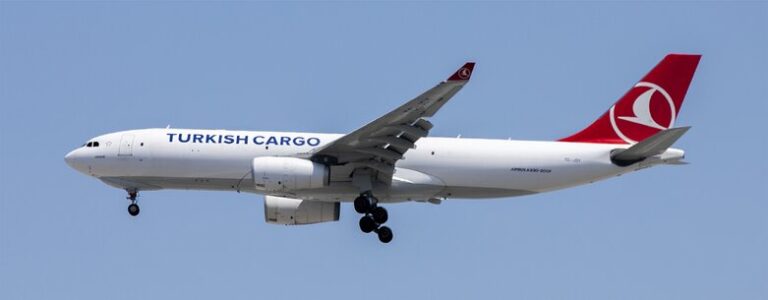
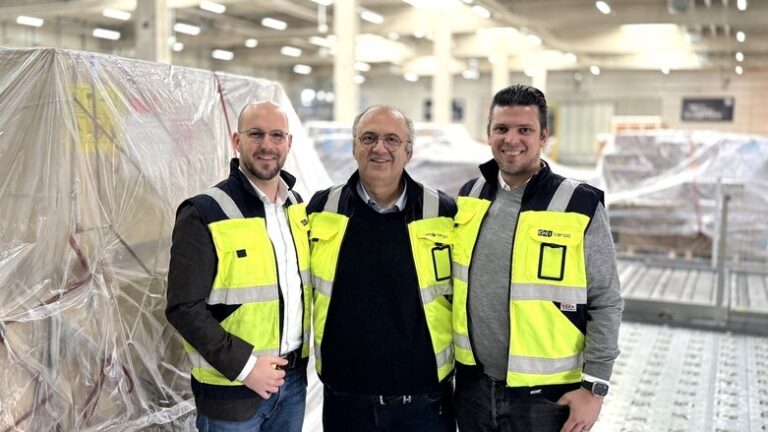
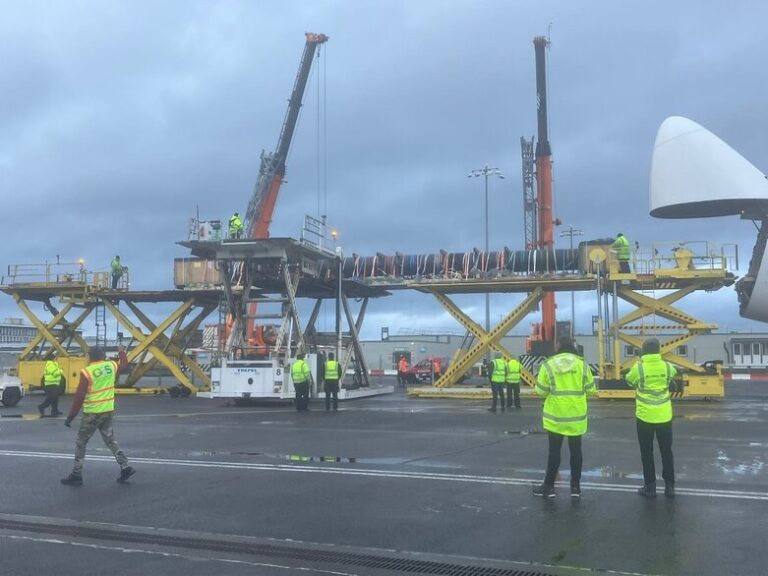
Via virtual space to booked physical capacity. Image: Turkish Cargo
Turkish Cargo has directly integrated its management system, COMIS, with CargoWise, thus offering eReservation services to freight forwarders and 3PLs worldwide and streamlining their operations, since they do not need to leave the CargoWise system to make bookings. The press release states that shippers [sic] now have real-time access to air cargo rates, flight availability, and make and receive booking confirmations directly within the CargoWise platform. This API connection enhances efficiency by reducing manual data entry errors, increasing transparency, and lowering operational costs. The integration also underlines Turkish Cargo’s commitment to digital transformation as it focuses on providing improved and more flexible solutions to its customers.
Selçuk Gençaslan, Turkish Airlines’ Senior Vice President of Cargo Marketing, explained: “As Turkish Cargo, we transport approximately 2 million tons of cargo to over 360 destinations within our flight network every year. Our wide flight network and high capacity allow us to be globally accessible while offering competitively cost-effective, innovative solutions. Consequently, we focus on offering digital solutions to our customers by swiftly adapting to the evolving dynamics of the industry and thus, we are pleased to advance our mission of delivering the best service to our customers through this collaboration with CargoWise.”
Jorre Cobelens, Vice President – Logistics Data and Connectivity at WiseTech Global, commented: “By establishing direct data connectivity with Turkish Cargo, we enable our CargoWise customers to efficiently process tens of thousands of unique shipments on the world’s largest air cargo network from within CargoWise. This increases productivity for the entire industry during and after the eBooking process, avoids double data entry, reduces human errors, and eliminates unnecessary emails. The API integration provides Turkish Cargo’s customers with real-time communication directly within CargoWise, which also includes the ability to modify a booking until final execution of the Master Air Waybill. With this partnership, the transparent data sharing enables Turkish Cargo to optimize their planning and capacity management.”
Scattering rose petals where and when they needed to fall. Image: Qatar Airways Cargo
Not just Qatar Airways Cargo, of course, as several other cargo airlines posted about the crucial part their transport operations played in showing the love on 14FEB25. As every year, the weeks in the run-up to Valentine’s Day mean top level logistics stress for everyone involved in the perishables supply chain. In Qatar Airways Cargo’s case, it successfully handled and carried the equivalent of 42 million freshly cut red roses across the world. Their total weight was 2,800 tons of flowers, of which around 1,600 tons originated in Nairobi, Kenya, and the other 1,200 were flown in from Bogota and Quito in South America. All were destined for the key flowers markets in the Netherlands, Middle East, Asia, and Australia. While many of the flowers traveled on board of the airline’s scheduled passenger and cargo flights, in the final two weeks prior 14FEB25, it additionally operated nine Boeing 777F charters out of Nairobi and ten from Quito. Qatar Airways Cargo’s Chief Officer Cargo, Mark Drusch, said: “Both Kenya and South America’s floriculture sectors are success stories that must be celebrated and supported. Both countries are well known for producing incredibly beautiful cut roses of unparalleled quality. As the world’s leading air cargo carrier, we are proud to be able to play our part in sharing this great product with the world and supporting the local economies of Kenya and Bogota and Quito. As part of our commitment to contributing to socio-economic development, Qatar Airways Cargo increased capacity by adding extra charter freighters to connect Kenya, Bogota and Quito’s floriculture sectors to key markets and customers worldwide through our network of over 170 passenger and 60 freighter destinations. The additional charter flights are in addition to our scheduled passenger and cargo flights. Because of Valentine’s Day, February is a crucial month and an important economic opportunity for the floriculture sector. Qatar Airways Cargo’s services are critical in helping reward the dedicated farm workers, farmers and entrepreneurs behind this blossoming agribusiness sector.”
Steffen Fessler joins Jettainer as Head of Cool ULD. Image: Jettainer GmbH
Possibly the ‘coolest’ leadership role there is… mainly because Jettainer manages an annual fleet of circa 12,000 cool ULDs, and – as Head of Cool ULD, Steffen Fessler’s responsibilities include the operations and ongoing development of Jettainer’s cool&fly service. This is a service that airlines can opt for, where Jettainer takes on their complete cool ULD order management from start to finish, including ULD ordering, positioning, demurrage cost reduction, monitoring and proactive intervention where required. It focuses on ensuring that both operational risks and costs are kept low.
Steffen Fessler, who joined Jettainer in Abu Dhabi, in NOV24 (though the press release went out last week), came from Lufthansa Industry Solutions where he held the post of Business Manager for Cargo Tools. As his previous position included supporting Jettainer in software development and air cargo IT infrastructure projects, he already had some experience of the company. He originally began his training and career in logistics over at building materials producer, Puren, in AUG06, gaining logistics and production experience over the next 13 years before joining Lufthansa Industry Solutions in 2019. Since NOV24, Steffen Fessler has been stationed in Abu Dhabi, lead Jettainer’s 24/7/365 center there, and working on developing and digitally enhancing the company’s cool&fly’s service.
Dr. Jan-Wilhelm Breithaupt, CEO of Jettainer, stated: “With his IT and logistics background, Steffen Fessler is the ideal candidate to consistently drive forward our service area of cool ULD management. The management of containers for temperature-sensitive goods is a highly complex process that requires absolutely precise and careful planning. We offer the world’s most efficient solution contributing significantly to our customers’ success which Steffen and his team will continue to improve technologically in the future.”
‘Quality meets Quality’ Skylog Türkiye and ANA launch cargo services. Image: Lemon Queen
This month saw All Nippon Airways (ANA) launch the first ever of its thrice-weekly direct Türkiye (Istanbul – IST) – Japan (Haneda – HND) connections on 12FEB25. To safeguard quality cargo sales out of Istanbul, the airline settled on ECS Group’s Turkish subsidiary, Skylog Türkiye, as its GSA and the two companies signed a GSA agreement that began on 01FEB25. ANA now operates three Boeing 787-800 flights per week, which together bring another 60 tons of cargo capacity to the market and offer a strong Asia-Europe network connection. ANA stands to benefit from Skylog Türkiye’s access to industry-leading digital tools created by CargoTech’s members, that ensure cargo space and revenue is optimized from the very start. The GSA’s local expertise further guarantees that the airline’s service is soon known across the country. The flights will mainly carry fish and other seafood products, automotive parts, and general cargo.
Kenichi Wakiya, Executive Vice President of ANA, announced: “Our inaugural direct flight from Tokyo Haneda, Japan, to Istanbul, Türkiye, on 12FEB25, represents an important milestone for us. Türkiye and Japan celebrated 100 years of diplomatic relations in 2024. We are confident that together with Skylog Türkiye, we can contribute to the next 100 years from 2025. Just as we are committed to providing seamless connections for our passengers, we seek to offer the same for our cargo customers. Skylog Türkiye’s local market knowledge and client base, along with its focus on top quality and technologically enhanced and efficient customer service, perfectly matches what we stand for at ANA. Together, we will also open sought-after cargo connections to the Middle East, Europe and Africa, which are all best served by Istanbul’s impressive global hub and Haneda.”
Jean Ceccaldi, Chief Executive Officer of ECS Group, emphasized: “First impressions count. ANA is launching its first direct Türkiye – Japan connection and we are greatly honored to offer our GSA expertise from the very start. Skylog Türkiye shares ANA’s philosophy that the new value of air cargo logistics goes beyond mere transportation. Our joint focus is on quality at all levels. Our commitment to service excellence, efficiency, and digital innovation, in combination with ANA’s exceptionally high operational standards, offer a strong foundation for a long and successful partnership, and the ultimate in customer experience. We are ready to create that perfect first impression!”
CHI’s Management Board (from left): Dominik Misskampf, Hakan Sener, Kai Domscheit – Image: CHI Aviation Handling GmbH
CHI Aviation Handling GmbH recently announced that it has appointed a new member to its Management Board. Since 01FEB25, Hakan Sener has taken on the role of board member, alongside Kai Domscheit and Dominik Misskampf. From his beginnings as a Customer Service Agent for Turkish Airlines in Frankfurt, back in DEC85, Hakan Sener has meanwhile garnered over 40 years of air cargo and operations experience at Frankfurt Airport. From Turkish Airlines, he moved to Fraport AG, before joining Cathay Pacific in OCT89 for 11 years. This was followed by almost 17 years at ACCIONA (passenger handling and ramp services), and then WISAG from FEB18, where he became Managing Director the following year. “Hakan Sener is a customer-centric and far well-known personality in the aviation industry,” the press release states.
As CHI Cargo group is focused on expanding its airline handling and therefore looking to enter into strategic partnerships with other airport operators in Germany, it has also expanded its board. “The last two joint ventures have been NCS NUE Cargo Handling GmbH & Co. KG and Cargogate Munich Airport GmbH. The CHI Cargo group has successfully expanded its network and positions itself as a boutique operator at its locations in Frankfurt am Main, Munich, Hamburg, Nuremberg and Amsterdam,” the press release states, underlining its unique focus on comprehensive e-commerce handling solutions that incorporate customs clearance, freight handling and trucking of e-commerce goods as a one-stop-shop, and which gained it contract with large e-tailers such as TEMU.
Dominik Misskampf, Managing Director of CHI Aviation Handling GmbH, assured: “Hakan’s know-how will significantly drive strategic development not only for CHI Aviation, but also for the entire company group. We strongly believe that he will strive to further significantly reduce the ‘time-to-customer’ by cutting down processing time between aircraft stand and freight forwarder.”
Over on LinkedIn, Hakan Sener stated: “I’m excited to be on board and grateful for the warm welcome! My first week has been filled with great discussions on delivery times and service levels, and I’ve been fully equipped with IT access, business cards, and CHI apparel.”
Saudia Cargo deepens ties with industrial partners – photo: pixabay20
At a Global Partnership Meeting held in Jeddah from 12 -13 FEB and attended by 140+ managers, Saudia Cargo outlined its roadmap to optimize fleet capacity, expand network connectivity, and accelerate digital transformation. Leveraging Saudi Arabia’s strategic geographic location, management emphasized its aim to serve the market as a vital air bridge connecting East and West, facilitating seamless global trade flows.
A company release stresses that the gathering highlighted Saudia Cargo’s commitment to innovation and operational excellence, with plans to maximize belly capacity on Saudia Airlines passenger flights, strengthen interline partnerships, and enhance cargo handling capabilities to ensure efficient and reliable cargo movement across international markets, solidifying the company’s competitive edge.
At the meeting, Eng. Loay Mashabi, CEO and Managing Director of Saudia Cargo, emphasized the critical role of GSAs in the company’s success: “Our GSAs are integral partners, and this gathering provided an invaluable opportunity to align on our shared vision for growth and innovation,” he said. “By focusing on customer-centric solutions, operational resilience, and strategic collaboration, we are well-positioned to meet the demands of a rapidly evolving market.”
The executive also highlighted Saudia Cargo’s achievements in 2024, including reaching an exemplary on-time performance rate of over 92%. “Despite global supply chain disruptions and shifting demand patterns, we prioritized flexibility, capacity expansion, and digital innovation. Our GSAs have played a pivotal role in driving growth, particularly in the e-commerce sector, helping us attract new business while retaining existing customers,” the manager added.
Aligned with Saudi Arabia’s Vision 2030, Saudia Cargo is committed to transforming the Kingdom into a global logistics hub by expanding capacity, strengthening global connectivity, and enhancing trade efficiency. The company aims to scale import, export, and transit volumes by 2030, driving economic growth and solidifying Saudi Arabia’s role as a key player in international supply chains. The annual GSA meeting underscored Saudia Cargo’s dedication to fostering strategic partnerships that drive service excellence and operational resilience.
Glasgow Prestwick Airport’s team handles 67-foot cargo for oil and gas sector. Image: Meantime Communications
It’s not every day that you get a request in to handle at 67 foot /20.4 meter-long pipe as air cargo. Certainly a first over at Glasgow Prestwick Airport (PIK), which had the task of offloading the piece upon its arrival from Kuala Lumpur (KUL), Malaysia, recently. The pipe, part of an oil and gas industry shipment destined for Aberdeen, and one of three oversized pieces in the consignment, has since gone down as the airport’s longest piece of cargo ever handled. A record – and weighing in at 24 tons, a pretty heavy one. Despite its size, it and the two accompanying pieces (both measuring a mere 40 feet/12.19 meters each) were offloaded in just thirty minutes, thanks to recent investments in new airport equipment.
The jumbo pipe had been transported on three 20-foot pallets, connected together. Three main deck loaders and two cranes were deployed to safely offload the shipment from the aircraft. Thanks to PIK’s new high loaders, capable of handling weights of 20 and 35 tons respectively, the shipment was swiftly removed and sent on the next step of its journey to its final destination in Aberdeen. “PIK’s additional investments included a heavy-duty pushback tractor, 12 new dollies, a Rapiscan X-ray machine, and cold storage facilities ranging from -30°C to +25°C,” the press release recalled.
Jules Matteoni, Operations Director, PIK, stated: “The safe, careful, and efficient offloading of this cargo required extensive planning from our in-house ground handling team at Prestwick. Handling such a large piece of freight requires immense coordination and expertise, two of our key assets.”
Nico Le Roux, Business Development Director, PIK, added: “Last year, we decided to invest significantly in our infrastructure, and the success of this operation is a direct result of that commitment. We are dedicated to supporting our clients and the industries they operate in, particularly outsized cargo for the oil and gas sector, which has always been one of our strengths.”
No air cargo conference goes by without a focus on e-commerce. As was also the case at the recent World Cargo Summit 2025 held in Ostend, Belgium. Its dominant role in air freight was illustrated during a panel attended by high-level experts.
L > R: Craig Strickland, Nicola Schaffner and Kendy Choi – photo: CFG/ms
Steven Verhasselt, Founder and Lead Consultant Cargo Strat Belgium & FB Cargo Strategy HK, led the debate. The panel participants were Craig Strickland, CSO BoxC (an international e-commerce management platform), Nikolai Schaffner, VP E-Commerce Swissport International, and Kendy Choi, Director, Commercial & Regional Partnership Regional Hub Services Cainiao Group.
The sky is the limit Mr. Verhasselt reminded the debaters that e-commerce has grown to a margin of 20% of all global air freight, accounting for 1.5 million tons daily, to which Ms. Choi replied that Cainiao’s expectations are in line with these figures and that demand keeps growing constantly.
Addressing the panelists, Steven Verhasselt therefore asked how they thought the ratio between e-commerce and all other air freight products would develop.
Displacement of other commodities Swissport International’s Nicolai Schaffner delivered these figures: “We handle 5 million tons of goods in 120 warehouses across the globe. Some 80% of the growing volume over the last 5 years is steered by e-commerce. It contributed a lot to the growth of Liège Airport [LGG], which has become Europe’s leading e-commerce hub. LGG’s ascent is a great achievement.”
“LGG offers its customers very friendly e-commerce operation,” applauded Craig Strickland. “From the package perspective, on the Europe to Africa route, volumes are constantly growing and other regions outside China start shipping as well,” the executive reasoned.
Bottlenecks Next, Steven Verhasselt tabled the bottleneck situation caused by the daily tsunami of packages flooding the European but also U.S. market, and how to overcome it. This is aggravated by insufficient aircraft capacity and the alarming shortage of drivers and trucks at European e-commerce hubs, jeopardizing the successive growth of the e-commerce business and the timely delivery of consignments.
Swissport’s Schaffner illustrated this by pointing out that some carriers have partially withdrawn their freighters from routes to Latin America and now deploy them between China, the Middle East and Europe. This reduced and keeps reducing the availability of widebodies in some markets and results in e-commerce increasingly displacing general cargo.
Another obstacle is presented by authorities that, in some cases, create bottlenecks. “In certain circumstances, the throughput of shipments is very slow which adds to the costs and causes delays,” said Kendy Choi of the Cainiao Group.
“Regular checks by officials, handling transparency and a well-functioning digital ecosystem involving all stakeholders, including customs could prevent hiccups,” she recommended.
As far as e-commerce in the U.S. is concerned, the biggest bottleneck is caused by customs authorities, said Craig Strickland. “The USCBP performance is dramatic,” he criticized.
Cuttingdown running times to 3.5 days As for the new import taxes on Chinese goods announced by the Trump administration, Swissport’s Schaffner remained relaxed “The average value of an e-commerce shipment is between 15 and 18 USD. Even with an extra tax of 20%, this will not alter consumer behavior. But there is no political rationale behind this,” the executive added.
Regarding distribution times, Ms. Choi said that Cainiao aims for 72 hours from order to delivery. “Currently, we are even thinking of shortening e-commerce transports to 3.5 days.” This is challenging, but feasible, because “we have a new facility in Hong Kong allowing us to track shipments all the way from A to Z.”
Over at Swissport, the ground handler has promoted e-commerce to one of its strategically most important pillars, Nikolai Schaffner. “It is supported by tailor-made logistics solutions, so we can contribute to meeting Cainiao’s 72-hour ambition. Aircraft will not fly faster; but data integration will further accelerate the process and spur the flow of goods.”
CargoForwarder Global’s ‘Spotlight On…’ brings a different segment of the air cargo industry to the fore every Sunday evening. This week, we’ve expanded that focus to include civil aviation authorities, then without bodies regulating and inspecting aviation activities and infrastructure to ensure aviation safety, security and standards, there would be no efficient, functioning air freight industry. Ana Santos de Sá e Benevides (AB) takes us through her responsibilities and shares her views and advice for the industry.
“Stay curious and engaged”. Image: Ana Benevides
CFG: What is your current function and company? And what are your responsibilities?
AB: Since 2021, I have served as the Chief of Staff for the Cabinet of the Board at ANAC Brazil, the National Civil Aviation Agency. Before that, I worked for over ten years as a civil aviation regulation specialist at ANAC. My primary responsibilities include advising the Board of Directors on institutional relations, coordinating strategic initiatives, and ensuring seamless communication across departments.
Additionally, I am deeply involved in the agency’s efforts to attract a new generation of diverse, untapped talent to the aviation sector through our strategic program: ‘Wings for All’. This initiative aims to foster an inclusive and respectful culture while harnessing the full potential of Brazil’s population to create a more representative and dynamic aviation industry.
CFG: What does a normal day look like for you?
AB: There isn’t really a ‘normal’ day! My work is a blend of strategic planning, project management, document review, administrative decision-making, team leadership, and stakeholder engagement.
Some days, I focus on project management, which often involves extensive coordination with various partners in the ‘Wings for All’ program. Other days, I spend time reviewing and signing official communications with external stakeholders, such as the Brazilian Congress, judicial bodies, and the Court of Accounts. Each day brings unique challenges, but that’s what makes my role so dynamic and rewarding.
CFG: How long have you been in the air cargo industry, and what brought you to it?
AB: I have been in the aviation sector for fifteen years. My passion for public policy and its ability to drive impactful change in critical industries like aviation is what initially brought me here. Over the years, I have become increasingly engaged in the potential of aviation as a platform for economic development and social inclusion, which continues to inspire my work.
CFG: What do you enjoy most about your job?
AB: I enjoy the dynamic nature of the aviation industry and its real impact on people’s lives — especially in a country as vast as Brazil. Civil aviation plays a vital role in connecting regions, ensuring access to goods and services, and fostering economic development.
During the pandemic, aviation was instrumental in the distribution of vaccines and medical supplies, demonstrating its crucial role in public health and crisis response. It is fulfilling to see how this industry can be a catalyst for growth and social well-being.
I am particularly proud of my work with ‘Wings for All’, which aims to open doors for young people from underrepresented backgrounds, allowing them to pursue careers in aviation and ensuring the sector reflects Brazil’s rich diversity.
CFG: What do you see as the greatest challenges in our industry?
AB: One of the biggest challenges is promoting innovation and growth while ensuring sustainability, particularly as the demand for air cargo and aviation continues to rise.
Another challenge is ensuring that the industry attracts, trains, and retains top talent to address current workforce gaps and prepare for future demands. Excellence is key in this industry, and many roles require extensive—and often expensive—training. Without adequate investment in education and workforce development, we risk a shortage of qualified professionals, which could hinder the sector’s long-term growth, efficiency, and sustainability.
CFG: What advice would you give to people looking to enter into the air cargo industry? Any particular training they should aim for?
AB: I recommend developing a strong foundation in aviation regulations, logistics, and sustainability. Specialized training in air cargo management, emerging technologies, and digital transformation can also be valuable in keeping up with industry trends.
More importantly, my advice is to stay curious and engaged. The aviation sector is evolving rapidly, with constant innovation. An open mind and a commitment to lifelong learning are crucial to staying ahead in this field.
CFG: If the air cargo industry were a film/book, what would its title be?
AB: “Carricare – The Load We Carry”
‘Carricare’ comes from Latin and means ‘to load a cart’. I think this title captures the historical essence of cargo—it’s about movement, progress through trade, and the responsibility that comes with carrying something of value. From carts and ships to airplanes and drones, the way we transport goods has always shaped societies, economies, and even our personal lives.
For me, air cargo is more than just logistics. It’s driven by the human desire to explore (new places, new goods, new cultures), and share it with others through trade. It’s about connecting people, bridging distances, whether it’s delivering essential medical supplies, supporting businesses, or bringing products from one corner of the world to another. There’s something deeply human about it: It’s not just about moving things — it’s about what those things mean to the people receiving them.
Thank you for sharing your views, Ana!
If you would like to share your personal air cargo story with our CargoForwarder Global readers, feel free to send your answers to the above questions to cargoforwarderglobal@kopfpilot.at We look forward to shining a spotlight on your job area, views, and experiences.
The Cairo-based national Egyptian freight carrier has been flying to Hahn Airport (HHN) in southwest Germany since 2009. This makes the cargo division of EGYPTAIR, the freight airline with the longest continuous presence at HHN. In Europe, EGYPTAIR Cargo has only served Ostend-Bruges in Belgium for even longer, namely more than three decades.
We met the airline’s management on the fringes of the recent World Cargo Symposium in Ostend, and wanted to know what’s positive and also critical at Hahn from its professional perspective. Interlocutors were Ihab El Tahtawy (IET), Chairman & CEO of EGYPTAIR Cargo, who is also a pilot, and Khaled Youssef (KY), VP Economic Affairs.
Ihab El Tahtawy heads Egyptair Cargo – photos: CFG/hs
CFG: EGYPTAIR Cargo is a loyal customer of Hahn Airport. What binds your company to the airport?
IET: Nothing binds us to any airport. But HHN offers a range of favorable services that we consider essential and that we absolutely need in order to run our operations smoothly and steadily.
Management reacts fast and flexibly
CFG: Please specify these essentials.
IET: It is a number of points that we welcome, and which are instrumental to keep operating our A330-200 P2F to Hahn. First to mention is the fact that there is no night flight ban. In the event of a possible delay, which cannot be ruled out in the freight business, we do not have to divert our flights to land at some remote place. This would add to costs and service losses. In the event of special requests, we receive an immediate response from the management and Hahn makes every effort to find viable solutions. In addition, thanks to the rapid processing of imports and exports by the local ground handling agent, Hahn Cargo Services (HSC), the time our aircraft spend on the ground is very short, speeding up their turnaround time. Incidentally, HCS’s warehouse is directly adjacent to the apron, which saves time when loading and unloading our freighters. This is essential for the strawberries and other perishables that we fly to Hahn. These are key factors that explain why we feel comfortable at Hahn, which we serve several times a week.
KY: I would like to add one more aspect to this: The doors of Hahn Management and the ground handler HCS are always open. We can therefore discuss requests, concerns, operational or technical aspects with them directly at any time, if necessary.
Khaled Youssef is Vice President Economic Affairs at Egyptair Cargo
New exclusive lounge for EGYPTAIR Cargo crew
CFG: Back to the Hahn flights: We sometimes hear from airlines that the airport is not attractive from the pilots’ point of view. There are few catering and other offers for the spare time they spend between two flights.
IET: That’s true. But from mid-February, our pilots will be offered lounge access. The facility has been set up exclusively for our cockpit personnel. With three flights a week, three on A330-200 P2Fs, our cockpit colleagues will certainly be happy to take advantage of this amenity.
CFG: And as far as optimization potential at Hahn is concerned: What does EGYPTAIR Cargo suggest?
KY: The weather could sometimes be better. But unfortunately, neither we nor the airport can influence that.
CFG: Ihab, Khaled, thank you for these impressions.