Bigger and better. Over at Birmingham Airport (BHX) in the UK, Carousel Logistics has just trebled its handling capacity, and taken a large step towards greater efficiency and sustainability. The company recently opened a new airside cargo facility, measuring an impressive 6,829 m² (22,405 ft²) as part of its strategic focus on efficiency improvement. The cargo hub allows Carousel Logistics to consolidate its handling operations, thus reducing not only delivery times, but also it negative carbon impact. The release reveals that the new addition should help to “reduce up to 80,467 km (50,000 miles) of road transport per year”, given that until the new facility was opened, “cargo unloaded at Birmingham Airport was previously sent to Carousel’s site in Coventry before making its onward journey”. Those extra journeys have now become obsolete, since cargo can be sorted and sent to their final destinations directly from the airport grounds. Carousel’s sustainability initiatives further include new, lower-emissions equipment at Birmingham Airport. Alongside a fleet of electric vans, the company’s forklifts and belt-loaders are now also electrically powered, and its ground power units are no longer diesel-run. Instead, they operate on HVO biofuel.
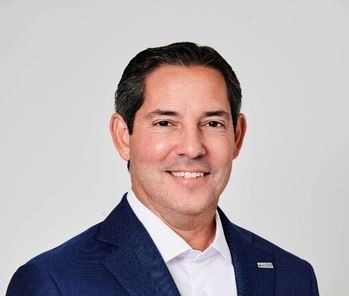
Andrew Lowery, UK Managing Director, Carousel Logistics – image: Carousel Logistics
Andrew Lowery, UK Managing Director, Carousel Logistics, announced: “Our new facility at Birmingham Airport will allow us to handle even greater volumes of cargo within the same tight time window. Strategically located near the M42 and M6 motorways, Birmingham International station, new HS2 links, and our electric rail freight partner Varamis Rail, this investment will dramatically improve line haul times and cut carbon emissions.”
The news was also met with applause on LinkedIn, where Tim Deniz, Chief Commercial Officer at DANX Carousel Group, commented: “Great to see the expansion of airside capabilities at Birmingham Airport! This new facility strengthens our ability to manage time-critical cargo efficiently, ensuring even greater service reliability for our customers. A fantastic step forward for our operations in the UK – well done to the team involved!”
Awery’s ERP platform is used by more than 45 GSSAs and counting. The company continues to grow and expand, and has place a particular focus on US and Southeast Asia. To support this expansion, Awery has brought on digital expert, Wayne Phelan, appointing him to the post of Business Growth and Product Development Consultant, with immediate effect. His responsibilities include digital consultancy for Awery’s growing customer base, as well as the development of other required air cargo digital solutions. Phelan joins Awery over from TriCargo – a not-for-profit air cargo start-up that he co-founded in 2023, and which seeks to improve connectivity between freight forwarders and airline General Sales and Service Agents (GSSAs) so as to drive efficiency and new business. Prior to that, Phelan spent almost 6 years in senior positions at Accenture, which included consultancy and digital project implementation responsibilities. His other roles over the past couple of decades have brought him international experience in consultancy, aviation software, digital transformation and innovation.
Wayne Phelan, Business Growth and Product Development Consultant, Awery Aviation Software. Image: Meantime Communications
Vitaly Smilianets, Chief Executive Officer, Awery, commented: “Our customers are increasingly looking for integrated solutions that streamline their operations. Wayne’s experience in developing practical solutions for air cargo businesses aligns with Awery’s commitment to delivering software that solves recurring and changing industry challenges. His insights will be particularly valuable as we enhance our digital tools and expand into the United States and Southeast Asia.”
Wayne Phelan stated: “Having worked extensively on emerging technology adoption, including within the air cargo sector, I understand the challenges and, more importantly, the opportunities facing the industry. My focus will be on ensuring Awery’s growth, and that the products continue to evolve to meet the changing needs of the market. Awery has a strong reputation for driving digital change across the aviation sector, and I look forward to working closely with the team to develop the business and further enhance its solutions that have already transformed efficiency and connectivity in air cargo.”
This month saw the start of ECS Group Subsidiary, AVS GSA Thailand’s GSSA contract for Air Macau in Thailand. The two-year agreement which began on 01FEB25, is “a significant milestone in the partnership between AVS GSA and Air Macau,” according to the press release. The two companies have been collaborating since MAY24, when AVS GSA Thailand began as Air Macau’s sub-GSSA. It is because the GSSA successfully generated substantial revenue in the following months, that the airline decided to officially appoint it as GSSA. AVS GSA Thailand now manages cargo sales out of Thailand to destinations across Air Macau’s network. It also provides operational services support and ensures seamless freight movement for a range of commodities including perishables such as orchid flowers and seafood from Macau, betel leaves and fresh foodstuffs to Kaohsiung (KHH) and Taipei (TPE), as well as electronic parts and general cargo destined for Mainland China. Air Macau operates three daily flights to Thailand – two from Suvarnabhumi Airport and one from Don Mueang Airport, deploying A321 and A320 aircraft. “This partnership will enhance air cargo connectivity between Thailand, Macau, and key destinations across North Asia, particularly Mainland China and Taiwan,” the release points out.
AVS GSA Thailand is a member of the Paris-based ECS Group – image: courtesy Air Macau
Jean Ceccaldi, CEO of ECS Group, announced: “We are delighted with this strategic partnership which strengthens our presence in the Thai market and further solidifies our collaboration with Air Macau. AVS GSA Thailand has demonstrated outstanding performance, and we are confident in their ability to drive continued success.”
Chirasak Chandratat, Managing Director of AVS GSA Thailand, added, “AVS GSA is very proud to play a significant role in the success of Air Macau’s cargo operations. Our team is committed to delivering outstanding sales results and providing top-tier operational services. We look forward to strengthening our cooperation with Air Macau and expanding our collaboration in the future.”
Luis Muñoz Marín International Airport (SJU) in San Juan, Puerto Rico, has been recognized by the International Air Transport Association (IATA) as a hub for certified pharmaceutical handling. This achievement is the result of collaborative efforts by the Puerto Rico Life Sciences Air Cargo Community to enhance cold chain operations in the region. It has worked closely with SJU and the Department of Economic Development and Commerce of Puerto Rico (DEDC) to support logistics providers in obtaining the Center of Excellence for Independent Validators (CEIV) Pharma certification. That initiative has included training programs for smaller organizations and government subsidies to cover accreditation costs. As a result of these efforts, seven members of the Community have successfully achieved CEIV Pharma certification: American Airlines, Prime Air Corp, ETH Cargo, Expeditors, César Castillo, Isla Frio Refrigeration, and Ground Motive Dependable Airline Services (GMD). IATA’s CEIV Pharma accreditation is a recognized global standard for pharmaceutical transportation and is awarded following a stringent audit of facilities, processes and people involved in pharma transport. With additional CEIV Pharma certifications in progress, the Community and its partners are committed to further advancing the standard of pharmaceutical operations across the island, reinforcing the airport’s position as a leading hub for life sciences and pharmaceutical logistics in the Americas.
Jorge Hernandez, Chief Executive Officer of Aerostar Airport Holdings (SJU manager and operator), said: “I would like to extend my deepest gratitude for the recognition awarded to SJU and for the hard work and dedication of our entire team. This achievement underscores our collective commitment to advancing Puerto Rico’s reliable and efficient transportation of pharma products.”
Peter Cerda, IATA’s Regional Vice President The Americas, applauded: “Congratulations to SJU Airport for playing an instrumental role in helping its airport community partners achieve IATA’s CEIV Pharma certification. This milestone not only reflects a commitment to excellence but also strengthens the integrity of pharmaceutical transport through the airport’s cargo supply chain. With this certification, SJU and its cold chain partners set a benchmark for reliability and compliance in line with CEIV standards, demonstrating their dedication to safeguarding the quality of life-saving medicines and establishing themselves as trusted partners in pharma logistics.”
Road Feeder Services are the lifeline for air freight. Without trucking, there would be no cargo flights. However, in the public perception, truck transports only play a very minor role as an indispensable service provider for air freight transportation. Mostly they are seen as obstacles, polluting the air and slowing down traffic flows. Dutch 4PL tech company, Ascension Freight intends to enhance the visibility, efficiency and transparency of European Road Feeder Services, to increase public acceptance of Road Feeder Services. We spoke with Frans Vriend (FV) responsible for business development.
Ascension Freight was founded by Alexander Keur who has 20+ years of experience in the RFS industry. Its main tool is a control tower creating visibility, enabling the optimization of routes, reducing idle times of cargo and trucks and cutting down greenhouse gas emissions.
There is plenty of potential to improve the streamlining of airline Road Feeder Services, states Frans Vried – photo: CFG/hs
CFG: Frans, in your professional opinion, what are the top 3 challenges the RFS industry is facing?
FV: Firstly, air freight is a global business involving many stakeholders, which often causes coordination issues, leads to slow response times and inefficient operations. Secondly, we see a lack of transparency and trust in this industry, resulting in parties focusing on short-term financial benefits rather than favoring a long-term collaborative approach. Thirdly, there is a growing lack of staff to perform proper day-to-day tasks, monitor on-time loading and delivery processes, which leads to reduced product quality.
CFG: What is the idea behind your company slogan “Ascension Freight: Making your RFS flow”?
FV: In the market, we see significant potential for improving the streamlining of airline Road Feeder Services. Many airlines view RFS as a cost factor and base their provider selection on price. By integrating RFS into the carrier’s operations, it can become a competitive differentiator. Currently, RFS is often managed as a standalone activity. In contrast, as a 4PL tech company, Ascension Freight provides full visibility into shipment status, meeting the need for up-to-date information for airlines and their customers. RFS arrival and departure planning is frequently based on the operators’ schedules, rather than the airlines’ needs to keep cargo constantly moving to minimize transit times and security risks. Hence, this is a different customer-centric approach.
CFG: Do you operate your own fleet of trucks?
FV: Ascension Freight does not own any assets, which allows us to focus entirely on our customers’ needs. The selection of an RFS provider can be managed either by the airline or by us. If the airline has already signed a contract, our system allows us to take over day-to-day operations management while working with the existing provider(s). What we’ve observed is that assigning a single RFS provider to cover all of Europe, doesn’t always serve the carrier’s interests – especially since 30-50% of the business is outsourced to third or fourth-party providers. In these cases, the provider’s business model typically focuses on maximizing the difference between buying and selling rates, which compromises transparency and compliance. Each provider has specific routes where they can deliver reliable service at competitive prices. However, by working with a mix of providers based on the best fit per lane or region in Europe, airlines can achieve better service and more favorable rates. Ascencion Freight is 100% neutral when selecting providers.
CFG: Do you offer the market any USP? What makes Ascension Freight different?
FV: Maybe not a single USP, but many benefits. As a 4PL tech company, we are fully committed to bringing efficiency to the industry. RFS orders are automatically fed into our Transport Management System (TMS), where we assign the orders to providers. GPS data from the trucks is received and displayed through our track and trace system, making shipment status globally accessible with just one click. Our team follows up based on a ‘management by exception’ approach, flagging any trips where the agreed ETD or ETA may be in jeopardy. Furthermore, we offer 100% transparency in the buying rates we secure. Our earning model is fair compensation for the services we provide, including customer service, carrier management, invoicing, and preparing customized reports that offer deep insights into KPIs and business performance. By being proactive and transparent – especially when issues arise – we foster trust between all parties involved. Airlines experience increased reliability and efficiency in their RFS operations, which enhances customer experience. RFS providers also benefit from working with us, as we are committed to ensuring fair rates, which enables carriers to provide humane working conditions for their drivers, rather than having drivers camp along highways.
CFG: Global warming demands reducing or even preventing greenhouse gas emissions, wherever and whenever possible. So, do you use telematics to map the CO2 emissions of the various RFS companies you partner with?
FV: Yes, we closely work together with our partners to decrease our customers’ environmental footprint. We do utilize telematics and real-time route optimization. By bundling volumes of multiple airline customers, we aim to improve load factors and decrease empty kilometers. CO2 emission insights are part of our KPI-reporting package for airlines. The reporting is only a starting point in our efforts to continuously decrease the carbon footprint.
After the fraud scam involving excessive surcharges was uncovered 15 years ago, Schenker’s owner, Deutsche Bahn, has now finally been able to close the corruption chapter. Cathay Pacific was the last of just under a dozen airlines sued, and, at the beginning of this year, it ended its legal dispute with the DB Group by mutual agreement. In a joint statement, the two companies negated information about financial specifics of the deal.
Short review: Back in 2008/09, the air freight industry was hit by major shock waves, after cartel practices came to light. Above all, the sudden scandal alarmed the defrauded parties because they had paid excessive security and kerosene surcharges to freight carriers over longer periods, that had been secretly and illegally agreed between airline managers in shady rooms. According to documents presented by DB Schenker, the Deutsche Bahn subsidiary was defrauded of 1,76 billion euros resulting from excessive surcharges demanded by airlines. After the full dimension of the fraud had become obvious, Schenker parent, Deutsche Bahn, claimed compensation payments from 11 airlines. Simultaneously, the EU Commission imposed fines of 776 million euros on the same carriers for illegal price fixing. These were: Air Canada, Air France-KLM, British Airways, Cathay Pacific, Cargolux, Japan Airlines, LAN Chile, Martinair, SAS, Singapore Airlines and Qantas.
Cathay reached a deal with DB in the illegal price fixing affair after years of legal wrangling – photo: B747-8F – courtesy: CX
Lufthansa Group submitted a leniency application Originally, the fraudster cartel also included Lufthansa Cargo and its sister company, Swiss WorldCargo. Yet, the EU waived fines as the Group had initiated the entire proceedings after it was guaranteed key witness status. However, the Lufthansa Group had to pay fines in the upper double-digit million range as a result of civil lawsuits bundled by Deutsche Bahn on behalf of aggravated parties such as Hellmann, Kuehne+Nagel, and others.
The last Mohican Cathay Pacific was the last remaining defendant in this case after all other proceedings had been settled. Both sides involved have agreed to keep the details of the accord confidential, particularly the financial specifics it includes. Martin Seiler, DB Board Member for Human Resources and Legal Affairs commented: “Our competition litigation experts have battled to secure over 65 settlements and recovered nearly 700 million euros in damages in the last few years – this marks a victory for justice and fair competition. I am pleased that this long-running legal process regarding the air freight cartel has now been successfully concluded.” In their action against the air freight cartel, the plaintiffs of Deutsche Bahn had proceeded very creatively, writes the daily newspaper, Handelsblatt. Their comrades-in-arms recruited airline lawyers under the code word “Barnsdale”. This is the name of a historical landscape in the UK that is closely associated with the legend of Robin Hood. The aim was to avoid possible retaliatory measures such as the delayed loading of Schenker shipments at airports or their late delivery to customers, thus harming the agent.
Tire cartel emerges on the horizon Further work may already be waiting for Seiler and his anti-corruption squad. As a result of recent raids, a cartel of tire manufacturers is emerging. According to informed sources, its members are likely to be the world’s leading players in the industry. However, the DB rail group is still keeping a low profile on the subject. Apparently, Seiler and his team’s tough stance against corruption enables an inflow of cash to replenish the empty coffers of the railway company.
CargoForwarder Global’s ‘Spotlight On…’ sheds light on the many activities that make up the air cargo industry. More than ever before, the pandemic demonstrated how crucial air cargo is when it comes to distributing relief supplies across the world. Yet, that need is ongoing and not often in the public eye. As this week’s Spotlight guest illustrates, there are many areas of the world reliant on help and humanitarian aid supplies. The distribution logistics require fast decisions under often very complex circumstances. Bethany Holland, Associate Director of Humanitarian Programs at Airlink, takes us through her day, her experiences, and her suggestion of a book title for the industry.
A job with a direct impact. Image: Bethany Holland
CFG: What is your current function and company? And what are your responsibilities?
BH: I’m the Associate Director of Humanitarian Programs here at Airlink — a US-based, non-governmental organization addressing the logistics and cost-related barriers to disaster relief and recovery. With generous support from the aviation industry, and in partnership with a network of more than 200 non-profit organizations, Airlink facilitates the airlift of humanitarian aid and relief personnel to communities affected by humanitarian crises. Given the context that Airlink operates in, every day is different. I manage our day-to-day response operations and lead our activation procedures during a rapid-onset emergency alongside our team of regional program managers. Over the past several years, I’ve maintained our portfolio of freight forwarding, airline, and logistics partners.
CFG: What does a normal day look like for you?
BH: There are no normal days at Airlink. At least, I haven’t had one yet in five years of being here (I joined Airlink a few weeks before the onset of the COVID-19 pandemic.) Working in the disaster response and humanitarian sectors already keeps me on my toes, but at Airlink we’re working with the air cargo industry as well. Our work straddles two dynamic, and often unpredictable, industries. My days are focused on managing a team of regional program managers, and ensuring Airlink is effective across both sectors, enabling us to fulfill Airlink’s goal of delivering impactful humanitarian responses around the world. This includes collaborating with Airlink’s commercial airline partners, humanitarian organizations, and logistics partners to strengthen relationships and identify solutions for critical humanitarian transport needs. These relationships are critical in such complex environments, and allow us to act quickly when a disaster strikes. Recently, this involves humanitarian cargo movement to West Darfur in Sudan, to the West Bank and Gaza, Haiti, and Afghanistan, to name a few. These critical, lifesaving shipments are made possible by the support of Airlink’s airline and private sector partners.
CFG: How long have you been in the air cargo industry, and what brought you to it?
BH: I’ve been in the industry for 5 years; Airlink is my first foray into this world. Previously, I was working in the US government on management and logistics projects and was ready for a new challenge. What drew me to Airlink was the unique role they play in the humanitarian sector and the obstacles they were able to overcome. The organization is able to make critical responses possible for many humanitarian partners. While this might not be the ‘usual’ entry into the air cargo industry, I’m grateful for the opportunity to work alongside cargo and commercial colleagues.
CFG: What do you enjoy most about your job?
BH: My favorite part of my job is working alongside my team to put the puzzle pieces together and build out transportation solutions for critically needed aid and supplies. The more complex the logistics, the better! I love when a shipment arrives at its destination knowing that the dedication and support from our airline and logistics partners helped make that happen. Whether it’s cholera treatment pharmaceuticals, shelter supplies, medical items, nutritional aid, or clean water kits, every shipment that Airlink facilitates empowers our humanitarian partners to reach more communities impacted by disasters and complex crises. I feel extremely grateful to have a job where I’m able to have a direct impact alongside our airline, logistics, and humanitarian partners.
CFG: What do you see as the greatest challenges in our industry?
BH: Specific to Airlink, although supply chains have bounced back since the pandemic, transport is as challenging as ever (with whole regions and route networks impacted by conflict). Operating in humanitarian contexts is becoming increasingly dangerous. A majority of conflict-related contexts in the world are worsening, with 2023 and 2024 being the deadliest years on record for humanitarians. Meanwhile, the global funding gap is at an all-time high. Transportation is a leading cost for humanitarian organizations around the world, often becoming a barrier to maintain sustainable responses. Access to aid transport needs to be donor- and private-sector led. We’re lucky to have a network of dedicated airline and private sector partners, but more must be done in order to reach communities in need around the world.
CFG: What advice would you give to people looking to enter into the air cargo industry? Any particular training they should aim for?
BH: My advice for anyone looking into joining this industry is to find the aspects of it that most excite you and go from there. For me, that’s the way the private sector and aviation industry can support humanitarian efforts around the world. I’ve found my niche and where I can have the most impact, and I hope everyone is able to find that for themselves.
CFG: If the air cargo industry were a film/book, what would its title be?
BH: ‘Going Farther Together’. This book would highlight the impact that collaboration and partnership have in making the world a better place. We each have a unique role to play — and when we play to our individual strengths, we make humanity stronger as we come together and help one another.
Thank you for your insights, Bethany!
If you would like to share your personal air cargo story with our CargoForwarder Global readers, feel free to send your answers to the above questions to cargoforwarderglobal@kopfpilot.at We look forward to shining a spotlight on your job area, views, and experiences.
“United we stand, divided we fall.” According to credible sources, this was already exclaimed by the ancient Greek poet, Aesop, in the 6th century BC. In line with Aesop’s prophetic words, Walloon Airport Liège (LGG) has now founded a cargo community called “LGG Connect”. The main aim of management is to overcome silo thinking and to enhance visibility. Examples from Amsterdam and Brussels show the positive effects this can have for everyone involved. Torsten Wefers (TW), Vice President Sales & Marketing, presented the project exclusively to CargoForwarder Global (CFG).
LGG CEO Laurent Jossart and Torsten Wefers (standing to the left of Jossart) present the Cargo Connect agreement, flanked by members of the pact – courtesy LGG
CFG: Liège Airport is jointly owned by the Walloon government and some private investors. What role do these owners play in the new Cargo Club “LGG Connect”?
TW: The shareholders firmly back the establishment of the LGG Connect cargo community but are not participating as active members.
CFG: How many stakeholders have become members and how many of them are representatives of airlines, forwarders, ground handlers or other logistics players active in LGG?
TW: LGG Connect was founded by six key members: Liège Airport, which initiated the project; Swissport, WFS, and Aviapartner, representing 60% of our handlers; Wallenborn, a leading trucking company; and Fresh Express, a homegrown freight forwarder with strong expertise in perishables. We chose to start with a select group of major LGG stakeholders who were eager to be part of this strategic initiative. Establishing a cargo community as a non-profit organization proved more complex than anticipated, making it more practical to begin with a smaller core group. However, our ambitions are high. We’ll soon be welcoming new members and have exciting plans for expansion as we continue to grow.
Growing collectively
CFG: Presumably, the community should not remain a pure, non-binding debating club. Hence, who coordinates the activities of LGG Connect, how binding are decisions taken and their practical implementation?
TW: Exactly. First and foremost, LGG Connect is not a forum for discussing personal company issues or sensitive commercial information. Each member must set aside their company-specific interests and focus on how we can grow collectively, as a unified ecosystem rather than as individual entities. Every stakeholder is a crucial link in the supply chain, and the efficiency of air cargo depends on seamless coordination among all players. When one link weakens, the entire chain is impacted. That’s why collaboration is at the heart of our approach. Our Secretary General coordinates activities such as working groups and meetings, but ultimately all members collectively decide the direction we take. Together, we are shaping the strategy for this year and beyond, setting clear priorities, defining future actions, and ensuring a long-term vision. LGG Connect is set to become a key driving force behind the airport’s growth. However, it’s important to acknowledge that this influence comes with responsibility. If LGG Connect were to take a different strategic direction, Liège Airport would have no control over it. That’s why we designed our governance structure to ensure balance: each founding member has a seat on the board and, to maintain fairness, all players have equal decision-making power.
Overcoming silo thinking
CFG: At Air Cargo Belgium, which has existed since 2016 and is based in Brussels, a central concern was the establishment of the data-sharing platform BRUcloud, enabled by solutions provider, Nallian. Its introduction marks the successful end of isolated silos in favor of a collective approach of all stakeholders to operate digitally as one. What are LGG Connect’s plans in this regard and what is the time horizon for the end of silo thinking?
TW: Liège Airport has already taken significant steps in its digital transformation, launching a central platform (LGG Tracking) that allows all stakeholders to track goods and shipments in real time. This initiative is a major step toward greater efficiency, and LGG Connect fully supports this vision. We strongly believe that breaking down isolated silos and fostering greater transparency and data-sharing are essential for the future of air cargo. A more centralized and interconnected system will not only improve operational efficiency but also simplify the daily workflows of all players in the supply chain. With better access to real-time information, decision-making becomes faster, processes become smoother, and the entire logistics chain benefits. In line with this vision, we are already exploring new digital solutions to enhance cargo operations at LGG. One of the projects under consideration is a shared truck slot booking system, designed to optimize the flow of trucks arriving at and departing from the airport. By reducing waiting times, preventing congestion, and streamlining overall ground operations, this initiative would ensure a more efficient and predictable supply chain for everyone involved. Digitalization is the future of logistics, and LGG Connect is committed to driving this transformation forward. In this regard, we are eager to work closely with other cargo communities, including ACB [Air Cargo Belgium, HS] and other well-established organizations. There is no competition between us; we see them as valuable partners from whom we can learn and exchange best practices. These communities have years of experience, and by engaging in open dialogue and cooperation, we can accelerate our own development while contributing to a stronger, more connected air cargo industry.
Eco-friendly policy
CFG: The community’s founding paper states, among other things, that LGG Connect actively contributes to offering the logistics industry reliable, innovative and sustainable solutions. What initiatives are planned to ensure that these goals are not just buzzwords?
TW: This vision may seem ambitious, but that was exactly our intention. From the very beginning, we worked closely with our founding members to develop a bold, long-term strategy for LGG Connect. We wanted to set high ambitions rather than limit ourselves to short-term goals. Of course, we are still in the early stages of this journey, taking our first steps in building a strong and impactful cargo community. However, we are already laying groundwork to enhance reliability and efficiency. Our working groups are focusing on key operational aspects, such as security, handling efficiency, and process optimization to strengthen day-to-day logistics at LGG. At the same time, we are looking ahead to digitalization and innovation. As mentioned earlier, one of our key initiatives is exploring a shared truck slot booking system, along with a customs digitalization project aimed at streamlining clearance procedures and enhancing overall supply chain efficiency. Sustainability is also at the heart of our vision. We recognize that the cargo industry must adapt to global environmental challenges, and LGG Connect is committed to driving more responsible and eco-friendly logistics practices. While we are still in the early stages, our ambition is clear: to make LGG a benchmark for innovation, efficiency, and sustainability in the cargo industry.
CFG: As “Development Strategy”, your reference paper stresses that LGG Connect intends “to establish two membership categories with different fees, benefits and conditions to suit various stakeholders.” Does this mean that there are two units within the same organization with different competencies?
TW: Beyond the founding members, who make up the Board of Directors for the first two years, LGG Connect offers two types of membership, each with its own fee structure. Strategic members have a voice in the General Assembly, allowing them to contribute to discussions and decisions. Associated members are part of the association but do not hold decision-making power. Each membership tier provides distinct benefits, accommodating both those who wish to take an active strategic role within LGG Connect and those who prefer to participate in activities without being directly involved in governance. To ensure strategic members have a deep understanding of LGG’s operations and challenges, our bylaws require them to have a physical presence on-site. This allows them to stay closely connected to the realities of daily life at the airport and contribute meaningfully to its development. Additionally, the two types of membership offer different advantages in terms of event participation, access to exclusive insights, and networking opportunities, allowing each member to tailor their level of engagement based on their needs and interests.
Broader media coverage intended
CFG: In the statement of principles, LGG Connect promises to engage with the cargo press to increase media coverage. As representatives of this media genre, we naturally welcome this ambition. At the same time, we wonder how it is to be implemented in practice. Please elaborate.
TW: Media coverage is a key priority for LGG Connect, especially as a newly established organization. Engaging with national and cargo media will be essential to increase our visibility, share our progress and highlight our initiatives within the industry. Beyond press relations, we are also focusing on expanding our presence on social media, particularly LinkedIn, to reach a wider audience and foster engagement. Additionally, we are working on developing our website to serve as a central hub for information, resources and new member access. We will further strengthen our visibility by participating in key national and international events, ensuring that LGG Connect establishes itself as a recognized and influential voice in the cargo industry.
The leisure airline’s Cargo division has obtained the IATA seal of approval as CEIV Pharma carrier. This hallmark, issued by the Center of Excellence for Independent Validators in Pharmaceutical Logistics, confirms that Condor complies with the globally recognized standards for transporting and handling sensitive as well as temperature critical pharmaceutical products.
Last week, the atmosphere at the Cargo division’s HQ near Frankfurt Airport was particularly cheerful. Management announced that Condor Cargo had officially obtained the IATA CEIV Pharma Certification. With this globally recognized standard, the airline received the knighthood forthe proper handling of pharmaceuticals throughout the entire logistics chain, considering key paradigms such as safety, compliance, efficiency and sustainability.
With this illustration Condor announces the CEIV-Certification to its customers – credit: CFG
Condor Cargo is lifted to a higher level
Two things are particularly noteworthy about this process: According to available data, Condor is the first leisure airline worldwide whose freight division received this IATA hallmark. Secondly, the entire validation process, i.e. the review of all processes in connection with pharma transports by external experts, took less than a year. A record-breaking short period of time for the sequence of very complex checks. Thilo Schäfer, Director Cargo at Condor, is in a correspondingly good mood. Thanks to the CEIV Pharma Certification, Condor Cargo’s entire business segment has been significantly upgraded. With this step, the cargo division of his airline is a pioneer in the entire holiday aviation industry. “The transportation of pharmaceutical & healthcare products is highly sensitive by nature. We are therefore delighted that Condor has been awarded the CEIV Pharma certification, demonstrating our ability to meet critical challenges such as maintaining cold chain integrity, speed, and reliability.”
CEIV Pharma certified routes will grow
He points out that this segment plays an increasingly important role in air freight and is having a positive effect on Condor’s annual financial result. The validation initially applies to some of Condor’s core routes. Currently, the transportation of pharmaceutical shipments following CEIV standards is available on the carrier’s nonstop flights between Frankfurt (FRA), Toronto (YYZ), New York (JFK), and Miami (MIA). “We plan to continuously expand this offering and extend it to additional routes between Frankfurt and other global destinations,” explains Dimitri Mougoyannis, Director Ground Operations. “Our goal is to provide our customers with a high-quality solution on key pharmaceutical trade lanes.” On long-haul routes, the leisure airline currently operates 18 brand-new Airbus A330-900neo passenger aircraft, each offering a cargo capacity in their lower decks of 10 to 14 tons per flight, significantly expanding Condor’s cargo capabilities. Three more A-30-900s have also been ordered and should be delivered by the end of 2028. Following the renewal of the long-haul fleet in 2024, Condor has now turned its focus to its short-and medium-haul fleet. With the addition of brand-new A32xneo aircraft to the fleet, Condor is about to become an Airbus-only fleet operator by the end of this year. Cargo chief Schäfer told CFG that CFG Cargo’s* “product portfolio expansion and this new offering have already been well received by our customers, and we are committed to further strengthening this segment in the coming months.” The evolution of Condor Cargo continues, the executive concludes.
ICAO will be holding its first Global Air Cargo Summit in Antalya, Türkiye, in April this year: in the week prior to IATA’s World Cargo Symposium. Does the industry need another cargo event and how will this one differ from existing, established conferences?
It was only during an ad hoc discussion with a communication peer in the industry the week before last, that CargoForwarder Global learned of The International Civil Aviation Organization (ICAO)’s upcoming event. A press release on the subject is not to be found on the ICAO website, though registration apparently opened on 29JAN25, as this was pushed through the organization’s social media channels. A rudimentary outline of the program is available on the event’s webpage, which was updated last week to include a video welcome address by ICAO Secretary General, Juan Carlos Salazar. The tentative agenda shows the three days split into Economic Development, Security and Facilitation, and Safety and Emerging Issues. A mix of presentations, panel discussions and ‘SkyTalks’ surrounding infrastructure, dangerous goods transportation, more flexible frameworks for air cargo, and the usual cargo conference themes of e-commerce, sustainability, and technology – viz digitalization, are listed. One interesting agenda focus does stands out, that is not often talked about: ‘Supporting air cargo transportation with unmanned aircraft’. However, with roughly 50 days left to go, there is no indication yet of who the speakers/presenters/exhibitors or sponsors will be.
CFG is interested to know who will be attending and/or speaking. Image: Canva/CFG
ICAO explains
CFG wanted to know why ICAO had chosen to launch this summit, why the timing was so close to IATA’s conference, how this event would differ from existing events, and how many participants were expected, among other things. 10 such questions were put to William Raillant-Clark, Communications Officer at ICAO, who provided the following text by way of explanation: “The International Civil Aviation Organization (ICAO) is launching its First Global Air Cargo Summit in Antalya, Türkiye, from April 9-11, 2025, recognizing the vital role that air cargo plays in global trade and commerce. The summit, themed ‘Advancing the Sustainable Growth of Air Cargo,’ comes at a crucial time, as air freight currently constitutes 35% of world trade by value despite accounting for less than one percent by volume. The significance of air cargo was particularly highlighted during the COVID-19 pandemic, where it proved essential for transporting humanitarian and medical supplies while maintaining critical supply chains for consumer goods.”
What is ICAO’s intention?
“This inaugural summit will serve as a crucial collaborative platform bringing together diverse stakeholders including regulators, airlines, freight forwarders, airport operators, academia, and strategic partners from relevant United Nations agencies. The timing is particularly significant as the discussions and outcomes are expected to help inform policy decisions at the upcoming 42nd session of the ICAO Assembly in September, making it a unique and exceptional venue for shaping the global air cargo framework,” he continued. “The comprehensive three-day program will address critical industry challenges through ten focused sessions, covering topics such as market access liberalization, e-commerce integration, infrastructure development, security measures, and the emerging role of unmanned aircraft in cargo operations. Key discussions will explore ways to improve the operating environment by removing operational and regulatory constraints while maintaining safety and security standards. Specific focus areas include establishing more liberal market access for air cargo operations, implementing quality infrastructure, streamlining security measures, and fostering technological innovation in cargo processing. The summit will also examine the growing relationship between air cargo and e-commerce, noting that 80% of cross-border e-commerce is transported by air. The event will be complemented by an exhibition showcasing products and services related to air cargo services. Administrative arrangements and registration details are being made available through the meeting website. The summit will be conducted in English and is being hosted by the Turkish Directorate General of Civil Aviation.”
What does IATA think?
Given that IATA’s World Cargo Symposium takes place in Dubai, the week after the first ICAO Global Air Cargo Summit, CFG wanted to know if this would affect IATA attendances and whether IATA had been informed in advance. Brendan Sullivan, Global Head, Cargo, at IATA, confirmed: “We are, of course, aware of the ICAO Global Air Cargo Summit and have been invited to attend, as indeed ICAO is always invited to contribute to our World Cargo Symposium (WCS). Our organizations are complementary, with different priorities, and we anticipate our events will reflect those differences. If the air cargo community finds value in ICAO’s event, then we welcome its addition to the calendar. For our part, the WCS continues to go from strength to strength with record attendances and exhibitor interest, and we expect an even more successful event this year.”
And what about TIACA?
Similar questions were put to TIACA’s Director General, Glyn Hughes, who responded: “Yes, I was aware of the ICAO event. They have been looking at holding something for a couple of years. I have been invited to make a keynote and to moderate a panel,” he offered. “There are a lot of industry events which means each of us who run events must differentiate our offering. ICAO are uniquely positioned to attract regulators and other government representatives which should provide a great platform for industry to communicate challenges and required solutions. I’m looking forward to engaging with as many state representatives as possible,” he explained. “These crucial interactions could then feed into our, TIACA Executive Summit scheduled for mid-year, and our Air Cargo Forum scheduled for November.”
Academia and UN agencies are more unique
With academia and UN agencies attending, ICAO’s event may be more successful than other industry events, in bringing agreements onto the table when it comes to regulatory frameworks and security measures. Yet, who from the air cargo industry will be attending? A mini LinkedIn Poll shows most not yet having been aware of the ICAO event, and the sheer number of cargo conferences has long been a topic of criticism. Some questioned the need for yet another one. As Henrik Ambak put it: “The calendar is now full: you can pack your suitcase right after New Year and return just in time for Christmas…and with so many conferences, no time to take action in between, which of course requires a conference of its own to discuss…”. Maurice Abondo remarked: “The IATA World Cargo Symposium will more or less be touching on the same subjects of Sustainability, Regulatory Frameworks and harmonisation of Operational Standards. Bringing Regulators to the IATA Event, all under One Roof with Airlines, GHAs, and large Forwarders, would be more impactful.”
In the interests of Sustainability
Whether the ICAO Global Air Cargo Summit will carve out a distinct niche in the conference calendar remains to be seen. (And the question of whether it will become an annual event was also left unanswered.) Its success will likely depend on its ability to deliver concrete outcomes and facilitate meaningful dialogue between regulators and industry stakeholders. In the interests of sustainability, however, CFG agrees with Maurice Abondo’s remark. Would it not make more sense to streamline the existing and well-established events and put a greater focus on tangible results and agreements on their agendas, broadening the attendee list to attract and include academia, regulators and authority bodies?
What are your thoughts, and will you be attending?