Home Blog Page 107

The melting of Polar Air Cargo

A surprise announcement rippled across the air cargo industry on Friday, 21FEB25: Atlas Air and DHL Express announced their decision to terminate their Polar Air Cargo joint venture, 18 years after its launch. At the front of many people’s minds: the airline’s long-term fraud scandal that had come to light in 2021 and subsequently saw 4 of its executives imprisoned. Yet, the two companies state that the reason for the termination was due to a change in their own respective strategies.

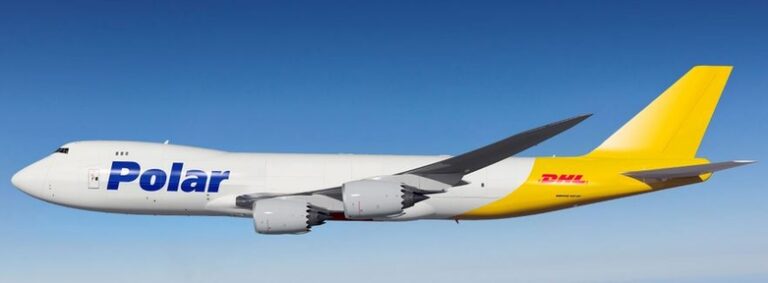
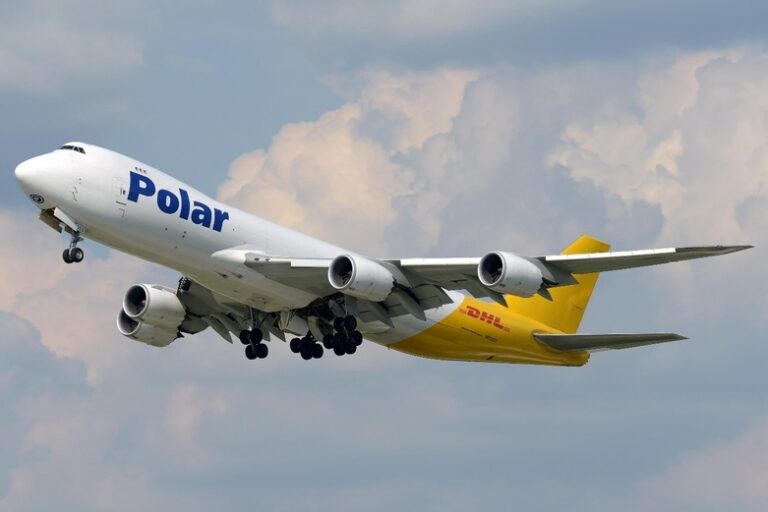
Polar’s fleet will be split up between Atlas and DHL. Image: Polar Air Cargo

Given that Polar Air Cargo was actively looking to fill financial and business positions just five months ago, the news on 21FEB25, that Atlas Air and DHL Express would be terminating their Polar Air Cargo joint venture, came as a surprise. Or rather, the timing of the announcement was a surprise, according to an insider, when CargoForwarder Global reached out. The decision itself, not so much, given how the air cargo market has been developing these past few years, they felt.

There were many things going for Polar Air Cargo, however. It had won prizes in recent years for Best All Cargo Airline, it was under new management, had a well-balanced senior management team, was CEIV Pharma certified and had significant expertise in a very diverse portfolio of commodities – including e-commerce, and operated a modern fleet on a strong global network.

Mutual Decision
Both Atlas Air Worldwide Holdings, Inc. (who owns a 51% stake in Polar Air Cargo Worldwide, and owns Atlas Air) and DHL Express (49%), stated that the decision was taken because the joint venture no longer aligns with their respective strategic directions. Atlas Air has embarked on a One Atlas Strategy, this year, which focuses on a strategic transformation and diversification model that includes goals such as diversifying its customer base (to also include direct shippers and e-commerce platforms, for example), strengthening its market position and expanding its global footprint, modernizing its fleet, concentrating more on profitable long-distance air cargo operations, and creating a thriving workplace culture for its 5,000 employees.

Over at DHL Express, its ‘Strategy 2025’ is strongly aimed at digital transformation (including a EUR 2 billion spend on digitalization by the end of this year), e-commerce, core-business development, and operational excellence, to name but a few goals.

Both companies place a high value on customer and employee satisfaction and though Polar Air Cargo’s fraud scandal has been negated as the reason for the decision, the distrust and negative effects it caused will surely have been a blight on its parent companies, too. At least, judging by readers’ comments on some of the media pages reporting on the news, the recurring message was “Polar Air drama over.”

Fleet Transfer
Interestingly, there are no official statements regarding the termination on any of the company websites. Though Polar flights appear to have ceased with the end of FEB25, its website and LinkedIn page remain as if it were still operating, and neither Atlas Air nor DHL Express have any reference to the decision on their news pages. While there is no timeline given as to when Polar Air Cargo will have been disbanded, Freightwaves reported that DHL will reclaim two Boeing 777 cargo jets and Atlas Air will take control of the four Boeing 747-8 freighters that Polar had been operating for DHL thus far, and will continue to provide air transport services for DHL Express as per the original vendor arrangement. Atlas will retain Polar’s air operating certificate, and also continue to provide crews, maintenance, and insurance DHL’s two reclaimed Boeing 777 freighters. However, Atlas Air will also redeploy its fleet additions to serve other customers under long-term contracts.

532 people work for Polar Air Cargo. Some operations and staff will transfer to Atlas Air, while others will move to DHL. It is not clear, however, if all staff will be provided with new positions. While freighter capacities will remain the same, reorganizations often result in a certain amount of redundancies.
Exclusive – SWW would be happy to increase its footprint at Hahn again

Currently, Silk Way West Airlines, based at Baku’s Heydar Aliyev International Airport, serves Frankfurt Hahn Airport (HHN), five times a week. The route is operated by B747F and enjoys a very high load factor, confirms the Azeri company. “We are very interested in expanding the traffic. The market demand for more cargo flights is there,” Wolfgang Meier, President of Silk Way West Airlines, told CargoForwarder Global during a high-level symposium on the Eurasian ‘Middle Corridor’ traverse at the Hamburg Chamber of Commerce on 20FEB25.

“We appreciate the unconditional 24/7/365 operational options at Hahn,” states SWW Chief , Wolfgang Meier – photo: CFG/hs

HHN offers unconditional 24/7/365 operations
However, the current bilateral traffic agreement does not allow for an increase in frequency, the executive regrets. Accordingly, Azeri airlines are allowed to land in Germany seven times a week to transport freight or passengers. The same applies to German carriers. In the Azeri case, the rights are split between Silk Way West (Cargo), and the state-owned passenger airline, Azal. While Azal opted for the Baku-Berlin route, Silk Way Cargo serves Hahn Airport instead. This also applies to fuel stops (up to four flights per week) on their freighters’ way to destinations in North America.  

Benefiting all parties involved
“Hahn is the only German airport owned by a private investor. It allows for unconditional 24/7/365 operations, and the handling services rendered by hahncargo and VG Cargo is first-class,” says Meier, praising the agents’ performance. “These favorable conditions benefit all sides: our airline, customers, and the airport, because our traffic secures jobs and contributes to the operator’s turnover,” states the executive. 

Until more frequencies to Germany are available, Silk Way’s freighters land at Liège Airport in Belgium, where the majority of the goods offloaded from or loaded onto the freighters are from/for Germany and need to be trucked across the border to LGG. “Environmentally friendly solutions look much different,” commented the manager of a freight forwarder at the Hamburg event.

Relocating traffic to Alat Int’l
As far as the Alat International Airport project is concerned, Meier confirmed that the entire complex will be completed in mid-2026; a date that Valeh Alasgarov, Chairman of the Alat Free Economic Zone (AFEZ), also announced to news agency, Reuters. As soon as the authorities have given the operational go-ahead, Silk Way West will completely relocate from the current Heydar Aliyev Airport in Baku to the company’s future hub.

This new airport will create significant advantages for Azerbaijan’s economy and neighboring countries located along the Eurasian Corridor. It will also provide extensive services,” Mr. Alasgarov exclaimed. The new airport is projected to cover more than 750 hectares of area: “In the initial phase, the airport is expected to accommodate 500,000 tons. But in future, the airport will be able to handle much more,” Wolfgang Meier noted.

Multimodal traffic options
In addition to a 30,000 m² cargo terminal managed by ground handler, Dnata, a building for forwarding agents will be erected within the Free Economic Zone. Currently, the former tent village run by Amazon Air at Leipzig Airport is being rebuilt at Alat Airport, afterSilk Way West Airlines purchased the entire components from the U.S. e-tailer and transferred the elements to Azerbaijan. “But instead of tarpaulins, we use more solid roofing materials,” stated Meier. In his role as panelist at the ‘Middle Corridor’ event, he pointed out that the airport is located just 15 km south of the Port of Baku and will be connected to the international railway network. “We thus offer the market multimodal transport options, including air, rail, road and sea.”

Silk Way West Airlines operates 15 widebody freighter aircraft but will phase out eight aging B747-400F. These will be replaced by four A350 freighters and four factory-built B777F.

Maastricht Aachen wants to become a boutique airport

0

Following the announcement by Air Cargo Netherlands (ACN) on 23JAN25, that Maastricht Airport (MST) and Amsterdam Schiphol plan to deepen their ties, CargoForwarder Global (CFG) spoke with Dean Boljuncic (DB), about the challenges and opportunities resulting from the intent for Maastricht, Netherland’s second largest Airport. Dean is Head of Commercial Development at MST.

“Within the Schiphol Group, we are the only provider of available and still usable capacity,” Dean Boljuncic told CFG  –  picture: CFG/ms

CFG: Dean, one of the challenges Maastricht Aachen always had to tackle is the fact that only 2,500 m of its 2,750 m runway can be used. Is that still the case?

DB: Unfortunately, it is still the case, and this still has an impact on our operation. Boeing 777 freighter aircraft cannot take off with full payloads and fuel. So, we always have to weigh both aspects. Due to the different flight distances, Triple Seven freighters bound for Dubai, for example, can be fully loaded, but those flying from Maastricht to Hong Kong cannot.

CFG: Is this linked to complaints by the residents?

DB: No, it has nothing to do with the residents. Currently, the existing operational license restricts the use of the runway. That’s why it must be renewed, enabling more flexibility. However, there is a lot of red tape that ties up capacity and costs time. On the physical side, everything is ready.

CFG: So, the protest by the residents has calmed down?

DB: Where there is air traffic, there are always protests of some kind. But the full use of our runway, once officially approved, will have no impact whatsoever.

LGG in the backyard

CFG: How do you cope with Liège Airport being in your back garden?

DB: Our story is different. We are 50% owned by the Schiphol Group, with a maximum capacity of 200,000 to 300,000 tons. We want to put ourselves in the market as ‘boutique’. Our unique selling point will be speed, as we are three companies in one: airport operator, aircraft handler and cargo handler. These functions are all in our contract and we, as airport operator, are the only contact point.

CFG: Are there any concrete plans for specific traffic to be diverted from Amsterdam to Maastricht?

DB: We do not have that information. This is something that must be decided together with Schiphol Group. Within the Group, we are the only provider of available and still usable capacity.

CFG: Contrary to Amsterdam, you do not have any belly capacity to offer.

DB: No, everything is full freighter. This is also our hallmark.

CFG: What is the ratio between imports and exports?

DB: There will always be some imbalance between import and export, which is typical for most airports in Europe.

CFG: Dean, thank you for this information.

MST and Royal Jordanian Airlines celebrate 35 years
Other USPs for the airport, which were mentioned in a press release, this week: its above-average cargo handling on-time performance of over 98% (a full three percentage points above the current industry benchmark for good performance) and the recent investments in its cargo facilities. Factors that ensure long-term relationships such as the 35 year cargo cooperation celebrated by the airport and the flight crew of Royal Jordanian Airlines’ flight RJ1033 on 20FEB25: one of three or four full freighter flights operated weekly to MST by the Jordanian airline.

Ibrahim Theodory, Station Manager, Royal Jordanian Maastricht, confirmed: “The choice for Maastricht Aachen Airport was, and still is, crystal clear. The speed, service, and trust at the airport are of an exceptionally high level. Add to that the airport’s accessibility and the friendly staff, and you simply don’t want anything else.”

Dean Boljuncic, Head of Commercial Development Maastricht Aachen Airport, said. “We are incredibly proud of this long-term partnership with Royal Jordanian. Every day, our team is very dedicated to give Royal Jordanian and all of our other clients custom-made cargo handling services.”

Spotlight on… Ben Lakerveld, Operations Director, VRR

0

CargoForwarder Global’s ‘Spotlight On…’ singles out a different aspect of the air cargo every week, to illustrate the manifold career opportunities within the industry. This week, we return to the world of ULDs, in particular: ULD design and manufacturing. With a growing focus on sustainability and fuel efficiency, clever developments in ULD design – such as VRR’s collapsible containers – can help bring about positive change in the industry. Ben Lakerveld, recently promoted to Operations Director at VRR, talks about his job, his views on the industry’s challenges, and reveals his film title suggestion.

Be part of a team with shared, clear goals – image: Ben Lakerveld

CFG: What is your current function and company? And what are your responsibilities?

BV: My new role starting this year is Operations Director. I’ll be responsible for overseeing our manufacturing, supply chain, and quality assurance operations, as well as developing and implementing improvements for continuously enhancing operations and thereby further benefiting our customers.

CFG: What does a normal day look like for you?

BV: Right now, I’m leading an internal project to better align the organization from an operational perspective, which will result in clearer and smoother operations in the near future and contribute to the value we provide to our customers. This is currently my top priority. It also means I’m in a temporary transition phase between my previous job as Sales Manager and this new role. Nevertheless, I’m already getting involved in the operations daily to familiarize myself with that side of our company.

CFG: How long have you been in the air cargo industry, and what brought you to it?

BV: I’ve been with the company for over 15 years now. The air cargo industry itself wasn’t my main motivation for joining this field. I was more excited by the company, its ambition, and the great projects we were working on. The innovative products and solutions we offer have always inspired me and taught me to think outside the box. I’ve felt this way and stayed with the company all this time.

CFG: What do you enjoy most about your job?

BV: I enjoy the variety of work I do and the opportunity I’ve had to be part of the growth our company has experienced over the past 10 years. Of course, it’s also about being part of a fantastic team that made this possible. The company hasn’t changed much; we’re still that bold company that’s trying to challenge the industry with new and innovative products.

CFG: What do you see as the greatest challenges in our industry?

BV: Safety remains a challenge in the air freight sector, particularly due to the increasing transport of lithium batteries and the risks it entails. Fortunately, many airlines and integrators have already taken precautions to minimize these risks. The solutions are available on the market. However, there are still numerous risks and incidents on a daily basis. Let’s hope it doesn’t come to the point where this leads to fatal accidents”

Additionally, global geopolitical tensions put us in an uncertain period. Luckily this industry has always been able to overcome these situations and even ensured continuation of supply chains while the regular logistics were disrupted.

The impact of global warming is also becoming increasingly visible, as shown by various natural disasters worldwide. We can’t ignore this anymore, and everyone in the industry must contribute positively. Sadly, this is a slow process with many stakeholders involved.

CFG: What advice would you give to people looking to enter into the air cargo industry? Any particular training they should aim for?

BV: Training and background really depend on the role you’re aiming for. The most important thing for people looking for a position in aviation is to seek an employer that truly cares for its employees. This means having the opportunity to demonstrate mastery every day, being challenged to learn new things, being treated just as you would treat others, having enough autonomy to perform the work well, and being part of a team with shared and clear goals. Only then can one thrive for staying long with a company and staying enthusiastic about your job.

CFG: If the air cargo industry were a film/book, what would its title be?

BV: I’d like to relate this specifically to the ULD industry: ‘The Hidden Backbone of the Skies.’ ULDs play an essential role in transporting all kinds of goods, even those goods most people may not realize exist. Although ULDs may seem like simple boxes, they require a lot of innovation and development as they help keep the industry running smoothly and ensure the safe transportation of complex goods in tough conditions.

Many thanks for sharing your views, Ben!

If you would like to share your personal air cargo story with our CargoForwarder Global readers, feel free to send your answers to the above questions to cargoforwarderglobal@kopfpilot.at We look forward to shining a spotlight on your job area, views, and experiences.

time:matters grants shipments HON status

A Lufthansa HON is a frequent flyer who earns 6,000 points within a calendar year in the Lufthansa Group’s Miles & More program. These HON Circle members travel comfortably with all amenities in First Class.
Although Lufthansa Cargo subsidiary, time:matters, does not award special bonus points for its shipments, many enjoy similar luxury conditions as offered to Lufthansa Group’s premium class passengers. And this ‘HON cargo’ segment is growing disproportionately.

‘Premium Express’ products enjoy the full range of services rendered by time:matters – photos: company courtesy

Premium Express
This is because more and more airlines are offering special services for particularly urgent or extremely valuable air freight consignments. Due to this growing demand, time:matters is expanding its competence in the area of premium express handling services. These are highly personalized services based on electronic messaging, and for which dedicated courier terminals form the nucleus.

This is illustrated at Shanghai Pudong International Airport. time:matters operates its own handling line as a subtenant within the local warehouse run by the Sino-German handling joint venture, Shanghai Pudong International Airport Cargo Terminal (PACTL). This is done in conjunction with a fast lane, speeding up the personalized carriage of shipments from the aircraft stand to the company’s express terminal. The same applies to exports travelling in the opposite direction. The existence of a fast lane shortens the throughput of items enormously.

Lars Krosch, COO time:matters 

Tail to tail services
Transit shipments processed tail-to-tail by local time:matters staff, also benefit from the HON status. “It is an extremely efficient solution that’s very much in demand,” states COO, Lars Krosch. He adds to this that “the entire set-up and processes are audited and are part of contractual agreements with airlines that offer premium conditions for air freight shipments in close consultation with us.” This special segment offered by time:matters has developed rapidly in recent times, and would bring benefits to the Chinese market.

The country is no longer a pure job shop, but the industry in conjunction with its suppliers has made great progress. From a logistics perspective, the domestic market is therefore also becoming increasingly interesting, including green products and technologies, Krosch notes.

However, the executive confirms that industrial trends such as ‘China + 1’ or the re- or nearshoring of production plants to avoid political and financial risks, is growing. Beneficiaries are Malaysia, Vietnam, the Philippines or Indonesia. “We are already well positioned in the entire region,” reassures Krosch.

In addition to Shanghai, time:matters also operates courier terminals in Munich and – a significantly larger one – at Frankfurt Rhine-Main Airport. The program is to be expanded by integrating other locations, the manager announces.

time:matters operates freighters
As far as the current business situation is concerned, the European automotive industry is currently experiencing significant challenges and is facing considerable pressure. Therefore, the demand for time-critical shipments is volatile. In contrast, medical technology items, life science products, semiconductors and urgent aircraft parts are running very well.

To speed up intra-European supplies, time:matters operates a small fleet of Dornier, Cessna, Saab and ATR freighters. They serve the Scandinavian countries, Spain, France, and Italy, overnight. For urgent shipments to the UK and Ireland, the agent uses the capacity of a Lufthansa Cargo A321 freighter, which serves the route Frankfurt – Birmingham – Dublin five times a week from Monday to Friday. These shipments are handled by the own time:matters courier terminal in Frankfurt.

Bettina Petzold heads Lufthansa Cargo’s Corporate Sustainability team

0

Bettina Petzold, a highly experienced cargo executive, is in the driver’s seat of the newly created Corporate Responsibility team, which includes Environmental Management. Its members’ main aim is to bundle and promote sustainability initiatives and bring them to the table within the Lufthansa Cargo cosmos, but also beyond the carrier’s borders. The core task is to support Lufthansa Cargo employees in their global commitment to sustainability activities and to increase customer involvement. Bettina Petzold and her team’s key motto is: Every action counts; the time of silo thinking in the industry should be over.  

Sustainability isn’t everything, but everything is nothing without sustainability, is Bettina Petzold and her team’s credo – photo: LH Cargo

“Sustainable Choice”
Sustainability is an extremely broad field of action in aviation, which is why priorities must be determined by parties responsible for this topic, to avoid companies getting bogged down. One of Bettina’s key agenda items is to further increase the share of Sustainable Aviation Fuel (SAF) in order to further reduce the greenhouse gas emissions of Lufthansa Cargo’s Triple Seven freighter fleet. This also applies to the B777 freighters belonging to JV partner AeroLogic (50% DHL / 50% LHC) where six units are operated by the cargo crane. “We invite our customers to contribute to the decarbonization of air freight with our `Sustainable Choice´ add-on service. The optional service can easily be booked via the Lufthansa Cargo homepage. The service combines CO2 reduction through the use of SAF with compensation through the contribution to high-quality climate protection projects,” says the executive. Its success will certainly take more time, because SAF is currently still 3 to 4 times more expensive than Jet A-1 fuel, since supply keeps lacking demand.

All it takes is a click
Seen from the practical side, ‘Sustainable Choice’ allows shippers or forwarders to book a certain percentage of SAF after filling out the air waybill. In return, they receive official certificates documenting the emissions saved. 

The offer is made to all customers, big or small, and seems to also be attractive for project business, states Bettina. “We would like to see even more penetration in the market and will be placing a strong focus on SAF this year.” Under the hashtag #Together for sustainability, a close exchange on the topic has begun, including initiatives for innovative projects or process optimizations.

SAF ‘Bulk’ offer
In addition to the digital add-on service, ‘Sustainable Choice’, individual ‘Bulk Offers’ are tailored to Lufthansa Cargo’s interested partners. The agreements are usually negotiated directly between Lufthansa Cargo and its global customers. Last year, Lufthansa Cargo concluded two major bulk deals with Danish logistics giant, Maersk, and the Chinese company, BSI, which is active along the entire value chain of the global transport and mobility sector.

Further measures
Further to this, Bettina emphasizes that Lufthansa Cargo strives for a maximum reduction of CO2 emissions in flight operations and relies on effective measures to achieve this. In addition to a modern fleet and the use of SAF, the focus is on continuous optimization of flight operations, for example through targeted fuel efficiency measures.

On the ground, the cargo airline is also taking steps towards achieving its goal of carbon neutrality by exploring new ways of reducing energy consumption, the use of fewer resources, and waste avoidance. Two targets achieved in 2024, were the change from carbon powered cars to electric vehicles operated by Lufthansa Cargo, and the recycling of defective and expired belts. The latter is a step that saves several tons of waste every year in Frankfurt. 

EMO-Trans: Bernhard has retired

0

28FEB25 was Bernhard Stock’s last working day at EMO-Trans GmbH. After serving the company for 32 years, most of them as head of the air freight business, he left his desk in Kelsterbach near Frankfurt, and entered a new phase of his life as a retiree. However, as EMO stakeholder, he will remain with the company, but without operational obligations. Nevertheless, with Stock, the logistics specialist is losing one of its top managers and a globally renowned figurehead of the company.

Bernhard Stock (2nd from right), flanked by the EMO management team hands over a check for EUR 8,000 to the head of the Bärenherz Foundation, Stan Albers (center), moderated by Bärenherz Ambassador, Babette von Kienlin – courtesy: Bärenherz

A very socially-committed person
Bärenherz is a foundation for children with multiple and severe disabilities. At least once a year, a delegation of EMO-Trans employees, always led by Bernhard Stock, visits the facility to give presents to the children and make a large donation to the organization. “Supporting this foundation is a matter close to my heart,” Stock told CargoForwarder Global on one of these occasions. “Bernhard is a very socially-committed person,” confirms Günther Gasthuber, Managing Director of the co-loading association, IGLU Air Cargo GmbH. Both cargo veterans know each other very well, as Stock is Chairman of the IGLU Advisory Board.

Expanding the company’s footprint
Bernhard began his career with Schenker in Asia and was subsequently stationed in Taiwan, Dubai, and Lagos. He joined EMO-Trans in Frankfurt in September 1993, where he soon played a central role in air freight. This was followed by efforts to widen the company’s footprint by stepping into the fast-growing Indo-Asia region. In the following years, he was instrumental in establishing and developing business activities in most countries in the Middle and Far East. He was also heavily involved in the expansion of various subsidiaries. 

Management buyout
As an entrepreneurially-thinking person, he participated in the management buyout with a handful of other executives after the Hamburg-born EMO founder, Eckart Moltmann, decided to sell the company, offering management to purchase his shares. “Bernhard’s commitment and leadership contributed significantly to the development and growth of air freight, which has always been our core business,” applauds co-stakeholder, Stefan Ritter, in a farewell message. 

Leaving a big gap
Last year, he began placing significant parts of his tasks in the hands of younger colleagues. Since then, Norman Klinkhammer has been responsible for the entire air and sea freight business of EMO-Trans GmbH. At the same time, Bastian Trapp, who reports to Klinkhammer, was appointed Head of Air Freight Germany, following in Stock’s footsteps. He praises Bernhard Stock as an “absolute expert” who has shaped the company’s air freight business like no other. “When I took over the position, he was like a mentor who supported me and opened many doors.” Trapp’s conclusion: “Through his departure, Bernhard Stock is leaving a big gap at EMO-Trans GmbH.”

Now it is up to the next generation togradually fill this vacancy. 

Atlas Air inks MoU with SATS and WFS, exits Polar JV with DHL

0

Atlas Air has signed a Memorandum of Understanding (MoU) with Singapore-based SATS Limited and its ground handling subsidiary Worldwide Flight Services (WFS) to expand their global cooperation and to leverage each other’s networks.

DHL’s brand name is still on the fuselage of the Polar freighters, as on this B747-8F – courtesy: Polar Air Cargo

The MoU aims to build on the strong working relationships between SATS, WFS and Atlas Air, particularly in North America where WFS provides handling for the airline at eight major airport gateways: Chicago, Dallas Fort Worth, Denver, Houston, Indianapolis, Miami, New York JFK, and Seattle.

In addition, the agreement will also expand cooperation in Singapore, the headquarters of the SATS Group, as well as in Riyadh, Saudi Arabia. This includes strengthening relationships for warehouse services, freighter ramp handling, and crew transport solutions.

The MoU is the first of its kind between Atlas Air, which operates the world’s largest fleet of B747 freighters and SATS, one of the world’s largest providers of air cargo handling services. It expands the relationship between the partners to work together on a fully integrated ground and cargo handling model to address the growing demands of e-commerce as well as network solutions to facilitate growth in air cargo volumes, including perishables, pharmaceuticals, and other high value shipments. The partners will also collaborate on the development of digital and automation solutions to provide expanded supply chain visibility and traceability of cargo throughout the combined networks, reads a joint statement.

Reflecting their shared commitments, Atlas Air, SATS and WFS have also pledged to achieve further collaboration on major international air freight trade lanes and cooperate on green and low-carbon initiatives which minimize the environmental impact.

“Our worldwide network, combined with Atlas Air’s fleet of freighters and global presence, offers immense opportunities to develop value-added and specialized services that deliver speed and traceability to enhance our customers’ competitiveness,” commented Kerry Mok, SATS President and Chief Executive Officer.

SATS and WFS handle over 237,800 tons of cargo annually for Atlas Air at these locations, carried onboard some 5,300 freighter flights.

At the same time, Atlas Air and DHL Express announced the termination of their Polar Air Cargo Joint Venture in which Atlas Air held 51% and DHL 49%. This marks the end of their 18 year-long contractually agreed collaboration to mutual benefit, as confirmed by U.S. Portal FreightWaves. “The joint venture no longer aligns with the strategic direction of either shareholder company. This decision is very much a part of our continued transformation and is in full alignment with our One Atlas Strategy,” Atlas Air told author Eric Kulisch from FreightWaves upon inquiry.

Atlas Air, SATS and WFS cooperate to grow network

0

Stronger together is the modus operandi of three leading cargo stakeholders who signed a Memorandum of Understanding on 19FEB25, that will see them “expand their global cooperation and leverage each other’s networks.” Atlas Air WorldWide Holdings, Inc.’s subsidiary, Atlas Air Inc., Singapore’s SATS Limited, and SATS Group member, Worldwide Flight Services, agreed to develop their business relationships – particularly in North America. Here, WFS is already Atlas Air’s handling provider at eight key airport gateways: Chicago, Dallas Fort Worth, Denver, Houston, Indianapolis, Miami, New York JFK, and Seattle. Other areas of focus are Singapore, and Riyadh in Saudi Arabia.

Martin Drew: Combining Atlas Air’s global network with SATS and WFS’ extensive ground handling expertise can unlock new opportunities for growth and efficiency – photo: CFG/hs

This is the first time that Atlas Air and SATS have officially signed a MoU though, together, SATS and WFS handle more than 237,800 tons of airfreight each year for the cargo carrier and its circa 5,300 freighter flights. The partners intend to ensure a fully integrated ground and cargo handling model with regard to e-commerce growth and the additional requirements it brings, and establish network solutions to support other growing commodity segments such as perishables, pharmaceuticals, and high value products. The MoU covers improved warehouse services, freighter ramp handling, and crew transport solutions. Digitalization to maximize automation and tracking and transparency is planned, and Sustainability figures, too. According to the press release: “Atlas Air, SATS and WFS have also pledged to achieve further collaboration on major international airfreight trade lanes and cooperate on green and low-carbon initiatives which minimize the environmental impact of air cargo.”

Martin Drew, Chief Strategy and Transformation Officer, Atlas Air Worldwide, stated: “This expanded partnership with SATS and WFS is a testament to our shared vision for the future of air cargo. By combining SATS and WFS’ extensive ground handling expertise with Atlas Air’s global network and commitment to innovation, we can unlock new opportunities for growth and efficiency. This collaboration will deliver significant benefits to our customers by enhancing visibility, service quality, and reliability. It will also drive meaningful progress across the industry by promoting sustainability and spearheading digital transformation.

Kerry Mok, SATS President and Chief Executive Officer, said: “We are pleased to […] work together to drive efficiencies in the air cargo supply chain to better serve our customers. Our worldwide network, combined with Atlas Air’s fleet of freighters and global presence, offers immense opportunities to develop value-added and specialized services that deliver speed and traceability to enhance our customers’ competitiveness.”

CargoAi welcomes Fits Cargo onto its digital platform

0

Sri Lanka headquartered, ‘hybrid physical and virtual cargo carrier’, Fits Cargo has elected to join CargoAi. This brings a good Asian boost to the platform, since Fits Cargo is active across India, Sri Lanka, Maldives, United Arab Emirates, and Bangladesh. According to the press release, the airline “is poised for global expansion through innovative interline partnerships, ensuring reliable and cost-effective cargo services worldwide.” Through its presence on CargoAi, it will potentially connect with over 18,000 freight forwarders across more than 130 countries. They will be able to search and book the airline’s capacities throughout its network. Fits Cargo has shared that it is establishing interline partnerships and will shortly be expanding it global network, accordingly.

Digital and virtual are a good match – image:CargoAi

Matthieu Petot, CEO of CargoAi, explained: “Partnering with Fits Cargo represents an important step forward in expanding our global network. This collaboration not only offers our users access to specialized general cargo solutions across high-growth markets but also reinforces our commitment to driving digital transformation in the airfreight industry. We’re excited to deliver a seamless experience for our customers, from instant quotes to efficient booking requests and interline solutions.”

Chief Commercial Officer of Fits Cargo, Zameer Marikkar, added. “We are thrilled to join forces with CargoAi. Their innovative digital platform allows us to extend our reach and offer our tailored general cargo services more effectively. By placing our streamlined quote and booking process on a platform like CargoAi, we can enhance customer accessibility in key markets while integrating our existing global solution through interline partnerships.”