Home Blog Page 106

Spotlight on… Nina Lökfors, Executive Vice President, Eltete TPM

0

CargoForwarder Global’s ‘Spotlight On…’ uncovers the many cogs of the air cargo industry without which the transportation of cargo from A to B, would not be as smooth and efficient. One common goal among air cargo stakeholders is net-zero carbon emissions by 2050 – as outlined in the Paris Agreement. Sustainability can be approached by many angles – one of them is packaging: smarter packaging and pallets can mean less packaging weight, for example, which translates into fewer CO² emissions. Nina Lökfors, Executive Vice President of Finland-based Eltete Transport Packaging Materials, has a strong sustainability focus and takes us through her responsibilities, experiences, and thoughts.

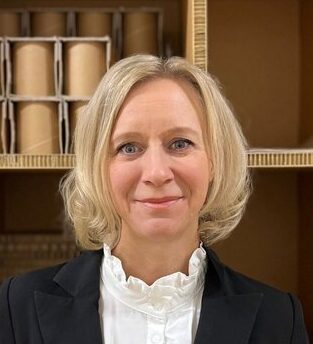
Image: Nina Lökfors

CFG: What is your current function and company? And what are your responsibilities?
NL: Currently, I am the Executive Vice President of Eltete Transport Packaging Materials and the CEO of Eltete Group. My responsibilities include the consolidation and analysis of the entire Eltete Group, as well as overseeing the daily operations of our factories and headquarters in Finland.

CFG: What does a normal day look like for you?
NL: In my world, constant change is the new normal, so no two days are alike. Our customers are our top priority, and one of my key responsibilities is ensuring smooth processes to provide excellent service, high-quality products, and on-time deliveries. My daily work also involves strategic planning and decision-making in areas such as investments, marketing and sales, environmental matters, and regulatory compliance.
I strive to embody our company motto, “Reduce, Replace, Recycle,” also in my leadership approach. My goal is to reduce time and money spent, making everything more cost- and energy-efficient. I aim to replace ineffective methods with lean thinking, automation, and AI, and to recycle effective practices by clearly communicating them across the organization.

CFG: How long have you been in the air cargo industry, and what brought you to it?
NL: After many years in finance, I transitioned to the packaging industry eight years ago after recognizing the company’s potential and its environmentally friendly products. For over 50 years, the company has been producing packaging from recycled materials. Some of these products were introduced to the air cargo industry as early as 2016–2017. However, it was only last year that we decided to actively focus on the air cargo sector, seeing an opportunity to contribute to lower emission goals.

CFG: What do you enjoy most about your job?
NL: I enjoy both the products and the challenges that come with them. I have the privilege of working with solutions that genuinely contribute to making the world greener. My mission is to show how easy it is for companies to transition to more sustainable packaging solutions. Leading and securing a market position for an independent, family-owned international business among giant packaging companies is challenging but incredibly rewarding.

CFG: Where do you see the greatest challenges in our industry?
NL: I believe the greatest challenge, common to all industries, is the constant change and the fear of it. Continuously adapting to new situations is essential. Another significant challenge is the accuracy, objectivity, and interpretation of information. For example, in Life Cycle Assessments and CO2 emissions, numerous factors influence the results. Depending on how you interpret these results, you can easily find data that supports your perspective. While today’s access to Artificial Intelligence can assist us greatly, it is still crucial to thoroughly analyze possible outcomes to determine their trustworthiness and real value to the industry.

CFG: What advice would you give to people looking to enter into the air cargo industry? Any particular training they should aim for?
NL: Sustainability is becoming increasingly important, yet there remains a general lack of knowledge about it. I highly recommend studying sustainability aspects, as this will add significant value and help build more industry-specific expertise.

CFG: If the air cargo industry were a film/book, what would its title be?
NL: With so much discussion about “Greenwashing” nowadays, I truly hope that the industry recognizes the possibilities of getting “greener”. That’s why I would name the movie “Greenloading”.

Thank you for your insights, Nina!


If you would like to share your personal air cargo story with our CargoForwarder Global readers, feel free to send your answers to the above questions to cargoforwarderglobal@kopfpilot.at We look forward to shining a spotlight on your job area, views, and experiences.

Exclusive – Freighter shortages hamper PER business

Since many years, the Belgian Tulpin Group has been a recognized advocate for the interests of European importers of fruit and vegetables from sub-Saharan Africa, Egypt, Jordan and South America. However, the past six months have been by far the most challenging for the perishables (PER) business since the Covid pandemic. The main reason for this was the serious shortage of freighter capacity on the charter market and the relocation of cargo aircraft from Africa and Latin America to China, triggered by the thriving and more profitable e-commerce business. Now, Alain Tulpin is hoping for a U-turn at the start of the new vegetable and flower season next fall.

The Belgian entrepreneur sends a clear message: “This season, we were forced to charter Mickey Mouse freighters such as the B737-800F in order to maintain our supply chains.” This is possibly a new normal for his company, considering the ongoing e-commerce hype. Instead of “baby freighters” [Tulpin], it is usually B747F that are chartered by his Group to bring in masses of vegetables and fruit during the main PER season which spans from fall to spring. That did not happen this season, because there was hardly any freighter capacity available on the charter market.

The PER business became victim of the e-Com hype since airlines relocated their freighters causing capacity shortages in Latin American and African markets, complains CEO Alain Tulpin of the Tulpin Group  –  photo: company courtesy

e-commerce rates beat vegetable transport prices
The capacity shortage was caused by airlines such as KLM Cargo or Qatar Airways Cargo which had withdrawn their freighters from traditional fruit and vegetables routes and had instead relocated them to the more lucrative e-commerce market, serving China, Europe and the USA. According to Tulpin, roughly 190 jumbo freighters depart from Chinese airports every day, mainly filled with e-commerce.
This relocation policy was recently confirmed by Gerard Roelfzema, Head of Communications at KLM Cargo, to CargoForwarder Global, and a few days ago by Peter Musola, Head of Cargo Commercial at Kenya Airways, during a panel at Air Cargo Africa in Nairobi. “A whole series of cargo aircraft operating in our area of responsibility, had to fly to Asia for the e-commerce business.” The manager spoke of around 1,000 tons of capacity being taken out of the Kenyan market. He also hinted that the African airline is considering leasing wide-body freighters to avoid future capacity shortages for the country’s dominant flower and vegetable exports.

e-commerce is killing brick-and-mortar business
Besides the capacity shortage, Antwerp-based Alain Tulpin points to another alarming consequence of the e-commerce hype: The shrinkage of brick-and-mortar businesses in Europe. “Shoppers visit stores, they put on different clothes but don’t buy them. Instead, they order the same items online for less money.” This results in shop closures and increasing commercial space vacancies in European cities, reducing their attractiveness for visitors and shoppers.

Change from air to ocean
In addition, Mr. Tulpin points to another emerging trend: an increasing number of Chinese exporters are switching from air to ocean freight and establishing warehouses in Europe and the USA. There, they store their goods which significantly shortens the delivery time of many products from the moment they are ordered online to the moment they are handed over to the buyer.
His Group operates 40 trailers, with the UK, Ireland and the Netherlands being the most important target markets. Most goods harvested in non-EU countries are flown to Ostend or Hahn (HHN) since Tulpin exited Cologne (CGN).

From CGN to HHN
“At CGN, we had constant issues with the crop protection inspectors, which were only temporarily available. However, fresh produce cannot follow the working hours of civil servants. That’s why we use Hahn Airport instead, where crop protection officials are always available for the inspection and release of shipments,” reasons the executive. Their duties also include Saturdays and Sundays. In addition to charter flights, many shipments arrive Europe on board of Egyptair Cargo freighters. The airline operates A330P2F that can accommodate around 60 tons per flight. From Hahn and Ostend, most imports are trucked to the UK or Ireland, while smaller contingents are also brought to the Netherlands. “We offer our clients one-stop-shop services. Everything stays in our hands, from landing to delivery,” stresses Alain Tulpin. Hence, it’s no surprise that the performance rate of his services is very high.

NAP joins the dawn of digital payments

0

While many of us have long had a host of online payment methods to choose from in our personal life or when travelling as aviation passengers, digital payment solutions over in the air cargo industry are only just properly emerging and can still be counted on one hand. The international network of air cargo specialists, Neutral Air Partner (NAP), is one of the pioneers in this regard. It recently launched NAPAY – a payment solution developed together with CargoAi especially for its 400+ members.

It was PayCargo, in fact, that pioneered digital payments in air cargo, when it first launched in MAR20 – just when it seemed that the world was disappearing into lockdown. Around the same time, CargoAi began conceptualizing its own online solution which eventually launched as CargoWALLET in FEB23. This was followed in OCT23, by a digital version of IATA’s CASS original payment method that had been around since 1971, and a year later, WebCargo by Freightos brought out its own WebCargo Pay in OCT24.

A milestone achievement in digital transformation. Image: NAP

NAPAY launches 28FEB25
Neutral Air Partner (NAP), “a leading industry network committed to optimizing air cargo operations”, is the latest to join the small party of digital solution providers. With the launch of NAPAY on 28FEB25, it celebrates the culmination of a project that began as a suggestion during a TIACA networking event, as CargoAi’s Founder and CEO, Matt Petot, revealed on LinkedIn last week: “Very proud of this great partnership! What started to be casually discussed 3 years ago during a nice lunch at a TIACA event with Christos [Spyrou – NAP CEO], became the ultimate Netting solution for freight forwarders with our CargoWALLET.

The need for speed
When CargoForwarder Global (CFG) asked how the idea for an own NAP payment solution came about, NAP explained that: “Our airfreight forwarder and consolidator members handle hundreds of transactions monthly within the network (payables and receivables), resulting in significant time consumption and high bank and Forex charges.” The need for speed, security, and ease in carrying out financial transactions, led to NAPAY. “Our payment solution and new wallet eliminate these challenges by enabling members to seamlessly pay each other, as well as third-party suppliers such as ground handlers, GSSAs, airlines, and consolidators — regardless of how the booking is made, whether through Cargo AI or other booking portals, or directly to an airline or a member manually.”

An exclusive design
It took around 2 years of close collaboration with CargoAi, to tailor a solution exclusively for NAP’s members, even to the extent of having its own branding: NAPAY combines the network’s acronym with the function the solution offers. NAP administrates the customized platform, though the backend is powered by CargoAi’s CargoWALLET. The result is a system that delivers “secure, fast, and seamless financial transactions across global air cargo operations.” Freight forwarders, consolidators, airlines, and GSSAs within the NAP network can all use the system to rapidly and easily process international payments. It is early days yet, but NAP told CFG that it expects 80 % of its 400+ members to use NAPAY within the year. The members are charged a small fee per transaction that is largely offset by the positive impact of a far more efficient payment system.

Attractive features
Since NAPAY is built on CargoWALLET, its users can enjoy the many features that CargoWALLET offers. These include real-time payment processing across more than 150 countries and in 47 currencies; secure, transparent transactions that are encrypted and traceable if needed, and comply with international standards; and operational efficiency thanks to streamlined financial operations. Faster, safer payments naturally result in reduced operational costs and better cashflow management. NAPAY was piloted prior to its official launch and interest in the platform is huge as Damien Rizzo, CFO of EZ Cargo, confirmed: “I’m excited to start using NAPAY! As an NAP network member, we frequently send and receive payments with other global members. Traditional payment options are slow and expensive, but NAPAY offers real-time payments at a reasonable cost. It’s easy to use, helping us keep freight moving efficiently!”

Game-changer for the industry
The final word goes to the heads of the two companies so intensively involved in launching NAPAY.
Olivier Veyrac, Senior Vice President of CargoAi’s CargoWALLET, stated: “We are excited to collaborate with Neutral Air Partner on NAPAY – a solution that exemplifies how digital innovation can transform freight logistics. By leveraging CargoWALLET’s capabilities, NAPAY delivers secure, real-time payments that support our mutual commitment to efficiency and excellence in the air cargo industry. This partnership reinforces our vision to simplify global freight transactions and drive sustainable growth.” NAP’s CEO, Christos Spyrou, concluded: “Partnering with CargoWallet to launch NAPAY marks a significant milestone for Neutral Air Partner. Our goal is to empower our network with an advanced, reliable payment solution that not only simplifies transactions between members but also drives efficiency and transparency across the entire air cargo logistics ecosystem. NAPAY is a game-changer for our industry.

Lufthansa: out goes Tom, in comes Alexis

0

Tom Enders, the long-standing head of Airbus, is leaving Lufthansa’s Supervisory Board. The airline’s Executive Board has nominated Alexis von Hoensbroech as his successor. The former Lufthansa (LH) employee and head of Austrian Airlines is CEO of the Calgary, Alberta-based Canadian airline, WestJet (WS), since 15FEB22.

Tom Enders, photo: credit DGAP

The forthcoming exit of ‘Major Tom’ (as friends call him because of his former military career as a major in the German army), from the airline’s Supervisory Board, comes as a surprise. He stated that he would resign from his post “at his own request” come 06MAY25. On that day, the airline’s shareholders’ meeting will take place. His stepping down from the Supervisory Board was not apparent until now, at least not to outsiders. Especially as his mandate would have run until 2027, and 66-year-old Enders was considered the most promising candidate to succeed Lufthansa Supervisory Board Chairman, Karl-Ludwig Kley (73).

Turning to new priorities
Although Enders did not give any reasons for his move, insiders assume that he will increasingly focus his activities on the defense sector. Since 2022, he has been a board member of the software company, Helsing, which produces armaments and develops their use in combat based on artificial intelligence, such as drones to defend Ukraine against Russian attacks. In his 19 years at Airbus, where Enders was CEO until 2019, he merged and significantly expanded the military division Airbus Defense and Space, among other industrial initiatives.

Alexis von Hoensbroech, picture: CFG/hs

An astrophysicist succeeds Enders
His successor on the Lufthansa Supervisory Board will be Alexis Graf von und zu Hoensbroech. The candidate, who comes from an aristocratic family, is well known within the Group, where he had long been a board member of Lufthansa Cargo and subsequently CEO of Group subsidiary, Austrian Airlines. Before joining WestJet, the scientifically certified astrophysicist was already being touted internally at Lufthansa as a potential successor to CEO, Carsten Spohr. However, due to the small age difference – Spohr is 59 years old, von Hoensbroech 54 – his prospects for the top job at the Lufthansa Group are likely to be rather slim if he should even aspire to the job.
His forthcoming appointment to the Supervisory Board is not an indication of a possible financial participation by Lufthansa in WestJet. There had been speculation about this after WestJet and Lufthansa Technik agreed on a multi-billion-euro contract for the maintenance of aircraft engines. The 15-year, multi-billion-euro deal signed in mid-FEB25, is the largest in WestJet’s 30-year history. The project is supported by the provincial government of Alberta and the central government in Ottawa.

No further ties between LH and WS
However, the technical cooperation is not the prelude to commercial cooperation or even financial participation of Lufthansa in WestJet. As CEO Spohr emphasized on several occasions, the crane airline will strengthen its position not only through organic growth and special partnerships (Air Baltic), but above all through investments and takeovers in Europe. This way, it secures its position as a dominant player in its home market alongside the SkyTeam alliance (orchestrated by Air France/KLM) and the oneworld club (headed by IAG [BA, IB]). According to Spohr, Lufthansa will not participate in airlines headquartered outside of Europe.

Qatar Airways Cargo’s AEROSPACE is ‘out of this world’

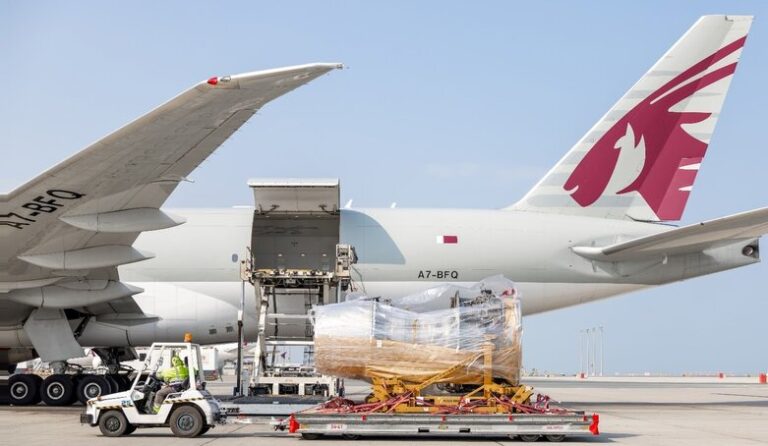
Every kind of AOG is welcome. Image: Qatar Airways Cargo

Qatar Airways Cargo has taken the industry’s universal AOG (Aircraft on Ground) process and given it its ‘Next Generation’ treatment. The carrier’s enhanced product, ‘AEROSPACE’, promises to be “out of this world”, the press release states. What is different about it? AEROSPACE offers “the most advanced and custom-crafted aerospace product for the aerospace industry,” which includes not only the usual aviation customer segment (mainly engines and aircraft spares), but also defense and space technology sectors – hence all kinds of critical aerospace parts and components such as avionics, electric propulsion equipment, airframe interiors, landing gears, for example. Other USPs are the airline’s expert floating loading technique for faster on and offloading and it is: “the only air cargo carrier to provide bespoke shock absorbing engine transport dollies at its hub in Doha, capable of carrying the largest engines including the Rolls Royce Trent 7000 and GEnx-2B engines, up to 20,000kg.”

The focus is on speed, security, and supervision, and AEROSPACE is aimed at manufacturers, freight forwarders and partners working with commercial airlines, as well as Maintenance, Repair & Overhaul (MROs), Original Equipment Manufacturers (OEMs), and those serving the defense and space technology sectors. All are seeing an increase in globalization when it comes to production, sourcing, and repairs. Speed is essential when an aircraft or aerospace project requires a new part. Qatar Airways Cargo has incorporated customer feedback in its product design and offers a tailored solution that includes fast transport across the entire Qatar Airways Cargo network (whether scheduled or ad hoc), highest loading priority, a dedicated handling team and Control Tower support. Any AEROSPACE loadability request is answered within just 45 minutes.

Mark Drusch, Qatar Airways Chief Officer Cargo, stated: “Time is money! That saying is particularly true when it comes to aviation in all its forms: every hour of downtime translates into lost revenue for airlines or sunk costs for aerospace projects. Factor in the additional need for safety and constant supervision, and it’s clear that our product – AEROSPACE – is the ideal solution for time-critical aviation parts and components. With our AEROSPACE product, we will be the number one logistics expert for every type of Aerospace product – whether it is for commercial aviation, defense, even space technologies. I can assure you already today that, thanks to our inhouse advanced screening techniques and our highly skilled loading teams, your AEROSPACE shipments are in the best of hands and will be delivered quickly and safely, utilizing our bespoke transport dollies in Doha, to wherever they are urgently needed.”

Kale and El Dorado create South America’s first CCS

Roadshow participants in Bogota. Image: Meantime Communications

El Dorado not only figuratively refers to a place of wealth, success, or happiness, but now also includes good collaboration. South America is about to see its first Cargo Community System (CCS) go into operation, as India’s Kale Info Solutions has been working together with the region’s busiest airport and Colombia’s mega hub, El Dorado International Airport in Bogota, to develop a suitable cargo community system. In shifting to a digital air cargo community system, South America’s largest airport (by capacity), can bring greater efficiency to its cargo operations, maximizing its throughput. Already today, El Dorado International Airport (BOG), annually moves around 0.76 million metric tons of cargo, and “is one of the 20 most connected airports in the world: offering non-stop international flights to the Americas, Caribbean, and the Middle East.”

Kale and the local cargo community have been engaged in collaboration workshops in Bogota, to ensure that all involved stakeholders are prepared for the digital transition and can make the most out of Kale’s Airport Cargo Community System (ACS). The ACS streamlines processes, provides stakeholders with enhanced visibility and transparency, and not only enables real-time tracking and monitoring of cargo movements, but also incorporates automated regulatory compliance checks while ensuring compliance with industry standards and regulations.

Fabio Marques da Silva, Chief Operating Officer of El Dorado International Airport, said: “We are excited to pioneer this digital infrastructure at our airport, we believe the ACS will deliver the efficiency, sustainability, resiliency and visibility benefits to the cargo community, as we aim to build our systems with cutting-edge technology.”

Amar More, President of Kale Info Solutions, commented: “We, at Kale, are thrilled to pioneer the development of South America’s first Airport Cargo Community System (ACS) at Bogota. Latin America presents a vast, untapped opportunity for comprehensive digital transformation in logistics. Starting this journey in Bogota, a city that bridges diverse worlds, is truly exhilarating. The implementation of the Bogota ACS marks a significant stride towards achieving our global vision of a seamlessly connected logistics industry. It underscores our commitment to enhancing efficiency and collaboration across borders.”

Smaller and even more sustainable: Envirotainer’s RelEye RKN

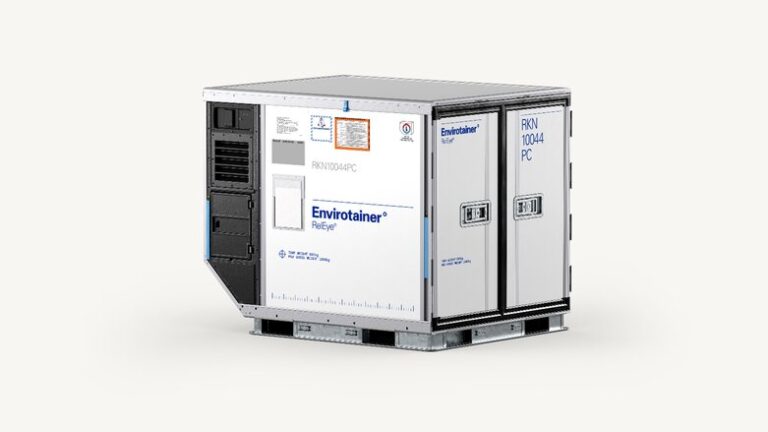
When you want to RelEye on specialist transport. Image: Envirotainer

Reliable transport is crucial when it comes to temperature-sensitive pharmaceuticals shipments. Sweden’s Envirotainer has combined this reliability with sustainability aspects and now launched the smallest in its RelEye family: the RelEye RKN. It has a tare weight of 583 kg and can take a maximum gross weight of 1588 kg. “The container meets the rising demand for small, lightweight, and connected temperature-controlled ULD solutions,” the release explains, going on to point out that the latest additions is “the lightest of its class, reducing CO2 emissions per shipment, improving sustainability metrics and supporting pharma companies to meet their net zero goals.” Its design provides a larger loading height, enabling more products per transport, which in turn means that pharmaceutical deliveries can be carried out more cost-effectively while at the same time creating less of a negative environmental impact. The RelEye RKN complies with the strictest pharmaceutical air freight regulations and gives peace of mind with its integrated real-time live monitoring of product condition, location, and shipment progress. That monitoring is linked to Envirotainer’s 24/7 Control Tower support. The Control Tower immediately responds to any possible deviation to ensure shipment integrity at all times. “With a market leading autonomy of +130 hours (over 5 days), the 1 pallet RelEye RKN protects cargo for longer, even in the event of unforeseen delays or supply chain disruptions,” the release underlines the newest container’s USP.

David Simonsson, CEO at Envirotainer, emphasized: “We are committed to bringing the most reliable and innovative solutions to market. Our new RelEye RKN enhances the safety of transporting lifesaving pharmaceuticals worldwide. With six airlines already approving it for use, we are collaborating with pharmaceutical companies and logistics providers to support their qualification process, helping them integrate it seamlessly into their cold chain operations.”

Gebrüder Weiss grows its Poland business

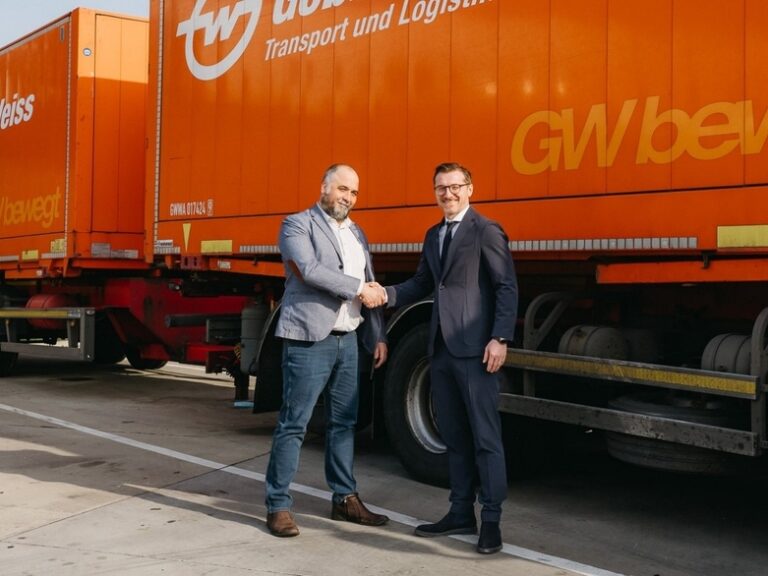
Poland’s management looking forward to continued growth. Image: Gebrüder Weiss

International logistics company, Gebrüder Weiss, has significantly expanded its services in Poland since the beginning of 2025. The company now offers national and international partial and full truck loads (LTL/FTL), as well as additional warehousing and logistics solutions, including order picking. Customers can now track their shipments in real-time and access digital documentation through the myGW customer portal.These new services complement their existing air and sea freight operations, which Gebrüder Weiss launched in Poland in 2020. The latest expansion has led to an increase in the company’s Polish workforce to 70 employees.

Poland’s growing importance as a logistics hub in Europe is evident, with its economy outpacing the EU average growth rate by threefold in 2024. The country serves as a crucial trading partner for German businesses and a significant import destination for goods from Asia and the US. It is continually improving and developing its transport infrastructure, and plans include a new major airport with an international freight center. Gebrüder Weiss, today, operates branches in Krakow, Wroclaw, Gdynia, and Warsaw, serving customers primarily from the high-tech, automotive, consumer goods, and e-commerce sectors. The company also provides specialized storage and order-picking services for temperature-sensitive pharmaceutical products. Looking ahead, Gebrüder Weiss aims to further expand its services as a Lead Logistics Provider in Poland, with potential new locations in Wroclaw or Katowice.

René Stranz, Area Manager Slovakia and Poland at Gebrüder Weiss, revealed: “Our goal is to offer companies in Poland with a first-class and comprehensive range of logistics services. By combining different modes of transport, our customers will be able to react even more flexibly to market requirements and make their supply chains more efficient in the future.” Maciej Szczyglowski, Country Manager Poland Land & Logistics at Gebrüder Weiss, commented: “Depending on how the economy develops, further locations are also possible. For example, in Wroclaw or Katowice, where we can imagine new logistics terminals for goods handling.”

Qatar Airways Cargo hosts ATA Conference 2025

146 industry experts attended the Doha-held ATA Conference to discuss animal transportation topics. Courtesy: ATA

146 international experts on animal transportation descended on Doha, Qatar, last week for the ATA Conference 2025. Hosted by Qatar Airways Cargo, it was heralded a resounding success, offering “insightful discussions on AVI handling, animal welfare, compliance, and innovation in transport solutions”. The aim was to look at the challenges faced by the industry and define the future of animal transportation. Issues such as animal motion sickness, transport risks, equine transport complexities, and paperwork errors, for example, were discussed, and above all prevention measures developed to ensure animal welfare along the entire the supply chain. The conference was opened by Eric Wilson, SVP Global Sales at Qatar Airways Cargo. Michael Wambold, Head of Cargo Terminal Services participated in a panel on AVI Handling and Animal Welfare, and Willem Lodewijk Berk, Regional Cargo Sales Manager, was appointed ATA President at the event.

Since Qatar Airways Cargo was the host, all those who participated were given the opportunity to visit its state-of-the-art, 5,260 m² Animal Center, that had been inaugurated 10 months previously. The air cargo carrier used the event to reaffirm its commitment to animal welfare. Both Qatar Airways Cargo and ground handler QAS Cargo in Doha are CEIV Live certified, and have recently applied for recertification. The airline works closely with industry leaders to perfect best practices in animal transports, and it runs a pioneering WeQare – Rewild the Planet program, where it carries rescued wild animals back to their natural habitat.

Mark Drusch, Chief Officer Cargo at Qatar Airways Cargo, explained: “The safe transport of live animals requires expertise, collaboration, continuous innovation, and respect for animals. At Qatar Airways Cargo, we are committed to setting the highest standards and supporting industry-wide improvements.” Newly appointed ATA President, Willem Lodewijk Berk, added: “Taking on this role is a great responsibility. The industry is facing new challenges, and it’s essential that we work together to improve safety, compliance, and animal welfare.”

Zafer Aggunduz is CCO of Global GSA Group

Global GSA Group Appoints Zafer Aggunduz as Chief Commercial Officer. Image: Lemon Queen

FEB25 saw Zafer Aggunduz take up his post as Chief Commercial Officer (CCO) of Global GSA Group. He was appointed to oversee the company’s global commercial strategy and is tasked with strengthening airline partnerships, expanding the GSA’s market reach, and fostering sustainable growth. He is no stranger to Global GSA Group, having joined the company back in 2011, initially as an intern working on a thesis titled ‘Entering China’, which focused on a potential business entry into the Chinese airfreight market. This experience sparked an interest in the air cargo industry, and he joined Global GSA Group as Global Marketing & Business Development Manager in the Netherlands in NOV14, moving up to Chief Marketing Office in DEC18, and Chief Business Development Officer in JUN22. “In his new capacity, Mr. Aggunduz will build long-term key partnerships, optimize commercial strategies, and identify new market opportunities while leading digital transformation initiatives that enhance operational efficiency and customer satisfaction. This appointment marks the first step in Global GSA Group’s expansion project as it prepares to extend its global footprint,” the press release explains.

Zafer Aggunduz stated: “I am excited about the opportunity to shape the commercial future of Global GSA Group and collaborate with our talented team to deliver innovative solutions for our airline partners and customers.” Ismail Durmaz, CEO of Global GSA Group, declared: “Zafer’s in-depth knowledge of the air cargo sector, combined with his strategic insight and leadership abilities, makes him the perfect fit for this role. His vision aligns seamlessly with our goals of expanding our global network, embracing digital transformation, and meeting the evolving demands of our customers.”