Home Blog Page 105

DB Schenker and Mercedes ink big SAF deal

The logistics company and the automotive group have agreed to procure 13,000 tons of Sustainable Aviation Fuel, which will reduce the carmaker’s CO₂e* emissions by 40,000 tons. The SAF biofuel is produced from waste and will be used to power freighters flying Mercedes shipments from Frankfurt to Beijing. For Mercedes Benz, the sourcing of such a quantity of SAF is a new record and will make a meaningful impact on sustainability in air freight.

Car maker Mercedes Benz and DB Schenker jointly support the decarbonization of aviation – credit: DB Schenker / Torsten Zimmermann

Neither of the two actors reveals which airlines will benefit from the green fuel deal to fly the Mercedes shipments to China. Allegedly, two of them are based in the EU with the third headquartered in the U.S.

It doesn’t take much imagination to deduce that one European candidate is Lufthansa Cargo. Lufthansa Cargo and DB Schenker had already agreed on SAF powered B777F flights between Frankfurt and Shanghai in 2021. The deal went to ashes a year later because of lacking financial support: too few freight forwarders and shippers were then willing to pay for SAF, which is three to four times more expensive than conventional kerosene. This reluctance torpedoed scaling effects which would lead to price reductions for sustainable fuels. The second reason that speaks for Lufthansa Cargo as part of the SAF trio: The carrier benefits from the fact that the Rhine-Main Airport is the home base for its long-haul freighter fleet. And that is from where Mercedes’ components are flown to China.

Lacking SAF supply keeps driving costs
DB Schenker and the automotive company have had a strong partnership for many decades. When the logistics arm of Deutsche Bahn launched the world’s first regular cargo flight 2021, partially powered by SAF, Mercedes-Benz was among the initial supporters, as were Nokia and Lenovo.

“Given the additional costs for SAF, we are pleased about the financial commitment of our long-standing customer, Mercedes-Benz,” commented Mario Arnold, Head of Global Public Relations, DB Schenker. He went on to say: “We have been investing in the procurement of SAF since 2020, and have seen a growing demand on the market. In total, our annual volume of SAF is currently in the five-digit ton range.” The fuel that limits CO2 emissions by roughly 80% compared to the traditional Jet A-1 kerosene, canbe booked via the Book & Claim tool for all DB Schenker air freight shipments worldwide, regardless of the airline or the air route.

SAF is a long-haul journey
At the presentation of the agreement with Mercedes, Thorsten Meincke, Member of the Management Board for Air and Ocean Freight at DB Schenker, pointed out that decarbonization is a long-haul journey. “The current partnership with our long-standing customer, Mercedes-Benz, sets a new benchmark in the area of sustainability. Together, we are directly reducing emissions in international supply chains. This contract is one of the largest agreements on SAF ever seen in the automotive and logistics industry. I would be delighted if other companies were to follow this example and work with us to promote the use of this fuel.”

A leading DB Schenker manager applauded Mercedes “that they are now investing in sustainability despite the strained market situation in the German automotive industry.”

A statement which is presumably welcomed by Elke Pusskeiler, Head of Supply Chain Management, Mercedes-Benz AG: “As part of our ‘Ambition 2039’ for Mercedes-Benz Cars, we want to reduce the CO2 emissions of our logistics activities by 60% compared to 2021. Our sustainability strategy focuses on avoiding CO2 and reducing emissions in all modes of transport, in- and outbound. The use of SAF for air freight is an important component of this. Together with DB Schenker, we have taken another significant step towards sustainable logistics,” she concluded.

EU regulators okay DSV’s intended acquisition of DB Schenker
In addition to the SAF deal between DB Schenker and Mercedes, it was reported that the EU competition watchdogs have apparently given the green light for the takeover of the Deutsche Bahn subsidiary by the Danish logistics heavyweight, DSV. Internal DB circles expect official approval on 04APR25. So far, only Washington’s go-ahead is still missing. DB Schenker’s imminent end as a company and as a world-renowned brand can already be seen in the draft of Deutsche Bahn’s 2024 annual report, which will be published on 27MAR25. The railroad group’s by far most profitable subsidiary, founded in 1872 by Austrian Swiss entrepreneur Gottfried Schenker, is only mentioned in the notes. 

*Carbon dioxide equivalent(CO2e) measures global warming potential but includes greenhouse gases besides CO2. For that reason, experts recommend using CO2e since it is a more accurate measurement.

Kale automates customs clearance at Kansai Int’l Airport

Ground handler, CKTS Company Limited opted to have Kale Logistics Solutions’ GALAXY system installed in its premises at Osaka, Japan’s Kansai International Airport, and is already reaping the benefits. The cloud-based cargo handling software has been used to automate its customs clearance operations in a first phase of deployment. GALAXY now handles the shipment triggering and document acceptance process, largely streamlining processes that were previously carried out manually. The move to digitalization does away with process complexity and removes the risk of errors or double work. The result is a faster, cleaner workflow at the popular airport where CKTS handles around 140,000 tons of cargo every year.

Vineet Malhotra, Co-founder and Director of Kale Logistics Solutions. Image: Kale

Kale’s GALAXY software covers a great deal more than just customs clearance, and the two companies have agreed on a stepwise integration of legacy systems. Carefully planning ensure that cargo operations remain undisrupted. In the next step, handheld terminals will be introduced to carry out key warehouse functions such as the recording and live reporting of shipment arrivals to customs.

Atsushi Kato, Management Advisor, CKTS Company Limited, reported: “Kale has consistently led progress in air cargo digitization and digitalization globally, and this launch is its strategic entry into the Japanese market. At CKTS, we are excited to use the capabilities of Kale’s flagship GALAXY system and look forward to benefiting from its advanced functionalities for many years.”

Vineet Malhotra, Co-founder and Director of Kale Logistics Solutions, said: “GALAXY has been a critical asset to a wide range of our partners, and it is now gaining more ground in the far east and transforming ground handling operations in Japan. Customizing proprietary messages is a major milestone for Kale as a digital trade facilitator – we look forward to further digitizing the CKTS operations in the deployment phases to come.”

TIACA invites registrations for its Executive Summit 2025

24-26JUN25 will see The International Air Cargo Association (TIACA)’s Executive Summit 2025 take place at the Conrad Hotel in Hong Kong. It is being hosted by Cathay Cargo. Registration for the event has now opened on TIACA’s website and the association points out that early bird discounts are available for everyone signing up prior to 01MAY25. Around 350+ international senior executives are expected for the 2-day networking event and conference, and it is anticipated to be the largest TIACA Executive Summit held to date. Attendees can look forward to an exclusive invitation-only tour of the Cathay Cargo Terminal facilities, to begin with. This will be followed by a Welcome Reception. Though the final agenda is still pending, the organizers promise “insightful keynotes and inspiring leader sessions as well as vital information on regulations and events that impact our industry on a daily basis”. Certainly, the previous Executive Summit in 2023 which took place in Belgium offered a huge scope of topics from young talent through to innovation, digitalization, air cargo market outlook, and the established Sustainability Awards and the Hall of Fame. The latter is also still open for nominations until the end of this month.

Steven Polmans, TIACA Chair, announced: “We are excited to invite the entire industry to the Executive Summit in Hong Kong this year. This event is truly a global event that draws industry leaders from around the world to do business, and to discuss critical items that impact them daily and to strengthen their network.”

Glyn Hughes, TIACA Director General, added: “As a global hub for eCommerce as well as being the world’s leading air cargo airport, Hong Kong is a perfect place to bring executives to meet, network and celebrate the work that is being conducted across the industry. We look forward to seeing you all in Hong Kong this June.”

Lödige upgrades its own handling system from 1979

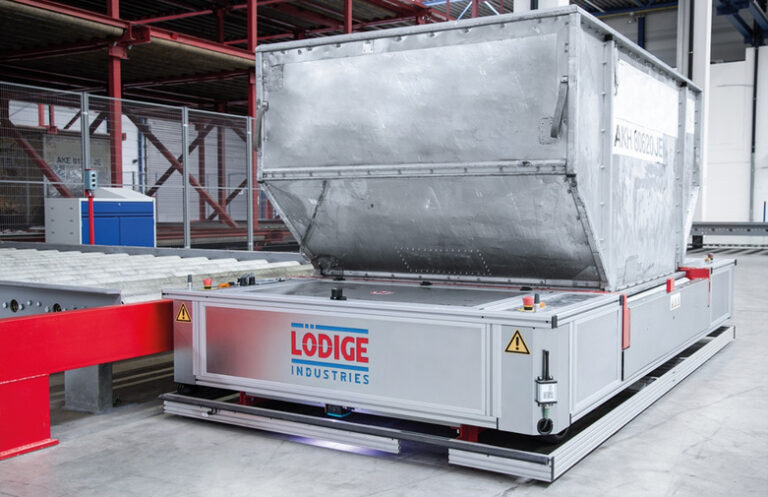
In 1979, while the world bought their first Sony Walkmans and listened to Michael Jackson’s ‘Rock with you’, or Pink Floyd’s ‘Another Brick in the Wall’, Lödige Industries was busy installing a material handling system over at Singapore Changi Airport. That 46-year-old system (installed for dnata two years after it began operating in Singapore), is now undergoing an upgrade in order for it to continue to run for a great many more years. Its performance to date has been very reliable and this particular system enjoys the status of being the first such system ever installed by Lödige in Asia. And such a long-standing relationship between two companies (which extends well beyond Singapore) speaks for the quality of Lödige’s products. The logistics systems provider is currently carrying out comprehensive maintenance services for dnata’s entire cargo handling systems (cargo handling, pallet handling, cool chain systems, etc.) at Singapore’s Changi Airport, in line with a cooperation agreement extension. Lödige Industries is also developing additional solutions to support dnata’s local cargo operations.

Lödige’s ULD handling equipment at dnata’s PER center at SIN. Image: Lödige

Sam Gould, Head of Cargo at dnata Singapore, commented: “Our partnership with Lödige Industries is the best we could have chosen, not only because they have extensive experience and knowledge in this field, but also because they understand our needs and have consistently proven themselves to have a high level of reliability. With this critical service, we will ensure that our cargo handling systems are ready for long-term operation, enabling us to handle growing cargo volumes and maintain the high-quality standards required by our customers. This partnership, which has grown over decades, is exceptional and fills us with both pride and ambition to uphold our high quality with every new project and to continue our collaboration in the long term.”

Ranga Jayaweera, General Manager for Singapore, for Lödige Industries, said: “Maintaining a fundamentally functioning system of good quality and adapting it to new challenges through upgrades can be the most effective solution in this case. We are very pleased to support dnata once again.”

Silk Way West Airlines honored by Azerbaijan

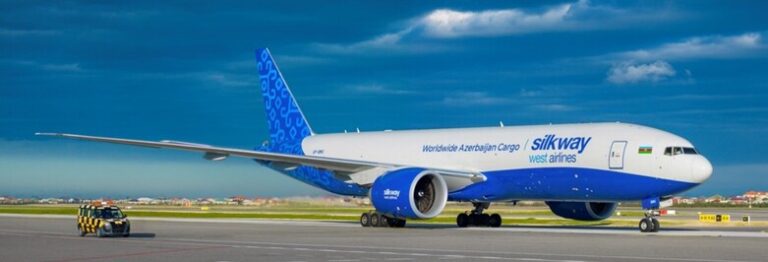
Silk Way West Airlines is possibly the only airline in the world to have been honored with the Highest Taxpayer Award. The Republic of Azerbaijan recently recognized the airline with this award, which was presented by the State Tax Service under the Ministry of Economy. It announced that Silk Way West Airlines was the largest tax contributor outside of the oil sector, and spoke of the airline’s “significant role in Azerbaijan’s economic diversification and financial stability. […] As a leading global cargo carrier, Silk Way West Airlines has played an essential role in strengthening Azerbaijan’s aviation and logistics sectors. By consistently fulfilling its tax obligations at an exemplary level, the airline has contributed to the country’s fiscal revenues, enhancing state budget stability and supporting a range of national economic initiatives. The airline’s adherence to international financial and taxation standards reflects its strategic approach to long-term growth and sustainable economic impact,” the press release explains, going on to illustrate Silk Way West Airlines’ contributions not only to aviation, but also indirectly supporting Azerbaijan’s infrastructure expansion and employment ratio. Given that the airline has its headquarters in Baku, it has played a major role in establishing Azerbaijan as a global logistics hub, and attracting international business. The airline continues to follow a solid growth strategy and therefore will contribute even more to the country’s tax coffers as well as its economic development, financial stability and industrial growth.

Recognized as Azerbaijan’s Highest Taxpayer. Image: Silk Way West Airlines

Wolfgang Meier, President of Silk Way West Airlines, stated: “The reforms implemented to improve tax administration and promote transparency, have positively influenced the country’s economic environment, enabling sectors such as aviation and air freight to thrive. This achievement highlights our commitment to corporate responsibility, economic growth, and sustainable development. We take great pride in being recognized as the country’s leading non-oil sector taxpayer, and will continue to contribute to Azerbaijan’s prosperity.”

Cargojet pioneers Aerios’ Carrier App

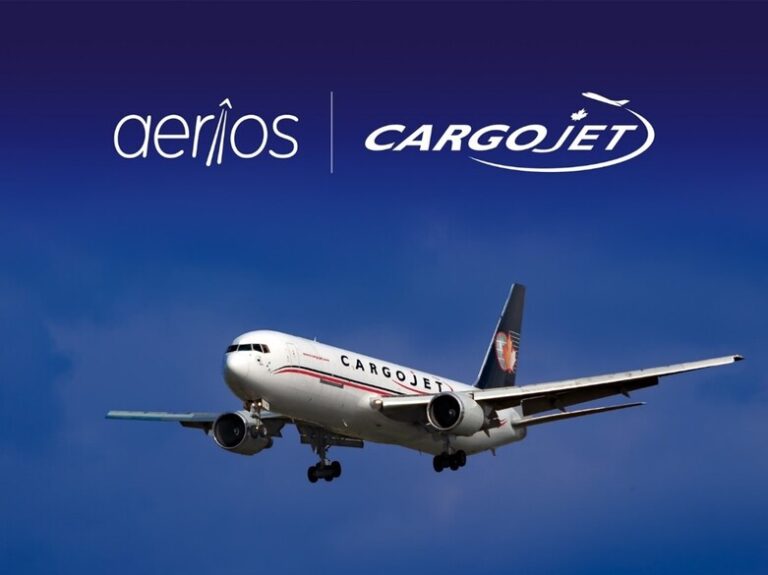
Cargojet is Carrier App’s launch customer. Image: Cargojet

CargoTech member Aerios, has designed an app that is specifically tailored to the requirements of the air cargo charter market. Called ‘Carrier App’, it covers and industry niche that up until now as seen no comprehensive digital development. Carrier App offers comprehensive charter management and seamlessly integrates CRM and communication systems within a carrier’s flight operation, to create a single digital workflow. “Aerios’ product suite enables airlines of all sizes to efficiently distribute and advertise their capacity to brokers and charter professionals, maximizing revenue opportunities,” the press release says. The app has now found a launch customer in Cargojet, which went live with the air cargo charter software after extensive trials. The global air cargo charter provider had taken part in Aerios’ so-called alpha program, and through its industry insights and feedback, helped to shape the final result. “Designed to streamline processes, enhance efficiency, and accelerate response times for charter quotations, the platform centralizes operations into a single system. Early insights indicate significantly faster responses to charter requests, supporting seamless operations and reinforcing Cargojet’s commitment to reliable and responsive global air cargo solutions. Additionally, this integration is expected to improve quote conversion rates,” the release enthuses. Three business areas in particular benefit from the app’s CRM data and reporting capabilities:

  • Identifying opportunities with new or existing clients
  • Supporting business development with existing clients and
  • Identifying the value and nature of lost opportunities

Simon Watson, Founder of Aerios, declared: “I am proud to announce Cargojet as our first partner carrier. Cargojet’s early adoption and feedback have been invaluable in shaping the Aerios Carrier App. The alpha program and partnership with the Cargojet team has been an incredible journey. Cargojet is the first of a long line of carriers to go live with the Carrier App, and I look forward to announcing more partner airlines in the near future.”

Royal Air Maroc offers Sino-Moroccan connections

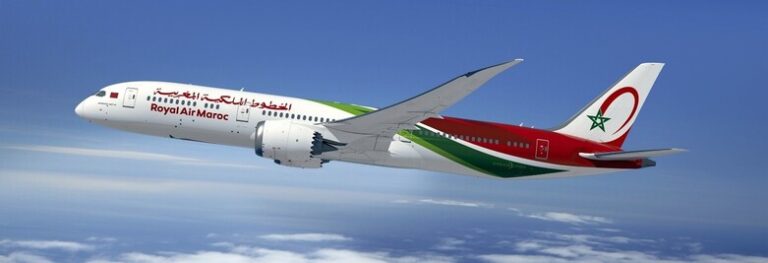
On 20JAN25, Royal Air Maroc resumed its Morocco-China scheduled connection between Casablanca (CMN -Morocco) – Beijing (Daxing International Airport -PKX -China). The pandemic had brought a halt to the airline’s successful Sino-Moroccan operations. Three direct flights per week (outbound on Mondays, Thursdays, and Saturdays) between Casablanca, (CMN) and Beijing (PKX), are served with Boeing 787-9 aircraft. Thus 30 tons of weekly cargo uplift each way are now available. Return flights to Casablanca operate on Tuesdays, Fridays, and Sundays. Out of China, the flights will be loaded with commodities such as integrated circuits, electrical control panels and conductors, transistors, mineral and metallic products, copper products, zinc ore, copper-zinc alloy, copper anodes for electrolytic refining, silver ore, lead ore, copper scrap, aluminum alloy, and manganese ore, to textiles, accessories, leather goods, garments, fish oil, frozen fruits and vegetables, and agricultural products.

Royal Air Maroc boosts cargo links with Beijing. Image: Royal Air Maroc

Inbound, also under the management of another ECS Group subsidiary, Globe Air Cargo China, Chinese goods such as: electricals, electronic equipment, furniture, lighting signs, prefabricated buildings, iron/steel goods, knitted or crocheted fabrics, manmade filaments, toys, games, and sports equipment among other commodities, will be loaded – some destined for Brazil, given RAM’s recently launched CMN-GRU flights.

Yassine Berrada, VP Cargo at Royal Air Maroc, explained: “For many centuries, Morocco’s geographical location has rendered it the perfect gateway for shipping trade to Africa and Europe. At Royal Air Maroc, we are proud to go even further, building Casablanca up as a true air bridge between Asia, Africa, and the Americas. […] Reinstating Chinese services was an obvious and natural decision as goods exchange is important. We chose China’s largest airport in Beijing as our starting point, since demand is strongest here both in terms of passenger and cargo. In the future, we plan to expand connections to other major Chinese cities such as Shanghai and Guangzhou.

Adrien Thominet, Executive Chairman of ECS Group, commented: “We are incredibly proud to support Royal Air Maroc in establishing this vital link between China and Morocco. Our dedicated teams at Globe Air Cargo China are committed to ensuring the success of this route by optimizing cargo flows and leveraging our advanced digital solutions. By combining our expertise with Royal Air Maroc’s ambitious vision, we are helping to build efficient and sustainable air freight solutions that drive economic growth and connectivity across continents.”

Aero Cargo Belgium is GSSA for Thai Airways

The GSSA agreement between Thai Airways and the Belgian ECS Group subsidiary, Aero Cargo Belgium, came into effect on 01FEB25, already. The GSSA is tasked with filling the holds of Thai Airways’ flights out of Brussels (BRU) to Bangkok (BKK) and beyond. The airline offers seamless transit options to destinations in Australia, Korea, India, Japan, Manila, and Singapore, and operates daily flights. It deploys Boeing 787-800 aircraft on the route, which each have a payload capacity of 15 tons.

Now managed by Aero Cargo Belgium out of Brussels. Image: Thai Airways

For ECS Group, the new contract between Thai Airways and Aero Cargo Belgium is highly attractive because it “marks a significant milestone in connecting Europe and Asia-Pacific with efficient and reliable cargo solutions,” according to the press release. The GSSA brings local expertise, as well as potential efficiency increases since it uses not only ECS Group’s in-house technology but also from the full deployment of CargoTech suite of digital tools. Through these digital support tools, the GSSA is able to spot potential business leads as well as maximize capacity use and therefore revenues per flight. “This collaboration caters to a diverse range of cargo, with a particular focus on pharmaceuticals, ensuring reliable and efficient transport solutions for time-sensitive and specialized shipments,” the release continues.

Jean Ceccaldi, CEO of ECS Group, commented: “ECS Group is proud to support this collaboration with Thai Airways, which reflects our commitment to building long-term, value-driven relationships with airlines. By enabling them to achieve operational excellence and deliver tailored solutions for their unique needs, we are setting a new standard for global connectivity and efficiency in the cargo industry.”

Bert Moortgat, Managing Director of Aero Cargo Belgium, added: “This agreement is a significant milestone for Aero Cargo Belgium “With daily flights and access to a network of vital destinations in Asia-Pacific, we are able to offer our customers unparalleled opportunities to connect their goods to global markets efficiently and reliably, particularly for high-value and sensitive commodities such as pharmaceuticals.”

New U.S. sanctions outrage ocean carriers

0

Shipping lines that call at a U.S. port will soon have to pay penalties if they operate vessels manufactured in China. The fees are hefty and range up to USD 1.5 billion per call. Should the penalties become law, imports discharged at U.S. ports will likely become significantly more expensive for U.S. consumers since box carriers will pass these additional costs on to their customers.

Not a day goes by without new bad news for the global economy, coming from Capitol Hill in Washington. No sooner had the Transpacific Maritime Conference (held in Long Beach) ended on 05MAR25, than Jamieson Greer, Trump’s new trade representative, surprised the shipping companies with this move: vessels calling at U.S. ports must pay drastic fees if parts of their fleets were manufactured in China. In this way, the U.S. government wants to weaken the Chinese industry and bring parts of maritime production back home to the States. That is the vague plan, conceived and announced by Greer.

Shipping companies have to pay a lot of money to the US tax authorities if they have ships built in China in their fleets.
Provided, the Greer initiative becomes law – photo: private

Stiff penalties to harm China
A closer look at these announced port tariffs shows that they are considerable. Shipping companies operating fleets consisting of 50+ boats, including one or more boats manufactured in China, are to pay one billion USD for each call at a U.S. port. If their vessels call at three or four different U.S. harbors, which is standard, the costs easily triple or quadruple. In the case of fleets consisting of 25 to 49 China manufactured vessels, shipowners will have to pay 750,000 USD per call. For a Chinese industrial share of less than 25%, USD 500,000 per port is due. And the grotesque thing is that shipping lines such as Maersk, MSC, K-Line, Hapag-Lloyd and others will all have to pay the same amount even if just a single vessel they operate was manufactured in China, regardless of whether it calls any U.S. port or not.   

Ultimately, U.S. consumers pay the bill
Managers of major shipping companies and representatives of leading maritime associations are alarmed by this news from Washington. “Any disruption has negative consequences for global supply chains,” warns Martin Kröger, Managing Director of the German Shipowners’ Association (VDR). Goods brought to the USA by sea would become more expensive, as the ocean carriers will pass on the increased costs to their customers. Ultimately, the U.S. consumer, as last link in the supply chain, will have to shoulder the higher prices payable at supermarket checkouts. In view of Greer’s punitive tariffs, shipping companies might stop serving the U.S. altogether or alternatively only call at one or two ports instead of three and four as is usually done. “I wouldn’t rule out a boycott of U.S. ports by some Asian or European ocean liners – at least temporarily,” an expert told CargoForwarder Global.
According to Kröger, around 70% of all newbuilds currently come from Chinese shipyards. If production were to be brought back to the USA, shipping companies would have to pay 3 to 4 times as much per vessel in comparison. “It is a completely unrealistic assessment that, with these price differences and the wage disparities between American and Chinese shipyard workers, it would be possible to renationalize shipbuilding in the USA,” states expert Kröger. In addition, he points out that the maritime industry is already facing huge expenses to finance the decarbonization of the fleets. Any additional burden would be poison not only for shipowners, but also for consumers, who would ultimately have to pay the final bill.     

Floating fossils
The Jones Act, resolved in 1920, shows what protectionist policies ultimately lead to. It stipulates that only ships manufactured in the USA, owned by U.S. citizens and operated by them, were allowed to transport goods between U.S. ports and in U.S. territorial waters. By banning foreign competitors from access to U.S. ports, U.S. companies would benefit, and shipyard capacity including know-how maintained. The outcome of this nationalistic policy is an eye opener for all those who want to see, says Martin Kröger: “Today, the U.S.-flagged fleet of commercial vessels is the oldest in the world.” Or to put it more drastically: these floating fossils pose a risk to crews and the environment and should be towed to a ship graveyard to be dismantled. The sooner, the better.

Lufthansa results: daughter companies rescue parent

0

The Group’s core brand, Lufthansa Airlines, lurched into the red in 2024. This is due to multiple strikes at German airports last year, high fees and bureaucratic constraints. A turnaround program is intended to bring the airline back into the profit zone. In contrast, subsidiaries such as Swiss Air Lines, Discover, Lufthansa Cargo, Lufthansa Technik and others contributed high profits to the annual result, compensating their parent company’s losses. At the Annual General Meeting, management proposed a dividend of EUR 0.30 per share.

Carsten Spohr coughed more than he spoke. Apparently, the drastic slump in profits at Lufthansa Airlines took his breath away. In fiscal 2024, the adjusted operating result fell by 39% to EUR 1.65 billion – a decline of more than EUR 1 billion, year on year. Worse still: the core brand, Lufthansa Airlines, which normally makes a significant contribution to the Group result, reports losses of EUR 94 million. Spohr spoke of an “unsatisfactory result”.

Turnaround Program as countermeasure
To get out of the red, Lufthansa Airlines has launched a comprehensive Turnaround Program to improve earnings by EUR 2.5 billion come 2028, the CEO announced. Two thirds of this sum is to be achieved through cost reductions, the rest through higher ticket prices and optimized route planning. Initial progress is already visible, but the year 2025 will still be a transitional period in which the measures will only gradually take effect.
In order to achieve better financial results, Lufthansa Airlines will add 26 passenger aircraft to its fleet in 2025 (among them, 12 widebodies), and it will focus on growth potential outside its German home market. The cost structures there are often more favorable, indicated CFO, Till Streichert. This applies to high-demand intercontinental connections between Europe and the Americas, but also to intra-European routes which are increasingly being taken over by subsidiary airlines or partners such as Air Baltic. Others will be axed completely due to cost reasons, as has already happened with the Leipzig-Munich route, for instance.   

Improving market presence
CEO Spohr praised the investment in Rome-headquartered ITA Airways (41%) as a successful move. Due to this step, Lufthansa had become the world’s largest airline group outside of the USA, based on majority shareholdings. Thanks to the ITA network, previously underserved markets such as Brazil and Argentina could be served more effectively and more frequently by the Lufthansa Group airlines. He did not rule out the possibility of Lufthansa upping its stake in ITA to 90% this summer. However, no final decision has yet been made. Currently, experts are putting their heads together to synchronize the Group members’ traffic before resolving expansion issues or deciding fleet growth issues. It also an open question as to whether Lufthansa Cargo will manage ITA’s freight business similar to the Austrian and Brussels Airlines model, or if ITA will do this on its own. “We will examine all possibilities and options to identify interesting cooperations between ITA and the Lufthansa Group. This also includes the cargo business,” states Corporate Communications.

CEO Carsten Spohr (left) and CFO Till Streichert presented the Group’s annual results

Umbrella brand strategy
In terms of Group affiliation, Spohr announced that this would be visibly displayed on the fuselage of all Group members’ fleets as part of a new umbrella brand strategy, visualized in lounges and printed materials. “50% of all passengers use more than one Lufthansa Group member when traveling, although they are often unaware of our family structure,” said Spohr.
In contrast to the core airline, the CEO was very pleased with the subsidiaries. Swiss Air Lines, Discover, Lufthansa Cargo and Co. achieved the third-best financial result in the Group’s 99-year history, despite the losses incurred by the flagship Lufthansa Airlines. Lufthansa Cargo contributed EUR 251 million to this result (previous year: EUR 219 million), of which EUR 199 million was generated in the fourth quarter, which is traditionally the peak season for airfreight (previous year: EUR 30 million). This development not only confirms the expected normalization in the airfreight market, but is also the result of strict cost management, which enables profitable growth, according to a statement. Lufthansa Cargo benefited in particular from the flourishing e-commerce business from China. Due to higher yields, the airline relocated some of its own B777 freighters from transatlantic routes to Asia/Pacific. “In view of the positive business situation, we could make good use of additional freighters, as the demand for airfreight grows, particularly in uncertain times,” said Spohr, but did not announce any orders for B777F or A350F.

Next stop: Lisbon or Madrid
With regard to the multi-hub strategy and further takeovers, Spohr referred to ongoing talks in Madrid (Air Europa) and Lisbon (TAP Portugal). Both carriers will probably join a larger airline group in order to be able to withstand the pressure from external providers from the Middle East, the Far East or the USA. He did not indicate a preference for either of the two airlines mentioned. However, internal circles point to TAP Portugal as the more desirable partner due to its traditionally dense network to Brazil as well as to some African countries. The ball is now in the Portuguese government’s court. It wants to fully privatize the Portuguese national airline in 2025. If Lufthansa wins the bid, Lisbon’s Humberto Delgado Airport would become the Group’s next intercontinental hub.