Home Blog Page 118

Flying wings usher in new freighter aircraft era

For years, blended wing-body aircraft (BWB) were a keen topic for aviation aficionados at specialist seminars, but were practically non-existent in the real world. This is currently changing, as advanced projects in San Diego and Hamburg demonstrate.

Natilus‘ Kona freighter is to be supplemented by the larger Horizon model provided it can be financed  –  courtesy: Natilus

Natilus – the company’s name is the game. Its management claims to reshape commercial aviation by developing a family of purpose-built BWB aircraft designed to improve both commercial cargo and passenger operations. Though it sounds like a PR slogan, it actually has substance. The company has secured dozens of tentative orders from cargo operators for its smaller Kona model. This can carry a payload of 3.8 metric tons and boasts a range of 900 nautical miles (1,667 km), making it a suitable solution for short-haul cargo operations and feeder services. Compared to the B737F and the Airbus A320F, it consumes 30% less fuel and the operating costs are 50% less, management claims.

Long-distance project
Recently, Natilus founder, Aleksey Matyushev announced a further development of the Kona model, called ‘Horizon’. Initially designed for passenger transportation, the blended wing aircraft will be able to fly 3,500 nautical miles (6,480 km), which would allow it to connect Montreal and Paris (5,535 km) nonstop at a cruising speed of 980 km/h. According to CEO Matyushev, the freighter version can accommodate 22,700 kg. This is a relatively meager payload, but thanks to its low drag, the operating costs are said to be 50% lower than those of conventional aircraft models – a figure that also applies to greenhouse gas emissions. 

The shape of the Kona and Horizon versions changes the ratio of volume to weight. In the age of e-commerce, this is a decisive advantage as relatively light volume freight now predominates. The cargo holds of the aircraft are also designed for the loading and unloading of standard containers.

Ideal for voluminous shipments
“From a freight perspective, our design makes a lot of sense,” says Aleksey Matyushev “It has 50% more internal volume, which doubles the amount of revenue-generating cargo per flight. With conventional designs, you run out of volume before you can maximize the take-off weight of the aircraft.”

And he believes there is another important criterion in favor of building blended-wing aircraft: “As we look increasingly at SAF, many of us in the industry – not just the investors, but also the aircraft builders – are starting to see the writing on the wall that scaling SAF is incredibly difficult and won’t be cost-effective for a very long time,” Natilus CEO Matyushev recently told DVV media group member, Flight Global. “I think people are going back to the drawing board and asking, ‘What else can we do?’ The question goes back to hydrogen and then airframes.”

New era in air transportation on the horizon?
He believes that his Manta Ray-like aircraft could usher in a whole new era in air transportation based on hydrogen as a power source, due to its advantageous flight characteristics and comparatively low fuel consumption.

However, it is still unclear how Natilus intends to finance the construction of the passenger and cargo Horizon variants. Marketing experts expect this to cost several billion USD. 

Over in Hamburg, aviation pioneers presented plans to build an e-powered blended wing-body aircraft of rather small size (4 m x 6.40 m), capable of covering distances of 300 km. Getwing-One is the name of this project. According to the start-up, a prototype will be presented by mid-2026. For safety reasons, the aircraft will be flown manually by a pilot in the initial phase, but will then be piloted remotely. According to the local newspaper, Hamburger Abendblatt, the company has already received an order to build a cargo version, although the customer wishes to remain anonymous for the time being. Management is currently looking for financial backers to realize its Getwing-One BWB vision.

CargoTech shows benefits of AI for air cargo

0

Technology group, CargoTech, issued a lengthy press release this week, in which it stated that “The air cargo industry is still taxiing onto the runway of AI opportunities”. Yet AI offers a great deal of potential and CargoTech’s members have and are integrating this into their products and are there to support the air cargo industry in its AI adoption. Cédric Millet, CargoTech’s President, stated: “On a scale of 1-10, I’d say the air cargo industry is currently at 3 when it comes to adopting AI-assisted decision-making.” The industry primarily uses AI in customer service and engagement functions, and is still in the process of digitizing its operations and accumulating data.

Cédric Millet and Michael Teoh highlight CargoTech’s AI benefits. Image: CargoTech

AI-driven tools to streamline decision-making already make up CargoTech’s product portfolio. The release states examples such as CargoAi’s CargoCOPILOT, which allows users to retrieve dynamic rates directly from their inbox. Another application is Rotate’s ‘Fair Share Analysis’, which uses AI to optimize airlines’ network and Origin-Destination sales mix. Wiremind Cargo emphasizes that AI is more than just ChatGPT, and deploys machine learning models for capacity and revenue management. Michael Teoh, Head of Strategy at CargoTech, cautions against viewing AI as a solver rather than an enabler, stating that: “AI should be viewed as an enabler rather than an end goal.”

The cargo charter niche faces challenges in data availability and quality. Aerios’ Carrier App is working to digitize analog data, paving the way for AI implementation. Here, AI is expected to benefit carriers in long-term planning and charter operation quotation processes.

Millet addresses misconceptions about AI replacing jobs, saying: “At CargoTech, we believe that roles will not be replaced, but specific tasks within them may change.” He suggests that AI will reshape roles, streamline processes, and potentially attract younger generations to the industry.

What are your thoughts on AI in air cargo? If you would like to write an Opinion Piece for CargoForwarder Global, please reach out to cargoforwarderglobal@kopfpilot.at

Etihad Cargo will fly Paris freighter from 07JAN25

0

Etihad Cargo is expanding its freighter network to include Paris Charles de Gaulle Airport (CDG) as a destination. From 07JAN25, the service will operate weekly, offering the market over 100 tons of additional cargo capacity. This move makes Paris the 12th destination in Etihad Cargo’s freighter network, highlighting the carrier’s commitment to enhancing global connectivity and meeting diverse customer needs. The new service will operate via Abu Dhabi, ensuring main deck capacity connections to key destinations such as Ezhou, Shanghai, Beijing, Hong Kong, Hanoi, and Zhengzhou. It will also integrate with a robust road feeder trucking network in China, expanding market access. Same-day connectivity across Etihad Cargo’s widebody and narrowbody networks will further ensure efficient delivery of time-sensitive shipments.

Paris is Etihad Cargo’s 12th freighter destination. Image: Etihad Cargo

Paris’ addition to the network supports Etihad Cargo’s specialized offerings and addresses increasing demand across various industries. The route will provide enhanced capacity for general cargo to cities like Riyadh, Jakarta, and Manila. It will also support PharmaLife services for pharmaceuticals to destinations including Mumbai, Jakarta, Seoul, and Sydney. Perishable goods will benefit from the FreshForward solution to cities such as Kuala Lumpur, Dubai, and Sharjah. The service will additionally cater to specific needs, including live animal transport via LiveAnimals and SkyStables, automotive shipments through FlightValet, and cultural cargo with FlyCulture.

Stanislas Brun, Vice President of Cargo at Etihad Cargo, commented: “Adding Paris to Etihad Cargo’s freighter network is a strategic milestone. This route expands Etihad Cargo’s European footprint and also supports the growing demand for Etihad Cargo’s specialized products across sectors, including pharmaceuticals and perishables. With the launch of the Paris service, Etihad Cargo continues to deliver tailored solutions and strengthen connectivity for partners and customers worldwide.”

Swiss WorldCargo expands offer on WebCargo by Freightos

0

Swiss WorldCargo has partnered with Freightos Limited to enhance its customers’ digital booking experience. This collaboration makes various Swiss WorldCargo products and services available for booking through WebCargo by Freightos, targeting select markets in Europe, Asia, and the Americas. The integration combines WebCargo’s real-time rate comparisons and eBooking platform with Swiss WorldCargo’s extensive network, offering strong pan-European connections alongside robust long-haul connectivity in the Asia-Pacific and Americas regions.

Swiss quality across the entire network – including digital bookings. Image: SwissWorldCargo

Recognized for its expertise in handling complex, high-value shipments, Swiss WorldCargo operates a network of more than 170 destinations, supported by trucking networks, trusted partnerships, and efficient processes in Zurich and Geneva. Its newest partnership with Freightos aims to enhance booking options for specialized shipments, including pharmaceuticals, with products such as SWISS General Cargo and SWISS Pharma and Healthcare. Customers can pair these offerings with Swiss WorldCargo’s Celsius Passive solution for temperature-sensitive goods or the X-Presso option for expedited shipments. Through its collaboration with WebCargo, Swiss WorldCargo strengthens its digital footprint, offering forwarders real-time access to rates and capacity, aligning with its goal to expand its reach and improve the customer experience globally.

Alain Chisari, Head of Swiss WorldCargo, stated: “We take pride in delivering Swiss-quality service and reliability across every aspect of our work. This commitment extends to our digital journey, ensuring a seamless and reliable experience for our customers. Partnering with the digital platform WebCargo allows us to elevate our customers’ digital booking experience while expanding our market presence onto future-looking digital solutions.”

Zvi Schreiber, founder and CEO of Freightos, said: “The integration of Swiss WorldCargo into WebCargo by Freightos marks another significant milestone in the Digital Air Cargo revolution. Swiss WorldCargo’s extensive network and premium service enable thousands of WebCargo freight forwarder customers to instantly book their air cargo needs, including specialized shipments like pharmaceuticals.”

Avianca Cargo earns Cargo iQ certification

0

Avianca Cargo has been officially certified as a Cargo iQ member for the first time, following a rigorous audit and dedication to upholding quality standards. The airline initially joined Cargo iQ as an associate member in 2014, but stepped away in 2020. In JUL23, Avianca rejoined as a Full Member, committing to implementing Cargo iQ’s quality standards and pursuing certification. To achieve this milestone, Avianca’s Transformation team enhanced its Quality Management System, culminating in successful certification after a detailed audit process. The audit included a review of documentation and an online session with an external auditor.

Coming back better and certified. Image: Cargo iQ

Avianca’s efforts were further recognized under Cargo iQ’s Classification Program, for its Corporate Social Responsibility and innovative approach. The airline has pledged to continuously refine its cargo processes by adhering to Cargo iQ standards, with semi-annual reviews involving the operations team to ensure ground handling agent (GHA) performance aligns with shipment planning parameters.

In OCT24, Avianca hosted the Cargo iQ Working Group in Bogotá – a bi-annual event that brings members together to drive ongoing initiatives. Significant progress was made on Scorecards and the MOP redesign during the session.

Laura Rodriguez, Manager Implementation & Quality Assurance, Cargo iQ, commented: “We are glad to see that the Cargo iQ methodology is enabling Avianca to deliver reliable service quality within air cargo and now the company has the certification to show it. The Quality Journey doesn’t stop here and we at Cargo iQ are committed to accompanying Avianca Cargo and the team on the next steps.”

Eduardo Arenas, Director of Alliances, strategy and Transformation at Avianca Cargo, agreed: “With over 50 years of experience, our company embraces the challenges of the future by leveraging our strengths and commitment to innovation. We are committed to high quality operational standards and utilize the latest advancements in quality through Cargo iQ, to shape the future of air cargo.”

First dedicated e-commerce flight lands at PIK

0

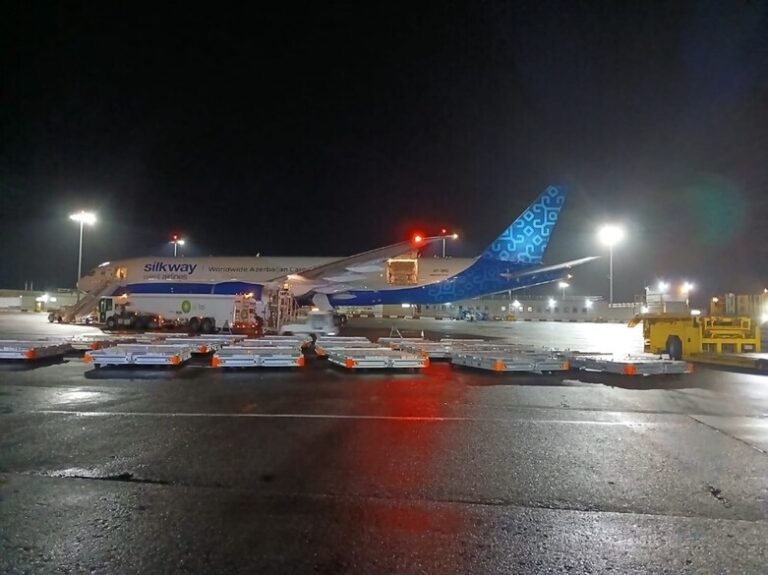
Glasgow Prestwick Airport (PIK) in partnership with Royal Mail, celebrated the arrival of its first dedicated e-commerce cargo flight on 17DEC24, marking a milestone in its growing e-commerce operations. Operated by Silk Way West Airlines, the flight was a charter for Zhonger Express and Jumen Logistics. On board was 90-ton shipment for Royal Mail’s final mile deliveries. This included products from major e-commerce platforms, Temu and TikTok, and a number of representatives came to see the cargo being handled at PIK.

PIK’s first dedicated e-commerce flight pictured airside. Image: Meantime Communications

This achievement builds on PIK’s partnership with Royal Mail (announced at the Air Cargo China exhibition in Shanghai, this year), positioning the airport as the UK’s international e-commerce hub. Recent developments include expanding operations in Asia, highlighted by appointing a sales representative in China, and investing over GBP 2 million in new cargo equipment to enhance efficiency. Looking ahead, the airport’s Business Development team is working to establish regular, scheduled e-commerce flights in 2025 and develop export opportunities for Scottish goods like whisky and salmon to the Far East on return flights.

Nico Le Roux, Business Development Director, PIK, explained: “This flight was an opportunity for us to showcase PIK’s efficient and reliable solution for e-commerce imports to the UK. Our expert handling teams offloaded the cargo, broke it down, and swiftly segregated it by area region, before loading onto trucks for onward delivery.

Edwin Ning of Zhonger Express and Jumen Logistics, confirmed: “Undertaking a business venture of this magnitude obviously comes with a high-risk level. I have a lot of confidence in my own teams here in China and had to carry out extensive diligence in the UK to find the perfect handling partner to make this trial an overwhelming success. The Prestwick team and Royal Mail exceeded themselves and we delivered a new market-leading solution to the e-commerce platform shippers. We will be regular visitors to Prestwick in the New Year.”

Vivian Davies, Director of Global Imports, Royal Mail, added: “Our successful collaboration with PIK in managing this flight arrival for our international e-commerce customers during peak times, has showcased smoother landing, efficient airport handling, and faster, streamlined processing all the way to our final mile delivery. We are excited to continue our partnership with PIK and our customers to develop even more innovative solutions at this new eCommerce hub.”

Challenge Group adds new Boeing 747-400F to Fleet

0

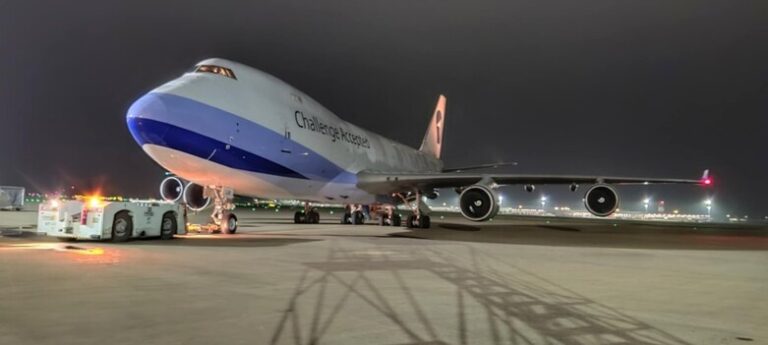
Challenge Group has expanded its fleet with the addition of a Boeing 747-400 production freighter, registered under its Belgian AOC. This move marks a significant step in the company’s fleet growth strategy, bringing its total fleet size to 10 aircraft: six Boeing 747-400F and four Boeing 767-300F freighters. Over the past three years, the company has tripled its fleet, reinforcing its ability to meet growing global demand.

And another makes 10. Image: Challenge Group

With the latest addition – and in line with its expansion strategy – Challenge Group can offer increased capacity and more flight frequencies, and help meet the increasing demand for perishable goods from Africa, e-commerce shipments out of China, and transatlantic trade. The Chinese e-commerce market will be the main beneficiary, but the versatile Boeing 747-400F will also cater to a range of other industries.

Challenge Group’s latest investment highlights its commitment to delivering tailored, reliable logistics solutions across industries. With a focus on efficiency and flexibility, the group continues to play a leading role in facilitating international trade while scaling its operations to meet evolving customer demands.

Or Zak, Chief Commercial Officer at Challenge Group, commented: “The addition of the Boeing 747-400F is a pivotal step in Challenge Group’s fleet strategy. It reinforces our ability to respond to the evolving demands for air freight capacity while expanding our capability to serve new markets. This aircraft exemplifies our commitment to operational flexibility and providing additional solutions for our customers.”

Envirotainer and AFKLMP promote SAF together

0

Temperature-controlled pharmaceutical logistics company, Envirotainer, and Air France KLM Martinair Cargo (AFKLMP) have come together to drive the adoption of Sustainable Aviation Fuel (SAF) and reduce emissions in the supply chain. By participating in AFKLMP Cargo’s Sustainable Aviation Fuel Program and investing in SAF, Envirotainer is assisting pharmaceutical companies in achieving their sustainability objectives while, at the same time, ensuring the reliability of temperature-sensitive deliveries. The initiative aims to advance the production of next-generation SAF, which is derived from renewable sources such as waste oils and residues. SAF has the potential to cut lifecycle greenhouse gas emissions by up to 85% compared to traditional jet fuel, making it a key component in aviation’s journey toward decarbonization.

Now partnered with AFKLMP to promote SAF use. Image: Envirotainer

Envirotainer has long been committed to sustainability, having set science-based targets to reduce emissions throughout its operations and value chain. This partnership highlights the importance of collaboration in driving long-term environmental progress. Building on prior achievements, including utilizing 95% renewable electricity in its facilities and maintaining top-tier standards in cold chain logistics, Envirotainer continues to demonstrate its dedication to sustainability.

E.B. Butt, Head of Global Key Accounts Airlines, stated: “At Envirotainer, we recognize that sustainability is about more than just our direct operations. Our partnership with Air France KLM Martinair Cargo reflects our dedication to addressing emissions across the entire supply chain. Through investments in SAF, we’re reducing our environmental impact while enabling pharmaceutical businesses to do the same. We believe that addressing the complexities of sustainability requires collective action. Working with industry leaders like Air France-KLM allows us to support sustainable solutions that benefit both the cold chain and pharmaceutical industries.”

Charlotte Elpers named VP Worldwide Operations at KLM Cargo

0
Charlotte Elpers is KLM Cargo’s new VP Worldwide Operations. Image: AFKLMP Cargo

KLM Cargo has announced the appointment of Charlotte Elpers as Vice President Worldwide Operations, effective 01MAR25. Elpers will take over from Koen Bolster, who will transition to the role of Executive Vice President Hub Operations at KLM on 01FEB25. In her new position, Elpers will lead KLM’s global cargo operations, bringing 19 years of experience within the KLM Group to the role. Her extensive operational background includes serving as Director Cabin Crew at Transavia, VP Schedule Development & Distribution at KLM, where she managed the operational aspects of flight scheduling, and her current role as VP Passenger Services at KLM’s Schiphol hub. Elpers’ appointment underscores her strong leadership and deep operational expertise, positioning her to guide KLM Cargo’s worldwide operations effectively.

Adriaan den Heijer, EVP Cargo Air France-KLM, announced: “I would like to express my gratitude to Koen Bolster for his outstanding contribution to KLM Cargo over many years. Koen successfully led our global cargo operations through one of the most challenging periods in KLM’s history, including the Covid-19 pandemic. His drive, enthusiasm and authenticity have been pivotal in shaping the KLM Cargo organization and its operational strategy. In Charlotte Elpers, we have found a worthy successor. With her extensive operational leadership experience and broad background at KLM, she is well-positioned to lead the continued growth and future development of KLM Cargo.”

Argentina to build South America’s first SAF plant

0

The province of Chubut in Patagonia is large in area (224,686 km²), but very sparsely populated, with only around 600,000 inhabitants. There, in the middle of nowhere, a production plant for sustainable aviation fuel is to be built. The constantly blowing wind plays the main role in the decision-making process. Resistance from the few residents against the industrial project is not to be feared.

Ignacio Torres, Governor of the Province of Chubut, presented the SAF refinery project to the Senate in Buenos Aires, courtesy: Gobierno de Chubut.

For many airlines, the lack of local SAF is an untenable situation: They still have to power their engines with SAF purchased in the USA, if they intend to improve their ecological footprint on routes to South Amerika. This is likely to remain the case for a few more years. However, come 2030, the manufacturer, Eco-Refinerías del Sur (ERS) in Chubut, plans to provide 100,000 tons of SAF to the aviation industry, with the prospect of gradually increasing the quantity to 500,000 tons per year. Although even that output will hardly be enough to sustainably reduce the greenhouse gas emissions caused by air traffic. However, for the subcontinent, it would be a start towards an ecological turnaround in passenger and air freight traffic.

Based on power-to-liquid technology
The German business developer, GreenSinnergy GmbH, in close cooperation with local Argentinian specialists, Ismael Retuerto and William Hughes. Last week, Chubut’s governor, Ignacio Torres presented the concept for the construction of the SAF plant in his province to the Senate in Buenos Aires. The project, which is based on power-to-liquid technology, aims to produce green hydrogen from wind energy and combine it with carbon dioxide using the Fischer-Tropsch process to generate low-emission liquid fuels. The Fischer-Tropsch (FT) synthesis, jointly developed a century ago (1920), by Franz Fischer and Hans Tropsch in Berlin, is a well-established and mastered technique used in the conversion of syngas to hydrocarbons and low-carbon liquid fuels for the transportation industry. In addition to the SAF plant, on 19DEC24 governor Torres unveiled plans for a free trade zone that includes 165 hectares in the former Trelew Industrial Park, a space that will be destined to industrialization activities and value-added services. The development site is in the vicinity of Marcos A. Zar International Airport, near the South Atlantic coast.

Savings of up to 1.5 million tons of CO2 per year
The first phase of Chubut’s SAF project would require an estimated investment of USD 2.5 billion, and the total costs of subsequent phases could exceed USD 6 billion.

The initiators estimate that their project could save up to 1.5 million tons of CO₂ per year once operational. It is also part of international efforts to move towards carbon neutrality in key sectors such as air transport. However, details of its economic viability and the specific contributions of the parties involved have yet to be presented publicly.

SAF production is still insufficient
Meanwhile, IATA reports that the global production of Sustainable Aviation Fuel (SAF) will reach 1 million tons in 2024 (1.3 billion liters), doubling 2023 figures. However, this volume represents just 0.3% of global jet fuel production and 11% of global renewable fuel capacity.

According to the Montreal-headquartered aviation organization, the growth is trailing the initially anticipated volumes of 1.5 million tons, states IATA. The shortfall is caused by key energy providers based in the U.S., who postponed their operation to 2025. This is one of the main factors for the sobering output.