Whether raccoons, nutria, Chinese king crabs or American bullfrogs: what all these creatures have in common is that they have managed to spread across large parts of the globe, successfully adopting to the new habitats, there. This also applies to many invasive plants and insects. Representatives of two harmful bugs have now been discovered by agriculture specialists from U.S. Customs and Border Protection (CBP), during a targeted control operation at Washington Dulles International Airport.
The vermin detected are a plant bug and a seed beetle, hidden in a shipment of flowers originating and flown in from South Africa. The flowers were destined for a recipient in King George County, Virginia – halfway between Washington D.C. and Richmond. Agricultural specialists secured the specimens and sent them to the U.S. Department of Agriculture (USDA).
Voracious South African plant bugs intercepted by CBP officials at Dulles Int’l Airport – picture: courtesy USDA-APHIS-PPQ
Voracious appetite Their entomologists identified the specimens as Caprhiobia sp. (Lygaeidae) and Oxycarenus maculatus (Protea seed bug). Caprhiobia sp. (Lygaeidae) is a plant bug that has a voracious appetite and causes extensive damage to vegetation. After intercepting the insect, USDA specialists consulted the national pest identification database and confirmed that it was a first-time find, meaning that no Caprhiobia sp. (Lygaeidae) has ever before been detected in the region.
The other species, Oxycarenus maculatus, is also known as the Protea seed beetle. These insects are crop pests and pose a serious threat to the crop industries such as corn, grains, wheat, cotton, fruit, tree nuts, and vegetables. Following the interception, the USDA entomologist consulted the national pest identifier database and confirmed that this insect pest has not been observed at Dulles Airport or the greater Washington region since November 1984.
Continuous training programs “Invasive insect pests pose a severe threat to our nation’s economic security,” said Marc Calixte, CBP’s Area Port Director of Washington, D.C. “Customs and Border Protection agriculture specialists remain steadfast on our nation’s frontline, protecting our natural and agricultural resources from invasive pests and plants, and from animal and plant diseases that could cripple our nation’s economy.”
In a release, U.S. Customs and Border Protection emphasizes that their specialists constantly undergo extensive training and gain valuable practical experience through field operations in both air and ocean cargo inspections. During a typical day, CBP agriculture experts across the nation seize 3,287 prohibited plant, meat, animal byproducts, invasive weeds, and other illicit imports, and intercept 231 insect pests at U.S. ports of entry.
CargoForwarder Global’s ‘Spotlight On…’ series brings a different role in the air cargo industry to the fore each week, by showcasing individuals in their function. By its very nature, international air cargo is bound by regulations – regarding physical handling, build-up and loading, and safety, as well as national and international laws that dictate which commodities can be sent where, in what quantities, and what paperwork is required. This week, Swissport’s Jamelene Latania Jeffries takes us through the responsibilities of an Export Agent, and shares her views and experiences of the air cargo industry.
CFG: What is your current function and company? And what are your responsibilities?
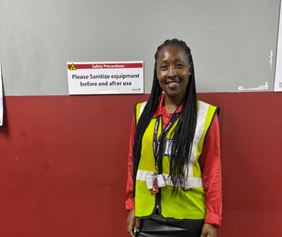
Air cargo is dynamic, with opportunities for growth and development. Image: Jamelene Latania Jeffries
JJ: My name is Jamelene Latania Jeffries. I am 29 years old. I am currently employed at Swissport Cargo Services Cape Town, as a Cargo Agent in the Export office department. Some of my daily responsibilities include the following:
Ensuring cargo is handed in with accurate and correct required documentation.
Capturing air waybills on cargo management systems, verifying cargo dimensions, pieces and weights, and maintaining accurate records of documentation.
Communicating with stakeholders by responding to emails, calls and messages from airlines, shippers and consignees.
Communicating with warehouse staff to ensure correct shipments were loaded and manifested on correct ULDs and correct flights.
Preparing documentation to accompany cargo on flights.
CFG: What does a normal day look like for you?
JJ: Personally, I would say that a normal day in the aviation industry does not exist. Given that the industry is rapidly changing, you might have to apply a certain aspect when conducting a flight, that was not necessarily a requirement yesterday. Also, workloads differ from day to day.
CFG: How long have you been in the air cargo industry, and what brought you to it?
JJ: I have been a part of the air cargo industry for approximately one year. Growing up, I was always fascinated by airplanes and the freedom of flight. I would describe myself as an individual who is always eager to learn and engage in new challenges and because aviation’s unique blend of technicality and customer services aligned with my skills and interests, and it is a dynamic field with opportunities for growth and professional development, which is committed to safety and precision, it inspired me to pursue a career in the industry.
CFG: What do you enjoy most about your job?
JJ: I enjoy:
Being able to build relationships with clients and airlines.
Ensuring that cargo is delivered intact on time and efficiently – this gives me immense satisfaction.
Being a part of a global network that provides opportunities for travel and industry event participation.
That it is a fast-paced dynamic environment that enables you to stay updated on industry innovations and technological advancements.
That it also helps build character and increases your ability to think and analyze critically.
CFG: What do you see as the greatest challenges in our industry?
JJ: I feel the greatest challenges are:
Cyber security threats: Protecting sensitive data and systems.
Weather-related risks.
Terrorism and hijacking.
Capacity constraints.
Air traffic control congestion.
Flight delays and cancellations.
CFG: What advice would you give to people to get into the air cargo industry? Any particular training they should aim for?
JJ: Pursue courses in logistics, supply chain management or any other field related to aviation. Participating in any training that is presented to you is an advantage. Even if it is not related to your occupation or position you are aiming for or already pursuing, it might be of an advantage to you soon. As the saying goes: ‘Knowledge is Power’. Manage stress and adapt to pressure, stay curious and committed to professional growth.
CFG: If the air cargo industry were a film/book, what would its title be?
JJ: If the air cargo industry was a film or book, I would have named it either ‘The Sky is Limitless’ or ‘Flight of Fortune’.
Thank you, Jamelene, for your answers!
If you would like to share your personal air cargo story with our CargoForwarder Global readers, feel free to send your answers to the above questions to cargoforwarderglobal@kopfpilot.at We look forward to shining a spotlight on your job area, views, and experiences.
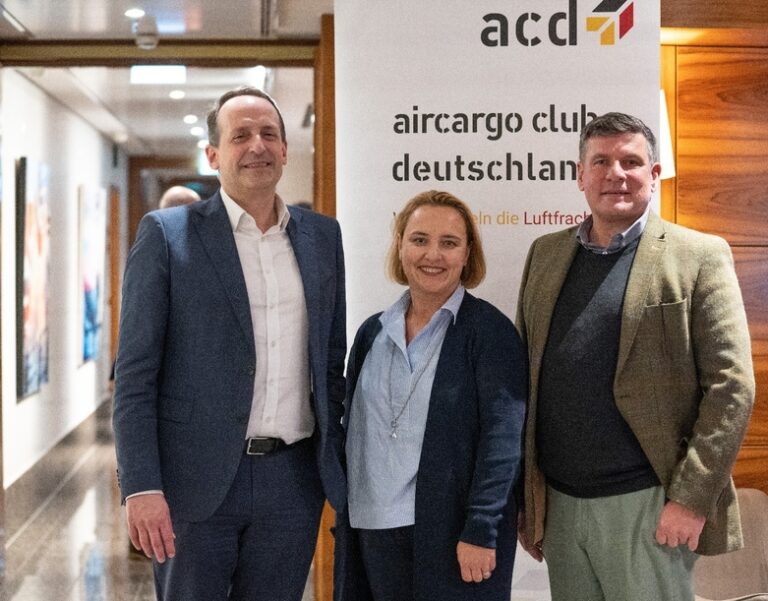
Rhine-Main has successfully defended its position as the Number 1 Cargo Airport in Europe in 2024. Pierre Dominique Prümm, Executive Board Member Aviation and Infrastructure at Fraport AG, and Kristine Heinisch, Team Leader Cargo Development, drew this conclusion shortly before the turn of the year, at the aircargo club deutschland (acd)’s annual closing meeting on Tuesday 17DEC24. Attended by 50 acd members, the event at Frankfurt Airport focused on current developments in air freight as well as the ‘CargoHub Master Plan’ which the two Fraport executives presented to the participants.
acd president Christopher Stoller (far right) welcomed Fraport executives Pierre Dominique Prümm and Kristine Heinisch at his association’s last meeting in 2024 – photo: Medienbüro am Reichstag
With a freight volume of 1.5 million tons in the third quarter of 2024 alone, Frankfurt remains the undisputed leader in Europe. However, the competition is not sleeping either. Airports such as Liège and Luxembourg are benefiting greatly from the current e-commerce avalanche and are getting closer in terms of volumes. Yet Rhine-Main has a decisive advantage over its European competitors, Pierre Dominique Prümm emphasized during his presentation. “While many airports specialize in either passengers or freight, Frankfurt offers a good balance between the two segments. Freighter flights are optimally utilized, and, at the same time, belly freight can be transported efficiently in the lower decks of passenger aircraft to a variety of intercontinental destinations,” thanks to the large network that Frankfurt offers, he added. The charm is the combination of pure cargo traffic, i.e. the offer of main deck capacity in conjunction with belly cargo transported by passenger aircraft.
Master plan paves the way for cargo growth The ‘CargoHub Master Plan’ is the operator’s answer to future challenges and their fulfillment. To realize this, Fraport has secured 48 hectares of real estate and intends to build warehouses and a building for accommodating forwarding agents, among others. The project includes the area that belonged to the former chemical plant, Ticona, which had to leave the site for safety reasons when Runway Northwest was built. The entire project illustrates to the market that Fraport intends to create long-term cargo capacity and expects air freight throughput to grow in the long term by 2.2% per year – at minimum. The intended measures complement the optimized use of space in CargoCity South, which, among other things, creates additional capacity for e-commerce and charging infrastructure for electric trucks.
acd’s role in air freight For the organization, the event was the opportunity to acknowledge Fraport’s efforts to enable air freight to grow unabated, but also to emphasize its own role as a debating platform deeply rooted in the industry. “We welcome Fraport’s ambitious plans and are prepared to actively support them,” explained acd President, Christopher Stoller. The 61-year-old association, founded in 1963, has 200 members and remains a leading voice for all aspects related to the cargo industry.
In addition to Fraport’s cargo masterplan, the attendees also discussed the challenges posed by new EU customs requirements and the need to speed up the digitalization of all relevant freight processes.
One final remark from Pierre Dominique Prümm: “The CargoHub Master Plan proves that we are not only pursuing the goal of strengthening Frankfurt, but also setting global standards. Only by working together in the industry we will be able to master the challenges of the future.”
This week, cargo veteran, Andrey Andreev joins CargoForwarder Global as a guest author, with his impressions gathered during a recent trip through Germany, Belgium, and Italy. He met with aviation experts, e-traders, producers and suppliers, resulting in an intensive exchange and update of industrial information. His observations, documented here, provide plenty of food for thought.
The global air freight market is going through a remarkable transformation phase, states Adrey Andreev – photo: private.
Freight forwarders are facing tough times The most lingering impression is that e-commerce has well advanced in surpassing general cargo as the most important commodity in air freight. This applies particularly to routes from the APAC region to the U.S. and EU. During the cargo conference in Liège in SEP24, some carriers advised that up to 80% of their capacity out of APAC, is filled with e-commerce. This has gravely changed transport chains, as carriers are increasingly tending to collaborate directly with leading e-commerce suppliers and their logistics operators by inking capacity purchase agreements. The consequence: Traditional freight forwarders are becoming sidelined.
New trend One Chinese cargo carrier has even launched bidding tenders for block space agreements (BSA), thus guaranteeing customers long-term transport capacity. A step that has resulted in rates exceeding USD 6,00 per kg. Until now, these tariffs were only valid in the event of urgent ad hoc cargo transport during peak seasons, and not for year-round business. And there is also a stunning new trend: some carriers offer discounts of 5-10% for direct deals with shippers, in this way kicking out forwarding agents.
Airlines increasingly tend to view e-commerce players as ‘capacity utilizers’ with no need for services offered by forwarders. However, experts hold that this is a short-sighted policy aimed at achieving favorable rates. Meanwhile, there is a visible trend to converge the activities of e-commerce actors and airlines, with carriers aiming at becoming an integral part of the e-trade, spurred by securing high volumes and benefiting from profit-sharing accords. This trend might even accelerate in future.
Reselling capacity to e-traders Nevertheless, against all odds, forwarding agents still play a pivotal role in the air-freight landscape. Some e-commerce platforms prefer to cooperate with forwarders, utilizing their infrastructure and service offerings. This can mainly be seen in the U.S, and most EU countries. In other cases, forwarders play a financial middleman role by simply reselling capacity to e-commerce marketplaces.
Ground Handling Agents are facing the biggest challenge, since most e-commerce actors rely on thru-units (BUP or build-up units) that simply need to be picked up and loaded on board a carrier without many ground handling activities. This way, e-commerce players remain in control of supply chains. The bitter consequence for those who do not adjust their processes and adapt to the new reality, is that they will lose their traditional bread and butter handling business, step by step. E-traders explain that they wish to exercise their own control, supported by a sorting infrastructure which classic GHAs cannot offer. Those handlers who do not adjust and adapt to the new e-commerce norms, will be burdened with high infrastructural and personnel costs, and are at risk of being left behind.
Faced with this constrained situation, Ground Handling Agents have started to impose strange surcharges (for example – direct delivery fees), which are normally part of the rates charged by forwarding agents. It is an attempt to survive but with low prospects of success.
Air-air patterns may change Looking at the Middle East, the GCC members’ future infrastructural plans are opulent. Dubai, Abu Dhabi, and Saudi Arabia, to name just three, aim to offer the industry ample warehouse capacity supported by AI implementation. This might change the classic air-air pattern to combined ocean-air transport, driving logistics costs for e-commerce further down. Once consumer habits can be precisely predicted, the flow of air freight will plummet. This is because up to 80% of orders will already be available in stock, which is predominantly shipped by ocean carriers.
Another irritating factor at present is that EU exports are down the drain. There has been always an imbalance between the volumes, but the gap is rapidly growing. Frederic Horst, Managing Director of the Trade and Transport Group recently posted some data on LinkedIn, showing that exports ex EU are decreasing. One of the reasons behind this is that the long-time industrial engine of Europe has lost its leading role in the automotive sector. As a result, the suppliers of automotive parts are also suffering, leading to a decrease in cargo volumes. Due to the constant overcapacity on eastbound routes caused by poor demand, in some cases the rate level cannot even cover the handling costs any longer.
Some rays of hope In contrast, the goods new is that perishables, AVI and, to a certain degree, pharmaceuticals remain stable and continue to grow. However, it cannot be excluded that they will embark on the e-commerce avenue sooner or later, provided air carriers and their partners can secure an uninterrupted cool chain from warehouse to warehouse.
To round the observations off, it can be said that the global air freight market is going through a remarkable transformation phase. It is leading to significant changes that most industrial stakeholders are facing and will have to adapt to – better sooner than later. The commodities carried the ‘old school way’ will continuously shrink. Those who survive will be players that are agile, flexible, innovative and courageous, and whose employees act as a team driven by a hands-on mentality.
The LinkedIn Jury was out in a recent mini-poll regarding 2025’s eventual air cargo revenue results – almost 40% were certain that it will be a better year than 2024, yet an equal amount felt it was impossible to say, given that there are too many variables. 17% held the opinion that it will likely be the same, and only 6% predicted doom. IATA voices forecast further growth though at a slower rate than in 2024. At CFG, we are generally optimistic.
May 2025 bring further sustainable growth and success. Image: CFG/Canva
On top of existing geopolitical struggles, the variables now also include Trump’s planned protectionist tariffs particularly on various countries, beginning with Canada, Mexico, and China, which will likely cause retaliation and imbalance. Add to that continued inflation (albeit slowing down), increasing labor costs as well as the ongoing difficulty to attract workers, limited aircraft availability, production delays for new freighters and conversion program setbacks – the latter exacerbating an already tight capacity situation – volatile weather impacts, various infrastructure deficiencies putting the brakes on sustainability progress, and last but not least: increasing regulatory burdens, not to mention a completely uneven playing field on many levels, and the witches brew that makes up air cargo industry competition is complete. Not easy.
Careful planning and navigation These challenges collectively create a complex operating environment for the air cargo industry in 2025, requiring careful management and strategic planning to navigate successfully.
Despite facing these challenges, however, the air cargo industry can look forward to several positive success factors in 2025, including revenue growth, cargo volume increases, cross-border e-commerce growth, continued above-average yields, global economic growth, new market opportunities (developing markets in Latin America, Southeast Asia, and the Middle East), technological advancements in terms of digitalization and automation aimed at improving efficiency and customer experience, and, of course, various sustainability initiatives, boosting both resource efficiency as well as improved public perception. ‘Collaboration’, too, which has long been a buzzword, appears to now be progressing more tangibly within the industry, with the growth of cargo communities.
Showcase your success in CFG As always, CFG looks forward to showcasing all your 2025 success stories – be they regarding new business partners, expansion, sustainability, digitalization, new products, routes, freighters, strategic milestone achievements, etc. And we will be continuing our popular Spotlight On… series, where we highlight the multifaceted world of air cargo logistics through the individuals that ensure its success. Why? Because we also want to do our bit to attract talent to this fascinating industry.
We always enjoy learning through what we write, and are grateful to you, our readers, sponsors, guest authors, contributors, and media partners for your sincere and faithful support during 2024. Thank you and may 2025 bring us all more of the positive aspects!
Happy New Year! Our next edition of CargoForwarder Global will be sent out on Tuesday 07JAN25. If you would like to see your article or advert in there or in a subsequent issue, simply send an email to us at info@cgofor.eu
CFG wishes everyone, whether at work, at home, or away on holiday during this time, a peaceful festive season, and an inspirational start to the new year.
The shipping line has just opened an office in Kampala, Uganda – its first in a landlocked country on the African continent. More are to follow, announced Thomas Orting Jorgensen, Senior Director Trade Management Africa, Hapag-Lloyd, in a bilateral meeting with CargoForwarder Global. This will happen successively, the executive says.
He points out that roughly 25% of all goods loaded or discharged at the Kenyan port of Mombasa come from Uganda, which has no direct access to the Indian Ocean. The majority of Uganda’s imports and exports are transported by truck to or from two key East African ports: Mombasa in Kenya, and Dar es Salaam in Tanzania. Approximately 95% of Uganda’s cargo passes through Mombasa, while the remaining 5% is handled by Dar es Salaam. Despite the insecure situation in the entire region, road transports are not escorted by security people or special guards, nor do the trucks travel in convoys so that the drivers can protect each other in the event of attacks – though this may vary for other sensitive cargo or for other hinterland locations.
The African hinterland, off the coasts, is becoming a focus area for H-L, says manager Thomas Orting Jorgensen – photos: courtesy H-L
GPS trackers provide protection At Hapag-Lloyd, they rely on a different system: “Our entire container fleet is equipped with GPS trackers. So, in the case of briberies or ambush attacks, we get the information immediately and can alert the local authorities or security forces,” says Thomas Jorgensen. “Up to now,” the Danish national knocks on wood, “this hasn’t happened, and I hope this will remain so.” The opening of a station in Uganda is fully in line with the company’s strategic plan to continuously expand its footprint across Africa. Apart from exporting its own products, Uganda’s importance also lies in its role as a business hub for packaging and consolidating a diverse range of commodities that move throughout the region. Key exports passing through Uganda include timber logs from South Sudan, cocoa, minerals and timber from the Democratic Republic of Congo, as well as some coffee from Rwanda.
Establishing an early presence in emerging markets These flows highlight Uganda’s growing impact on East African exports and its potential for facilitating trade across borders, states Hapag-Lloyd in a release. “Uganda plays a vital role in the export landscape of Africa and continues to see economic growth,” says Lars Sorensen, Senior Managing Director Region Middle East at Hapag-Lloyd. “Opening our office in Kampala is part of our long-term strategy to establish an early presence in emerging markets with high potential. With Kampala as our new hub, we can strengthen our position in the African market, improve service delivery, and better meet the needs of our customers both in Uganda and in neighboring regions.”
Hapag-Lloyd shipments on way from Kampala to Mombasa
Increasing economic power
Currently, Africa accounts for 5% to 6% of Hapag-Lloyd’s global sales. “This, we aim to double in the near future,” states Thomas Jorgensen. Trade within Africa but also with Europe, the Middle East and the Far East is growing faster than the global market. Incomes are rising, so more people are becoming an active part of regional ecosystems, and the population is growing very strongly, as demographic data shows. In contrast to Europe, Africa is a young continent with increasing economic power but threatened by the impact of the climate crisis on agricultural production, and repeated political and religious unrest in parts of the continent. Now Uganda. In which landlocked African country will Hapag-Lloyd fly its flag next? CargoForwarder Global wants to know: Zambia, Botswana, Burkina Faso or Malawi? Thomas Jorgensen remains tight lipped. He refers to a list in which the steps are outlined, but which is currently ‘for internal use’ only.
Africa is not part of the Gemini pact Instead, he stresses that Hapag-Lloyd will call at additional ports in Africa and/or increase the liner’s shipping frequencies. The company is extremely well positioned to tackle this task. In 2021, Hapag-Lloyd acquired NileDutch, a shipping company serving mainly ports along the West African coast. The company was well established with offices in Angola, Cameroon and Congo. After the acquisition, these offices became Hapag-Lloyd offices and there are more to come in the region. Asked about the role of the upcoming Gemini cooperation between Hapag-Lloyd and Danish box carrier, Maersk, Jorgensen says that African trade lanes are not covered by the maritime pact. “We run two hubs, Tangier and Port Said, where transshipments from the intercontinental fleet to feeder vessels serving Africa take place.” However, due to the hazardous situation in the Red Sea caused by the Yemeni Houthi regime forcing Hapag-Lloyd to circumvent Africa instead of crossing the Suez Canal, only Tangier in Morocco will be used by his company and partner, Maersk, as a joint maritime hub on the African continent, he explains.
Air Congo is the latest partner of Africa’s leading airline. The Congolese state holds 51% of the shares in the newcomer based in the capital Kinshasa, whose equity is valued at USD 40 million by the responsible regulator, and Ethiopian Airlines holds the remaining 49%. The much-applauded inaugural flight on the Kinshasa-Lubumbashi route recently took place in the presence of local dignitaries.
Mefin Biru, the former regional director of Ethiopian Airlines for France and the Maghreb states, was appointed as the company’s first chief executive officer. The Congolese startup has also leased two Boeing 738-800 from Ethiopian. Both aspects show who has the say there.
Air Congo is a building block on Ethiopian Airlines’ path to becoming a pan-African carrier
Can Air Congo and Congo Airways coexist? In the initial phase, Air Congo intends to concentrate on consolidating its domestic network. In addition to the Kinshasa-Lubumbashi sector, cities with 17 and 2.4 million inhabitants, respectively, the Congolese airports of Kolwezi, Mbuji Mayi, Goma, Kisangani and Kalemi stand on the carrier’s route map. Domestically, the new company is up against its competitor, Congo Airways. The latter is also majority state-owned and had to cease flight operations in September last year because it ran out of cash. However, thanks to new funding, a new start was made on 10NOV24 with leased aircraft from the Lithuanian wet-lease and charter airline Klas Air. In a statement, Deputy Prime Minister and Transport Minister Jean-Pierre Bemba Gombo clarified that the two airlines can coexist by benefitting from rising passenger demand and 50 domestic airports they could serve. The further development of Air Congo will depend on the support given by Ethiopian Airlines. The pair’s pact includes setting up a maintenance base at Kinshasa N’djili Airport for Boeing aircraft, a flight school and vocational activities for qualifying young talent.
First pan-African carrier The approach resembles the integration of other regional African airlines into the Ethiopian Group, namely Malawi Airlines, Togolese Asky Airlines and Zambia Airways. Thanks to its own network, which is intertwined with that of its affiliates, Ethiopian Airlines is well on its way to becoming the continent’s first pan-African airline, offering broad transcontinental connectivity through its partner’s gateways, Kinshasa, Lomé and Lusaka. This multi-hub strategy allows ET to span a dense transcontinental network and connect key hubs with markets in Europe, the Far East, the Middle East and the Americas. It will offer passengers and air freight customers an alternative, especially to the Gulf airlines, which are very active in the Sub Sahara markets. Although African politicians have long been calling for implementing a continental single sky solution, the scheme is still in its infancy. Hence, Ethiopian’s pan-African advance is an alternative, driven and coordinated by ET management in Addis Ababa.
More aircraft to come As far as the fleet plans for Air Congo are concerned, Ethiopian wants to increase the number of B737s to a total of 8 units within the next four years. In addition, two Dreamliner B787s will connect Kinshasa with destinations in Europe, the Middle East, Angola and South Africa. Simultaneously, the Congolese government committed to beef up the infrastructure at key airports such as Kinshasa’s N’Djili International, Kolwezi and Mbuji Mayi. It also announced investing in aviation security to achieve international standards.
Joost van Doesburg decided to step down from his post as cargo boss and exit Schiphol Airport when a smear campaign started to take a toll on his well-being. His departure will have no impact on the policy of the local cargo community, says Maarten van As, Managing Director of Air Cargo Netherlands (ACN). According to informed sources, Eric Dietz, the former head of the French parcel delivery service, Geopost, is being considered as van Doesburg’s successor.
The vehicle for the above-mentioned campaign was the populist and right-leaning newspaper, ‘De Telegraaf’, which quoted ‘anonymous sources’ in JUL24, stating that van Doesburg was responsible for a culture of fear and harassment at AMS Airport. According to the left-leaning daily, ‘De Volkskrant’, the issue is about a collaborator who had been found guilty of fraud, following an integrity investigation initiated by Mr. van Doesburg. In this procedure, he had the backing of the group’s top management.
Joost van Doesburg became victim of a smear campaign – photo: CFG/ms
Letter of support This was proved by the fact that, on the morning of the publication of the article, Schiphol’s new CEO, Pieter van Oord, sent a letter to the cargo community, in which he deplored the ‘unjustified and defamatory accusations’ against Joost van Doesburg and the cargo department. “These issues have been investigated and dealt with internally,” the executive wrote. “Since he took office at Schiphol, Joost has spoken out on non-ethical behavior, and he has committed himself justly to look into this matter. All signals and notifications have been investigated by Schiphol’s integrity commission, inclusive of the allegations against Joost. The result of this investigation is that there is no cause to doubt Joost’s integrity.” Further to this, he stated: “Cargo is an important and integral part of Schiphol and will remain so. We enjoy the dialogue with the cargo community. For questions and concertation on air cargo, our door is always open, so that we can collaborate on a good future for cargo at our airport.”
From critic to policy maker Joost van Doesburg joined Schiphol Group in MAR23. His previous job was as an adviser at the trade union, FNV, in which he was often critical of the labor conditions at Schiphol Airport. So, in certain circles, his career switch to the airport group was seen as a ‘gamekeeper turns poacher’ operation. Part of Mr. van Doesburg’s job was to align the cargo business with the far-going measures to reduce noise pollution, a scheme expected to be unfavorable to the cargo operation. A successor for Mr. Van Doesburg has not been appointed yet. A name mentioned through the grapevine is Eric Dietz, who was COO Europe and EVP of Geopost.
Dialogue goes on Air Cargo Netherlands (ACN) pursues the dialogue with the airport, says the umbrella’s Managing Director, Maarten van As. “We maintain our commitment for sufficient space for cargo at Schiphol, as well as an ideal digital infrastructure to optimally support the cargo processes and to be a strong cargo hub. In this respect, good and constructive discussions are on-going with the Schiphol management and the cargo department.”
Air Belgium goes ‘cargo only’ On Thursday 12DEC24, the Corporate Court of Nivelles accepted the conditions put forward by the consortium willing to take over Air Belgium. It is made up of the holding, PESO Aviation Management, owned by former Martinair boss, Peter Scholten, and British Air One Holding International, owned by Indian businessman, Guneet Mirchandani. The consortium will be paying €800,000 for Air Belgium – purely for its cargo activity. This means that only 147 staff will be kept, while the other 204 will be made redundant. The take-over still requires approval from the Belgian Directorate-General for Aviation, a procedure that can take up to 4 months. According to rumors, the new owners are planning to add another aircraft to Air Belgium’s current cargo fleet of two Airbus A330-200 and two B747.
Ramping up for capacity publication in Spring 2025.
U.S. air freight carrier, Delta Cargo, has entered a long-term agreement with digital air cargo booking platform, cargo.one. Thus, the platform’s more than 20,000 forwarders can soon look forward to accessing Delta Cargo services online, across the airline’s global network spanning over 250 destinations. Through cargo.one, forwarders will be able to check, quote, book, and track Delta Cargo capacity in seconds, using innovative tools designed to streamline shipment management and enhance commercial efficiency. From Spring 2025, general cargo bookings will be available in select markets, with plans to introduce additional product types in the future. The partnership equips Delta Cargo with data-driven insights to optimize its market fit, improve operational scale, and meet forwarders’ demands for greater visibility and control in the booking process. Joining over 60 airlines already partnered with cargo.one, Delta Cargo can expect to strengthen its digital sales presence in a successful marketplace. Peter Penseel, President of Delta Cargo, said: “Ensuring that Delta Cargo services are readily accessible wherever freight forwarders prefer to book, is essential. This collaboration with cargo.one, a truly global sales partner, is a natural extension of our digital offering, allowing us to connect with more forwarders in key markets. cargo.one shares our commitment to service excellence, delivering a convenient, efficient and seamless booking experience for every customer.” Moritz Claussen, Founder & Co-CEO of cargo.one, commented: “With Delta Cargo capacity at their fingertips, thousands of forwarders across our global footprint can look forward to winning even more shipments. As the industry’s leading procurement platform, we are delighted to support Delta Cargo in expanding its reach and enhancing the digital sales experience for customers. We look forward to working closely with the Delta Cargo team to maximize the many opportunities this exciting integration brings.”
To digitally go where no cargo airline has gone before...
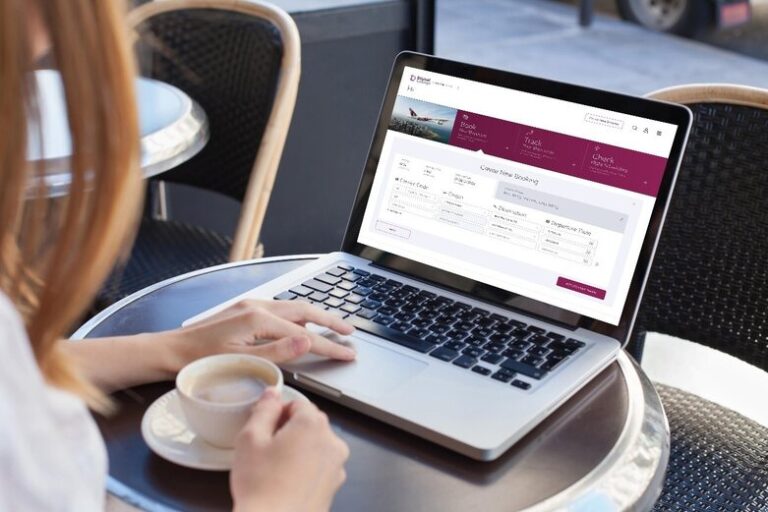
Qatar Airways Cargo has become the first cargo airline in the industry to offer online interline bookings with instant confirmations through its Digital Lounge portal. This advancement simplifies the booking process for interline partners, eliminating the need for local station contact and reducing the manual exchange of emails. The portal enhances efficiency by providing real-time access to booking information and updates. Currently used by American Airlines Cargo and Latam Cargo, the interline booking feature allows these partners to manage all bookings seamlessly on Qatar Airways Cargo flights. Plans are underway to expand this functionality to all interline partners in the near future. The Digital Lounge portal includes features such as shipment tracking, multiple dimension uploads, notification configuration per air waybill, BUP bookings with ULD details, allotment bookings, and a tailored experience for consolidators. Customers can complete bookings in just 2 to 3 minutes, supported by a 24/7 technical support team. A recent addition to the portal, the ‘My Allotments’ feature, offers real-time visibility, prevents overbooking, and optimizes shipment planning. This tool, combined with Qatar Airways Cargo’s e-booking portal and omnichannel approach, provides customers with an enhanced and connected digital booking experience. Mark Drusch, Chief Officer Cargo at Qatar Airways Cargo, explained: “Digitalization is a cornerstone of our strategy, and we are proud to continue setting new standards in the cargo industry. As the first air cargo carrier to offer online bookings with instant confirmations to our interline partners, we are committed to innovation and improving the booking experience for both our partners and our customers. Our teams actively gather customer feedback to enhance the user experience on the Digital Lounge portal, and we have made significant progress since its launch in 2022.” Faisal Karamat, Vice President Cargo Customer Experience at Qatar Airways Cargo, added: “Since the launch of Digital Lounge, we have welcomed over 6,800 registered customers and 15,000 users to the portal, achieving nearly 500,000 online bookings. The portal’sintuitive design and user-friendly layout have received high praise, underscoring its success in meeting customer needs and driving digitalization in the cargo industry. We are continually exploring ways to enhance our Digital Lounge, and the introduction of the new Interline feature is a testament to our commitment to adding valuable functionalities.”