China Airlines (CI), a leading Taiwanese carrier and one of the world’s top 15 air cargo operators, has successfully integrated IBS Software’s iCargo solution into its air cargo management infrastructure. This milestone marks a significant step in the airline’s digital transformation journey, aimed at optimizing operations and enhancing customer satisfaction. The iCargo platform will strengthen China Airlines’ air cargo management across sales and import/export operations. By adopting this fully integrated digital solution, the airline is transitioning away from legacy systems to an end-to-end digital framework, futureproofing its cargo platform with advanced management technology. This strategic move aligns with China Airlines’ broader digital transformation goals, reducing reliance on outdated systems while embracing innovative tools to streamline operations and improve efficiency. The implementation underscores the airline’s commitment to staying competitive in the global air cargo market by leveraging cutting-edge technology to meet evolving industry demands. Eddy Liu, Senior Vice President of China Airlines, stated: “China Airlines is taking active measures towards being a world-leading cargo carrier. Transitioning to a cloud-based SaaS solution and consolidating our existing platforms with IBS Software will streamline our current processes and boost efficiency. We look forward to working together to transform the air cargo industry.” Ashok Rajan, Senior Vice President & Head of Cargo & Logistics Solutions at IBS Software, commented: “China Airlines has long dominated the air cargo market as a leader in executing complex cargo transportation requirements across the globe. This agreement reinforces IBS Software’s key objective to digitize airline carrier systems by creating innovative and efficient solutions to streamline processes. We anticipate a long and healthy working relationship with China Airlines as partners in leading cargo operations.”
WestJet Cargo has launched a national campaign to raise awareness about the life-saving importance of blood donations, deepening its collaboration with Canadian Blood Services (CBS). In the past five years, WestJet Cargo has transported critical blood and plasma products to hospitals and patients in need, leveraging its extensive network and Priority service to reach 65% of Canadians within four hours. As part of the initiative, WestJet Cargo employees participated in a blood donation drive on 19NOV24, with staff from Calgary and other provinces contributing at CBS locations nationwide. This effort supports CBS’s annual goal of 300,000 donations facilitated by Partners for Life groups, emphasizing WestJet Cargo’s commitment to health and community well-being. WestJet Cargo’s Priority service ensures reliable, expedited handling for time-sensitive medical shipments, meeting the strict demands of healthcare providers. This service plays a crucial role in the safe and timely delivery of essential medical supplies, such as blood and plasma, across Canada. Through its partnership with CBS, WestJet Cargo not only supports health care but also aligns with the WestJet Group’s broader charitable mission, demonstrating a commitment to enriching the communities it serves and addressing critical needs in health and safety. Kirsten De Bruijn, Executive Vice President at WestJet Cargo, underlined: “WestJet Cargo is dedicated to serving the Canadian community by delivering life-critical shipments and promoting initiatives that save lives. Our recent customer survey reaffirmed the importance of our community-focused values, and this relationship reflects our commitment to making a tangible difference. By working together with Canadian Blood Services, we are not only addressing pressing health needs but also inspiring Canadians to join this vital cause.”
GAC India now oversees ca. 40% of Thai Airways’ Indian exports.
Thai Airways has strengthened its foothold in India by appointing Globe Air Cargo (GAC) India, a subsidiary of ECS Group, as its General Sales and Service Agent (GSSA) for operations in Bangalore (BLR) and Cochin (COK). Effective since 01SEP24, this collaboration aims to boost connectivity to key destinations across the Far East, Europe, and Australia. Globe Air Cargo India is now managing daily A350-900 flights from Bangalore, offering 15 tons of cargo capacity per flight. Cochin, which began with three flights per week, has scaled up to daily services, adding around 2.5 tons of cargo per flight. With this expanded role, Globe Air Cargo India now oversees operations at four of Thai Airways’ eight major Indian stations, accounting for over 40% of the airline’s exports from the country. On board of its flights are mainly commodities such as pharmaceuticals, perishables, garments, spices, and automotive parts. For Globe Air Cargo India, this agreement marks a significant achievement, reflecting its growing influence in the Indian air cargo sector. For Thai Airways, the collaboration underscores its commitment to scaling operations and meeting growing market demands in one of its most dynamic regions. Jean Ceccaldi, CEO of ECS Group, commented: “Our partnership with Thai Airways underscores the trust in our expertise and operational excellence. Expanding our footprint in India through this contract enables us to support Thai Airways in optimizing its reach and enhancing trade flows between India and international markets.” Girish Kunder, Managing Director of Globe Air Cargo India, agreed: “This partnership marks an exciting chapter for Globe Air Cargo India as we join forces with Thai Airways to boost cargo capacity and connectivity across key routes. Leveraging our resources and experience, we are dedicated to delivering a seamless experience for our customers and positively impacting the air cargo industry in India.” Veera-Anong Pookgaman, Team lead of Cargo and Mail Sales at Thai Airways, stressed: “Partnering with Globe Air Cargo India aligns perfectly with our strategy to strengthen our presence in the Indian market. Their extensive experience and commitment to service excellence assure us that this collaboration will enhance the reliability and efficiency of our cargo services, meeting the diverse needs of our clients.”
The International Air Cargo Association (TIACA) has signed two declarations submitted to the International Civil Aviation Organization (ICAO) to honor the 80th anniversary of the Chicago Convention, marking the birth of commercial aviation. These declarations, spearheaded by the Air Transport Action Group (ATAG) and the International Aviation Foundation (IAF), emphasize the industry’s ongoing commitment to safe, secure, and sustainable growth. Additionally, TIACA has endorsed the ‘Aviation 4 All’ Declaration, developed by the International Aviation Forum (IAF) as a strategic vision for sustainable growth in aviation. Over 40 organizations have already signed this initiative, which outlines key goals for the industry. The declaration highlights commitments to achieving a net-zero environmental impact, fostering inclusivity and diversity in the workplace, enhancing global connectivity, and collaborating with governments to strengthen safety and security. It also focuses on improving customer experiences through seamless technology integration, minimizing service disruptions, and reducing financial barriers to air travel, enabling broader global accessibility. By supporting these initiatives, TIACA reinforces its dedication to driving progress in the air cargo and aviation sectors, contributing to the broader benefits of commercial aviation, including economic prosperity and cultural integration. Steven Polmans, Chair, TIACA, said: “The air cargo industry has been allowed to grow and thrive over the last 80 years under the guidance issued by ICAO with the signing of the Chicago Convention. We celebrate the foresight, wisdom and strength that the guidelines have given to the industry and look forward to another 80 years of sustainable and economic growth within our industry. […] TIACA’s support of the Aviation 4 All declaration is a natural extension of the work we do on behalf of the industry. We are pleased to support this initiative, and we cannot wait to get to work in supporting its implementation.” Glyn Hughes, Director General, TIACA, concurred: “As we continue to work toward TIACA’s vision for ‘a safe, profitable and united air cargo industry that embraces modern technologies and practices to sustainably and fairly serves trade and social development worldwide’, we are thrilled to continue our support of ICAO and their role within our industry. […] We are thrilled to be invited to support initiatives such as the Aviation 4 All vision as it confirms the value the global aviation community sees in what TIACA is doing to support the air cargo industry and the declaration’s contents are fully aligned to what we see as being vital for the sustainable growth and development of our industry.”
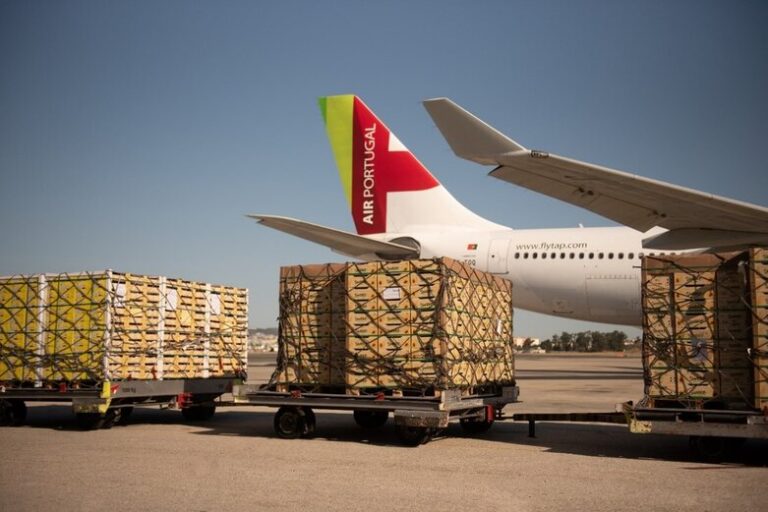
Wiremind Cargo and TAP Air Cargo have advanced their partnership by integrating SKYPALLET with CHAMP’s Cargospot cargo management system. A SKYPALLET customer since OCT22, TAP Air Cargo has now embedded SKYPALLET further into its capacity optimization process through an API integration with Cargospot Airline. This allows TAP Air Cargo staff to transfer air waybill data automatically from Cargospot to SKYPALLET for shipment evaluation and flight planning. The integration optimizes flight plans, performing co-loadability checks, segregation, T-ULD, and more, while ensuring that Cargospot remains the source of truth for updates such as booking changes, which are quickly reflected in SKYPALLET. The automation eliminates the need for manual input and reduces flight planning time from 15–30 minutes to mere seconds. Wiremind Cargo, a member of CargoTech, collaborated with CHAMP Cargosystems to establish the integration, utilizing CHAMP’s API ecosystem. Nathanaël de Tarade, Chief Executive Officer of Wiremind Cargo, stated: “Digitalization brings significant process efficiencies as the ongoing success of our SKYPALLET product proves: a single solution that, on average, helps improve flight load factors by up to 5-10%. The ability to integrate our solutions seamlessly into customers’ existing software is a product priority for us at Wiremind Cargo, to help unlock process efficiencies and maximize the useability of our solutions. We are particularly happy to launch this solution together with TAP Air Cargo, who has been a valued partner over the past year and a half, and CHAMP to demonstrate the potential of collaboration within our industry.” Rita Rosário Garcia, Product and Service Director of TAP Air Cargo, revealed: “It was always our plan to integrate SKYPALLET with our cargo reservation system, Cargospot, since we engaged Wiremind. Both systems were API ready and there is always a step change in benefits when you are able to support a business process with a seamless technical integration. Once the technical integration was completed, Wiremind Cargo’s implementation team supported us with the transition and change management, which enabled us to focus on our core business and maximize the value we get from SKYPALLET.” Nemil Sheriff, Senior Product Manager – Cargo Portals & APIs, explained: “APIs are at the heart of Cargospot’s open and collaborative approach. With our extensive integration capabilities — which include one of the industry’s most comprehensive API portfolios — we empower our clients to innovate and rapidly create new solutions that transform their businesses. This approach is perfectly demonstrated by the integration of SKYPALLET with Cargospot Airline. We are delighted to see this integration come to life, as it will enable TAP Air Cargo to leverage the power of Cargospot for a highly efficient capacity optimization process.”
Jettainer creates a CITO position and Pauly fills it. Image: Jettainer
Jettainer announced this week that it has appointed Stefanie Pauly as Chief Information and Technology Officer (CITO), as it drives its digital strategy forward. The role, which has been newly created, emphasizes the ULD management company’s commitment to innovation, digitalization, and technology, to enhance its services and solidify its position as a global market leader. With over ten years of experience in IT project management and process optimization within the air cargo industry, Pauly will lead Jettainer’s innovation strategy. Collaborating with the IT team, she will focus on developing customer-centric software solutions and refining processes to improve service quality. Pauly joins Jettainer from Lufthansa Cargo, where she served as Head of Fulfillment Framework, having held several different roles prior, since joining the cargo airline in 2013. She has managed projects related to digitalization, process optimization, and innovation. Her achievements include leading the ‘Airmail IT’ project as Senior Manager Supply Chain Optimization and Strategy, spearheading the digitalization of global handling processes, and implementing new production planning software at the Frankfurt hub as Senior IT Project Manager. Dr Jan-Wilhelm Breithaupt, CEO of Jettainer, commented: “As new technologies become available, customers are rightly expecting digital solutions for seamless collaboration and greater transparency and efficiency in the supply chain. With Stefanie Pauly, we are gaining a highly competent leader who will continue to drive these topics forward for us. We are looking forward to shaping the future of ULD management with her know-how and creativity. Her extensive experience and commitment to pioneering solutions make her the ideal candidate for this important position.”
CargoForwarder Global’s ‘Spotlight On…’ series showcases a different role and individual in the air cargo industry each week. Given the many stakeholders in our industry, some jobs are, in themselves, incredibly varied. One such example is this week’s Spotlight focus on Paola López, Technical Manager at Swissport in Barcelona, since she deals with quality, safety, maintenance, training, auditing, and all kinds of aspects that go into ensuring smooth and safe air cargo ground operations. She takes us through her responsibilities, gives advice to those looking to get into the air cargo industry, and has a particularly interesting take on our film/book title question.
Cargo is like solving a new puzzle every day – image: Paola López
CFG: What is your current function and company? And what are your responsibilities? PL: I am currently the Technical Manager at Swissport Barcelona Cargo. My role is focused on managing quality, safety, and environmental policies (QHSE), and ensuring we comply with our Integrated Management System. I also oversee the maintenance and performance tracking of ground service equipment using the MAXIMO system, as well as coordinating training programs to ensure our staff stays qualified. One of the most interesting aspects of my role is leading the audits at the Barcelona facility – it’s a challenge I genuinely enjoy.
CFG: What does a normal day look like for you? PL: A ‘normal’ day doesn’t really exist in my role. Every day is a surprise! I walk into the office not knowing exactly what challenges I’ll face, whether it’s dealing with local authorities, navigating the ever-changing requirements of airlines, or managing compliance with health and safety regulations. Some days are spent coordinating with different teams to ensure smooth operations, while others are filled with last-minute issues that need immediate attention. Every day brings a new set of challenges, and I never quite know what to expect until I walk into the office! I can plan, but at the end of the day, the air cargo world is unpredictable – one phone call or email can completely change the direction of your day.
CFG: How long have you been in the air cargo industry, and what brought you to it? PL: I’ve been in the air cargo industry for two years. Before this, I had no experience in this sector – I actually studied aerospace engineering in Barcelona. What brought me into air cargo was my passion for airports and aviation in general. I was looking for a role that would allow me to apply my technical background in a fast-paced environment, and air cargo turned out to be the perfect fit. Although I wasn’t familiar with the specifics of the industry at first, the ever-changing nature of the work, the complexity of logistics, and the challenge of navigating the regulatory landscape quickly drew me in. It’s like solving a new puzzle every day!
CFG: What do you enjoy most about your job? PL: What I enjoy most about my job is the sheer unpredictability. Every day is different, and there’s always something new to tackle. Whether it’s solving a complex issue with an airline, navigating the intricacies of local or health regulations, or dealing with internal procedures, there’s never a dull moment. I also really enjoy the challenge of leading audits and making sure that we meet the high standards required across the board. There’s a real sense of satisfaction when everything falls into place, especially after working through a particularly challenging issue or meeting a strict deadline.
CFG: What do you see as the greatest challenges in our industry? PL: The greatest challenges in the air cargo industry are the constant regulatory changes, managing complex relationships with multiple stakeholders (from health authorities to airlines), and the ongoing pressure to maintain high standards while keeping operations running smoothly. The industry is becoming more and more interconnected, and the complexity of dealing with various regulations, compliance requirements, and customer needs can be overwhelming. The unpredictability is part of the job, but it’s also what makes it so challenging and exciting. Navigating these challenges requires constant learning and flexibility, as what worked yesterday might not work today!
CFG: What advice would you give to people to get into the air cargo industry? Any particular training they should aim for? PL: My advice would be to embrace flexibility and resilience. The air cargo industry is not for the faint-hearted – it’s a fast-paced world where you never quite know what you’ll face when you walk into the office. One day you’re handling a regulatory crisis, and the next you’re managing a last-minute shipment that could make or break the day. Training in logistics, supply chain management, and aviation regulations is a great place to start, but equally important is learning how to adapt quickly. Strong communication skills are key, because you’ll need to liaise with all sorts of stakeholders – from airlines and local authorities to health agencies and internal teams. Most importantly, be prepared to solve problems on the fly, because every day is a new puzzle to figure out!
CFG: If the air cargo industry were a film/book, what would its title be? PL: If the air cargo industry were a film, it would be “The Devil Wears Cargo”. Think of it as a dramatic romantic comedy much like The Devil Wears Prada, but with more paperwork, more customs forms, and a lot more chaos. It’s that kind of ‘love-hate’ relationship: one minute you’re feeling on top of the world, meeting every deadline with grace, and the next minute you’re drowning in regulations and trying to decipher an email from an airline that definitely doesn’t make sense. Every day, you’re caught in a whirlwind of demanding stakeholders, impossible expectations, and last-minute challenges. But just when you think you’ve had enough, there’s a small victory – a shipment makes it through, the audit is passed, and suddenly you’re in love with the job all over again. It’s a toxic relationship, sure, but it’s also one you can’t escape… because it’s so dang addictive.
Thank you for your insights, Paola!
If you would like to share your personal air cargo story with our CargoForwarder Global readers, feel free to send your answers to the above questions to cargoforwarderglobal@kopfpilot.at We look forward to shining a spotlight on your job area, views, and experiences.
Here we present other unique cargo transports that will be remembered by everyone involved beyond 2024. We start with a topic sent to us by Or Zak, Chief Commercial Officer, Challenge Group.
Tesla Cybertruck transported by Challenge – company courtesy
Challenge mastered the Tesla challenge At Challenge Group, we specialize in end-to-end logistics solutions for complex, non-standard cargo. Among the diverse industries we serve, automotive logistics stands out as a testament to our adaptability and expertise. A remarkable milestone in our journey was transporting the Tesla Cybertruck – a vehicle that embodies innovation and the evolving demands of the automotive industry – across the Atlantic. Being entrusted with this futuristic prototype took the level of our operational responsibility to new heights. Thanks to decades of air freight experience and an amazing team of experts, we ensured a seamless process, delivering the Tesla Cybertruck safely and in perfect condition. This achievement reflects not only our operational excellence but also our commitment to staying ahead of the curve. As the automotive industry continues to innovate, we do the same. At Challenge Group, we continuously adapt our processes to meet the unique challenges posed by groundbreaking vehicles like the Tesla Cybertruck, exceeding customer expectations every step of the way. By combining expertise, precision, and a passion for airfreight and logistics, Challenge Group remains at the forefront of global airfreight solutions, ready to embrace the future of automotive logistics. Wherever innovation takes flight, we’re here to deliver.
Rahmi at his new home. Photo: Zoo Zurich, Enzo Franchini
Swiss WorldCargo transported Raymi first class Raymi is an endangered Andean bear who needed a new home to support the conservation of his species. Swiss WorldCargo stepped up to the challenge and safely moved Raymi in the fall of 2024, from his base in the U.S. to his new habitat at Zoo Zurich. The shipping operation was more than a routine transport — Raymi needed a well-coordinated effort to ensure his welfare and contribute to biodiversity efforts. From meticulous planning to compliance with complex wildlife regulations, Swiss WorldCargo handled each phase of Raymi’s journey with an eye for safety and animal care, contributing to wildlife conservation through careful, compassionate logistics. In the words of Dominik Ryser, Head of Communication at Zoo Zurich: “In order to continue breeding and thus make an important contribution to preserving the reserve population in zoos, Raymi is particularly valuable, as his genes are not yet present in the European zoo population. Genetic diversity is important for a stable population.” Transporting wildlife internationally goes beyond getting a cargo ticket. There are many regulations and policies to consider, especially when moving between two highly-regulated continents: North America and Europe. Each step of the documentation process was essential to maintaining compliance with laws governing protected species. This meant securing veterinary clearances, import and export permits, and customs approvals. Before departure in the U.S., Raymi underwent pre-flight health checks by a team of veterinarians to ensure the bear was fit for the journey. The team at Swiss WorldCargo collaborated with animal health experts to address every aspect of Raymi’s in-flight needs, including temperature-controlled conditions, dietary provisions, and steps to reduce potential travel stress. After a successful flight and arrival in Switzerland, Swiss WorldCargo coordinated its ‘special passenger’ handover to Zoo Zurich’s staff and ensured a seamless transition for the Andean bear. The process was carefully managed to give Raymi a calm welcome experience.
Essential medical shipments represent the heartbeat of the Canadian carrier’s cargo operations – credit: WestJet Cargo
WestJet Cargo’s lifesaving missions In 2024, and in the years before, WestJet Cargo played a vital role in lifesaving missions by transporting essential medical shipments, including blood, plasma, and tissue, across Canada and beyond. These shipments, crucial for medical treatments, transplants, and emergency responses, represent the heartbeat of the Canadian carrier’s cargo operations. Transporting medical materials requires precision, speed, and an unwavering commitment to safety. Each shipment is handled with the utmost care, and arrives promptly through the airline’s priority product, to support urgent healthcare needs. From coast to coast, the team works to ensure hospitals and clinics receive these critical supplies on time. Beyond the role in logistics, the WestJet Cargo team is deeply committed to supporting healthcare in other meaningful ways. Many team members donated blood throughout the year, recognizing the life-changing impact of such contributions. This dedication extends into 2025, as the airline continues to give back and strengthen the connection to the communities it serves. Every blood and tissue shipment carried is a testament to WestJet Cargo’s dedication to helping save lives and supporting medical advancements. At WestJet Cargo, the employees are proud to serve as a trusted partner in healthcare logistics while contributing personally to the cause through the team’s ongoing blood donations. And here is a little context about the picture attached: To further engage with CBS, WestJet Cargo employees participated in a blood donation drive that took place on Tuesday, 19NOV24, with participation from Calgary, Alberta-based employees and sales managers across Canada, at CBS locations in their own provinces. The blood donation drive aimed to reinforce WestJet Cargo’s dedication to health and well-being while contributing to the annual 300,000 blood donations facilitated by CBS Partners for Life groups.
Outsized shipments like this GE turbine require special care – photo: Lufthansa Cargo
Large and heavy loads are no problem for Lufthansa Cargo The General Electric aircraft engine that Lufthansa Cargo transported from Beijing to Frankfurt in NOV24, was over five meters long, three meters high, and weighed twelve tons. As always, fast transport was very important in order to equip an aircraft with the engine and avoid long ground times. After all, flight cancellations or delays can result in high consequential costs. The aircraft engine’s journey with Lufthansa Cargo began at Beijing Capital International Airport. The efficient handling of this large and sensitive cargo worth several million euros, required a great deal of organization. Before the shipment arrived at the airport, all processes were planned in detail and coordinated with the freight forwarder to keep storage time to a minimum. The turbine was transported to the apron on a heavy-duty dolly at the exact time the Boeing 777 freighter arrived. Only one hour was available for the entire loading process. In addition to the engine, other cargo had to be loaded on the main deck. Everything had to be done quickly and safely. This was the job of specially trained loadmasters for ‘AC Engine Movements’ from Frankfurt, who were responsible for the safe loading and securing of the engine. Lufthansa Cargo’s ‘Loadability Team’ flies around the globe to supervise the loading and unloading of special shipments, to ensure that everything goes smoothly. Due to the size of the GE turbine and the limited space in the cargo hold, precision work and careful coordination were required, especially when loading through the cargo door. Some 50 lashing straps secured the turbine directly to the aircraft structure during the flight to protect it from vibration and movement. Projects of this kind require not only technical expertise, but also close cooperation between all partners involved. They are a good example of how the company enables global business and connects markets and industries with high quality.
In 2024, millions of shipments were flown safely and mostly on time across the world. But numbers are sound and smoke. That’s why we asked air freight operators what unique shipments they handled that stood out from the crowd and will be remembered. We were inspired by DHL, who had launched a corresponding initiative in which they named outstanding shipments. We are therefore starting our “Best of” list with an impressive shipment accomplished by the integrator. Please also read PART 2 of our report.
Surgery room transported by DHL – photo: company courtesy
DHL shipped Eleven Containers of Hope Transporting a hospital? Yes, that’s possible, too. In February 2024, DHL delivered the world’s first mobile heart clinic across oceans, covering over 9,000 kilometers from Bremen, Germany, to Zacamil, El Salvador. Developed by the German non-profit organization Kinderherzen, the clinic provides lifesaving surgery for children with congenital heart defects in areas that lack specialized facilities. The shipment consisted of 11 containers, transported by sea and road. After a 15-day setup, international heart surgeons began offering free treatments to the country’s young patients. The clinic remained in El Salvador until May 2024, before DHL transferred it to Burundi, East Africa, where it continued its mission.
On way to Barbados – courtesy Thilo Schäfer, Condor Cargo
Condor Flies Emotions It’s that time of year when people seek to escape seasonal stress and winter’s chill, opting instead for a well-deserved holiday in sunny, blue-water destinations. Whether they plan to relax on a pristine beach or embark on a luxury Caribbean cruise, Condor plays a vital role in making these dreams a reality. For many years, Condor has ensured that cruise passengers reach their destinations not only in the Caribbean but also in Asia and other parts of the world, now with their brand-new fleet of A330 aircraft. While travelers look forward to enjoying warmer climates and exploring different cultures, they also appreciate maintaining cherished traditions – such as a festive Christmas atmosphere complete with trees and decorations. This year, Condor delivered 20 Christmas trees to Bridgetown, Barbados, one of which stood an impressive 7 meters tall. Given the limited cargo space of a passenger aircraft, loading such a large tree into the lower deck of an A330 presented a significant logistical challenge. However, the dedicated logistics specialists at Condor made it possible. “It’s a pleasure for us to organize the transport of a Christmas tree, as we can imagine the light in the eyes of travelers when they see it during this season,” said Thilo Schaefer, Director Cargo at Condor. Transporting a Christmas tree of this size isn’t an everyday task, but for a logistics provider, it’s all part of the job. What makes this kind of shipment unique are the emotions involved – delivering not just cargo but also the magic of the holiday season. Such an operation requires seamless collaboration among the freight forwarder, handling agent, and airline to ensure smooth execution and timely delivery. Precision is especially critical when transporting a Christmas tree that must arrive in time to be placed on a cruise ship. In these scenarios, there’s no room for error. The successful completion of this mission reflects Condor Cargo’s commitment to going above and beyond – not just transporting goods but delivering joy. As passengers admire the beautifully decorated tree on board their cruise ship, it’s clear that Condor has achieved more than just a logistical service. They’ve brought a piece of home and a sense of festivity to a faraway destination, reminding us all of the emotions tied to the season and the power of thoughtful logistics.
Vasylyna and Nikola in their new sanctuary – photo: Four Paws
AF-KLM-MP relocates two lions to South Africa Lions Vasylyna and Nikola embarked on a significant journey on 25APR24, boarding on a Martinair Cargo 747 freighter aircraft that headed for South Africa. Vasylyna and Nikola share remarkably similar backgrounds. Lioness Vasylyna, originally kept as a pet in Ukraine, managed to escape and wandered through the war-affected streets of a village near Kharkiv before being captured and taken to a temporary wildlife shelter in Ukraine. Due to the wartime situation and lack of adequate care and space, she was swiftly relocated to a specialized sanctuary for big cats run by animal welfare organization FOUR PAWS in Friesland, the Netherlands. Nikola was rescued from illegal private possession by local authorities after ten days of roaming the streets near Budva on the Adriatic coast. Exhausted and malnourished, he was brought to a sanctuary to recover and gain strength again, followed by his and Vasylyna’s journey to LIONSROCK, a lifelong home for big cats in South Africa. “At our animal hotel at Schiphol Airport, we prioritize dedication to providing the best care for our animal passengers. We ensure the highest level of attention and care for every animal, from the moment of arrival to departure,” assures Mirjam Scherer, Global Head of Specials Logistics at Air France KLM Martinair Cargo. In the meantime, the two lions have settled in well in their new home. “While it’s saddening that they never had the chance to be released into the wild due to illegal trade, we are glad to offer them a more natural life at LIONSROCK,” said Petra Sleven, director of FOUR PAWS. Her organization covered the flight expenses.
As 2024 draws to a close, the air cargo industry reflects on a year of milestones, challenges, and transformation. In a detailed review presented by IATA at its annual Media Day on 10DEC24, IATA Director General, Willie Walsh, Economist, Ghislaine Lang, and Brendan Sullivan, IATA’s Global Head of Cargo, recapped the year’s results and discussed key focus areas, going forward.
Willie Walsh opened the hour-long Media session with an unprecedented forecast for the year ahead, for the aviation industry as a whole: “We expect overall revenues in 2025, to exceed USD 1 trillion for the first time.” (2024 is expected to close with USD 965 billion in revenues.) That said, costs are, of course, continuing to increase and IATA reveals a net profit of USD 36.6 billion, which – though a large figure – represents a net margin of just 3.6%. There is growth in all segments predicted: Passenger revenues are expected to grow by 4%, while cargo revenue growth forecast is 5.4%, and roughly 6% increase in Cargo-Tonne-Kilometers (CTK). Cargo yields are showing a slight decline of 0.7% for 2025. Overall, cargo operations have become increasingly vital. They now represent 15.6% of total industry revenues, up from 12% in 2019. “[Cargo] continues to represent a very significant proportion of overall revenues for the industry,” he stressed.
Summary of a strong growth year, with more to come. Image: IATA
Passengers traffic is back With annual global economic growth of around 3% forecast for the next 5 years, and a pretty stable growth trajectory over the past few years despite fears to the contrary, “it indicates that the global business cycle is still overall favorable for the airline industry,” Ghislaine Lang outlined in her economic summary. Passenger traffic achieved full recovery from the pandemic, this year, she said. A fact that is “relevant for air cargo, since most of the industry’s cargo is transported on passenger bellies,” she underlined.
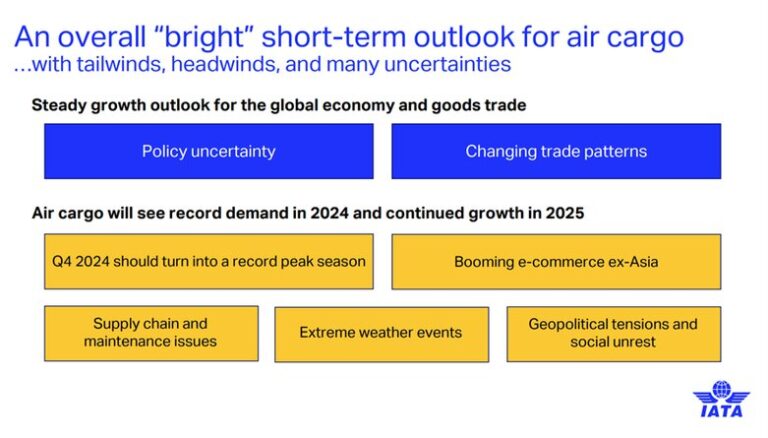
Record air cargo demand 2024, so far (JAN-OCT24 figures were available), has marked a record year in air cargo demand. Driven by booming e-commerce and the fallout of maritime shipping disruptions, CTK reached its second-highest level ever in Q3/24, “topped only once during the pandemic in Q4/21”. Nine out of ten months, this year, achieved double-digit growth, and “we are experiencing a very strong Q4/24, and it’s slightly [sic] going to turn into a record peak season, after all”, Lang predicted, going on to state that shippers and transportation companies appear to have been very well-prepared for the peak season, this year. The annual CTK forecast stands at a “remarkable 11.8% for 2024 […] delivering an all-time high in air cargo demand”. While demand is expected to continue in 2025, it will happen at a slower pace, at 6%.
Challenges: Geopolitics, Trade Barriers, and Production Delays Ghislaine Lang pointed to geopolitical tensions, rising trade barriers, and inflation as persistent headwinds. Over 3,000 trade restrictions – five times the 2015 level – have been imposed globally. The U.S., in particular, continues to raise trade barriers, risking retaliatory actions that could impact air cargo volumes. Production delays for new aircraft are another looming challenge. While freighters have shouldered a significant load since the pandemic, the fleet’s reliance on older models may present constraints in the future.
Structural shifts in global production Lang also underscored the evolving dynamics of global trade. Companies are increasingly multi-sourcing, moving production away from China to a diverse range of countries. This shift is reshaping trade lanes, with routes like Europe–North America and Far East–North America seeing strong demand. Freighter usage remains robust, especially on transpacific routes, where reliance has exceeded pre-pandemic levels. Belly capacity is moving away from China, but freighters are moving towards it for e-commerce reasons, mostly. In OCT24, global cargo yield levels were still roughly 50% above 2019, and there are no signs that they will revert to pre-pandemic levels – again, mainly due to the boom in e-commerce. Yields are expected to remain around one-third above pre-pandemic levels in both 2024 and 2025. Still, air cargo has become more competitive against maritime shipping, with air freight now only six times as expensive as sea freight compared to 10–15 times, pre-pandemic.
The Digital Revolution and Sustainability Drive Digitalization took center stage in 2024 – also given that e-commerce, which makes up 20% of what moves by air, demands speed and efficiency. Brendan Sullivan emphasized the growing adoption of IATA’s ONE Record standard, which aims to streamline data sharing across the supply chain. Over 200 companies are piloting the system, with full industry adoption targeted by 2026. Examples of successful implementation include multimodal tracking projects with Cathay Cargo and vaccine transportation initiatives. Sustainability remains another top priority. IATA is pushing for zero carbon by 2050, reducing single-use plastics, and combating food loss, which costs the global economy $940 billion annually. Sullivan also flagged evolving security threats, such as incendiary devices, that require robust regulatory responses.
Outlook for 2025 2024 will likely see a 7% increase in revenues, with another 5% expected in 2025. Cargo revenue share will remain elevated at around 16%, this year and the next. Growth in air cargo volumes is expected to slow to 6.4%, but the sector’s foundational strength remains intact. Continued e-commerce demand and advances in digitalization offer promising opportunities, while geopolitical and production challenges will test resilience. As Sullivan aptly summarized, the industry has undergone a structural transformation for the better. However, adaptability and readiness for surprises will be critical in navigating the uncertain road ahead. For air cargo, 2025 promises another year of innovation and growth, underscored by the lessons and successes of 2024.