Air Charter Service (ACS) recently transported 39 white rhinos from Namibia to Dallas as part of breeding initiatives aimed at protecting the species and preserving their genetic diversity. This operation involved months of planning and coordination with conservationists, veterinarians, and airlines.
39 white rhinos are not an everyday shipment. Image: Air Charter Service
The rhinos traveled in specially designed containers aboard a Boeing 747 freighter. Due to the cargo’s significant weight of around 80 tons, a refueling stop was made in Cape Verde before reaching the U.S. Upon arrival, the rhinos were quarantined before moving to their new environment. This was the largest single airlift of rhinos to date, breaking its previous record of relocating 30 rhinos from South Africa to Rwanda in 2021. Additionally, the company facilitated the transport of 16 rhinos to the Democratic Republic of Congo. These initiatives demonstrate ACS’s commitment to wildlife conservation and its capability in executing challenging animal relocation projects.
Lyndee du Toit, CEO of ACS Africa, commented: “The purpose of this project is to responsibly and ethically conserve the endangered white rhino population and preserve the Namibian rhinos’ unique genetics against poaching. It is the largest translocation of rhino ever undertaken and required many months of careful planning, working in close collaboration with the conservation and relocation company and the airline. Over the past few years we have been involved in several flights transporting these magnificent creatures, so are well-versed in what is required from our side. In 2021, we arranged a charter to move 30 rhinos from a South African reserve to their new home in Rwanda, in what was then the largest single translocation project. This latest flight, with 39, becomes the most rhinos ever to have flown on one aircraft. There was an intricate load plan to fit all the oversize containers on board the Boeing B747, but once aboard, the team of veterinarians were able to personally look after the creatures for the duration of the flight to the United States. A fuel stop in Sal, Cape Verde, was necessary due to the rhinos combined weight of 80 tons, before landing at Dallas Fort Worth Airport, where they were unloaded under the full supervision of the U.S. Fish and Wildlife Service, before their onward journeys. They have now been released from their quarantine bomas and are doing well in their new environments.”
Challenge Group announced the successful launch of its inaugural flights to Nairobi (NBO) on 02DEC24. This milestone marks the company’s first venture into Africa, with twice-weekly flights operating on Mondays and Thursdays. The service utilizes a B767 freighter, offering a capacity of 52 tons and 400 cubic meters of volume. This move highlights Challenge Group’s focus on growth and expanding into new markets. Hot on the heels of its Indian operations launch, the addition of Nairobi demonstrates the company’s commitment to meeting the ever-evolving needs of its global customers. Nairobi, a vital hub for perishable goods, is now linked to Challenge Group’s expertise at Liège Airport where it is a strategic partner for handling perishable cargo. The new connection aligns seamlessly with Liège Airport’s broader goals and reinforces Challenge Group’s role as a key player in global trade.
A fresh connection in every sense! Image: Challenge Group
Breaking into the African market is a significant step forward for Challenge Group, its partners, and clients. With an expanding network and forward-thinking services, the company continues to connect markets and facilitate trade on a global scale.
Or Zak, Chief Commercial Officer at Challenge Group, said: “Our decision to launch flights to Nairobi is driven by our customer-centric approach. With the increasing demand for airfreight solutions out of Africa, we are delighted to offer our clients dependable access to this emerging market. Additionally, by linking Nairobi to our hub in Liège, we are strengthening Liège’s role as a competitive and well-equipped hub for handling and distributing perishable cargo.”
ACI Air Cargo and Atlantis Transportation Services mark 50 years as leaders in air cargo handling and trucking across North America. Since 1974, Atlantis has pioneered reliable airport-to-airport Road Feeder Services (RFS) between Canadian and U.S. hubs, while ACI built its presence at Toronto (YYZ), Montreal (YUL), and Vancouver (YVR) airports. The two companies now employ over 150 professionals and offer services spanning cargo handling, premium trucking, certified screening, and temperature-controlled logistics for sensitive goods such as pharmaceuticals. Known for handling diverse cargo, from live animals to dangerous goods, ACI and Atlantis have set industry standards for reliability and customer care.
Their culture of teamwork and a focus on innovation drive their success. Recent milestones include Department of Transportation (DoT) approval for RFS expansion in the U.S., and a partnership with Alliance Ground International (AGI), combining expertise in cargo handling and ramp services for passenger and freighter operations. The half-centenary celebrations included a Toronto gala on 21NOV24, and for clients and industry leaders, and an employee appreciation event on 07DEC24. Celebrations are planned for the teams in Montreal and Vancouver, too.
As they consider the future, ACI and Atlantis are banking on technology and partnerships to deliver smart, efficient logistics solutions, to continue building on their legacy of innovation and excellence which has stood them in good stead thus far.
Sylvain Lacelle, Vice President of Sales and Operations at ACI Air Cargo, stated: “ACI Air Cargo and Atlantis Transportation Services have evolved alongside Canada’s air cargo industry, constantly investing in infrastructure, technology, and specialized services. We have successfully combined our strong local roots with a global perspective, expanding service offerings while maintaining essential values of integrity and client-centered solutions.”
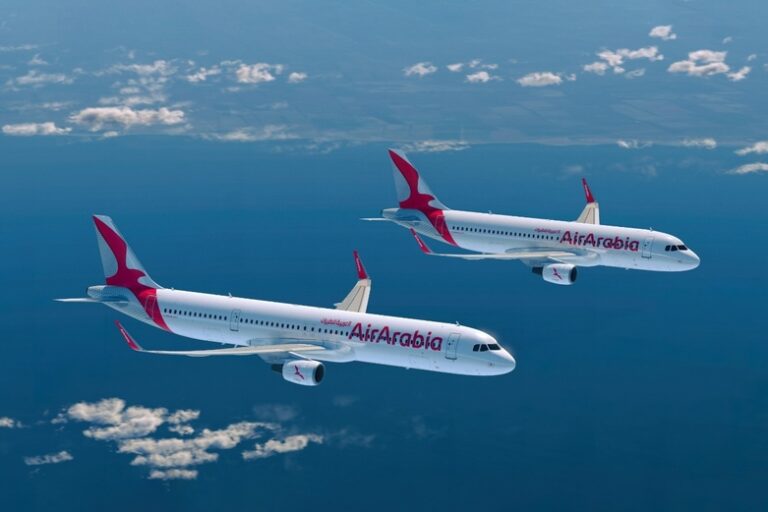
ECS Group subsidiary, Globe Air Cargo (GAC), has been selected as the GGSA to represent Air Arabia in Poland. The initial three-year contract was recently signed and became effective on 15OCT24. GAC will support Air Arabia in developing its air cargo business in the region. The airline currently serves Krakow out of the UAE, four times per week. This is soon due to rise to five weekly rotations, still during the winter schedule, and from this month onwards, Air Arabia will also serve Warsaw with five flights per week. The carrier deploys A320 and A321 variants on these routes, opening the cargo market up to a variety of commodities. The main commodities being carried include general cargo and passive temperature-sensitive shipments such as pharmaceuticals, cosmetics, and foodstuffs.
Now represented by GAC in Poland. Image: Cargo iQ
As its website states, “Air Arabia’s vision is to be the leading cargo trend setter in Air Cargo Industry.” It offers a cargo network numbering over 50 destinations, and “is in a state of continuous growth”, which its record revenues thus far in 2024 (passenger and cargo), reflect.
According to the press release, the new partnership benefits both the airline and the GSSA, creating opportunities for growth in a growing Polish logistics market.
Robert Van de Weg, Chief Commercial Officer of ECS Group, commented: “We are proud to represent Air Arabia in Poland. This collaboration not only enhances our service offerings but also reinforces our commitment to providing efficient and reliable logistics solutions. We look forward to working closely with Air Arabia to maximize their potential in the Polish market.”
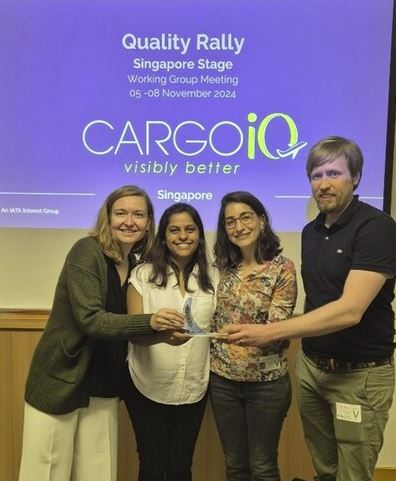
Swissport and Lufthansa emerged as winners at the Cargo iQ Quality-Rally (Q-Rally) held in Singapore for their collaborative project, ‘Freight into Warehouse’ (FIW), which has been implemented across all Swissport and Lufthansa stations. Their initiative aimed to enhance the accuracy of Service Level Agreement (SLA) measurements in aircraft, drop-off, and warehouse processes. Swissport’s Priscilla Marques, Swissport’s Manager Global Operations Cargo, spearheaded the project using a continuous improvement approach. The process began with manual logging of shipment movements, followed by system analysis, improvements, remeasurement, and further refinements.
Improved SLA accuracy across all stations. Image: Cargo iQ
During the Q-Rally, the team shared insights and demonstrated improved workflow efficiency through upgraded ramp delivery profiles. These enhancements also fostered greater accountability among stakeholders. Jussi Lemola, Swissport’s Vice-President Global Operations, highlighted the importance of a station-specific approach to effectively implement the milestone and identify bottlenecks. Swissport relied on existing resources for FIW implementation and contributed to the Cargo iQ Membership’s efforts to advance the initiative.
The bi-annual Q-Rally brings together Cargo iQ stakeholders to showcase projects aimed at improving air cargo processes, reinforcing the industry’s commitment to continuous advancement.
Marie Seco-Köppen, Executive Director, Cargo iQ, explained: “The Q rally is designed to push continuous improvement and encourage Cargo iQ stakeholders to challenge each other and work together, share learnings, and make their efforts and results visible. Swissport and Lufthansa showcased it wonderfully. Obviously Swissport and Lufthansa’s win goes beyond the Q-rally. The implementation of FIW being a key example of how value is created among partners. It also reflects, how milestone implementations have a ripple effect on the airport processes as a whole.”
Cargolux has achieved a triple milestone on its digital transformation journey. It announced on 05DEC24, that it has now gone live in Germany and the Benelux on three of the air cargo industry’s leading booking platforms: cargo.one, CargoAi, and WebCargo by Freightos. More countries and geographical regions will be rolled out stepwise, following this initial launch. The decision to branch out onto digital marketplaces came as part of Cargolux’s endeavor to meet changing customer requirements by investing in resource optimization and state-of-the-art digital innovation. Presence on the digital marketplaces will further extend Cargolux’s reach and availability to perhaps hitherto untapped customer potentials. Freight forwarders can look forward to efficient and seamless booking processes as the marketplaces offer customers swift, easy, and direct access to capacity, with Cargolux able to provide swift responses.
Now live on three platforms in Germany and the Benelux. Image: Cargolux
Mathieu Weber, VP Digital Sales & Marketing, stated: “As the demand for digital processes grows, we are intent on embracing change and broadening our digital reach. Joining marketplaces offers an additional, intuitive tool for our clients to book capacity that matches their requirements. This tool will not only enhance customer experience, it will also allow Cargolux to strengthen its market footprint.”
Domenico Ceci, EVP Sales & Marketing, commented: “The partnership with marketplaces is the latest step in Cargolux’s wide-ranging Sales Digitalization program. Service excellence has always been central to the Cargolux philosophy, and this initiative is an additional step towards seamless and tailored service.”
Moritz Claussen, Founder & Co-CEO of cargo.one, said: “As we continue to deliver on our commitment to offering forwarders the largest portfolio of digitally connected airlines worldwide, we are thrilled to announce our ongoing partnership with Cargolux. This global collaboration is excellent news for forwarders, providing a significant leap in digital access to Cargolux services.”
The WACO System (WACO), a global network of independent freight forwarders, has partnered with cargo.one to enhance its members’ digital capabilities. The result is an industry-first collaboration that enables WACO members to streamline capacity discovery, quoting, and booking processes via the cargo.one WACO Module. WACO members, spanning 118 countries, can now utilize this centralized platform to discover and book live air capacity rates on 60+ airlines, as well as view each other’s local charges and trucking offers, and generate door-to-door quotations in real time. The platform also allows members to seamlessly book each other’s rates, reducing reliance on emails and significantly saving time. Additionally, each member company gains an online shopfront to market services 24/7, extending the network’s reach to non-member agents. This initiative aligns with WACO’s commitment to empowering its members through digital tools that boost efficiency, resilience, and competitiveness. By integrating cargo.one’s capabilities, forwarders can access competitive market rates while ensuring comprehensive service options.
An industry-first, enabling WACO’s members to grow their networks. Image: cargo.one
Trans Global Freight Management Ltd., a leading UK-based freight forwarder and early adopter of the cargo.one WACO Module, has reported positive impacts from the digital quoting and booking functionality.
Richard Charles, CEO of The WACO System, commented: “We are always looking for ways to strengthen our global network, and digital solutions play a vital role in this. By partnering with cargo.one, we are equipping WACO members with the tools to enhance and streamline their operations digitally. And with better digital connectivity, our network will be more robust, productive, and rewarding than ever before.”
Moritz Claussen, Founder & Co-CEO of cargo.one, added: “Our exciting collaboration with WACO brings together the powerful benefits of its network withthe powerful impacts of digital collaboration. Leveraging seamless and efficient digital workflows with cargo.one, forwarders can work quicker, compete better and reinvest significant time savings into developing their WACO relationships.”
Simon Rawlinson, Operations Director at Trans Global, explained: “For years, WACO membership has provided us with an effective way to connect with other members to buy and sell services. After adopting capacity search, quoting and booking with cargo.one, the network effect now feels supercharged – we are quoting and winning shipments faster.”
Atlas Air Worldwide Holdings, Inc. has appointed Klaus Goersch as its Executive Vice President and Chief Operating Officer. Reporting to Chief Executive Officer, Michael Steen, Goersch will join the Company in late DEC24, and become a member of the Executive Leadership Team. He will oversee global flight, ground, and technical operations, and assumes direct responsibility for safety, regulatory compliance, and operational excellence. Goersch will act as Atlas’ primary liaison with the Federal Aviation Administration, focusing on and leading strategic efforts to enhance operational efficiency while maintaining high safety standards.
Klaus Goersch steps up as Atlas Air’s COO. Image: Atlas Air Worldwide
With a Master of Aeronautical Science and a Bachelor of Science in Professional Aeronautics from Embry Riddle Aeronautical University, Klaus Goersch also has almost 30 years of aviation industry experience, having held roles as Chief Operations Officer at Air India, British Airways, and Air Canada, as well as having been Chief Executive Officer of Saudi Arabia’s NEOM Airlines, and Executive Vice President of AirTran Airways.
Michael Steen declared: “Klaus brings exceptional operational leadership experience and deep aviation expertise to Atlas. His proven track record of successfully managing complex airline operations, combined with his strong regulatory background and focus on operations efficiency, make him ideally suited to help drive Atlas’ continued transformation and growth.”
Klaus Goersch explained: “Atlas’ position as the globalair logistics leader makes this an exciting opportunity. I look forward to working alongside Atlas’ world-class operations teams to advance the Company’s strategic growth agenda while maintaining our commitment to safety and service quality.”
Chapman Freeborn announced on 02DEC24, that it has established a dedicated European music and entertainment division. Operations are to be led by two newly appointed heads: Paul Kindred and Chloe Phelps have been appointed to lead Chapman Freeborn’s new division, as the charter carrier predicts that the music and entertainment industry will continue to grow.
Paul Kindred, Head of Music & Entertainment Business Development; Chloe Phelps, Head of Music & Entertainment Charters. Image: Chapman Freeborn
Paul Kindred takes on the role of Head of Music and Entertainment Business Development, and Chloe Phelps is the division’s Head of Music and Entertainment Charters. As part of its services, Chapman Freeborn provides music and entertainment clients the option to offset carbon emissions from performer and equipment travel.
Paul Kindred commented: “Chapman Freeborn has been the leading charter broker in the music and entertainment industryfor decades. We have retained our success throughout the years by maintaining an unrivalled level of trust within the industry, consistently strengthening and growing our relationships and reputation worldwide. The past 12 months have been very successful, and we are on track to achieving our corporate aim of becoming the partner of choice for the global music and entertainment industry. Over the past year, we have seen unprecedented growth in our live music and touring division, and I have been incredibly fortunate to be a part of delivering this service. I’m very excited about what’s ahead of us and I look forward to continuing to contribute meaningfully to the success of Chapman Freeborn.”
Chloe Phelps added: “The opportunity for Paul and me to lead the music and entertainment division across Europe is both an honor and an exciting challenge. We’re entering a busy year for the industry and we’re confident that 2025 and the years ahead will bring tremendous growth and success. We’re eager to bring fresh ideas and a clear vision to this role and look forward to getting started.”
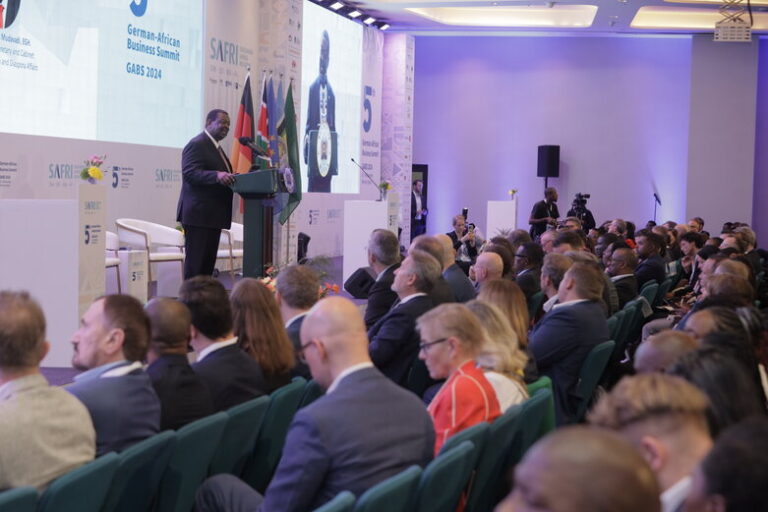
Stella Scheibenzuber joins CargoForwarder Global as a guest author this week, with her review of the German African Business Summit 2024. The German African Business Summit (GABS) took place from 02-04DEC24, and brought around 800 business, political, association and academic representatives from 36 countries together in the Kenyan capital, Nairobi. The event was opened by Kenyan President, William Ruto, and German Vice Chancellor, Robert Habeck. The summit focused on key topics such as economic cooperation, sustainability, financing and the importance of logistics as an indispensable basis for Africa’s industrial development.
Economic development in Africa is progressing with increasing speed and added value. Intra-African trade is set to double in the next 4 years to 30% of the nationally produced aggregate output, while imports and exports are set to double at the same time.
The Nairobi-held German African Business Summit was well attended – photos: courtesy GABS
Logistics at the center of discussions A particular focus during the summit days was the issue of supply chains. According to the CEO of Volkswagen Mobility Solutions Africa, Serge Kamuhinda, logistics account for almost 40% of the company’s total costs in Rwanda, which underlines the problematic nature of this sector. A special panel on logistics entitled ‘Sustainable Logistics – Key Success Factor for Business Development and Trade Participation’, brought together leading German and African companies such as Kuehne+Nagel, DB Schenker, Bosch, Volkswagen, Lufthansa Cargo, Freight Forwarders Kenya and Frankfurt Hahn Airport, who shared their experiences with the conference participants. The panel was organized by Professor Dr. Frank Straube (Technical University of Berlin, Department of Logistics, member of the GABS program committee), and Felix Zimmermann (Medienbüro am Reichstag). Professor Straube presented key findings from his study on ‘The future of Logistics with sub-Saharan Africa’ and moderated this logistics side event together with Professor XN Iraki (University of Nairobi, Department of Logistics). Professor Iraki emphasized that terms such as CO₂ emissions and sustainability hardly played a role in African logistics before 2020. This has now fundamentally changed and environmental protection is increasingly shaping the industry in Kenya. The manager of the Kuehne Foundation’s Climate Center in Nairobi and the company Kubick, which transforms plastic waste into sustainable building materials, spoke on the panel about decarbonizing logistics networks.
Robert Habeck, German Vice Chancellor and Minister of Economy called for closer cooperation between Africa and the EU
Infrastructure projects as a beacon of hope The African Union has initiated several major infrastructure projects: e.g. corridors from Mombasa and Dar es Salaam, which are to cross the continent. However, cooperation between the countries involved is still in its infancy. Professor Straube sees an urgent need for action here: “Logistics in Africa must be organized through cross-industry cooperation. The African automotive industry, through its initiative of the Association of African Automotive Manufacturers, is an example of how cooperation across the entire continent can efficiently overcome challenges, provided that the logistics networks for this function sustainably and robustly.” In addition to the automotive industry, the pharmaceutical and food industries are also developing positively, particularly due to growing demand and improved supply chains. At the same time, climatic challenges and crop failures are key problems that can affect supply, but also require careful logistical planning for emergencies. Supply chains for critical raw materials are further growth drivers and require innovative, secure logistics and air freight transportation capacity. The need for long-term, well-organized humanitarian logistics was also emphasized at the conference. The aim is to strengthen resilience to crises such as natural disasters, droughts and political unrest.
Challenges in air freight transport Another key topic was air freight, which plays a crucial role in the export of perishable goods such as flowers and fruit to Europe. Due to the ongoing attacks by the Houthi rebels on the Suez Canal / Red Sea, it has become almost impassable, which makes air freight even more important. However, the low freight rates and the lack of sufficient return shipments from Europe to Africa stand in the way of profitability. These problems have led Turkish Airlines and Qatar Airways, among others, to withdraw capacity from the Kenyan market and shift it to more lucrative routes, particularly to China.
Future prospects and cooperation However, the conference was not only about current challenges, but above all about global perspectives and cooperation between Europe and Africa, with a particular focus on the role of Germany. During the event, Professor Straube announced the further development of initiatives for logistics that bring together business, politics and universities. The aim is to draw up a roadmap for sustainable and resource-saving logistics development in Africa, and to involve the high-quality African start-up scene in the process. “We need to work together on new solutions and utilize the existing potential by closely networking our expertise,” concludes Straube.