Home Blog Page 122

Aviation is getting greener

Well timed after Hamburg’s Hydrogen Technology Expo Europe in OCT24 which included a look at aviation and Airbus, Toulouse (Hamburg’s twin city from an Airbus perspective), hosted two parallel events that were clearly aerospace focused and contained hydrogen aspects. Green Aero Days, the first of these 100% B2B events, brought together the cream of sustainable light aviation.

Small but powerful – France’s Daher EcoPulse hybrid electric aircraft  –  photo credits: Green Aero Days

Hydrogen fuel cell, hydrogen combustion, electric, hybrid – all kinds of propulsion systems were either exhibited as real aircraft or models. What many of them have in common: in contrast to their larger counterparts of the established aircraft manufacturers, they are not an AI-designed vision of sometime-in-the-2030s, no – they have either already flown or have maiden flights planned for 2025. Along with the various pitches and panel discussions, where creators such as Toulouse’s Beyond Aero presented their experiences (in this case, a test flight series with an ultra-light aircraft which began in FEB24 – CFG reported), the evening event showcased many other of these hydrogen pioneers in the nearby Aeroscopia museum. Truly a big monument in the fascinating history of aviation since its beginnings.

Hugo Duchemin of COMWORXX highlighted the transformation of ground infrastructure and operational processes through the use of H2 at airports.

No flights without ground infrastructure
Co-organized by Aerospace Valley, which, with its 852 members, is the leading European competitiveness cluster, the conference program followed a holistic approach to the subject matter. In other words, it focused on proactive solution-finding versus chicken-egg approaches. One panel named ‘Transforming airport infrastructures: how are they evolving to accommodate new aircraft?’, brought together first movers of both industry and infrastructure. CEO, Juriaan Kellermann presented FokkerNextGen’s 100-seater, based on the original Fokker 100, with a concrete plan to enter commercial service in 2035, fueled 100% by liquid hydrogen. From a groundwork perspective, CEO, Hugo Duchemin of consulting firm, COMWORXX, explained that a Berlin-based study has led to a European cooperation with Toulouse (France), Bodø (Norway), and Lelystad (Netherlands), with the objective of a trans-European demonstration flight of the smaller (4 seat) hydrogen aircraft, introducing standardized hydrogen refueling facilities. Stuttgart Airport CEO, Ulrich Heppe champions that idea on a larger scale, with the new Hydrogen Aviation Center at Stuttgart Airport. It is the base of start-up, H2FLY, which designed and built the fuel cell system for its parent company, Joby’s demonstrator. Joby recently performed a landmark test flight of 800 km, powered by liquid hydrogen. ENGIE Green, a division of the French energy giant, was represented by Innovation Project Manager, Guilhem Cuny, who explained its numerous solar energy projects at regional airports, exemplifying the reality of green airport infrastructures that can ultimately turn renewable energy into green hydrogen for land and air use.

Airline perspectives on Sustainable Aviation Fuel (SAF) and business travel
Day 3 of the event concentrated on Aeromart: a global trade fair bringing together major players and start-ups from all over the world. This is genuinely the pure B2B version of the Paris Air Show – no flight shows, just business matchmaking. Industry leader, Airbus’ presentation of its sustainability roadmap was followed by a lively panel discussion titled ‘Decarbonizing Business Air Travel: On the Path to Zero Emissions?’ It turns out that Airbus’ capability and objective to make its commercial aircraft 100% SAF-compatible by 2030, does not at all mean that they will fly on SAF to that extent. Panelists representing Air France, easyJet, and Lufthansa, expressed their struggle with comparable problems: SAF availability and cost. Together with their major travel agents, American Express and BCD, also present as panelists, they leverage SAF cost against ESG accountability benefits for their corporate business travel customers, representing an increasing part of the solution.
Efforts are being made to offer more transparency in travel planning, enabling passengers to choose flights based on decarbonization criteria. However, even with a decent corporate travel strategy, it seems that the necessary ramp-up of SAF production is an unsolved problem with no short-term remedy.

Andreas Hermann, SVP Sustainability Roadmap & Business Integration, Airbus, explained the frame maker’s roadwork to net zero.

Critical audience opinion considered
The panel positively opened up for audience participation, triggering further discussion. One attendee asked about Airbus’ and the airlines’ opinion on the engagement in green hydrogen production being a key feedstock for eSAF, and currently considered as the fuel that can be produced globally in larger quantities than crop-based SAF. The argument culminated in the assumption that aviation itself used to be a luxury segment of the travel industry, and its current mainstream market position is a result of competition, efficiency, and volume.
That being said, the same principles could be applied for the ramp-up of SAF with more sophisticated technology and strategic volume increase. Since green hydrogen is still a marginal product and fossil fuels benefit from major direct and indirect subsidies, it was voiced that aviation should join forces with global oil to speed up the transition to SAF production, even using their joint influence on policy makers. That particular aspect brought up the subject of the ‘Level Playing Field’; a term also used in the Lufthansa Cargo Sustainability Conference a few months ago. Air cargo customers are corporate by nature, and sensitive to sustainability leverage as long as there are rules that enforce fair global competition. In that same train of thought, audience participant, Fadimatou Noutchemo from Cameroon, herself an African and global thought leader and influencer, pointed out that Africa is often underestimated as industry participant, with urgent needs and economical challenges but standing in third or fourth place in the rankings of important markets. She also raised food for thought regarding the huge African land potential for solar energy and crop production, a major geopolitical opportunity to have Africa participate in this global search for solutions in sustainable aviation.

Spotlight on… Lukas Schroeder, Head of Customs Clearance, G. Englmayer, Zoll & Consulting GmbH

0

CargoForwarder Global’s ‘Spotlight On…’ series highlights the manifold functions involved in ensuring smooth, efficient, and safe logistics services within air cargo. Customs plays a crucial role in facilitating and regulating air cargo transport by ensuring compliance with international trade laws and security standards. Efficient customs processes can help streamline the movement of goods, reduce delays, and minimize costs, enhancing the global supply chain’s reliability. This week, Lukas Schroeder (LS), Head of Customs Clearance, G. Englmayer, Zoll & Consulting GmbH, tells us more about his role, and shares his experience and advice for those wanting to forge a career in customs.

Wings of Commerce: Through Borders and Bureaucracy. Image: Lukas Schroeder

CFG: What is your current function and company? And what are your responsibilities?
LS: I’m working as Head of Customs Clearance for G. Englmayer, Zoll & Consulting GmbH. With my team of about 30 customs agents, we ensure a smooth customs process for importing and exporting companies in Austria.

CFG: What does a normal day look like for you?
LS: There is not really a typical day, but the main parts of my work are to support my team when they have special cases and improving the process of customs clearance with colleagues from other departments, software engineers, our customers and also the customs authorities.

CFG: How long have you been in the air cargo industry, and what brought you to it?
LS: I did an apprenticeship as a forwarding agent more than 10 years ago. As customs was already an important topic for my company back then, I had the chance to take my first steps and to dive deeper and deeper within the years that followed.

CFG: What do you enjoy most about your job?
LS: We get in touch with many different companies from different branches and countries and we get close insights into their newest innovations. For me, this a really interesting part of my job.

CFG: What do you see as the greatest challenges in our industry?
LS: We and also our customers will have to face many new regulations like the deforestation regulation, supply chain due diligence act, revised UCC, and so on, in the next years. Although there are good intentions behind these rules, I can often hardly imagine how especially smaller or medium-sized companies should handle all of them, and how much time will be left for the activities they earn money with.

CFG: What advice would you give to people looking to join the air cargo industry? Any particular training they should aim for?
LS: From my point of view, I could just give them advice on how to get into customs. For me, the most important thing is good general knowledge as you have to deal with many different branches and goods. Furthermore, a good understanding of processes and data management will help you to get ahead. There is no school or something like that for customs agents in Austria and many other EU countries, so most of it is learning by doing. This is the reason we founded the ‘Zollakademie [Customs Academy] Austria’ and ‘Zollakademie Germany’, where we offer training courses on topics related to customs.

CFG: If the air cargo industry were a film/book, what would its title be?
LS: Wings of Commerce: Through Borders and Bureaucracy.

Thank you, Lukas, for your views.


If you would like to share your personal air cargo story with our CargoForwarder Global readers, feel free to send your answers to the above questions to cargoforwarderglobal@kopfpilot.at We look forward to shining a spotlight on your job area, views, and experiences.

QR Cargo pacts with JAL, deepens ties with Cainiao

0

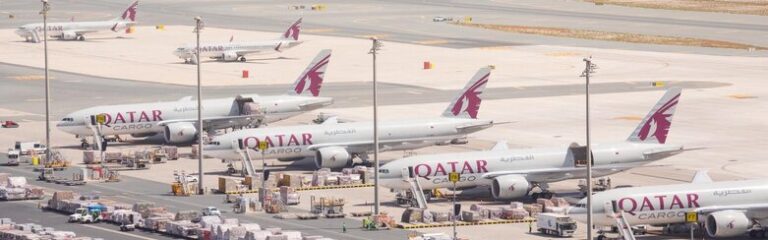
Qatar Airways Cargo’s communications department has had a busy week. On 01DEC24, they announced the partnership expansion between Qatar Airways Cargo and Cainiao. This was followed on 04DEC24 by the MoU with Japan Airlines (JAL). And just one day later, on 05DEC24, Qatar Airways Cargo’s media people published a press release informing about plans to run a jointly held conference with the Animal Transport Association next FEB25 in Doha.

To start with, this seems to be the most important message aired by Qatar Airways Cargo: the deepening of relations between the Gulf carrier and Alibaba Group member, Cainiao. Its main aim is to meet fast-growing global e-commerce demand. Both airlines have been working together since 2021, and according to Mark Drusch, Chief Officer Cargo at Qatar Airways Cargo, this has proven to be a very fruitful relationship for all parties involved.
The pact is based on a division of labor. “By utilizing the Qatar Airways Cargo hub at Hamad International Airport in Doha, we aim to expedite shipments to customers in Europe, the Middle East, and Africa, reinforcing our commitment to Cainiao,” explained the executive. The dense global network of Qatar Airways and its cargo arm, Qatar Airways Cargo, is particularly attractive for Cainiao. By transferring shipments made in China after arrival at Hamad International Airport to connecting Qatar Airways Cargo flights, the Chinese carrier can tap into a variety of markets. For instance, this includes 22 destinations in sub-Saharan Africa, served by Qatar Airways. These connections operated by Qatar Airways should give a further boost to e-commerce sales in local African marketplaces, as the number of Africans ordering shipments online is increasing rapidly.
Wan Lin, CEO of Cainiao, also referred to the network expansion resulting from the closer ties between the two airlines: “At Cainiao, we’re committed to building a smart, future-proof logistics network for e-commerce. We are pleased to strengthen our partnership with quality players like Qatar Airways Cargo, to build a more robust global express network and better support our global customers with faster deliveries and enhanced supply chain efficiency.”
Both carriers point out that through their deepened partnership, they will leverage their complementary strengths to enhance global e-commerce logistics and stimulate economic growth both at regional and global levels.

QR Cargo and Cainiao move closer together – courtesy QR Cargo

Qatar Airways Cargo and JALCARGO join forces
The two cargo airlines have inked a Memorandum of Understanding (MoU) aimed at scaling up their product offerings and achieving operational synergies. In a release they announce plans to streamline the transfer of cargo between the two carriers, this way ensuring a more efficient process for their customers. Enhanced trade flows between the core markets served by each of the partners will generate significant value, they state. Over the past 12 months, both carriers have transacted 4,462 tons of import and export cargo in Japan, highlighting the substantial impact of their collaboration. The MoU and commitment to the partnership will see this figure grow in the coming years.
This is confirmed by Yuichiro Kito, Senior Vice President, Head of Cargo and Mail at Japan Airlines, who said: “This agreement further strengthens the long-standing partnership between JAL and Qatar Airways Cargo. […]  JALCARGO will leverage JAL’s passenger flights, freighter network, and the newly expanded Qatar Airways network to deliver customers’ cargo to an even broader range of destinations than ever before.”
Mark Drusch, Chief Officer Cargo at Qatar Airways Cargo, stated: “This MoU symbolizes a commitment to a deeper partnership, aiming to integrate both networks via the hubs in Doha and Tokyo [Haneda]. This will enhance network connectivity and product offerings for customers, linking Japan to Qatar Airways’ extensive network in Europe, the Middle East, the Levant, and Africa, and vice versa.”

ATA opts for Doha as venue for its conference
Finally, the Gulf carrier announced that it will be hosting the Animal Transportation Association Conference 2025 in Doha, from 16-19FEB25. The ATA event’s schedule lists keynote speeches, panel discussions, and a variety of workshops.Topics will cover a wide range of issues, from animal welfare and regulatory compliance to technological innovations and sustainability in animal transport.
Qatar Airways Cargo is highly committed in this area. For example, as part of its eQare: Rewild the Planet program, it has often returned wild animals held in captivity to their natural habitats.“The globalization of markets has significantly increased the demand for animal transportation services. The ATA Conference 2025 allows members from across the globe to come together to be educated on the complex issues our industry faces,” said Sean Harding, ATA President. Unfortunately, some carriers still fly strictly protected animals across the globe under questionable conditions, as documented by customs authorities in Hong Kong, at U.S. gateways or EU airports. With an annual value of up to 20 billion euros, the illegal trade of wild animals is the fourth largest crime worldwide – after drug trafficking, human trafficking, and arms trade.

Achievements in Air Cargo Handling Logistics

The panel bearing the same title at the ACHL/Aviation Connect event in OCT24, covered a record number of topics in the brief half-hour accorded to it, illustrating the air cargo handling industry’s increasing transformation, fueled by resilience, innovation, and collaboration. Sebastiaan Scholte, CEO of Kales Airline Services, moderated the panel and invited four industry leaders to share their achievements, strategies for differentiation, and insights into the sector’s evolving challenges.

His guests were: Dirk Goovaerts, CEO Continental Europe, Middle East, Africa & India, Swissport; Janet Wallace, Managing Director Cargo Operations & Transformation Air Canada, Wilson Kwong, CEO, HACTL, and David Kerr, Consultant, ValleyRoad Capital SA.

Challenges and opportunities in a continuously growing industry. Image: Canva/CFG

Adapting to increasing volumes and complexity
Dirk Goovaerts of Swissport highlighted the company’s response to unprecedented volume growth, emphasizing the importance of ensuring a seamless value chain from shipper to consumer. Swissport’s collaboration with stakeholders has been critical in maintaining high standards of speed and service quality. Similarly, David Kerr from ValleyRoad Capital SA, described innovative efforts in Europe to integrate road feeder services (RFS) with air freight in a non-traditional fashion in order to support the growing e-commerce sector. Janet Wallace of Air Canada Cargo pointed to the industry’s resilience and adaptability in addressing challenges such as customs and security measures, emphasizing operational excellence as a cornerstone of their strategy. Wilson Kwong of HACTL shared a comprehensive view of its advancements, including investments in safety, security, service quality, and sustainability. HACTL has implemented cutting-edge measures, such as new thermal equipment for handling sensitive cargo, recycling uniforms into reusable items, and trialing autonomous tractors to enhance efficiency.

Differentiation in a commoditized market
In a highly commoditized industry, differentiation often hinges on service quality and technological innovation. Kwong emphasized that HACTL’s commitment to service quality involves substantial investments in infrastructure, training, and advanced tools such as AI, which is being tested to streamline compliance with complex operational standards. Wallace noted that speed and transparency are also critical for Air Canada Cargo, which has prioritized process improvements to deliver on these factors. Kerr addressed the growing demand for end-to-end solutions, particularly among new entrants, and pointed to innovations in deconsolidation, robotics, and piece-level handling as vital to meeting e-commerce needs. Goovaerts, on the other hand, stressed the importance of creating collaborative ecosystems, such as cargo communities, to ensure efficiency and quality. He cited an example involving a closed-loop system for exporting flowers from farms to airports, demonstrating the value of stakeholder collaboration.

e-commerce: opportunities and challenges
e-commerce, which now accounts for nearly 20% of global airfreight volumes, presents both opportunities and challenges. Goovaerts and Wallace discussed the industry’s proactive approach to managing growth, with investments in equipment and manpower to handle the increasing demand. Kerr noted that gaps in integration and technology remain a challenge, underscoring the need for innovative partnerships to streamline operations. Kwong emphasized the importance of building capacity to manage e-commerce volume swings, from ensuring adequate ground support equipment (GSE) to maintaining a robust workforce. Across the board, leaders recognized that e-commerce is a trend that is unlikely to reverse, making it essential to adapt and innovate continuously. 

Addressing labor shortages
Labor shortages remain a pressing concern for the industry, particularly in handling operations, where costs are high and retention is challenging. To attract and retain talent, Goovaerts highlighted the importance of equipping younger workers with modern tools that align with their preferences, moving away from outdated methods. Wallace emphasized the need for clear career development plans and effective change management to address organizational gaps. Kwong noted that younger generations prioritize purpose and rapid growth opportunities, prompting HACTL to provide coaching, overseas assignments, and cultural initiatives that underline the industry’s critical role in maintaining global supply chains. Kerr added that pairing digital solutions with the expertise of seasoned professionals is vital to mitigating the loss of experienced talent and fostering growth.

Sustainability: a growing focus
Sustainability has emerged as a central focus for the industry, with many organizations implementing innovative practices to reduce their environmental impact. HACTL’s efforts to recycle uniforms into reusable items, such as cups, reflect the growing commitment to zero-waste operations. Trials of autonomous tractors are addressing both labor shortages and energy efficiency, demonstrating the potential for technological solutions to support sustainability goals. As these initiatives gain traction, the industry is taking meaningful steps toward a more environmentally responsible future.

A forward-looking industry
Looking ahead, the air cargo handling industry is poised for continued evolution. Collaboration, technology adoption, and sustainability will play pivotal roles in navigating the complexities of the sector. While challenges such as labor shortages and e-commerce demands are significant, they also present opportunities for differentiation and innovation. By fostering resilience, prioritizing service quality, and investing in people and technology, the industry is well-positioned to adapt and thrive.

Boeing forecasts the next 20 years

0

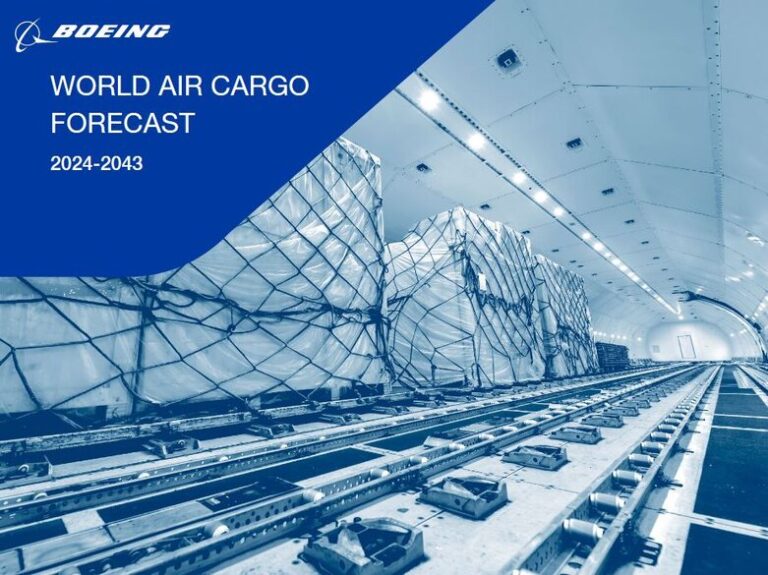
Last week, Boeing presented its new ‘Air Cargo Forecast 2024-2043’. The key findings in a nutshell: Boeing expects global air freight to grow by 3.4% annually, express will outgrow standard freight, supply chains continue to be diversified, geographically benefitting countries in the Southeast Asia, Latin America, and Eastern Europe. These markets will step up from the third to the second or even first league in air freight traffic.

India takes first place in domestic cargo
According to Boeing’s analysis, India will secure pole position for aviation growth over the next two decades, due to the strong increase in domestic Indian air traffic. Its drivers are fast increasing industrial activities that positively stimulate supply chains, the enormous domestic consumer market, and rising incomes. The Boeing experts speak of a “fourfold increase in domestic Indian air cargo over the next 20 years,” with e-commerce as the main driver. The cargo growth avenue that India has embarked on will support the political goal of achieving developed country status by 2047 – its centenary of independence. The cargo upswing is strongly supported by the Delhi government, which is heavily investing in aviation and cargo ground infrastructure.

Globally, it’s China-USA
Further to this, Boeing analysts predict that China and the USA will remain the dominant markets for intercontinental freight transportation during the next two decades. However, the imbalance in shipment flows remains, with nearly twice as much cargo flying eastbound to North America, compared to westbound. Air trade on this flow is heavily concentrated. Yet, they add that this forecast will only hold true if supply chains do not collapse, for example because of an invasion of Taiwan by China, or other massive geopolitical disruptions. The United States accounts for nearly 90% of North American trade with East Asia, while China is the largest East Asian air trade partner of North America with a 55% share of North American air imports and 37% share of exports. However, China’s share is slowly decreasing in percentage terms, not in absolute terms. This is because the risks posed by geopolitical tensions are increasingly prompting industries to diversify their activities by building production plants outside China, preferably in Vietnam, Thailand, Malaysia, and Indonesia, but also in Mexico or Eastern Europe.

Export and import volumes between Asia and Europe have converged
Boeing also considers the East Asia – Europe sector, the world’s second-largest cargo market. Unlike the transpacific flows, volumes on this trade lane are fairly balanced. The East Asia-to-Europe direction is dominated by consumer goods, whereas Europe-to-East Asia is driven by manufacturing and industrial items. However, European exports of consumer goods, luxury items, and perishables have increased in recent years as East Asia’s middle class and consumer base continue to grow. Sixth-Freedom carriers centrally located on this trade lane have risen to prominence in recent years. Clear examples are Azerbaijan-based SilkWay West Airlines, and ME carriers such as Qatar Airways Cargo and Turkish Cargo. Their ability to link the two regions and beyond by efficiently transshipping cargo through their hubs in Baku, Doha, Dubai or Istanbul, has allowed them to capture market share and lead industry growth, particularly given the Russia overflight restrictions faced by European and some Asian carriers. Strong economic foundations and expanding e-commerce markets on both sides of this trade lane will drive air cargo growth at around 4.0% per year over the next 20 years, predict the Boeing experts. Capacity remains elevated because of supply chain disruptions related to the Red Sea crisis and the closure of the Siberian airspace following Russia’s war on Ukraine. Overall, the risks for air freight on these routes are comparable to the hazards that transport chains between China and the USA are facing.

Latin America and Africa are the future hotspots in air cargo
As far as the trade lanes between Latin and North America are concerned, the authors of the market study forecast accelerated growth of intra-American air trade over the next 20 years. Cargo will be further stimulated by expanding consumer economies, rising e-commerce, and U.S. efforts to nearshore manufacturing from China to Latin American countries.
The Africa-East Asia air cargo market is also set for leaps in growth. It will triple in volume and surpass Europe as Africa’s largest air cargo market. Africa’s population is expected to double to 2.5 billion people by 2050, by which time one-quarter of the world’s population will live on the continent. Industrialization and economic development will raise incomes and boost consumption with positive effects on air freight and the entire transportation sector.

1,560 new freighters by 2043
Regarding the global freighter fleet, Boeing projects a growth of approximately 66% from 2,340 cargo aircraft in 2023, to 3,900 jetliners in 2043. Of the newbuilds, roughly 45% will replace retired airplanes. Freighter deliveries will total 2,845, with approximately two-thirds being converted jetliners. Around 70% of the P2F-conversions will be standard body freighters such as the Boeing 737MAX or the A320 family of Airbus. Of the factory-built freighters, 34% will be delivered to carriers based in Asia-Pacific, followed by North America (34%), Eurasia (18%), Middle East and Africa (9%) and Latin America (6%).

Boeing’s misery limits available cargo capacity
Overall, the study also states that the demand for cargo aircraft surpasses supply, which will probably last longer. Both manufacturers, Airbus and Boeing, are struggling with production delays mainly caused by supply chain interruptions. But the worst hit is Boeing, which has suffered severe setbacks due to its many B737 MAX dramas, multiple technical deficits affecting different variants, and serious production delays. Due to faults in the engine suspension system, the frame maker recently had to completely stop its test flight program for the B777X aircraft. This further extends the delivery waiting time for Emirates, Lufthansa, and others. The B777X was originally due to enter service in 2020. With production figures and deliveries of factory-built aircraft lagging far behind schedule, the U.S. frame maker has unintentionally but actively contributed to the gap between capacity demand and supply. This applies to both passenger and freight traffic, because around 50% of all cargo shipments are transported in the lower decks of passenger aircraft.

airBaltic Cargo joins the cargo.one platform

0

airBaltic Cargo, the Latvian national airline’s freight division, has partnered with cargo.one to enhance its digital sales capabilities and connect with more freight forwarders worldwide. Starting in Winter 2024, airBaltic Cargo’s extensive network of over 80 destinations across Europe, the Middle East, North Africa, and the Caucasus will be accessible through cargo.one’s industry-leading booking platform. Freight forwarders in 134 countries will be able to book general cargo, perishables, and temperature sensitive pharma shipments, across the entire airBaltic Cargo network. With cargo.one’s innovative technology, airBaltic Cargo can look forward to an enhanced market presence, lower sales costs, and offering faster, more accurate digital solutions to more customers.

airBaltic brings some very interesting destinations to the cargo.one platform. Image: cargo.one

This collaboration supports airBaltic Cargo’s ambitious growth strategy, which includes expanding its modern fleet of 49 Airbus A220-300 aircraft to 100 by 2030 and completing The Baltic Cargo Hub, the region’s largest air cargo facility, at Riga Airport. With its hub in Riga and additional bases in Tallinn, Vilnius, Tampere, and Gran Canaria, airBaltic Cargo offers flexible belly capacity, including access to shorter runway destinations less frequently served by other airlines.

Iļja Seļiverstovs, VP Cargo at airBaltic, said: “Digital sales is a vital driver of our cargo growth plans. It makes every sense to leverage cargo.one to expand our market reach and sales, and ensure airBaltic Cargo services remain front of mind with thousands of forwarders using the platform daily. Working alongside cargo.one, we will ensure that every customer receives the best possible end-to-end experience.”

Moritz Claussen, Founder & Co-CEO of cargo.one, stated: “We are thrilled to enable airBaltic Cargo to take its digital sales strategy to the next level, and our collaboration will capitalize upon its strengths in relevant markets. Forwarders rely upon cargo.one’s comprehensive global market view to discover, quote and book their air shipments, and the addition of airBaltic Cargo capacities will provide a strong option for many.”

LCAG and Maersk Partner advance air freight decarbonization

0

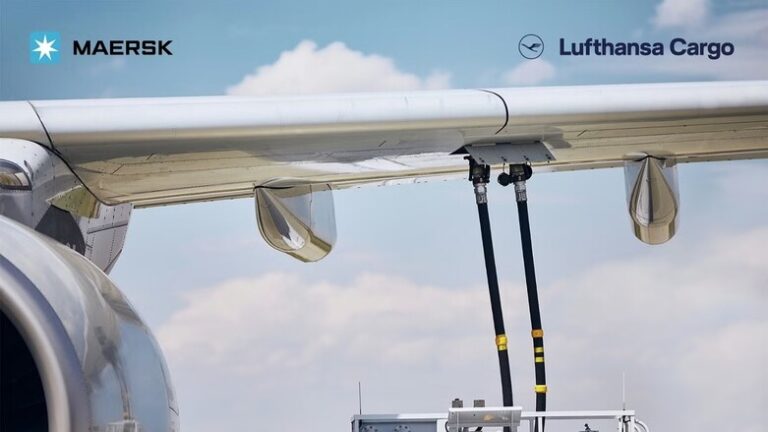
Lufthansa Cargo and A.P. Moller – Maersk (Maersk) have joined forces to promote sustainable air freight by integrating Sustainable Aviation Fuel (SAF) into operations. Under a new agreement, Lufthansa Cargo will utilize 400 metric tons of SAF on behalf of Maersk during the rest of this year, reducing CO2 emissions by approximately 1,200 metric tons. This initiative coincides with peak year-end cargo volumes, highlighting its significance in supporting greener logistics.

Collaborating for cleaner skies. Image: Lufthansa Cargo

The SAF, derived from biogenic residues such as used cooking oil via the Hydro-processed Esters & Fatty Acids (HEFA) process, offers an 80% lower CO2 footprint over its lifecycle compared to conventional kerosene. As a ‘drop-in’ fuel, SAF seamlessly integrates into existing infrastructures, enabling scalable adoption without altering flight operations. Lufthansa Cargo’s use of SAF (since SEP21) reflects its commitment to the Lufthansa Group’s goal of halving net CO2 emissions by 2030 and achieving carbon neutrality by 2050.

Maersk, a leader in sustainability with Science-Based Targets initiative (SBTi)-validated net-zero targets, will allocate the emissions reduction achieved through its ECO Delivery Air product, designed to offer greener logistics solutions.

Both companies emphasize innovation and collaboration to advance climate goals. Lufthansa Cargo operates one of the most efficient fleets, the Boeing 777 freighters, while Maersk targets net-zero emissions across transport and logistics operations by 2040. This partnership underscores a shared commitment to decarbonizing supply chains and setting benchmarks for sustainable air freight practices globally.

Morten Bo Christiansen, Head of Energy Transition at A.P. Moller – Maersk, commented: “Cutting greenhouse gas emissions from air freight is one of the most challenging tasks within the decarbonization of global logistics and supply chains. This is why we are excited to partner with Lufthansa Cargo in this important task. The uptake and availability of SAF in the aviation industry is still limited. Our agreement with Lufthansa Cargo enables Maersk to contribute to an increase in the uptake.”

Ashwin Bhat, CEO of Lufthansa Cargo, added: “SAF is a decisive technological key to more sustainable flying and essential for the energy transition in aviation. With Maersk we are jointly making a valuable contribution with the new agreement. At the same time, more sustainable flying also requires major efforts for a modern fleet and increased efficiency in flight operations. It is only through this interplay that change can be achieved sustainably.”  

Silk Way AFEZCO and MCG sign Cargo Village agreement

0

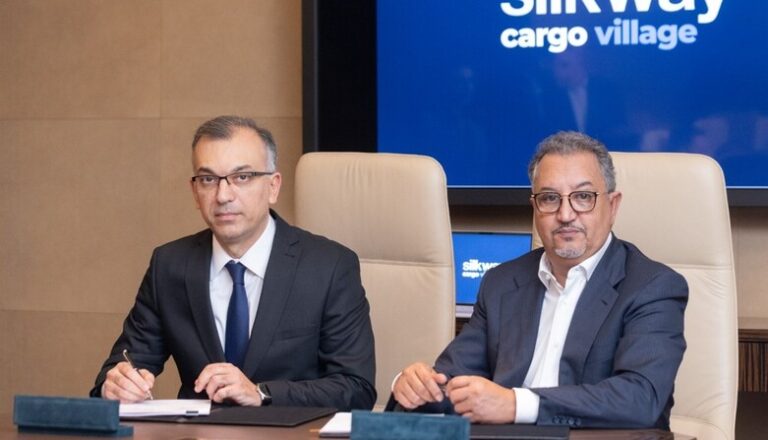
In what the press release hails ‘a landmark design and build agreement’, Silk Way Alat Free Economic Zone Company (SW AFEZCO) and Modern Construction Group (MCG) have officially sealed their intention to design and construct the Silk Way Cargo Village in the Alat Free Economic Zone (AFEZ). The country is set on becoming a global logistics hub, and once inaugurated, the Cargo Village will play a key role in advancing Azerbaijan’s logistics and trade capabilities.

Signing the landmark agreement – Arif Guliyev (left) and Jawad Dbila. Image: Silk Way Group

The agreement tasks Modern Construction Group with delivering three major facilities: a state-of-the-art cargo terminal, the Silk Way office building, and a shared freight forwarder facility. The infrastructure will adhere to international standards for green and sustainable development, reflecting SW AFEZCO’s commitment to innovation and environmental responsibility. Scheduled for completion by July 2026, the project aims to enhance regional connectivity and facilitate global trade. With nearly 30 years of expertise and over 100 projects delivered globally, MCG provides end-to-end design and construction services. It is renowned for its efficiency – particularly on-time, budget-conscious delivery – innovation, and quality, and its portfolio includes collaborations with industry giants like BP and Halliburton.

Jawad Dbila, Managing Director of SW AFEZCO, underlined: “This agreement marks a transformative step toward establishing Azerbaijan as a premier global logistics hub. The fully automated 30,000 m² cargo terminal, the largest in the Caspian Sea region, will set new standards in sustainable construction and enhance trade connectivity between Europe and Asia, solidifying Azerbaijan’s strategic role in the global logistics network.”

Arif Guliyev, Director of Modern Construction Group, stated: “We are honored to collaborate with Silk Way AFEZCO on this transformative project. Our expertise in delivering complex infrastructure projects will ensure that the Silk Way Cargo Village becomes a sustainable beacon of Azerbaijan’s logistics ecosystem.”

DB Schenker ‘enabl’ed to use remote-controlled forklifts

0

It’s a step into the future for DB Schenker, offering interesting opportunities when you consider the difficulty of finding onsite warehouse workers. And for the German tech start-up, enabl, it is a significant milestone. Over on LinkedIn, enabl says “This is just the beginning” of a bigger movement. The two companies signed an historic Letter of Intent last week, that will see the deployment of remote-controlled forklifts being trialed at DB Schenker’s Contract Logistics site in Kassel, Germany.

Tech start-up, enabl, and DB Schenker are going for remote-control. Image: Schenker

What is meant by remote-controlled forklifts, is that forklift drivers – or, more correctly – ‘operators’, in this case, control the vehicles from a distance. The beauty of this is that, via the enabl platform, a single operator can be connected to several different vehicles at different locations. Clearly this flexible application has the potential to solve a great deal of staffing problems in an industry that has long felt the pinch. The Letter of Intent between DB Schenker and enabl, will see the two collaborate long-term on increasing automation within Schenker’s logistics processes, by scaling enabl’s advanced remote control and automation technology for forklifts at a number of DB Schenker’s international locations.

Lucas Mömken, Vice President Global Engineering & Innovation in Contract Logistics, DB Schenker, explained: “The collaboration with enabl allows us to react flexibly to fluctuations in demand and automate our processes to increase productivity. We see this partnership as a valuable addition to our CL digitalization strategy, which will help us to secure our competitiveness in the long term.”

Julian Wadephul, CEO enabl Technologies, declared: “Our solution has been in continuous use at DB Schenker for nine months and has shown that our product meets the needs of our customers and market trends. This collaboration is a big step for us on the way to becoming a global leader in warehouse automation. We are pleased that our safety concept makes it possible to dispense with a support driver with immediate effect.”

Kale joins Cargo iQ as strategic partner for digitalization

0

Cargo iQ is growing. Among its now almost 70 members, including international cargo airlines, freight forwarders, ground handlers, SME intermediaries, IT companies and other air cargo industry stakeholders, is now Kale Logistics Solutions (Kale). The IT service provider has been recognized twice by the United Nations for trade facilitation and reducing cargo’s impact on the environment. Kale has stepped up as a Strategic Associate Partner and will put its extensive expertise in digitalizing air cargo hubs to good use, supporting the community in all things digital, including digital reporting. Kale’s LinkedIn page stated: “Kale Logistics Solutions will support Cargo iQ’s mission to enhance quality standards, foster collaboration, and optimize digital capabilities across the air cargo community. This partnership marks a step forward in shaping a smarter, more sustainable future for the air cargo industry.” Enhanced data reporting and collaboration will aid members in optimizing their digital capabilities and improving communication flows, in line with Cargo iQ quality standards.

Marie Seco-Köppen, Executive Director, Cargo iQ, welcomes Kale. Image: Cargo iQ

Marie Seco-Köppen, Executive Director, Cargo iQ, said: “As facilitators of collaboration and drivers of digitalization for the global air cargo industry, it is great to work with Kale as a strategic partner. Their proven expertise in helping logistics export/import stakeholders achieve better coordination, visibility, resource optimization, and rapid information exchange, will enable more industry stakeholders to improve process quality across their operations.”

Amar More, CEO, Kale Logistics Solutions, announced: “We are proud to work with Cargo iQ, to help improve the air cargo industry through collaboration, and bring more digital solutions to the community. Our team is excited to work with Cargo iQ especially with our cargo community systems and expertise in digital harmonization that support the quality standards [that] Cargo iQ [is] continuously improving.”