Chapman Freeborn has announced key developments to bolster its global operations and regional growth. Linas Dovydenas has been appointed President for the India, Middle East, and Africa (IMEA) region, effective immediately. Dovydenas brings extensive experience from his 16-year tenure at parent company Avia Solutions Group, where he held executive leadership roles, and from his recent position as Executive VP, ACMI Leasing, at Chapman Freeborn. His expertise in business expansion aligns with the company’s strategic goals for the IMEA market.
Linas Dovydenas, President, India, Middle East & Africa (IMEA) Image: Chapman Freeborn
Eric Erbacher, Group CEO, Chapman Freeborn, said: “From 2007 until 2023, Linas played an integral part in almost all of Avia Solutions Group’s group companies’ development and geographical expansion, so he is exceptionally placed to step into the role of President, IMEA, at Chapman Freeborn and turn his attention to accelerating our growth in the region.”
Linas Dovydenas commented: “I look forward to working with the IMEA team and driving growth throughout the region. Chapman Freeborn is an exceptional company, and it will be a privilege to oversee further expansion at such an exciting time in the industry.”
In a separate move, Chapman Freeborn has entered an exclusive partnership with Portuguese logistics firm, Santos e Vale, unveiled at the Supply Chain Magazine Iberia conference in Madrid. The agreement enhances Chapman Freeborn’s cargo charter, on-board courier, time-critical delivery, and group charter services across the Iberian Peninsula. Catering to sectors such as general cargo, aerospace, automotive, and construction, the partnership enables freight forwarding between 1,200 kilograms and 120 tons.
These developments highlight Chapman Freeborn’s strategic efforts to strengthen its leadership and service offerings in key global regions, meeting rising market demands while advancing its presence in dynamic industries.
Héctor Romero, General Manager Iberia, Chapman Freeborn, stated: “This partnership allows Chapman Freeborn to enhance its market presence in Portugal and capitalize on the exciting economic opportunities in the region. With over fifty years of experience, Chapman Freeborn has a well-earned reputation as a trusted air charterer, and I look forward to working strategically with Santos e Vale as we look to expand our joint service offerings across Iberia.”
Joaquim Vale, Chief Executive Officer, Santos e Vale Group, commented: “Our new partnership with Chapman Freeborn represents an important milestone in the expansion of our air cargo service offerings, positioning Santos e Vale as a new global operator in Portugal. This collaboration allows us to integrate into a global network of services, offering new logistical solutions where time makes all the difference.”
It’s a first in the Latin American carrier’s history: flying Chilean salmon fillets to Australia. The 220-kilogram cargo shipments loaded in the holds of a passenger B787-9, departed from Santiago de Chile (SCL) in the early morning of 27NOV24 and arrived in 11,356 km distant Melbourne 13 hours later. The air transport of salmon marks the beginning of a new chapter for Chilean seafood exports. Only days before, LATAM Cargo presented plastic pallets made from recycled beverage boxes. The durable ULDs will replace pallets made of wood.
First Salmon shipment flown by LATAM Cargo to Australia – photos: company courtesy
New chapter LATAM Cargo speaks of a ‘significant milestone’ and a ‘new chapter’ for Chile’s seafood industry as the country’s first shipment of fresh, chilled salmon fillets arrived in Australia on board of flight LA805. The transport was preceded by extensive audits conducted by the National Fisheries and Aquaculture Service (Sernapesca), with support from ProChile. The audits ensured that the product met the stringent requirements of the Australian market, both in terms of sanitary controls and food safety. In late SEP24, the Australian Department of Agriculture, Water and the Environment (DAWE), officially recognized Chile as a country eligible to export processed salmonids, designating Sernapesca as the competent authority for sanitary and safety certification.
Important export commodity Soledad Tapia Almonacid, National Director of Sernapesca, highlighted the significance of Salmon supply to the markets in Oceania for her country: “The successful completion of this first export to Australia is a testament to the hard work of the entire salmoniculture industry and our service as the competent authority for certification and export facilitation,” she emphasized. Farmed salmon from Chilean coastal waters are currently exported to 76 countries, with the main markets being the United States, Brazil, Russia, China, and the European Union. In 2023, salmon exports exceeded USD 6 billion, and between Q1 and Q3, 2024, they have already reached USD 4.1 billion.
Daily flights to Australia Claudio Torres, Commercial Director for South America at LATAM Cargo, points out that his airline has handled 49% of Chilean salmon exports this year. Natalia Arcos, International Director of ProChile, emphasized the importance of this milestone for salmon exports, stating: “This achievement is crucial for our salmon exports as it opens up a market of over 26 million people, offering significant potential for our products. Furthermore, it diversifies our export destinations and creates new opportunities for Chilean companies in the sector.” In SEP23, LATAM reinstated its flights to Melbourne (MEL), following a pause of almost three and a half years due to the pandemic. In addition, the carrier reintroduced direct flights between Santiago and Sydney (SYD) on 28OCT24. While the sector SCL-MEL is serviced thrice weekly, SCL-SYD is connected four times a week.
Plastic pallets stacked at LATAM Cargo’s freight terminal in SCL.
Durable plastic pallets will replace wooden ULDs In addition to the salmon flights destined for Australia, the LATAM Cargo Group announced the introduction of plastic pallets made from recycled beverage boxes. They will replace traditional wooden and conventional plastic pallets. The new pallets are more resistant, durable, and have a lower environmental impact. In a first step, they will be used in the carrier’s domestic Chilean operation. Provided they prove their worth in daily use and contribute to the circular economy, the group plans to expand this initiative to cities where it currently has cargo operations, nationwide. Additionally, it will evaluate the implementation of the use of these recycled plastic pallets in other South American markets such as Peru, Ecuador, Brazil, and Colombia.
Impressive lifespan According to LATAM Cargo, these new plastic pallets have a lifespan of approximately a decade, significantly longer than a conventional pallet. The initiative is part of the Group’s commitment to achieving its goal of zero waste to landfill by 2027.“Sustainability is a priority for LATAM Cargo Group and the transition to recycled materials such as plastic pallets, reflects our commitment to the circular economy and the goal of being a zero waste to landfill group by 2027. In line with this, the use of recycled plastic pallets adds to initiatives already implemented in other operational processes, such as replacing plastic with reusable blankets or a stretchable tape,” says Cristina Oñate, VP Sustainability and Product at LATAM Cargo Group.
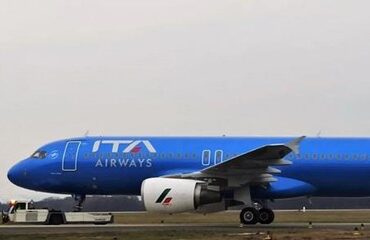
The EU Commission has approved the Lufthansa Group application to acquire a 41% stake in Alitalia successor, ITA Airways for 325 million euros. The Brussels decision was preceded by numerous concessions by Lufthansa to hand over existing slots in Rome and Milan to competitors. Through successive integration, Lufthansa is expanding its group and making Rome its sixth European hub after Frankfurt, Zurich, Vienna, Munich, and Brussels.
ITA becomes a member of Lufthansa’s multi-brand group – company courtesy
Spohr achieved his target Lufthansa CEO, Carsten Spohr has finally reached his goal. For years, he has been trying to anchor his airline more firmly in Italy. First by acquiring a stake in the chronically loss-making Alitalia and then, following its insolvency, in its successor ITA Airways. After more than a year of negotiations with the Italian Ministry of Finance, the owner of ITA and, above all, the EU competition authority, Spohr, who has an affinity for Italy, has now achieved his target. “The approval from Brussels is excellent news for ITA Airways and Lufthansa, and especially for all passengers flying to and from Italy. We look forward to welcoming ITA Airways and its outstanding employees as a new member of our airline family very soon. The decision is also a clear signal for strong air traffic in Europe, which can successfully assert itself in global competition,” Mr. Spohr stated, following the EU Commission’s decision.
Painful concessions By integrating ITA into the multi-brand and multi-hub Lufthansa Group, Lufthansa is strengthening its leading position as a passenger and cargo airline in Europe. The price for this, however, is a series of concessions demanded by the Brussels competition watchdogs for their approval of the merger. For example, ITA must give up slots at city-centered Milan Linate Airport to competitors, in order to prevent a dominant market position. EasyJet has already announced that it intends to set up a base at Linate. In addition, Lufthansa and ITA have to hand over traffic rights for transatlantic flights at Rome Fiumicino Airport, to rivaling SkyTeam members: Air France-KLM and Delta Airlines. Both are two bitter pills for the Lufthansa Group, but probably bearable as Italy is Lufthansa’s strongest market outside Germany. This should now be further expanded, which also applies to air freight activities since northern Italy, in particular, is highly industrialized and therefore extremely attractive for the cargo business.
Air Dolomiti faces uncertain fate “Despite the comprehensive and far-reaching concessions, the investment in ITA Airways strengthens the Lufthansa Group’s position in global competition. We will make ITA Airways a strong and successful part of our company and thus secure its future as an international airline and strong brand. ITA Airways will support us in further expanding our position as Number One in Europe,” Mr. Spohr declared. To this end, talks are currently underway to include ITA in the Star Alliance airline grouping. Shortly after its foundation, the carrier joined the competing SkyTeam Alliance. However, it is still unclear what will become of the Lufthansa subsidiary (100%), Air Dolomiti, which mainly operates feeder flights from northern Italian cities to Munich. Whether the 1991-founded and Verona-based airline will remain part of the group’s multi-brand system might probably only be decided once Lufthansa increases its stake in ITA from 49% to 80% for a price of 800 million euros. This is expected to take place a year after closing. The Italian Ministry of Finance is to retain 20% of the ITA shares.
Whether it is TIACA, IATA Cargo or Air Cargo Europe – almost every air freight conference places an emphasis on the topic of retaining young talent in the industry. This was also the case last week, in Frankfurt, at a Fireside Chat with the Young Air Cargo Executives (YACE) and Nina Strippel. Nina is Managing Director Germany and Vice President Poland at Wallenborn Transports, and has over 25 years of airport experience. Her topic was ‘Unlocking the secrets of success for the next generation of air cargo executives’.
The YACE team, a broader group of young talents and new entrants in air cargo and logistics, is one of the key initiatives of the Air Cargo Community Frankfurt e.V. At this particular event, 8 members of the YACE team – 3 women and 5 men – gathered in Wallenborn’s Frankfurt offices. The meeting offered the young professionals a chance to engage with an accomplished leader, hear about her career journey, the lessons she has learned along the way, and her thoughts on the future of the air cargo industry.
Nina Sippel unfolds avenues for young talent – photo: private
A journey from passenger services to air cargo Nina Strippel’s career path reflects an evolution of interests and a willingness to adapt. Starting in passenger services, she eventually found her place in the air cargo sector, a field she now describes as dynamic and full of opportunities. Making the transition required resilience, curiosity, and the ability to navigate change. As a senior leader at Wallenborn, Nina manages the company’s representations in Germany and Poland, helping to drive their growth and impact in the air cargo industry. Wallenborn Transports is known for its reputation and commitment to delivering high-quality services across Europe, and Nina’s leadership continues to contribute to the company’s enduring success. Her story resonated with the attendees, offering a real-world example of how embracing change and staying committed can lead to unexpected opportunities.
Three principles for career growth During the Fireside Chat, Nina highlighted three key principles that have shaped her career and can guide others in theirs:
Engagement Nina spoke about the value of being fully committed to one’s work. Whether leading a team or tackling day-to-day tasks, she emphasized the importance of taking responsibility and showing genuine dedication to achieving goals.
Adaptability In an industry marked by constant change, Nina shared how remaining flexible and open to new challenges has been instrumental in her success. She encouraged attendees to view change as a chance to grow rather than an obstacle.
Patience Patience, combined with persistence, has been another cornerstone of Nina’s approach. She reflected on how enduring challenges and waiting for the right opportunities have played a significant role in her professional career.
Empowering talent: a leader’s role A significant portion of the discussion revolved around Nina’s approach to leadership and talent development. She firmly believes that recognizing and nurturing talent is one of the most rewarding aspects of her role. “Identifying potential isn’t just about technical skills – it’s about seeing the bigger picture,” Nina explained. She shared how mentorship and creating opportunities for others have been integral to her leadership journey. By fostering an environment where individuals feel valued and supported, she ensures her teams are motivated to contribute to Wallenborn’s continued success. Nina also reflected on advice she received early in her career: “Promote those who are better than you.” This philosophy has shaped her leadership style and her commitment to empowering her team members to grow beyond their current roles. Wallenborn’s culture of mentorship and development plays a critical role in this process, ensuring that the next generation of professionals is prepared to meet future challenges.
Leadership insights and industry trends The fireside chat provided an opportunity to discuss broader themes affecting the air cargo industry. Nina touched on the role of digitalization and sustainability, both of which are reshaping the sector. She acknowledged the challenges these changes bring, but also highlighted the opportunities they create for innovation and growth. Nina encouraged the YACE group to think about how these trends can be leveraged to make air cargo more attractive to young talent, emphasizing the importance of mentoring and outreach in building the next generation of industry leaders. At Wallenborn, innovation and sustainability are core values, ensuring that the company remains a forward-thinking leader in the transportation and logistics space.
Creating a path for future professionals The event was not only an exchange of ideas but a call to action. Discussions explored how young executives can inspire others to pursue careers in air cargo. From showcasing the dynamic and innovative nature of the industry to developing mentorship programs, the session was filled with actionable insights for fostering interest in this vital sector.
An informal yet impactful gathering The fireside chat’s informal setting encouraged open dialogue, allowing participants to ask candid questions and share their aspirations. The relaxed atmosphere fostered genuine connections between attendees and provided a platform for meaningful conversations about career development. For the YACE community, the event reaffirmed the importance of peer learning and mentorship in professional growth. It also highlighted the value of creating spaces where young professionals can engage directly with industry leaders, gaining insights that go beyond textbooks or formal training programs.
A milestone for YACE and the air cargo industry This fireside chat with Nina Strippel marked another milestone in YACE’s mission to empower young professionals and shape the future of air cargo. By connecting emerging talent with experienced leaders, YACE continues to drive innovation, inclusivity, and excellence in the industry. As the air cargo sector evolves, events like these underscore the importance of collaboration, learning, and fostering the next generation of leaders. For the participants, the evening was not just a conversation – it was a step toward building a brighter future for air cargo.
CargoForwarder Global’s ‘Spotlight On…’ series highlights the manifold functions involved in ensuring smooth, efficient, and safe logistics services within air cargo. Certain freight projects may require flexible solutions – from sourcing the right type of aircraft for the job, through to ground transport solutions, crew, maintenance, insurance contracts, AOG or Onboard Couriers, and all kinds of other ad hoc aviation needs. Air Partner is a long-established solution provider in this context. CargoForwarder Global heard from Eliska Hill, SVP Cargo at Air Partner, as to what her role entails, and her thoughts and advice for those wanting to join the air cargo industry.
Inspire more women to join the air cargo industry. Image: Eliska Hill
CFG: What is your current function and company? And what are your responsibilities? EH: I am the Senior Vice President of Cargo for Air Partner, a Wheels Up Company. My role mainly involves driving strategic growth across our UK and ROW markets. I lead our teams in ensuring smooth operations, exploring new opportunities, and building Air Partner’s presence in key regions worldwide.
CFG: What does a normal day look like for you? EH: As every day is so dynamic in the world of cargo and logistics, a ‘normal’ day is hard to define. There is always something new happening in the industry and things can change in an instant, so I am always engaged and adaptable and lead our team to function the same way.
CFG: How long have you been in the air cargo industry, and what brought you to it? EH: I’ve been in the air cargo industry for almost three decades. My journey began with a true love of aviation. Originally, I had wanted to be a pilot, which was something I had been interested in since childhood, but as I became more involved in the aviation space, I found my first role working for a cargo carrier and have fully embraced the industry ever since. I also spent 18 years living in the Middle East.
CFG: What do you enjoy most about your job? EH: What I love most about my job are the opportunities for unique and incredible global experiences. Cargo has brought me interesting challenges that continue to shape my career and perspective every day. Especially at Air Partner, our bespoke services really give our cargo operations the ‘white glove’ experience, and that is something I want to showcase more across in our industry.
CFG: What do you see as the greatest challenges in our industry? EH: One of the biggest challenges we face is the constant demand for agility in a world where variables such as fuel costs, global crises, and changing regulations can impact operations overnight. The need for a highly efficient service requires innovative solutions, and I see this as a critical focus area for our industry moving forward.
CFG: What advice would you give to people looking to join the air cargo industry? Any particular training they should aim for? EH: For anyone looking to enter the air cargo industry, my advice would be to get as much experience as possible in logistics, commercial strategy, and customer relations. The industry is fast-paced and highly interconnected, so having a versatile skill set is a great advantage. Also, as one of a small group of female leaders in this industry, I particularly want to encourage and inspire more women to enter this space.
CFG: If the air cargo industry were a film/book, what would its title be? EH: If I had to name a film or book that captures the spirit of the air cargo industry, I’d probably call it ‘Wings Across Borders’. The title reflects the interconnected nature of our work across many borders, and the critical role air cargo plays in connecting people, industries, and economies worldwide.
Thank you, Eliska, for sharing your experience.
If you would like to share your personal air cargo story with our CargoForwarder Global readers, feel free to send your answers to the above questions to cargoforwarderglobal@kopfpilot.at We look forward to shining a spotlight on your job area, views, and experiences.
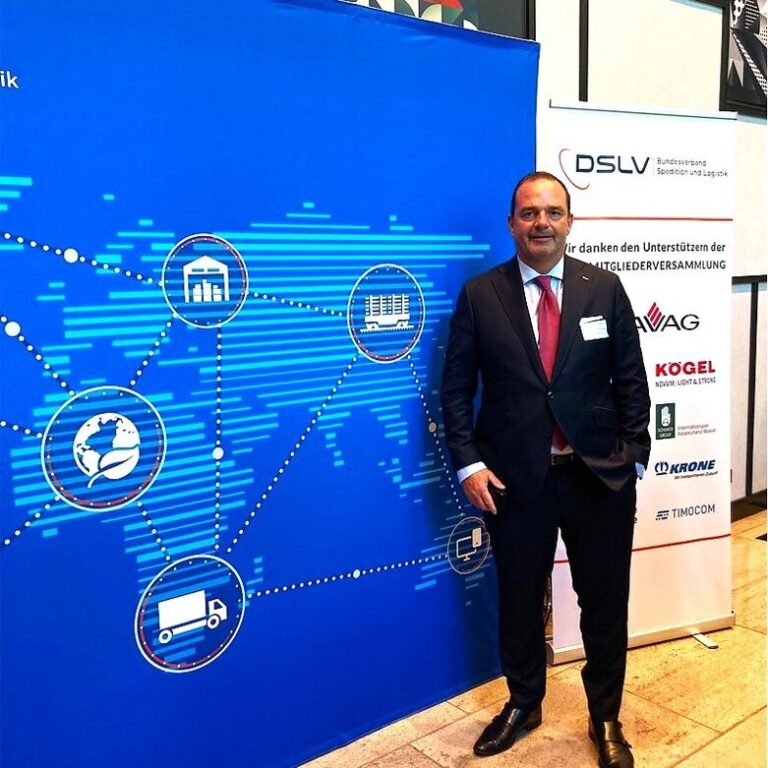
This year’s Frankfurt-held conference of air freight agents (organized by the forwarding association, DSLV), focused on the challenges the industry is facing and how shortcomings can be overcome. The result was a very mixed picture drawn by the 75 attendees. Fraport’s intentions to build a new Logistics Center West, was highly praised at the meeting. The project, which is part of the operator’s Masterplan 2030, should give the industry a new boost.
The delegates first had to let off steam. So, they named the deficits that they struggle with on a daily basis and that need to be overcome. That aviation in Germany is taxed way too high compared to other EU countries, was a key topic high on the DSLV agenda. To avoid skyrocketing expenditures, freight carriers turn their backs on Germany and land in Belgium, France or the Netherlands, instead. The often-repeated message was that the cost avalanche scares airlines off. An alarming tendency, summarized Timo Stroh, Chairman of the air freight forwarders represented in the association of German air freight and logistics agents (DSLV). “The price shock leads to a gradual loss of our competitiveness,” he warned. Addressing policymakers directly, he demanded to do away with inefficient and costly bureaucratic procedures and advocated for an EU-wide level playing field in air freight security and charges.
Cargo veteran Timo Stroh moderated the DSLV event, picture: TS
Promising projects In contrast, one positive signal was the intended construction of a Logistics City West, documented in Fraport’s Cargo Masterplan 2030 and presented by Pierre Dominique Prümm, Fraport’s member of the Executive Board. But what exactly do the freight agents expect from the infrastructural measure? CargoForwarder Global (CFG) asked Timo Stroh (TS) on the sidelines of the meeting. Here is what he said:
TS: Our members expect clear benefits resulting from both programs. The planned investments in digitalization and space development are essential for increasing the efficiency of processes, reducing idle times and enhancing the competitiveness of Frankfurt Main Airport (FRA) in cargo altogether. In particular, the creation of additional space for ground handling agents with direct apron access and the prospect of a trimodal hub from 2030 onwards, demonstrate that Frankfurt is on the right track to master future challenges in air cargo. Basically, the freight forwarders support the masterplan presented by the operator and welcome the initiative of building the Logistics City West, reducing operational constraints and time losses.
CFG: However, DSLV delegates also complained about the constant head wind the industry is facing. TS: And they are right. To name the gravest obstacles in short: Excessive bureaucracy, unequal competitive conditions within the EU, and the high-cost level at German airports. To remedy them, freight forwarders expect greater support from politicians and authorities. Long-term growth and innovation can only be secured through positive framework conditions, including a reduction in taxes and levies.
CFG: When listening to the agents’ complaints, one gets the impression that the bureaucracy has a life of its own and is unfamiliar with the day-to-day running of the business. True or false? TS: The fact is that the extremely restrictive German security practice in air freight compared to schemes in the Netherlands, Belgium or France, places a heavy burden on the freight companies involved. This policy practiced by the regulator, LBA, generates additional costs and delays processes but does not lead to a higher level in air freight security. This said, we urge the authorities to step up efforts to harmonize procedures and digitalize processes while maintaining the highest security standards. In addition, regular dialog with industry is important to ensure that new measures are practicable and do not place an excessive burden on the shoulders of the companies affected.
Air freight faces a technical revolution Technological innovations will shape air freight in the coming years, was another topic listed on the DSLV agenda. Solutions developed today to improve processes tomorrow, were shown by Harald Sieke (Fraunhofer), Philip Rauchhaus and Jasmin Kaiser (Lufthansa Cargo) in their presentations. In particular, generative AI, robotics and automation were mentioned. Combined, they can increase the efficiency of air freight and, at the same time, provide answers to demographic developments. These technologies will not only help to alleviate shortages of skilled workers, but also ensure competitiveness through intelligent, scalable solutions. Chairman Timo Stroh concluded: “Despite political and economic uncertainties, we remain optimistic. Air freight connects us, overcomes challenges and opens doors for sustainable growth across borders. But aviation in Germany needs more thrust to climb again.”
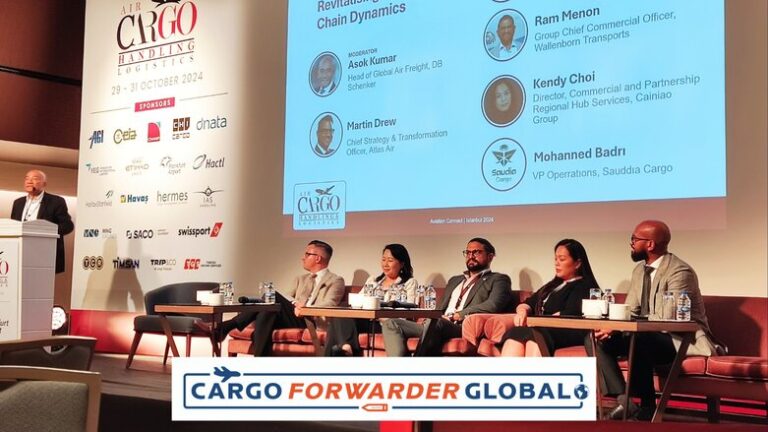
That was the title of a panel at the Aviation Connect in Istanbul at the end of OCT24. A vast subject, given the scope of what constitutes supply chains, as was acknowledged by moderator, Asok Kumar, Head of Global Air Freight at DB Schenker, in his opening summary. “It’s avery broad topic. Understanding the latest trends is critical and important: supply chain dynamics, continuity, digitization, AI, sustainability, Mergers and Acquisitions in a very fragmentized industry…,” he listed before inviting his panelists to the stage to discuss the industry’s emerging trends, challenges, and strategies to navigate the evolving landscape.
Joining him, were Ram Menon, Group Chief Commercial Officer of Wallenborn Transports; Martin Drew, Chief Strategy & Transformation Officer of Atlas Air; Thomas Yu, Senior Director, Global Hub Operations and Product Development at Cainiao Network; Kendy Choi, Director Commercial & Partnership Regional Hub Services at Cainiao Group; Mohanned Badri, Vice President Operations at Saudia Cargo; and Joanna Li, Executive Director – Commercial and Business Development at HACTL.
A multitude of challenges demanding agility and collaboration. Image: CFG/bg
Capacity constraints are a growing challenge In answer to the question of the latest trends affecting supply chain dynamics, the capacity crisis clearly took first place when it came to the industry’s challenges. Martin Drew noted that despite being the world’s second-largest cargo airline, demand consistently outpaces supply. “Capacity shortages will continue for the foreseeable future,” he predicted, pointing to delays in production, new aircraft technologies and certification for converted freighters. The industry eagerly anticipates Airbus’s widebody freighter debut in 2026, yet systemic pressures will remain. Mohanned Badri highlighted the dual challenge of rising demand and smaller passenger aircraft replacing larger models, further straining capacity. “Older aircraft consume much fuel and are therefore less efficient, and newer models don’t meet demand,” he stated. “A clear trend is value creation for customers,” he noted, underlining the importance of partnerships such as Saudia Cargo’s collaboration with Cainiao in Liège, to expedite deliveries. Kendy Choi agreed and stressed the need for integration across the supply chain. “Cost barriers must come down, and collaboration is key,” she argued, aligning with Joanna Li, who advocated for agility and customer-centric solutions to address these constraints.
e-commerce is a double-edged sword e-commerce has been both a boon and a challenge for the industry. Li highlighted its exponential growth and its impact, especially the handling of complex shipments such as lithium batteries which require specialized safety measures. “e-commerce brings business but significantly increases risk,” she explained. Thermal detection systems, Lithium Battery dogs and other initiatives all require investments to ensure safe handling and transport. Drew acknowledged the growing flow of goods from China to Latin America and Mexico, driven by e-commerce. “It’s safe to say e-commerce will always find a way,” he remarked, underscoring its role in reshaping global trade routes.
Sustainability: aspirations vs. practicality With the International Civil Aviation Organization (ICAO) setting ambitious sustainability regulations for 2028, the panelists debated the feasibility of these goals. Drew’s opinion: “I don’t see how 2028 will be achievable. There are 633 widebody freighters in the world. 103 of those (mostly MD11) are over 30 years old,” he illustrated. Though Atlas Air pushes SAF, it is extremely expensive, and not enough is being produced. “How much of that [cost] can be passed on to the customer?” he queried. Badri, too, warned of skyrocketing costs as older, less fuel-efficient aircraft are phased out. “We all support sustainability, but it needs to make sense,” he argued, echoing Drew’s concerns. On the ground, Ram Menon highlighted the high costs of transitioning to hydrogen and electric vehicles – including the lack of infrastructural support, as well as the expensive running costs. “Hydrogen is 115% more expensive to run than diesel RFS,” he revealed. “Everyone wants sustainability, but no one wants to pay for it,” he said, emphasizing the importance of optimizing current diesel fleets to balance cost and emissions.
Technological integration requires a mindset shift Technology is a driving force behind supply chain transformation, Choi explained, describing it as a “mindset,” and urging stakeholders to integrate systems rapidly to unlock e-commerce’s full potential. Drew lamented the slow pace of digitalization in cargo compared to passenger aviation, while Badri celebrated the transformative impact of artificial intelligence (AI). Menon called for improved communication and collaboration, particularly for road feeder services (RFS), which often bear the brunt of inefficiencies. “Turnaround time is our biggest challenge,” he stated, advocating for agility, flexibility and clear communication across the supply chain to mitigate delays.
Collaboration and agility are key Collaboration came up time and again during the discussion. Li urged stakeholders to involve ground handling agents (GHAs) in planning and decision-making, highlighting their critical role in ensuring smooth operations. “We can be the stopper if something doesn’t work,” she cautioned. Menon echoed this sentiment, emphasizing the shift away from traditional silos toward a more integrated approach. “The old boys’ club of cargo is changing,” he declared, a sentiment shared by Drew, who noted the increasing role of partnerships in driving value and efficiency.
The road ahead As the supply chain industry grapples with all these challenges, the consensus among the panelists was clear: adaptability, innovation, and collaboration are paramount. “Post-COVID, our industry has transformed completely,” Badri concluded, with e-commerce shaping the future in ways no one predicted a decade ago. And while sustainability, capacity, and digitalization pose significant hurdles, the industry’s resilience and ingenuity offer hope. As Choi aptly summarized, “Technology is no longer just a tool – it’s a mindset. To thrive, we must integrate faster and smarter.”
For a long time, cargo only played third or fourth fiddle at the airline. However, the wind has changed since 01FEB24, when Peter Gerber, the former head of Lufthansa Cargo and Brussels Airlines, took the helm at the leisure airline. He attaches great importance to the cargo business and made this very clear in his presentation at the annual meeting of the German Freight Forwarders Association (DSLV), last week in Frankfurt.
During the COVID-19 pandemic, Condor decided on a fleet rollover: B767 out, A330-900 neo in. It was a brave move in extremely difficult times for aviation, but a rewarding one as is now known. Currently, the company operates seventeen of these Airbus variants. Number 18 will arrive in Q1/2025, followed by three more A330-900 in the next two years. The fleet revamp increases the transport capacity per flight compared to its Boeing predecessor, and pre-built standard pallets (BUPs) can be loaded without any hassle. This saves time on the ground and notably eases cargo handling.
Peter Gerber heads Condor since FEB2024 – photo: courtesyThiloSchaefer
From seasonal to year-round services The fleet rollover also enables Condor to gradually expand its long-haul network and offer the market year-round flights to key destinations such as New York, Miami, Seattle, Toronto, Cancun, and lately even Bangkok, Gerber emphasized in his speech. “We have also increased the number of interline agreements, allowing us to service up to 300 destinations directly or indirectly,” added Thilo Schaefer, Director Cargo at Condor and, like his boss, Peter Gerber, long-time executive of Lufthansa Cargo. Condor’s co-loading partners are – amongst others – DHL for connecting with South America; Copa Airlines in the Dominican Republic; Avianca in Cancun, Mexico; and Thai Vietjet Air in Bangkok, Thailand.
New (digital) product offerings A second important step for playing a greater role in air freight was Condor’s decision to expand its digital services across all eBooking platforms and establish a close cooperation with HAUS61, a German start-up accelerator specializing in air cargo. The enhancement of the product portfolio has also begun. Alongside General Cargo, specials such as Perishables, Dangerous Goods, AVI and Mail were added to its offering. What pleases Thilo Schaefer most is the fact that air freight plays a more prominent role in the carrier’s network decisions. “The contribution of cargo is now more than ever considered when evaluating whether a route generates profits all year round or can only be operated profitably on a seasonal level,” the executive reasons. The growing role of air freight within the company is also documented by the fact that new employees are to be hired. “We will soon be welcoming two new colleagues to our team,” announces Schaefer. This will make a total of five employees who take care of sales steering, product management, digitalization and other cargo-related issues. That may not sound like much, but the operational side of the business is handled by the French agent, ECS, based on a Total Cargo Management contract with Condor.
The company wants to use the test series to gain clarity on several research objectives: The operational cost of the hydrogen truck, in comparison to Diesel and e-powered vehicles, its reliability in daily ops and if H2 is supplied in sufficient quantities and on time to guarantee constant refueling processes. The test vehicle now presented for the first time should be ready for use in mid-January 2025.
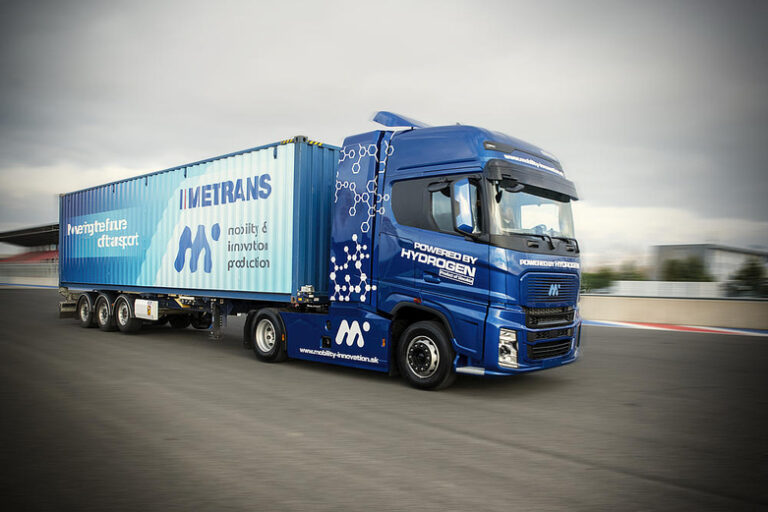
To be seen on the roads of Slovakia come 2025: H2 test truck operated by Metrans – illustrations: courtesy: HHLA
Metran’s management chose Slovakia as the test region for the deployment of the hydrogen-powered truck because the company Mobility & Innovation Production s.r.o (MIP) is based there. A letter of intent has now been signed between the two parties to jointly test the first hydrogen-powered truck in Slovakia in operational service. Metrans will initially deploy the vehicle to feed goods into its three rail terminals it operates in Slovakian and for forwarding incoming goods to local customers.
Dense intra-European rail network The East European country is part of the company’s pan-European railway network which includes hubs in Dunajska Streda, Zilina and Kosice, offering rail connections to 50+ ports and cities stretching from Rotterdam, Hamburg, Koper, Prague, Warsaw to Istanbul. The company is the market leader for container transportation in seaport hinterland traffic across Central, Eastern and South-Eastern Europe. It runs inland terminals, operates special locomotives, and its rolling stock enables it to offer a range of products such as customs clearance or depot and shunting services in addition to railing solutions.
Green agenda Stepping out of fossil fuel burn stands very high on Metrans’ agenda, emphasizes management. Evidenced, for instance, by cargo trains in Austria and Germany that are powered exclusively by green energy. Where CO2 emissions cannot be avoided, they are offset by certified projects. The test of the H2 truck in Slovakia concurs with the approach to scale down fossil fuel burn whenever and wherever possible.
The future of transportation is based on hydrogen drives, says Hamburger Hafen und Logistik AG
Compared to other electric vehicles, the MIP truck offers an extended range for long-distance trips. The 48-kilogram hydrogen tank allows a range of at least 600 kilometers without the need to refuel the vehicle. As part of the trial, the hydrogen used to fuel the truck comes from renewable energy sources. “Refueling will take place at permanently installed H2 filling stations whose network still has major gaps. That’s why we will place mobile filling stations at places where needed for securing energy supply,” Metran spokesperson, Karolin Hamann told CargoForwarder Global.
Peter Kiss, CEO of the Metrans Group, stated: “We are delighted to have the opportunity to test MIP’s new hydrogen-powered truck for our container transport. Through innovations like this, we can offer our customers climate-friendly solutions not only by rail but also by road. This takes us another important step toward decarbonizing European logistics chains.”
Metrans aims to offer its customers fully climate-friendly transport solutions from a single source. The combination of eco-friendly rail and road transport creates significant added value. The logistics company is also part of the Clean Port & Logistics Cluster, in which terminal operator HHLA and partner companies are jointly exploring the use of hydrogen-powered equipment in port logistics.
Metrans emphasizes thatthe company has been using e-trucks for transporting containers for two years now. In addition, it runs energy-efficient electric and hybrid locomotives and electric container gantry cranes. Provided the test program yields convincing results, the e-truck fleet might be complemented by hydrogen-powered vehicles. Metrans aims to offer its customers environmentally benign solutionsfrom a single source. The combination of eco-friendly rail and road transport creates significant added value, states the company. Metrans is also part of the Clean Port & Logistics Cluster, in which terminal operator HHLA and partner companies are jointly exploring the use of hydrogen-powered equipment in port logistics. Hamburger Hafen und Logistik AG (HHLA) is the parent of rail operator Metrans.
Technical specifications of the H2 truck The hydrogen truck was built in cooperation with Ford. Slovakian manufacturer MIP claims that it is one of the most advanced hydrogen-powered vehicles using cutting-edge technologies that have not yet been implemented in commercially available vehicles yet. The integrated REFIRE fuel cell, with a capacity of 117 kW, supplies the truck with the required energy. It is the first truck in Europe to integrate the Dana Sumo motor into a heavy-duty vehicle. The maximum permissible weight is 45 tons, based on the European standard.
Based in Maumee, Ohio, USA, Dana produces innovative motor and inverter designs. Its Sumo series offers up to 430 kW of continuous power and 540 kW of peak power. In view of these performance parameters, the name’s reference to the famous Japanese Sumo wrestlers is no coincidence.
The ULD service provider has set new growth targets come 2025. CEO, Bernhard Kindelbacher explained to CargoForwarder Global in an exclusive interview, that the company aims to tap into new markets, thus expanding its global reach, and offer customers one-stop-shop ULD Management solutions through logistics services and technical innovations.
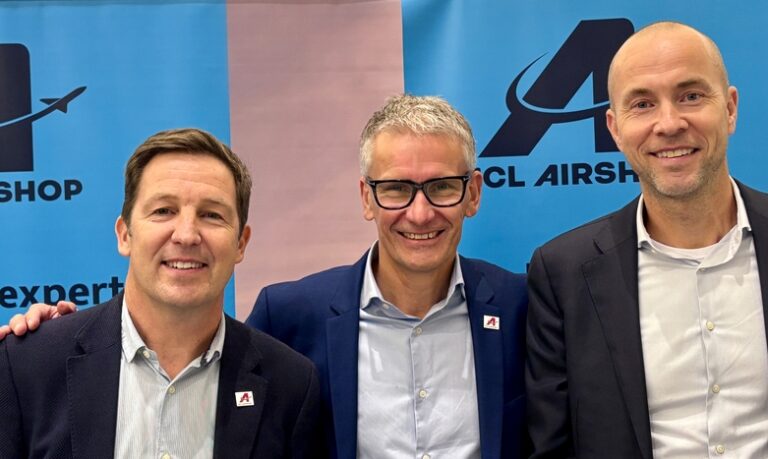
ACL Airshop’s exect team (left to right):Jasper van Gelder, Head of Global Sales & Business Development / Bernhard Kindelbacher, CEO / Jos Jacobsen, CCO – photos: company courtesy
The market for ULD service providers to secure a slice of the pie is enormous. This is because two in three airlines carrying cargo still manage their container and pallet business themselves. For ACL Airshop and its main competitors, Jettainer and Unilode, this means that two thirds of all airlines could become their potential customers. However, this figure is deceptive, as most low-cost carriers operate narrow-body aircraft that are not equipped with loading systems for containers or pallets. Yet even so, ULD service providers still face a big piece of cake that they could secure for themselves.
Three-pronged approach ACL Airshop intends to capture this potential through a combination of geographical expansion, an increase in service activities, and a smart recruitment policy. For example, there are plans to appoint a Sales Director for Japan. The name is to be announced in the next weeks. However, Kindelbacher already reveals that the candidate has a Japanese passport, which implies linguistic and cultural affinity. This personnel decision shows “that we want to position ourselves more globally in addition to our core markets of Europe and the USA. We prefer to have the regional business run by managers who are culturally anchored there, but have international experience in air freight and logistics,” explains the CEO of ACL Airshop. While penetrating the Far East stands on top of his agenda, Latin America, India, and Africa will follow suit.
Supplying the air freight industry with pallets, containers, straps and nets is ACL Airshop’s daily business
Twin-seat concept The service provider, which has dual headquarters in Amsterdam and Greenville, South Carolina, currently employs 230 people worldwide and manages a fleet of 110,000 ULDs. Greenville is also the company’s production center for nets and straps. Own staff is based at 15 airports, including key cargo hubs such as Hong Kong, Singapore, Tokyo, Shanghai, Amsterdam, Liège, Frankfurt, Milan, Dubai, Bogota, JFK, Chicago, Miami, and Los Angeles. Repair work is also carried out at most of those stations. In addition, there are agreements with local GSAs at more than 50 airports. They are responsible for providing customer airlines with the necessary ULD equipment and logistics services in time.
The company lacks recognition According to Bernhard Kindelbacher, one shortcoming is the relatively low level of awareness of his company as provider of ULD Management Services & Logistics. This is to be improved through marketing initiatives in conjunction with a refreshed brand appearance. “At the same time, we want to invest more in technical innovations in order not only to track the ULDs but move them more efficiently through the system. This will help airlines to reduce their fleet significantly and save cost.” In case a damaged container or pallet is detected, repairs can also be initiated immediately or replacements arranged faster.
Asked about the differentiation between ACL Airshop and its main competitors, Jettainer and Unilode, he mentions his company’s extremely high level of customer orientation. “I’ve been running the company for nine months now. From day one until today, I haven’t heard a single complaint from customers, which I value as a high recognition of our daily performance,” he applauds his staff’s engagement.
Not only ACL Airshop’s presence at important cargo hubs may have contributed to this, but also the company’s balanced HR policy: “We attach great importance to a healthy mix of experienced employees and junior staff. It’s all about diversity, including in terms of gender, age, and nationalities. This creates a pleasant working atmosphere. Because only those who feel comfortable at work identify with their job, their company, and customers.”