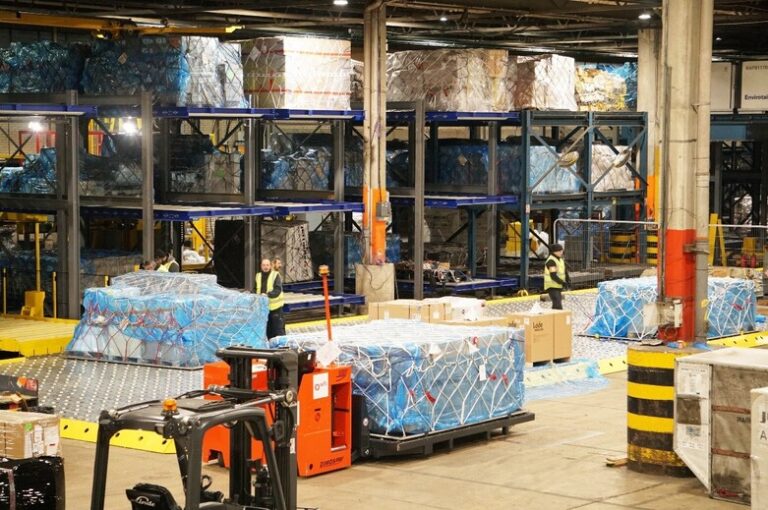
In the run-up to Christmas, American Airlines Cargo announced significant expansions and enhancement to its operations at London Heathrow Airport (LHR). Heathrow is its largest operation in Europe. The cargo division of the airline moved to a new location next to its previous two buildings, and in doing so, brought its import and export operations into a single facility. The new American Airlines Cargo facility at Heathrow measures a total of 40,000 m² – which is a 5,000 m² increase compared to the original combined facilities. That gives it almost double as much PMC pallet storage capacity. The number of landside and airside doors have increased, and there are now more X-Ray machines and build stations. These enhancements enable faster acceptance and delivery, as well as improved build-up and break-down efforts.
Bigger and better over at London Heathrow. Image: American Airlines
As well as a larger, improved facility, American Airlines has also updated its digital connection with its cargo handler, Worldwide Flight Services (WFS), to improve operational updates between WFS’s CargoSpot system and American’s iCargo platform. The expansion and technology enhancements are expected to unlock operational efficiencies and provide a better experience for customers shipping cargo in and out of London Heathrow.
Sam Mendenhall, VP of Operations for American Airlines Cargo, said: “The facility expansion is a significant milestone for us in how we operate in LHR. We are confident that the move to a larger, more uniform cargo facility, coupled with the technology enhancements with WFS, will unlock operational efficiencies and ultimately provide a better experience for our customers who ship in and out of LHR.”
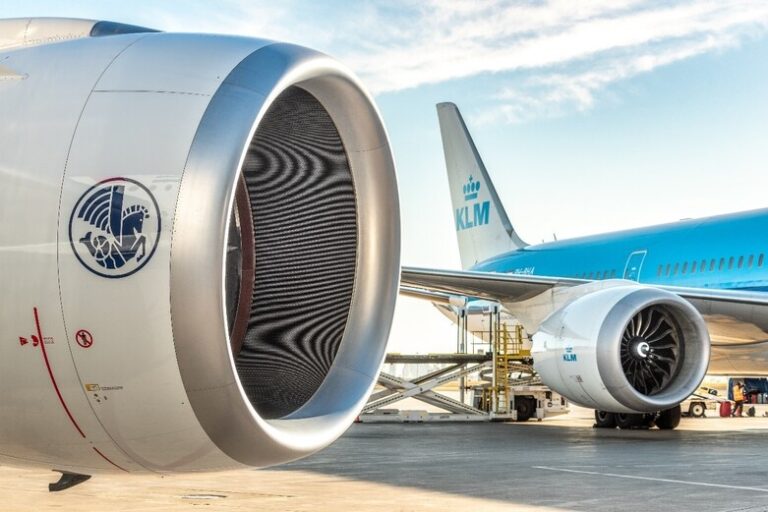
Air France KLM Martinair Cargo (AFKLMP) reported that 85% of all cargo bookings were made online last month – a record high, marking a significant milestone in its digital transformation journey. The airline lauded this achievement as proof of the success of its myCargo digital platform which, over the past eight years, has evolved from a simple quote-and-book tool into a comprehensive online service hub.
The myCargo platform, developed in-house with direct input from customers and cargo professionals, has become the cornerstone of AFKLMP’s channel strategy. It aims to meet the growing demand for seamless, round-the-clock business interactions in the cargo industry. AFKLMP has invested heavily in dynamic pricing, and leveraging data and artificial intelligence to offer real-time optimal pricing. Additionally, AFKLMP has partnered with Salesforce to develop a new global Customer Relationship Management (CRM) platform. Set to be rolled out across more than 65 offices worldwide by mid-2025, this CRM system aims to generate new benchmarks for service levels in the cargo industry.
To complement its digital advancements, AFKLMP has expanded its service offerings. The introduction of the PLUS service level provides customers with higher commercial priority, while network expansions, particularly in Asia, support the booming e-commerce market. The company has also maintained significant cargo capacity in South America, the United States, and Africa. These strategic developments have not only generated increased customer appreciation but also reinforced AFKLMP’s position as a leading European carrier throughout 2024. It plans to continue its commercial transformation in 2025 as it evolves to meet the changing needs of its customers.
GertJan Roelands, Senior Vice President Commercial at Air France KLM Martinair Cargo, stated, “We have high hopes for 2025, when we will continue to take bold steps in our commercial transformation by offering unique, next-level service propositions to meet the increasing demands and needs of our customers.”
NAV AERO Global Cargo GSSA Network has announced a significant expansion of its services through a new partnership with LOT Cargo. This strategic alliance is in line with NAV AERO’s focus on broadening its airline portfolio and enhancing its global cargo capabilities.
LOT operates a mixed fleet of Boeing, Bombardier and Embraer jetliners. Displayed here: B787-800 – company courtesy
LOT Polish Airlines, established in 1929, has built a solid reputation in the cargo transport industry. With its headquarters in Warsaw and regional offices across Poland (Kraków, Wrocław, Poznań), as well as international presence in major cities like New York, Chicago, and Beijing, LOT Cargo offers comprehensive air freight services. Its advanced fleet and extensive route network connect Warsaw to key destinations across Europe, North America, and Asia. In addition, LOT Cargo offers a Road Feeder Service (RFS) for goods unsuitable for air shipment. The company’s ISO 9001:2015 certification further attests to its commitment to quality service.
NAV AERO’s clients are set to benefit from the addition of LOT as a partner, since it offers them increased flight options, optimized scheduling, and has the potential for customized logistics solutions.
In leveraging LOT Cargo’s expertise, particularly in Central and Eastern European markets, NAV AERO aims to strengthen its position in the global cargo industry and offer more comprehensive services to its customers.
Michał Grochowski, Head of Cargo and Mail at LOT Polish Airlines, commented: “Partnering with NAV AERO aligns perfectly with our mission to deliver innovative and reliable cargo solutions. Together, we are unlocking new opportunities for growth, leveraging NAV AERO’s expansive network and expertise. This partnership enhances our ability to serve clients with precision and efficiency, particularly in key markets where collaboration fosters stronger connections and solutions.”
Ralph van Eijk, Head of GSSA Network and Airline Development at NAV AERO, stated: “Welcoming LOT Cargo to our network is a significant milestone. Their extensive network and advanced fleet are a perfect match for our global strategy. This partnership empowers us to offer superior services to our clients while reinforcing our commitment to being the premier choice for air cargo solutions.”
NeX e-Commerce announced the appointment of Mandy Deakin-Snell to its leadership team. She takes on the new role of its Head of Global Academy Program, as the international expert group seeks to advance cross-border e-commerce education and innovation.
Mandy Deakin-Snell joins NeX e-Commerce leadership team. Image: Neutral Air Partner
Deakin-Snell brings a wealth of experience to her new role, having held influential positions in the logistics industry throughout her career. Her background includes General Management at TNT, Director of International Operations at DPD, and International Managing Director at the Geopost Group. Most recently, she founded and led MDS Alignment, a coaching and consulting firm for supply chain professionals.
The NeX Academy aims to transmit essential knowledge and tools to businesses and professionals involved in cross-border e-commerce. Deakin-Snell’s appointment is expected to elevate the Academy’s offerings and strengthen NeX’s position as a global leader in logistics education and innovation. As an international group of experts, NeX is dedicated to advancing the interests of the e-commerce supply chain logistics industry. The organization comprises industry-leading logistics providers committed to delivering seamless omnichannel fulfillment operations, cross-border transportation, distribution, return logistics, and end-to-end e-supply chain management.
With Deakin-Snell at the helm of the Global Academy Program, NeX e-Commerce is poised to redefine the future of cross-border trade education. Her leadership is expected to drive innovation and growth within the Academy business unit, ultimately empowering professionals and businesses worldwide in the rapidly evolving e-commerce and logistics sectors.
CEO, Justus Klüver-Schlotfeldt, said: “I am beyond excited to welcome Mandy to the team. Her unparalleled expertise, leadership skills, and talent for nurturing growth make her the perfect fit for this role. Mandy’s vision and mentorship will undoubtedly inspire both our team and program participants as we push the boundaries of what’s possible in cross-border logistics.”
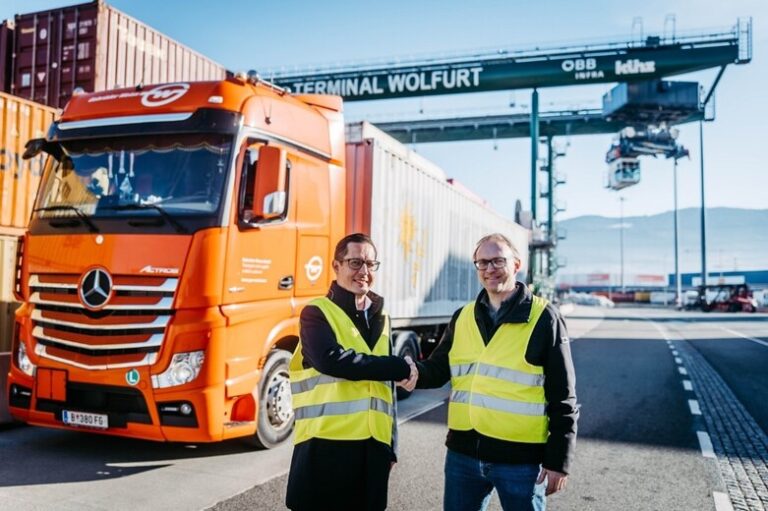
Global logistics company Gebrüder Weiss recently announced the transport – free-of-charge – of a high-performance photovoltaic (PV) system from Vorarlberg to the Palorinya refugee settlement in northern Uganda. This initiative, dubbed ‘Solar Power for Palorinya’, aims to replace outdated diesel generators with clean, sustainable energy. The new solar system is shipped in a 40-foot container from Wolfurt to Rotterdam by rail, then on to Mombasa, Kenya by sea, before completing its journey to Uganda by truck. The project was spearheaded by Catholic missionary, Erich Fischnaller, who has been instrumental in developing educational and vocational programs in Palorinya since 2016. The settlement, home to over 125,000 people, primarily houses refugees fleeing civil unrest in neighboring Sudan.
Bilgeri and Burtscher. Image: Gebrüder Weiss
Fischnaller’s work has focused on providing young refugees with skills to build independent lives. Several training workshops have been established, offering instruction in carpentry, metalwork, and baking. However, these facilities have relied on costly and environmentally harmful, old, diesel generators for power.
The donated PV system, capable of generating up to 200 kilowatts of off-grid electrical energy, will transform the settlement’s power infrastructure. Companies from Vorarlberg and Liechtenstein have generously contributed all necessary components for the system. This initiative not only addresses immediate energy needs but also capitalizes on Uganda’s equatorial location, which provides consistent, intense sunlight year-round. The switch to solar power will significantly reduce fuel costs and environmental impact, marking a sustainable step forward for the Palorinya settlement.
Andreas Bilgeri, Manager of Gebrüder Weiss Air & Sea Wolfurt, explained: “This is an exemplary initiative by companies in the region that helps to give the local population a perspective for the future – and it also makes ecological sense. Solar energy instead of fossil fuels: a sustainable aid project that we are happy to support.”
Aid campaign coordinator, Matthias Burtscher, remarked: “I am pleased to partner with Gebrüder Weiss, a globally experienced logistics company based in Vorarlberg. Their expertise streamlines our coordination processes and ensures the solar system will arrive safely and on schedule.”
Around 4% of all air cargo tonnage transported globally each year is made up of temperature-controlled pharmaceutical shipments. This highly valuable and sensitive air cargo commodity has enjoyed double-digit growth recently, and its requirements are changing as both the industry and quality stipulations evolve. CargoForwarder Global’s guest author, Delphine Perridy, Chief Commercial Officer at Envirotainer, explores six essential predictions shaping pharmaceutical logistics and cold chain for the year ahead.
Delphine Perridy, CCO at Envirotainer. Image: Envirotainer
The pharmaceutical cold chain is becoming a cornerstone of global supply chains, shaped by new regulations, innovation, and the need for resilience.
In 2024, the industry witnessed remarkable innovations across the broader pharmaceutical distribution landscape. One standout development was the rapid growth of direct-to-patient logistics. Pharmaceutical companies have made strides in delivering treatments directly to patients’ homes. These advancements not only enhance patient access but also reflect a wider trend towards personalized, patient-centric supply chains.
Hard on the heels of a year shaped by innovation, sustainability, and security, 2025 now promises the pharmaceutical industry even greater transformation.
Strengthening supply chain resilience Over the past year, global tensions and geopolitical conflicts have created ongoing logistical disruptions and bottlenecks. These challenges can vary from port closures to sanctions or trade restrictions, all of which impact delivery efficiency and cost. Such issues expose vulnerabilities in the pharmaceutical supply chain, leading to significant delays or, in worse cases, spoiled or cancelled shipments.
In response, companies in 2025 will need to diversify logistics strategies and focus on working with partners who are able to quickly adapt in response to changing circumstances or risks in the supply chain. Cold chain solutions will also evolve, with a growing emphasis on redundancy and alternative routes to avoid disruptions and support the reliable delivery of critical medicines.
Elevating sustainability standards Following on from COP29, the call for sustainable practices in pharmaceutical delivery is louder than ever. This summit marked a pivotal moment, as countries are now urged to integrate health considerations into their Nationally Determined Contributions, which will significantly impact the pharmaceutical industry.
This increased pressure will lead pharmaceutical companies to evaluate and adapt their ESG requirements, making sustainability a non-negotiable factor for suppliers. Building on this expectation, advanced cold chain providers are shifting their focus from merely avoiding waste to finding the most sustainable way to distribute essential medicines. This includes both reusable equipment and optimized single-use solutions that are lighter, use fewer raw materials, or are biodegradable, enabling effective resource use even when disposability is necessary.
As environmental awareness continues to grow, sustainability standards across the industry will continue to rise. The next step for the industry is to review and address supply chain emissions, which are often the hardest to reduce. Companies can achieve this independently, but submitting emissions targets to the Science Based Targets initiative provides a public demonstration of their commitment to taking meaningful action.
Expanding into emerging markets Despite global tensions and geopolitical conflicts, the pharmaceutical industry is increasingly expanding its reach into underserved markets – and this reach will continue to grow next year. This push is essential for bringing critical medicines to new communities, yet logistics and storage infrastructure in these regions can create additional complications.
Cold chain logistics rely on stable, temperature-controlled environments to protect sensitive medicines. However, outdated infrastructure in emerging markets often means smaller storage spaces, unreliable electrical supplies, and no return logistics for reusable packaging. These factors make it problematic for cold chain providers to maintain the necessary conditions consistently.
To overcome these challenges, market expansion will require specialized packaging and logistics solutions that address local infrastructure limitations. These adaptations will be key to enabling successful market entry and supporting long-term growth.
Rising mergers, acquisitions, and strategic partnerships We witnessed an increase in merger and acquisition activity in the pharmaceutical industry in 2024, and we expect to see this continue to rise in 2025. Pharmaceutical companies are also increasing their strategic partnerships with CMOs and CDMOs to accelerate innovation and reduce time-to-market. By pooling resources and expertise, companies will be able to streamline the R&D process, paving the way for faster production and delivery of high-demand drugs.
The beneficial outcomes will be set to multiply if companies integrate cold chain logistics into these new partnerships. Not only will this support the rapid scale-up of new therapies, but it will also help build a robust supply chain for new markets.
Adapting to small-batch shipments As the demand for smaller, high-value pharmaceutical shipments grows, cold chain logistics will need to become more agile and adaptable to meet these evolving needs. These solutions are essential to ensure highly sensitive medicines, such as personalized treatments, are stored and transported under precise temperature-controlled conditions.
Additionally, AI-driven clinical trials are accelerating drug development, leading to faster production cycles that also require efficient, responsive cold chain solutions to handle smaller but high-value, sensitive shipments.
Finally, the growing prevalence of decentralized clinical trials adds to the demand for robust cold chain logistics. These trials, which involve direct delivery of experimental therapies to patients’ homes, rely on precision cold chain networks to maintain the integrity of highly sensitive medicines.
Optimizing cold chain with technology The potential of AI will extend beyond R&D to supply chain management next year. Organizations will begin to use the technology to minimize risk, reduce costs and boost efficiency. Cold chain providers can learn from tech giants like Amazon and Alibaba, who use AI and data-driven insights to improve logistics and access to treatments. While their focus isn’t exclusively on the cold chain, their innovations may offer valuable ideas for delivering sensitive medicines more efficiently.
Finally, blockchain’s potential to increase supply chain transparency through decentralized, immutable records makes it a key technology to watch. Deloitte’s case studies already demonstrate its practical application in ensuring product integrity, underscoring the importance of blockchain in advancing pharmaceutical logistics.
2024 saw steady progress in pharmaceutical logistics, with innovations continuing to shape the future. As we move into 2025, the focus will be on smarter packaging, agile supply routes, and solutions that address the growing complexity of global healthcare demands. The year ahead holds significant opportunities for companies willing to adapt, collaborate, and lead the charge in delivering medicines to underserved communities, improving availability, and saving lives.
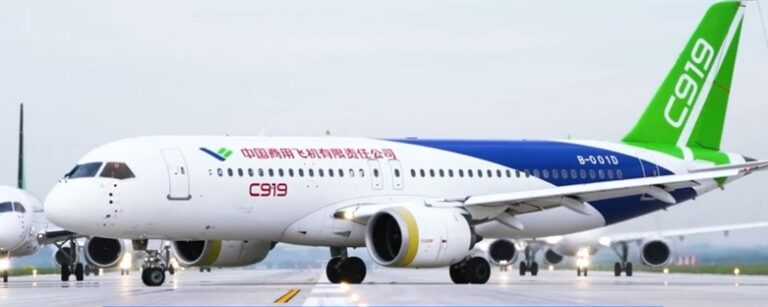
Until now, Boeing and Airbus have dominated the global market for passenger aircraft with 100 or more seats, and freighter versions. But the era of the duopoly is coming to an end. A new, Chinese entrant, COMAC is pushing into the market: first with regional aircraft and, from 2027 onwards, also with its long-haul C929 version. This aircraft is set to break the dominance of the A350 and B787 on intercontinental routes.
COMAC has secured orders for 300+ C919 aircraft – company courtesy
Nicole Dreyer-Langlet, Member of the Management Board of Airbus and Head of Research and Development, Germany, lays it out straight: “The times for Airbus and Boeing are getting rougher since a new Chinese competitor has emerged on the horizon.” This was stated by the Airbus executive on 23OCT24, at the Hamburg-held Hydrogen Technology Expo Europe.
New kid on the block She was referring to COMAC. This is an acronym that civil aviation will soon have to get used to. It stands for Commercial Aircraft Corporation of China, an aircraft manufacturer founded on 11MAY08, and based in Shanghai. Currently, COMAC’s portfolio includes a regional jetliner (C909), and a narrowbody (C919). The first C919 was delivered to China Eastern in 2022, followed by twelve aircraft of the same model in 2024. Production of the jetliner is slowly picking up pace amid hundreds of firm orders as the major Chinese airlines – China Eastern, Air China, and China Southern – placed firm orders for more than 300 C919s. That plane type is the counterpart to the Airbus A320 and the Boeing 737.
COMAC relies on massive state aid COMAC is taking a very systematic approach to its government-led expansion strategy. In the first phase, its aircraft are to be thoroughly tested in terms of their flight characteristics and operational capabilities on domestic routes. Only then is it planned to operate them on routes in Southeast Asia. However, the necessary international airworthiness certificates are still missing.
As far as the long-haul version, C929, is concerned, it is still in the design phase, so the production process is not expected to start until 2027, at the earliest. One open question, however, is which turbines will go under its wings as there are no Chinese-produced engines for commercial aircraft. It is therefore expected that COMAC will opt for either the Rolls Royce Trent 1000/XWB engine or the General Electric GEnx, at least as long as no comparable engine in terms of performance is available that has been developed in China.
The extent to which COMAC’s construction program also includes cargo aircraft is unclear. The frame maker prefers a very restrictive communication policy, which is extremely nontransparent.
Series of setbacks While the Chinese newcomer is securing market share thanks to lavish state funding and orders from Beijing-controlled airlines, competitor Boeing is facing an existential crisis – at least in the commercial aircraft segment. For the U.S. manufacturer, plagued by a series of setbacks, 2024 was an annus horribilis. This is reflected in the share price. With a 25% drop in share value, Boeing is the biggest annual loser in the Dow Jones Industrial Index, which lists the 30 most important, market-leading U.S. companies. The successive decline is largely self-inflicted due to quality deficiencies leading to various incidents and the grounding of 171 B737-9 MAX aircraft by regulator FAA,serious management mistakes, supply chain disruptions, and strikes which further complicated the frame maker’s situation.
The Airbus-Boeing gap is widening Boeing’s arch-rival, Airbus, on the other hand, reported a comparatively positive development for 2024. In contrast to its U.S. rival, the European airframer suffered no serious technical breakdowns or interventions by regulators in 2024, although it also had to contend with global supply chain hiccups. And in terms of deliveries, Airbus widened the gap to its U.S. rival. The manufacturer has even got off the starting blocks in the freighter segment, its stepchild for many years. The latest A350F customers are Etihad (10 units) and Cathay Pacific (6 firm orders + 20 options), due to be delivered in 2026 (EY) and 2027 (CX), respectively.
Year
Boeing
Airbus
2022
480
663
2023
528
735
2024 – as of 30 NOV – as of 31 DEC
341
765
Deliveries – comparison Boeing / Airbus
There is also calm at the top of the Group in terms of personnel – another difference to Boeing. Guillaume Faury will continue to lead the Group, provided the Board of Airbus Directors propose the renewal of his contract to the shareholders at the 2025 Annual General Meeting. And Lars Wagner, the current CEO of MTU Aero Engines AG, has been appointed as the next CEO of Airbus’s Commercial Aircraft business.
The stock market reacted positively to Airbus’ performance in 2024. The share price rose from EUR 133 (AUG24) to EUR 158 (31DEC24). Most analysts currently recommend buying the airframer’s shares.
CargoForwarder Global’s ‘Spotlight On…’ series brings a different area of the air cargo industry to the fore each week, showcasing the vast sea of opportunity that it offers. Collaboration, networking, and exchanging ideas are what push this industry forward, and the most conducive environment for these to happen are industry events. EVA International Media Ltd. has long been involved in organizing specific industry platforms. Its publisher and owner, Parveen Raja, kicks off CFG’s 2025 spotlight column, giving an insight to what her function entails and sharing her views and suggestions on how to get into the air cargo industry.
Giving young people opportunities in a fascinating industry. Image: Parveen Raja
CFG: What is your current function and company? And what are your responsibilities?
PR: I am the publisher and owner of EVA International Media Ltd., which means I wear a lot of hats, some more glamorous than others! My main responsibilities include running the business, working with a brilliant and proactive team (who, thankfully, make my life much easier), and collaborating with industry associations to organize impactful events. Together with my finance manager, I keep a close eye on the numbers to ensure a healthy cash flow, while focusing on creating a workplace where people are motivated, happy, and occasionally bribed with biscuits. Of course, as the old saying goes, “You can keep some of the people happy some of the time, but not all of the people happy all the time.” Let’s just say I aim for more happy people than not!
On top of that, my role involves cooking up new ideas to ensure EVA stays at the forefront of the industry – innovation doesn’t take coffee breaks, after all. Speaking of breaks, I have also recently taken up the role of office dishwasher, since ours decided to retire early. Fingers crossed it gets fixed in the New Year! [Laughs]
CFG: What does a normal day look like for you?
PR: There’s really no such thing as a ‘normal’ day in my world. Most mornings begin with a walk with my dog, Mojo, a lovely way to ease into the day. That is, unless I have got an early Zoom or Teams call with clients, in which case Mojo and I are both rushing to keep up!
Once in the office, it’s all systems go. I start by greeting the team before diving into the email inbox. I try to reply to everyone out of respect (because let’s face it, no one likes being ghosted), though occasionally an email slips through the cracks. When that happens, I do my best to circle back – better late than never!
I am not one for micromanaging. I hire people I trust to do their jobs well and make myself available if they need guidance. Leading a tight-knit team of about 12 people (plus freelancers) is worlds apart from managing hundreds, which I honestly can’t imagine doing without some kind of superhero cape.
As a business owner, my role touches every part of the company: design, editorial, event management, printing, finance, sales, you name it. While sales is my natural habitat, I have made it a point to learn about every department because you never know when you might need to jump in. Whether I am working with staff, suppliers, printers, or mailing houses, every day is a mix of surprises and challenges.
I sit right where the team can easily access me, great for staying connected, but occasionally a bit too accessible! Without fail, someone will swing by with, “Do you have two minutes?” I always say yes… but two minutes usually turns into thirty. I don’t have the heart to cut them off, even when I should. That said, if I am stressed, usually in the run-up to an event, I might be a little short, though I try to keep it pleasant (or at least polite).
Before I know it, 6 p.m. rolls around, and I am left wondering where the day went. Even then, my work is not quite done. I often tackle emails in the evening to keep the next day from spiraling into inbox chaos. And somehow, despite the whirlwind, I wouldn’t have it any other way.
CFG: How long have you been in the air cargo industry, and what brought you to it?
PR: I have been in aviation sales since 1988—it feels like a lifetime ago! In 1994, I co-founded AirTransport Publications with my former publisher. We started with directories like MRO & The Airport Yearbook before launching The Air Cargo Yearbook, and eventually transitioned into magazines, including Airline Cargo Management. That marked the beginning of my journey into air cargo, making it a 30-year rollercoaster ride. I did not intentionally choose this path; I got into sales out of necessity. It happened by chance, but it turned into a career I love.
CFG: What do you enjoy most about your job?
PR: In the past, it was the travel and the opportunity to meet people from around the world, learning about how business is done in different cultures. These days, what I enjoy most is giving young people opportunities and watching them grow in their roles. It’s incredibly rewarding to see them succeed, knowing I have had a small part in shaping their careers. I take pride in making a difference in people’s lives and careers, and I consider myself fortunate to be in a position to do so.
CFG: What do you see as the greatest challenges in our industry?
PR: The greatest challenges include the rapid growth of e-commerce and the struggle to recruit and retain young talent. While there’s a lot of focus on getting more women into top positions in the industry, which I support, it’s equally important to focus on attracting young people in general. The industry also tends to be slow in adapting to change, often out of fear of disrupting established practices. Sometimes, taking a bold gamble is necessary. Companies like Amazon and CMA CGM have proven that innovation and market disruption can lead to success. Airlines, on the other hand, have historically been too cautious, worried about upsetting freight forwarders. This mindset needs to change if we want to remain competitive and build a successful, sustainable business.
CFG: What advice would you give to people to get into the air cargo industry? Any particular training they should aim for?
PR: Nowadays, there are aviation courses available at colleges, which can give students a taste of the industry and help them decide if it’s the right path for them. My advice is to try things out – you never know where a career might take you. I didn’t set out to work in aviation; I stumbled into it while looking for a way to pay my bills. That said, I would wholeheartedly recommend aviation as a career. It’s an exciting industry with endless opportunities for growth, and you can work your way up the ladder if you are driven.
CFG: If the air cargo industry were a film/book, what would its title be?
PR: The Invisible Network – Reflecting how air cargo operates behind the scenes to keep the world moving.
Thank you, Parveen, for sharing your views!
If you would like to share your personal air cargo story with our CargoForwarder Global readers, feel free to send your answers to the above questions to cargoforwarderglobal@kopfpilot.at We look forward to shining a spotlight on your job area, views, and experiences.
Who has the final say on air traffic matters: the EU Commission in Brussels or the block’s 27 member states? The Luxembourg-based Court of Justice of the European Union (CJEU) must now clarify this controversial and hotly debated issue, once and for all, following an advance of the Commission. To outsiders, what may look like an academic dispute over legal issues has considerable consequences for the existing air traffic regime in Europe.
Home of the Court of Justice of the European Union are the three towers (l > r) Rocca, Montesquieu and Comenius in Luxembourg – courtesy CJEU
This can best be illustrated by the example of Emirates (EK), among others. For years, the Gulf carrier has been trying to gain permission to fly to the German capital city, Berlin. Without success because the German government refuses to grant the traffic rights to EK. The policymaker’s argument is that with Frankfurt, Dusseldorf, Hamburg and Munich, Emirates already has four German domestic destinations where it can offer the market passenger and cargo services. There will not be a fifth. Period! Why? Because in return, Emirates can only offer German airlines Dubai as a sole destination, which – with all due respect – is only of limited interest to Lufthansa, AeroLogic, Condor or Eurowings.
Swapping routes might be possible This situation could change if the judges at the European Court of Justice follow the Commission’s arguments. In this case, Brussels would be given the right to negotiate traffic rights to EU destinations with third countries and their designated carriers, such as Emirates, Ethiopian Airlines, Air India, among others. If based on the currently applicable procedures for EU negotiations of comprehensive aviation agreements, the Commission may still need to get relevant negotiation mandates from the Member States but, in the end, the result of such EU dealings would be binding for all member states. To illustrate this: Emirates currently serves 25 destinations in the EU, not counting the 5 airports in the UK. If the EU lawmakers consent to the Commission’s advance, a future EU – UAE aviation agreement might enable Emirates to swap the Dubai-Bologna route for Dubai-Berlin, for example. The network between Dubai and the EU would remain the same, only it would be linked differently.
It is understandable that the EU member states are resisting Brussels’ dirigisme. In a harsh reaction they emphasize that a shift of competences in favor of the EU, would disrupt the existing well-practiced cooperation in aviation matters between the block’s member states and the Commission, and lead to disruptions of the existing well-balanced traffic right scheme.
Cargo traffic affected as well Meanwhile, the issue has been brought to a political level and was on the agenda of the latest meeting of the Council of EU transport ministers in December, last year. In addition, airline associations have addressed this important subject in official letters to the EU Commission, combined with warnings against the shifting of competencies.
The move by the Commission could also have a serious impact on the services of EU cargo operators and consequently on the logistics sector, as well as on the development of freighter flights to/from European airports. The current air traffic system protects national airlines from the dominance of carriers from third countries, with most of them heavily state aided which distorts the playing field. Furthermore, EU members support their carriers in continuing to serve foreign markets by taking into account the interest of external airlines to increase passenger or cargo frequencies based on bilateral traffic rights.
A decision by the EU Court of Justice in favor of an exclusive competence of the European Commission would overthrow the current system and have consequences both for the passenger and air freight markets. Those consequences are difficult to assess at this stage, aviation experts warn. This throws up many questions such as whether an exclusive and centralized competence of the EU Commission would be in favor of a dynamic and flexible development of external air services rendered to passenger and cargo clients in EU member states.
CargoForwarder Global will keep you updated on developments!
Berlin (BER) Airport and long-haul traffic? According to most aviation experts, this was a hopeless venture. Regional pan-European operations yes, but intercontinental flights? Most traffic prophets were skeptical when the airport opened its gates in OCT20.
They were wrong. The intercontinental segment is constantly growing at BER, as evidenced by data. Air freight is benefiting from this upward trend, emphasizes Torsten Jueling (TJ), Senior Manager Business Development Aircargo, in his interview with CargoForwarder Global (CFG).
Air freight veteran Torsten Jueling is BER’s Mr. Cargo – company courtesy
CFG: A while ago, experts gave BER little chance of sustainable long-haul traffic, despite Berlin’s population of roughly 4 million. Traffic figures refute the forecast. What happened?
TJ: In 2024, In 2024, intercontinental cargo traffic at BER grew by 43% year over year, versus +67% on continental routes. Currently, BER offers a network of eight intercontinental destinations beyond a distance of 4,000 km. Due to the increasing utilization of widebody aircraft, cargo flown long-haul accounts for 44% of the total throughput, followed by trucking and regional cargo operations to continental destinations.
E-commerce heads the list of products handled at BER, followed by shipments dispatched by big industrial players such as TESLA and its European mega factory, which is located close to the airport. Other well-known names that have settled in the vicinity and contribute to steady cargo flows are the turbine manufacturers, MTU and Rolls Royce, with the latter planning to expand its activities due to growing demand for aero engines. Pharma producers, Bayer and Takeda, or electronics giant, Siemens, that engages in Power-to-Hydrogen turbine production, are also big names in cargo. As are firms such as Volkswagen or the maritime industry at the Baltic Sea, located in Poland, close to the German border, no more than 2–2.5 driving hours away from BER.
Growing intercontinental network
CFG: Qatar Airways is constantly upping its Berlin flights. Is BER meanwhile experiencing an economy-of-scale effect, benefitting both passengers and cargo?
TJ: Qatar Airways was the only intercontinental carrier that kept serving BER Airport during the Covid pandemic. This enabled them to expand their customer base, which has been paying off ever since. Currently it offers 18 widebody flights (B787) per week on the Doha-Berlin sector. Come 30MAR25, the frequencies will be increased to three flights per day. Compared to 2022, cargo capacity has tripled, reaching more than 200 tons of export per week.
CFG: Further proof of economies of scale is Turkish Airlines (TK), which has announced additional Berlin services, operating widebody aircraft. What exactly are TK’s BER plans?
TJ: TK’s passenger expansion is backed by the largest Turkish community outside Turkey, with a headcount of nearly 200,000 people living in Berlin. Turkish Airlines also plans to up the frequencies of its widebody fleet at the end of MAR25, from 2 to 3 daily flights. This also increases the fleet’s lower deck cargo capacity by 33%.
CFG: Another long-haul customer, serving BER-PEK, is Hainan Airlines, which has just upped its A330 flights to 5/7 – the maximum allowed by the regulator. What role does cargo play on this route, broken down into imports and exports?
TJ: From a cargo standpoint, the main reason for the flight increase is the import of e-commerce goods. Often the bellies of the A330 are fully booked. On the export side, the carrier cooperates with GSSA Air Logistics, which is responsible for selling capacity from Berlin to/via Beijing.
CFG: The low-cost airline, Scoot from Singapore, serves Berlin 4/7, but only carries air freight on way to Berlin, not on the return leg. Why is that?
TJ: On the way back to Singapore, Scoot stops over in Athens. That might be a reason for their decision.
Transatlantic flights are thriving
CFG: In contrast to the aforementioned carriers, United and Delta serve transatlantic routes. So does Norwegian budget carrier Norse. As widely known, without a substantial contribution to earnings from air freight, a route is generally not profitable. Hence, what role does cargo play on flights to and from North America?
TJ: That’s absolutely correct. Even a jammed passenger class of a legacy carrier or a fully booked flight of a low-cost airline do not suffice to generate profits on long-haul routes. Hence, the airlines need the contribution of cargo to earn money. This contrasts to pan European passenger services which allow for 3 to 4 flight rotations per day.
Norwegian carrier Norse utilizes B787-9 for transatlantic flights ex BER – photo: CFG/hs
Back to the North Atlantic: We are experiencing an increasing demand from/to Berlin. In addition to United, which flies EWR year around 7/7 – Delta Air Lines connects JFK 5/7 as of April, followed by 7/7 in MAY25. Norse will increase their new BER-MIA flights from 2/7 to 3/7 during the Easter holiday period (March03 – April25) and continue their 4/7JFK flights in May.Finally, the Canadian leisure carrier Air Transat intends to connect Berlin with Toronto 2/7 with A321LR seasonally from JUN20 till OCT23, 2025.
CFG: Are there actually any signals from the Lufthansa Group to offer passengers and cargo clients intercontinental nonstop services to/from Berlin?
TJ: No. They offer the market belly load service from Berlin to their hubs Frankfurt and Munich complemented by RFS to FRA.
Latam and Africa are still white spots on BER’s flight schedule
CFG: Iberia is the first airline to operate the Airbus A321XLR. Other carriers have also signed purchase agreement for this Airbus variant, including American Airlines. Although the jetliner is not very cargo-friendly due to the additional tanks in the lower deck that limit cargo carriage, it would enrich BER’s intercontinental network. Are there already signals from airlines to serve Berlin with the A321Extra Long Range?
TJ: In addition to Boeing’s B787, the A321(X)LR is an ideal Airbus variant to connect Berlin nonstop with more intercontinental destinations, even if there will be only limited space for cargo. But once a route is established, a larger and more cargo-friendly passenger jetliner might replace the ‘door opener’ A321XLR. Air Transat just announced that it will start with two flights per week from Berlin to Toronto from 20JUN25 until 23OCT25 with A321LR. It remains to be seen if it will utilize the connection to carry express cargo, e.g. to increase the profitability of this route.