All good things come in threes – through Awery likely has more prizes to come. Image: Awery
Its hackathon success story began with its prize-winning CargoTracking.aero door-to-door air freight planning and real-time update solution for Cargo iQ members, developed in record time in Frankfurt, Germany, back in JUN23. This was followed hot on the heels, by its book and pay solution, Qpay.aero, at the hackathon in Doha, Qatar, in NOV23. And now, Awery has brought home the Developer Prize for a third time, at IATA’s latest ONE Record Hackathon held in Istanbul, Türkiye, and which concluded on 14OCT24. The aviation software expert’s focus, this time, was on IATA’s instruction to develop a real-time data sharing solution for airlines, ground handlers and ramp agents, to avoid delays and increase air cargo handling efficiency. “Flight Care” was the result presented after an intense 28 hours of developing. The practical solution is designed to improve communication and visibility across the air cargo supply chain, particularly with regard to existing messaging issues between airlines and third-party providers. IATA’s ONE Record Data Sharing Standard is used to enable stakeholders to share critical shipment data in real-time and facilitate the input, update and tracking of Cargo iQ Flight Milestones (based on Cargo iQ MOP 4.0 guidelines) in both directions. Vitaly Smilianets, Founder and Chief Executive Officer (CEO), Awery, revealed: “Our goal was to develop a solution that eliminates the long-standing communication barriers that exist between handlers and airlines. By leveraging seamless data exchange through ONE Record, Flight Care can also accelerate the industry’s adoption of this data standard, facilitating further developments down the line.” Henk Mulder, Head of Digital Cargo, International Air Transport Association (IATA), applauded: “Congratulations to Awery Aviation Software on winning the Developer Prize at IATA’s ONE Record Hackathon. Their Flight Care solution addresses a critical need for better communication between airlines and ground handling agents, which is essential for improving efficiency and reducing delays. We are excited to see how this solution will continue to be developed to help advance collaboration between airlines and ground handling agents.”
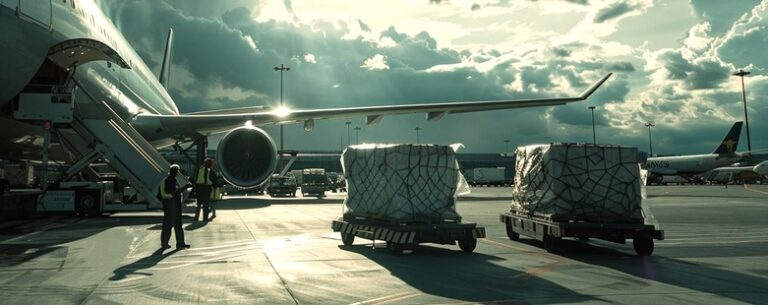
No need to think outside the box, if it all works fine. Image: Unilode
After 15 years of ULD management success, Cargolux and Unilode Aviation Solutions have again renewed their partnership vows for a further five years. Europe’s largest cargo airline therefore continues to have access to Unilode’s ever-increasing fleet of 172,000 ULDs, benefiting both from the ULD expert’s container placement services as well as their digital connectivity – an important factor in shipment journey transparency. By its own admission, “Unilode owns and manages the world’s largest digitally enabled ULD fleet. Unilode’s unique pooling concept combined with its digital capabilities will further support Cargolux through its new digital developments such as the E-ULD APP and customer portal.” Having global access to such a large, modern fleet of containers, gives Cargolux the freedom to flexibly expand its network to meet market requirements. Alongside a Luxemburg-based, dedicated customer success management team, and network planning experts located in its Operations Control Centre in Bangkok, Unilode also carries out ULD maintenance and repairs across a dense, global network of 50 Maintenance, Repair, and Operation (MRO) facilities. Joep Bruijs, Senior Vice President Global Logistics – Cargolux, said: “Unilode’s continuous support and ULD management expertise has played a pivotal role in ensuring that Cargolux has the ability and agility to meet our everyday ULD needs. Cargolux is committed to being an industry leader in the air cargo market. By embracing innovative technologies, Unilode’s digital journey will enable our airline to enhance the services offered to our cargo customers. It is important to collaborate with strategic partners who share our values and vision, and we are pleased to be able to continue our strong relationship.” Ross Marino, Chief Executive Officer of Unilode, said: “We are delighted to extend our longstanding partnership with Cargolux, and their trust in the Unilode team and our services makes us extremely proud. We are excited about the opportunity to continue working together. Over the next five years, we will strive to achieve continuous improvement that results in ever better service excellence, and to deliver on our digital transformation and sustainability targets.”
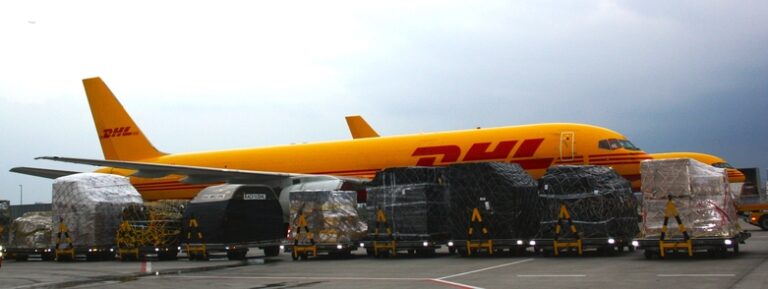
Another parcel being transported by DHL Express, has exploded in Minworth near Birmingham, UK. No one was injured by the fire. The incident, which occurred on 22JUL24, but only became known on 16OCT24, is one of several recent attacks on the integrator. Counter-terrorism police are investigating whether Russian saboteurs had dispatched the shipment.
DHL Express is suffering attacks initiated by Russian secret services – photo: courtesy DHL
It is still unclear who sent the parcel and where it was handed over to DHL. But fact is that the shipment had arrived at DHL’s Minworth warehouse by air, though it is not known where it was destined for. The consequences would have been grave had it blown up while airborne.
The incident at DHL’s Birmingham facility, was only disclosed following joint inquiries by the German broadcasters, NDR and WDR, and their UK partner, The Guardian, prompting questions as to why the local authorities had not revealed it earlier. An official answer is still pending.
Terrorism experts from both countries are now comparing whether there are similarities between the two attacks, and what the consequences are for the existing control and security system.
Escalating hybrid war All affected parcels detected so far contained electrical items and vials filled with liquids. The high shipping costs of the parcels were regularly ‘economically disproportionate to the value of the goods’, emphasizes the German Office for the Protection of the Constitution, in a warning to the industry. In security circles, it is an open secret that Russian sabotage and espionage activities in Germany and across Western Europe, have increased significantly in recent weeks and months, as seen by the rapidly growing number of drones spotted across critical and sensitive infrastructures such as airports, military installations or telecommunication facilities.
In a hearing conducted by the Deutsche Bundestag (parliament), Thomas Haldenwang, the head of Germany’s domestic intelligence service, did not accuse the Putin regime directly of fighting a hybrid war against western states. However, he did accuse the Kremlin’s spy agencies of behaving increasingly aggressively, severely risking or harming people’s life through their attacks and sabotage operations.
Creating chaos Ken McCallum, the head of Britain’s MI5 delivered similar arguments. Just days ago, he warned that Russia’s GRU military intelligence appeared to be on “a sustained mission to generate mayhem on British and European streets: we’ve seen arson, sabotage and more.”
Confronted with these and similar allegations, the Putin regime repeatedly denied any sabotage activities, but blamed accusers of spreading conspiracy theories. However, the frequency of the actions and statements by some arrestees speak against this. A warehouse in east London, run by a company with close business links to Ukraine, caught fire in a suspected arson attack in MAR24. Seven men have been charged with involvement in the incident, which has been linked to a Russian plot, reports The Guardian. A shopping center in Warsaw, Poland, was destroyed by a fire in MAY24. Shortly after, Poland’s prime minister, Donald Tusk, indicated that the blaze was caused by operatives from Russia’s intelligence services.
Assassination orders However, the most serious plot that has since come to light, was an attempt to assassinate Armin Papperger, the CEO of the German arms producer, Rheinmetall (Armored Combat Carrier Lynx XM30, Battle Tank Challenger 3, Counter Drones, among other military products). In JUL24, it was reported that U.S. intelligence services had foiled Russian plans to murder him.
To carry out such espionage or killing orders, the Russian secret service hires individuals across Europe belonging to shadow armies consisting of right wingers or radicals from the extreme left.
Proxy war Consequently, military experts are already talking about a Russia-NATO proxy war. In case a perpetrator is identified, the Putin regime can claim to have nothing to do with the occurrence.
In NATO leadership circles, it is assumed that Moscow is pursuing various goals with the series of attacks: The aim is to send a signal to the West, that the delivery to Ukraine of long-range weapons capable of hitting military installations in the Russian hinterland, will further increase the escalation spiral. The fear potential in the EU that the conflict will be scaled up, is to be kept high, as generating fear is a key component of Russia’s psychological warfare. And thirdly, actions such as those against DHL, are intended to increase the pressure on Western governments to reduce their military and financial support for Ukraine in order to accept a ceasefire or even peace agreement on Russian terms.
A further 7,500 m² terminal for air freight handling is to be built in Frankfurt Airport’s CargoCity South. The contracting authority is operator Fraport AG. Its management invites interested users to submit their bids by latest 15NOV24.
The construction site has already been determined, but there is no design for the building yet – courtesy: Fraport AG
The offer is non-discriminatory, emphasizes Christian Engel from Fraport’s Corporate Communications department. The current handling agents doing business at the airport will not have any privileges, and all interested parties will have the same chance of obtaining a contract. Contracts will carry a 10-year validity, with the option of an extension.
Stark cargo growth Engel cites the ongoing growth in air freight in Frankfurt as the key reason for the planned cargo project. The site is also one of the last available plots within CargoCity South. According to traffic statistics from JAN-SEP24, air freight including transit shipments, increased by 7.9% year-on-year to a total volume of 1,522,783 tons. “We expect air freight to continue to grow and increase by 50% to a throughput of around 3 million tons, come 2040,” Fraport’s management forecasts. The ongoing upswing in tonnage documents the importance of Frankfurt Airport as a main European cargo hub and distribution center for a broad range of goods, states management in a press release. In addition, there is a very strong and active local cargo community, which ensures a high basic volume, emphasizes speaker Engel.
Attractive combination of main deck and belly capacity Frankfurt’s charm also lies in the fact that freighter traffic is complemented by many passenger services, enabling fast transfers of shipments from main deck to lower deck and vice versa. This combination of capacity offerings speeds up the supply chains and makes FRA as cargo hub highly attractive for consignors and shippers.
The planned new cargo facility shall help to cement Rhine-Main’s leading position as the main European freight hub. The rental terms of the contract as defined by operator Fraport, provide for a monthly rent of EUR 11.95 per square meter of floor space and EUR 16.75 per square meter of office space.
The design can be influenced As soon as written expressions of interest have been received from bidders, Fraport will submit a building permission. Following the conclusion of a legally valid contract, tenants will have the opportunity to influence the construction of the warehouse in advance. For example, the design could be determined by whether traditional air freight dominates, or special products would mainly be processed there, such as e-commerce shipments, for instance.
In contrast to some other warehouses in CargoCity South, that offer tenants direct apron access, the upcoming freight terminal is located in the second row. Attractive, however, are the many truck gates and the large loading area in front of the future building, supplemented by car parking spaces for employees, customers, and visitors. The tenants themselves will be responsible for the interior design of the warehouse, including the fixed inventory.
Provided there is sufficient interest from potential users, Fraport is aiming to conclude a rental agreement by 30JUN25.
A one-of-a-kind event will soon take place: Stakeholders and users of pallets are to meet up in Hamburg. A flow of ideas between industry, retail, and logistics representatives is expected. The topics are centered around the Euro Pallet, Europe’s most popular ULD. Different keynotes complement the meeting, covering broad aspects of the European pallet market, pallets in warehouse automation, as well as pallet handling projects in e-commerce and related businesses.
Without pallets, the transportation system would collapse – courtesy: Logistiknachrichten.de
Innovations can sometimes be very simple – and extremely effective. In this case, it consists of eleven boards, nine blocks and 78 nails. Together, they weigh just twenty kilograms but can carry up to four tons of weight. We are talking about the Euro Pallet. Whether in trucking, rail transport or air freight: It is impossible to master everyday life without paying tribute to these pallets.
Old tool, new roles Due to their immense importance for the global flow of goods and as a precondition for enabling transportation, a Pallet Symposium will soon be held in Hamburg, orchestrated by the HLT – Hamburger Logistik Tage logistics events specialist. The initiator, Olaf Oczkos wants to primarily showcase new developments and the changing role of ULDs in the age of digitalization and data exchange. The event offers networking opportunities and includes an exhibition where the latest products will be presented, as well as a series of lectures. Experts will illustrate how cost-cutting and optimization potential can be leveraged. Right from the start, the focus will be on current trends and developments on the European pallet market, followed by taking a closer look at the practice of smart digital pooling solutions. Other presentations will focus on warehouse automation and its implementation in ongoing operations, pallet management, and challenges in international supply chains.
Although millions of pallets are in use every day, they are an almost unknown entity in terms of their provenance and significance for trade and commerce. They exist, they are available, they are a useful tool for transportation. That’s about it, in general terms.
From ancient Egypt to modern times Yet, they are a millennia-old appliance for mankind. The first pallets already existed in ancient Egypt, where the builders of the pyramids dragged building materials weighing several tons, across the desert sands on wooden planks. The breakthrough in modern times, came with Howard T. Hallowell from Philadelphia, who filed the first pallet patent in 1924, under the name ‘Lift Truck Platform’. The upswing in mass production after World War II, and the increasing international exchange of goods, soon drove up the demand for cheap, efficient transport pallets. The system had proven its usefulness and finally gained widespread acceptance. Ultimately, however, it was not until the 1960s that standardized dimensions and material quality were agreed on in Europe. The result is the Euro Pallet, originally presented on 01JUL61, which is still going extremely strong. Its uniform dimensions of 1200 x 800 x 144 mm, enable forwarders to operate door-to-door services without breaking up consignments and repacking goods after arrival at airports.
Quality is guaranteed due to licensed production Despite its immense importance for the logistics industry and the economy, the pallet never became a star. At least not in the public perception. This role was reserved for the sea container. Developed by Malcom McLean in the 1950s, the first vessels with 60 steel boxes on board, sailed from Newark to Houston on 26APR56. Today, the huge number of containers handled at seaports or airports day in, day out, can only be guessed.
Back to pallets: exactly 34 units fit on a single truck bed. The Euro Pallet is manufactured under license, thus guaranteeing the quality of the ULD. Warehouses and freight terminals are equipped with racks tailored to the dimensions of the Euro Pallet. To lower costs and reduce the CO2 footprint, the exchange of pallets was initiated by German forwarding agents. The idea of reuse was soon adopted worldwide.
The new generation of Euro Pallets meets the regulatory import requirements. All units must be heat-treated to comply with the safety standards of The International Plant Protection Convention (IPPC), that aims to protect the world’s plants by preventing pest infestations.
Event organizer Olaf Oczkos expects a high number of participants – photo: private
Broad range of subjects These and other issues will be discussed at the Pallet Symposium, which takes place on 11-12NOV24, in Hamburg (Hotel Hafen Hamburg), Germany. The event will begin with a networking dinner to break the ice amongst the participants. Keynotes are planned for the next day with various specialist lectures on offer, including presentations on the latest generations of wooden and plastic pallets. The focus will be on the optimization of operations through the use of pallet software, the automation of processes and new tracking solutions (https://palettensymposium.de/kontakt/). Finally, the importance of the ULD as a traditional and modern transport unit will also be highlighted. “We expect over 100 participants from the entire transport industry, including ULD manufacturers and exhibitors,” states the organizer, Olaf Oczkos.
CargoForwarder Global’s ‘Spotlight On…’ series highlights every aspect of the air cargo industry to illustrate the wide expanse of responsibilities required to ensure safe and swift carriage of cargo from one end of the world to the other. Without Unit Loading Devices (ULDs) such as approved pallets and containers, air cargo transport would be a much slower and riskier affair. This week, therefore, CargoForwarder Global (CFG) hears from Dennis Demtröder (DD), CEO of PalNet GmbH Air Cargo Products, as to what his job entails, and how he sees the industry’s challenges and opportunities.
Living in the world of ULDs. Image: Dennis Demtröder
CFG: What is your current function? And what are your responsibilities?
DD: I am CEO of PalNet GmbH Air Cargo Products, and my main responsibility is managing the company together with my father. I am also the Accountable Manager for our Quality System, and my other management tasks cover Sales, Facility Management, and Company Development.
CFG: What does a normal day look like for you? Or is there such a thing?
DD: In general, I start at 8 a.m. in our facility, speaking with all our departments individually. After that, I check my project list and mails. But every day is different because I am responsible for the entire organization, so all daily problems come to me, and I provide advice or solve them. It often happens that my plan in the morning will be totally different come 8.05 a.m. But that is what makes it fun and interesting.
CFG: How long have you been in the air cargo industry, and what brought you to it?
DD: I have been with PalNet for 13 years now, and that was also my starting point really in the air cargo industry. Prior to that, I was working in a different industry (Gardening) and had totally different plans until my father, as PalNet Founder, asked me to join the company. I made up my mind, though I really loved my gardening job and was successful.
But also, with the outlook of maybe one day running a company in an interesting industry and all that comes with it, like traveling around the world, working with big companies and developing products, made the decision quite easy. We planned what would be the best way to get me ready for this new challenge. So, I went to the UK to work at Airbase GSE, a repair station, for one year, and there I learned a lot about repairing ULDs. After leaving the UK, I came back to Germany and experienced a second apprenticeship for three years and after my examination, I joined PalNet. That’s the whole story.
CFG: What do you enjoy most about your job?
DD: Working with our team of 30 people, making sure they have a good work-life balance, enjoy their work and transfer this into high quality products which are reliable, long-lasting and safe. And of course, you have some nice benefits with supplying products worldwide; traveling to clients and exhibitions or conferences and meeting all different kinds of people.
CFG: Where do you see the greatest challenges in our industry?
DD: Besides satisfying the needs of our clients, i.e. discussing and solving their problems, delivering on time, to always being technically up-to-date, I currently see the greatest challenge is to get our industry greener. The environmental impact of air cargo transportation becomes an increasing concern. Reducing carbon emissions and promoting sustainable practices is a significant challenge for the entire industry.
CFG: What advice would you give to people looking to get into the air cargo industry? Any particular training they should aim for?
DD: The air cargo industry offers a wide range of exciting opportunities, from logistics and operations to sales and marketing. Develop strong interpersonal and communication skills to deal with diverse clients. Understand the intricacies of transportation, warehousing, and customs clearance.
Get familiar with all technical and commercial aspects of the ULD business and attend training courses offered by IATA or specialized aviation training courses offered by various coaching companies.
CFG: If the air cargo industry were a film/book, what would its title be?
DD: “Living in the world of ULDs”
Thank you, Dennis, for sharing your views.
If you would like to share your personal air cargo story with our CargoForwarder Global readers, feel free to send your answers to the above questions to cargoforwarderglobal@kopfpilot.at We look forward to shining a spotlight on your job area, views, and experiences.
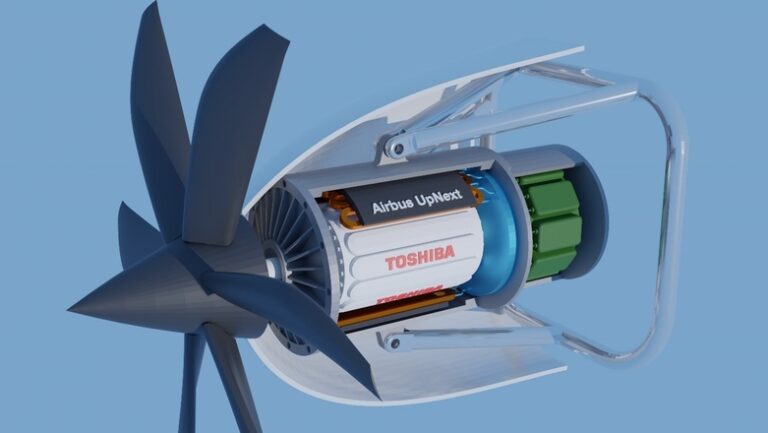
Both enterprises have announced that they will jointly conduct a feasibility study aimed at co-developing a two-megawatt superconducting motor for future hydrogen-powered aircraft. Contractual partners are Airbus UpNext, a fully-owned subsidiary of the European aircraft manufacturer, and Toshiba Energy Systems & Solutions Corporation, Toshiba Group’s energy arm.
Airbus and Toshiba will jointly develop a superconducting propulsion system cooled by liquid hydrogen via a helium recirculation loop. Displayed here is a sample – picture: Airbus
Airbus’ ambition is to bring the world’s first hydrogen-powered commercial aircraft to market by 2035. To get there, its engineers and experts engaged in the manufacturer’s ZEROe project, are currently exploring a variety of configurations and technologies, as well as paving the way for the ecosystem that will produce and supply the hydrogen. H2-powered aircraft are one of the promising solutions to achieving net zero emissions in aviation.
Technological quantum leap expected Superconducting technologies offer a unique advantage for these aircraft, using -253°C liquid hydrogen both as a fuel as well as an efficient cooling method for the aircraft’s electric propulsion systems. Cryogenic technology could allow for a nearly unimpaired power transmission within the electric systems of the aircraft, significantly improving their energy efficiency and performance. “Partnering with Toshiba presents a unique opportunity to push beyond the limitations of today’s partial superconducting and conventional electrical motors. Through this collaboration, we aim to deliver breakthrough technology that could unlock new design possibilities, in particular for Airbus’ future hydrogen-powered aircraft. This partnership represents a natural and essential step in advancing superconducting motor technology to meet the needs of the aerospace industry,” said Grzegorz Ombach, Airbus Senior Vice President and Head of Disruptive R&T, while presenting the plan.
Tremendous potential The accord was inked in Tokyo, on the occasion of Japan Aerospace 2024, by Airbus executive, Ombach, and Tsutomu Takeuchi, Toshiba’s Corporate Officer (responsible for Power Systems business), and Director of Toshiba Energy Systems & Solutions Corporation. They were joined by Ludovic Ybanez, Airbus Head of Cryoprop demonstrator and Cryogenics technology, Airbus UpNext, and Kensuke Suzuki, Head of New Technology, Power System Division, Toshiba Energy Systems & Solutions Corporation.
l > r: Ludovic Ybanez, Head of Cryoprop demonstrator and Cryogenics technology, Airbus UpNext / Grzegorz Ombach, Airbus SVP & Head of Disruptive R&T / Tsutomu Takeuchi, Director Toshiba Energy Systems & Solutions Corp. / Kensuke Suzuki, Head of New Technology, Power System Division, Toshiba Energy Systems & Solutions Corp. – courtesy: Airbus/Toshiba
“Toshiba’s expertise in superconducting technology for high current flow, motor drive technology for precise current control, and advanced rotating machinery technology for stable, high-speed operation, forms a strong foundation for this partnership. We both recognize the tremendous potential of superconducting technologies in shaping the future of aircraft and driving the decarbonization of the aviation industry. We are confident that our collaboration with Airbus will play a key role in advancing next-generation technologies for the aerospace sector,” stated Toshiba’s Mr. Takeuchi.
Pushing boundaries Only recently, Airbus UpNext launched Cryoprop, a demonstrator to test a two megawatt-class superconducting electric propulsion system. Toshiba has been conducting research and development of superconducting technology applications for nearly half a century, and released its own two megawatt-class superconductivity motor prototype for mobility applications in JUN22. Thanks to these initiatives and the experience gained, both companies are global leaders in this specific and futuristic technology. Their partnership aims to advance research, technology and innovation in aerospace and push boundaries to prepare for the next generation of aircraft. The precursor to this was Airbus’ move in MAY24 to establish a tech hub in Japan, where future drive systems based on H2 are to be developed in collaboration with industrial partners.
A new chapter has begun in the 55-year history of the Brazilian aircraft manufacturer, Empresa Brasileira de Aeronáutica S.A. (Embraer). With immediate effect, the company, which employs around 18,000 people, is expanding its product portfolio to include cargo aircraft. An important prerequisite was the go-ahead from Washington’s Federal Aviation Administration (FAA), that has now fully certified Embraer’s E190 freighter aircraft.
Embraer expects to sell nearly 700 of its E190F and E195 P2F in the next 20 years – picture: company courtesy
“FAA certification is an important milestone in our passenger-to-freighter conversion program. With our E-Jet footprint across the U.S. and worldwide, we are offering optimum cargo solutions to our customers for this connected world,” stated Martyn Holmes, Chief Commercial Officer, Embraer Commercial Aviation in reaction to the FAA decision.
The loading concept was developed and produced by U.S. Cargo Systems, a Goldsboro, North Carolina-based designer and manufacturer of Cargo Handling and Aerial Delivery System technologies. Its core part is a large hatch cut into the fuselage to allow for larger shipments to be loaded onto the main deck of the aircraft. The E190F’s combined loading capacity of its lower and main decks is 13,500 kilograms.
Filling a niche The freighter can accommodate 6 ULD 96x124x73 inches, 1 ULD 96×60.4×73 inches and one ULD LD3. The modification includes a reinforced floor equipped with roller beds to facilitate the fast and smooth movement of unit load devices within the jetliner.
The E190F has a range of 4,260 km when fully loaded. It thus fills a niche in payload and range between the ATR Turboprop 72-600F and Boeing’s B737-300 /-400 P2F conversions. Embraer forecasts a market for its freighters of nearly 700 units over the next two decades. Originally, the E190 freighter conversion and its sister model E195P2F were supposed to enter service at the beginning of this year, but the program was delayed.
Spurred by changed market demand In a press release issued in JUL22, Embraer announced its intention to step into the air freight market by manufacturing both E190 and E195 freighters respectively. “New demands spurred by ecommerce and e-trade” were the motives behind this step. “This requires fast deliveries and decentralized operations to serve regional markets,” states the frame maker in its current release.
In JUL24, the E-freighter was certified by the National Civil Aviation Agency of Brazil (ANAC). Following FAA certification, market observers expect conversion orders from various airlines that have E190s and E195s in their fleets. One of these could be LOT Polish Airlines, whose management has been discussing the launch of an own freighter fleet for some time.
However, the Embraer jetliners have yet to receive the green light from the European Aviation Safety Agency (EASA). Following the go-ahead from Washington’s FAA, this will happen before the turn of the year, European aviation experts believe.
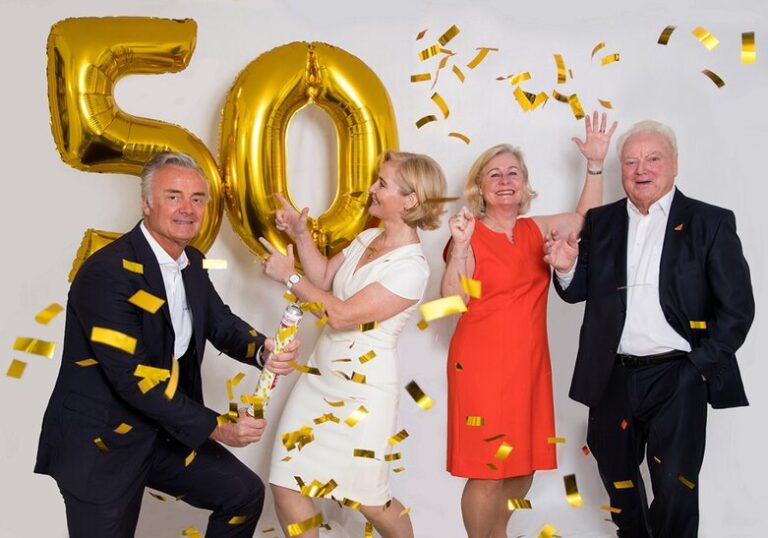
On 31OCT24, Dieter Haltmayer, founder and long-time patron of Quick Cargo Service GmbH, will celebrate his 90th birthday. A double gala is planned, as it is also the 50th anniversary of forwarding agent, QCS. The festivities will take place on 02NOV24, at the Kempinski Hotel, Gravenbruch, located on the outskirts of Frankfurt, Germany. Dieter’s children: Stephan, Heidi, and Jennifer, and grandson Niko, who organized the jubilee, will be there, as well as many employees, friends, and professional companions.
“You’re welcome to call me, I’ll be at work tomorrow and in my home office, the day after,” was his response on his cell phone. The man is a phenomenon. Almost 90 years old (or “young”, as the case may be, here) and still actively involved in his company’s daily business. “As long as there is Quick, there will be Dieter,” a senior employee recently exclaimed. So probably – and hopefully – for a very long time yet to come.
The Haltmayer family (l > r): Stephan Haltmayer, Jennifer Melnyk, Heidi Haltmayer, and Dieter Haltmayer – photo: QCS
From a no-name company to a respected brand Over the course of 5 decades, Dieter and his three children have developed QCS from an almost unknown name to an internationally recognized and respected brand. Daring, a little luck, foresight and clever management are the cornerstones of success. However, the human factor is decisive. Anyone who deals with Dieter is overwhelmed by his generosity, charm and ability to listen, and his respect for other’s opinions. Especially for us as representatives of the media, he is a treasure trove – always approachable, never at a loss for clever, profound answers. His professional career from the founding of the company in Frankfurt in 1974, to the present day, cannot be adequately portrayed in this short tribute. Here are just a few highlights and anecdotes. “In the early years, we did not know an eight-hour day; 12 to 14 hours were the rule rather than the exception,” biographer Wolfgang Schubert quotes him in his remarkable book, ‘50 Jahre Quick Cargo Service’ (50 Years of Quick Cargo Service).
Battle for capacity Air freight was gaining ground back then, but the transport capacity of the aircraft at the time was limited. Airline managers had to be at least persuaded, if not more (!), to accept shipments, he recalls, without revealing details of the deals. It was a daily battle for capacity. And a fight between passenger luggage and cargo shipments. “The airlines, or rather their local managers, were on a very high horse back then,” he remembers the wild 70s and early 80s. This changed fundamentally when the first B747 jumbo freighters were put into service, such as the B747-200F by Lufthansa Cargo. Suddenly, large-scale console shipments were possible, which gave the air freight industry a huge boost. However, as Quick did not have the volumes that the big players in the industry had, Dieter came up with the smart idea of founding IGLU Air Cargo in 2000: a neutral player that bundled shipments from around 25 member companies, on high-demand routes and obtained rate advantages in return. Other international alliances followed, such as the China Cargo Alliance and the Aerospace Logistics Group, to name but two. “This was the only way we could stand up to the Goliaths of the industry in close collaboration with other medium-sized companies.”
Change of leadership In 2012, QCS also stepped into the ocean freight business. “It was customers from the air freight sector who tempted us to do this. They asked whether we could also ship sea freight for them, in addition to air freight.” The result: an office was set up in Hamburg, not far from the seaport with an adjacent warehouse. “Today, the facility is bursting at the seams,” says Dieter Haltmayer. Meanwhile, his son, Stephan, took over the reins, becoming responsible for the business of the QCS Group. He has set up branches in various Eastern European cities as part of “Project 24”, thus diversifying the activities and reducing the dependence on local market fluctuations. Today, QCS runs 29 stations in eleven European countries. The 30th will soon follow suit: a branch in Antwerp, Belgium.
“I want to be like Dieter” It is a life’s work that Dieter Haltmayer can be proud of. He is also proud of the involvement of his three children in the development of the company. Last but not least, of the loyalty of the vast majority of the 260+ employees at QCS. Many of them are pictured in Wolfgang Schubert’s book and will be taking part in the company’s 50th anniversary celebrations on 02NOV24. Among the invitees is Ram Menen, the former iconic Head of Emirates Sky Cargo, and longtime friend of the Haltmayer family. “Once I’m grown up, I want to be like Dieter,” was his witty wish at the last QCS anniversary event. There is nothing to add to that.
CargoForwarder Global’s ‘Spotlight On…’ series brings a different area of the air cargo industry to the fore every week. When you are in the midst of the air freight supply chain, concentrating on getting shipments from one end of the world to the other, it can help to have outsiders illustrate the bigger picture and offer solutions for even more efficient and economical operations. That is where consulting comes in: experts with an overall industry view, who can help steer companies towards a more digitally fit and commercially sustainable future. This week, Markus Flacke, Global Business Development, Lufthansa Industry Solutions, takes us through his role and shares his experience and advice for anyone looking to forge a career in the air cargo industry.
Always at the heartbeat of international trade. Image: Markus Flacke
CFG: What is your current function and company? And what are your responsibilities? MF: I am currently working for Lufthansa Industry Solutions, the IT consultancy of the Lufthansa Group. Although we are part of an aviation group, we work with clients across various industries, e.g. automotive, ocean shipping. My role is to develop the business with international air cargo clients.
CFG: What does a normal day look like for you? MF: One is tempted to say there are no normal days – but consulting is a structured activity. I tend to start with the daily media update, checking for technology trends, discussing solutions for clients with the consultancy team and, of course, assessing how technology will impact the air cargo ecosystem.
CFG: How long have you been in the air cargo industry, and what brought you to it? MF: I have been in the industry for 23 years and, like so many, I came to it by coincidence. I am a political scientist by training and was looking for a job in an international environment after graduation. Applied to one of Lufthansa’s graduation programs and was accepted. The rest is history!
CFG: What do you enjoy most about your job? MF: The diversity of it all and that one is always at the heartbeat of international trade. I think, for a lot of people, globalization is just a word – in air cargo, you see it happen every day and the positive impact it can have on many people’s lives.
CFG: What do you see as the greatest challenges in our industry? MF: Walk the talk! I have been at plenty of industry conferences over the years and I am often intrigued that topics like digitalization are discussed as if there were alternatives to it. It is high time that every stakeholder has at least an executable digital road map established – one that isn‘t questioned every other year because the industry is going through another down cycle. We operate in a cyclical business environment; however, digitalization will only have an impact when it is seen as a business accelerator and not a cost position.
CFG: What advice would you give to people looking to get into the air cargo industry? Any particular training they should aim for? MF: Be curious and bring common sense to the job. I have met people with so many different educational backgrounds that it is hard to specify a particular training, but what they all have in common is curiosity and a willingness to put the team above everything else.
CFG: If the air cargo industry were a film/book, what would its title be? MF: It has to be ‘Groundhog Day’ – many conferences’ digital cargo streams feel like it – the same discussion over and over again – but I am certain there will be a happy ending!
Many thanks for your answers, Markus.
If you would like to share your personal air cargo story with our CargoForwarder Global readers, feel free to send your answers to the above questions to cargoforwarderglobal@kopfpilot.at We look forward to shining a spotlight on your job area, views, and experiences.