Home Blog Page 132

Lubos targets ambitious goals

0

Founded in 1974, the family-run agent, Quick Cargo Service, is growing strongly in Europe. This process is to continue steadily, with the founding of a further station in Antwerp, Belgium. However, the company’s plans go much further: QCS intends to become the biggest independent German freight forwarding agent. Lubos Lukác (LL), Chief Commercial Officer of the QCS Group, announced this extremely ambitious goal in an interview with CargoForwarder Global on the fringes of the latest BUD Cargo Day in Budapest.

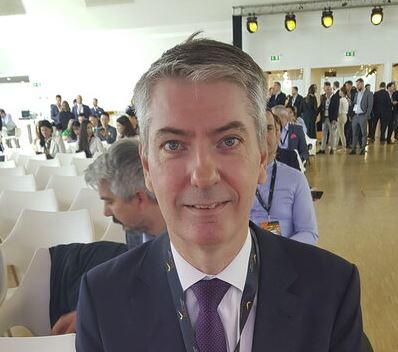
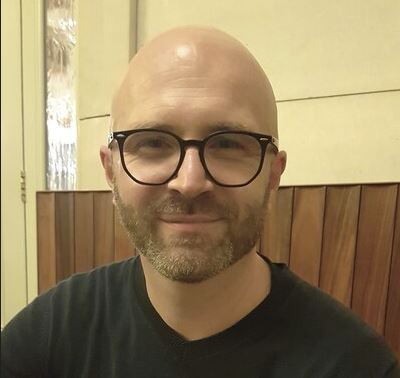
Bratislava, Slovakia-based Lubos Lukác announces the opening of further QCS stations in the near future – photo: CFG/hs

Lubos, roughly two years ago, QCS launched its Eastern Europe initiative by setting up stations in different states. What is today’s status of your ‘Go East’ strategy?
L.L.: We are very happy with the development since 2022, where we either changed the set-up, starting from green field or by widening our footprint through M&As in these countries: Poland, Hungary, Romania, the Czech Republic, Slovakia, and Austria. This was followed by a branch in Slovenia becoming our latest family member. Besides these mergers, QCS grows predominantly organically based on cost efficiency. Core consideration is to bring the right people to manage the projects where we can build subsidiaries and branches around them to create a local market. This way, the QCS family culture is kept, which employees are familiar with, and can be further developed as the group grows, reaching the next stage.

CFG: Is QCS’s ‘Go East’ approach a reaction to the derisking strategy of many western industries that want to reduce their dependency on China by channeling their funds into safer heavens?
L.L.: QCS is a very fast-acting company due to its lean structure of management and ownership. We can quickly adapt to market trends and demands from customers or partners. Also, we don’t have such big overheads and huge operations, which helps us to avoid pitfalls and manage the daily business. We follow our customers, who tend to change trade lanes and collaborate with other suppliers. As we don’t run any offices overseas, we are not dependent on China. Since QCS is a member of some intercontinental alliances, we have no difficulties finding suitable strategic partners that best complement our own network and enable our global reach.

CFG: A growing volume of QCS’s ocean freight is processed in Koper, Slovenia. Could the Mediterranean route for sea freight surpass Hamburg volumes – your preferred port so far?
L.L.: Hamburg and Rotterdam continue to be key gateways for us. But the Slovenian Port of Koper is an important gateway for the Central Eastern European region (CEE); particularly for the automotive business. This accounts as well for the markets in the Middle East and India, with Africa listed next on our agenda. With the office we just set up in Slovenia, we will be able to create synergies to support our business model and have a seaport Hub for Central and Eastern Europe in place.

CFG: While we spoke, you stated that QCS intends to become the biggest independent German freight forwarding agent. Didn’t you raise the bar too high? After all, Dachser achieved revenues of more than 7.1 billion euros in 2023 – far more than the family-run QCS Group.
L.L.: It’s not my quote, but a mission statement from our CEO, Stephan Haltmayer, who said that QCS is on its way to becoming the number one Independent European Freight Forwarder. Yes, that’s our aim – long-term. Admittedly, this is a high hurdle but manageable, as evidenced by the last 1.5 years, when our company grew disproportionally, and demonstrated by the network we set up in Eastern Europe. And the good news is that all offices are in the black, after just a short start-up period. A personnel and organizational decision also played a role in this development. All our branches set up in Eastern Europe, are headed by proven and loyal individuals to whom the Haltmayer family offered the role of managing partner. This promotes personal initiatives and increases the identification with the company enormously. Simultaneously, it also has a positive effect on the employees on site. These are positive prerequisites for above-average growth in the years ahead.

CFG: According to rumors, QCS is planning a new station in Belgium. What is the time horizon for the project? When will it happen, and what might be the consequences for Hamburg, your current ocean freight hub?
L.L.: Belgium is an important market for us in Western Europe, which we handle via our offices in the Netherlands or Germany, but where we also want to increase our footprint. Antwerp is a big hub for project cargo and the LATAM market. An Antwerp station supplements our well-running setup in the Netherlands, making us even stronger in these thriving markets. For Hamburg, this will not be an issue at all. Our Hamburg office is extremely busy. A tighter-knit network combined with close collaboration between QCS stations, will enhance the business, leading to improved customer experience and tailored logistics solutions.

CFG: Where will QCS be in 5 years’ time?
L.L.: This is a great question, but I don’t have a crystal ball. QCS has several goals for the next 5 years, split into internal and external targets. Internally, we want to be a much sought-after company to work for. Our family culture will be kept, combined with new digital tools and tailored solutions to make life easier in daily operations, thus benefiting the customer. External presence is also a key factor enabling us to open the next stations in 3 to 5 countries. Currently, we put opportunities under the microscope that fit our business model and philosophy best. This includes M&A solutions as recently done at Vienna Airport, Austria. However, the key factor is our P&L statement that decides investment initiatives. This said, the sky is the limit for us in the next five to ten years.
Key trade lane capacity imbalances raise concerns…

0

…states TIACA Chair, Steven Polmans (SP) in this exclusive CargoForwarder Global (CFG) interview. Due to the thriving e-commerce business, cargo airlines are tending to shift their capacity from Latin America and Africa to routes connecting China with Europe and North America. This could hurt the agricultural industries in Kenya, Colombia, or Ecuador, that depend on reliable air transports to market their floral products, fruit and vegetables.
He also reflects on the amazing upswing of the cargo business in Budapest and comments on the role of ChatGPT, AI and the growing importance of sustainability for the cargo industry as a whole, and his own club, The International Air Cargo Association (TIACA).

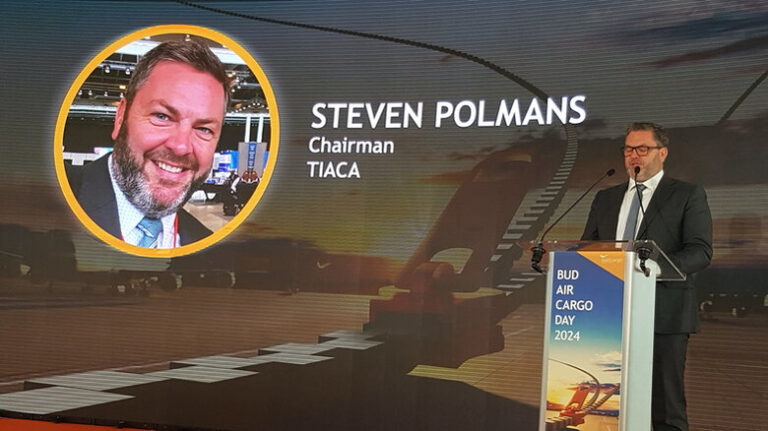
„Sustainability is no longer an industry buzzword,” emphasized Steven Polmans in Budapest – photo: CFG/hs

CFG: Steven, on Tuesday (08OCT24), you delivered the keynote speech at the BUD Cargo Day. In your role as TIACA Chair, the industry expects you to take a neutral stance. Nonetheless, we would like to know how you and TIACA value the cargo development at BUD in recent times.


SP: Indeed, TIACA does take a neutral stance when it comes to promoting one member over another, however what we can do and, in fact, we must do, is spotlight success, promote innovation and improvements in the customer experience, and recognize when parties have performed well. This can only inspire others. The numbers speak for themselves in BUD. The airport is aligned with the community and, in turn, they are both aligned with customer and market needs. You could argue there are other reasons for their success, such as location or government and customs support. But that falls short in explaining what has been happening at Budapest for many, many years now: a clear, well-articulated vision and strategy, supported by precise execution are the key ingredients for their long-term success and this differentiates them from many other airports in the region and around the globe.

CFG: According to ChatGPT, which you cited during a panel, e-commerce will play an ever-dominant role in air freight – not only in Budapest but also elsewhere – followed by digitalization, data analytics and sustainability/decarbonization. What is your answer to this machine-generated prediction?


SP: ChatGPT scans, analyzes and aggregates to generate these AI thoughts. So, nobody is surprised by this outcome as it impacts all our agendas these days. These are the topics the industry is talking about and that shape our immediate situation as well as the future. One interesting topic which e-commerce masks is what is happening to the other industry verticals, i.e. high tech, perishables, pharmaceuticals, fresh produce, fashion, precision instruments, etc. We cannot forget the important role they and other verticals play in driving industry success.

CFG: If this ChatGPT-generated forecast comes true, what are the implications for route decisions and network considerations by major cargo airlines based in Europe, the Middle East or the Far East, that operate large freighter fleets?


SP: I think we are already seeing this playing out. Demand for capacity to support e-commerce out of China and east Asia, is continuing to grow, and to satisfy that demand, we are seeing capacity redeployment from other markets into the Key Asia – Europe and Asia – North America trade lanes. These routes are reflecting load factors of more than 88%, whilst return loads are operating around half that. This growing imbalance is a concern. But also, the availability of capacity for flower exporters in South America or Kenya might be impacted by this. As many others. 

CFG: And what will the implications be for traditional and large cargo airports, for instance Dubai or Qatar? Will nonstop e-commerce flights between China and Europe challenge their business model based on stopovers and the transshipment of freight? As various industry representatives such as Dennis Li from Cainiao, emphasized in Budapest, fast air transportation is one of the key criteria in e-commerce.


SP: Jack Ma laid out the global vision for e-commerce: 72 hours anywhere to anywhere. So direct hub to hub operations are important in moving large volumes across major trade lanes. However, e-commerce also needs to arrive at second and third-tier airports and therefore the market will continue to provide great opportunities for all operators. Asia to major European hubs will continue to grow, as will Asia to Middle East hubs, and then to second and third tier destinations. In the latter situation, effective main deck to belly operations will be key.

CFG: What role does e-commerce play within TIACA? Supposedly, you have this topic well on your radar.


SP: Absolutely! In fact, we have recently launched the first e-commerce industry task force, comprised of all sectors of the supply chain, to look at this very topic. The objective will be to highlight common issues and pain points, and to then propose practical and workable solutions. We are not a standards-setting or regulatory body, but we will use our industry connections to promote needed solutions to those who can act.

CFG: Back to the ChatGPT findings which rate sustainability and decarbonization very high as action fields for air cargo. How are TIACA’s sustainability efforts proceeding?


SP: Another great question. Sustainability is no longer just an industry buzzword; it is now almost a justification to continue in business, with customers, partners, employees, local communities, regulators, financial partners, and others, all demanding to see greater ESG focus by organizations. TIACA has continued to grow its portfolio of sustainability focused tools to helps in as many areas as we can. Our annual survey and Insights Report provides the most transparent report card of how the industry is performing collectively. On an individual company basis, our BlueSky program, which provides a company with a personalized assessment of its sustainability strategy and actions, continues to grow. More recently, we have launched a Training Library to connect those with training needs to those with training solutions. We have also launched our Investing in Climate Action Platform, which enables organizations and individuals to invest in several social and environmental projects across the globe and, in turn, they will receive certified carbon credits.

CFG: TIACA’s Air Cargo Forum 2024 is just around the corner. It will beheld at the Miami Beach Convention Center from 11-14NOV24. What are the three most important topics listed on the agenda, that no attendee should miss?


SP: Where to start? There are so many anticipated discussions that we will aim to tackle at this year’s ACF. Starting from global economic prospects following a year of significant elections, to the impact on trade policies and border management, through to balancing the capacity supply vs demand equation, not forgetting that people and operational challenges will feature heavily, and particularly how new tech, led by AI, automation and autonomation, will shape future operations. And, as mentioned previously, the whole topic of sustainability, as it relates to people, planet, and global prosperity, will also feature.

CFG: Dear Steven, thank you for your reflections.

DANX Carousel praises AI and data for improving efficiency

0

DANX Carousel’s Chief Information Officer, Mohan Palaniandy used the platform of a recent supply chain transparency conference in Birmingham, UK, to urge participants to “break down data silos and embrace new technologies to maximize efficiency.” The reason being the growing demand from manufacturers to obtain full transparency on the transport of their time-critical goods. Data and AI are intended to deliver this, but it can only work if all stakeholders share that data in proper quality and quantity. Manufacturers therefore expect logistics suppliers to further integrate with their operating systems. His speech highlighted the benefits of AI and Data, and outlined the contents of a white paper published by DANX Carousel focused on improving efficiency within supply chains.

Mohan Palaniandy, Chief Information Officer, DANX Carousel. Image: DANX Carousel

Mohan Palaniandy, Chief Information Officer of DANX Carousel, said: “DANX Carousel will continue to enhance its time critical capabilities while reducing waste in the supply chain at every possible step in its operations – full digital transparency between stakeholders delivers both. DANX Carousel is committed to improving transparency in the supply chain and recommend businesses conduct internal training, review service level agreements and key performance indicators, and invest in technological advancements in the final mile, aiming for full integration with logistics suppliers.”

Klaus Rud Sejling, Chief Executive Officer, DANX Carousel, declared: “The logistics industry is undergoing a digital revolution. AI, machine learning, and data are transforming supply chains, improving their transparency, efficiency, and profitability in turn. For time-critical logistics, increased data transparency across the supply chain must be the goal and we should now work across industries to break down data silos and embrace new technologies.”

BUD Cargo is based on three pillars

0

What could be better than taking over the management of a company where business is thriving? This is what happened to Francois Berisot, who became CEO of Budapest Airport on 06JUN24. Above all, air cargo is the showpiece. 226,000 tons are expected to be handled there, this year. But the airport wants more. This was made clear by Head of Cargo, Jozsef Kossuth, in his presentation at the BUD Cargo Day, attended by well over 100 participants.

When Jozsef started his career at the airport, 10 years ago, only around 5 freighters a week landed at Budapest Liszt Ferenc. According to traffic data, this has grown to 70 per week, today. Adrián Palagyi, BUD Cargo Development Manager, even speaks of 76 weekly freighter services. These are supplemented by 28-30 flights operated by the big integrator boys: DHL, UPS, and FedEx.

BUD CEO Francois Berisot comes from the French Vinci Group which acquired 20% in the Hungarian airport. Since JUN24, state-run investor Corvinus Zrt. holds 80%  – photos: CFG/hs.

Next cargo terminal announced
All in all, it is an enormous development that has put Budapest on the global air freight map. Not least, because of the investments in infrastructure. For example, a new Cargo City was erected, which offers a handling area of 42,000 m², enabling a throughput of 300,000 tons per year. Yet although the capacity is not yet exhausted, BUD Cargo is already planning the next step: “We want to build another cargo terminal of between 15,000 m² and 20,000 m²,” announced cargo chief Kossuth. This will be complemented by two or three stands for freighters, directly in front of the building, to facilitate the rapid handling and throughput of shipments, he added.

Number one cargo airport in CEE
At the conference, representatives of the entire industry confirmed that Budapest is the most dynamic cargo airport in Central and Eastern Europe. Airport boss, Berisot cited three pillars as the foundation of the airport and its cargo division’s success to date: “The outstanding infrastructure with state-of-the-art facilities, the excellent air and road connections, and a local cargo community whose members collaborate closely and pull together despite competition.”

Positive prospects
Marcell Nemeth, Senior Manager at auditing and consulting company, KPMG, explained in his presentation that the expected growth targets of annually 3%-4%, have a real basis. Together with Warsaw, BUD has developed into a gateway for e-commerce traffic between China and the EU. This trend will continue, further producing above-market growth figures. Every working day, 5,000 tons of e-commerce shipments are flown to Europe from Hong Kong alone; most of them from Temu and Shein, according to Olaf Oczkos from the trade journal, Palettenreport. Not all of them land in BUD, as there are also e-commerce airports in Liège, Madrid, Frankfurt, Hahn, Leipzig and Vienna, but many do. eTrade will continue to grow strongly, boosted by expanding economic performance and decreasing inflationary pressure in the ECC countries, which induce demand towards air cargo services, predicts KPMG expert Nemeth. This goes hand in hand with private and government consumption, which are picking up pace. Disruptions in ocean shipping, as seen in the Red Sea since last fall, prompt companies to shift cargo to air transport for security reasons.

BUD’s Cargo management places great emphasis on the close cooperation with the business community.

Imbalances create opportunities, states Jozsef Kossuth
However, the import-driven business, as seen in Budapest, also implies some disadvantages. For example, the freighters on westbound routes are full, while the return flights lack shipments. Yet, Jozsef Kossuth also sees this imbalance as an opportunity for European air freight agents. “Empty main decks of freighters or lower decks of passenger aircraft, are a big opportunity for forwarders because this enables them to ship goods eastbound at a reasonable price.”
The panel ‘The Customer View,’ illustrated the dependency of the air freight industry on external circumstances it cannot influence, as e-mobility shows. Han Yunkyn, Manager SK on / Europe Procurement, complained that demand for e-cars and their batteries is lacking. Eva Gerendeli, VP Samsung SDI Hungary, added to this that the charger landscape in Hungary and Eastern Europe is still inferior, which prevents customers from buying an e-car. Yet, both as well as Viktor Török, Head of Logistics at Bosch Hungary, are convinced that electric mobility is the future and that investments in this area would pay off in the medium term, affecting industrial settlements and supply chains.
At present, however, electric cars are a rare species on Budapest’s streets – unlike Norway, where every second car is now an electric vehicle.

MAB Kargo is now Cargo iQ certified

0

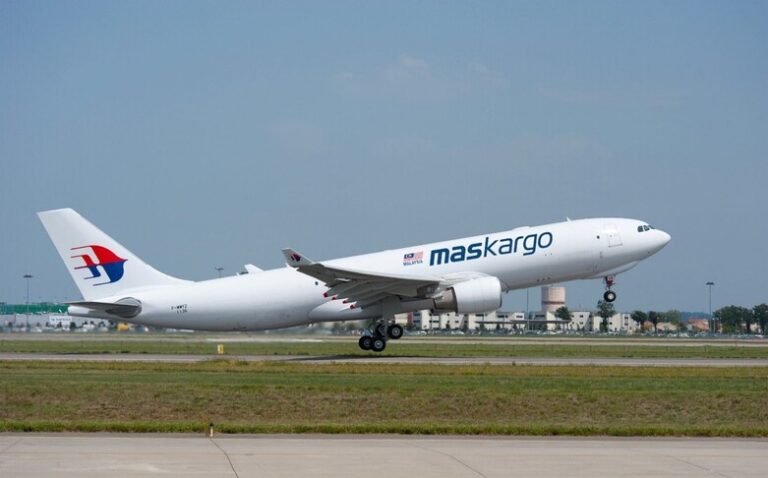
It was the first Cargo iQ audit for the airline, and it passed it with flying colors: Malaysia Airlines Berhad Cargo (MAB Kargo) is now Cargo iQ certified. The audit examines a company’s entire air cargo operations to establish if it is capable of providing quality air freight services to and from its global published network. To this end, MAB Kargo which has been a member of the air cargo community since 2018, reported 95% of its shipments to Cargo iQ in JUN24, for its first certification audit in Malaysia. The certificate it now holds is valid for the next three years, after which it will again be audited against its Master Operating Plan. Each audit examines an company’s clear objectives, corrective actions, continuous improvement activities, shipment planning, visibility and reporting, and alignment with the Master Operating Plan. “Cargo iQ helps members create a robust quality management framework – part of which is a methodology to plan, control, and measure the movement of shipments in various steps along the way,” the release states.

Passed its quality audit with flying colors . Image: MAB Kargo

Zulkefly Ujang, Head of Operations, MAB Kargo, announced: “We are extremely excited to join the distinguished list of Cargo iQ certified carriers. The certification stands as a testament of our unwavering commitment to provide seamless critical milestone tracking capabilities of our customers’ shipments throughout our cargo and airline network. The improved visibility on our service deliveries via CIQ dashboards enables proactive tactical measures to be taken to continuously maintain service consistency for our customers while driving higher performance standards from our handling partners.”

Laura Rodriguez, Manager Implementation and Quality Assurance for Cargo iQ, stated: “The Cargo iQ certification provides documented proof that a member has put quality at the forefront of their planning and strategy, through building a robust quality management framework that follows our principles. We are always very pleased to see members go through the audit process successfully, and even more so when it is their first ever Cargo iQ certification – it is rewarding for all the people that have been part of that process and a recognition of their hard work.”

cargo.one welcome flydubai Cargo onto its platform

0

flydubai Cargo has opted for cargo.one as its first digital sales channel, and its global network will soon be open for General Cargo bookings on the platform. Freight forwarders will thus have access to the capacities of the airline’s modern fleet of 88 Boeing 737 aircraft. The 2012- incepted Gulf airline offers 150+ international destinations across 53 countries in Africa, Central Asia, the Caucasus, Central and South-East Europe, the GCC and the Middle East, the Indian Subcontinent and South-East Asia. “Since the start of 2024, the carrier has expanded its network with the start of operations to Al Jouf and The Red Sea in Saudi Arabia, Basel in Switzerland, Islamabad and Karachi in Pakistan, Kerman and Kish Island in Iran, Langkawi and Penang in Malaysia as well as Mombasa in Kenya,” the release points out, highlighting the airline’s many interline agreements as well as its particularly short transit services in Dubai: “flydubai Cargo offers the reliability and convenience of high frequency services from Dubai to destinations such as Beirut, Colombo, Doha and Salalah. Shipments can be transferred from one flydubai Cargo flight to another in as little as one hour from arrival in Dubai.” The airline, too, profits from access to many potential new customers on cargo.one.

flydubai Cargo goes digital with cargo.one. Image: cargo.one

Mohamed Hassan, Senior Vice President of Airport Services & Cargo at flydubai, stated: “At flydubai, we have a long-standing commitment to creating free flows in trade and adopting best-in-class practices in the industry and we are pleased to reaffirm this with the launch of our digitalized sales. Our partnership with cargo.one will enable us to grow our cargo market reach and ensure the most efficient and user-friendly booking experience for our customers around the world.”

Moritz Claussen, Founder & Co-CEO of cargo.one, commented: “We are delighted to be the partner flydubai Cargo trusts to bring its digital sales strategy to life and we look forward to applying our market experience and digital best practices to support its exciting growth. Through the partnership, our freight forwarding customers will gain fast and exclusive access to flydubai’s unique cargo offering.”

Gebrüder Weisss grows its facility in Tbilisi

0

Over the past twelve years, Gebrüder Weiss has invested over 25 million euros in its logistics presence in Tbilisi. The latest investment totaled 11.5 million euros and saw its logistics terminal being expanded for the third time, gaining a further 13,000 m² of handling space. The company has thus responded to the increase in business between Europe and Central Asia. It has operated its own logistics center at Tbilisi International Airport since 2012, building it up to become a central hub for trade across the Caucasus region, and benefiting from free trade agreements with the European Union and the Eurasian Economic Union, enabling transits through Georgia. In just five years, Gebrüder Weiss has handled almost half a million tons via Georgia. These include textiles, household goods, high-tech, and automotive goods travelling via truck, rail, sea or air, for which the logistics services provider has provided transport, customs clearance and warehouse logistics.

Cutting the ribbon on Tbilisi’s third expansion in twelve years. Image: Gebrüder Weiss

Wolfram Senger-Weiss, CEO at Gebrüder Weiss, said: “This expansion is our response to the rising demand for transport and logistics services in the region, which are growing largely due to the increase in trade between the European Union, Georgia, and its neighbors Armenia and Azerbaijan.”

Alexander Kharlamov, Country Manager for Georgia at Gebrüder Weiss, revealed: “This is the third time we have expanded the logistics center since it opened twelve years ago. With this move, the first expansion in 2019, and the location’s connection to the railway network the following year, we now have a total of 142,000 m² of warehousing, handling space, railway, parking and open area at Tbilisi, with over 177 staff providing a full range of logistics services to our customers in the region.”

Thomas Moser, Regional Manager Black Sea/CIS at Gebrüder Weiss, explained: “We are also using this expansion as an opportunity to further build out our transport services in the Caucasus region and to ramp up our collaboration with Kazakhstan, Uzbekistan and other Central Asian countries. This will benefit our international key account customers, too.”

Swiss WorldCargo and Globe Air Cargo Bulgaria resume contract

0

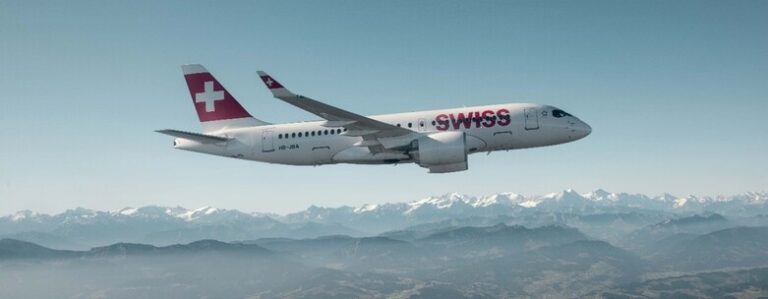
The two companies go back a long way, together – all the way to 2008. For the past 6 years, their partnership contract lay dormant, as the airline had paused its cargo services to Bulgaria. With the resumption of cargo sales on this summer, Swiss WorldCargo also rekindled its business relationship with Globe Air Cargo Bulgaria. Since 01JUN24, the GSSA is once more responsible for sales, booking, messaging, operational supervision, post-flight activities and claims, on behalf of Switzerland’s national air cargo carrier. To this end, Globe Air Cargo Bulgaria also employed an additional team member as a dedicated airline contact. “Swiss WorldCargo operates an A220 service between Zurich and Sofia, offering Bulgarian freight forwarders attractive connections across Europe, North and South America, and the Far East. The carrier has specialized in high-value, care-intensive and temperature-sensitive cargo  such as Valuables, Perishables, and Pharmaceuticals, alongside its X-Presso transportation solution,” the release explains.

Expertise in high-value cargo into and out of Bulgaria. Image: Swiss World Cargo

Tania Mlechenkova, GLOBE AIR CARGO Bulgaria Managing Director, announced: “Globe Air Cargo was proud to represent Swiss WorldCargo when it first began cargo operations in Bulgaria back in 2008, and we are more than delighted to welcome them back after a six-year gap. In fact, our joint contract was never terminated during all this time, which goes to show the value that trust and reliability create in a partnership. It was clear from our initial face-to-face tender meeting, 16 years ago, that our two companies share a strong common interest in providing exceptional customer service through long-term stability and expertise. That is the credo we follow. Special cargo shipments require particular care and professional attention. Globe Air Cargo has the expertise to handle these needs efficiently and precisely. To further strengthen our capabilities, we’ve recently added a fully trained team member, ensuring even more dedicated support for Swiss WorldCargo.”

Gieri Hinnen, Head of Cargo Global Sales at Swiss WorldCargo, confirmed: “Our expertise in transporting shipments that require extra care, and the high quality of our services is reflected in the high-quality work of the partners we collaborate with. This is also the case for Globe Air Cargo, which allows us to keep providing our cargo customers in Bulgaria with the extra care treatment they are accustomed to. We are glad to re-establish our partnership with Globe Air Cargo for a continuous and consistent service to our customers.”

Fraport Cargo: Duarte succeeds Conrady

0

From 01JAN25, Denis de Farias Duarte will head the Cargo Development team at operator Fraport AG and will thus be largely responsible for the further progress of the cargo business at Rhine-Main Airport.

Denis Duarte: “The implementation of IATA’s ONE Record initiative in transport chains can open up new avenues.” – Picture: private

“I am pleased that we have been able to recruit Denis de Farias Duarte, a proven professional from the cargo sector with more than 25 years of international experience in the air freight and logistics industry, for this position,” states Simone Schwab, Head of Aviation and Cargo Development at Fraport AG.

Brazilian native Duarte (49) has 25 years of experience in the air freight and logistics industry. He is moving within the Group from FCS Frankfurt Cargo Services GmbH. After graduating in molecular biology and anthropology, he worked in various positions at Lufthansa Cargo, Qatar Airways and Lufthansa Consulting. In April 2024, he joined FCS in Frankfurt as Senior Sales Manager. 

The Cargo Development Team at Fraport AG focuses on the further development and implementation of the Cargo Master Plan for the digitalization and optimization of cargo processes, space growth and site marketing together with partners at the Frankfurt site.

Duarte succeeds Max Conrady, who has held this position for around six years. Conrady left the company at the end of September after nineteen years with Fraport in various roles. Since 01OCT24 he has been a member of the management team of local railway developer Regionaltangente West Planning Company Ltd (RTW GmbH).

The Fraport management further announced that the company has sold its 10% stake in Delhi International Airport Limited (DIAL) to majority owner GMR Airports Infrastructure Limited (GIL) for a price of USD 126 million.     

On the occasion, Fraport CEO Stefan Schulte stated: “After a successful 18-year partnership driving impressive growth in Delhi, it’s time to start a new chapter. We look back with pride on the various milestones we’ve achieved together with GIL. We jointly upgraded and expanded Delhi Airport into one of Asia’s leading air transportation hubs.”

The Fraport Group has held its stake in Delhi Airport since India’s capital gateway was privatized in 2006. Fraport currently expects the transaction to be closed within the next 180 days, subject to approval in particular by Airports Authority of India (AAI) and GIL shareholders. The additional cash inflow from the divestiture will contribute to further reducing the Group’s net financial debt

Orchestrating smooth logistics for an opera festival

0

Chapman Freeborn operated a particularly delicate charter recently: delicate because when you transport an orchestra from A to B, you are not only dealing with irreplaceable instruments of great value, but also with musicians’ worries and emotions. Every musician has a very special relationship with their instrument and there are more than enough horror stories in the press about instruments going missing or becoming damaged. It is therefore understandable that they are reluctant to let their instruments out of sight.

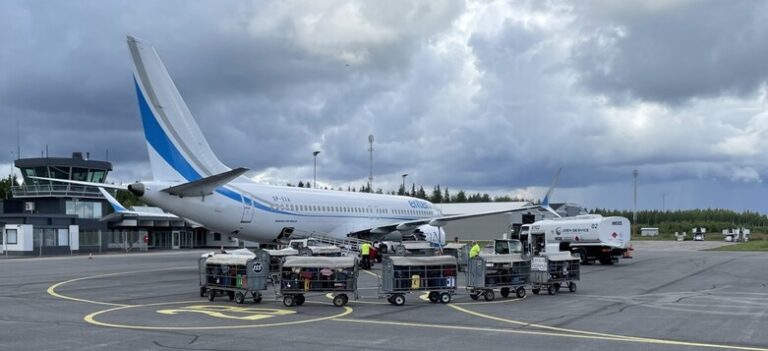
All tuned up and ready to fly. Image: Chapman Freeborn

In this case, it was Prague National Opera’s orchestra of 185 musicians and their instruments that were needing to travel between the Czech Republic and Finland to play in the Savolinna Opera Festival recently. Under the capable hands of Annika Eerola, Passenger Sales Manager Nordics, Chapman Freeborn, and Passenger Charter Broker, Gary Vaughan, the charter was carried out using a Boeing 737-800, and the musicians were able to accompany their instruments to the plane.

Annika Eerola, Passenger Sales Manager Nordics, Chapman Freeborn, explained: “This kind of charter is often challenging given the delicacy of the orchestra’s instruments and, understandably, members want to be next to them at all the times. Communication with the airport handling agent and the operator is therefore very important. We personally escort clients from their arrival at the airport to their departure, so that they know everything will be taken care of, enabling the client to enjoy a stress-free and smooth flight.”

Henna Orava, Producer, Savonlinna Opera Festival, commended: “Chapman Freeborn provided prompt assistance at every turn and throughout the process. I felt confident that they were in control of our order and its details. It was easy to make arrangements, and commitments were consistently honored.”