Home Blog Page 133

time:matters expands in Shanghai

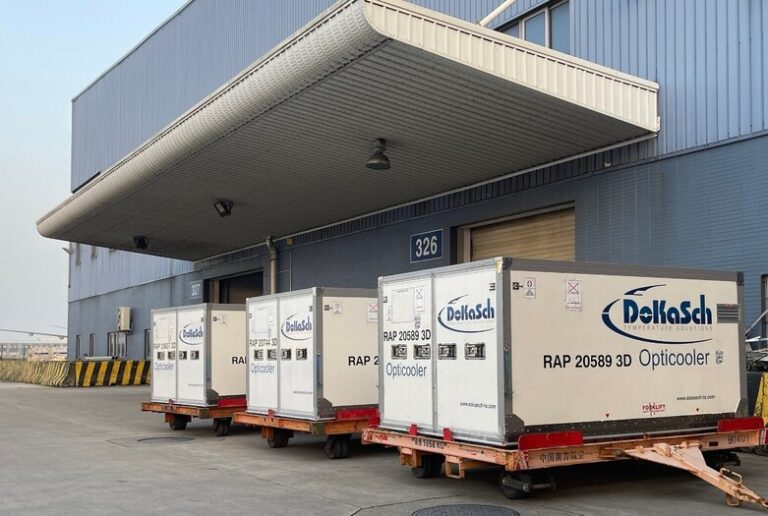
On 25JUN24, the specialists in organizing and operating ultra urgent shipments will inaugurate a courier terminal at Shanghai Pudong Airport. This will enable  in and outgoing courier and express air freight consignments to be handled with the utmost speed. The direct apron access of the tmCT facility, as it is called, means that the length of the entire process can be cut by two thirds, says Constance Wu, Managing Director of time:matters (Shanghai) International Freight Forwarding Ltd. In this specialty segment, this is a quantum leap in time.

Shanghai was chosen as the location for the courier terminal for two basic reasons. Firstly, time:matters has been active there with an own station for 5 years. Hence, it knows the local business and regulatory conditions extremely well. Secondly, the Chinese and East Asian market is becoming increasingly important for the subsidiary of Lufthansa Cargo. Local customers are served from there, whether through consulting activities, support in shipment bookings, the preparation of air waybills or local invoicing activities. “Our global customers, in particular, benefit from the Shanghai entity. Our network connects important Chinese marketplaces with the major economic centers in Europe and the USA,” says time:matters spokesperson, Katja Sonday.

time:matters is increasingly enlarging its service portfolio, as shown by a new courier terminal which opened at Shanghai Pudong – photo: company courtesy.  

time:matters asks for patience
When asked whether further comparable terminals are planned in China or the Far East in general, she replied: “We are looking at various options as part of our growth strategy. However, it would be too early to name specific projects or timelines at this stage. We ask for your patience.”
The tmCT has been designed to optimize both the monitoring and the handling speed for time-critical and sensitive goods. In doing so, time:matters is building on its many years of expertise gained at the Courier Terminals in Frankfurt and Munich, for example, since 2004 and 2019, respectively. “For time-critical, sensitive and high-value goods, speed and security are essential and the new terminal in Shanghai will “significantly improve” handling of imports and exports,” stated Constance Wu, managing director of time:matters in Shanghai.
Business areas for the subsidiary of LH Cargo include automotive, aviation and aerospace, high-tech and semiconductors plus medical technology.

New service: active monitoring of shipments
For the first time at the tmCT in Shanghai, time:matters offers the possibility to physically monitor shipments on the apron until loading or departure, using direct apron access. This guarantees maximum control over all shipments as well as a customized service, high reliability combined with the utmost flexibility for its customers. A hub monitoring system also enables real-time monitoring and informs the business partners proactively in the event of irregularities. A designated dock for receiving shipments, an X-ray system, and a dedicated counter for export and import documents further improve the quality of service, a press release emphasizes.

Sharply reduced handling times
To enhance the flexibility and speed of shipments and ensure optimal delivery and onward transportation, time:matters relies on fast truck access, its own delivery and pick-up ramp, and its own truck delivery to the consignee. Depending on the utilization of the waiting areas, this option saves additional hours in the drop-off and pick-up areas. Handling times will be reduced from approximately four hours for exports and six hours for imports to 120 minutes and 150 minutes, respectively. The terminal is open 24/7, 365 days a year. In contrast to Frankfurt, Paris-Orly, Zurich, Berlin or Warsaw, to name but a few major European hubs, night flight bans do not exist in Shanghai Pudong.

Supply chains: Don’t put all your eggs in one basket

… warns DHL in a remarkable analysis of latest supply chain trends. The ongoing global crises, including China’s constant military threat to Taiwan, have reinforced and recently accelerated a trend dating back more than four decades: the diversification of global production and supply chains. Lately, this phenomenon has increasingly been oversimplified as near-shoring, re-shoring, friend-shoring, China +1 and the like.
Here is a summary of DHL’s findings and recommendations for multinational investors and logistics companies, aimed at mitigating risks and avoiding unpleasant surprises.

The smarter diversification and supply chain solution – photo: CFG/hs

One-size-fits-all solutions are a thing of the past
The categories put under DHL’s microscope are Multi-Shoring, Multi-Sourcing, the Use of Different Transport Modes, and as a fourth dimension: the Diversification of Logistics Operations. In a foreword, DHL points out that supply chain diversification occurs as companies put aside agendas driven purely by cost efficiency and service levels. Instead, they now additionally focus on resilience, agility, and flexibility. This shift requires more sophisticated management of logistics operations, including design and inventory control, and may necessitate more investment based on longer-term planning. Since 1980, global trade has increased more than tenfold, reaching a record high of over USD 32 trillion in 2022 and remaining at that level throughout 2023.
The recent cascade-like accumulation of shockwaves caused by COVID-19, Russia’s war in Ukraine, the Hamas-Israel conflict, coupled with natural disasters such as the current heat wave hitting many regions, has led to considerable volatility, with disruption increasing by 183% since 2019 (33% in 2023 alone). The record highs also disguise the challenge of agility and resilience in supply chains, which prevent companies from responding effectively.

Missing out on USD 1.6 trillion in revenues every year
This vulnerability has resulted in an annual average of USD 1.6 trillion in unrealized revenue opportunities in the past few years, DHL calculates. The shelling of commercial vessels in the Strait of Aden by Houthi rebels is a daily occurrence and delays the ocean transportation of goods on the Europe-Far East route by around 10 days, as box carriers avoid the Suez Canal passage for security reasons and circumvent Africa instead.
This all asks for supply chain diversificationby augmenting the logistics infrastructure with additional capacities such as hubs, warehouses, and distribution centers. Depending on the requirements, this could include redundant logistics capabilities in other locations both near and far. DHL illustrates this by pointing at a European elevator manufacturer and a global productivity partner for mining and construction. Both employ a similar logistics diversification strategy but on a regional scale. Each company assembles different parts of its finished products at separate distribution centers across several regions. Spare parts are stored primarily at each country’s local distribution and customer centers, facilitating rapid repair of essential products as needed. Finished products are shipped directly from production sites to customer centers to ensure customer centricity and agility. This mitigates the risks resulting from ocean or rail transports halfway around the globe. A diversified logistics operation provides alternative options that maintain continuity in the supply chain during disruptions, DHL maintains.

Strategic gigafactories and supply chain diversification
To best illustrate the accelerating multi-shoring trend, the second category mentioned in the study, DHL showcases the Volkswagen Group and its electric vehicle strategy. The carmaker established ‘PowerCo’ to bundle the group’s activities along the EV battery supply chains. As a consequence, VW is now building gigafactories strategically located in key markets in Europe and North America. This allows the company to respond rapidly to market demands, optimize costs, meet sustainability goals, and reduce its dependency on the Chinese market.
Multi-sourcing is another tool to mitigate financial or operational risks such as a supplier’s inability to deliver on time or at all. But adding redundant suppliers to a company’s client base to be on the safe side by reducing dependencies might not be the smartest move.
Mode diversification is another category put under the microscope by DHL. It spans from one mode to parallel modes for each part or product. DHL mentions a best-practice model of supply chain diversification by highlighting a retail market leader. “Aiming to respond rapidly to consumer preferences and trends within 10 to 14 days, the company utilizes all modes of transport across all supply lines, opting, for instance, to ship goods via air freight between regions rather than using slower ocean freight. This allows swift and flexible stock reallocation between markets based on customer requirements and disruptions,” the DHL study states.

Enhanced infrastructures
As the final category of its supply chain diversification study, DHL focuses on the expansion of logistics capabilities. This means enhancing the logistics infrastructure with additional capacities such as hubs, warehouses, and distribution centers. Diversifying logistics operations may also involve outsourcing specific logistics activities. Like multi-shoring and multi-sourcing, a diversified logistics operation provides alternative options that maintain continuity in the supply chain during disruptions.
All in all, the study provides much food for thought. It is advisable for investors to take a close look at its contents before making decisions on diversifying their supply chains and business activities. After all, early information can prevent costly mistakes.

Spotlight on… Justin Atchison, Air Pricing and Procurement Manager DACH, CEVA Logistics

0

CargoForwarder Global’s ‘Spotlight On…’ series highlights the many different functions in the air cargo industry and talks to people involved in those jobs. There is so much that goes on behind the scenes when it comes to arranging air cargo transportation. Just one such aspect, and a crucial one when it comes to planning and commercial decision making, is pricing and procurement. This week, Justin Atchison, Air Pricing and Procurement Manager DACH at CEVA Logistics, takes us through his role, talks about what brought him to our industry, and has a few words of encouragement for those considering a career in air cargo.

Adaptability and mindset are crucial. Image: Justin Atchison

CFG: What is your current function? And what are your responsibilities?
JA: I lead the pricing and procurement team for the DACH region in the air cargo division at CEVA Logistics. My team and I manage tenders, long-term agreements, and spot business. Our goal is to unite all stakeholders — sales, customers, operations, and providers such as airlines, truckers, and handling agents — to find optimal solutions. Recently, I joined a European working group to share and implement best practices across various countries to enhance customer service.

CFG: What does a normal day look like for you? Or is there such a thing?
JA: In logistics, no two days are alike. Some days, I work on projects like improving pricing logic and streamlining processes with colleagues from other regions. On other days, urgent requests can disrupt plans, requiring immediate solutions. As we’ve seen over the past few years, unexpected challenges can include pandemics, geopolitical conflicts, severe weather, or unexpected offloads.

CFG: How long have you been in the air cargo industry, and what brought you to it?
JA: I entered the air cargo industry a decade ago through a trainee program with Lufthansa Cargo. I was more interested in the passenger side while studying air transport, but the opportunity to join a global cargo airline in the U.S. piqued my interest. After completing my trainee program, I handled pricing and related projects, including dynamic pricing in the Americas and new product implementation. Back in Germany, I helped implement the largest cargo joint venture on the North Atlantic, collaborating with experts from Lufthansa and United Cargo. This experience showed me the power of a diverse and skilled team with a common goal and what change it can bring. These lessons I now apply in my current role.

CFG: What do you enjoy most about your job?
JA: I love the constant learning and the competitive nature of the industry. Meeting customers and understanding the specifics of their businesses is particularly rewarding. I leverage my experience and network to enhance current solutions. Additionally, I depend on a wide range of colleagues from project logistics, ocean, ground, customs, and contract logistics, which provides ample opportunities for development and innovation. Working in an organization with a global reach adds to the excitement.

CFG: Where do you see the greatest challenges in our industry?
JA: Apart from industry volatility and consolidation efforts, digitization poses a significant challenge. While forwarding remains a people business, reducing transaction costs through automation is crucial. However, automating processes can diminish flexibility and personal connections with customers and team members. The key is to implement digital solutions smartly while maintaining valuable personal interactions. We must constantly evaluate where personal interaction adds value.

CFG: What advice would you give to people looking to get into the air cargo industry? Any particular training they should aim for?
JA: Adaptability and mindset are crucial. I’ve worked with geologists and linguists who became passionate and knowledgeable about air cargo. While formal education, apprenticeships, or internships are beneficial, the industry offers opportunities for those eager to work. Get your foot in the door, gain experience, and you can move around within the industry.

CFG: If the air cargo industry were a film/book, what would its title be?
JA: ‘Hitch – The Date Doctor.’ The forwarding industry is about creating useful matches, much like dating. Trust and honesty are paramount. Misrepresentation can quickly sour relationships, necessitating the search for new providers or customers. Success hinges on genuine and transparent interactions.

Many thanks, Justin, for your input.


If you would like to share your personal air cargo story with our CargoForwarder Global readers, feel free to send your answers to the above questions to cargoforwarderglobal@kopfpilot.at We look forward to shining a spotlight on your job area, views, and experiences.

Swiss WorldCargo captures CO2

The Zurich-based freight carrier has launched a new product to fight global warming. Its name: Aviation Tech Pioneer. The initiative is based on a two-pronged approach: the removal of 20% of greenhouse gas emissions through an innovative technology, combined with the use of Sustainable Aviation Fuel that accounts for an 80% reduction.

‘Aviation Tech Pioneer’ is offered as a Green Choice add-on service, so it can be booked voluntarily by the airline’s cargo customers. This option complements existing measures introduced earlier by the carrier and results from a partnership with Zurich-based specialist, Climeworks. This particular partner was chosen because of its direct air capture technology (DAC) combined with CO2 storage solutions. Climeworks already operates the two largest DAC extraction and storage facilities in the world. Its integrated concept has put the company in a leading position worldwide within the carbon removal field.

Displayed is the second Iceland-based carbon storage facility operated by Climeworks. It opened in MAY24  –  photo: company courtesy.

Captured, pumped and stored
DAC is a vitally important method of removing CO2 directly from the atmosphere and storing it permanently underground so it can no longer contribute to global warming. Climeworks has erected two storage facilities in Iceland. There, its local partner Carbfix pumps CO2 deep underground, where the gas reacts with basalt rock through a natural process, transforming it into stone. In this way, it can remain safely stored for over thousands of years.
Swiss WorldCargo points out that DAC technologies also offer a scalable means of procuring atmospheric CO2 for use as a raw material in manufacturing the next generation of synthetic fuels, best known as Sustainable Aviation Fuels (SAF). As widely recognized, the use of such synthetic fuels is crucial to the decarbonization of the aviation sector. SWISS and the Lufthansa Group have long been industry pioneers in this field, driving the scale-up of these key fuel technologies.

There is no one-fits-all solution
With immediate effect, Swiss WorldCargo’s customers can now opt to support the scale-up of critical tech to reach net-zero in aviation, as well as work on achieving their own scope 3 emission reduction targets. As Climeworks’ first airline partner, Swiss WorldCargo’s new premium offering reflects SWISS’ ongoing commitment to scale-up key decarbonization technologies. The new add-on complements existing initiatives that are part of the carrier’s portfolio, such as investments in Sustainable Aviation Fuel (SAF), the use of lightweight containers or the procurement of modern and fuel saving aircraft. Combined, they have the potential to pave the way for more sustainable practices in the aviation and logistics industries for the years to come.
The current heat waves in the Middle East, India and parts of the USA, which have claimed thousands of lives, show just how essential it is to take measures to combat global warming and achieve the net zero target in aviation. For example, temperatures in Saudi Arabia rose to a record 51.8°C during the Muslim pilgrimage Hajj. Neighboring Egypt reports a similar heat wave, as do Cyprus and parts of the Indian Subcontinent.

MUC welcomes a home cargo carrier

0

Munich Airport (MUC) is Lufthansa’s second-busiest cargo hub worldwide after Frankfurt. This is thanks to the belly capacity offered to the market by the airline’s intercontinental passenger flights operating from and to Munich. Soon, main deck A321 freighters will be adding main-deck uplifts of 28 tons to the available cargo booking options. The airport has long been campaigning for this service.

The management of Munich Airport is in a doubly festive spirit. First reason: Lufthansa Cargo is integrating MUC into its European regional network. This means that the years of campaigning to become part of Lufthansa Cargo’s trans-European A321F freighter services, pushed forward by MUC’s freight-minded CEO, Jost Lammers, have resulted in an initial success.
Secondly, MUC is getting a new home carrier. This is because the four A321 freighters flying in Lufthansa colors are operated by Lufthansa City Line, which is headquartered in Munich where their maintenance and technical center is also located. So, formally, the A321Fs are registered in Munich, without thus far serving the airport – until now.

Munich has long campaigned for getting an air freight home carrier. Now the mission is accomplished, states MUC’s CargoChief, Markus Heinelt – photo: courtesy MUC Airport

The market decides whether further flights will follow
This will change on 06JUL24. From that day on, the MUC-IST-MUC sector will be operated twice a week. Markus Heinelt, Munich’s Head of Cargo, speaks of a “welcome start” with hopefully more to come. Now it is up to the market to make the route a success. In all likelihood, this will also determine whether Lufthansa Cargo will increase the frequencies on this leg or add additional pan European freighter flights to and from Munich.
MUC-IST-MUC will be served on weekdays 6 and 7. “We expect demand to be high, as southern Germany accounts for 40% of the total air cargo market in Germany,” Manager Heinelt optimistically forecasts. And his boss, CEO Lammers, adds: “We see huge potential for air cargo at Munich Airport on account of the economic strength of our catchment area. As one of Europe’s leading airports with corresponding capacities for further expansion, cargo business is an important pillar of our Group strategy that will help us to achieve continued growth.”

High share of transit shipments
As far as products are concerned, it is likely to be mainly textiles from Turkey, but also car parts, chemical products and electronics flown westbound on board of Lufthansa Cargo’s A321F. These will include many transit shipments which will continue their journey via MUC to intercontinental destinations served by the Lufthansa long-haul fleet, predominantly in North and South America. Worth mentioning in this regard, is the recently announced connection between Munich and Sao Paulo, which will be served three times a week with an A350, starting from 09DEC24. Sao Paulo is the city with the highest number of German industrial enterprises worldwide that are active outside their national borders.
Eastbound ex MUC, cargo managers expect mostly automotive products, high-tech and pharmaceuticals to be flown by the A321Fs to IST; among them many transits coming from overseas.

Bhat speaks of an attractive network addition
The cargo airline has been operating a large-scale CEIV-certified pharmaceutical hub at Munich Airport since mid-2020. Hence, the local workforce is very familiar with the handling or interim storage of larger temperature-sensitive shipments.
Even though the first MUC-IST-MUC flight is still around 14 days away, Lufthansa Cargo clients can book their shipments on the new route with immediate effect. “This new freighter connection makes our global network even more attractive. For our southern German customers in particular, Munich Airport offers ideal conditions for the fast and reliable transportation of air freight, which ultimately also enables global business from another important European airport [Munich],” explains Ashwin Bhat, CEO of Lufthansa Cargo. The executive goes on to say: “With the launch of our cargo operations out of Munich, we are laying the foundation for aligning our network even more closely with the needs of our customers in the future and continuing to manage it flexibly.”

Excellent ground infrastructure
And with reference to its own pharma hub, the airline emphasizes that temperature-critical products can be stored and handled under optimal conditions. The facility is integrated into Lufthansa Cargo’s own premises comprising of 38,000 m² of space. Thanks to the well-developed ground infrastructure, the carrier is able to process and transport almost all products and commodities via Munich. Until now, these have mainly been accommodated in the lower deck compartments of the passenger fleets operating out of MUC, belonging to Lufthansa, Brussels Airlines, Discover Airlines, Austrian Airlines, and SunExpress. Soon, the main decks of the A321Fs will also be available, at least on the sector MUC-IST.

2024 at Half-Time: What’s the score?

Really, when it boils down to it, there are plenty of similarities between the air cargo industry and a football game. Both require strategy, teamwork, coordination, and efficient execution to achieve success. As a large part of CargoForwarder Global’s side of the world is currently in EURO 2024 fever plus we have just witnessed the longest day in the year, this is a good time to take stock of the year so far, and how we feel it may pan out. Taking on the role of a sports commentator, here we go!

Welcome, fans, to the half-time recap of the 2024 Air Cargo Industry Cup! Judging by the first half, we’re in for a thrilling year-long match, with the latest prediction standing at double-digit growth, following MAY24’s incredible play with a +12% year-on-year volume score. Let’s recap the action, the goals, the offsides, and look ahead to what strategies will bring victory in the second half.

All eyes on the ball as we head into double-digit growth this year. Image: Imagen AI creation/CFG

Opening Move: E-commerce Surge
From the very first whistle, the air cargo industry took early possession of the year with a rapid e-commerce surge. According to Xeneta, e-commerce demand boosted early volumes, with precise logistics akin to a series of well-coordinated passes setting up early goals. Willie Walsh, IATA’s Director General, commented in MAR24: “This is a strong start to the year. In particular, the booming e-commerce sector is continuing to help air cargo demand to trend above growth in both trade and production since the last quarter of 2023. The counterweight to this good news is uncertainty over how China’s economic slowdown will unfold.”

Key Goal: Efficient Operations
Using AI and advanced logistics, the industry began shifting towards greater efficiency, scoring crucial goals in customer satisfaction and on-time delivery. Ball control in the shape of CargoAi’s CargoQUALITY kick-off as well as increasing cooperation between service as software providers, logistics specialists, airports and airlines to develop cargo community systems, made for more tight-knit team play. More and more players are starting to make use of real-time data analytics to create more successful game strategies.

Offsides and Challenges
The challenges posed by economic uncertainties, fluctuating fuel prices, exploding rates in ocean freight demanded strength and balance from air cargo’s defense, which partly gained from a modal shift from sea to air. Xeneta’s Chief Airfreight Officer, Niall van de Wouw highlighted that the U.S. crackdown on e-commerce shipments out of China, however, coupled with the potentially negative impact of rising costs and increasing transit times on consumer behavior, could lead to a decrease in e-commerce shipments. This could have a knock-on effect of freighter over-capacity bringing air cargo rates down, going forward. Global supply chain issues and geopolitical tensions were major offsides, causing delays and rerouting. However, the industry adapted quickly, showing resilience and maintaining strategic possession.

Strategic Goal: Sustainability Initiatives
One standout goal was the industry’s push towards sustainability. More airlines and forwarders signed SAF agreements, interest in TIACA’s BlueSky initiative grew, and diverse stakeholders pushed for hydrogen and electric solutions to aircraft propulsion. Several major airlines reported reductions in carbon emissions through new fuel-efficient aircraft and other sustainable practices such as ground equipment shifts towards electric vehicles, for example.

Penalties and Fouls
Penalties came in the form of increased regulatory scrutiny and rising operational costs. Safety issues, in particular, posed a concern both on the ground and in the air, Companies had to navigate these challenges carefully, avoiding fouls that could lead to costly delays. Red and yellow cards were metaphorically issued for compliance breaches, maintenance failures, and inadequate training, pushing players to stay within strict regulatory frameworks.

Second Half Predictions: July to December
As we move into the second half of 2024, the air cargo industry must stay adaptable, leverage technological advancements, and maintain a strong focus on sustainability to secure a win. Play strategy should include the expanding into emerging markets such as Southeast Asia and Africa. Establishing reliable networks and forming strategic partnerships will help to create strong offensive play. Managing high volumes while maintaining quality will test the industry’s stamina and strategy, and innovations in cargo handling and last-mile delivery will be pivotal.
Xeneta’s Chief Airfreight Officer, Niall van de Wouw, foresees a similar end of year peak to last year, and feels that the industry is in a better position to cope with the increase in passenger belly capacity over this summer.
IATA predicts that total air cargo volumes may reach 62 million tons in 2024. “The global economy counts on air cargo to deliver the USD 8.3 trillion of trade that gets to customers by air. Without a doubt, aviation is vital to the ambitions and prosperity of individuals and economies. Strengthening airline profitability and growing financial resilience is important. Profitability enables investments in products to meet the needs of our customers and in the sustainability solutions we will need to achieve net zero carbon emissions by 2050,” Willie Walsh, IATA’s Director General, commented, at the recent IATA General Meeting.
Teams capable of executing these strategies with precision and resilience will emerge victorious, navigating the challenges and seizing the opportunities that lie ahead.

A freighter full of Yaks

Flying to new green pastures. Image: Silk Way West Airlines

Weighing in at between 225 kg (small female) to 585 kg (large male), the total weight (undisclosed in the press release) of the 116 yaks recently transported, must have been pretty impressive. An unusual shipment that Silk Way West Airlines was selected to carry, as it is not every day that such large and hairy animals board a plane. Though the airline has seen its fair share of extraordinary animal shipments, including the transport of alpacas, kangaroos, European bison, alongside more regular horse and dog shipments.
This mission was on behalf of the Azerbaijan’s Ministry of Agriculture, which purchased the yaks from Kyrgyzstan as part of its breeding program in Kalbajar. Kyrgyzstan’s native cattle breed has been domesticated and raised there over the past hundred years or so. Yaks are characterized by their undemanding nature, their adaptability to conditions in extreme climates; and the fact that they live outdoors all year round and can thrive at altitudes of up to 4.500 meters. Their use is very versatile – not only do they provide basic nutrition such as milk and meat, but also leather and wool for clothes, tools and housing. Kyrgyzstan has long supported yak husbandry, and Azerbaijan, too, is now seeking to promote and support this type of sustainable agricultural development.
The yaks, vital to the agricultural biodiversity of Azerbaijan, traveled over 2,000 kilometers aboard a Boeing 747-400F from Bishkek Manas International Airport to Ganja Airport. To ensure the highest welfare standards, the yaks were accommodated in custom-designed crates that provided protection from injury and stress. The aircraft was equipped with advanced ventilation and temperature control systems to maintain an optimal environment throughout the journey,” the release described. Once at destination, the animals continued their journey by truck to Kalbajar, where they will “enhance the genetic diversity of the region’s livestock.” Vugar Mammadov, Vice-President CIS and Central Asia at Silk Way West Airlines, commented: “We are honored to support sustainable agriculture and biodiversity through expert handling and transportation of live animals. This collaboration with the Ministry of Agriculture underscores our commitment to enhancing local ecosystems and contributing to global sustainability efforts.”

An established Solar Challenge partnership

The solar vehicle looks more impressive with each challenge. Image: AFKMLP Cargo

The Nuna12 picture in the image, here, is the descendent of Delft University of Technology’s original Nuna that won the sixth World Solar Challenge in Australia back in 2001. At the time, the university’s Solar Team was the first amateur team to win the race, outstripping 43 other competing teams. They had been inspired to enter the race after having watched a film called “Race the Sun,” and asked Wubbo Ockels, first Dutch astronaut and professor at the TU Delft, to be their team coach.
The World Solar Challenge was created soon after Danish inventor, Hans Tholstrup built the first solar-powered car and drove it across Australia in 1983. His invention was a reaction to the global oil crisis in 1973, which led to people seeking alternative and more sustainable energy sources. His car demonstrated the potential of solar energy. Delft University has been participating in the challenge over the years to contribute to sustainable innovation. “Today, solar racing continues to drive technological innovation and raise awareness for the environmental impact of fossil fuels. It challenges teams to develop and refine new technologies, contributing to advancements in sustainable technology that will eventually benefit commercial industries,” the release states.
Since Air France KLM Martinair Cargo also follows a sustainability strategy, it has partnered with the Dutch Brunel Solar Team in previous years, too. Now, the 2024 Sasol Solar Challenge is on in South Africa, and AFKLMP has again stepped up to assist the Brunel Solar Team with its logistics as it prepares to participate in the challenge 13-20SEP24. “As partners, we hope to help the team win this prestigious solar race for the fifth time!” the release states. “We will handle air transport and related logistics for the team’s solar vehicle, the Nuna 12s. To minimize environmental impact, AFKLMP will offset the fuel required to transport the Nuna 12s from Amsterdam to Johannesburg with SAF (an alternative aviation fuel), significantly reducing the carbon footprint of this journey.” GertJan Roelands, SVP Commercial at Air France KLM Martinair Cargo, stated: “Air France KLM Martinair Cargo is inspired by and aligned with the mission of the Sasol Solar Challenge. The airfreight industry faces the challenge of reducing its carbon footprint. Our goal is to lead innovation in this area by spearheading initiatives that involve all industry stakeholders.”

Etihad provides extra cargo capacity this summer

100 new passenger flights with cargo capacity. Image: Etihad Cargo

This month sees the UAE carrier expand its belly capacities for cargo. Eight new destinations have joined the schedule: Antalya, Bali, Al-Qassim, Jaipur, Malaga, Mykonos, Nice and Santorini, and 100 new weekly passenger flights in total are now being offered. Among them are increased passenger flight frequencies to Europe, the Middle East and Asia. U.S. services were already increased back in MAR24 with the launch of a fourth US gateway: Boston.
In Europe, from 02JUN24, the airline will offer cargo capacity on three weekly passenger flights to Malaga and two flights per week to Nice. Athens flights increase to 14 per week, two of which will operate via Mykonos, and two others via Santorini. New destination, Antalya in Türkiye, will be served thrice-weekly, complementing 14 (instead of 10) weekly flights to Istanbul from 22JUL24. Dublin will also see an increase come 23JUL24, with 10 flights per week, as opposed to seven.
In the Middle East, Saudi Arabia’s Al-Qassim joins as a new destination (thrice-weekly). Flights to Amman double to 14 per week, while Kuwait flights increase from 21 to 28 per week. Bahrain, Beirut and Muscat all see an increase of two flights per week, Doha is connected with five more weekly flights, whilst Cairo flights increase to 28 per week. Over in India, Jaipur is the new destination with four weekly flights, complementing Thiruvananthapuram’s ten weekly flights (up from seven since the 2023 winter schedule). Ahmedabad and Bengaluru are now each served 17 times a week, the Kolkata service increases to eight per week.
New route, Bali, sees four weekly flights, while services to Bangkok are increased to 18; Colombo to 27; Karachi to 17; and Seoul to 11.
Stanislas Brun, Vice President Cargo at Etihad Cargo, said: “With the launch of its summer schedule, Etihad Cargo will deliver significant benefits to its partners and customers, thanks to the added belly hold cargo capacity and enhanced connectivity to key markets. The expansion of the airline’s passenger network, in combination with Etihad Cargo’s regular and charter freighter services, will substantially increase cargo capacity across Europe, the Middle East and Asia. Introducing new routes and increased frequencies will reinforce the connections between Abu Dhabi and major global markets, effectively meeting the growing demand for cargo capacity.”

AviAlliance sells Budapest Airport

BUD CargoCity was inaugurated in NOV19 – photo: CFG/hs

It had been a long time coming, but now it’s done: Budapest Airport is changing hands. New owner is a consortium consisting of Hungarian Corvinus Zrt. (80%) and the French co-investor Vinci Airports (20%). According to local sources, the total equity value of the deal is EUR 3.1 billion, with net debt of EUR 1,2 billion to be added to the amount. Originally, AviAlliance did not want to sell its stakes, as airport ownerships are an important source of income for its parent, Quebec’s Public Sector Pension Investment Pension Fund, to finance pensions. However, constant pressure from the Orban government has now prompted it to sell its majority stake (55,44%) in BUD.
Following the inking of the sales agreement, Gerhard Schroeder, Managing Director of AviAlliance, stated: “Since our initial investment in 2007, Budapest Airport has grown significantly. Together with our co-shareholders, we have invested a total of more than 700 million EUR in the expansion and development of the airport. Thanks to this and to the dedication of its excellent management team and employees, the airport has been internationally recognized for its high-quality service. We are convinced that our investments and development plans provide a solid foundation for continued success under the new ownership.”
Under the ownership of AvíAlliance, Budapest Airport experienced substantial growth in passenger and cargo traffic. In 2023, 14.7 million travelers departed or landed at BUD while air freight throughput surpassed 200,000 tons.
One of AviAlliance’s most important investments was the development of the BUD CargoCity, the first phase of which was inaugurated in 2019 followed by subsequent enlargements. With its numerous handling facilities and office wings for freight forwarders and ground operators, it has put Budapest on the international cargo map. The constant increase in shipment volumes since then is impressive proof of this.