The war in the Middle East has a significant impact on regional and international air traffic, including freighter services. One of the main companies affected is Malta-based Challenge Group, which has close ties to Israel due to its own history combined with longtime business relations. CargoForwarder Global (CFG) spoke with Sales Chief, Or Zak (OZ), about the consequences of the conflict for his airline and future fleet plans.
“As long as Ben Gurion Airport remains open, we will continue serving Israel,” states Or Zak of the Challenge Group – courtesy Challenge Group
CFG: Challenge Group has its roots in Israel, a country and market it still serves today. How does the current military situation in Israel and the entire Levante region affect your company’s freighter operations?
OZ: Challenge Group has been serving the Israeli market for over four decades, starting with facilitating the perishable trade with Europe and evolving into a key player in managing complex verticals.
Regarding the current situation, I can confirm that as long as the airspace and airport [Ben Gurion, Tel Aviv] remain open, we will continue to operate. By doing so, our services rendered to standard market conditions strictly follow regulatory guidelines to ensure the safety of our staff and assets.
CFG: Is your airline a sort of lifeline ensuring constant supplies of goods urgently needed locally?
OZ: Our expertise allows us to offer end-to-end logistics solutions for a variety of commodities, ensuring efficient operations for the local freight forwarding and shipper community. As part of our growth and development plan, we remain committed to connecting this market to the world. During any disruption or challenging situation, as a pure freighter operator, we play a crucial role in ensuring the supply chain remains operational, especially when the capacity offered by passenger aircraft suddenly disappears. We provide essential support to local trade and meet the region’s logistics needs, all while maintaining our commitment to the safety and security of our staff and aircraft. As already stated, we strictly adhere to the guidelines and regulations set by the relevant regulatory bodies to ensure smooth and secure operations without compromise.
CFG:You just added two Boeing converted B767-300BDSF to your fleet, bringing the total number of this freighter variant in your fleet to four units. Thanks to the additional capacity, you launched new services to Delhi in addition to three weekly services to Mumbai. Is the Indian market Challenge’s new El Dorado?
OZ: As a pure freighter operator and logistics provider, Challenge Group views itself as an enabler of global trade. We strategically deploy capacity based on where our customers need us most. With the shift of some manufacturing from China to India, there has been a growing demand for increased capacity to serve specific industries such as pharmaceuticals, electronics, high tech, and aircraft engines. During our 767 conversion program, we repeatedly emphasized that this added capacity would allow us to explore new markets and offer enhanced logistics solutions to our customers. By opening new destinations and increasing frequencies to India, we have fulfilled that promise, and the local freight forwarding and shipper communities have embraced our innovative approach to the supply chain.
CFG: Including these latest additions to the fleet, the Challenge Group now operates ten all-cargo aircraft. Are more to come? And if so, which models are you eyeing?
OZ: Currently, Challenge Group operates a fleet of ten fully-owned freighters, consisting of six Boeing 747-400s and four Boeing 767-300BDSFs, supported by three AOCs. However, there is more to come soon, so stay tuned.
We are progressing rapidly in line with our fleet growth plan, having just completed the B767 conversion program. To offer our customers even more efficient, flexible, and competitive solutions, we’ve already announced plans to add Boeing 777-300ERSF converted freighters to our fleet next year, which will be a valuable asset addition.
CargoForwarder Global’s ‘Spotlight On…’ series illustrates the many different roles involved in ensuring that the air cargo industry runs smoothly and efficiently. Digital marketplaces have fast become a key factor in bringing airline capacities and freight forwarder requirements together, and the combination of technology experts and experienced cargo minds is creating all kinds of digital opportunities for greater process transparency and efficiency. This week, we learn from Gunda Buhr, Customer Success Manager at CargoAi, about achieving success on all levels: customer, career, and air cargo as a whole.
Wearing many hats, life is never dull. Image: Gunda Buhr
CFG: What is your current function and company? And what are your responsibilities?
GB: I joined the software company, CargoAi, about 20 months ago. While I officially started as a Customer Success Manager, working in a startup means that you wear many hats. Flexibility is key—you jump in wherever you’re needed most, always with the goal of putting a smile on the customer’s face. My responsibilities may change day to day, but the heart of what I do is ensuring that our customers feel supported and heard.
CFG: What does a normal day look like for you?
GB: Our team is a wonderful mix of over 45 people from all corners of the globe, working remotely. So, while it presents challenges with time zones, it also gives us the unique opportunity to be ‘on’, 24 hours a day. If something urgent needs attention, someone, somewhere, will be able to help. There’s no typical day in this kind of setup. Every day is about stepping up, taking ownership, and working as a team to solve whatever comes our way. And that keeps things exciting.
CFG: How long have you been in the air cargo industry, and what brought you to it?
GB: My fascination with airfreight started in 1999. Growing up in South Africa, I remember my family’s annual trips to Germany and how I was always intrigued by the logistics of it all. Even as a little girl, I knew I wanted to be part of this industry, to work for an international company. It was a dream that’s stayed with me, and getting to live it now feels like coming full circle. It’s an industry that captured my heart from the beginning, and it hasn’t let go since.
CFG: What do you enjoy most about your job?
GB: What I enjoy most is that there’s no rigid job description. I get to work on whatever is needed to create the best experience for our customers. There’s something so rewarding about being part of a team where everyone, no matter where they’re from, comes together to make things happen. It keeps me grounded, knowing that we’re all essential in our own way. And that sense of collaboration — knowing that we’re better together — is something I truly value.
CFG: What do you see as the greatest challenges in our industry?
GB: Since the day I entered the airfreight industry, we’ve been talking about digitizing processes, about becoming faster and more efficient. And here we are, 25 years later, still working on it. It’s not that the solutions aren’t out there; they are. But there’s a hesitation, an unwillingness to let go of the old ways and old things. I think the biggest challenge is to have the courage to embrace change fully. We need to listen to fresh perspectives, especially from those coming into our industry with knowledge of how other sectors have made this leap. If we can do that, we’ll rediscover what true speed and innovation look like.
CFG: What advice would you give to people wanting to get into the air cargo industry? Any particular training they should aim for?
GB: If you’re considering joining the airfreight world, be ready for an exciting, ever-evolving ride! It’s complex, yes, but that’s what makes it so interesting. You’ll never stop learning — about different countries’ regulations, customs laws, safety protocols, and so much more. Start with the basics: understanding how cargo operations work and the potential of APIs to transform the industry. Once you have that foundation, everything else starts to click. And trust me, once you’re in, you’ll find it hard to leave. There’s no such thing as a dull day in this business!
CFG: If the air cargo industry were a film/book, what would its title be?
GB: “Chasing the Sky: A Journey in Speed and Innovation.”
Many thanks for sharing this with us, Gunda!
If you would like to share your personal air cargo story with our CargoForwarder Global readers, feel free to send your answers to the above questions to cargoforwarderglobal@kopfpilot.at We look forward to shining a spotlight on your job area, views, and experiences.
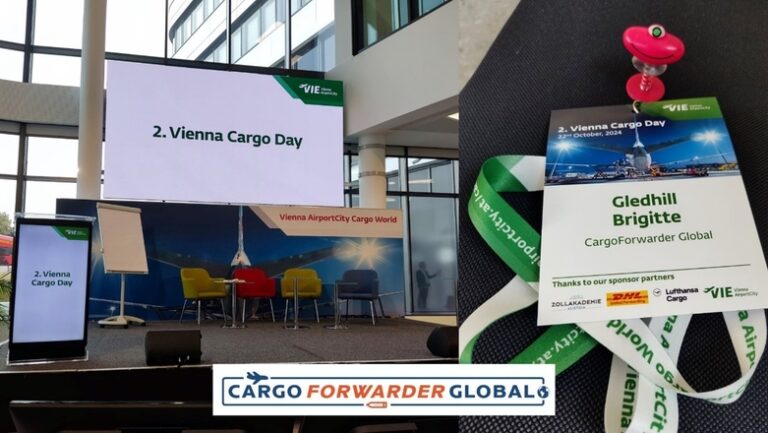
Vienna International Airport hosted its second annual Cargo Day on 22OCT24, bringing around 160+ interested parties to its new conference and innovation center, to network, present, and discuss the challenges and opportunities shaping the air cargo industry. There was certainly an ambience of opportunity given the healthy number of logistics students in attendance from Vienna’s WU university, but it was also clear that despite the repeated emphasis on the need for collaboration, when it comes to a unified cargo focus, Vienna Airport faces its greatest challenges from within.
Turning up the volume on cargo at VIE for a day. Image: CFG/B. Gledhill
Full marks for effort on the part of Ralph Rösener, Manager Cargo Business Development, Vienna Airport, who opened the event and is proactively involved in positively marketing the airport to potential new cargo customers. In his opening address, he outlined the wish to build on the first Cargo Day’s discussions from the previous year, where the emphasis had been on sustainability and hydrogen technology, and to offer a platform for more innovation and networking. The global role of cargo faces an increasing number of challenges and Cargo Day 2 should therefore explore all the possibilities for the industry’s future. Among the challenges stated over the course of the day, were the ongoing double-digit growth in demand pitted against a lack of capacity, leading to higher freight rates and aircraft operating at high utilization. Other examples were e-commerce-related risks, cybersecurity risks, and general aviation safety in an industry under pressure.
A perfect breeding ground for cargo If you take a look at Vienna Airport’s services, the ingredients for a potentially thriving cargo segment are all there: 24-hour airport and customs operations, a seriously good emphasis on sustainability and the environment, and substantial investments in office and warehousing facilities, notably in pharmaceuticals, which saw its own dedicated conference over the following two days, 23-24OCT24. The airport celebrated longstanding relationships with Korean Air Cargo (20 years), and Emirates (20 years), this year, and naturally has a close relationship with Lufthansa Cargo – one of the co-sponsors of the Cargo Day event – given that the Lufthansa Group plays a significant role in the airport’s business success.
Passenger this, Passenger that… Yet, both the opening presentation by Prof. Dr. Günther Ofner, Joint CEO & CFO of Vienna Airport, as well as Route Developer for East Asia, SE, Asia, and Oceania [the airport’s most important cargo regions, by the way], Ursula Pusch’s explanation on how routes are strategically considered and steered, focused almost entirely on tourism and the future of aviation from the point of view of the passenger business. In fact, when CargoForwarder Global raised the question as to how cargo figures in route planning, Pusch’s frank answer was that cargo does not bring in as much money as passenger. Apparently, a different department exists for freighter steering, but oddly enough, that department or contact was neither named nor present.
Clearly, the passenger business is the number one focus for any new routes or capacity increases at Vienna Airport in its goal of attracting more airlines, more destinations and increased frequencies. Yet the air cargo industry cannot survive on bellies alone, and the airport’s stance here appears oddly outdated and short-sighted, particularly in the aftermath of the pandemic – and not to mention, a flourishing cargo airport just down the road, in the shape of Budapest (BUD), which held its own Cargo Day a couple of weeks beforehand. CFG reported.
Cargo is six times more financially significant Those focused purely on the passenger business, would do well to ask TIACA’s Glyn Hughes for his slide on the significance of air cargo in global economies. He used his welcome slot to spread the much-needed message yet again: that while tourism’s global economic contribution in 2023 was a staggering USD 1.4 trillion, air cargo’s value during the same time was USD 8 trillion. In plain words: the air cargo sector is nearly six times as valuable as tourism.
Vienna has a lot to be proud of Despite air cargo’s lower-class (or maybe that should be ‘belly-class’?) status, those actively involved in air cargo at Vienna Airport, have much to be proud of. “Well done, Vienna Box Kickers*!” was Sam Okpro’s message in his presentation when he echoed Michael Mottl, Vienna Airport’s Head of Customs and Documentation’s figures on the airport’s cargo performance. Vienna has seen record-breaking months this year, with cargo volumes up 18.8% from JAN24 to AUG24. JUL24 saw 25,000 tons of cargo in what is usually a quiet month – and next to MAR24, was the strongest month so far. “This year is completely different to every year before,” was Mottl’s verdict, and at 4.4% over 2019’s cargo figures, “It looks like cargo is back again!”
Belly capacity increased from 37% to 41% this year. Freighters make up 29% of business, and trucks 30%. Mottl pointed out that Vienna is growing faster than many German airports, but admittedly not as fast as Budapest. Imports make up 55% of the business, Exports 45%. The Far East, at 72% market share, is by far the hub’s most important focus. Vienna Airport’s recent CEIV Lithium Battery certification was triggered by a request from Korean Air Cargo, and the airport illustrated a number of other innovative measures currently being worked on.
e-commerce up, general cargo going nowhere “e-commerce is the main driver of cargo volume increase,” Mottl stated, warning that general cargo is facing challenging times, and the industry in general is plagued by uncertainty in the consumer markets, international crises, and EU overregulation and bureaucracy. Despite 25 years of talking about going paperless, paperwork is massively increasing, and he believes: “We now have 50% more paper for the same amount of cargo, compared to 10 years ago.” Hence, a Cartken initiative being trialed to autonomously transport paper documents to the aircraft.
A cargo milk round** Taking a look at the booths at the Cargo Day 2, which included freight forwarders, specialist pharma couriers (in preparation for the following two days where the focus was 100% on pharmaceuticals transportation), and airlines, training clearly stood out as a focus in the shape of the WIFI (the Austrian Chamber of Commerce training institute), the Zollakademie (Customs Training Institute), and – not often seen at cargo conventions, but also a large factor in global transportation – the Austrian military logistics school. From that perspective, Vienna’s Cargo Day 2 did well to inform and possibly attract the large group of WU students to a future in air cargo logistics – whichever form it may take.
“Paddle before you know the wave is good!” One eye-opening and entertaining highlight was Prof. Dr. Sebastian Kummer’s (Vienna University of Economics and Business) exploration of the potential of AI in freight and supply chain management. He illustrated its role in improving forecasting accuracy and tackling industry challenges, and highlighted AI’s use for predictive analysis, route optimization, and crisis mitigation, while also cautioning that reliance on technology without transparency and oversight, poses risks. Kummer observed that as AI adoption grows, companies with limited resources often benefit more from the efficiency gains than those already skilled and achieving. He surmised that air cargo’s slow move towards AI could be due to the large focus on safety and security. Nevertheless, he recommended that AI can be used in almost all freight transport processes and saw its greatest potential in route planning and handling optimization. “It is better for single tasks than business intelligence,” he said, and encouraged the audience to try it out and learn from “hopefully not too many errors!”. His closing motto was: “Paddle before you know the wave is good!”
*‘Box Kickers’ are what passenger colleagues in North America call their cargo counterparts.
**‘Milk round’ is the term used in the UK for the semester in which companies visit universities to attract and recruit their graduates
Sustainability is a much-used word. Every transport company positions it prominently on its website. It stands on the agenda of most conferences initiated by players of the air freight and logistics industry, stimulates discussions, soothes the conscience of the organizers and inspires the imagination of the participants. But what are the practical consequences for everyday life?
Lemon Queen CEO Audrey Serdjebi is one of the most innovative figures in air freight PR and communication – photo: courtesy LQ
Sustainability is an overarching topic that encompasses all areas of life. Despite this understanding, most people change their lifestyle and consumption habits rather hesitantly, if at all. This was documented at a recent aviation conference in a European metropolis. Panelists lauded new approaches to achieving net zero in air freight and road feeder traffic not in 2050, but in 2040 or even earlier. Nods of approval in the hall and big applause from the participants for the proposals made by experts.
Sobering gap Then it was time for a lunch break. An hour later, a look at the garbage cans standing in the room was sobering: in addition to waste such as paper napkins and packaging, they were overflowing with leftover food. By personal impression, the latter made up at least a third of the garbage, including pieces of meat, sausages, bread or uneaten, discarded potatoes, rice, and lots of vegetables.
Sustainability stood high on the agenda of the meeting; yet, the throwaway society was having a ball in the dining room.
It was a scandal, but none of the 100 or so attendees were irritated by it, or at least no one criticized or even mentioned the food waste happening at the conference. A typical example of the widespread gap between theoretical knowledge and individual consumption patterns.
The media world is no exception. The paperless office is still an illusion despite all digitalization efforts. The same accounts for airports, despite electronic data transfer (please see the statement of manager Michael Mottl from Vienna Airport in Brigitte’s coverage of the recent Vienna Cargo Day).
Words can move mountains This can’t go on forever, something has to happen – finally, is what the French PR agency, Lemon Queen, thought, and that is why it has now launched Lemon Green. Lemon Queen announces that itstraditional marketing portfolio of PR,social media, design, branding, and event services, will be complemented by providing eco-friendly added value that extends beyond today’s methods of communication. Lemon Green aims to create a comprehensive eco-system of environmental responsibility, including all aspects of communications, by implementing sustainable solutions in close cooperation with its business partners.
“Words can move mountains. At Lemon Queen, we know all about the power of communication in driving change and influencing opinion, and see it as our urgent duty to raise awareness about the air cargo industry’s challenges and efforts in ecological transition,” says Audrey Serdjebi, Chairwoman and CEO of Lemon Queen. Audrey goes on to say: “Every action counts. Many, when they hear the word ‘Sustainability’, immediately think of carbon emissions reduction through the use of Sustainable Aviation Fuel. Yet biofuels alone will not provide the entire answer, and the onus of proof is not just on airlines. All of us within the air freight industry have a collective responsibility to act. Lemon Green provides the expertise and the tools to create positive change, meeting the growing demand for liable Corporate Social Responsibility-aligned communication.”
Innovative program The spectrum of Lemon Green’s activities ranges – among others – from designing and constructing eco-friendly conference booths, to eliminating environmentally unfriendly promotional goodies, and establishing partnerships with NGOs.
“Since we are the first communication agency specialized in air freight, to advocate for eco-responsible communication, we consciously lead by example in accordance with our commitment charter,” says Marie Férole, Eco-Communication Officer at Lemon Queen. “Our skills, capabilities, and values must serve a message that promotes change, and we bring new staff and partners on board who share our mission.”
She warns against the widespread misconception that sustainability solutions are extremely expensive and time-consuming. This said, even small, inexpensive actions can have a big impact, she emphasizes. Lemon Green helps implement these.
Four suspects were detained in Poland on charges of endangering DHL freighters and their crew with parcel bombs. Two other suspects are still being searched for internationally, a spokesperson of the Polish public prosecutor’s office told a local news agency. Poland’s government has now openly accused Russian secret services of orchestrating the attacks. As consequence, it closed the Russian consulate in Poznan.
Foreign Minister Radoslaw Sikorski ordered the shutdown of a Russian Consulate in Poland on allegation of espionage. Photo: Gov PL
According to the investigators’ findings, the group is said to have sent packages containing hidden explosives and other dangerous materials to fake recipients in EU member states, including transits via UK airports destined for Canada and the U.S. Various courier services were involved in the supply chain of the parcel bombs in order to disguise the shipment’s tracks. The packages were prepared in such a way that they could autonomously ignite or explode while airborne or being trucked.
The Polish authorities hope for more details In connection with the arrests, the Polish security services did not provide any information as to whether a parcel bomb sent by the suspects via DHL Express, had exploded or caught fire during transportation. Furthermore, the public prosecutor’s office did not disclose if the detainees were Polish citizens or foreigners living there. In addition to the attempted attacks, the perpetrators also aimed to test the routing of the shipments containing explosives on their way between Europe and North America, to reconnoiter transit points and running times.
Hybrid war The arrest of the four suspects is the second blow struck by investigating authorities against saboteurs who apparently have DHL Express in their crosshairs. On 19SEP24, a Lithuanian national was arrested by local security forces who had identified him as dispatcher of parcel bombs. The man is said to have tried to disguise his identity with the help of fake postal addresses, fantasy names, and false information about the recipients of the shipments. An accomplice was simultaneously arrested in Poland. Earlier, a parcel bomb sent by the suspects to an unknown consignor and flown by DHL Express via its hub Leipzig Airport, ignited on the apron during transfer to a commuting aircraft, fortunately not harming local ground workers or causing serious damage, CFG reported.
Almost simultaneously, a package transported by DHL Express exploded in Minworth near Birmingham, UK.Ken McCallum, the head of Britain’s MI5 warned that Russia’s GRU military intelligence appeared to be on “a sustained mission to generate mayhem on British and European streets: we’ve seen arson, sabotage and more”, see here.
Operatives paid by the Kremlin Confronted with these and similar allegations, the Putin regime repeatedly denied any sabotage activities, but blamed accusers of spreading conspiracy theories.
The government in Warsaw takes a very different view. On Tuesday (22OCT24), Poland’s Foreign Minister Radoslaw Sikorski ordered the closure of the Russian Consulate General in Poznan. He justified the measure by suspected Russian attempts at sabotage. Sikorski said that the southwestern Polish city plays a key role as hub for the transport of military supplies to Ukraine, which has made it a target for Russian espionage and acts of sabotage and arson. The decision to shut the consulate follows a court case involving a 51-year-old Ukrainian citizen recruited by Russian intelligence and accused of planning to set fire to a paint factory in Wroclaw.
Russian state-owned news agency, RIA Novosti quoted the Kremlin’s Foreign Ministry spokeswoman, Maria Zakharova, as calling the move “another hostile step”. She promised the Polish government “a painful response.”
Western officials believe operatives paid by Russia are behind a series of crimes and hostile hybrid actions across Europe, including break-ins and arson at factories and critical infrastructure, physical attacks and even a reported assassination plot against Armin Papperger, the CEO of Germany’s largest arms producer, Rheinmetall. The national secret service prevented the assassination attempt.
Always rising to the Challenge – this time the 767 conversion program. Image: Challenge Group
And then there were ten! With the addition of freighter registrations 9H-CAD and 9H-CAH, Challenge Group now operates a fleet of ten cargo aircraft. The latest two additions, flying under the Maltese AOC, are B767-300BDSF aircraft, which now make up 40% of the Group’s freighter fleet. And with that, Challenge Group has completed its planned 767 conversion program. As the release proudly states: ‘Challenge accepted and achieved!’ and it speaks of a significant milestone in the Group’s fleet expansion, on its way to establishing itself as “a key player in the air cargo industry and enabler to the global trade.” The Group’s focus is on providing custom-made, reliable end-to-end logistics solutions for a whole range of industry requirements, and it is particularly known for tackling the larger, more difficult shipments that do not fit into standard cargo airline service portfolios. The converted 767s which will be deployed on short- and medium-haul routes, each offer an uplift of 52 tons and a capacity of 400 m³. They have been modified to include specific cargo-related features such as reinforced floors, wide cargo doors to accommodate large shipments, and operate at optimized fuel efficiency. A larger fleet means a bigger network, and thus Challenge Group now offers a new, twice-weekly service to Delhi, to complement its three existing weekly frequencies to Mumbai, and meeting customer needs when it comes to India’s growing industries such as pharmaceuticals, automotive, textiles, electronics and high tech. Now that the B767s can be deployed on these routes, the Group’s B747 freighters are able to cover more frequencies on long-haul routes connecting Europe, the Far East, and the U.S. Or Zak, Chief Commercial Officer of Challenge Group, commented: “The introduction of these two B767-300 freighters is a significant step forward in Challenge Group’s strategic expansion. Their versatility and fuel efficiency empower us to increase flight frequencies, enhance flexibility for charter operations, and explore new market opportunities. These aircraft will help meet the rising demand for complex verticals and e-commerce, reinforcing Challenge Group’s leadership in the air cargo industry.”
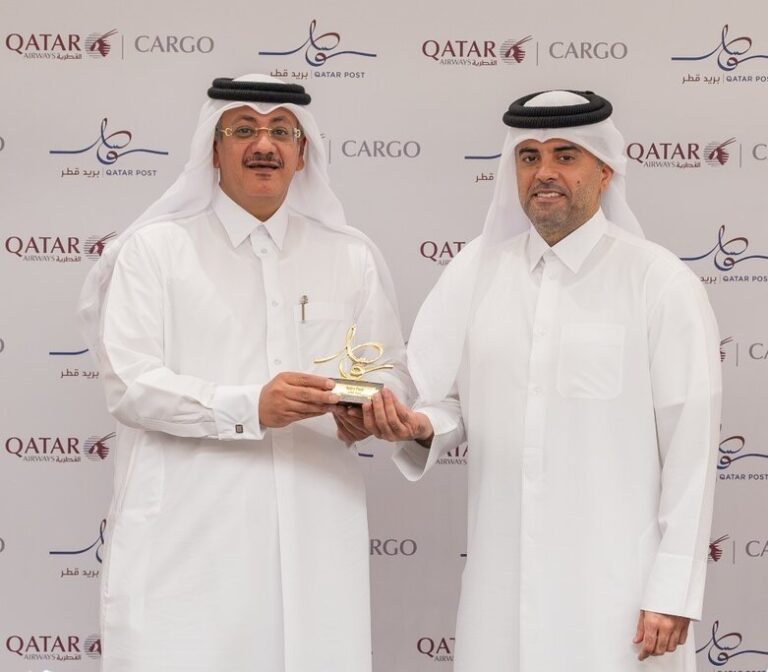
The two companies recently signed a strategic cooperation agreement designed to improve postal services on all counts, with customers ultimately reaping the benefits. Qatar Airways Cargo and Qatar Postal Services Company have agreed competitive postal rates for mail shipments carried by Qatar Airways Cargo on behalf of Qatar Post. They will also enhance the overall logistics infrastructure and uphold international postal union standards to provide the best possible service when it comes to mail shipping and delivery to and out of Doha. Qatar Airways Cargo can handle up to 500 tons every day and offers a gateway to almost everywhere in the world. Post customers can therefore expect efficient and smooth mail operations wherever their chosen destination may be. Engr. Badr Mohammed Al-Meer, Chief Executive Officer of Qatar Airways Group, stated: “As the world’s leading air cargo carrier, our robust fleet and expansive network enable us to meet customer needs efficiently, in-line with international standards. This strategic cooperation agreement reflects our commitment to improving logistical infrastructure and ensuring smooth and effective coordination in delivery to and from Doha. In addition, our Mail product provides seamless 100 per cent EDI integration for bookings, a dedicated hub warehouse for streamlined operations, and end-to-end track and trace capabilities for real-time shipment visibility.” Chairman and Managing Director of Qatar Post, Mr. Faleh Bin Mohammed Al-Naemi, said: “We are pleased to strengthen our cooperation with Qatar Airways and look forward to achieving sustainable and mutually beneficial successes in postal and logistical services that serve our customers’ interests. We emphasize the importance of forming strategic partnerships between Qatar Post and national companies adhering to global standards such as Qatar Airways.”
All set to fly to JED from 02NOV24. Image: IAG Cargo
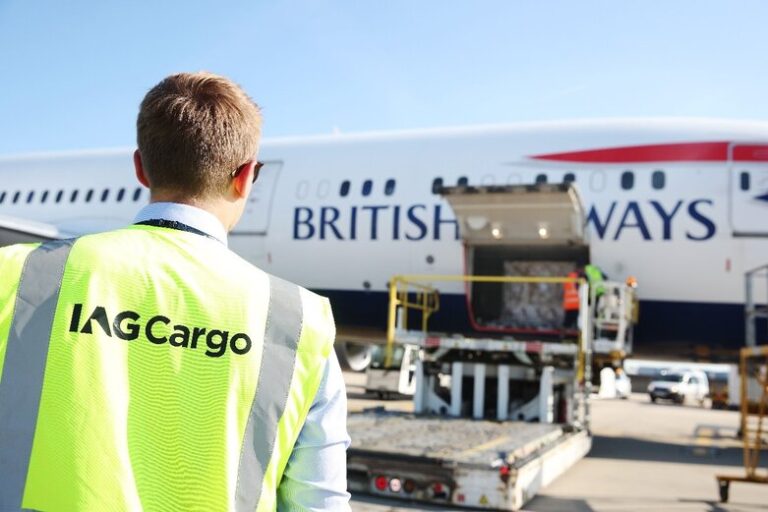
As in so many cases, the pandemic saw a number of routings being pulled or put on ice. One of those was the almost daily cargo connection offered by IAG Cargo between London Heathrow (LHR) and Jeddah King Abdulaziz International (JED). This will now soon resume. From 02NOV24 onwards, the cargo subsidiary of the IAG Group will operate six flights per week, deploying a widebody Boeing 787 on the route. It already serves Saudi Arabia’s Riyadh King Khalid International Airport (RUH) ten times per week out of LHR. Thus, a solid and attractive cargo capacity offer is in place between the UK and Saudi Arabia, supporting international trade between the two countries. The press release quotes GBP 17.6 billion as the sum of exports and imports between the UK and Saudi alone in the first quarter of this year. Camilo Garcia Cervera, Chief Sales and Marketing Officer at IAG Cargo, explained: “In the first quarter of 2024, trade in goods and services between the UK and Saudi Arabia totaled GBP 17.6 billion. The resumption of the Jeddah service – which has been paused since the Covid-19 pandemic – and the additional capacity to Saudi Arabia, is therefore timely and will ensure additional choice and flexibility for our customers. Jeddah’s King Abdulaziz International Airport is a vital air cargo hub for trade between the East and West and has plans to double its cargo handling capacity. We are very happy to announce the return of Jeddah to our expansive network which spans six continents.”
Planning strategic expansion in the U.S. Image: Air Serbia
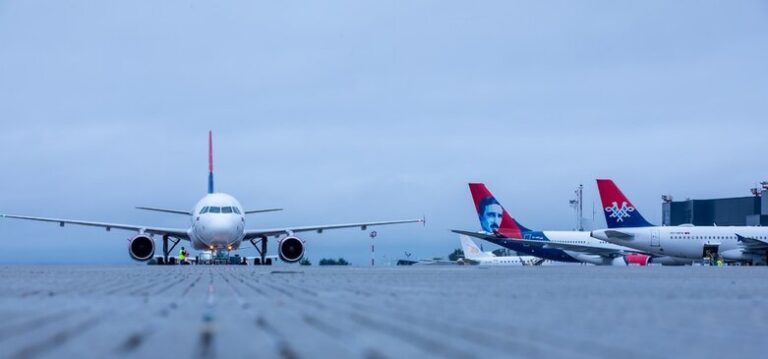
Globe Air Cargo and Air Serbia have signed a partnership agreement and intend to strategically grow the airline’s cargo operations across the USA. Since 01OCT24, the ECS Group subsidiary is the exclusive GSSA cargo representative of Air Serbia in the United States, and will manage the airline’s sales and marketing operations. Air Serbia operates five weekly flights between New York (JFK) and Chicago (ORD) to Belgrade (BEG). Its A330 fleet offers a weekly cargo uplift of 60 tons and opens the door for freight forwarders seeking to transship to key European destinations such as Bosnia (SJJ), Montenegro (TGD), Albania (TIA), North Macedonia (SKP), Zurich (ZRH), Istanbul (IST), for example. In the U.S., the new partnership benefits from an extensive Road Feeder Service (RFS) network, feeding into Air Serbia’s JFK and ORD destinations for onfowarding to Eastern Europe and beyond. ‘Beyond’ includes Air Serbia’s reach into China, which serves Guangzhou (CAN), Tianjin (TSN), and is set to expand in 11JAN25, when it launches a new Shanghai Pudong International Airport (PVG) routing. Francisco Hernandez, Managing Director of Globe Air Cargo USA, said: “This partnership is a pivotal step in strengthening our presence in the U.S. market. By combining Globe Air Cargo’s expertise with Air Serbia’s growing network, we aim to deliver seamless global logistics solutions.” Veselin Djordjevic, Head at Air Serbia Cargo, announced: “We’re pleased to partner with ECS Group as our Cargo GSA in the USA. They’re renowned in the industry and global leaders in cargo GSA representation. Our network offers access to hard-to-reach destinations including Podgorica, Tirana, Skopje, Sarajevo, Sofia, and Zagreb, alongside Belgrade. With over 50 drop-off points covered by extensive RFS connections via ORD and JFK, our product is well-regarded in the USA. Serving both Chicago and New York year-round, we provide high-quality, reliable service to support the U.S. export community.”
CAC’s first Positive Energy Building, close to the apron. Image: Changi Airport
Changi Nexus One is the name given to an 8,000 m², refurbished air cargo logistics facility located in the Changi Airfreight Centre (CAC), which boasts being the ‘First Green Mark Platinum Positive Energy Building (PEB) in Changi Airport’. It is the first CAC building to achieve the respective PEB certifications by Singapore’s Building and Construction Authority (BCA). Sustainability initiatives include the installation of solar photovoltaic (PV) panels (completion due in Q1/2025), which contribute to its BCA accreditation as a super-low energy building able to achieve over 60% energy savings and generate more renewable energy than it requires. By 2028, Changi Nexus One is expected to generate enough on-site solar power to offset the total building energy consumption by more than 140%, with the surplus going towards sustaining operations at the airport’s other facilities. Its opening was announced by Changi Airport Group (CAG) on 15OCT24. It will now serve two tenants – one of which being freight forwarder, Expeditors. It has direct access to the apron and offers fast cargo handling and generous warehouse capacity. As a transshipment cargo hub, Changi is already well-established and has planned with foresight to meet the growing demand for air cargo services. In addition to Changi Nexus One, Changi East Industrial Zone (CEIZ) in set to be operational by the mid-2030s. Barthul Hoefnagels, Expeditors’ Regional Vice President – Malaysia, Singapore & Indonesia detailed: “The new facility in Changi Airfreight Centre will enhance our end-to-end efficiency and reliability through fewer touch points, allowing Expeditors to further enhance our specialized cargo handling capabilities for pharmaceutical, aviation, semiconductor and other industries, and better serve the in-transit needs of our global customers. We are excited to expand our collaboration with Changi Airport Group to drive further value to our customers.” Lim Ching Kiat, CAG’s Executive Vice President for Air Hub and Cargo Development, added: “The opening of Changi Nexus One marks a significant milestone in our efforts to strengthen Changi Airport’s position as a global air cargo hub. Through enhancing our cargo handling capacity and capabilities, we aim to stay at the forefront of the air cargo industry, putting Changi in a good position to capture growth from key cargo players, as well as growth in the region. Working closely with our tenants, we aim to bring in new cargo opportunities and expand into new markets. As we strive to maintain Changi’s continued success as a thriving air cargo hub, we also constantly challenge ourselves to carry out our development works and operations according to our sustainability goals.”