
Home Blog Page 129

Qatar Airways Cargo implements Wiremind Cargo’s CARGOSTACK

0

The switch has been flicked on and with it, launch customer, Qatar Airways Cargo, has become the first airline to go live with CargoTech member, Wiremind Cargo’s Revenue Management suite: CARGOSTACK Optimiser. The cargo carrier now benefits from unique AI-driven solutions supporting its revenue management innovation. Since early last year, the partnership between the airline and the software solution provider has seen stepwise solution rollouts for demand forecasting, inventory optimization, and overbooking recommendations, as well as a bid price machine learning model, more recently. CARGOSTACK is now delivering AI-generated recommendations to the various revenue management responsibles within Qatar Airways Cargo. It offers an intuitive user interface and a number of features that were developed in collaboration with the airline’s employees during the implementation phase. Examples are CARGOSTACK’s fully configurable business rules engine, and the overbooking strategy recommendation algorithm. “Both parties undertook extensive efforts to validate the machine learning models, including testing and iterating on multiple approaches to deliver significantly improved revenue results,” the release states, confirming that the partnership will continue to work on improving efficiency across air cargo processes.

Optimizing its revenues thanks to CARGOSTACK. Image: Qatar Airways Cargo

Mark Drusch, Chief Officer Cargo at Qatar Airways Cargo, explained: “At Qatar Airways Cargo, our goal is to lead. The adoption of Wiremind Cargo’s CARGOSTACK Optimiser suite is a testament to our commitment to innovation and excellence. This partnership continues our leadership in employing technology by utilizing the most sophisticated AI solutions available to transform our revenue management processes. We are thrilled to have found a partner in Wiremind Cargo with whom we continue to closely collaborate, and who deliver and fine-tune their cutting-edge solutions at such an incredible speed.”

Nathanaël de Tarade, CEO of Wiremind Cargo, confirmed: “We are delighted to see Qatar Airways Cargo going live with our CARGOSTACK Optimiser suite, solidifying our partnership and shared vision for the future of air cargo. Our collaboration with Qatar Airways Cargo is a perfect example of how Wiremind Cargo’s advanced AI solutions can transform commercial operations. We are excited about this essential step in our partnership, and look forward to what’s next, including the release of our SKYPALLET Version 2 solution, which will further enhance commercial capabilities and operational efficiency.”

Udi Sharon appointed CEO of Challenge Airlines IL

0

Challenge Group announced last week that it has appointed Udi Sharon to the position of CEO of Challenge Airlines IL – one of three fleets that make up the group’s Challenge Airlines. Coming over from Haifa Port, where he was CEO since AUG23, Sharon will now assume responsibility for the airline company’s activities in Israel, and joins the senior executive management team of the global Challenge Group. “Udi brings vast experience in business and managing organizations within the global and Israeli logistics sectors, alongside extensive professional knowledge in air freight and global supply chain management,” the press release reads and explains his nomination as an important milestone in the Group’s focus on developing tailored supply chains solutions and a strong global network.

From ocean to air. Image: Challenge Group

Yossi Shoukroun, CEO of Challenge Group, commented: “I am delighted to welcome Udi Sharon as the CEO of our company in Israel. I am confident that in his role and as part of the Group, he will significantly contribute to optimize the company’s local and global operations, strengthening the Group’s position in both the Israeli and international markets.

Udi Sharon said: “I am proud to join Challenge Group and lead Challenge Airlines IL’s operations. I believe that with our dedicated team and the Group’s global capabilities, we will continue to expand the services we offer to our customers and provide advanced and competitive logistics solutions in a dynamic and challenging market.” Over on LinkedIn, his post read: “After a short break with family and friends, I am full of excitement and energy to start a new journey as the CEO of challenge airlines Israel. Excited to enter the airline business and to be part of this amazing group.”

Air White Whale celebrates first production model

0

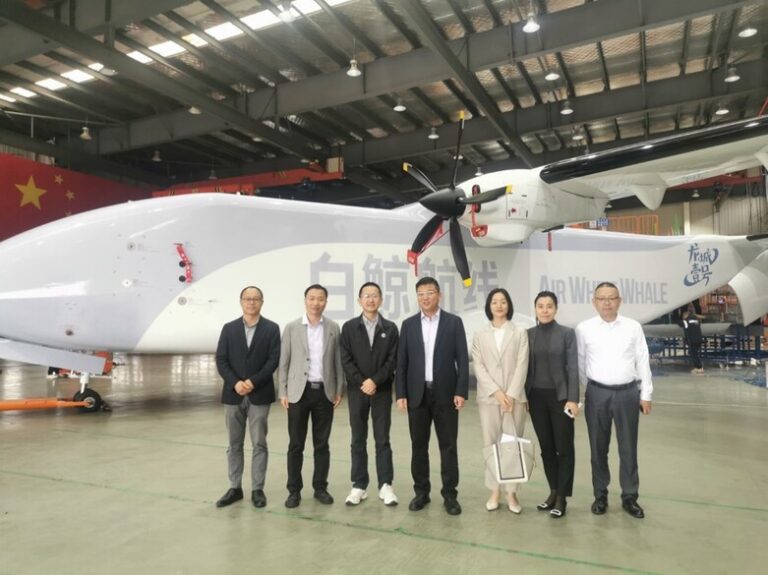
CargoForwarder Global reported on the Air White Whale earlier this year, already, and now there seems to be much positive movement. On 18OCT24, the W5000, the world’s largest unmanned cargo aircraft, was successfully assembled and rolled off the production line at Air White Whale’s Changzhou production base. With a maximum take-off weight of 10.8 tons, a maximum payload capacity of 5 tons, and a range of 2,600 km, this model is the world’s largest unmanned cargo aircraft. The company’s press release refers to the event as “an important milestone for Air White Whale, and a major leap for the unmanned cargo industry. As technology continues to progress and the market matures, unmanned cargo aircraft are expected to become the new normal in the logistics industry, providing efficient, safe and environmentally friendly logistics solutions for customers around the world.”

There is movement in the Air White Whale’s story. Image: Air White Whale

That milestone was swiftly followed by a second one as the company announced that it had obtained 120 million RMB in Series A financing – the second investment round this year. The total amount invested in Air White Whale thus far is close to 200 million RMB, and the funds are mainly being put towards the production and development of the W5000 test model, ground tests and assembly capacity building.

ASEAN, Japan and South Korea, Russia’s Far East and five Central Asian countries are all within the W5000’s flight range. Middle East countries such as Saudi Arabia and Jordan, are also interested in the W5000’s large-scale unmanned intelligent cargo aircraft and have already signed orders of intent. Air White Whale’s Changzhou assembly base is planned to have an annual production capacity of 120 aircraft, and the first aircraft expected to be delivered in the second half of 2026. Should this come to fruition, then Air White Whale will be a great step closer to realizing the goal of 24-hour nationwide accessibility for domestic logistics, as well as offering a solid contender in the idea of the “future air cargo.” Several interested parties visited the production site last week to discuss use cases and implementation. The state-of-the-art cargo drone which incorporates advanced technologies such as artificial intelligence, big data analytics, and the Internet of Things (IoT), has the potential to accelerate the development of China’s logistics industry and set a new benchmark in the global unmanned freight transportation field, thus realizing the country’s vision of “Accelerating China, Serving the World”.

More SAF for DHL and IAG Cargo

0

DHL and IAG Cargo have signed a new contract covering this and next year’s SAF usage. IAG’s pledge to use an additional 60 million liters of Sustainable Aviation Fuel (SAF) on behalf of DHL, makes this not only one of DHL’s largest SAF customer agreements, but also the largest that any airline has signed thus far. Both are committed to reaching their net-zero GHG emissions goal by 2050, and with this agreement, they are looking to reduce 165,000 metric tons of CO2e in greenhouse gas emissions over the next 1.5 years. The press release puts the reduction amount into context, stating that it “would be equivalent to removing a B747-400 freighter from DHL’s intercontinental operations from the UK to U.S.”

Committed to driving sustainable air freight. Image: IAG Cargo

The SAF used by IAG Cargo mainly on its operations out of London Heathrow, is made from waste sources such as used cooking oil or food waste. It is certified by International Sustainability & Carbon Certification (ISCC) and has been proven to achieve around 80% lower lifecycle emissions.

DHL’s customers can opt for more sustainable supply chain operations by choosing its GoGreen Plus Service, which makes use of sustainable fuels and GHG emissions reduced solutions for ocean freight, air freight, and land transport.

Travis Cobb, EVP Global Network Operations & Aviation at DHL Express, emphasized: “We strongly believe that collaboration is the foundation of a more sustainable future. Both DHL and IAG Cargo share a strong commitment to carbon footprint reduction. We are pleased that we can now mark another milestone on our journey towards more sustainable air freight.”

Max Sauberschwarz, Global Head of Air Freight at DHL Global Forwarding, added: “SAF in combination with our ‘book and claim’ approach is currently the most efficient and convenient method to reduce GHG emissions in air freight. This solution enables us to decrease GHG emissions at their source and allocate the reductions achieved to our customers through certificates. We are delighted that our longstanding partner, IAG Cargo, shares our commitment and supports us in our mission to deliver more sustainable transportation solutions to our customers.”

David Shepherd, Chief Executive Officer at IAG Cargo, stated: “This partnership with DHL is a testament to our shared commitment to decarbonizing aviation. By utilizing 60 million liters of Sustainable Aviation Fuel, we are not just reducing our carbon footprint by an estimated 165,000 metric tons of CO2e, we are demonstrating the power of collaboration in driving meaningful change. This reinforces IAG Cargo’s commitment to sustainable air freight solutions and brings us closer to achieving our Group goal of net-zero emissions by 2050.”

Emirates pm track to operate 21 freighters by end 2026

0

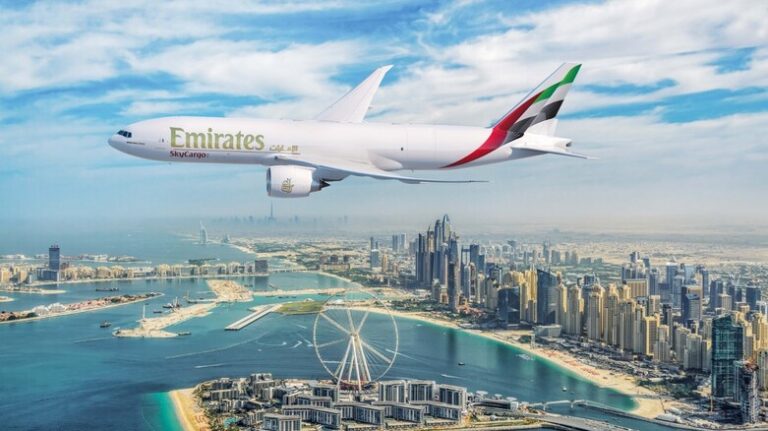
Emirates announced that it has ordered another 5 Boeing 777 freighters, bringing its total orders thus far to 14. They are planned for delivery in 2025/26, as the airline advances on its strategy to operate a 21-strong freighter fleet by DEC26, doubling its fleet size in the space of just two years. It also recently signed a multi-year lease extension with Dubai Aerospace Enterprise for 4 Boeing 777Fs in its existing 11-strong fleet mix of B777F and B747F. Plus, it still plans to convert 10 passenger Boeing 777-300ERs into freighters. Cargo space in the bellies of its large wide-body passenger fleet made up of a mix of B777, A350, and A380, complements its capacity offer. Despite the large freighter order already pending, Emirates also announced that it would be coming to a decision before the end of 2024 on what its freighter fleet will look like from 2028/2029 onwards. Both the Boeing 777-8F as well as the Airbus A350-1000F are under discussion, as Emirates plans for continued future growth.

5 more B777F have just been ordered. Image: Emirates

That growth will be stimulated by the Dubai government’s plans to develop Al Maktoum International airport (DWC) into the world’s largest cargo hub, capable of handling an annual 12 million tons of cargo. Dubai is also creating a Logistics District near to the airport, that should serve as an international base for global cargo and shipping companies, as the Emirate aims to become the leading multi-modal cargo hub for air, sea and land connections.

HH Sheikh Ahmed bin Saeed Al Maktoum, Chairman and Chief Executive, Emirates Airline and Group, explained: “We’re investing in new freighter aircraft to meet surging demand and provide our customers around the world with even more flexibility, connectivity, and options to leverage market opportunity. Demand for Emirates’ air cargo services has been booming. This reflects Dubai’s growing prominence as a preferred and trusted global logistics hub, and also the success of Emirates SkyCargo’s bespoke solutions that address the needs of shippers in different industry sectors.”

Stephanie Pope, President and CEO of Boeing Commercial Airplanes, said: “Emirates continues to set the direction for our industry, and we deeply appreciate the trust they have placed in the Boeing widebody family to serve as the backbone of their global fleet. We are proud to support Emirates SkyCargo’s growth as it relies on the performance and versatility of our 777 Freighter to further connect the world.”

Air Canada Cargo inaugurates new LHR cold-chain facility

0

While it looks like those could be variants of a curling stone standing on the left of the image, what is actually being shown, is Air Canada Cargo’s brand-new and now up and running cold chain facility at its largest European hub – namely London-Heathrow (LHR.) Offering around 300 m² of temperature-controlled warehouse space, the upgraded facility has been developed to ensure that the transport of temperature-sensitive cargo fully complies with the industry standards and global regulatory requirements. Shipments of pharmaceuticals, fresh food and other perishable cargo that is shipped loose, will all be stored in the respective area that suits their commodity requirements. The facility offers a Cold Room (COL) at +2°C to +8°C, a Controlled Room Temperature (CRT) area for shipments needing +15°C to +25°C, and Extended Room Temperature (ERT) of +2°C to +25°C.

Staying cool despite all the excitement. Image: Air Canada Cargo

Matthieu Casey, Managing Director, Commercial at Air Canada Cargo, announced: “The launch of our new London-Heathrow cold chain facility continues to show our customers that we are committed to maintaining the integrity and safety of their temperature-controlled products throughout their journey. This enhancement of our capabilities at one of our key global hubs will play a key strategic role in further expanding our already robust global network and advancing our capabilities for our customers.”

The airline offers more than 45 widebody flights per week out of LHR, feeding into its global network. That said, Air Canada Cargo also published an update this week on its Pre-load Air Cargo Targeting (PACT) Program, which becomes effective on 01NOV24. It reminds that from that date on, forwarders must ensure that the data on all Master Air Waybills and House Air Waybills must be complete and correct in order for the shipments to be transported as booked. PACT is Transport Canada’s initiative to improve security by identifying and mitigating high-risk air cargo shipments before they are transported into Canada, using advanced analytics in the risk assessment of pre-loading advance cargo information.

TIACA and KSIA collaborate to bring cargo to the fore

0

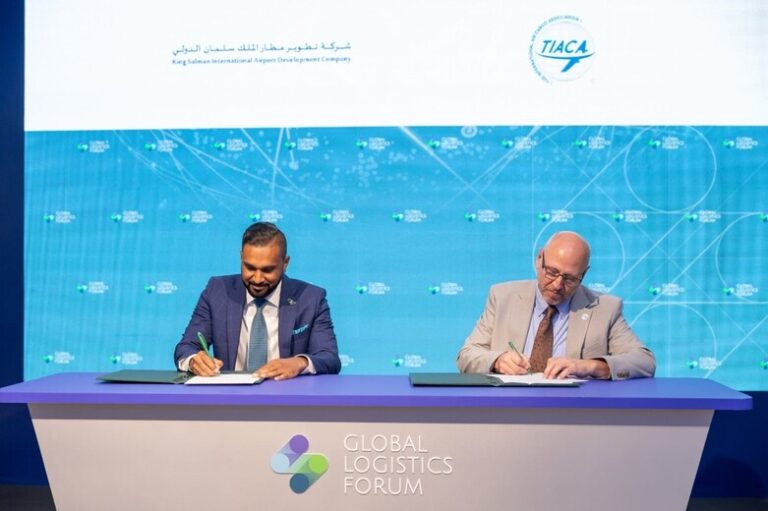
At the Global Logistics Forum in Saudi Arabia last week, The International Air Cargo Association (TIACA) and the King Salman International Airport (KSIA) signed a Memorandum of Understanding in which they agreed to work together to enhance the profile of cargo and logistics – not just within the region but also globally. Four areas of focus have been defined to achieve this mission. The first is ‘Promotion’. TIACA and KSIA will jointly highlight the importance of cargo and logistics and how it contributes to quality of life for people, businesses and communities around the world.

Mammen Tharaken, KSIA, and Glyn Hughes, TIACA, signing agreement. Image: TIACA

The second pillar is ‘Training and Capacity Building’. Those within KSA’s logistics environment and the next generation of logistics leaders in the Kingdom of Saudi Arabia will benefit from the extensive training program portfolio and network of TIACA’s members as they connect with the KSA ecosystem. ‘Innovation’ as a third pillar aims to share best practices and implement emerging technologies that can improve the region’s cargo and logistics proposition and industry status. And finally, ‘Sustainability’ will look at identifying and promoting sustainable practices in air cargo operations, such as decarbonization, waste elimination, biodiversity protection, and social inclusivity.

Steven Polmans, TIACA Chair, declared: “This signing of this MoU is important to the industry as it signals the strong support of the association’s mission not only to unite the industry, but to set the vision for the air cargo industry, disseminate and enhance knowledge, and promote and encourage business, social and technological innovation. We are excited to get to work with our colleagues at KSIA and appreciate their vision to further air cargo not only within their region but also globally.”

Marco Mejia, Acting CEO of KSIADC, commented: “This strategic membership marks a significant milestone for KSIA and its partners, as they collectively strive to enhance Saudi Arabia’s position as a global logistics powerhouse. KSIA remains dedicated to its mission of delivering a world-class airport, logistics, and cargo solutions; and fostering Saudi Arabia’s economic development.”

Glyn Hughes, Director General, TIACA, said: “Over the last few years, TIACA has been focused on spotlighting the importance of air cargo across the globe, the training of the future of the next leaders, creating a sustainable future, and shining a light on innovation within the industry. The signing of this MoU couldn’t be more of a natural step, and we look forward to working with KSIA to accomplish the tasks at hand.”

ECS Group’s new CEO is Jean Ceccaldi

0

The changes took place in MAY24, but the formal announcement went out last week: Adrien Thominet, Chairman of ECS Group and formerly also CEO until APR24, appointed Jean Ceccaldi to take on the CEO role from MAY24. Jean Ceccaldi (pictured left), who until that point had been Managing Director of Aero Cargo France, ECS Group’s top-performing subsidiary, was succeeded by Guillaume Tourneret, formerly the subsidiary’s Commercial Director and natural progressor for the role. The changes all came as part of a major restructuring strategy “to accelerate the transformation of its GSSA model,” the release states. Adrien Thominet leads the initiative to focus on strengthening the Group for the future by “integrating advanced technology, enhancing agility, and ensuring closer relationships with its clients”.

Change at the helm of ECS Group. Image: ECS Group

Jean Ceccaldi, who has been with ECS Group for almost 30 years, contributing to operations, sales, and general management, was chosen for his comprehensive understanding of the Group’s business, both in terms of strategy and day-to-day operations.

His task now, is to bring the Group’s global Managing Directors together in a unified strategic approach towards greater agility and flexibility in the face of shifting market requirements. Sustainability, digital transformation across all subsidies, and promoting the GSSA Group’s tailored ‘Abilities’ solutions are the pillars on which ECS Group will build to ensure greener and greater efficiency within the air cargo industry.

Jean Ceccaldi stated: “The air cargo industry is evolving rapidly, and the GSSA model must transform if we are to remain at the forefront. […] As CEO, my goal is to ensure that ECS Group remains the global leader in GSSA services by adapting quickly to market demands and implementing forward-thinking solutions. I am fully committed to enhancing our technological capabilities while fostering stronger relationships with our teams and our clients. I look forward to leading this transformation in close collaboration with all MDs and key stakeholders.”

Adrien Thominet confirmed: “With Jean at the helm of this transformation, I am confident that ECS Group will continue to innovate and strengthen its leadership position. Our commitment to agility, sustainability, and technology will ensure we remain the trusted partner of choice for airlines and freight forwarders. Together, we are preparing ECS Group for the future and positioning ourselves to meet the challenges ahead.”

A321P2F gets type certification from Brazil’s Aviation Authority

0

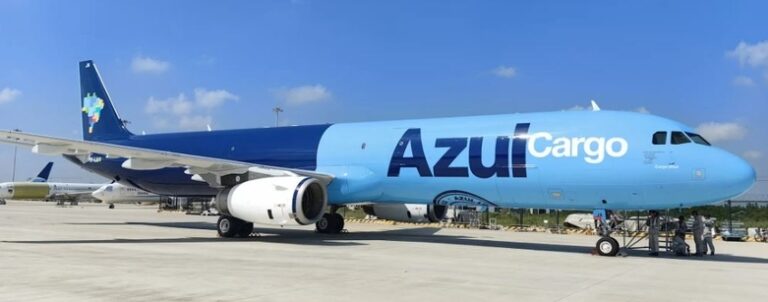
Brazilian airline, Azul Linhas Aéreas, has taken delivery of its first passenger-to-freighter converted Airbus A321 at its hub at Viracopos Airport (VCP). The cargo aircraft, along with a sister model set to be delivered before the turn of the year, will be operated by Azul Cargo Express. It was enabled a second life as freighter by Dresden-Germany-based Elbe Flugzeugwerke (EFW) on behalf of lessor, AerCap, who passed the aircraft on to its customer and operator, Azul.

The subcontinent is not a blank spot any longer on EFW’s conversion map concerning freighters for medium-haul ranges – photo: Courtesy AZUL

With Brazil validating the supplement type certification (V-STC) for the A321P2F, EFW’s conversion programs are now okayed by the major aviation authorities from all continents.

Pan-Brazilian services
Azul’s A321P2F, registered as PS-AJA, is 18 years old and previously belonged to China Southern Airlines, to which it was delivered directly from the European aircraft manufacturer on 26APR06. After arrival at Viracopos Airport, it was saluted by the local fire fighter brigade with a traditional water shower. The jetliner will remain at Azul’s home base for a short time, to undergo some technical specifications before commencing commercial operations. Crew adaptation is not required since AZUL’s fleet is composed ofA320 family aircraft. It will primarily serve intra-Brazilian routes connecting Manaus, Recife, Viracopos/Sao Paulo and Porto Alegre.

Second A321P2F operated in Brazil
In a release, EFW claims that their A321P2F conversion “is the first-ever A321P2F aircraft registered in South America.” That is partly accurate. The first passenger to freighter converted A321 was delivered to Brazil’s cargo airline, Levu Air Cargo, in MAY24, by lessor, SmartLynx. This was confirmed by Edvinas Demenius, CEO of SmartLynx Airlines: “Our partnership with Levu marks a significant milestone, not only for the Brazilian aviation market with the introduction of the first A321F registered in the country and region, but also for SmartLynx, as we extend our cargo capacity management services to Latin America.” CFG reported.

Clear performance advantages
Back to first or second converted A321 freighter: Azul’s A321P2F is the very first A321 aircraft converted by EFW and delivered to a Latin American airline. More are to follow, states Anke Lemke, Head of Communications at EFW. Yet a higher conversion rate is only possible if there is enough feedstock available. Many airlines, however, are flying their current aircraft longer than planned because the construction programs and thus the delivery rates of Airbus and Boeing are significantly behind schedule, due to material shortages and supply chain hiccups. According to Lemke, EFW will convert 30+ aircraft in 2024, across the entire range of Airbus variants. This is up from 28 units in 2023.

Azul’s A321P2F offers higher cargo capacity compared to the Boeing 737-400F.It can accommodateup to 27 tons with 14 pallets fitting into its main compartment, complemented by additional capacity in the lower holds. It is 39% more efficient in terms of capacity/weight, consumes 27% less fuel per ton transported, and will reduce greenhouse gas emissions by 9,000 tons per year, in comparison to the B737-400F operated by Azul Cargo Express since JUL18.

Major milestone
“The arrival of a new aircraft is always a reason for pride and celebration; it means that we are getting closer to offering the best opportunities and much more capacity to serve our current and new customers. These are modern aircraft, with more space, reliability, and autonomy for international flights. With the two freighters, we will promote a logistical transformation in the country, and we are ready to deliver even more agility to Brazilians,” said Izabel Reis, Director of Azul Cargo Express, at the arrival of the freighter in Brazil.

Following the supplement type certification for the A321P2F program obtained from the Brazilian aviation authority, “we look forward to introducing this freighter conversion solution to the wider South American market,” stated Jordi Boto, CEO of EFW. The executive went on to say: “The validated STC, together with our first-ever A321P2F to be operated in South America by Azul Cargo, mark a major milestone that augments the global presence of our Airbus converted freighters.”

Up until now, the subcontinent was a blank spot on the European aircraft manufacturer’s conversion map concerning aircraft for small and medium-haul routes. The market was dominated by production freighters and 737P2C conversions from U.S. frame maker, Boeing.

Air Cargo Belgium sets out ambitious strategy

0

Eight years after its inception, Air Cargo Belgium (ACB) is scaling up. The organization is transforming itself into a forceful community that is to become a forerunner in innovation and digitalization and wants to establish a formidable presence on the international stage.

Freek De Witte is Director of Air Cargo Belgium – courtesy ACB

When ACB was launched in 2016, it was supported by Brussels Airport Company from the very start. The organization’s incumbent chairman is Geert Aerts, Chief Cargo & Real Estate Officer at Brussels Airport. “Over the past 8 years, ACB has grown into a very healthy company with over 162 members,” he said at the presentation of the strategy program last Thursday (24OCT24). “Now is the time to consider how to scale up this company.”

According to ACB Director, Freek De Witte, increased operational efficiency and digital services have been high on the ACB agenda. “We are the first community to start with Digital Green Lane (DGL), Perishable/Inspection Management Application (PMA/IMA), Pharma + DGL (Digital Green Lane) Dashboard and BlueSky (TIACA-driven sustainability program),” he said.

5 pillars
But now the time has come for a new strategy, the decision for which was initiated last April, supported by 25 interviews within the ACB community. “From these, we identified an overall request to show more ambition on all fronts,” Mr. De Witte continued. “The enablement of speed of delivery and full adoption of digitization, the involvement of the community in decision-making and to act as one, and the upgrading of capabilities and expertise to deliver upon strategic projects.”

The road to success is based on 5 pillars: creating a vibrant community, establishing the leading platform for seamless operations, building effective partnerships, drawing ‘better’ business to Brussels (such as Pharma, Perishables and the like), and last but not least, achieving international recognition as a community.

The road plan is to be spread over three ‘horizons’ up to 2029 and beyond, the first of which – by mid-2025 – is the strengthening of the foundation. Horizon 2 is to bring continuous improvement and sustained innovation, and Horizon 3 is for further innovating and taking the lead.

Bringing in experience and another way of money-making
These ambitions require some fundamental changes within the ACB organization, Mr. De Witte admitted. “So far, our hiring focus has been on youngsters. We are now aiming for a more hybrid hiring policy, to bring in more experience. Funding, which now relies on memberships and projects funding, will move towards funding based on services. When companies realize that our efforts bring gains to their business, I do not see that they would not be willing to pay for some services.”

Beyond the management level
The present reactive response transactions are to make way for proactive, customer-centered processes. ACB also has to be deepened by changing from a community of managers to a broad community of air cargo people which, Freek De Witte thinks “will contribute to a faster dissemination of proven innovations.”

Finally, project facilitation should evolve into project leadership. “The latter encompasses change management and project risk management, ensuring full adoption of digital tools and the continuity of operations.”

The presentation of the new strategy was followed by ACB’s Annual Awards ceremony.