The Dutch specialist for integrated logistic process automation will take over the logistics unit from Siemens for EUR 300 million. It will catapult Vanderlande, a subsidiary of Toyota Industries Corporation, into a leading position of solution providers for automated warehousing, airport logistics, cargo handling, and parcel throughput. The transaction is expected to close in the course of 2025, provided regulators approve the deal.
With the planned sale of the logistics division, Siemens is parting with another niche business. The management’s strategic goal is to “sharpen the portfolio as a leading technology company by concentrating on industrial software,” reads a Siemens AG statement. In line with this objective, the Group acquired the U.S. software company Altair Engineering for around 10 billion dollars just last Wednesday (30OCT24). With the integration of Altair, Siemens is strengthening its AI-based capabilities for the design and simulation of production processes. Nuremberg-based Siemens Logistics, whose main customers include airlines and airports, recently generated annual sales and profits of 550 million euros. The change of ownership affects around 2,500 employees worldwide, all of whom Vanderlande intends to take over according to the agreement.
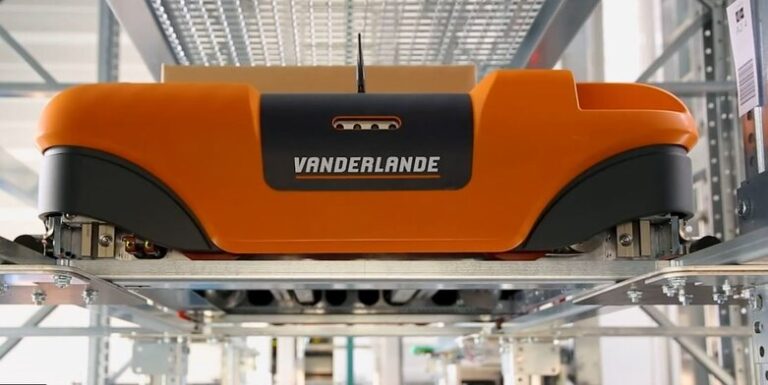
Vanderlande offers innovative robotized end-to-end warehouse solutions – company courtesy
Offering value-add potential “As a distinguished provider of solutions for airport logistics, Siemens Logistics enjoys first-class reputation in the baggage and air-cargo handling areas. Together with Vanderlande and our committed global teams, we look forward to bringing fresh impetus to the airport industry and to supporting our customers’ business with future oriented technologies,” said Michael Schneider, CEO of Siemens Logistics. “Our innovative portfolio of high-performance hardware and software along with extensive offerings for smart services will perfectly complement Vanderlande’s portfolio and continue to contribute to automating and digitalizing the industry. A future joint set-up will offer our customers as well as our teams significant development and value-add potential.”
Logistics landscape is changing rapidly In a reaction, Andrew Manship, Vanderlande’s President & CEO said: “Siemens Logistics’ innovative approach and robust business model align perfectly with Vanderlande’s vision for the future. Its forward-thinking and innovative mindset also proves its ability to adapt to changing market dynamics. Our customers will benefit from a broader range of solutions and services, enabling them to address their challenges more effectively.” Vanderlande points out that the global logistics landscape is undergoing significant change, with increasing demand for efficient, automated systems. Its market people forecast tremendous potential for sustained growth. With air travel and freight transport on the rise and airports investing heavily in modernization, the long-term market outlook for airport and cargo automation is highly positive, they conclude. Incepted in 1949, Vanderlande offers integrated logistics solution and technical support at 600+ airports and has equipped sorting centers run by DHL, UPS or FedEx with automated systems. In 2017, Toyota Industries Corporation (TICO) acquired Vanderlande from the company’s former owner NPM Capital and other minority shareholders. Currently, offices in more than 150 countries belong to the Veghel, near Eindhoven-headquartered Dutch provider of technical systems for value chains optimization, employing around 9,000 people.
CargoForwarder Global’s ‘Spotlight On…’ series brings a different role in the air cargo industry to the fore each week, by showcasing individuals in their function. Air cargo logistics is bound by regulations and regulators, some of whom may not have an in-depth understanding of how logistics functions on a day-to-day basis. An important role, therefore, is being the voice of an entire industry – in this case, freight forwarding – and speaking up for its needs, illustrating developments, and educating regulators on its activities. Over in the U.S., Brandon Fried (BF), Executive Director, Association Leader, Industry Advocate and Air Cargo Expert at The Airforwarders Association, does just that. This week, he gives CargoForwarder Global (CFG) readers insights into his responsibilities and gives advice to those looking to get into the air cargo industry.
The industry is constantly evolving. Image: Brandon Fried
CFG: What is your current function and company? And what are your responsibilities?BF: I am the Executive Director of the Airforwarders Association (AfA), representing air freight forwarders across the U.S. My primary responsibilities include advocating for our members on Capitol Hill, working closely with government agencies, and addressing regulatory challenges. I also lead initiatives that promote best practices and drive innovation within the air cargo industry. Our work spans multiple areas, including improving airport truck congestion and collaborating extensively with the U.S. Transportation Security Administration (TSA) on security protocols for air cargo.
CFG: What does a normal day look like for you?BF: There’s no such thing as a “normal” day, given the dynamic nature of the air cargo industry. One day might involve meetings with lawmakers or government agencies like the TSA or Customs and Border Protection (CBP) to discuss pressing issues such as air cargo security, regulatory changes, or airport infrastructure. Other days are spent preparing for industry conferences, meeting with members, or tackling emerging challenges like airport truck congestion or digital transformation in logistics.
CFG: How long have you been in the air cargo industry, and what brought you to it? BF: I’ve been in the air cargo and freight forwarding industry for about 40 years. My interest started early with a passion for logistics and the complexity of moving goods worldwide. Over the years, I’ve held various roles that have given me a broad perspective on how the industry works, and it’s been fulfilling to advocate for forwarders while helping the industry grow and adapt.
CFG: What do you enjoy most about your job? BF: I enjoy the variety and the opportunity to work with such a diverse set of people and businesses. No two days are the same, and I find it rewarding to help shape industry policy, from air cargo security with the TSA to pushing for infrastructure improvements at airports. Seeing our efforts on Capitol Hill result in tangible benefits for our members, like the recent GAO study on airport truck congestion, is incredibly fulfilling.
CFG: What do you see as the greatest challenges in our industry? BF: One of the biggest challenges is balancing security with efficiency. As regulatory requirements continue to evolve, particularly in areas like air cargo security and customs compliance, freight forwarders must stay agile to keep up. Capacity constraints and infrastructure issues, like truck congestion at airports, are also ongoing concerns. Moreover, the increasing digitalization of the industry brings cybersecurity risks, requiring constant vigilance.
CFG: What advice would you give to people to get into the air cargo industry? Any particular training they should aim for? BF: Start by building a strong foundation in logistics and supply chain management. It’s essential to understand the broader flow of global trade. I would also recommend focusing on regulatory training, as compliance is key in this industry. Programs related to air cargo security, customs procedures, and even emerging technologies like automation and AI will be particularly valuable.
CFG: If the air cargo industry were a film/book, what would its title be? BF: “Navigating the Skies: A World in Motion.” This reflects the industry’s constant evolution, the complexity of global trade, and the critical role air cargo plays in keeping the world connected.
Thank you for your insights, Brandon!
If you would like to share your personal air cargo story with our CargoForwarder Global readers, feel free to send your answers to the above questions to cargoforwarderglobal@kopfpilot.at We look forward to shining a spotlight on your job area, views, and experiences.
The Frankfurt-based carrier has commenced round-the-world services taking off from Frankfurt to Hi Chi Minh City, across the Pacific, onto Los Angeles and back to Frankfurt. Operator of the weekly B777F flights is AeroLogic, a DHL/Lufthansa Cargo joint venture (50/50%), though the German freight carrier markets the entire capacity of the aircraft.
This is the first time after nearly twenty years that Lufthansa Cargo is offering the market main deck capacity on different legs spanning the globe. The new TransPac route is the result of lengthy planning and coordination involving many market players, says Lufthansa Cargo spokeswoman, Katharina Stegmann. Economic growth in Vietnam, particularly the e-commerce business, was a strong driver, as were a broad variety of other products. According to initial data, the first flight went very satisfactorily, she summarized. It took off from Frankfurt on 26OCT24 and returned to its home base on 28OCT24.
FRA-SGN-LAX-FRA – once a week flown with a B777F from AeroLogic, marketed by Lufthansa Cargo – courtesy LHC
Growing in dynamic markets Obtaining the traffic rights for transporting freight shipments from Vietnam to the USA was the precondition for this routing. Without this authorization, there would be a revenue gap – in this case on the leg SGN – LAX, which would render the service unprofitable. “This new freighter connection highlights our commitment to connecting economies by responding to the demand of the rapidly growing economy in Vietnam, which can now be seamlessly connected to the U.S. even faster. This service reinforces our purpose of enabling global business, which is why we are continuously examining the possibilities of establishing new routes and growing in dynamic market environments,” explains Ashwin Bhat, CEO of Lufthansa Cargo. Including the new flight, Lufthansa Cargo now offers its customers 89 weekly B777F freighter connections, worldwide. This includes 50 frequencies to 17 destinations in Asia, reflecting the strong demand in the region. e-commerce is the main driver of this development. The carrier has a total of 18 777F, with six operated by JV partner AeroLogic. The deployment of the aircraft is based on profit maximization expectations.
First round-the-world flights burned a lot of money Lufthansa Cargo’s first round-the-world route dates back to 2003, when its former MD-11 freighter aircraft took off from Frankfurt to the USA, commuted to New Zealand on a codeshare agreement with Air New Zealand, continued to Singapore before finally flying back to Germany. The airline’s last MD-11F was retired in OCT21 and replaced by B777F. The loss-making flights were scrapped after a rather short period of time, Jean-Peter Jansen, former CEO of Lufthansa Cargo told CargoForwarder Global. “The services were heavily requested by crew due to attractive stopovers at Tahiti or some of the Pacific Islands. Since we operated only three flights per week, the pilots enjoyed lengthy stays in nice environments before continuing their duties after the next flight had arrived. And not only them, but they also requested green lights from management for their partners or family members to accompany them.” These round-the-world flights were an expensive gimmick favored by pilots, not to mention members of the marketing department, recalls Mr. Jansen. Hopefully, the results of the current TransPac flights will not be similar come OCT25. As this article goes online, a second AeroLogic flight is en route from Saigon to Los Angeles, 36,000 feet above the Pacific Ocean.
The EU wants to drastically restrict the activities of Chinese shopping platforms. According to Brussels, the reasons for this are many: European online shoppers are unwittingly ordering products that pose a health risk, the Chinese e-tailers are constantly violating customs regulations, and they are still offering items that are banned in the EU. Currently, Brussels is preparing legislative initiatives to prevent e-tailers from further violating EU rules. An amended legal framework will be presented after the new Commission takes office in early 2025.
This is critical news for Shein, AliExpress and Temu. Various EU states are massively increasing the pressure on online sellers in reaction to constant EU law violations. Recently, a sextet consisting of lawmakers in the Netherlands, Denmark, Poland, Germany, France, and Austria, wrote an urgent letter to the current EU Commission. In it, the Brussels legislators are urged to severely punish the platforms by imposing harsh penalties on those responsible for misuse. The initiative comes as a reaction to repeated breaches of applicable laws by e-traders. In many cases, controllers detected hazardous chemicals in children’s toys. However, these toxic items were not mentioned in any product description as prescribed. Also, many shipments came from obscure manufacturers who provided no or misleading information on the contents of their products.
This “Intelligent Dog“ sold by TEMU costs €24.54. Under ‘material specification’ it says: “Others”. No registration number of the Hong Kong-based “Business Provider” OPH Ltd is mentioned – Source: Catalogue TEMU
Appeals don’t help The initiative of the six governments escalates a conflict that has become increasingly heated in recent months. The EU has already twice demanded that platform operators provide precise data on their suppliers and forward it to the EU customs authorities, though without much success. The e-tailers are also required to ensure that their products comply with European consumer protection regulations. The legal basis for this step is the Digital Service Act. EU Regulation 2022/2065. It states: “[…] an infringement (of the Regulation) occurs if an online platform fails to display clearly the identity of the trader, as required by this Regulation, where an online platform withholds the identity or contact details of the trader until after the conclusion of the contract concluded between the trader and the consumer, or where an online platform markets the product or service in its own name rather than in the name of the trader who will supply that product or service.”
45 million EU customers – per month If the e-commerce platforms do not comply, Brussels has announced severe penalties based on the Digital Service Act. But even if Shein, Temu, and AliExpress do adhere to the legal requirements, this will hardly change the mass import of cheap Chinese toys, bracelets, apparel items or accessories. Currently, every single working day, 5,000 tons of e-commerce shipments are flown to Europe from Hong Kong’s airport Chek Lap Kok alone; most of them stemming from the three e-traders, reports Olaf Oczkos, editor of the trade journal, PalettenReport. If flights from Shanghai, Guangzhou or Zhengzhou are added, the total volume easily doubles. The shipments come directly from production facilities and are loaded onto freighters or into the lower deck compartments of passenger airplanes at Chinese airports, arriving 12 or 15 hours later in Liège, Madrid, Budapest or Frankfurt. The e-commerce segment reports a phenomenal growth rate in most countries, reaching between 6% and 10% p.a. Temu alone receives orders from 45 million European customers every month. Product demand is likely to be similarly high for Shein or AliExpress. In 2023, cross-border e-commerce sales in Europe amounted to 255 billion EUR. According to data available, to date, around 4 billion parcels are expected to be delivered to European shoppers by the end of 2024, 80% of which will come from China.
Many small shipments generate big money This trend might please consumers, however, it is a nightmare for European customs agencies and EU treasurers. This is because Shein and Co. split up larger shipments, making them small in order to avoid paying customs duties. The upper limit for charges set by the EU Customs Directive stands at 150 EUR per shipment. Hence, most e-commerce items pass the EU borders without any customs dues. Although there are random checks after arrival, due to the huge volume of e-commerce products, the authorities are simply overstretched in terms of personnel and administration to carry out effective supervision. But even this could soon come to an end. The EU is planning to establish a unified European customs authority with far-reaching powers. A central part of the reform package is also the abolition of the 150 EUR duty-free limit. As a result, the products ordered by consumers on e-commerce platforms based outside the block of 27 EU member states, will become more expensive in future.
Full halls, thousands of visitors, a record number of exhibitors: in a nutshell, that was the result of the Hydrogen Technology Expo Europe 2024 trade fair, which took place in Hamburg, a week and a half ago. From the dynamic conversations happening at exhibitors’ booths, to the cutting-edge insights shared in panel discussions and technical sessions, every corner of the expo had something exciting to offer.
The large stand of Airbus and its industrial partners was often packed in Hall A1 of the expo ground. Supposedly because the European aircraft manufacturer is at the forefront when it comes to hydrogen concepts. Aviation aficionadas seem to be fascinated by plans that should see the first hydrogen-powered Airbus passenger aircraft enter commercial service in 2035. On the occasion, leading representatives confirmed that there are no compromises to the schedule, even though there is still a challenging road ahead for the Group and its industrial partners, admitted Nicole Dreyer-Langlet, Member of the Management Board of Airbus and Head of Research and Development, Germany.
Image of the first ever built A380, Serial Number: MSN 001, with a turbine mounted on the rear section for flight tests – courtesy: Airbus
A380 receives new honors To gain the technical expertise required to build an H2 fleet as quickly as possible, a vintage aircraft highly valued by air travelers will be reactivated: the very first Airbus A380, serial number MSC 001, whose maiden flight dates back to 18MAR05. Flight engineers will equip the aircraft with a fifth engine in the aft fuselage segment, solely powered by hydrogen. The data gained through continuous tests will serve as the basis for the development of an H2-powered fleet. No major modifications to the aircraft are required except for some structural reinforcements.In terms of aerodynamics, the A380 is a very stable aircraft. “With the A380, we have an aircraft that’s already fully instrumented. The flight-test-instrumentation (FTI) is a big part of the project and can be a major driver in terms of cost and planning. So MSN001 was the perfect fit for us,” states Nicole Dreyer-Langlet.
Three aircraft to choose from Airbus has identified three aircraft variants that could be considered as prototypes for hydrogen engines: a turboprop model for shorter distances, a jet for medium-haul routes, and a delta wing aircraft capable of covering longer distances. Following a series of laboratory tests, a decision is to be made by 2027, which of the models fits best as a prototype for the H2 concept. Ms. Dreyer-Langlet left no doubt that the first H2 aircraft will be ready for use come 2035, categorically ruling out the usual delays associated with many aircraft programs. The future H2 aircraft is expected to offer a range of 1,000 to 2,000 nautical miles, with a seating capacity of between 100 and 200 passengers.
Airbus executive Nicole Dreyer-Langlet confirmed that the first entirely H2 powered Airbus will take off in 2035 – photo: CFG / Heiner Siegmund
Five European H2 hubs At the same time, the Airbus manager and delegates of airports emphasized that the step into the H2 aviation future would only be possible if there was a corresponding ecosystem on the ground. Its realization is already in full swing. Airbus has identified five airports in Europe to become H2 hubs, including Hamburg, the center and coordinator for hydrogen airports in the Baltic Sea region. This group includes prominent names such as Stockholm Arlanda, Riga International, Helsinki Vantaa, Tallinn Airport, Gothenburg Landvetter, and Vilnius Airport, among 15 others named on the list. As far as Hamburg is concerned, its project manager, Julian Klaassen, points out that two sources have been identified to supply the airport: The construction of 6 wind turbines on a larger site around 20 km away, at a cost of EUR 36 million, and a pipeline from a deep-water port in the North Sea (port of Wilhelmshaven) to Hamburg. In addition to the supply issue, the airport is also working on improving energy efficiency by converting its fleet of buses, pushbacks or luggage carts, for example. “Since the base year 2009, we have already reduced CO2 emissions at Hamburg Airport by 90%,” says Klaassen proudly. “Now the airlines have to follow suit by adding more SAF to their kerosene.”
Saudi Arabia becomes main supplier of green energy The holistic picture was provided by manager, Ulrich Herzog, from the U.S. H2 provider, Air Product. He referred to Saudi Arabia, a traditional oil exporter, which is planning to build a huge PV plant covering an area of 48 km2, and wind farms within a region spanning across 213 km2. Due to the favorable geographical and climatic conditions, an average of 600 tons of hydrogen per day can be produced and converted into transportable ammonia, and shipped to Rotterdam, NL, Hamburg, D, and Immingham, UK. At these destinations, the ammonia is then liquefied again and converted into H2. The scale is gigantic. For example, 20 tons of green hydrogen are currently being produced by three providers across Europe. Measured against the future quantity coming from Saudi Arabia, this corresponds to the contents of a bucket. As the safe storage of hydrogen requires a lot of space, caverns such as old coal mines, need to be reactivated, says expert Herzog. In a nutshell, the hydrogen future of aviation and the entire transportation sector has begun, but only in small steps. That was the consensus among exhibitors and visitors at the Hydrogen Technology Expo.
There was positive change in the air at the Aviation Connect in Istanbul, Türkiye, last week – even before the Bomonti* orders began flowing over the conference hotel bar. This year, the conference encompassed 6 streams, including the ACHL 2024, and was held at the Renaissance Polat Istanbul from 29-31OCT24. CargoForwarder Global was there and these are the takeaways.
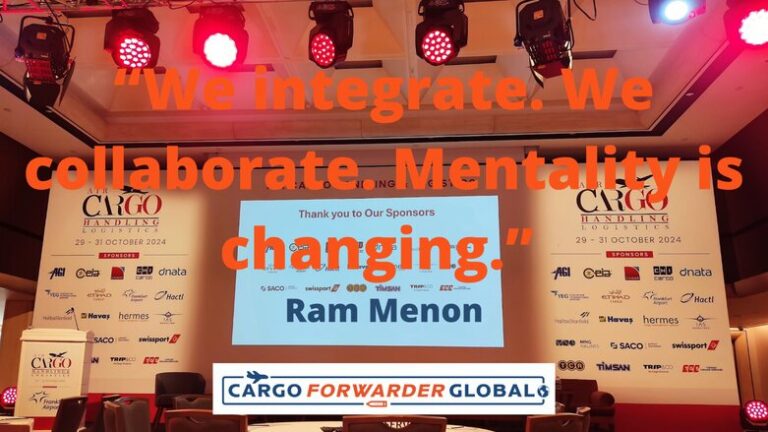
Ram Menon, Group Chief Commercial Officer, Wallenborn Transports’ observation during the ACHL panel on ‘Revitalizing Supply Chain Dynamics’, best describes the general ambience of the conference: “We integrate, we collaborate. We break away traditional barriers. The ‘Old Boys’ Club’ of cargo is changing. Mentality is changing.”
Air cargo handling is finding its voice. Image: CFG
Record growth and positive expansion In just two years, what Master of Ceremonies, Mark Pilling, Editor of Airline Routes & Ground Services, referred to as the “Ground and Cargo Handling event of the year”, organized by UK-based Eva International Media, has almost doubled in number of attendees (770+ in 2024, compared to under 500 in 2022, 600+ in 2023). Registrations were still coming in in the weekend run-up to the event, despite it falling on Türkiye’s 101st anniversary celebration (29OCT24) – a fact that was respectfully acknowledged with much music and flag-waving near the end of the day. A record 60+ exhibitors were available to talk to in a hall that was far larger than at previous events, and 27 sponsors supported the event, which now brings a total of 6 conference streams together: the ACHL (now under Henrik Ambak’s Chairpersonship), The Airport Services Association (ASA)’s Leadership Forum, ULD Care, Airfreight Pharma, GSE & Ramp Ops Global, and the Road Feeder Services (RFS) Forum.
Collaboration, mindset, change management No wonder, then, that true to the conference’s new branding as Aviation Connect, ‘collaboration’, ‘change management’ and ‘mindset shift’ came up in discussions, time and again. All panels were carefully balanced to include stakeholders from across the air cargo journey, even including EASA and independent shipper and consultants, alongside members from each of the six streams, as well as IATA and TIACA representatives, depending on the topic. For the first time in the event’s history, plenary sessions were included at the start and the end of event, bringing together the 6 streams and setting the expectations for the conference and summarizing the event’s key takeaways and targets for the coming year. These, as well as an ASA CEO Panel at the very end of the second day, were remarkably well-attended, compared to previous years, and were certainly worth their while.
Success, standards, and sharing With panels on cargo handling achievements, enhancing stakeholder collaboration, improving cargo handling efficiency, advancing sustainability, technology, and pushing for minimum standards in ground and cargo handling, the conference tackled many of the industry’s challenges in an open, constructive dialogue. The innovation showcase on day one, with its 7-minute slots per speaker, also demonstrated a number of truly useful and applicable industry solutions, and was an inspiring change to the usual company plugs in past years. It also emphasized a core message throughout the event: the technology is there – the true challenge is user acceptance and encouraging a mindset shift within the industry/respective company.
Facing a new dawn In the closing plenary on the final day, each of the stream heads summarized their impressions of the three-day event. For Fabio Gamba, Director General, ASA, the need for Aviation Connect was clear. “I strongly feel we are about to face a new dawn,” he declared, mentioning the upcoming EASA regulation for 30 countries, as well as a soon to be published report showing the importance of ground handling, globally. “We [ASA] are partnering with IATA to get more visibility on this industry […] Power is in data,” he concluded. Henrik Ambak, ACHL Chairperson, commented on the discussions on digitalization, urging participants to take the lead and encourage others to follow. His greatest wish was for minimum standards across the industry. His takeaway from the standards panel was that “instead of waiting for a uniform standard, people will be doing something,” but that we could expect progress. Another topic stood out: “e-commerce is on everyone’s lips and has a big impact on cargo,” including triggering the discussion of multi-assignment to more than one GHA. Bob Rogers, VP & Treasurer, ULD Care, commended Aviation Connect’s success in bringing the industry together and breaking down silos. He emphasized the positive changes that ULD Care has been working on during the past year, regarding sustainability standards: lower weight ULDs and the sustainability label. This will continue in 2025.
Expect the unexpected! Stavros Evangelakakis, CCA Board Member, reminded participants that “1.9% of pharma in volume, goes via air, representing USD 1.9 billion in turnover.” Yet temperature deviations still happen, so collaboration and transparency are crucial. He was particularly impressed by the “younger generation [who] presented really interesting topics [which he went on to illustrate], and created a positive vibe in the room. There is HOPE! […] We should create a platform with these positive examples,” he urged, and mentioned 2 phrases that he was taking away from the event: “We need to ‘expect the unexpected’, and ‘complexity is the new norm’.” For Jason Breakwell, Commercial Director, Wallenborn Transports, attending as RFS representatives for the first time and engaging with the airlines, handling companies, airports, etc. present, it was clear: “RFS has been a big success and definitely needs to be a permanent fixture. Can we have a larger room next time, please?!” His verdict: “RFS is an increasingly important part of the air cargo ecosystem and needs to have a seat at the table prior to infrastructure developments, digital integration, or sustainability policies.”
A greater voice in the wider industry Representing GSE & RAMP OPS, dnata’s Robert Powell, VP President, Technical Services, listed three themes: A necessary mindset shift in regard to innovation, away from reasons why things cannot be done to discussing what CAN be done. Regarding sustainability: “it doesn’t really matter what the energy type may be, they all require an element of infrastructure” and barriers need to be broken down in attitudes to bring about solutions. Lastly, he pleaded for an image shift: “We need to make the industry attractive to next generation […] Package it better to show the excitement, travel, dealing with people. […] At GSE, we are no longer ‘greasy, dirty guys’, but a diverse, highly educated, tech-savvy team. We need a greater voice in the wider industry,” he concluded.
Wonderful, wonderful Copenhagen! As revealed by Lars Gotfredsen, Senior Air Cargo manager, Airline Sales ALS, at the very end of the conference, the next Aviation Connect will see the conference location shift again, this time heading north to Copenhagen, Denmark. The dates have not yet been set, so stay tuned and CargoForwarder Global will let you know as soon as possible. And for those uncertain as to whether they should attend, Steve Allen, CEO of dnata, speaking in the CEO panel on 30OCT24, said: “This conference is best attended by the most senior people in our industry that I have ever seen!” No better place, therefore, to discuss with the air cargo industry’s decision makers across the board.
The next Aviation Connect will take place 14-16OCT25 in Copenhagen!
*If you’re into cultural education, know that Bomonti, founded 1890, is the oldest brewery in Istanbul, Türkiye, and now belongs to Efes, which continues to brew Bomonti as per the original recipe.”
One of the UK’s oldest dog training and canine-screening companies, Dog Detectives Ltd., based near Liverpool, has been acquired by the Global K9 Protection Group (GK9PG). Thus, the number one U.S. air cargo screening provider, founded and operated by military veterans, embarks on its strategy to branch out into the European market and eventually expand further on an international level. Dog Detectives is the UK’s largest exporter of Detection Dogs worldwide with strong connections to the United Nations and the Middle East, while GK9PG currently provides canine screening services in 660 facilities, spanning 162 cities across the US.
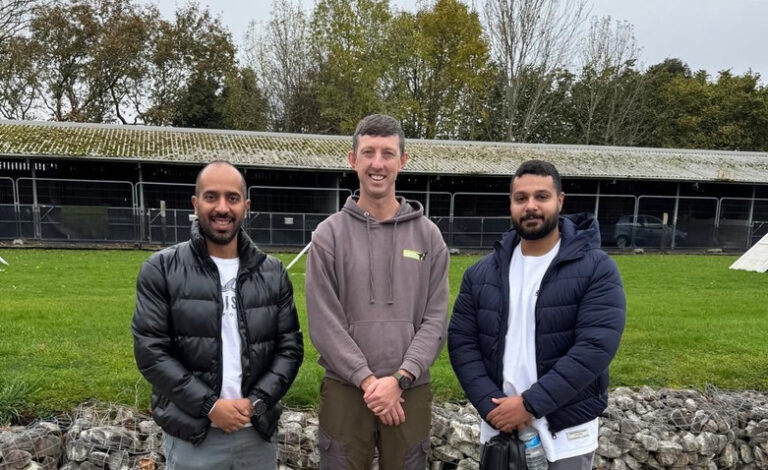
(Left to right) Major Ali Aljeeran, Head of Bahrain Customs K9 Unit, Andrew Jones, Director, Major Hamad Alnaham, Head of Search and Investigation Section. Image: Meantime Communications
Roland Beason, Chief Operating Officer (COO), GK9PG, said: “We are looking forward to working with Dog Detectives’ experienced staff, and leveraging their 25-year track record of providing excellent screening services. This acquisition kick-starts GK9PG’s international expansion plans, building on our strong presence across the U.S.”
Andrew Jones, who has played a large part in the Dog Detectives’ success, will stay and assume his new function as Director at GK9PG. He commented: “GK9PG is one of the world’s largest canine screening providers and the acquisition agreement marks a new chapter for Dog Detectives. Dog Detectives was founded by my father, David, and over the past 25 years, we have been proud to build it into the trusted operation it is today. By combining our expertise, we are well positioned to continue delivering effective screening solutions for the years to come.”
Australia’s largest air cargo carrier, Qantas Freight is expanding its digital reach on cargo.one. Following the success of its trans-Pacific services launch on the platform this time, last year, it is now branching out and giving cargo.one’s 20,000+ freight forwarder users access to North American connections as well as its ‘Kangaroo Route’. The latter refers to its nonstop services from the UK to Australia on which freight forwarders can now book General Cargo up to 10,000kg in weight. Qantas is the only airline to offer nonstop services from the UK to Australia with its daily flights from London to Perth, as well as its daily flights to Australia via Singapore. cargo.one and Qantas Freight have been the working to ensure seamless, reliable and simplified end to end digital quoting and booking experiences for users, and are looking to add further routes and products over the next few months. To date, Qantas Freight operates 20 cargo terminals across Australia and Los Angeles and is set to expand into Western Sydney International Airport (WSI), increasing Sydney’s capacity by 33%. With a diverse fleet of freighters and belly-space across Qantas and Jetstar, Qantas Freight supports a wide range of cargo needs, serving a large domestic network as well as offering connections to more than 500 international destinations.
Freight forwarders can now book the ‘Kangaroo Route’. Image: cargo.one
Igor Kwiatkowski, Executive Manager Qantas Freight, illustrated: “With its presence in many global freight markets, cargo.one is an ideal partner to help grow digital sales and connect our brand and products with more freight forwarders around the globe. We’re looking forward to strengthening our partnership with cargo.one and delivering for our mutual customers.”
Moritz Claussen, Founder & Co-CEO of cargo.one, added: “We are delighted to play a key role in shaping the digital sales engine for Qantas Freight. Having supported its teams over the past year to commence its external digital sales, we look forward to bringing more Qantas Freight capacity live and working to further extend its digital market share.”
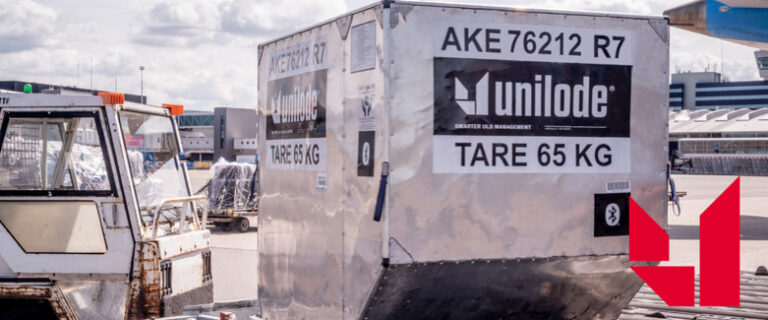
The two newest airlines to outsource their ULD management to Unilode and benefit from the world’s largest pooled ULD fleet, are Egyptair Cargo and TAAG Angola Airlines. Egyptair Cargo – one of Africa’s largest air cargo services – has agreed on long-term, full-service ULD management for its freighters and the bellies of sister passenger airline. Unilode will supply Egyptair Cargo with digitalized PMC and PAG pallets and provide repair services as well as access to its e-ULD app and customer dashboard to further enhance operational efficiencies and data analytics.
Unilode welcomes TAAG Angola Airlines and Egyptair. Image: Unilode
TAAG Angola Airlines has signed a multi-year agreement with Unilode, covering its day-to-day ULD needs across its network, and including repair, digital track and trace services as well as total operational management planning and oversight.
David Ambridge, TAAG Angola Airlines, Director Cargo & Mail, explained: “One of the main reasons for our decision to outsource the management of our ULD operations was to be able to focus on our pursuit of excellence, to continuously improve, and to deliver on our promises to our customers especially as we continue to grow our services across Africa and beyond. Unilode’s proven expertise in ULD management will also support our growth aspirations and help in achieving key sustainability milestones.”
Ross Marino, Unilode’s Chief Executive Officer, commented: “We are delighted that we can extend our partnership with TAAG Angola Airlines, from short-term leasing support to full ULD management and to be a partner in their exciting growth journey. […] Our partnership with TAAG Angola Airlines […] demonstrates Unilode’s coverage and scale in effectively managing ULD’s across the global network and in continuing to expand our presence, and services, across high growth regions such as Africa, Oceania, and the Indian sub-continent.”
Mohammed Akhlaq, Unilode’s Chief Commercial Officer, said: “We welcome Egyptair Cargo as the newest member of our global ULD management customer portfolio and are committed to facilitating their expansion with Unilode’s ULD solutions for many years to come. Our investment with our newly refurbished Operations Control Centre, growing MRO network, groundbreaking in-house ULD digitalization transformation platform, including our new eULD app and customer portals, and commitment towards sustainability goals, continue to provide unique outsourcing opportunities that are being well embraced by the industry.”
The new week starts with a new network-wide product over at WestJet Cargo. It launches its solution for time-sensitive shipments on 04NOV24. Called ‘Priority’, it lives up to its name by offering a premium service with priority loading and transport for cargo meeting the product’s requirements. Urgent healthcare or manufacturing goods can thus be flagged for transport on specific flights. Priority has been developed for industries requiring fast, reliable transportation of critical goods. Priority shipments can be delivered up to two hours prior to departure on board of narrowbody flights at WestJet Cargo’s main hubs: Calgary (YYC), Vancouver (YVR), or Toronto (YYZ). This is one hour less than the usual cut-off time of three hours. Shipments that are due to travel on widebody flights can be handed over up to three hours before departure, instead of the usual six hours. “In the unlikely event that a Priority shipment does not fly as confirmed, the Priority charge will be fully refunded,” the press release promises. More cargo origins are due to be added to the Priority network soon, though 80% of Priority volumes are expected the be sent out of or to Calgary, Vancouver, or Toronto. The product launch, which is “expected to significantly enhance operations at WestJet Cargo’s key hubs”, is the latest milestone in the airline’s strategy of providing fast, reliable transport across its large cargo network across Canada, Europe, Asia, and the Americas.
Kirsten de Bruijn, Executive Vice President Cargo, underlined: “Our Priority product is tailored to address the growing demand for urgent logistics solutions. With shorter cut-off times and guaranteed uplift, we provide a solution that enhances efficiency and peace of mind, especially for customers in healthcare and other critical industries. These clients depend on timely, secure transport for essential goods such as human blood, tissue samples and machinery.”