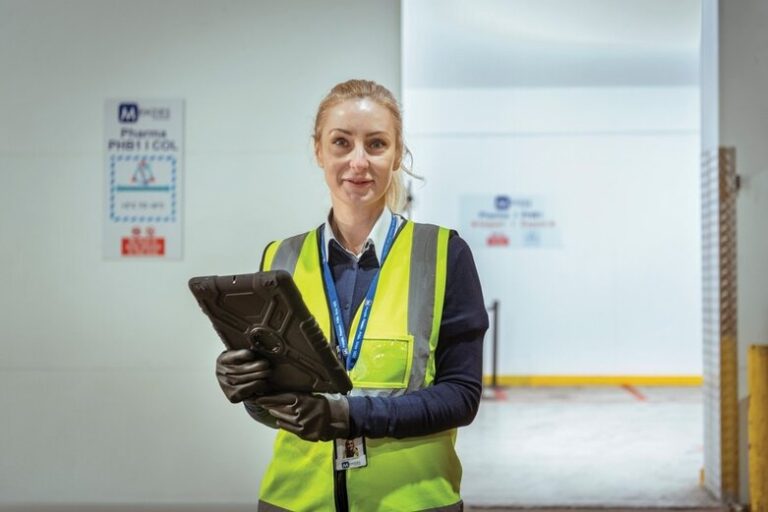
A single source of truth smooths cargo operations across the board. Image: Menzies
Since NOV23, 24 stations have already been rolled out and are operating with Menzies’ end-to-end the Menzies Aviation Cargo Handling (MACH) cargo management system that uses a ‘single source of truth,’ to improve data accuracy across the air cargo management ecosystem, helping to simplify and standardize all cargo processes. It is cloud-based and thus accessible from anywhere in the world, at any time and on any device, and provides real time insights and data. Operational stations include Menzies’ major centres in Auckland Airport (AKL), Dallas Fort Worth International Airport (DFW) and O. R. Tambo International Airport (JNB), and to date over 150,000 tons have been managed using the system. Another 13 airports are due to go live soon. Now Menzies Aviation has announced that it will continue working with technology services and consulting company, Wipro, to roll MACH out to a further 28 new stations in the coming year. Once completed, over 3,000 end users will be working with MACH: Currently, over 600 Menzies employees have been trained to use the system safely and effectively. Rory Fidler, SVP Cargo Technology, Menzies Aviation, said: “We are very excited to confirm the second phase of the MACH roll-out, which will see the system implemented at an additional 28 locations across the world. The first phase of the program will be completed over the coming months, which is testament to the successful offering, and sharing the multiple benefits of this pioneering and cutting-edge system to our airline customers across our global network.” Omkar Nisal, UKI Managing Director, Wipro Limited, said: “Leveraging advanced automation, real-time data integration, and streamlined workflows, our solution is helping Menzies handle more shipments with fewer resources, leading to cost savings and faster turnaround times. Through real-time data integration, Menzies is now able to have better visibility into the supply chain, allowing them to identify and resolve issues promptly, thus ensuring timely deliveries and customer satisfaction. We are committed to continually raising the bar on our work for Menzies and bringing these leading technology solutions to the broader Cargo industry.”
Chapman Freeborn appoints Bernardo Nunes as Global COO. Image: Chapman Freeborn
Chapman Freeborn announced this week that it has appointed Bernardo Nunes as its Chief Operating Officer. He is no stranger to the company, having previously held the position of Director of Transformation and Analytics during 2021-2022. At the time, he managed cross-departmental projects to drive and execute the company’s commercial and digital transformation, and supported the CEO and Senior Management with strategic transformation projects. His more than 25 years in air cargo supply chain and finance, includes positions within forwarding, airline, and digital booking platform and data analytics companies. In his new function, Nunes will focus on strengthening the cultural, strategic, and operational leadership at all levels of the Chapman Freeborn group, including Magma Aviation, Intradco Global, and the Arcus Air Group. Eric Erbacher, Chief Executive Officer, Chapman Freeborn, announced: “Bernardo will be managing daily operations across the Chapman Freeborn group to achieve strategic objectives and foster long-term sustainable growth. This is an exciting time for Chapman Freeborn, and I am confident that Bernardo’s leadership will help us reach new heights as we work towards our 2030 vision and beyond – I look forward to working closely with him.” Bernardo Nunes, Chief Operating Officer, Chapman Freeborn, enthused: “I’m thrilled to be back at Chapman Freeborn, working closely with Eric and the wider team to reinforce our ambition, efficiency, and customer centricity. Together we will utilize Chapman Freeborn’s decades of knowledge and experience to further cement our place as the leading air charterer.” Over on LinkedIn, Russi Batliwala, Chairman of The Board at Chapman Freeborn Group, wrote: “Welcome back, Bernardo. Great to have you back on board. Your business skills and focus on getting things done for the CF group will help us on our journey forward.”
Michael Teoh is CargoTech’s Head of Strategy. Image: CargoTech
Cargo technology group, CargoTech, has brought on board a Head of Strategy to “help fast-track the air cargo industry’s digital transformation”: Michael Teoh took up his new function early OCT24, and is responsible for steering the company’s strategy and member portfolio, and supporting digitalization within the air cargo industry by identify common problems and aligning these with solutions being developed by CargoTech’s member companies or potential external technology providers. “A significant part of my job will be scouting for startups and mid-size companies across the globe, that offer technology solutions in the air cargo value chain, and bringing them into the CargoTech community,” he explains. The expert in group strategy, M&A, turnaround transformation and PMO, was drawn to CargoTech because of its mission “to encourage, facilitate, and accelerate the air cargo industry’s digital transformation” and the chance to become a first mover and make a positive impact on the industry. Furthermore, its focus on sustainability, customer-centricity, as well as its international set-up: “Sustainable impact is at the core of solution design. And the potential to expand the product and services offerings is huge given that Cargotech is a multi-expert group of companies based in Paris, London, Utrecht and Singapore, and thus approaches innovation from many different angles of the air cargo value chain. […] At CargoTech, we believe that air cargo transformation is not a one-party solution; it requires collaboration from like-minded players across the value chain, who are willing to experiment, innovate, share, and invest in joint solutions. CargoTech is well positioned to support this facilitation and acts as a catalyst to spur new ways of working.” Cédric Millet, President of CargoTech, emphasized: “Leaders need winners. Michael Teoh’s impressive track record in digital transformation and strategy at some of the world’s largest companies, not to mention leading airlines, clearly defines himas the best in tech to take CargoTech’s mission to the next level. Welcome, Michael Teoh!” Since 2022, CargoTech with its unique one-stop-tech-shop concept to facilitate and accelerate the air cargo industry’s digital transformation journey, has developed well, he feels. “But we can always go faster and deliver more. And with transformation mastermind, Michael Teoh, on board to source and inspire the fast-growing number of trailblazing digital start-ups to join us, CargoTech and the air cargo industry can anticipate a strong and sustainable digital future.”
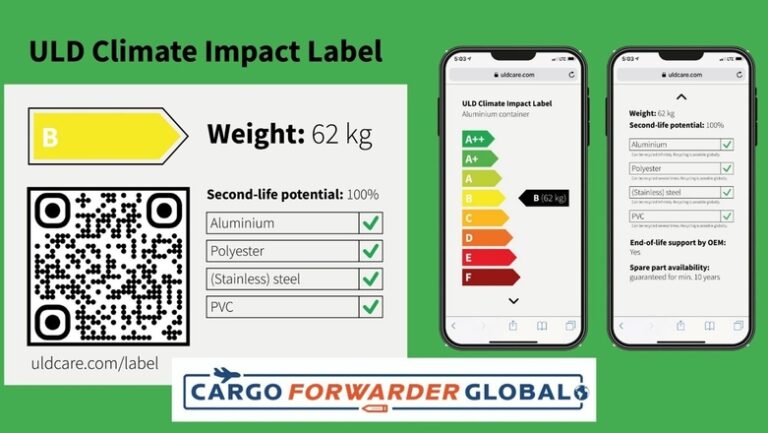
You’ve seen them on refrigerators, televisions, washing machines and all kinds of household appliances – and soon they’ll be spotted on an AKE container near you… The Energy Label, alias: the first ever “ULD Climate Impact Label”. A significant Memorandum of Understanding was signed by representatives of leading ULD Original Equipment Manufacturers (OEMs), pooling company and airlines at the Aviation Connect event in Istanbul, Türkiye, on 30OCT24, endorsing the adoption and implementation of a specially developed system that provides information on a container’s sustainability factors.
Starting out on AKEs with other container types to follow. Images: ULD Care/CFG
You see, there is more to sustainability in aviation than simply SAF – and particularly if, in this case, it is something that does actually meet the eye. In the Aviation Connect panel discussion on ‘Advancing Airfreight Sustainability and Accountability: Integrating ULD Care Initiatives’, it was Terry Waithe, Manager – ULD Logistics and Cool Chain – Cargo at Air Canada Cargo and IATA ULD Board member, who quoted Maya Angelou: “When you know better, you do better.” Talk was of improving the environmental impact, make-up, and product lifecycle of ULDs. And that consideration is what this new label aims to address.
“When you know better, you do better.” The original Energy Label was first introduced by the EU in 1994 (though discussions began back in 1976, already), with the aim, on the one hand, of encouraging consumers to choose more energy-efficient products, and on the other, of motivating manufacturers to innovate and adopt more efficient technologies. Today, around 93% of consumers recognize the energy label (according to the latest Eurobarometer survey) and a good 75% actively base their buying decisions on the information it provides. In many cases, the label not only gives information on the product’s energy consumption, but also additional information on other relevant features such as the product’s noise emissions or water consumption, for example.
A significant leap Like the EU Energy Label, the ULD Climate Impact Label has been designed to provide an easily understandable and clear message regarding the ULD’s environmental impact. The information displayed is currently threefold: It shows the container’s weight – naturally, the lower, the better, since less weight means less need of fuel in transportation, ergo fewer CO2e emissions during flight. The second piece of information regards Spare Part Availability. “Ensuring the long-term availability of spare parts extends the lifespan of ULDs, minimizing the need for frequent replacements and thereby reducing waste and environmental impact,” the press release explains. And finally, the label shows the container’s Second-Life Potential. This is an assessment of the ULD’s recyclability once it comes to the end of its operational life, and the listing should hopefully “encourag[e] responsible end-of-life management and resource optimization.”
“The comprehensive evaluation of these three core elements offers a holistic view of a ULD’s overall environmental footprint, enabling more informed purchasing decisions and promoting a shift towards more sustainable practices. The label is designed to be user-friendly, easily accessible, and readily integrated into existing procurement processes,” reads the release.
Accountability is an opportunity to do better Urs Wiesendanger, ULD Care President, is certain: “The ULD Climate Impact Label represents a significant leap towards a more sustainable air cargo industry. By providing a clear and accessible framework for assessing and comparing the environmental impact of ULDs, we empower both OEMs and ULD operators to make informed decisions that minimize their carbon footprint. We’re excited to launch this initiative in partnership with leading industry players, driving collective action towards a greener future for air freight.”
Participating OEMs actively interested in minimizing air freight’s carbon footprint, currently include: Aerotuf, AmSafe Bridport/Nordisk Aviation, AviusULD, Palnet GmbH Air Cargo products, Satco Inc., Taiwan Fylin Industrial Co. Ltd., and VRR. ULD manager, ACL Airshop, as well as the airlines: Air Canada, KLM, and United Airlines, were also involved in the creation of the original ULD Climate Impact Label proposal.
Terry Waithe outlined the goals of the label: “When it comes to recycling – we need to talk the talk and walk the walk. Are ULD materials being discarded or repurposed? Over how many life cycles? Are emissions occurring? Can we use bio-degradable materials in part of the ULD? Accountability drives this initiative and is key to innovation. […] Accountability is an opportunity to do better!”
More to come in 2025 2025 will see a continued concerted effort to improve sustainability in relation to ULD movement, manufacturing, and management. Airport College CEO, Pertti Mero, announced the creation of another free 60-second training video to come in the new year, in its series on safe ULD inspection, handling and storage. It will have a core focus on Sustainability. He also stated that an e-learning course to raise awareness of sustainability in aviation would be coming out later this year.
Louise Platell, Innovation Engineer at VRR, confirmed that for VRR “Sustainability is a promise. There is more work to do, but we will make it happen.” The ULD Care plan is to implement the ULD Climate Impact Label first on the AKEs (Aircraft Lower Deck Containers), then branch out to other container types/products, further improving the details in the label such as the inclusion of ULD lifecycle emissions, repairability, and durability – factors that are currently excluded due to the challenges in accurately measuring them. Further, ULD Care intends to establish a central authority and documentation system to manage the label and its documentation.
Be part of the solution Celine Hourcade, VP Global Head of ESG & Sustainability at SATS Ltd., urged Aviation Connect participants listening to the ULD Care Initiatives panel to join in the ULD Care challenge: “Everyone in the conference has some stake in ULD operations. Please pay attention to what ULD Care is trying to do, and we are always looking for partners to leverage improvements! […]Common sense and constant dialogue is needed. Sustainability should be a constant topic in standard customer relationship.”
Terry Waithe emphasized the message by quoting Eldrige Cleaver: “If you’re not part of the solution, you’re part of the problem.”
“We all have the opportunity to become part of the solution,” he added.
CargoForwarder Global’s ‘Spotlight On…’ series highlights the many very different jobs that, in conjunction, ensure smooth, efficient, and safe logistics services within air cargo. A large and important part of air cargo takes place on the ground – in warehouses across the globe. These differ in size and scope. In Frankfurt/Main, Germany, Lufthansa Cargo’s warehouse facilities are central to its entire operations. Handling needs to run like clockwork to keep the flow of air cargo running according to schedule. Thomas Rohrmeier (TR), Vice President, Head of Handling Frankfurt at Lufthansa Cargo, tells us more about his role, and shares his experience and advice for those wanting to join the air cargo industry.
Air cargo is full of suspense! Image: Thomas Rohrmeier
CFG: What is your current function and company? And what are your responsibilities?
TR: I act as Head of Handling Frankfurt, meaning I am responsible for all warehouse activities at our Frankfurt Hub (FRA). Here, we process a little over 40,000 shipments per week, or in other words, over 23,000 tons of cargo per week – arriving and leaving in FRA on some 1,400 trucks per week, and several hundred daily flights.
CFG: What does a normal day look like for you?
TR: There is no such thing [smiles]. As with many managers, my day consists largely of meetings and digesting information. But the range of topics is extremely broad: from working with our handling partners to deciding next steps around our Hub-Rebuilding project, LCC Evolution, to HR topics, and layout decisions to questions such as how do we best deal with e-commerce in a compliant way. And many others… What I enjoy most is going down to the shop floor and having an open conversation with anyone I run into. That usually triggers the steepest learning curve.
CFG: How long have you been in the air cargo industry, and what brought you to it?
TR: Since 2002, straight from university. I was always interested in creating order from chaos, and in real world problems rather than just financials. So, I went on to study logistics and supply chain management – first in Regensburg, where it’s all about automotive, and then in San Franciso, where it was all about tech and collaboration. So, the step to connect the world through logistics was a kind of natural fit.
CFG: What do you enjoy most about your job?
TR: The opportunity to get an ‘old lady’ (our hub) into shape and being able to rebuild the beating heart of cargo, both in terms of concrete and steel, as well as people. I have never had a job with more opportunity to create. We are spending close to EUR 600 million on a major construction and technology project through to 2030, to have a cutting-edge operation again. That’s really exciting!
CFG: What do you see as the greatest challenges in our industry?
TR: The people in our industry are very nice – but also rather innovation resistant. If we don’t change and adopt technology more and agree on some modern (!) standards, then I fear sooner or later someone from outside of the industry will come and solve it for us.
CFG: What advice would you give to people looking to join the air cargo industry? Any particular training they should aim for?
TR: The content specific to air cargo is something you will learn once you get started. No one expects a fully trained air cargo specialist unless they hire them from another cargo company. We know that we are a niche business. However, I would always look for people who can demonstrate some understanding of process design (take an operations management class…), basic IT principles, and the ability to work with data. Those are precisely the things that we lack, historically, as an industry, so therein lies your opportunity.
CFG: If the air cargo industry were a film/book, what would its title be?
TR: “What flies beneath…” This is borrowed from the famous horror movie with Michelle Pfeiffer and Harrison Ford. Not that air cargo is a horror show – but it is full of suspense, and you really don’t know what’s going to be the next story twist. [Laughs]
Thank you, Thomas, for your answers.
If you would like to share your personal air cargo story with our CargoForwarder Global readers, feel free to send your answers to the above questions to cargoforwarderglobal@kopfpilot.at We look forward to shining a spotlight on your job area, views, and experiences.
Aircraft maintenance, repair and overhaul are still the core activities of the Lufthansa Group’s technology subsidiary. However, other business areas are increasingly coming to the fore, especially logistics. This became clear at the recent annual conference of the German Association of Aviation Journalists (LPC) in Hamburg. LPC members were informed first-hand by Lufthansa Technik and Airbus about new developments and trends in aviation.
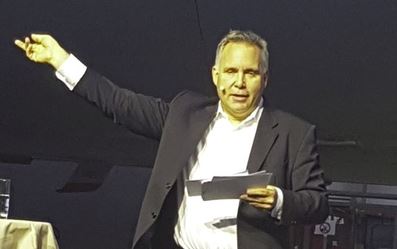
Harald Gloy presented Lufthansa Technik’s development plans – photos: CFG/hs
Harald Gloy outlined his company’s ambitions, initiatives, and strategic visions come 2030. “We are undergoing a fundamental transformation; it is ongoing, and its speed is accelerating,” the former Lufthansa Cargo executive and current Chief Operating and Chief Human Resources Officer of Lufthansa Technik dictated to the recorders of the 60 or so LPC journalists present.
Strong sales ambitions His employer’s ambitions are clear: Lufthansa Technik aims to achieve a turnover of EUR 11 billion by 2030, compared to EUR 5.6 billion in 2022, andjust under EUR 8 billion in 2023. The margin is set to grow at a double-digit rate each year and the network of stations is to be expanded and thus become even more closely knit. This is to be achieved largely organically, although targeted acquisitions to foster strategic growth are certainly an issue. As was the case in AUG24, for example, when Lufthansa Technik acquired 80% in Tulsa, Oklahoma-based, ETP Thermal Dynamics, marking a significant step in the expansion of its aircraft component services portfolio in the Americas, and enhancing its heat exchanger capacity within its global network.
Various growth areas According to manager Gloy, the transformation strategy is based on three pillars:
The company’s global leadership in traditional MRO activities is to be maintained and expanded in a targeted manner. Next on the agenda is the setting up of a station in southwest Europe, he indicated, without revealing specifics. Gloy went on to say that analog value creation models are to be replaced by digital processes, supplemented by AI and robotics. Between 200 and 300 projects are already underway, he added. And thirdly, new business models and products are to be developed in order to drive forward market development.
Since plans born during the pandemic to sell 20% of the shares and channel much needed cash into the empty coffers of parent Lufthansa Group, are now off the table, Lufthansa Technik does not need to take any external stakeholders into consideration when making investment decisions.
Lufthansa Technik displayed a special LPC livery on an aircraft as warm welcome to the attendees of the annual meeting of the German Aviation Journalists (LPC).
The focus is on logistics Gloy sees considerable growth potential, particularly in the logistics business segment. Thanks to its subsidiary, Lufthansa Technik Logistik Services, the company is already well positioned in this sector. “Components worth around EUR 2 billion are in stock at our stations. Thanks to this inventory, we can ensure the end-to-end supply of our customers in the shortest possible time,” assures the manager.
Now Lufthansa Technik intends to become active in the defense sector. For example: by modifying military aircraft and providing component support. A collaboration agreement has already been concluded with the New Zealand Air Force. Further contracts for the tandem-rotor helicopter, Boeing CH-47 Chinook, ordered by several EU countries, could follow. The helicopter can transport 40 cubic meters of material over a distance of up to 1,000 kilometers. Germany has ordered 60 of the heavy transport helicopters in their most modern version. An efficient supply of components is essential for the long-term operational capability of the Chinook. However, Gloy made one point very clear. “Although we want to gradually expand the defense business, this does not include services for weapon systems.”
Two weeks ago, CargoForwarder Global reported exclusively about plans presented by the communications agency, Lemon Queen, that its doing will be guided by sustainability criteria. We asked agency owner, Audrey Serdjebi (AS), what this means for day-to-day practice and where the agency has identified specific fields of action. After all, simply coming up with a new brand, Lemon Green, does not in itself generate an environmentally friendly, green policy – or does it?
To start with, CargoForwarder Global (CFG) wanted to know whether pressing current issues were the deciding factor for the initiative or if the idea matured over a longer period of time.
Here is what Ms. Serdjebi said:
AS: The project which has always been close to my heart and was supported by the entire team from day one, took shape progressively. It was driven by our internal Corporate Social Responsibility Audits, consultations with stakeholders, and our carbon footprint assessment. These foundational steps, along with extensive research and meaningful encounters, helped bring Lemon Green to life.
We believe that even the smallest actions can contribute to solving the greatest challenges. This conviction is at the heart of Lemon Green: no action is too small when it comes to making a difference.
CFG: Were there any role models or events that motivated you and your team to bring the project to life, transforming the idea into conceptual practice?
AS: Having worked with Guillaume Halleux on Qatar Cargo’s WeQare program, I have seen first-hand how leading by example can inspire real change. But it is communication that truly has the power to shift mindsets and drive collective action. Without communication, even the best initiatives remain unnoticed, and opportunities for change are lost.
Lemon Green is rooted in this conviction. It’s not just about what we do, but about how we inspire others to join us. Communication is the key to breaking old habits and creating a ripple effect that fosters meaningful and lasting transformation. It’s through our words, stories, and actions that we can convince others to make the leap toward a more sustainable future.
CFG: Will Lemon Green present a regular report on its sustainability initiatives and measures, creating transparency? This question arises as competitors might claim the initiative is merely a PR ploy to attract attention.
Preserve nature, decarbonize, become much more environmentally aware, is the message of Lemon Green, kicked off by the French agency, Lemon Queen.
AS: Absolutely. At Lemon Green, transparency is a cornerstone of our approach, and we are fully committed to demonstrating the tangible impact of our actions – not just for ourselves, but also for our clients.
We have already completed our first carbon footprint assessment with a clear goal: to significantly reduce our emissions in the next cycle. While we are not yet publishing specific figures, this is because we are waiting for our second carbon assessment to provide meaningful year-over-year comparisons. Once available, we will share the results in a comprehensive annual report, ensuring full transparency.
For emission-heavy activities such as stand construction at trade shows, we are working with specialized experts to develop bespoke carbon calculation tools, enabling us to monitor and reduce emissions effectively. Additionally, we design and build eco-responsible stands that are guaranteed to have a significantly lower environmental footprint.
CFG: And what changes will result for you internally because of the focus on ecological criteria, i.e. for your day-to-day work?
AS: Internally, we’ve implemented an engagement charter that guides all our actions and is publicly available on our website. Our graphic designers have also signed a specific charter outlining best practices to integrate sustainability into their work.
Externally, we carefully select partners who align with our eco-responsible values, ensuring every collaboration supports our sustainability goals.
For our clients, this commitment translates into real impact: eco-friendly stand designs, sustainable event strategies, and a more conscientious approach to communication that aligns with their own CSR values. Lemon Green is not just about us — it’s about empowering our clients to communicate responsibly while making a positive environmental difference.
We are optimistic about the road ahead and confident in our ability to deliver measurable results that inspire trust and set a new standard in sustainable communication.
CFG: Are organizations such as TIACA and its BlueSky program involved in the initiative, or is Lemon Queen throwing a stone into the pond with Lemon Green, to see what ripples it produces?
AS: I find it deeply demotivating to see how often people assume that any effort to do our part is immediately attacked as greenwashing, marketing gimmicks, or having a minimal, almost futile impact. It’s precisely the opposite. Every action matters, and because there’s no such thing as a “small gesture,” Lemon Green exists to ensure every effort achieves its full potential.
We don’t have a choice. We can’t just hide behind sustainable aviation fuel. There are thousands of men and women in this industry who want to make a difference and dozens of companies that have implemented incredible ideas to be more planet-friendly. Lemon Green is here to amplify their voices. So, should we sit back and do nothing? Absolutely not — not us!
CFG: You need partners to broaden your goals. Are talks planned with customers, associations or representatives of customs and authorities at the upcoming TIACA event in Miami?
AS: Absolutely. As one example of several, I would like to mention that we will be meeting with Glyn Hughes at the Air Cargo Forum in Miami, to explore a potential collaboration with TIACA and its BlueSky program. While Lemon Green currently focuses on communication, we welcome all partnerships that align with our mission.
Our approach is not one of observation but of action: Lemon Green actively supports its clients while transforming its own practices daily. We complement initiatives like the ones already initiated by TIACA with a distinct yet aligned approach. Each entity brings its own expertise, and these can absolutely work together in harmony.
Communication is essential to convey the message of ecological transition. It is indispensable for raising awareness and mobilizing industries and individuals alike. This is our deepest conviction.
CFG: Audrey, thank you for your time and explanations
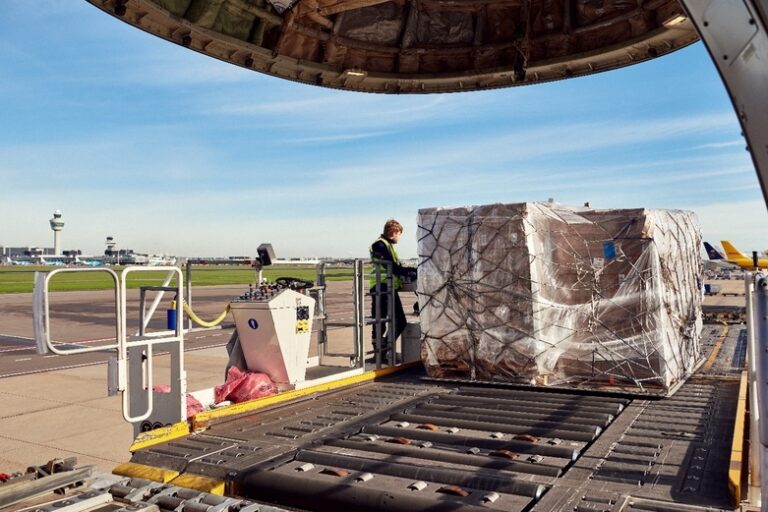
Amsterdam management announced a successive increase in airport fees at Schiphol (AMS) by a staggering 41%. The intention to sharply raise LTO (landing and take-off) fees follows a rate hike of 40% over the last three years. The aim of the stiffer tariff policy, which is subdivided into different categories, is to force older and therefore relatively noisy aircraft out of Amsterdam. This would mostly affect the cargo sector.
Cargo is hit hardest by Schiphol management’s new fare regime– Image: AMS
According to Schiphol management, the charges for B747-400F night operations could increase by as much as 650-700%, subdivided by take-offs or landings, and day rates by 250% come 2027. Carriers operating the newer B777-200Fs (category 4) will also face a significant increase in fees. For night operations, prices will rise by 350-400%, while daytime rates will increase by about 75-80%, according to a pricing table from Schiphol, reports John Versleijen from Nieuwsblad Transport (NT). In total, the B747-400Fs and B777-200Fs accounted for over 10,000 of the nearly 15,500 allocated cargo slots at Schiphol over the past twelve months. This translates into a market share of 65%.
However, it remains to be seen as to whether this is the final word. Talks are still taking place between the parties involved.
Should the new charges finally come into force, many cargo airlines serving AMS would be affected, but the hardest-hit would be Schiphol-based KLM/Martinair Cargo.
On a weekly basis, “we operate 12 cargo flights out of Amsterdam with Boeing 747-400ERF,” Gerard A Roelfzema, Communication & Media Relations Air France KLM Martinair Cargo, told CargoForwarder Global.
A bitter pill These 20+ year-old jumbo freighters are known for being particularly noisy. “If this [price structure] truly becomes the new situation, it would be a bitter pill for cargo to swallow,” he stated. The aging freighters will be replaced by four A350F, ordered by Air France-KLM in JAN23, which comply with ICAO Chapter 14 for noise reduction.
Similar to the Air France-KLM Group, a lot of airlines are currently renewing their fleets (transitioning from the Boeing 747-400F to either the Airbus A350F or the Boeing 777F). However, due to the supply chain issues that manufacturers are facing, the delivery of many of those aircraft is being delayed.
Constant pressure on AMS More than 95% of air freight processed in the Netherlands passes through Schiphol Airport. Unlike its neighboring countries, there is no fully-fledged alternative available to divert that flow within the country, states Air Cargo Netherlands (ACN) in a reaction to the price hike. Schiphol is the only Dutch airport that is open at night. Night-time is essential for several airlines operating freighters, and for integrators, to deliver their goods and services on time, the association underlines. Quoting a survey of the Erasmus University, ACN reminds the Dutch government that “about 25% of added value and employment at Schiphol can be traced to air cargo. About half of this cargo is transported in cargo aircraft, the other half in the cargo holds of passenger aircraft.”
In addition, the lobby group criticizes that increasing pressure has been exerted on Schiphol for years, partly by local residents, but also by the Amsterdam city government and leading policy makers in The Hague. Cutting thousands of slots to reduce aircraft movements or imposing a night flight ban were two controversial topics hotly debated in the Netherlands.
This constant pressure on Schiphol’s policy and operations has contributed to considerable uncertainty regarding the role of AMS. The first airlines, such as LATAM Cargo, have withdrawn completely from AMS to land in Brussels (BRU) instead. Various studies and recommendations show that there is a risk that Schiphol will lose its position as an important air cargo hub. This harms the interests of Dutch-based companies with an international value chain, ACN concludes.
“Fleet renewal should be encouraged, not penalized!” Negatively affected by the new airport fees is also Transavia, the low-cost subsidiary of Air France – KLM. These charges include landing, parking, and take-off of aircraft. Fare differentiation is often used to encourage airlines to operate quieter and more fuel-efficient aircraft. However, the amount of the new night-time fares demanded by AMS management, is beyond reason, states Transavia CEO, Marcel de Nooijer. Landing at night is now many times more expensive than in the previous fare period, while Transavia wants to use the newest quieter aircraft and keep flying accessible, he says. This hits a ‘home-based carrier’ like Transavia hard, even though the company is committed to fleet renewal. “That should be rewarded and encouraged, instead of penalized,” the executive argues.
… claim Western security services. After evaluating previous findings, they conclude that the fires triggered by parcel bombs in Leipzig and Birmingham last July, were part of a covert operation. According to the investigators, the saboteurs’ aim was to carry out test runs for an intended series of attacks on cargo and passenger aircraft on flights between Europe and North America.
A pallet of packages on fire – Courtesy: CBS
Their findings are consistent with statements made by Colonel Pawel Szota, Head of the Department of Information at the Polish Foreign Intelligence Agency. In a response to an inquiry by the Wall Street Journal, he attributed the sabotage and attempted attacks to Russia’s secret services. In his statement, he mentions a “massive escalation” of Russian aggression against the West. “I’m not sure the Russian leadership realizes what the consequences would be if such a package explodes in flight and, in the case of a passenger plane, kills many people.”
Attacks-for-hire groups As CargoForwarder reported, Polish authorities recently arrested four suspects who are believed to be connected with the incendiary devices hidden in DHL parcels.
The investigating authorities accuse the quartet of targeted sabotage and terrorism, hired and paid by Russian sources. According to research by the Polish Foreign Intelligence Agency, it is certain that one of the detainees posted the parcels in a DHL store in the Lithuanian capital, Vilnius, as an intermediary for the Russian secret service, using a false name.
The Kremlin rejects accusations In a statement to the Wall Street Journal, Putin spokesman, Dmitry Peskov speaks of “unsubstantiated insinuations” against Russia. He is not aware of any official accusations against the Russian government. The fact is that some authorities in the West assume that Russian secret services may have planned actions such as the arson attacks without authorization from the Kremlin.
Attacks with little or no warning The 38-page “2025 Homeland Threat Assessment,” released late OCT24, states that the U.S. remains highly concerned about threats to air transportation and cargo, including the potential use of the air cargo supply chain to transport concealed, dangerous and potentially lethal items. “Russian state-sponsored actors […], lone actors, and small groups continue to pose the greatest threat, conducting attacks with little or no warning,” is stated in the bulletin.
As part of a multi-layered security approach, Washington’s Transportation Security Administration (TSA) is collaborating with industry partners to step up security measures for U.S. aircraft operators and foreign air carriers regarding certain cargo shipments bound for the United States, in line with the 2021 TSA Air Cargo Security Roadmap, a TSA announcement reads. “We continually adjust our security posture as appropriate and promptly share any and all relevant information with our industry partners, to include requirements and recommendations that help them reduce risk,” the TSA notes.
AeroLogic is part of the safety network Asked by CargoForwarder Global about consequences for its security scheme following the arson attacks, DHL emphasized that it “cooperates closely with the relevant authorities to protect our people and assets. [However], we do not disclose security-related matters for obvious reasons,” said Dirk Heinrichs, Spokesman Global/EMEA, DHL Express. He emphasized that the security-related cooperation also applies to AeroLogic, in which DHL and Lufthansa Cargo each hold 50% of the shares. Like DHL Express, AeroLogic is based in Leipzig/Halle.
“We are in very close and constant contact with our AeroLogic colleagues, which also applies to those responsible for the Leipzig hub,” the most important in the integrator’s global network. Asked about the possible use of dogs to detect explosives in parcels thus lowering the risks further, he said that this is an option. “If necessary, we can request trained canines at all times if we expect this step to further improve our existing and fine-tuned security scheme.”
“They are simply unstoppable, these Haltmayer people. In 50 years, they managed to form a classic German medium-sized company with 400 employees – with heart and mind. Thanks to continuous expansion, their ‘baby’ QCS has now become a pan-European company.” This statement delivered by EDIfly executive Ingo Roessler, on Quick Cargo’s anniversary and its patron Dieter Haltmayer’s 90th birthday, characterizes the gala event best, held last night (02NOV24) at the Hilton Hotel in Gravenbruch, near Frankfurt.
Dieter cuts the QCS anniversary cake – photo: CFG/hs
Practically, it was a double anniversary in one. Dieter turned 90, QCS celebrated the 50th year of its existence. Guests were invited from practically every continent. The verbal prize for the travel record went to Aubry Inston from Talkcargo in Aukland, New Zealand. “He spent incredible 24 hours in the air and on the road to attend our event,” applauded Stephan Haltmayer in his keynote address. Next on stage was Dieter who thanked all invitees for their coming. He mentioned in particular some of his long-time companions, dearest friends and professional partners: Ram Menen, the “father” of Emirates Sky Cargo, Des Vertannes, the most outstanding representative of IATA Cargo to date alongside Glyn Hughes, Florian Pfaff, the former VP Germany and VP Asia Pacific at Lufthansa Cargo, to name just three of the hons on behalf of many others. To convey an impression of the great event professionally orchestrated by Heidi and her sister Jennifer, we asked some of the invitees for a testimonial. Here we go:
(l > r) Front row: Christopher Stoller, Des Vertannes Back row: The author, Dieter Haltmayer, Ram Menen – courtesy: QCS
Ram Menen, former head of EK Cargo and meanwhile retired “and I love it”: What an event last evening celebrating my friend Dieter has been. As always, he just goes to prove that ‘he is de man” no matter what the age is … It goes to prove that age is just a number. Decades later, I still want to be like him when I grow up. The legacy that Dieter has built up is nothing short of inspirational. I don’t think I have come across the family business dynamics like the one that exists between papa Dieter, Stephan, Heidi and Jennifer, that has led to 50 years of success for a family business that is, against the odds of the nineties and this century, still going strong whilst the larger multi nationals were gobbling down the smaller companies and were finding it challenging to survive. QCS bucked the trend, and actually helped the smaller companies to survive and compete with the multi nationals’ buying power by creating the IGLU, an interest group consisting of 25 companies that bundles freight on certain routes in order to achieve more favorable rates. Other associations followed like the China Cargo Alliance, initiated by the Haltmayer family as well. All these platforms have built the QCS of today. When I was with Emirates, we were great advocates of the start-ups and SME and always supported them. We believed that growth of the SME, as we were one of them, is what will help us grow. Having watched QCS mature over the last decades, I have nothing but admiration, for the whole Haltmayer family, their partners and wish them continued success. QCS, apart from building their own business, has such a positive effect on the German forwarding business… Tonight’s celebration was all about celebrating a living legend’s life and the business he built. What a night it was … we were honored to be invited to be a part of this fantastic milestone event. Happy 90th birthday and 50th anniversary of the business you built, Dieter. I am looking forward to your century milestone.
Des Vertannes, former head of IATA Cargo It’s an absolute pleasure and a privilege to be celebrating Dieter Haltmayer’s 90th Birthday and QCS’s 50th Anniversary. My wife and I were present at his 80th Birthday too, but the remarkable thing about Dieter is his legacy and uncompromised passion for the industry!! He knew what the air cargo industry needed and wanted to overcome every obstacle to achieve his goals even when the odds were stark against him. He was a loyal customer and supporter to me and his success and achievements are to be celebrated and recognized globally. The most important ingredient to his success has been his family. From Maureen, who loved and supported him, to his children, Stephan, Heidi and Jennifer. They have built on his foundation to create this most successful of logistics companies.
The Mckenzie bag pipers fired up the spirit in the room – photo: CFG/hs
Christopher Stoller, head of ACD – Air Cargo Association, Germany Dieter Haltmayer is an entrepreneur par excellence. At the age of almost 40, he founded the start-up QCS in Frankfurt. With constant diligence and dedication, he laid the foundation for a company that keeps on growing continuously. Alongside his children, Stephan, Heidi and Jennifer, the third Haltmayer generation is now contributing to the success of the company and thus also to air freight in Germany and Europe.
Lufthansa Cargo was prominently represented by Klaus Kunkel (left) and J. Florian Pfaff – photo: CFG/hs
J. Florian Pfaff, Manager Lufthansa Cargo Dear Dieter, I have the privilege to have known you for more than 30 years, to attend your 25/65 party in Frankfurt, the 40/80 anniversary and now the 50/90 party in Gravenbruch. But on top, I had the honor to work closely with Dieter personally, his company QCS and Lufthansa Cargo to jointly develop and grow a partnership over years and – hopefully – for many more years to come. When Dieter initiated the interest group IGLU I was happy to support this project from its very beginning. I also was proud to hand over various awards for the achievement of special performances in the air freight industry. But most important I am grateful for our friendship spanning three decades, including three generations. We experienced many wonderful moments with our families in the beautiful Rheingau area and around Frankfurt Airport. After a few years in Singapore, I look forward to a lot of get-togethers in the future.
Markus Heinelt – photo: CFG/hs
Markus Heinelt, Cargo Chief Munich Airport It was an outstanding anniversary event, where everyone present sensed the entrepreneurial spirit of the Haltmayer family, their solidarity and the identification of the QCS employees with their company. QCS makes its employees feel valued and appreciated, its strategy is transparent and forward-looking. It’s a difference to some of the large companies, which operate differently and are more anonymous. The business environment is brutal. But the motivation of the employees is the decisive difference that decides success or failure over longer periods of time. I was particularly impressed by Stephan’s speech. He outlined a clear pan-European strategy for QCS, where he aims to be a leader in the family business sector. This is long-term thinking and includes transparent targets, which has become rather rare today.