Home Blog Page 126

Maersk powers tankers with wind energy

0

The Danish operator of tanker ships decided to deploy suction sail technology on five of its medium range vessels. The step is in line with its strategic goal to reduce its environmental footprint and amplify sustainable initiatives in maritime transportation. The first retrofitted tanker equipped with a wind-assisted propulsion system will be operational in APR25, with the others to follow until mid-2026.

Artist image of Maersk’s taker fleet equipped with Wind-Assisted Propulsion Systems  –  courtesy: Maersk Tankers

Leading by example
They look like four chimneys looming 26 meters upwards from the deck of each of Maersk’s five tankers. It is only a small fleet, but the vessels contribute to reducing greenhouse gas emissions, slightly improving the environmental footprint of the Copenhagen-headquartered shipping company. This is emphasized by Claus Grønborg, Chief Investment Officer in Maersk Tankers: “For the tanker industry to progress in the energy transition, concrete investments and actions are essential. At Maersk Tankers, we are committed to leading by example, continuously adopting advanced energy-efficient technologies to reduce fuel consumption and CO2 emissions. By implementing Wind-Assisted Propulsion Systems at scale in our fleet, we enable our customers to meet their sustainability targets, while also advancing the objectives of FuelEU Maritime and the EU Emissions Trading System.”

Operating autonomously
The retrofitted vessels will operate predominantly in EU coastal waters, Lars Sprogoe Bentzen, Communications Officer, Maersk Tankers, told CargoForwarder Global.

The wind powered propulsion scheme drags air across its aerodynamic surface to generate lift and propulsive efficiency. The eSAIL systems adapt autonomously to prevailing wind conditions for optimal performance. The technology will be installed on the vessels during dry dock periods. Which shipyard will execute the modifications is not public yet, states Dana Camps, spokesperson of bound4blue. CargoForwarder Global reported.

NJORD has a leading role in the project
Maersk Tankers first introduced WAPS technology to its fleet in 2018, with the installation of rotor sails on the Maersk Pelican. Drawing on its experience with deployment and of WAPS, Maersk Tankers expects double-digit percentage reductions in fuel consumption and CO2 emissions per vessel. NJORD, a green technology business venture between Cargill, Mitsui and Maersk Tankers, was appointed by Maersk Tankers as its green transition partner for the project. It has managed the design and technology selection process end-to-end and will lead the integration and installation of the systems, while also validating the savings.

Not suitable for box ships
However, so far, only medium range ships and ferry boats have been equipped with WAP Systems.It remains to be seen whether the technology is also suitable for larger tankers or bulk carriers. In any case, container ships are unsuitable as their decks are full of boxes, leaving no room for masts.

For Cantabria, Spain-based wind propulsion systems supplier, bound4blue, it is the largest retrofit contract so far. José Miguel Bermúdez, CEO and Co-Founder of the company, describes the Maersk order as a “key milestone”, adding: “The trust Maersk Tankers has placed in our technology, reinforces the proven capabilities of our solution in reducing fuel consumption and emissions.” The turnkey units are expected to reduce fuel burn and CO2 emissions in a double-digit range per annum.

Double digit fuel and CO2 saving expected
When asked how much in greenhouse gas emissions can be saved per year and per ship through suction sail technology, Dana Camps remains tight-lipped. She states that Maersk does not wish to publish any figures. The same applies to financial aspects, i.e. the cost of retrofitting and when the expenditure is likely to be amortized. Experts assume that even without precise figures, fuel burn and CO2 emissions will annually decrease by a double-digit figure.

So far, bound4blue has installed its eSAIL system on four ships and has signed additional agreements with other shipowners such as Eastern Pacific Shipping, Marflet, Louis Dreyfus Company, Marubeni Corporation, Odfjell, Klaveness and SNA TUHA’A PAE, to install the system on their fleets.

Ms. Camps says that more agreements will be inked before the end of this year.
EPAL Pallets – the queens of logistics

0

Around 675 million pallets are currently in use worldwide. And this number is growing every day. They are extremely easy to handle and are transported on trucks, freight trains, ships, and airplanes. Most are made of wood, others of plastic. Without pallets, supermarket shelves would be empty. But their use is inadequate. There is no functioning digitalized system that electronically maps the end-to-end process.

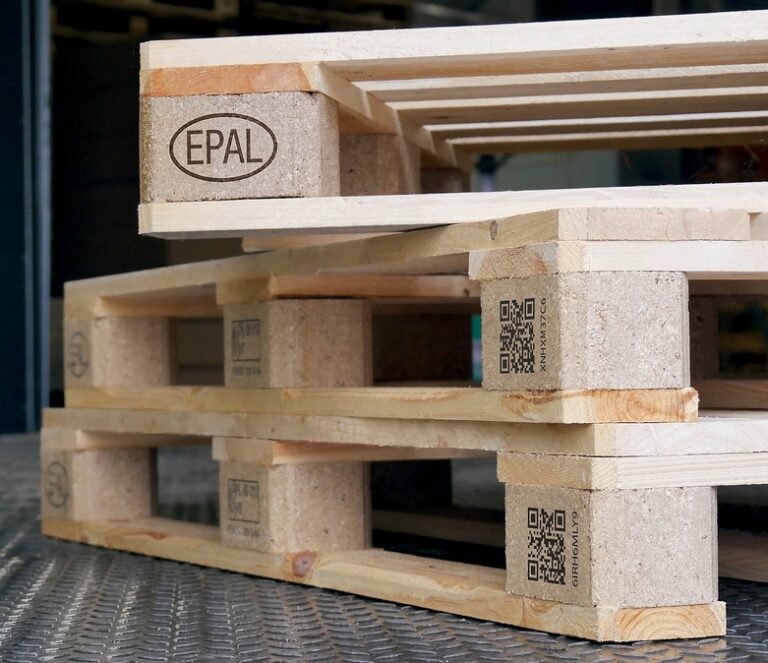
The Euro pallet was developed 1961 by the Swiss Federal Railways – SBB, marking the beginning of its triumphant advance – courtesy: EPAL

Ekart Kuhn, Managing Partner of EKUPAC GmbH, pointed out this shortcoming during a Pallett Symposium held in Hamburg, last week. The expert is a concept developer for reusable transport packaging, ULDs, and the logistics of consumer goods distribution. “When it comes to pallet shortcomings, they are mostly caused by data chaos,” criticizes Mr. Kuhn. The manufacturers of goods, retailers, and freight forwarders must finally agree on a uniform system of master data widely accepted by all, and stick to it in day-to-day practice, he urges the industry. Without process standardization, there will be no automation. Because conveyor belts, sorters or stackers need reliable data to do their job.

No automation possible with faulty pallets
This was exemplified by Frank Domke, Senior Business Development Manager, Volume Storage Systems GmbH, in his impressive presentation. Pallets with nails sticking out, or support blocks attached crookedly can throw automated storage and picking systems completely out of sync. Conveyors come to a standstill and the defunct pallet must be manually removed.

Pallet shortcomings can only be overcome if there is a uniform data system – photo: CFG/ hs

Yet, there is hope. The transportation of fruit and vegetables shows that a high degree of automation is possible. These fresh products are shipped in standardized boxes, which means that there are hardly any hiccups on their way from the field to the shelf. Basically, this is also possible when using wooden or plastic pallets, but it fails if data is not standardized along the entire supply chain, warns expert Ekart Kuhn.

Stunning innovations
The venue of the Pallett Symposium was the Hotel Hafen Hamburg. The two-day event was organized by the Hamburger Logistiktage Gesellschaft in cooperation with the publisher of Logistik-Nachrichten, Olaf Oczkos. Interesting innovations were presented to the 100 participants. For example: smart RFID readers that can be easily attached to packages or, at larger dimensions, to vehicles. These are developed by the U.S. company, Trackonomy, based in San Jose, California. This wearable RFID technology facilitates a seamless transition from manual to automated scanning, thus contributing to more transparent and responsive logistics and improving last mile delivery service. One of Trackonomy’s key customers is integrator UPS, states Holger Heckmann, General Manager EMEA.

EPAL pallets are made exclusively from wood of legal origin. This is checked by the certification company Bureau Veritas, assures EPAL official, Jens Luebbersmeyer – photo: CFG/hs

Harmonized quality criteria
The European Pallet Association, EPAL, was also prominently represented by several managers grouped around its own stand. According to Jens Luebbersmeyer, Head of Germany, the organization collaborates with 1,650 licensees worldwide. Each of its members has signed a pledge that the Euro pallets they produce meet internationally uniform quality criteria. These include standardized dimensions of 1200 mm length, 800 mm width and 144 mm height, as well as the use of certified wood from renewable forests. Each Euro pallet is capable of accommodating goods weighing up to 1.5 tons.

Heat treatment is paramount
EPAL manager Luebbersmeyer emphasizes that it is particularly important that pallets are heated to 76° centigrade for at least 30 minutes before use. At this temperature, the protein of beetle or caterpillar larvae melts in case the insects have penetrated the pallet planks. Consequently, the mandated heating treatment prevents the global spread of invasive species. “We invest a lot in the quality assurance of the Euro pallets, coach our license partners and actively advise forestry operations and timber storage companies,” explains the EPAL official.

Euro pallets contribute significantly to the efficiency and sustainability of global trade, says Olaf Oczkos, co-organizer of the Pallet Symposium – picture: CFG/hs

The market price for a Euro pallet currently fluctuates between 9 and 11 EUR. Thanks to sophisticated pooling systems, experience shows that the wooden ULD is reused on average nine times.

Final remarks from the co-organizer of the event, Olaf Oczkos: “The Pallet Symposium combined pallet and ULD-focused topics with warehouse automation, a first in Germany. Adding to the innovation, AI was integrated into discussions on pallet solutions. The attendees were fond of the location: a scenic Hotel Hafen Hamburg with a perfect view of the port and a maritime ambience. Many participants and attendees were happy to enter pallet deals.”

Spotlight on… Dennis Mutuku, Cargo Warehouse Team Leader, Swissport

0

CargoForwarder Global’s ‘Spotlight On…’ series highlights the very varied roles within the air cargo industry, that work together to swiftly and safely transport shipments from one end of the globe to the other. What happens on the ground plays a major role here. Operations in the warehouse must be correctly orchestrated as their performance is crucial to ensuring that strict flight schedules are adhered to, and that flights leave with professionally built and carefully checked loads on board. This week, Swissport’s Dennis Mutuku (DM), Cargo Warehouse Team Leader in Nairobi, Kenya, illustrates exactly what his responsibilities are, what he enjoys about the industry, and what book/film title he would give the air cargo industry.

The ability to think on your feet and make quick decisions is critical. Image: Dennis Mutuku

CFG: What is your current function and company? And what are your responsibilities?

DM: Dennis Nzioka are my names, and I am currently working as cargo warehouse team leader. My main responsibilities include but are not limited to:

  • Ensuring the efficient allocation of workload among the staff throughout the shift while monitoring staff performance to ensure work is of high standard and implementing corrective action when required on a day-to-day basis.
  • Maintaining discipline and ensuring that staff observes safe working practices as per company policies.
  • Completing shift incident reports and any paperwork as directed.
  • Making sure airline (clients’) instructions and procedures are followed.
  • Ensuring all quality standards procedures subscribed by Swissport are adhered to.
  • Ensuring fixed equipment in the warehouse is serviceable (i.e.: interfaces, cold rooms, scales, etc.) and operated by authorized staff only.
  • Ensuring all mobile equipment is in place and in good working condition (i.e.: forklifts, pallet movers, etc.) and is operated by authorized staff only.
  • Ensuring all equipment is maintained and notifying maintenance team of any necessary repair.
  • Ensuring the cargo operations system, CARGOSPOT, is continuously updated to ensure accurate record of the export warehouse.

CFG: What does a normal day look like for you? (Or is there such a thing?)

DM:
1. Morning Briefing – Start of Shift: Depending on my shift schedule, I start early in the morning or late in the evening for night shifts. I begin by reviewing the flight bookings and schedule landing timings, checking for any special instructions or updates, and receiving any briefings from management.
2. Warehouse Walkthrough – Inspect Operations: Walk around the warehouse to monitor the overall condition of the facility. I check for any safety hazards, ensure that shipments are being properly stored and handled, and verify that work areas are organized.
3. Managing Staff – Supervise Team Members: I mostly spend a significant portion of my day/night supervising my team members, coaching them on tasks, troubleshooting any issues, and ensuring that work is done accurately and efficiently.
3a. Problem Solving: I address any issues that come up, such as delays in shipments, or equipment breakdowns. I sometimes may also need to mediate disputes or resolve conflicts between team members.
4. Focus on Safety and Compliance – Safety Checks: A significant part of my role is to ensure that the warehouse operates in compliance with health and safety regulations. This involves conducting daily safety checks, ensuring that equipment is maintained, and overseeing the correct handling of Dangerous Goods and hazardous materials, if necessary.
4a. Training: I am also responsible for training new staff or re-training existing employees on safety procedures, correct lifting techniques, ULD Handling, Live Animals handling, Perishables and Valuable cargo handling as a trained and qualified cooperate trainer.
5. End of Shift Handover – Wrap-Up: As my shift ends, I submit all flight reports, End-Shift reports, I ensure a smooth transition. This includes reviewing any outstanding tasks, reporting any ongoing issues to the in-coming shift team leader.

CFG: How long have you been in the air cargo industry, and what brought you to it?

DM: I have been in the cargo industry for the last 7 years. The passion to work in the aviation industry was brought about by the fact that it is a dynamic and fast-paced environment. Every day in aviation is different, whether you’re a pilot, air traffic controller, ground operations staff or a cargo warehouse team leader. There’s a sense of excitement in working in an industry that involves high levels of coordination and can be fast-paced and dynamic. Not forgetting the fact that aviation roles often involve thinking on your feet and problem-solving, which appeals to people who thrive in environments that require quick decision-making and creative solutions.

CFG: What do you enjoy most about your job?

DM: My delightful moments are when I am mentoring and sharing knowledge as a leader/trainer. Also, my problem-solving role – guiding my team through challenges. When I help my team to overcome obstacles or teach them new techniques, I am not just solving the issue at hand but building their skills and confidence.

CFG: Where do you see the greatest challenges in our industry?

DM: Cybersecurity Risks. As the industry becomes more digital, the risk of cyberattacks grows. Protecting sensitive cargo data, customer information, and operational systems from cyber threats, is an ongoing challenge.

CFG: What advice would you give to people looking to get into the air cargo industry? Any particular training, they should aim for?

DM: Entering the air cargo industry offers exciting opportunities, but it’s a field that demands both technical expertise and soft skills, such as communication and problem-solving. By gaining knowledge of the industry’s regulatory framework, embracing technology, understanding logistics principles, and staying adaptable, one can build a strong foundation for a successful career.

CFG: If the air cargo industry were a film/book, what would its title be?

DM: THE SEAL TEAM 6. The ability to think on your feet and make quick decisions is critical in both the special operations world and the air cargo industry. For example, in case of unexpected disruptions (like delays, accidents, or security breaches), air cargo professionals must adapt quickly and effectively. Similarly, SEAL Team 6 is known for its ability to solve complex problems under pressure, whether it’s rescuing hostages or planning a high-stakes mission. Air cargo professionals need to identify potential risks, manage those risks proactively, and mitigate the impact of disruptions, such as security threats, delays, or equipment malfunctions. The risk management process in both fields requires a high level of attention to detail and the ability to handle unpredictable situations.

Many thanks, Dennis, for your insights!

The Case for Minimum Handling Standards

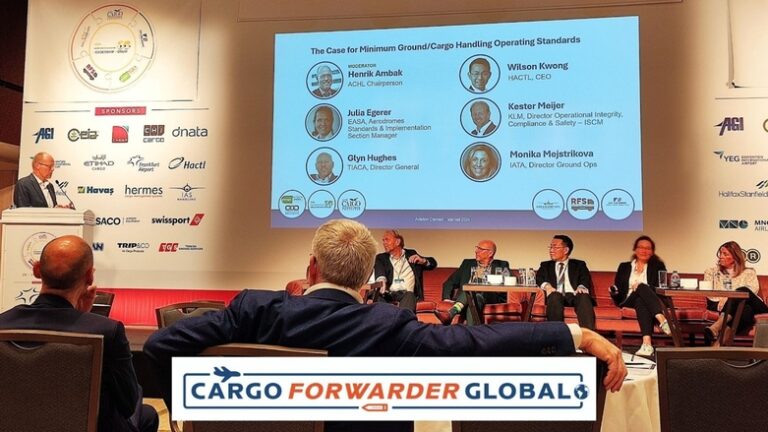
What may sound like a Sherlock Holmes story was, in fact, the title of a panel at the recent Aviation Connect event in Istanbul, Türkiye: ‘The Case for Minimum Ground/Cargo Handling Operating Standards,’ moderated by ACHL’s own Chairperson, Henrik Ambak. He brought together IATA’s Director Ground Operations, Monika Mejstrikova, TIACA’s Director General, Glyn Hughes, Wilson Kwong, CEO of HACTL, Julia Egerer, EASA’s Aerodromes Standards & Implementation Section Manager, and KLM’s Director Operational Integrity, Compliance & Safety – ISCM, Kester Meijer, to assess the status quo and discuss the need for uniform ground /cargo handling standards across the aviation industry.

Addressing the need for uniform cargo ground operating standards Image: CFG/bg

17 different ways to chock an A320? Surely not? Unfortunately, yes. That is the reality that some ground handlers face. Why? Because practically every airline has its own interpretation of the IATA Ground Operations Manual, known as IGOM, which serves as a benchmark for harmonized ground handling practices. Monika Mejstrikova, IATA’s Director of Ground Operations, was positive when outlining the evolution of the IGOM which has seen 13 years of progress with input from airlines, GHAs, and airports. The IGOM has become a mature standard, though its implementation remains inconsistent. Yet, this is improving. “The challenge isn’t the existence of standards — it’s their consistent adoption. The average number of variations in 2023 was 22. This year, it has dropped to 17. We are making good progress and heading the right way, but there is work still to be done,” she summarized, basing her opinion on data drawn from IATA’s Operational Portal (launched in 2022), which monitors regulatory adherence.

So many standards…
Standardized procedures play a crucial role in ensuring safety, efficiency, and regulatory compliance. By law and regulations, the airline operator is the ultimate accountable entity for flight operations and ground operations, even if the responsibility for the latter has been outsourced. For many companies, the IGOM forms the standard baseline. However, not only is it interpreted differently by different stakeholders, they may often also add additional requirements and standards that the GHA needs to abide by. And some GHAs may also have their own standards, such as HACTL, which places great importance on what it calls the 4 S: Safety, Security, Service Quality, and Sustainability. HACTL CEO, Wilson Kwong, explains the domino effect challenge that no central agreement on standards brings: “We were the first ground handler to be accredited with ISAGO* when it launched. But we handle over 100 customers and carry out ground handling for freighters for over 60 airlines. 11 of those airlines have B747F and each has a different policy on top of IGOM / ISAGO. I respect that, but from a ground handler point of view, this requires much effort in training – in our case, for 2,300 people!”

So little time…
Training is one issue – another time consuming one deflecting from the GHAs actual work is audits: “We need to reduce number of audits! […] Prior to Covid, we had 2-3 audits per week – more than 100 per annum. During Covid, this moved to online audits. Yet, 2023 again saw 70+ audits,” Kwong continues. This is difficult, particularly since manpower is a real constraint, these days. And the inconsistency makes attracting new talent all the more difficult. KLM’s Director Operational Integrity, Compliance & Safety – ISCM, Kester Meijer, illustrated the many factors and bodies influencing or exerting requirements on air cargo, in an elaborate flipchart drawing. His messages were: “A student entering the industry – where can they go to read how we do stuff?” He also warned against ‘minimum’ standards: “If you don’t raise the bar, people jump low.” And the crux of the matter, when it comes to harmonization of standards: “Who is the competent authority, and how do you mitigate things that go wrong,” in a global industry.

Making rules is like making sausages
One very welcome solution is the work that EASA is doing in this regard. Julia Egerer, EASA’s Aerodromes Standards & Implementation Section Manager, shed light on the European Union’s push for dual ground handling regulations. She described the collaborative process of developing these rules, which involved airlines, GHAs, member states, and trade unions. “Regulators are slow,” Egerer admitted, emphasizing EASA’s focus on the balance between performance-based regulations and high-level operational standards. It aims to merge regulatory oversight with existing industry benchmarks like IGOM to reduce costs and enhance safety. The industry needs standards such as IGOM, but also rules, she said, going on to quote Bismark to illustrate the difficulty being faced: “Making rules is like making sausages – everyone wants to eat them, but don’t want to know how the butcher made them!” Egerer highlighted the development of a broader safety management system (SMS) framework that mandates data-sharing between GHAs, airlines, and airports, ensuring a more cohesive operational ecosystem. “Airlines can outsource responsibility but not accountability,” she reiterated. With regard to audits, within the EU, she stated, work was ongoing to establish uniform inspection criteria for competent authorities, thus mitigating conflicting interpretations.

Light at the end of the runway
Inconsistent standards and frequent audits create financial and operational burdens. Yet, Glyn Hughes, Director General of TIACA, also revealed that global damage costs due to handling inefficiencies: these annually amount to USD 1.5 billion in the EU alone, and around USD 5 billion, globally.

Though the panelists acknowledged that global alignment on standards and oversight remain a distant goal, they were still optimistic about the industry’s progress toward harmonization – particularly in light of the EASA initiative. They agreed that continued dialogue, collaboration, and technological advancements are crucial to achieving a universally standardized system, and that since air cargo continues to face rising demand and heightened safety expectations, the quest for consistent ground and cargo handling standards will remain a top priority for stakeholders worldwide.

*Launched in 2008, the ISAGO program is intended as a ‘cost-effective alternative to the audits conducted by airlines, airports, and regulators of ground operations, reducing duplication and cost of oversight’, with its primary objective of improving the safety of ground operations through qualified audits that check that ground handling service providers are working according to industry ground operations standards such as IGOM, AHM, and ICAO Annex 19 Safety Management System, for example.

Fraport Cargo thinks big

0

Rhine-Main Airport’s management is planning far-reaching steps to continue playing first fiddle as an air freight location in Europe in 2030 and beyond. This is to be achieved through a bundle of interlinked measures. In a call with CargoForwarder Global, Pierre Dominique Pruemm, Executive Board Member for Aviation and Infrastructure at Fraport AG, explains Fraport’s development scheme.

Fraport Executive Board member Pierre Dominique Pruemm announces the creation of a trimodal cargo hub – photos: Courtesy: Fraport

The concept is based on three pillars which are closely intertwined: the rapid digitalization of all air freight processes, complemented by the redesign of existing free space for air freight throughput within Fraport’s Cargo City South. At the same time, plans are already being developed to set up a logistics hub adjacent to Runway Northwest, whereby the practical implementation of this project is expected to begin from 2030 onwards.

Digitalization of export freight comes next
Back to the first task: digital transformation. Fraport and the software developer, DAKOSY, are driving forward this ambitious issue in a joint venture called “allivate”. All electronic data obtained from the freight processes are channeled into the Cargo Community System’s dashboard, providing users and business partners with real-time information on the status of their shipments. “Following import freight, the next big step is the digitalization of export shipments,” announces the Fraport executive.

Higher volumes on a smaller area
A second task is more tangible: in order to increase the handling capacity for imports, exports, and transit shipments, Fraport wants to fill the vacant spaces between buildings at Cargo CitySouth, and build freight facilities on the last plots of land. Since there are only a few vacant lots left, the space will be exhausted in the near future. Mr. Pruemm indicates that Lufthansa Cargo’s LCCevo project is part of the airport’s masterplan for cargo development. The freight carrier is investing 600 million euros in a new cargo center on site, which is due to be fully operational in 2030. Manager Pruemm is particularly impressed by the recently unveiled high-bay warehouse. “It allows the handling of a significantly higher number of shipments on the same floor space,” he says, praising the forward-looking, space-saving concept. To round the space issue off, he mentions a 53,000 m² area in the southern part of Cargo CitySouth, which can still be developed. In addition, 20,000 m² of additional parking space will be created for ground handling purposes.

Freight volumes in Frankfurt have been rising continuously for months

Trimodal hub is integral part of the masterplan
Once this space is allocated to a user, Cargo CitySouth is full. Therefore, management already identified nearby expansion areas for cargo development and decided on the Northwest Runway where the former Ticona chemical plant was located. “Investors are always looking to the future, which means that we have to develop concepts today for tomorrow and after, in order to remain a highly attractive location for air freight in the long term,” states the executive.

With the plan to build a Logistic Center West, Fraport is responding to these wishes. For this task, 250,000 m² of floor space have been reserved. In addition, a permit for erecting freight facilities measuring 150,000 m² have been secured, says the manager. The accessibility of the future Logistics Center West is excellent. It is directly connected to two major motorways, a railroad line, and the Cargo CityNorth. Hence it is ideally suited for a trimodal cargo hub, Mr. Pruemm lauds.

A combination of criteria makes an airport attractive
When asked about competitors in Belgium, the Netherlands, and France, he says that the decision of cargo airlines in favor of an airport depends on a positive combination of certain factors: a high degree of reliability, fast throughput of shipments, acceptable and transparent price structures, a positive market environment, rapid customs clearance practices, and the compliance of import shipments, in particular, with legal and regulatory requirements.

Tense personnel situation
When asked about the personnel situation, he spoke of “challenging times”, comparable to Singapore or other major airports worldwide. Recruitment starts very early, Mr. Pruemm noted. Fraport, for example, offers dual study programs at universities of applied sciences, combining academic studies with in-house practical experience at the airport operator. However, the program is limited to a select group of participants. “We will recruit our next manager generation from this group of young talent, who will then take on responsibility and shape the future of our company.” As far as simpler jobs are concerned, AI, robotics and automation could make daily work at warehouses or on the apron a lot easier and the employees affected could qualify for new responsibilities. “Some projects are already part of our daily routines in air freight handling and throughput.”

Avianca Cargo unveils its new look

0

The Colombia-registered freight carrier has presented a new brand concept following three years of business consolidation. It includes 16 factors stretching from advanced eBooking strategies to ambitious sustainability activities. Primary objectives are enhanced operational efficiencies, network enlargements and improved connectivity enabled by streamlined ground processes and fleet investments.

“Our transformation has positioned us as one of the six best cargo airlines worldwide,” said Diogo Elias, SVP Avianca Cargo – photo: company courtesy

Avianca’s rebranding was announced by management on 13NOV24, on the fringe of TIACA’s Air Cargo Forum in Miami. The objective of all measures presented is to reinforce the airline’s dedication to its customers, partners, employees and the communities served by the carrier. Currently, it operates 220 cargo flights weekly, serves 75 destinations, and utilizes the lower deck transport capacity of over 1,400 passenger flights.

One of the six best cargo airlines
The new brand positioning is a culmination of efforts that have enhanced operational efficiency and streamlined connectivity, emphasized management.

“Our transformation has now positioned us as one of the six best cargo airlines in the world,” stated Diogo Elias, Senior Vice-President of Avianca Cargo, while presenting the new brand identity to shippers and forwarding agents.

Señor Elias went on to say: “We’ve enhanced our service levels, upgraded our fleet and revamped our product offerings, all while ensuring a more consistent and efficient operation. Our dedicated team works tirelessly to meet every requirement and solution our customers seek, enabling them to grow their businesses.

First encouraging results
The new concept that focuses on customer needs and long-term partnerships is already showing initial positive operational results. With the closing of Q3 2024, Avianca Cargo increased its network load factor by over 5% aligned year-over-year. In addition to the fleet renewal, external factors also contributed to this, such as the recovery of Latin America’s cargo import market.

Regarding sustainability efforts, Avianca Cargo emphasizes that a real-time platform was launched which allows clients to monitor, track, and offset their shipments’ carbon emissions, and support environmental projects in Latin America. This is done in collaboration with the climate technology company, CHOOOSE. Simultaneously, Avianca Cargo optimized two major warehouses to reduce its carbon footprint, implementing energy-efficient cold rooms in Medellín and in Miami, with zero-Ozone-Depletion Potential (ODP), to cut greenhouse gas emissions further.

Four more A330P2F
Its fleet expansion initiative is also in line with its environmental activities. Avianca Cargo grew its fleet by four A330-300/200 P2F aircraft, boosting capacity and fuel efficiency. The first freighter joined the airline’s Mexican commercial partner, AeroUnion, in JUL24, with two more arriving in 2025, and the final one in 2026. These will offer enhanced payload and flexibility on medium-range routes.

Finally, Avianca Cargo improves its cargo flows by collaborating with software platform, CargoWise, which executes complex logistics transactions and manages freight flows from origin to destination. This is supplemented by an offer to freight forwarders: Through the Airblox platform, Avianca Cargo gives freight agents instant access to cargo capacities for electronic block space agreements (eBSA) on 280+ flights over a two-month period.

It is worth mentioning that it is the first cargo carrier in the Americas to have obtained IATA CEIV certifications in four different categories: Pharma, Fresh, Live and Lithium Batteries.

dnata has upgraded to Certified Cargo iQ member

0
A certified Cargo iQ member for the first time. Image: dnata

A member of Cargo iQ since 2020, dnata has now received Certified Membership for the first time. “Becoming a certified member means having adopted a data-driven quality mindset – Visibly Better – and achieved a meaningful certification level. The set of Guarantees include Quality, Reliability, Collaboration, Trust, and Innovation,” the Cargo iQ website explains. Dubai-headquartered dnata, in which 159 airlines across the world have place their cargo ground handling operations totaling 2.9 million tons of air freight each year, has committed to increasing transparency through continuous reporting, and thus delivering top-quality handling and operational performance throughout its network.
In line with that commitment, dnata has integrated the Cargo iQ principles into its existing Quality Management framework, and intends to report on 75% of its shipments across the globe. Its digitalization initiative, onecargo, has enabled ground handling data to be collected from all global stations within one system, and its main stations: Dubai, London, Amsterdam, and Singapore, are already using data collection to feed into that quality monitoring framework.
Marie Seco-Köppen, Executive Director, Cargo iQ, said: “dnata’s commitment to its quality journey is reflected in both the Certification Roadmap meetings with the Cargo iQ team, as well as its determination in driving the project for harmonizing ground handling data globally. Further to their own quality roadmap, Lawrence Cockburn and Kevin Walsh brought expert contributions to the latest Master Operating Plan (MOP) upgrade and in so voicing the needs of the Ground Handling community.”
Guillaume Crozier, Senior Vice President – UAE Cargo & Global Cargo Strategy, dnata, commented: “Achieving excellence in air cargo requires not only compliance and rigorous data management, but also a commitment to community performance, supply chain visibility, and safeguarding product integrity at every step. dnata supports the Cargo iQ framework and will continue to invest in technology and innovation, aiding real time capability to support our customers, and delivering on our promises.

ECS Group appoints Paco Ortega to Region VP Americas

0
Building a cohesive and agile Americas region. Image: ECS Group

Since 01JUL24, Paco Ortega has been carrying out his duties as ECS Group’s new Regional Vice President for the Americas. These include leading ECS Group’s commercial development efforts across the continent, to create a more welded network across its U.S., Central, and South American operations. Together with CEO, Jean Ceccaldi, he will work on aligning regional initiatives with ECS’s global goals, strengthening client relationships, implementing new digital tools and flexible service solutions, and generally expanding the Group’s uniformity and reach as it adapts to market evolution. ECS Group aims to position the Americas as a key hub.
Like Ceccaldi, Ortega brings more than 30 years of ECS Group experience, having spearheaded major projects such as the integration of North American offices and establishing key partnerships across the continent.
Paco Ortega stated: “It’s an honor to take on this role at such a pivotal moment for ECS Group. My focus is on building a cohesive and agile Americas region, where we leverage digital capabilities to drive value and strengthen our commercial impact. The chance to deepen our relationships and align with ECS Group’s broader vision for the future is truly exciting.”
Jean Ceccaldi, CEO of ECS Group, detailed: “Our goal is to create a more connected and resilient network across the Americas. Paco’s understanding of the regional market and his commitment to ECS Group’s values will be instrumental in achieving this vision, and I look forward to driving this transformation together.”
Adrien Thominet, Chairman of ECS Group, confirmed: “With our commitment to agility and client-focused solutions, we are intensifying our presence in the Americas — an essential region for our growth. Paco’s deep experience and insight into ECS Group’s structure make him an invaluable leader in driving forward our ambitions and fostering commercial success in the region.”

Lufthansa Cargo strengthens China relationships

0
Ashwin Bhat, LCAG CEO and Feng Xin, CEO, Shanghai Airport Group. Image: Lufthansa Cargo

Ashwin Bhat, CEO of Lufthansa Cargo, recently visited China where he signed strategic cooperation agreements with Shanghai Airport Authority, Air China Cargo, and China Postal Express & Logistics Co., Ltd, strengthening its position in one of world’s most important air cargo growth markets which it has been serving since 1997. The joint MoU with Shanghai Airport Authority, backed by the Municipal Government of Shanghai, lays out a framework for greater cooperation, enhancing operational efficiencies, and improving customer experiences through innovative solutions and shared expertise. The strategic goal is to jointly develop Shanghai Pudong Airport into the world’s most competitive Asia-Pacific core hub. Ashwin Bhat stated: “Shanghai is the biggest freight hub for Lufthansa Cargo next to our hub in Frankfurt, and the MoU gives us the confidence and commitment to further contribute to business excellence in this strategically important market.”
Feng Xin, CEO of Shanghai Airport Authority, declared: “The last 25 years of partnership through our joint venture have yielded excellent results for both parties. The MoU marks the beginning of our cooperation journey, and we look forward to even closer collaboration in the years ahead.”
Shanghai’s Vice Mayor Hua Yuan, confirmed: “The Shanghai Municipal Government is willing to work together to promote Lufthansa Cargo’s deeper participation in the development of Shanghai, including closer cooperation between the Company and the Airports Group, facilitating cooperation among the enterprises and top e-commerce platforms, and jointly boosting the digital integration of China and Germany’s customs.
Bhat also signed an MoU with Air China Cargo, to enhance its 30+ year-long partnership (including its joint warehouse facility, PACTL). Co-signatory, Air China Cargo CEO, Jun Li commented: “The cooperation between the two parties will further stabilize the logistics corridor between China and Germany and will provide customers with more choices and solutions.”
Thirdly, Lufthansa Cargo and China Postal Express & Logistics Co., Ltd, announced their intention to focus on innovation, digitalization, and sustainability over the next 5 years. Lin Zejian Deputy General Manager, CPEL, said “China Postal Express & Logistics Co., Ltd. and Lufthansa Cargo Airlines have a history of more than ten years of cooperation. The new strategic cooperation is not only conducive to consolidating the existing business cooperation between the two sides, but also can develop more commercial value in new business fields.”

WebCargo gains Qantas and Jetstar capacities

0
Capacity on key U.S., Australian and New Zealand routes. Image: Freightos – cropped

With the biggest Pacific fish in the form of Australia’s Qantas Freight and Jetstar on board of WebCargo by Freightos, the air cargo booking platform can now boast a total of 55 carriers representing almost 70% of global air cargo capacity. The latest addition seriously increases the trans-Pacific offering on key U.S., Australian and New Zealand Routes. Freight forwarders can now search, compare and book Qantas and Jetstar capacity across both Freightos’ WebCargo and 7LFreight by WebCargo for all of Qantas’ combined passenger and 747-400F freighter services between key U.S. hubs such as Los Angeles (LAX), San Francisco (SFO), Dallas/Fort Worth (DFW), and New York (JFK), and major Australian cities: Sydney (SYD), Melbourne (MEL) and Brisbane (BNE). “U.S. forwarders will have more options at their disposal for instant rate quotes and bookings by both ground and air providers, including Less Than Truckload (LTL) shipments, domestic U.S. air cargo, and international air cargo, all on one platform,” the release specifies.
Zvi Schreiber, Founder and CEO of Freightos, underlined: “The air cargo industry is in the midst of a transformation, with digital solutions driving the shift toward faster, more reliable freight movements. Partnering with Qantas Freight enables forwarders to take control of their shipments with real-time booking and visibility, whether via WebCargo, 7LFreight by WebCargo, or even in their TMSs via our integrations. This is what modern logistics needs to look like, and together with Qantas, we’re setting a new standard for digitalization and efficiency in trans-Pacific trade.”
Igor Kwiatkowski, Executive Manager at Qantas Freight, explained: “Partnering with Freightos is great for our customers, streamlining the booking process on key trans-Pacific routes and modernizing the way forwarders access Qantas and Jetstar capacity. With more dedicated freighter and passenger services than any other cargo operator across the Pacific, forwarders can now benefit from the addition of Qantas Freight onto WebCargo’s online booking platform.”