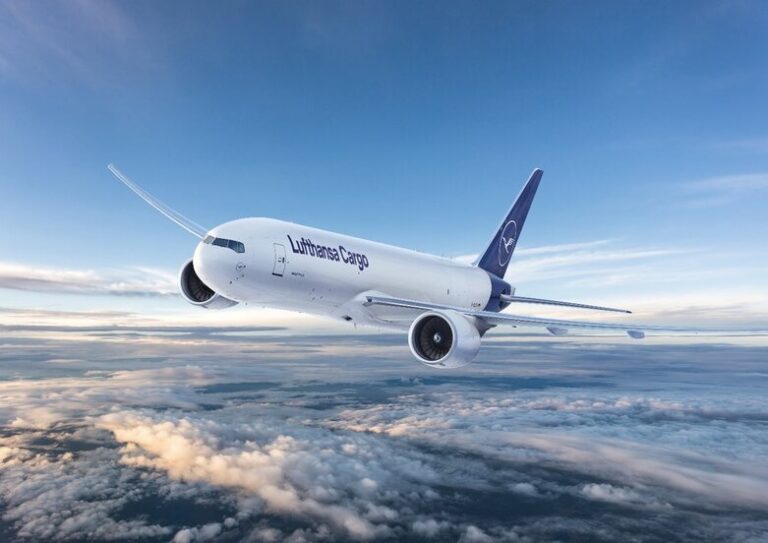
Spreading the SAF cost burden. Image: Lufthansa Cargo
Lufthansa Cargo and Swiss World Cargo sent out nigh on identical press releases informing their customers that SAF quota rates will become part of the Airfreight Surcharge (ASC) price index, come 01JAN25. Until now, the ASC, which the airlines introduced back in 2015, included fuel, currency and security prices in its index: additional costs that the airlines cannot influence and still need to cover. These price developments are monitored using a standardized index calculation system, and the ASC adjusted accordingly at given intervals. The ASC is added to the net price of each shipment, but its level can vary from country to country, depending on local regulations. Since the airlines feel they require support in bearing the increasing environmental costs of mandatory SAF blending, SAF prices will soon be added to the ASC monitoring. “For departures from European Union (EU) countries, a mandatory SAF blending rate of initially 2% will apply from 2025. Countries outside the EU are also planning to introduce or have already introduced mandatory SAF blends. The Indian government, for example, is working on a mandatory quota of 1-5% from 2027. Singapore is requiring airlines to add 1% SAF to flights departing from Changi Airport starting in 2026. The target is 3-5% by 2030. By then, the EU will require 6%, and the UK and Japan will require 10%,” the releases state. In other Lufthansa Cargo news: its current Chief Operations Officer, Dietmar Focke, will step down from the cargo airline’s Executive Board on 31OCT24, to take on the function of Managing Director at Lufthansa Industry Solutions. Since 01MAR22, he was responsible for Global Handling Management, Flight Operations, Security and most of Lufthansa Cargo’s equity investments. Dr. Michael Niggemann, Chairman of the Supervisory Board of Lufthansa Cargo AG and Chief Human Resources Officer of the Lufthansa Group, lauded: “With his extensive experience in aviation and logistics as well as the management of large business units, Dietmar Focke has continued to lead Lufthansa Cargo into the future as part of the Executive Board team and has made a significant contribution to the further development and modernization of Lufthansa Cargo [referring to LCC Evolution, e-commerce, and A321 freighter expansion, for example]. We would like to thank him for the good cooperation, and we are pleased that he continues his career within the Lufthansa Group as Managing Director of Lufthansa Industry Solutions. We wish him every success for his new role.” His successor has not yet been named.
Securing the smoothest ramp transport imaginable. Image: Challenge Group
Not just any dolly, either. Challenge Group has launched a dolly designed specifically to transport aircraft engines from their offloading point to the aircraft door and vice-versa, without vibration. The group’s innovation includes advanced shock-absorbing cushions to protect sensitive engines against tarmac vibrations. Hailed as an ‘industry benchmark’, the exclusive dolly can carry shipments of up to 13,800 kg, and offers flexible loading options for 16FT X-load, 20FT, and 10FT configurations. Thus, it can transport Trent engines ranging from the 500 to 1000 versions used in Boeing and Airbus models, and is also capable of handling RZX containers (ASML). David Canavan, Challenge Group COO, stated “This innovative engine dolly significantly enhances our operational capabilities, giving us a distinct edge over the competition. By ensuring the safe and efficient transport of aircraft engines directly from the offloading point to the aircraft door, we not only streamline our processes but also minimize risks associated with warehouse and tarmac vibrations.” Or Zak, Challenge Group CCO, added: “The introduction of our new specialized dolly represents a significant advancement in our logistics operations, reinforcing our commitment to operational excellence. This equipment is designed to ensure the safe and secure handling of aircraft engines. We are dedicated to providing our business partners with a seamless experience, prioritizing both the efficiency and integrity of their valuable cargo every step of the way.”
Argentina’s national carrier (IATA: AR) has been state-owned for 16 years. During that time, various governments have pumped a lot of money into the company to keep it airborne. They did that because AR is more than just an airline: it is a symbol for the country. However, it is one that has been run down and has degenerated into a self-service store for a certain privileged clientele. Next week, the ultra-liberal President, Javier Milei intends to present a roadmap for the airline’s privatization. The prospects for its realization are good.
Aerolíneas Argentinas, incepted in 1950, has plenty of experience with changing ownership. The formerly state-owned national carrier was privatized in 1989, and run by Iberia, then Spanish capital investor Sociedad Estatal de Participaciones Industriales (SEPI), American Airlines, followed by Spanish Grupo Marsans. Deprived of cash, Marsans sold Aerolíneas Argentinas back to the Argentinian State in 2008. Since then, the carrier’s losses have been piling up.
AR operates a mixed fleet of Airbus A330-200, Boeing 737 MAX, Boeing 737-700 / 800 and Embraer 190 – company courtesy
Tough restructuring concept is needed There are many reasons for AR’s downhill drive: mismanagement, a bloated personnel structure, continued walkouts of the workforce coupled with growing competition from budget airlines on domestic and regional routes, but also increasing pressure from the LATAM Group, which dominates South America’s passenger and cargo markets. Added to this is the unfavorable geographical location on the southern part of the American continent. This makes a Buenos Aires-based transnational hub-and-spoke system unattractive when it comes to enabling passengers to commute quickly and the rapid cross-border transits of cargo shipments to Uruguay, Chile, Paraguay or to destinations in the Argentinian hinterlands. Hence, AR’s international network is dominated by point-to-point services.
1200 pilots for 80 aircraft According to presidential spokesman, Manuel Adorni, the Argentinian State has shuffled 8 billion USD into the airline since 2008 (about 7.2 billion euros), to cover the company’s losses which he describes as an ‘atrocity’ and ‘lack of empathy’ towards the citizens, many of whom “have never flown in their lives.” “This atrocity is also reflected in the [carrier’s] oversized structure, which has a headcount of 1204 pilots to fly only 81 aircraft in service; an absolutely excessive number compared to the industry average,” said Adorni. Meanwhile, a group of 20 deputies, headed by Hernán Lombardi, submitted a bill to the Congreso de la Nación Argentina (National Congress), supporting the privatization of AR. In their note, they point out that “in recent years, traveling with the flag carrier has become a privilege reserved for a few and financed by those who barely manage to cover their basic needs. For many who try to access this service, the high cost of tickets, added to the scarce supply of air routes, has represented a significant obstacle.”
Commercial efficiency is a foreign word for AR Lombardi’s bill also points out that AR has never been able to match the low fares offered by budget airlines, which has contributed to its growing lack of competitiveness in the market. “Years of corruption, the use of the company as a niche to accommodate party militancy, and extortion by some unions, have cost millions of dollars to all Argentines,” claims Lombardi. “Privatization will allow Aerolíneas Argentinas to operate under criteria of commercial efficiency, improving the quality of service and generating a more competitive environment that will benefit all citizens,” Mr. Lombardi concludes.
Postal Service is next on Milei’s list for radical budget savings Alongside the postal service, Correo Oficial de la República Argentina, the airline is the largest state-run company in the Latin American country. In addition to AR, the 53-year-old anarcho-capitalist, Milei, whose symbol is the chainsaw, has also announced a radical austerity course for the postal service to drive state costs down. His government plans to shut down a large number of postal stations, especially those in rural areas with only offices in populated centers to be spared. For many inhabitants of the hinterlands, this means long journeys to pick up or drop off letters or parcels, and to have their monthly pension payments handed out, which often are processed via the postal system. In Buenos Aires, economic and policy experts are debating how long Milton Friedman fan, Milei will be able to sustain this radical strategy of shrinking state services. The most common forecasts by polling institutes are until the end of the current summer in South America or latest by mid-2025.
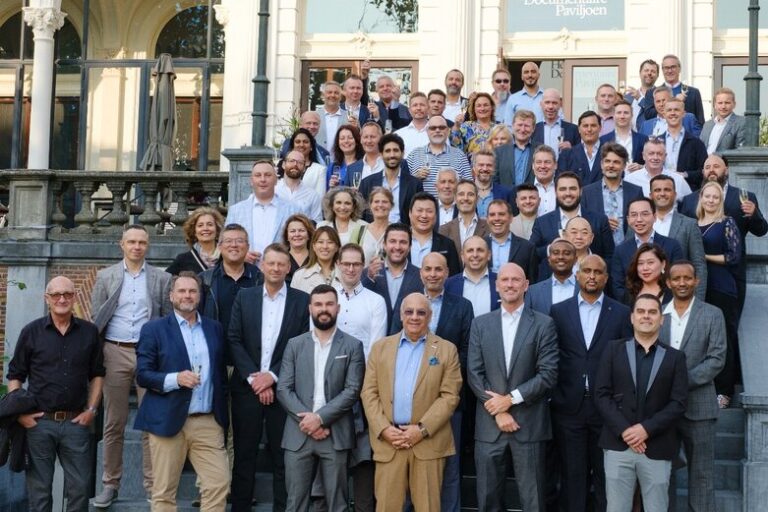
The Amsterdam-based General Sales and Service Agent celebrated its 30th birthday. Around 80 guests joined the party – the majority of them employees from the worldwide stations, but also 26 representatives of long-standing customers. During the festivity, CEO Sebastiaan Scholte announced major news.
Gefeliciteerd met je verjaardag – Happy Birthday, Kales Airline Services! A few days ago, the company celebrated a lavish party at its headquarters in Amsterdam, which lasted until the early morning hours. But before the actual celebrations started, there was an internal meeting – typical behavior and in good tradition with the Calvinist heritage of the Dutch people. During this meeting, management took stock and looked ahead to the coming years.
It was a fantastic party for the participants and the entire company, summarized Kales CEO Sebastiaan Scholte (in front row, 2nd from the right) – photos: company courtesy.
From regional to global brand It was followed by a thank-you to the company’s loyal customers who paved the way for Kales’ rise to become one of the world’s largest GSSAs, as management claims. CEO Scholte emphasized in his keynote speech, that without their long-lasting support, it would not have been possible to become a global brand. The company’s ascent was enabled by organic growth, coupled with selective acquisitions to penetrate new markets and tighten the network. In recent years, the sales agent has extended its services to India, China, Hong Kong, Turkey, Central America, and the USA. What distinguishes Kales and justifies the leading role of the GSSA? It is a combination of services rendered, reliability, and expertise. Above all, however, it is – again very Dutch – the entrepreneurial spirit of the company and its employees. “We offer our mandate airlines one-stop shopping solutions, targeted business packages like Total Cargo Management service portfolios, and foster long-lasting relationships. In other words, going the extra mile is part of our genes.”
Data availability has become a main business driver This customer relationship is increasingly driven by data that makes processes transparent and indicates future developments at an early stage. From this perspective, Kales has developed into a data pool. This allows trends to be identified at an early stage and makes it easier for management to take targeted decisions and understand the specific demand of its customers better.
A toasts to 30 years of Kales!
After these considerations, the invitees took over control of the further course of the event. One highlight was the mixing of cocktails by the guests according to their own ideas and taste preferences. After this intermezzo, the atmosphere was unbeatable.
Avianca enriches Kales’ global network However, before turning to wining and dining, Sebastiaan Scholte and his management team had another ace up their sleeve, which they then unveiled. Beginning 01OCT24, the Colombian airline, Avianca, will join the Kales club, becoming a new mandate carrier. The airline offers southbound routes from the USA and Canada to destinations in Central and South America. Kales will represent Avianca in Washington, New York (JFK), Dallas/Fort Worth, and Houston. Avianca operates A330-200 and A300-B4 freighter aircraft, thus offering the North American market main deck utilization. In addition, Kales is responsible for filling the lower decks of Avianca’s passenger aircraft with freight on flights bound for Colombia, Mexico, Brazil or Argentina, among others. The Avianca news further stimulated the mood at the Kales party. “It was a fantastic feast, good for the morale of our staff and good for the entire company,” CEO Scholte summed up. “Despite all modernization and electronic data exchange, the celebration proved, once again, that air freight is still a people’s business,” the executive concluded. Or, translated into the Dutch native’s mother tongue: luchtvracht blijft een mensenzaak.
Logistics giant, DHL, intends to significantly expand its business within the next five years and beyond. The ambitions are specified in a new scheme called ‘Strategy 2030 – Accelerate Sustainable Growth’. Its key points were presented to the media last Tuesday (24SEP24) by Group CEO, Tobias Meyer and CFO, Melanie Kreis.
It is the logistics heavyweight’s third strategy, after the ‘2020 – Focus Connect Grow’-scheme aimed at improving quality, followed by the ‘Strategy 2025’ that promised ‘Delivering excellence in a digital world’. In its new action plan stretching until 2030, management intends to increase revenue by 50% compared to 2023, to surpass 120 billion euros annually. In fiscal 2023, the Group generated revenue of just under 82 billion euros. “We want to grow faster and more profitably, and significantly exceed the global gross national product,” stated Group CEO, Tobias Meyer, when presenting the plans on 24SEP24. The aim is to gain market share in the logistics sector. This is to be achieved primarily by expanding business in the pharmaceutical and healthcare sectors as well as in the energy sector.
In its new Strategy 2030, Green Logistics of Choice has been added by DHL as fourth bottom line to its original three – image: credit DHL
Stark e-Trade However, in the coming years, online retail will continue to be the most important contributor to DHL’s service portfolio offered to the markets. According to Meyer, more than a quarter of the Group’s revenue is already linked to e-Trade. But much sought-after products are fast gaining ground. In its 2030 strategy, DHL has put the pharmaceutical industry in the spotlight, which it defines as a thrilling growth market. Specialized logistics solutions such as temperature-controlled deep-freeze or cryogenic storage, are a requirement for providing customers with tailored services. The company also wants to capture market shares in the business with renewable energies and the transformation of the automotive industry from fossil to electric vehicles and provide first-class services for battery storage systems and wind turbine blades.
Organic growth beats M&As The sales targets are to be achieved primarily through organic growth, Mr. Meyer said. He did not rule out acquisitions, but only in cases where takeovers strengthen the company’s own business areas and accelerate the targeted growth. This particularly applies to potential candidates that promote DHL’s growth in niche markets and widen its regional presence. Asked by CargoForwarder Global whether the looming takeover of Schenker by DSV would trigger a new wave of mergers and acquisitions in global logistics, Meyer replied cautiously. “I can’t say that, today. But some customers will certainly ask themselves whether the structure resulting from the merger will still suit their expectations and needs.” Further to this, the executive announced that DHL intends to focus on fast-growing regions such as India, Southeast Asia, Africa, the Middle East, and Mexico. He did not mention China at all.
Targeting SMEs According to Mr. Meyer, the e-Commerce business accounts for 28% of his Group’s total sales. 70% of corporate customers said that digital channels contributed 40% to their revenue. In this context, the executive announced that DHL would be setting up special courier services for the first and last mile. As far as customers are concerned, he sees growth potential above all in small and medium sized enterprises (SME) whose core business is e-trading in line with producers of industrial goods that want to grow internationally. DHL will consistently adhere to its goal of decarbonizing all business processes. “Today, we are still pouring money into it, as the number of customers who are contributing to the additional costs is manageable. In the longer term, however, green transport chains are a competitive advantage,” the DHL boss emphasized.
Kreis promises reliable dividends DHL manages five business units: the transportation of time-critical documents and goods (DHL Express), the international transport of consignments by air, ocean and land (DHL Global Forwarding, Freight), supply chain solutions (DHL Supply Chain), national parcel transport outside Germany (DHL e-Commerce), and the transport of letters and parcels in the domestic German market (Post & Paket Deutschland). He indicated that the e-Commerce and Post & Parcel Germany divisions are to become independent entities. CFO, Melanie Kreis pointed out to shareholders that DHL is aiming for a payout ratio of 40-60% of adjusted net profit. For shareholders, this means that they can count on reliable dividend continuity. This news should also please the German government. The state holds a 16.99% stake in DHL/Deutsche Post via KfW Development Bank.
CargoForwarder Global’s ‘Spotlight On…’ series highlights the manifold roles that serve to ensure the air cargo industry runs smoothly and efficiently. Fast logistics has taken on a new dimension with the emergence and rapid rise of eCommerce, and what was once a clear split between integrator and general air cargo business, has become largely blurred over the past few years. Reason enough to talk to Nikola Todic, Managing Director of heyworld GmbH, to learn about his function, and hear his experience and advice for those wanting to join the air cargo industry.
It’s everything but boring at heyworld. Image: Nikola Todic
CFG: What is your current function and company? And what are your responsibilities? NT: I am one of two Managing Directors at heyworld, and am responsible for Sales and Operations. Heyworld is a 100% subsidiary of the Lufthansa Cargo Group. We build and manage end-2-end eCommerce solutions with a clear focus on cross-border parcel deliveries. With our eCommerce platform, we connect last mile carriers, customs brokers and air cargo carriers with global eCommerce brands and platforms to deliver fast and cost-efficient shipping options.
CFG: What does a normal day look like for you? NT: I joined heyworld at the of beginning 2023, and I really think there has been no day like the next. Change is the new normal; we have all known that for years. But the recent pace that new eCommerce players and platforms have brought to the industry, is energizing and challenging at the same time. From winning new customers, building innovating shipping solutions, all the way to day-to-day challenges. I always like to tell the team: I promise you one thing, it will be everything but boring at heyworld.
CFG: How long have you been in the air cargo industry, and what brought you to it? NT: I started as a management trainee at the Lufthansa Group, but very soon moved into the air cargo business after just one year. Back then, I joined the CEO office at Lufthansa Cargo as I was keen to learn and develop in a truly global organization. Also, with my background in economics, it’s always exciting to see global trade and market news affecting our day-to-day business in no time. You hear about new regulations, an airport congestion or short-term market demands, and the infinite game starts over again.
CFG: What do you enjoy most about your job? NT: Clearly the diverse team I work with and the ever-evolving opportunities.
CFG: What do you see as the greatest challenges in our industry? NT: I think it’s finding the right balance between three things. First: staying relevant and meeting increasing customer demands. Second: managing a competitive cost-base to allow room for growth and trade. And third: implementing more sustainable supply chains at a higher pace. All three are equally important, yet often it seems we can’t achieve all three at the same time – kind of like a perfect triangle that we strive for. One day, we will have to achieve it to win in the long-term.
CFG: What advice would you give to people to get into the air cargo industry? Any particular training they should aim for? NT: Come with the right hunger and some healthy patience; sometimes things take time.
CFG: If the air cargo industry were a film/book, what would its title be? NT: “The Infinite Game” by Simon Sinek. I also highly recommend reading this one.
Many thanks for your replies, Niko.
If you would like to share your personal air cargo story with our CargoForwarder Global readers, feel free to send your answers to the above questions to cargoforwarderglobal@kopfpilot.at We look forward to shining a spotlight on your job area, views, and experiences.
The Frankfurt-based airline handling agent will acquire a 74.9% stake in Cargogate, the ground handling subsidiary of operator, Munich Airport. For CHI, airline handling is the third major business pillar alongside trucking and forwarding handling. The takeover is scheduled for 01JAN25 but is still subject to regulatory approval.
The days when airports had their own subsidiaries responsible for airline handling services, are largely over. Today, players such as Menzies Aviation, Celebi, Swissport or WFS dominate this business. And increasingly CHI Aviation, at least in Central Europe. It will soon be managing the airline handling in Munich, following its entry at Nuremberg Airport, a year ago. “Munich is a highly attractive location for air cargo, offering excellent connectivity by belly-cargo capacity that generally has a lower yield which, in turn, makes it more profitable to freight forwarders. In addition, the comprehensive range of services offered by Cargogate enables the handling of full freighters at its best,” says Dominik Misskampf, Managing Director, CHI Aviation.
Come 01JAN25, CHI will sit in the driver’s seat of ground handler Cargogate at Munich Airport, including its high rack warehouse as pictured here – photo: courtesy MUC
State-of-the-art infrastructure Cargogate operates a first-line warehouse of around 17,000 m². Amongst other things, this includes a handling area, an automated high-racking system, an ETV for storing BUPs, a radioactive room, an animal station, as well as CEIV-certified Pharma facilities. “I am pleased that, with CHI, we have been able to gain a strong strategic partner for our cargo subsidiary, Cargogate, in order to jointly advance cargo development at our Airport,” says Jost Lammers, CEO of Munich Airport. The executive further announced that “freight capacity will continue to increase this year. New routes to Seattle, Johannesburg, and Vietnam, as well as additional flight frequencies – including to Beijing and Osaka – offer industrial and logistics companies in Munich Airport’s catchment area, additional opportunities to ship directly via Munich.”
Soaring business Mr. Lammers says that a significant share of MUC’s cargo traffic is attributable to belly freight. The direct connections to China that are being offered again, the new route to Bangalore in southern India and the route to Taipei, which is flown four times a week, are being extremely well welcomed, especially by the strong Bavarian export industry, he tells.
Jobs are secured The employment of the Cargogate staff is secured by the contractual agreement with Flughafen München GmbH, which will keep 25.1% in the upcoming joint venture. The joint venture will continue to operate under its current name, Cargogate Munich Airport GmbH, until further notice. The common goal is the sustainable further development of air freight at Munich Airport, to substantially increase volumes. In 2023, a total of 284,000 tons were handled in MUC. This translates into an increase of 6.6% compared to the previous year. MUC was therefore the only major German airport whose volume grew last year. There are reasons for this success, CEO Lammers states: “Munich Airport’s cargo area scores particularly well with its fast turnaround times, thanks to its efficient infrastructure which enables goods to be transported to the aircraft quickly due to the short distances. This infrastructure is currently continuing to grow. DHL Express is planning to put a new building for cargo handling into operation in the coming weeks. The airport also has enough space for setting up additional facilities in the cargo area.”
Expansion continues According to Kai Domscheit, MD CHI Aviation, 23 airlines belong to the portfolio of the CHI Group. The company group will now focus on Munich, subject to official approval of the joint venture. “Our expansion continues, following our buy-and-build strategy whereby we combine continuous organic growth with further transactions.” The executive confirms that CHI’s interest in intensifying its activities at Leipzig airport still remains. All of CHI’s latest transactions indicate that CHI is currently focusing on extending its airline handling business endeavors. The CHI Group operates in Frankfurt, Nuremberg, Munich, Hamburg and Amsterdam. In addition to classic air freight handling, it also offers trucking services, packaging logistics and documentation, security services, among others.
‘Where do you see yourself in five years’ time?’ is a favorite or dreaded job interview question, depending on which side of the desk you’re sitting. No one being asked that question in 2018/19, could have predicted what would happen during the subsequent five years. It was pre-pandemic and pre-digital-booking Gold Rush. It was then also pre-CargoAi, which now celebrates its 5th anniversary and an incredible upward development in a very short space of time. CargoForwarder Global (CFG) asked CargoAi Founder and CEO, Matt Petot (MP) about those past five years, and what he has planned for the next five.
The future of air cargo lies in data-driven decision-making. Images: CargoAi
Matt Petot is CargoAi’s mastermind
CFG: Matt: 5 years and a rocket rise on the digital air cargo scene. Congratulations! Is this how you envisaged CargoAi happening? What was your initial motivation to start up? MP: I envisioned CargoAi as a solution that would help bridge the gap between air cargo operations and the digital world. The industry was ripe for innovation, but it lacked the right tools for seamless integration. My motivation was to create a company that could simplify complex processes and increase transparency, giving stakeholders access to real-time data and better decision-making tools. I knew we could make a difference, but the speed of our success has been incredible, even if I always wanted to go faster.
CFG: How, where and with whom did you celebrate your 5-year anniversary? MP: We are actually celebrating with the whole team next week. It is great to get everyone together, especially as we are a fully remote company with people living in locations ranging from New Zealand to Ecuador. This provides great energy and pride to our teams to have such diverse colleagues and demonstrate we can build something great together with modern tools.
CFG: Where do you stand today in terms of airline partners / global capacity coverage / forwarders? Any interesting figures you would like to share with CargoForwarder Global readers, to put CargoAi’s success into perspective? MP: We are proud to offer 104 airlines to over 18,000 freight forwarder users in 130 countries. It is great to see airlines reaching out to us by themselves, now, as they need to be visible to maintain their business and market share. Our team is focusing to onboard more freight forwarders, who are now shifting from their previous solution as they realized we have a larger airline coverage and more features than our competitors: from rate management, options to hold bookings, shipment tracking, to shipper quotations, etc.
CFG: What geographical regions are CargoAi’s definite strengths and where does its focus lie for the next 12 months? MP: Our strongest presence is still in Europe, but we see significant growth in North America, with major airlines moving to digital this year. Asia is accelerating fast with airlines coming onboard as well, and thanks to the full benefit of our CargoWALLET, which is our unique scalable solution to accept payment in 47 currencies.
CFG: Looking back, was the pandemic a blessing or do you believe the air cargo industry was already ripe for digitalization by this point? MP: The pandemic acted as a catalyst. While the industry was already moving towards digitalization, the crisis highlighted inefficiencies in traditional processes and spurred the need for agile, digital solutions like CargoAi. In many ways, it forced a faster adoption of the tools and innovations that were long overdue.
CFG: Green Tech: What can CargoAI users look forward to in this area, on top of your existing initiatives? What are your thoughts on Sustainability within air cargo? MP: Sustainability is very important to us as a company and as individuals. However, to be honest, it has been hard for us to get the similar commercial successes as in distribution or payment. It seems we are not the only one in the same situation, so it is not a product issue but potentially a market readiness one. I believe air cargo has a responsibility to reduce its carbon footprint, not only to measure. This is what our solution provides with the CO2 benchmark based on our unique tracking capabilities, but it seems this is not the priority for a lot of players, yet.
CFG: What were the greatest surprises in the first five years? MP: One of the biggest surprises has been the speed of adoption across various segments. When we first launched, we expected a slower pace, but the industry’s openness to change has been remarkable. Additionally, I’ve been pleasantly surprised by how much value we’ve been able to extract from data. It’s become clear that the future of air cargo lies in data-driven decision-making. Of course, like every entrepreneur, I was very optimistic and thought adoption was going to be even faster.
CFG: How has being a member of CargoTech influenced CargoAi’s development? MP: Being part of CargoTech has accelerated our development by enabling collaboration with other tech innovators in the cargo space. It’s provided a platform for shared knowledge and resources, helping us refine our products and push the boundaries of what’s possible in air cargo technology.
CFG: You recently brought Olivier Veyrac on board as Senior Vice President of CargoWALLET. Settling into the world of air cargo, what is his verdict so far? MP: Olivier is very new to the team but has already brought fresh perspectives, and his insights have highlighted potential in our various use-cases, where digitalization is still nascent but growing. He is impressed by the product and what the team has achieved in the last 2 years, and sees great potential as they have developed unique paying capabilities that are critical for the industry and customers we serve.
CFG: What’s on schedule for the next 5 years? MP: Over the next five years, we plan to continue expanding our global reach, particularly in under-digitized regions. Our focus will also be on enhancing our AI-driven tools, further developing green tech solutions, and ensuring seamless integration with customs and regulatory bodies. We aim to solidify our position as the go-to platform for end-to-end cargo distribution and payment.
Thank you for the interview, Matt, and again: Happy 5th Anniversary!
Swiss’ cargo division has a new helmsman: Alain Chisari. The Swiss-Italian dual national has held various management positions at Swiss and the Lufthansa parent company since 2008. On 01OCT24, he will take over the driver’s seat from his predecessor, Lorenzo Stoll. The latter left Swiss WorldCargo three months ago to become head of a Swiss company engaged in the healthcare sector.
The name of the new head of freight will probably mean nothing to the majority of the roughly 300 employees at Swiss WorldCargo. That is because the 52-year-old has not made a name for himself in the cargo industry in his professional career to date. This will change next week, Alexandra Dahl, Head of Communication told CargoForwarder Global. “On the occasion of his appointment, we intend to organize a Welcome Session held either hybrid in Zurich at our headquarters or completely online,” she announces.
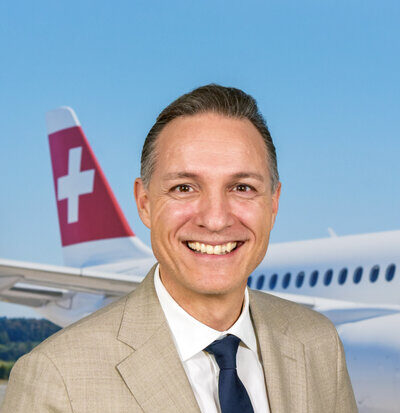
Alain Chisari will be introduced to the employees of Swiss WorldCargo next week – photo: Courtesy Swiss
Extensive management experience, but no cargo background So, who is Mr. Alain Chisari? He joined Swiss in 2008, having already acquired 12 years of industry experience with other airlines outside the Lufthansa Group. He initially served as Head of Leisure Sales, before moving within Swiss to become Head of External Relations & Alliances. In 2013, he moved to Swiss’ subsidiary, Edelweiss, where he spent the next five years as Chief Commercial Officer and a Member of the Management Board. After a further five years serving first as the Singapore-based Vice President Area Management Asia & Pacific for the Lufthansa Group and subsequently in the Group’s Munich-based Area Management EMEA, he assumed his present function as the Lufthansa Group’s Implementation Officer for Italian airline, ITA Airways, one year ago. Particularly this role, which he has recently assumed, could become very important for Swiss WorldCargo. This is because the catchment areas of Swiss and ITA overlap significantly. The northern Italian market, with its economic centers of Milan, Bergamo, Genoa, Turin, Bologna and Verona, is extremely interesting for cargo carriers, due to its high industrial density. Chisari’s task will certainly be to prevent cannibalization to the detriment of both sides.
Excellently connected Little is known about his diplomatic skills, but the manager has an extremely wide range of languages. In addition to English, German, French, and Swedish, he speaks perfect Italian, which should make it easier to reach agreements with the cargo division of Rome-based carrier, ITA. “Alain Chisari brings a vast range of experience of the airline business both within and beyond the Lufthansa Group, to his new position,” says Swiss Chief Commercial Officer, Heike Birlenbach. “Thanks to his various international activities, he is also excellently connected throughout our industry. I’m convinced that he will continue to successfully develop our air cargo business, and I look forward to working with him.” Mrs. Birlenbach went on to say: “I also offer Lorenzo Stoll my warmest thanks for all his service and commitment. He steered our air freight division with great success, not least through the highly challenging pandemic times; and he and his Swiss WorldCargo team have consistently made a key contribution to our company’s favorable earnings of the past few years.” Alain Chisari holds an Executive Master’s Degree in General Management from the SGMI Institute of Management St. Gallen. In his new role, Chisari will bear overall responsibility for Swiss’ entire air freight division and for developing and implementing the division’s business strategy.
COP29’s Global Air Cargo Partner. Image: Silk Way West Airlines
With the 29th Conference of the Parties (COP29) taking place in Baku this 11-22NOV24 due to Azerbaijan being chosen its Presidency, it stands to reason that Silk Way West Airlines steps up as the conference’s Global Air Cargo Partner. “This partnership emphasizes the airline’s commitment to sustainability and environmental responsibility, aligning with global efforts to combat climate change, while also being in keeping with Azerbaijan’s declaration of 2024 as the Year of Solidarity for a Green World,” the release states. The Azerbaijani airline previously announced plans to renew its fleet with eight new state-of-the-art aircraft by 2030 for cleaner, more efficient freight services. Azerbaijan’s Year of Solidarity for a Green World includes a number of initiatives to protect the environment. The nation has set itself ambitious goals to reduce greenhouse gas emissions by 35% by 2030, and 40% by 2050, relative to the 1990 baseline year. It is also looking into Smart City/Smart Village possibilities and aims to have 30% of its electricity generated through green energy by 2030. In its role as Global Air Cargo Partner, Silk Way West Airlines will transport all the necessary materials and supplies required for the COP29. It thus also has the opportunity to work together with the global leaders, innovators, and policymakers attending the conference. “As a company operating at the crossroads of global trade, Silk Way West Airlines recognizes the importance of reducing its environmental impact and advancing green logistics solutions. By joining COP29, the airline continues to further its vision of fostering a sustainable future for the aviation and logistics sectors, in line with its mission to connect East and West through its strategic hub in Baku,” the release concludes. Zaur Akhundov, President of Silk Way Group, stated: “We are honored to serve as the Global Air Cargo Partner for COP29. Sustainability is at the heart of everything we do at Silk Way West Airlines, and this partnership affirms our dedication to reducing the environmental impact of air cargo. By participating in this landmark event, we aim to contribute to a greener future for the global logistics industry and support Azerbaijan’s environmental goals.”