India’s Group Concorde, founded in 1985, announced this week that it has been appointed by IAG Cargo as its General Sales Agent representative in 8 countries across Asia-Pacific and Oceania. It is now ramping up over the next three months, to take over cargo sales operations in Cambodia, Philippines, Myanmar, Malaysia, Indonesia, Vietnam, Australia, and New Zealand. Group Concorde promises a seamless transition and states that the partnership “signifies a major expansion for both companies” in these key markets. Customers can look forward to more efficient cargo operations and enhanced customer service. IAG Cargo benefits from Group Concorde’s long-standing and extensive industry experience and established network in these 8 of its 14 markets, while customers in these countries will have improved access to IAG Cargo’s expansive network and services.
Getting ready to manage IAG Cargo in Asia-Pacific/Oceania. Image: Group Concorde
Prithviraj Chug, CEO of Group Concorde, commented: “We are honored to be appointed as IAG Cargo’s General Sales Agent in these vibrant markets. This opportunity aligns perfectly with our mission to provide exceptional cargo solutions and enhance our global network. We look forward to working closely with IAG Cargo to deliver unparalleled service and support to our customers.”
Camillo Garcia Cervera, Chief Sales and Marketing Officer at IAG Cargo, stated: “Partnering with Group Concorde as our GSA for eight key markets, is a strategic move that will allow us to strengthen our presence and ensure we provide customers with the best possible service. We aim to offer the best possible service for businesses looking to transport cargo globally, and Group Concorde’s market knowledge and expertise makes them the ideal partner for us.”
Gianmarco Steinhauer is now responsible for business development in Germany. Image: DoKaSch
The week of 02SEP24 began with a new member over in DoKaSch Temperature Solutions’ Germany team. Gianmarco Steinhauer has been appointed as the company’s Business Development Manager and is tasked with growing its success in its home market. At an annual revenue of 73 billion euros in 2023, having enjoyed a 5%+ increase on the previous year, the German pharmaceutical market is a strong, dynamic and still growing economic sector. It has healthy import and export figures, and its main suppliers are located in the USA, Ireland, and Switzerland. These are markets in which DoKaSch Temperature Solutions is already established with Opticooler® stations. With Gianmarco on board, DoKaSch looks to develop existing and establish new customer relationships. Prior to DoKaSch, Steinhauer held positions at DHL (Cold Chain Visibility Specialist), and more recently was Head of Business Development DACH at the Finnish start-up, Logmore, (focused on an innovative digital cold-chain and condition-monitoring solution). His experience and network in cold chain and pharmaceuticals logistics will serve him and DoKaSch well in their expansion endeavor.
Gianmarco Steinhauer, Business Development Manager Germany, DoKaSch TS, commented: “I look forward to working with our customers to tackle their individual challenges and develop customized solutions that provide real added value for their cold chain logistics.”
Andreas Seitz, Managing Director at DoKaSch Temperature Solutions, said: “With Gianmarco Steinhauer as our new Business Manager, we are strengthening our German team and simultaneously expanding our network in our home market. His expertise will help us further strengthen our market position in Germany and offer even better services to our customers.”
Elodie Berthonneau takes over from J. Florian Pfaff. Image: LCAG
Having stepped down from Qatar Airways Cargo as Vice President Network Planning and Strategic Partnership just a couple of months ago, the secret as to where she was heading has now been revealed: Elodie Berthonneau has been appointed Vice President Asia-Pacific for Lufthansa Cargo and will thus take over from long-standing Florian J. Pfaff in what is one of the cargo airline’s most important regions. Her new responsibility begins on 01OCT24, and she will be based in Singapore. Sales and Handling operations in key markets such as China, Japan, South Korea, Thailand, Vietnam, Singapore, Malaysia, Indonesia, Philippines and Oceania, fall under her management. Her 25+ years of aviation and air cargo experience, working for professional airlines such as Air France KLM Cargo and Martinair Cargo as well as British Airways in addition to almost a decade at Qatar Airways Cargo, have taken her to Europe, the Middle East, and Asia. Her previous management positions included responsibilities in sales, pricing, profit management, strategic planning, building start-ups, restructuring organizations, network redesign, major strategic partnerships and people management.
Anand Kulkarni, Head of Global Markets at Lufthansa Cargo, announced: “We are happy to welcome Elodie Berthonneau as Head of Asia Pacific. The Asian region is one of our most important markets and is expected to become even more relevant in the coming years. Combining her expertise and experience within the industry and the Lufthansa Cargo brand and knowledge, she will set new accents in our Asia Pacific organization and in the dialogue with our customers.”
CargoAi, which recently celebrated its 5th anniversary, welcomed its 102nd live airline this week: Singapore Airlines has opted to share its cargo capacities on the CargoMART platform. This means that the platform’s 16,000 freight forwarding users based in over 130 countries around the globe, now have direct access to Singapore Airlines’ offers, and can immediately carry out bookings where required. “This partnership signifies a significant step forward in CargoAi’s mission to shape and connect the freight landscape through innovation. By integrating Singapore Airlines’ airfreight services into CargoMART, CargoAi continues to expand its ecosystem of digital solutions, driving frictionless procurement and payment while promoting sustainability within the industry,” the release states.
Singapore Airlines has joined CargoAi’s CargoMART. Image: CargoAi
With every new airline partner, CargoAi’s digital marketplace grows in potential and attractivity. Users have greater routing options and can make informed decisions based on real-time rates, timings, and even sustainability factors. Bulk quoting, and Track and Trace features are also available.
Matt Petot, CEO of CargoAi, said: “We are thrilled to join forces with Singapore Airlines, a global leader in air transportation. This collaboration underscores our commitment to providing our users with best-in-class technology and unparalleled access to airfreight services worldwide. Together, we are poised to revolutionize the way air cargo is managed and shipped.”
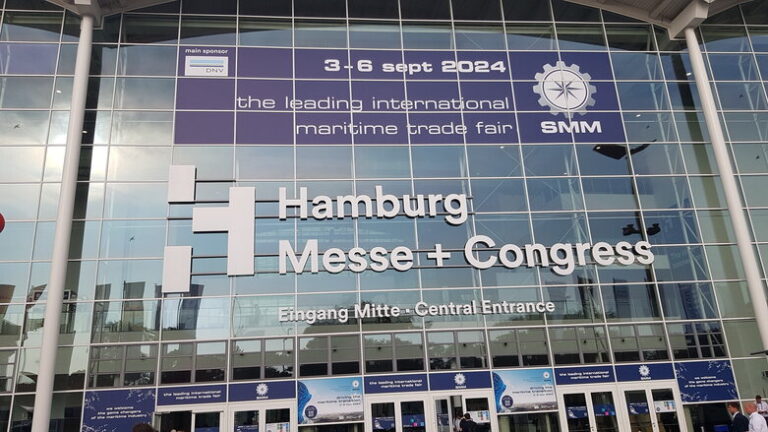
The Cantabria, Spain-based company, bound4blue, presented one of its six hybrid wind-propelled and heavy fuel oil-powered vessels at the world’s leading trade fair and conference event for the maritime industry: the SMM, held in Hamburg, Germany, this week. These ships equipped with eSails, are a successful testament to the industry’s journey towards CO2 neutrality, simultaneously reducing greenhouse gas emissions and transport costs.
The Amasus, currently moored in the port of Hamburg, looks like an ordinary ship at first glance. Yet the two masts at its stern, reminiscent of chimneys, clearly distinguish it from other vessels. They are high wind catchers that operate autonomously, aligning themselves according to the prevailing wind conditions. Sails in the traditional sense are nowhere to be found. The electronically steered system works by dragging air across an aerodynamic surface, generating exceptional propulsive efficiency. The simple, low weight and easy to install units significantly cut main engine loads, fuel use and emissions.
The “Amasus”, equipped with an advanced eSAIL® wind propulsion system, moored in Hamburg from September 3-4, 2024 – photos: CFG/hs
Not suitable for large box ships Operated across the North Sea between the Netherlands and Norway, for example, vessels like the Amasus can reach a speed of between 10 and 12 knots, or around 20 km/h in metric terms. This is roughly equivalent to the speed of a ferry boat crossing the English Channel between Le Havre and Portsmouth. eSails best fit tankers, bulkers, ro-ros, cruises, ferries, gas carriers, and general cargo vessels, regardless of their size or age. They are not suitable for container ships as there is not enough space for the necessary reinforcements of the ship’s structure in the area where the sail posts are fixed.
Fast cost amortization If a shipping company decides to modify one of its medium-sized vessels, it can expect a cost of around 500,000 euros per eSail, twice as much for two installations similar to the Amasus type. eSails are pre-assembled and installed on a given vessel in a dry dock. Technically, this is no rocket science, says José Miguel Bermudez, CEO of bound4blue. As experience shows, the task can be accomplished within two days, he says. The costs amortize themselves in a relatively short time. Bermudez speaks of three to five years, depending on the shipping area. In the windy North Sea, the financial recovery time for ship owners is significantly shorter compared to sailing areas with low wind conditions.
SMM is the world’s leading maritime trade exhibition. It took place on the fairgrounds of Messe Hamburg.
Reducing CO2 emissions By operating eSails, up to 30% greenhouse gas emissions can be avoided; however, more realistic are savings between 10% and 20%, the manager admits. “You should take a look at the order book from bound4blue. It’s full to bursting,” says Rasmus Stute, Area Manager Germany, DNV. This is confirmed by Mr. Bermudez, who speaks of up to 50 eSails that will be manufactured and introduced to the market during the course of 2025. “In the next two months, we will announce three additional contracts.” Last Wednesday, the eSail received a full Type Approval Design Certificate (TADC) from Norway’s DNV. The certificate, handed over to the management on board the Amasus, validates complete compliance with the technical standards specified in the classifier’s Wind Assisted Propulsion Systems (WAPS), demonstrating that the team’s breakthrough suction sail technology is in line with the industry’s most advanced rule set. “Receiving the TADC from DNV provides third-party validation of excellence, quality stamping our system and helping fast-track customer due diligence procedures. We believe this will work to accelerate the adoption process and facilitate further orders,” commentedDavid Ferrer, Co-Founder and CTO of bound4blue.
Building confidence in the wind technology On the DNV certification occasion, Hasso Hoffmeister, Senior Principal Engineer at DNV Maritime, notes: “Wind is an inexhaustible, free, zero carbon energy source, which is receiving increasing attention within the maritime industry. To harness its potential, owners require trusted systems with validated technical and design compliance, to ensure the highest quality standards. DNV, is committed to helping our customers innovate and build confidence in these new technologies on a foundation of trust.” The manager went on to say: “Our cooperation with the team at bound4blue has been excellent, and we’re very pleased to award this certification. We look forward to seeing the growth of wind as a green energy source for vessels worldwide, as we work together to make the maritime industry even more sustainable for the generations to come.”
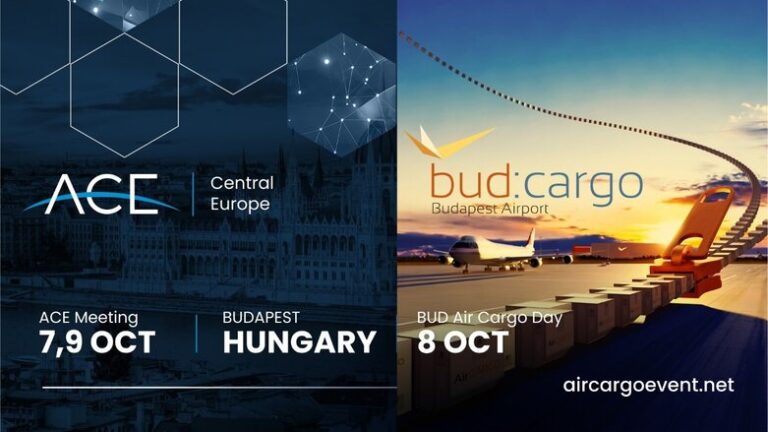
Budapest Airport’s Cargo Day, a must for industry representatives in Central and Eastern Europe, will take place this year on 08OCT24. The venue is the Balna Convention Center, located directly on the shores of the Danube River, near the city center. For the first time, it is a two-day double event which will be held together with event manager ACE, responsible for running the show on 09OCT24 at the prestigious Ritz Carlton Hotel, Budapest. The program of both days is filled with topics currently hotly discussed in the air freight industry, primarily addressing industry representatives from Central and Eastern Europe.
Budapest Airport’s Cargo Day, a must for industry representatives in Central and Eastern Europe, will take place this year on 08OCT24. The venue is the Balna Convention Center, located directly on the shores of the Danube River, near the city center. For the first time, it is a two-day double event which will be held together with event manager ACE, responsible for running the show on 09OCT24 at the prestigious Ritz Carlton Hotel, Budapest. The program of both days is filled with topics currently hotly discussed in the air freight industry, primarily addressing industry representatives from Central and Eastern Europe.
How is success defined? It will also be interesting to hear from the panelists as to what the adjective “successful” means exactly in the context of air cargo and mentioned in the program as a key topic. Is it all about maximizing profits? Or harmonizing one’s own business model with pressing ecological requirements? Success – that is a term that is open to interpretation, delivering much food for thought. So, it will be up to Mr. Polmans and his panelists to translate the term into practicable use and make it manageable for the attendees, thus offering them an important takeaway.
Customers and their expectations The focal topic: “The Customer View – what do the consignors think today about the air cargo industry and its role in logistics? What are their requirements?” not only has the longest title of all thematic offers listed in the program, but also sounds very appealing. The panel will be moderated by József Kossuth – Cargo Director, Budapest Airport and host of the BUD Cargo Day event. Needless to say that customer views often differ substantially, depending on subjective business interests and other priorities. What they all have in common, however, is a transparent supply chain from source to destination, shorter ground times and thus the fast flow of goods, as well as the safe transportation of shipments. And, in the event of a claim, that someone is available and takes care of the case. In the past, airlines and ground handling agents have sometimes had severe shortcomings in this field, as customer complaints show. Another point worth discussing is the Suez crisis and its impact on supply chains. Does air freight benefit from longer ocean transports forced by the Houthi’s shelling of commercial vessels in the Gulf of Aden, forcing them to circumvent Africa? It would be interesting to hear reports and assessments from industry representatives on this aspect at the BUD event.
Temu and Shein, the new shooting stars Prior to concluding the official program with networking, it will all be about eCommerce. Speaker Dennis Li, General Manager Cainiao Network, will talk about the latest technological and commercial developments in this segment. A panel consisting of a very international line-up will pick up and broaden the topic, moderated by Adrián Palágyi, Cargo Development Manager, Budapest Airport. Propelled by the Chinese e-tailers Shein and Temu, air freight volumes have risen sharply in recent months and are expected to increase further. It is no coincidence that Martinair Cargo and Qatar Airways Cargo have shifted parts of their cargo traffic from Latin America to routes between China and Europe. Without flexible air freight solutions, the daily volumes of Temu and Co. would not be manageable. The way in which Budapest Airport is affected by this trend and presumably benefitting from it, will certainly be a top subject to be discussed at the BUD Cargo Day.
ACE provides the platform for deepening business relations The second day is all about collaboration between the various industry stakeholders. Responsible for running the show is organizer ACE, whose platform provides exclusive networking opportunities including one-to-one meetings and solution-driven presentations. It offers many opportunities to build and strengthen long-lasting partnerships. “We’re enthusiastic about hosting our first event in Central Europe alongside the BUD Cargo Day. Budapest stands as one of Europe’s premier air cargo transportation hubs, making it an ideal location for ACE this year. Budapest Airport is forward-thinking, offering ample opportunities for industry players of all sizes to explore new business prospects and fortify existing relationships,” states Christos Spyrou, the organizer of ACE. “The essence of the ACE event lies in its ability to gather executives from industry stakeholders, including airlines, freight forwarders, consolidators, GSSAs, handlers, shippers, and solution providers, under one roof. At Budapest Airport, we are building the cargo gateway to the CEE region. We understand the significance of collaboration and knowledge-sharing in propelling innovation and growth within the air cargo industry. By working together with ACE, we are able to jointly offer a valuable platform for industry stakeholders to come together and tackle the challenges and opportunities facing our sector in Central Europe and beyond,” notes Jozsef Kossuth, Head of BUD Cargo.
The 9th Air Cargo Conference hosted by the Air Cargo Community Frankfurt at the House of Logistics and Mobility (HOLM), brought together over 300 industry leaders to discuss key trends shaping the air freight sector. The topics evolved around e-commerce growth, sustainability, and external challenges, emphasizing the Air Cargo Community’s vital role in driving innovation and addressing global complexities.
FRA’s Air Cargo Conference offered a broad range of current air freight topics – photos: credit Anastasia Katzantzis
E-Commerce: A Key Growth Driver The surge in e-commerce has significantly impacted logistics, with air freight playing a critical role in fast, reliable deliveries. Cross-border e-commerce, led by companies like TEMU with 7% of the global market, and SHEIN, was a major point of discussion, driving increased cargo volumes at major hubs like Frankfurt (FRA). Tobias Wöffel, a Senior Expert and member of McKinsey & Company’s Transport, Logistics and Infrastructure Practice, thus expressed confidence in FRA’s infrastructure to handle the growing demand. To capitalize on this boom, air cargo operators need to focus on single shipment handling, expand network coverage, and improve last-mile delivery. Mastering data flow from origin to destination will be crucial for staying competitive in this evolving market, according to Wöffel.
Sustainability: A Strategic Imperative Sustainability remains a top priority for the air freight industry as it faces increasing pressure to reduce carbon emissions. The conference addressed the sector’s role in fostering greener practices and meeting IATA’s and ICAO’s ambitious net-zero CO2 targets. Sustainable Aviation Fuel (SAF) emerged as a key element in these discussions. However, SAF production faces significant challenges, with only one-third of the required supply expected to be available by 2030. Fleet renewal is expected to contribute 20%-30% to CO2 reduction, but delays in aircraft production and high SAF costs remain barriers. Despite Boeing’s commitment to 100% SAF in its future aircraft, continuous innovation is essential to meet the industry’s environmental goals.
External Influences on Logistics Operations The air cargo industry is heavily influenced by external factors, including geopolitical events and trade disruptions. Operational costs are forecasted to rise by 1% annually from 2023 to 2033, prompting air carriers to streamline their operations. Cargo rates have already increased 20%-30% above pre-COVID levels, adding pressure to control costs while maintaining service quality. Since cross-border e-commerce now accounts for 50% of global commercial shipments, digitalization in managing the growing volume of small, frequent shipments is gaining importance.
German Foreign Trade: Trends and Risks Dr. Vincent Stamer, a Senior Economist at Commerzbank AG, discussed trends and risks in German foreign trade and highlighted that post-pandemic Germany’s exports reached €1.6 trillion in value, but inflation-adjusted volumes have declined. Exports to China fell €45 billion short of expectations. Since 2023, the United States has overtaken China as Germany’s largest trading partner. Germany faces a critical labor shortage, necessitating a focus on producing high-value goods. The diversification of supply chains by moving production to multiple countries is seen as essential to mitigate risks. The Red Sea crisis also boosted European air cargo, especially towards the Middle East and Southeast Asia.
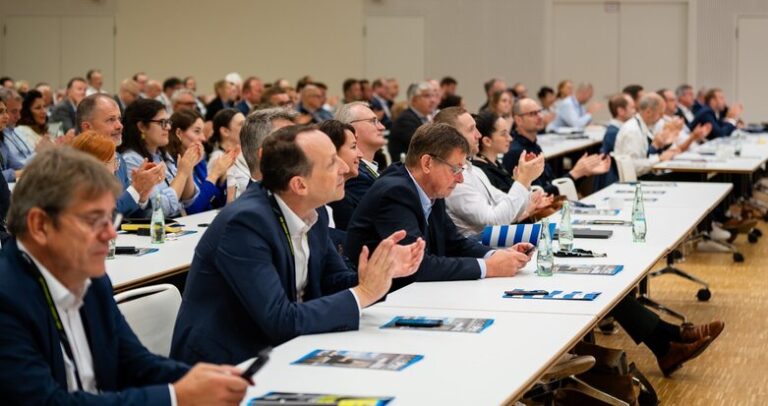
Frankfurt’s event was well attended as seen here.
German Foreign Trade: Trends and Risks Dr. Vincent Stamer, a Senior Economist at Commerzbank AG, discussed trends and risks in German foreign trade and highlighted that post-pandemic Germany’s exports reached €1.6 trillion in value, but inflation-adjusted volumes have declined. Exports to China fell €45 billion short of expectations. Since 2023, the United States has overtaken China as Germany’s largest trading partner. Germany faces a critical labor shortage, necessitating a focus on producing high-value goods. The diversification of supply chains by moving production to multiple countries is seen as essential to mitigate risks. The Red Sea crisis also boosted European air cargo, especially towards the Middle East and Southeast Asia.
Aircraft Delivery Delays: A Growing Issue Björn Walther, CFO at Condor Airlines, addressed the growing issue of delays in aircraft deliveries, drawing on the airline’s experience in modernizing its fleet. These delays, caused by workforce shortages and supply chain constraints, are becoming more frequent. However, the benefits of modern fleets – lower fuel consumption and reduced maintenance costs – outweigh the challenges. Fleet renewal remains critical for meeting environmental regulations and reducing operational costs.
The Path Forward The Air Cargo Conference 2024 highlighted that e-commerce and sustainability will continue to be key drivers in shaping the future of air freight. The rapid growth of e-commerce will require air cargo operators to enhance their digital capabilities, expand infrastructure, and adopt new technologies to meet rising demand. On the sustainability front, progress has been made, but challenges remain—particularly around scaling SAF production and overcoming operational hurdles. Continued innovation and collaboration among industry leaders, policymakers, and technology providers will be essential to achieving long-term carbon reduction targets. The Air Cargo Community remains a crucial force in shaping the industry’s future. The insights gained at this year’s conference will influence strategic decisions in the years to come as the sector navigates the dual challenges of e-commerce expansion and sustainability.
Anastasia Kazantzis reports for CFG on the conference.
This report was contributed by Anastasia Kazantzis,
Head of Public Relations, Riege Software International GmbH, Meerbusch / Dusseldorf
CargoForwarder Global’s ‘Spotlight On…’ series highlights the manifold career possibilities within the air cargo industry and invites a different individual each week to talk about their role, industry experience, insights and advice to potential newcomers. Digitalization brings benefits not just to single companies, but to entire cargo communities, improving and facilitating the exchange of data, and making the smooth and safe transfer of air cargo shipments possible. This week, Joke Aerts, Marketing Director at Nallian, takes us through her day, duties, and deductions.
Our differences make us more powerful together! Image: Joke Aerts/Nallian
CFG: What is your current function? And what are your responsibilities? JA: I’m the Marketing Director at Nallian, where we specialize in digitizing landside processes and building connected cargo communities. My primary goal is to ensure that when people think of landside digitalization or cargo community systems, they think of Nallian. I am also dedicated to building and executing our company strategy with my colleagues in the management team, ensuring we deliver our customers outstanding products and service, and offering our team a great place to work.
CFG: What does a normal day look like for you? Or is there such a thing? JA: Days can look very different, but there is one constant: they start with a cup of coffee! Mostly, it will be a dynamic mix of strategic meetings, crafting messages that resonate with our global customers, talking to (potential) customers, deep dives into performance metrics, hosting webinars, and syncing with colleagues across departments. No two days are the same, which keeps things interesting.
CFG: How long have you been in the air cargo industry, and what brought you to it? JA: It’s been an exciting 6-year journey in air cargo so far. All thanks to a former colleague who introduced me to Jean Verheyen, our CEO. It took just one lunch at the BRUcargo restaurant to get me interested in the dynamics and potential of the industry and our company. And – more importantly – to give me the feeling that I would work on something I believe in (the power of digitalization), in a role that is dynamic and evolving and with people that I can trust and with whom I have core values in common.
CFG: What do you enjoy most about your job? JA: I very much enjoy that I can work ‘out of the box’. Being a good marketer requires knowing your products, customers, and market well. So, I appreciate being involved in various facets of our business, from strategy to sales, product and customer success. I also very much like our strong team collaboration and the dynamics of my work environment. Both our company and the adoption of digitalization in the industry are growing, which generates constantly evolving challenges and opportunities – which keep me motivated every day.
CFG: Where do you see the greatest challenges in our industry? JA: One significant challenge is the slow adoption of digitalization. Despite rapid technological integration in our personal lives, the industry lags behind. Many seem to ‘wait for others to go first’ or are too busy solving the operational ‘shit of yesterday.’ Yet the benefits of digitalization will soon be a must-have, to remain competitive and attract young talent. Which brings me to another challenge: increasing diversity (in all its forms) and empowering young talent. As much as we should treasure the experience and insights of ‘the grey hair’, we also need the fresh ideas and enthusiasm of the younger generation to push boundaries and drive progress. I applaud the initiatives some associations, companies, and individuals are taking to bring variety in the uniform sea of blue and black suits we typically see at our industry events and in board rooms. Our differences make us more powerful together!
CFG: What advice would you give to people looking to get into the air cargo industry? Any particular training they should aim for? JA: As a ‘Shakespeare girl’ (my first degree was in Germanic languages), who turned out to be a B2B/tech marketer in logistics, I dare say that training doesn’t necessarily define your path. It may depend on the role you aspire to, but I firmly believe attitude and motivation trump polished CVs. So, I would say ‘spread the word’: talk to people in your network, and don’t be afraid to reach out to people and companies you do not yet know. People are often more open and helpful than you think.
CFG: If the air cargo industry were a film/book, what would its title be? JA: Love is in the air! Not to be cheesy, but because I continue to be impressed by the sheer passion for air cargo of so many people across our industry.
Many thanks, Joke, for your insights.
If you would like to share your personal air cargo story with our CargoForwarder Global readers, feel free to send your answers to the above questions to cargoforwarderglobal@kopfpilot.at We look forward to shining a spotlight on your job area, views, and experiences.
This week has seen a number of back-to-school photos being posted across Social Media and, at the same time, many articles warning of a capacity crunch as the air cargo industry gears up for a peak season. Reason enough to ask ChatGPT what similarities it sees between the back-to-school rush and the end-of-year air cargo peak season. This is what it came up with:
Preparing for a year-end peak season. Image: Canva/CFG
“Rising to the Challenge: How Air Cargo’s Year-End Peak Mirrors the Back-to-School Rush” As the holiday season approaches, the world gears up for a flurry of festive activities, but another rush happens behind the scenes—one that’s less visible but no less crucial. The year-end peak in air cargo is a logistical storm, with companies scrambling to meet surging demand for shipments. Interestingly, this seasonal rush bears striking similarities to an annual event many of us have experienced: the back-to-school rush. Whether starting a new academic year or preparing for the busiest months in air freight, both demand careful preparation, adaptability, and the ability to handle high-pressure situations. But what makes these two seemingly unrelated phenomena so alike?
Preparation and Anticipation: Bracing for the Big Surge Every August or September, more than 1.5 billion children worldwide prepare to head back to school, according to UNESCO. Students and parents alike gear up for the new academic year, buying supplies, organizing schedules, and mentally preparing for the challenges ahead. It’s a time of anticipation — new teachers, new classes, and the inevitable increase in workload. Similarly, air cargo companies begin their preparations months ahead of the year-end peak season. This period, particularly the final quarter of the year, can see freight volumes surge by as much as 30% compared to other times of the year, largely driven by holiday retail and e-commerce. According to the International Air Transport Association (IATA), air cargo companies handle an average of over 17 million metric tons of freight in the fourth quarter alone, as global businesses race to stock shelves and meet consumer demand. Much like students need to be organized with their supplies and schedules, air cargo companies must ensure their fleets, warehouses, and workforce are ready for the volume increase. The preparation involves meticulous capacity planning, workforce management, and forecasting—essentially, bracing for a logistical storm as intense as any first day back at school.
Increased Workload and Pressure: A Race Against the Clock The first few days of school can feel overwhelming for students. They’re suddenly faced with new schedules, homework, extracurricular activities, and the mental adjustment to a new academic year. The workload ramps up almost instantly, with teachers handing out assignments and setting expectations that students must juggle. The air cargo sector experiences a similar sense of urgency during the year-end peak. In the final quarter, e-commerce giants like Amazon and Alibaba prepare for massive surges in sales. According to Statista, e-commerce revenue during the holiday season can increase by over 30%, putting tremendous pressure on the logistics industry. This leads to a spike in air cargo volume as retailers push to get products to customers before major holidays like Christmas, Hanukkah, and New Year’s Eve. Air cargo companies must work around the clock to meet delivery deadlines. The sheer scale of shipments, from consumer electronics to clothing to perishable goods, means that delays are costly. Any disruption during this period can affect businesses and consumers alike, much like how students who fall behind on assignments at the start of the year may find it difficult to catch up later. For example, DHL, one of the world’s largest logistics companies, reported handling more than 5 million packages daily during the peak holiday season — a 50% increase over the rest of the year. The pressure to meet these volumes mirrors the kind of high-stakes challenge students face during exam periods or project deadlines.
Adapting to New Challenges: Flexibility Is Key Adaptability is a key trait for both students and air cargo operators. For students, the start of a school year means adjusting to new teachers, learning environments, and academic expectations. It requires flexibility to navigate these new dynamics and figure out how to succeed. For air cargo companies, adaptability is just as important. Despite months of planning, unexpected challenges are inevitable. Weather disruptions, flight delays, and changes in demand can complicate operations, much like how students must adjust to new routines and demands at school. During the 2020 holiday season, for instance, the air cargo industry faced unprecedented challenges due to the COVID-19 pandemic. With passenger flights (which normally carry about half of the world’s air freight) drastically reduced, air cargo operators had to quickly adapt by repurposing passenger planes to carry goods. According to IATA, global air cargo demand rose by 9.4% in December 2020, compared to pre-pandemic levels, forcing the industry to pivot and adjust capacity on the fly. Much like students learning to use new apps or tools to manage their studies, air cargo companies have turned to technology to help them adapt. Real-time tracking, automated sorting systems, and data-driven forecasting have become essential for managing the surge in shipments and ensuring that goods reach their destinations on time.
Peak Demand Periods: A Global Exam for the Supply Chain Every school year has its peak moments — times when the pressure is highest and performance matters most. For students, these are the exam periods, when preparation and focus are critical to success. In air cargo, the weeks leading up to the holiday season are similarly crucial. The fourth quarter is the busiest time of the year for air freight, with companies striving to meet holiday shopping demands. In 2022, the total air cargo demand in December reached 20.1 billion freight ton kilometers (FTKs), according to IATA. The holiday season represents the industry’s equivalent of final exams — only instead of grades, the stakes are timely deliveries, satisfied customers, and seamless operations. For both students and logistics operators, the key to success during these peak periods is the same: preparation, focus, and the ability to perform under pressure.
Learning from the Experience: A Time for Growth Every school year is a learning experience for students, offering new challenges, skills, and opportunities for growth. Similarly, air cargo companies learn valuable lessons during the year-end peak. Each year brings new logistical hurdles, market shifts, and customer demands, offering an opportunity for companies to refine their processes and improve efficiency. The lessons learned from the peak season help logistics companies optimize their operations for the future, just as students grow academically and personally from their school year experiences. Ultimately, the year-end rush in air cargo isn’t just a time of intense activity — it’s an opportunity for growth, innovation, and improvement. Just like the back-to-school period, it’s a time of change, challenge, and adaptation that pushes everyone involved to rise to the occasion.
CargoForwarder Global is certain that there are many potential writers among our readership, who have something interesting and founded to say about the air cargo industry. What do you think about ChatGPT’s musings? Does it meet CFG’s journalistic standards and experience at all? Did it provide any kind of value or food for thought that may have triggered an article idea? Let us know on cargoforwarderglobal@kopfpilot.at We much prefer authentic input and look forward to receiving yours!
Around 43.4 million people worldwide are currently classified as refugees. Many of them are actively seeking employment to rebuild their lives. Yet, they often face significant barriers when trying to find jobs. On the other side of the coin, the aviation and air cargo industries are suffering from a distinct lack of manpower as their ageing staff retire and they compete with perhaps more attractive industries for new talent. Menzies Aviation has seen a potential solution to these two aspects and has launched Allies in Aviation.
Looking for a job is daunting enough in your own language, in your own country. The struggles you face as a refugee seeking employment go well beyond that level of difficulty. Quite aside from possible legal restrictions preventing immediate employment as refugees apply for and await work permits in what can be a very lengthy process, they are usually faced with a whole host of obstacles. These range from language barriers to their qualifications not being recognized, to a lack of social and professional networks in the local field, all the way through to discrimination and bias. Refugees may face prejudice and social stigma, which can result in exclusion from certain jobs. Also, employers may also have concerns about the stability of a refugee’s legal status.
Helping refugees into employment through Allies in Aviation. Image: Menzies
The good news The good news is that, despite these obstacles, initiatives such as job training, language education, and legal aid are being implemented by various organizations to support refugees in overcoming these challenges. One such promoter of refugee employment support is the Tent Partnership for Refugees, founded in 2016 by Hamdi Ulukaya, CEO and Founder of the multimillion-dollar U.S. food company, Chobani. He sought to mobilize the world’s largest employers to help refugees access local labour markets, and now eleven countries have established their own Tent Networks. Of those, Tent UK counts more than 70 major companies in its network, which are all committed to hiring refugees across the country and supporting them in preparing to apply. One such company is Menzies Aviation which joined Tent in 2022 and has set itself the target of recruiting refugees equivalent to 1% of its global workforce by 2026.
Arise, Allies in Aviation Menzies Aviation has committed to empowering displaced communities and will be carrying out its ‘Allies in Aviation’ event for the first time this week, over at its London Headquarters. ‘Allies in Aviation’ is an employability training session designed (in partnership with Tent UK) to help individuals from displaced communities find meaningful employment in the aviation sector. Participants in the event will learn how to prepare an effective CV, be given advice and support in applying for roles, and will have the chance to practice interview techniques. “By focusing on practical advice and real-world examples, the event aims to empower individuals to confidently pursue and secure employment in the aviation sector,” the release states.
The first of hopefully many Juliet Thomson, Chief People Officer, Menzies Aviation, said: “We’re excited to hold the first Allies in Aviation by Menzies Aviation event in London, helping individuals from displaced communities gain the skills and insights needed to pursue meaningful employment and supporting their integration into society in their host country. It forms part of our wider commitment to support the underrepresented, foster diversity and inclusion in the workplace and play an active role in addressing the refugee crisis. We hope that this event will be the first of many, with plans to roll this initiative out to new locations within our global operations later in the year.”
Leadership for better Jen Stobart, Director for Tent UK, said: “Businesses play a critical role in helping refugees access jobs and overcome the many barriers to employment they face, such as language skills, a lack of professional networks, and transport. The Allies in Aviation event is just one example of how Menzies Aviation is showing leadership and delivering on its commitment to connect refugees to jobs, both within its own workforce and across the sector.”