Kale Logistics Solutions announced the appointment of its new Chief Innovation Officer this week: Sanjeev Madavi. He brings three decades of experience in digital transformation and innovation – the majority of which are in international supply chain and logistics. Working remotely out of Muscat, where he has been based for much of that time (coming over from the Khimji Ramdas LLC conglomeration where he held the position of Group Chief Digital Transformation Officer since 2021), Sanjeev Madavi’s new responsibilities include Kale’s continued expansion into multi-modal community platforms. Under his leadership, Kale’s Cargo Community Systems will be enhanced and new, complementary and value-added services developed. His own focus, according to his LinkedIn profile, will be on developing Kale’s Logistics Control Towers, Freight Exchanges and eCommerce Logistics for worldwide customers.
Sanjeev Madavi, Chief Innovation Officer, Kale Logistics Solutions. Image: Kale
Sanjeev Madavi, Chief Innovation Officer, Kale Logistics Solutions, stated: “I am truly inspired by Kale’s vision and mission, and I am excited about the opportunity to contribute to our global footprint and diverse customer base spanning all continents. My passion for leveraging technology to drive innovation aligns perfectly with Kale’s digital products, which are instrumental in transforming supply chain and logistics facilitators into global integrated communities. I look forward to advancing our offerings in this dynamic industry.”
Vineet Malhotra, Co-Founder & Director, Kale Logistics Solutions, said: “Sanjeev will be a tremendous asset to our leadership team. His philosophy of ‘Agility with Outcomes’ resonates with our core values at Kale as we continue to deliver solutions that are not only efficient but also future-proof and agile.”
With immediate effect, the logistics company will use the cargo.one online booking platform to secure transport capacity for its own shipments. DB Schenker employees working in air freight worldwide can thus opt to book the belly compartments or main decks of around 60 airlines listed on cargo.one. Meanwhile, the deadline for submitting a purchase offer for the Deutsche Bahn subsidiary is drawing closer.
As CargoForwarder Global has learned from internal sources, potential Schenker buyers must hand in their takeover bids next Thursday (22AUG24). On that day the deadline for submitting bids ends. Of the original twenty interested parties, two candidates remain: CVC and DSV. The strategic financial investor, CVC, is supported by the Abu Dhabi Investment Authority (ADIA) and the GIC fund from Singapore. The Danish logistics company, DSV, could leverage the greatest synergy effects with the acquisition of Schenker, which would presumably cost jobs. This could be a disadvantage in the race for the logistics arm of state-controlled Deutsche Bahn. Therefore, insiders believe that CVC has the best chances to be commissioned the role as preferred bidder, although they do not rule out the possibility that Schenker parent, Deutsche Bahn, will continue to hold a minority stake in the logistics company.
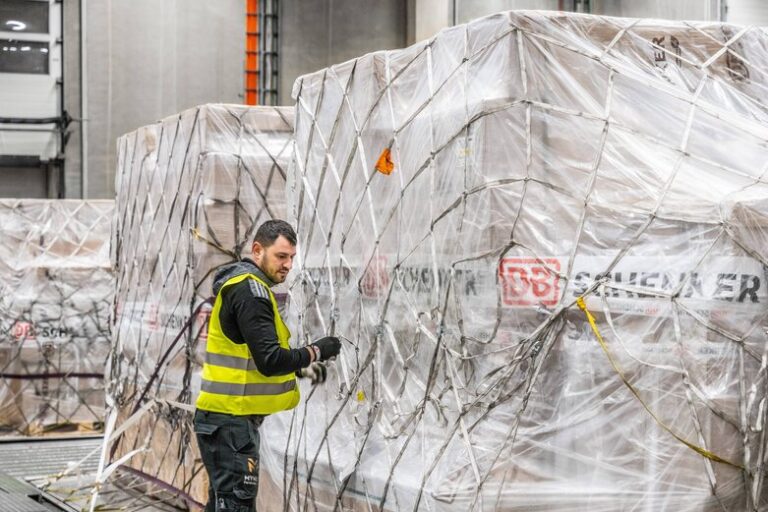
DB Schenker sales staff can now book shipments like these via the portal of partner cargo.one – courtesy: DB Schenker / Michael Neuhaus
Securing access to capacity Regardless of the pending ownership decision, DB Schenker has inked an agreement with the online booking portal cargo.one to secure transport capacity for its own shipments. The peak season for air freight is about to begin and experience has demonstrated that the demand for available capacity will gradually increase. The step also strengthens the company’s digitalization course, says Thorsten Meincke, Global Board Member for Air & Ocean Freight, DB Schenker: “We are continuing the digitalization of transport by establishing solutions that are in high demand on the market. By increasing our access to available airline capacity, we save time for our customers and make processes faster, smoother and more efficient for them.” He adds that cargo.one is the perfect solution for this endeavor, as the company has in-depth expertise in handling the large amount of real-time data.
Efficiency gains Christa Koenen, Global Board Member for Information Technology and Digitalization (CIO/CDO), DB Schenker, offers a similar explanation: “With more than 150 years of business expertise, we aim to choose the ideal external providers to build up new options based on innovation and technology. Efficiency gains accomplished through IT, help to make the entire logistics industry more resource efficient. The more carriers DB Schenker connects to digitally, and thus automates and optimizes processes, the better the final choice for our customers will be. The concept is comparable with automated last-minute deals from airlines or travel agents.”
Top carriers account for four-fifths of the total volume DB Schenker is connected bilaterally with the top air freight carriers via an application programming interface (API), whereby the cooperation with cargo.one creates additional digital channels, i.e. complements the existing API scheme. 75% of the total air freight volume moved by Schenker, was previously handled with its Top 20 airline partners. Providers such as Royal Air Maroc or Air Europa, which are now new to cargo.one’s portfolio, are expanding the transportation options, says Mario Arnold, Head of Global Public Relations, DB Schenker.
Big fish The number of airlines cooperating with cargo.one has increased significantly in recent weeks. With Air Europa, Royal Air Maroc, Condor, and WestJet Cargo, four more carriers have been added to the list, enabling them to market their capacities through cargo.one at the click of a button, with full price transparency. From now on this also applies to DB Schenker, which operates 2,100 branches worldwide with a total of 72,710 employees. Last year, the company transported 1,149 million tons of air freight. That puts it in fourth place worldwide after Kuehne+Nagel, DHL Global Forwarding, and DSV. “DB Schenker is a very important partner for us, which should once again significantly increase the volumes booked through our platform,” comments Moritz Claussen, Founder and Co-CEO of cargo.one. Hence, DB Schenker is a big fish, enabling cargo.one to grow its market share and further optimize its negotiating position towards carriers.
cargo.one intends to widen its product availabilities However, the logistics giant can currently only book general cargo shipments for its customers via cargo.one. According to Moritz Claussen, the product range is to be expanded. For example, cargo.one already offers cool passive for perishables for some users, although dangerous goods are also already offered in some cases. “We will gradually open up our product portfolio further,” Mr. Claussen told CargoForwarder Global. cargo.one also wants to improve its footprint in sustainability. “We intend to offer customers a marker for adding SAF to their air transport requirements.” But it is up to the agents to negotiate the details with their airline. “We are not the carrier, so we have no influence on the refueling of aircraft with SAF or the introduction of CO2 compensation measures,” Mr. Claussen states.
The Miami (MIA) Air Cargo Forum (ACF) 11-14NOV24 is still three months away, yet TIACA has already published the 2025 venue and dates, so whip out your pencils and diary, make a note of 04-06NOV25, and check your connections to Abu Dhabi (ABU), UAE.
ACF veterans may be wondering if CargoForwarder Global has overlooked a typo. Surely the next ACF should be in 2026 rather than 2025. Well spotted, but no – 2025 is correct. The ACF will now be an annual event instead of every two years. Also, Yas Island in ABU will become its second permanent location and all subsequent ACFs will alternate between MIA and ABU. The success of the ACF – MIA is already 70% sold out – and TIACA’s commitment to supporting the global air cargo industry, representing each sector and each geographic region, led to this decision. The ACF 2025 will be organized by TIACA and MGME, sponsored by the Department of Culture and Tourism, and hosted by Etihad Cargo. In ACF tradition, it will showcase industry innovations, address challenges and offer a collaborative networking platform.
Steven Polmans, Chair of TIACA, stated: “Keeping with the same spirit of the ACF 2024 in Miami, the ACF 2025 will be a world class event that will feature keynote addresses from influential thought leaders, interactive panel discussions, multiple networking opportunities, and a comprehensive exhibition showcasing the latest products and services in the air cargo sector. We thank Etihad Cargo and the Department of Culture and Tourism of Abu Dhabi for making this vision a reality.”
Stanislas Brun, Vice President Cargo at Etihad Cargo, said: “Abu Dhabi’s strategic location as a key hub connecting the East to the West, makes it an ideal choice for ACF 2025. This city is not only a crossroads for global trade but also offers world-class infrastructure and a dynamic business environment. As the national carrier of the UAE, Etihad Cargo is looking forward to welcoming the air cargo community to Abu Dhabi for this event.”
Glyn Hughes, Director General, TIACA, concluded: “As the world continues to face unprecedented challenges, the Air Cargo Forum serves as a critical platform for industry stakeholders to meet, collaborate, innovate, and strategize for a sustainable and resilient future. We found it vital that we continue to bring the air cargo community together through well thought out and organized events […] on an annual basis.”
Royal Air Maroc has signed a Memorandum of Understanding (MoU) with Airlink wherein it commits to supporting communities mostly located in West and Central Africa, in times of crisis. It is the first such partnership agreement between the two organizations. As per the agreement, Royal Air Maroc will assist Airlink and its associated NGOs in supporting communities in crisis over the course of next year, by transporting 50 tons of humanitarian cargo and providing other logistical support. This includes providing passenger tickets for humanitarian personnel, as well as a charitable cash donation to support Airlink operations.
RAM will transport 50 tons of humanitarian aid. Image: RAM
With its 28 destinations in Africa (and another 90, worldwide), Royal Air Maroc is an important addition to Airlink’s partner network, since it will help access some of the world’s most challenging environments. Among them: Burkina Faso, Cameroon, the Central African Republic (including refugees from Sudan), the Democratic Republic of Congo, Mali, and Niger. The partnership will also support humanitarian needs and strengthen health systems in Sierra Leone and the Middle East. These regions, often underserved and overlooked as long-term humanitarian crises, will be prioritized in the partnership. Throughout Sub-Saharan Africa, the Sahel region, in particular, often suffers the fall out of severe humanitarian crises. Climate shocks, violence, food insecurity, and forced displacement exacerbate the situation, leaving 33 million people in need of urgent and increasing humanitarian assistance and protection.
Abdelhamid ADDOU, Chairman Of the Board and CEO of Royal Air Maroc, commented: “Under the strategic vision and impulsion of His Majesty King Mohammed VI, Morocco is relentlessly working to develop South-South Cooperation and is acting, in particular, for the development of Africa and the well-being of African communities. Therefore, this partnership with Airlink fits perfectly within our vision and mission in a common objective of continental solidarity.”
Steven J. Smith, Airlink President and CEO, said: “A key priority for Airlink is expanding our regional focus across Africa’s diverse regions, actively incorporating our humanitarian partners’ locally informed perspectives to develop flexible and tailored operational strategies. Royal Air Maroc’s support will increase Airlink’s capacity to transport humanitarian aid and assistance to countries where partners face significant barriers to response, such as Cameroon and the Central African Republic in the Sahel. We are eager to embark on this partnership journey and are thrilled to have their support.”
It is the first of its kind for FedEx in Europe, but the sixth overall. The new state-of-the-art Life Science Center (LSC) in Veldhoven, the Netherlands, joins the integrator’s network which includes locations in Memphis (USA), Mumbai (India), Singapore, Seoul (South Korea) and Tokyo (Japan). Veldhoven was chosen because of its strategic location favored by the technology industry, and not far from Europe’s pharmaceutical, biotech and life science industries. Like its peers, the new LSC offers dedicated refrigeration facilities and a Good Distribution Practices-licensed environment where healthcare products can be received, stored, packaged and shipped.
Veldhoven now boasts a state-of-the-art Life Science Center. Image: FedEx
The opening of the Life Science Center in Veldhoven is an important milestone in FedEx’s end-to-end services. With its new, high-quality, temperature-sensitive technology solutions in Europe, it is poised to carve market-share out for itself in the fast-growing market in the pharmaceutical and clinical industry in this region, with end-to-end supply chain solutions for the storage and transportation of temperature-sensitive medical products. The 1,000 m² LSC includes four temperature-controlled rooms and cooling facilities for temperatures from -80 °C to +25 °C. It is monitored around the clock and each temperature zone has its own alarm system. FedEx also offers special packaging, proactive monitoring solutions and value-added services such as labeling and returns logistics.
Marius Penninks, Vice President Ground Operations at FedEx Benelux, stated: “We are very pleased to announce the opening of the first European FedEx Life Science Center in the Netherlands. With the growing global demand in healthcare, a reliable logistics solution for the safe, timely and efficient delivery of medicines, clinical trials and biological products, is crucial. With the new Life Science Center, we are perfectly positioned to be a critical component in the medical transportation supply chain and facilitate the timely care of patients.”
Etihad Cargo has restructured its organization with the aim of enhancing customer experience and growing its business. Four regions now make up its geographical layout – each headed by a newly appointed Director. The regions are: South Asia and Oceania (SAPAC, India, Vietnam, Australia) led by Bernard Lee; North Eastern Asia (China, Hong Kong and Macau, Korea, Japan, Taiwan) led by Jacqueline Han Lin Ni; Europe and Americas (North Europe, Central Europe, South Europe, UK and Ireland, Americas) led by Rainer Krammer; and Africa, Middle East and CIS (GCC, UAE, Africa, Levant, CIS) led by Grant Kemp. With the new structure, the airline hopes to get closer to its customers to better understand and respond to their commercial requirements. This more focused customer-centricity is further underlined by the introduction of a dedicated Customer Experience Department. The CED is headed by Lubna Allaham. She and her team are tasked with improving the customer journey with additional customized customer-centric solutions, and making sure that Etihad Cargo provides the same high levels of service at all its locations.
Four regions plus a Customer Experience Dept. Image: Etihad
The airline also announced that it had appointed Rayan Alhaddar to the new role of Senior Manager Business Development Cargo Manager, as it strengthens its sales team and reinforces its commitment to the UAE market.
Stanislas Brun, Vice President Cargo, stated: “Etihad Cargo is committed to building strong partnerships to achieve mutual growth and success. This new structure will enable Etihad Cargo to work even more closely with its customers and better understand their specific needs. With the appointment of new regional managers and senior leaders, I am confident that the team is well-equipped to deliver exceptional results and drive the continued success of Etihad Cargo. This ensures our services and products are aligned with customer expectations, delivering a superior experience for all.”
Dr Nadia Al Bastaki, Chief People and Corporate Affairs Officer at Etihad Airways added: “This new organizational structure underscores the vital importance of the Cargo division to Etihad’s vision and ambitious plans for growth. By enhancing Etihad Cargo’s regional capabilities and focusing on customer experience, the carrier is not only improving its service offering but also reinforcing its commitment to being the air cargo partner of choice. Etihad is confident that this new organization will drive the cargo division’s continued evolution and success, fully aligned with the airline’s core values.”
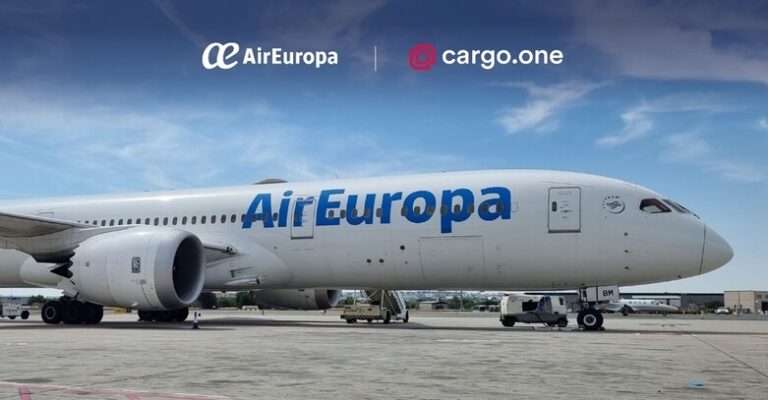
20,000 freight forwarders across 121 countries can soon look forward to even more capacity as Air Europa Cargo begins sharing its capacity on the cargo.one digital marketplace. The established Spanish carrier offers a network of 130 destinations and is working with the digital booking platform to open up its schedule over the coming weeks. Freight forwarders in selected cargo.one markets throughout EMEA and Latin America will be the first to have access to Air Europa Cargo capacities later this summer, and other markets will be included as the year progresses. The airline operates hubs in Madrid and Barcelona and flies to Europe, North America, Latin America, the Caribbean, Middle East and Africa. Latin America is a particular strength and a gain for cargo.one as it seeks to expand its portfolio of leading carriers in the Spanish and Latin American markets. Air Europa Cargo’s fleet consists of Boeing 787 Dreamliners and 737 aircraft.
Another 130 destinations gain extra capacity with Air Europa Cargo. Image: cargo.one
For Air Europa Cargo, the motivation to publish on cargo.one was to ensure greater visibility and spread of its service offer, reduce costs, and offer a reliable, easy-to-use booking platform. Freight forwarders will be able to search, quote and book Air Europa Cargo capacity for general cargo, perishables and pharma shipments up to 1.5 tons.
Jordi Pique Dalmau, General Manager, Air Europa Cargo, explained: “Our extensive cargo services have evolved greatly and now is the ideal time to broaden our global reach and digital growth by working with cargo.one. The partnership enables us to apply the latest digital best practices and double-down on the valuable strategic gains from digital distribution.”
Moritz Claussen, Founder & Co-CEO of cargo.one, commented: “We are delighted to take Air Europa Cargo’s digital sales to the next level and expand its digital footprint to many more forwarders across the world. In preparation for Peak Season, it makes every sense for Air Europa Cargo to enhance its booking experience and build new sales muscle for all its relevant markets.”
In its quest to facilitate processes for freight forwarders, CargoAi has now launched its latest innovation on its CargoMART digital marketplace – a Shipper Quotation Module. Aimed as small, medium, and large freight forwarders alike, this solution allows them to create and customize real-time quotations for their customers. What is otherwise a lengthy ping-pong process between procurement and sales teams, is now a far quicker, efficient and more accurate sales process. CargoAi speaks of a revolution in the way freight forwarders will, in future, generate and manage quotations with their own clients.
Speed, Autonomy and Flexibility are promised. Image: CargoAi
“The feature allows users to create detailed, real-time quotes tailored to their customers’ specific needs, streamlining the sales process and enhancing customer satisfaction. By integrating this module into CargoMART, CargoAi continues to demonstrate its commitment to providing comprehensive digital solutions that drive operational efficiency and business growth,” the release states, going on to mention three key benefits that the Shipper Quotation Module brings: Speed, Autonomy, and Flexibility. Aside from a far faster quotation communication process, forwarders also enjoy full control over the quotation process, from creation to customization. They can manage their quotations independently rather than having to rely on a middleman. The flexibility arises from the ability to modify or cancel quotations directly from their CargoMART account, as they react to changing market conditions or customer requirements.
Matt Petot, CEO of CargoAi, declared: “Our new Shipper Quotation Module represents a significant leap forward in our mission to digitize and simplify the air cargo booking process. By providing a tool that allows forwarders to create and customize real-time quotations, we are not only enhancing their operational efficiency but also empowering them to offer superior service to their customers. This is a game-changer for freight forwarders of all sizes.”
Aviation should be net zero by 2050 at the latest, sending a strong signal to other industries against global warming. However, there are increasing signs that this target will be missed by a wide margin. The reasons are manifold and mutually dependent. Above all, however, political will lags behind development, shying away from stiff decisions forcing airlines, airports, ground handling agents and fuel suppliers worldwide to adhere to the Paris climate goals.
Two decades after airlines pledged to switch from carbon fuels to biofuels, SAF still accounts for only 0.2% of the jet fuel market. Passenger and cargo airlines argue that this will need to rise to at least 65% by 2050, if the ‘net zero’ carbon emissions target is to be achieved by then. A highly ambitious scheme extremely difficult to realize on voluntary basis.
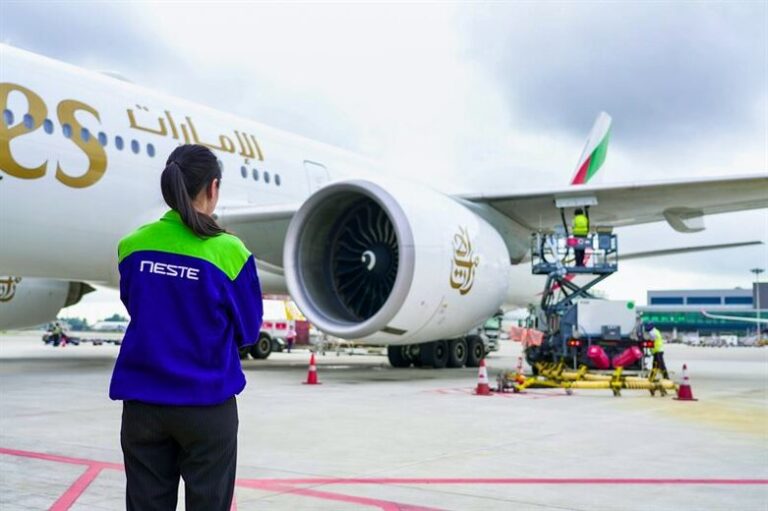
Finland-based Neste is one of the largest producers of blended SAF, but the quantities are not sufficient to exert price pressure – courtesy: Neste
One step forward followed by two steps backward. This all the more since even minor successes are now at risk or being scaled back altogether. For instance, Schenker decided months ago to discontinue the weekly SAF flights from Frankfurt to Shanghai, powering a Lufthansa Cargo B777F. According to a Schenker executive, the operations became too costly since only a very limited number of shippers joined the SAF bandwagon. This is despite the knowledge that biofuel, when burned in turbines, leads to around 80% less greenhouse gas emissions compared to traditional Jet A-1 kerosene. But the basic problem remains: It is around 4 times more expensive than carbon-based fuels, which is what prevents many forwarding agents and their industrial clients from financing its utilization.
Shell stalls SAF production in Rotterdam As of today, the green fuel is the only option for the aviation industry to significantly reduce emissions, apart from the development of hydrogen-powered aircraft which are still in their infancy. Yet, instead of scaling up SAF production and supply, the trend is downwards. Just weeks ago, Shell announced that it would be pausing the construction of an SAF production plant in Rotterdam, alarming environmentalists. On the opposite side of the globe, Air New Zealand skipped their 2030 emission reduction target, blaming aircraft manufacturers that their passenger and cargo aircraft variants being offered the market today, are not fuel efficient and yet would still be in service for 25 or more years, if currently ordered.
Take joint action and stop blaming each other Airlines and suppliers have long accused each other of being to blame for the fact that the available quantities of SAF are far too low to significantly reduce CO2 emissions in aviation, with liter or gallon prices remaining extremely high. Through this ever faster spinning circle of naming and shaming, air operators or fuel producers risk falling behind their own SAF proclamations, giving the aviation industry a miserable testimony when it comes to its contribution to climate protection. There are now more and more voices doubting that 10% of the fuel burned by airlines will be SAF by 2030. “If we don’t reduce the price of SAF, flying is going to be much more expensive,” said Luis Gallego, CEO of British Airways-owner, IAG, during a panel discussion at the Farnborough Air Show, after praising the UK’s decision. According to Reuters, he is alluding to an announcement by Downing Street, introducing a price guarantee for sustainable aviation fuel to incentivize producers to open more plants and build infrastructure to scale up the fuel’s production. This will gradually reduce the price per liter, the politicians argue.
London moves forward Meanwhile, London has confirmed its Sustainable aviation fuel mandate targets to ensure that 10% of all jet fuel in flights taking off from the UK will come from sustainable sources by 2030. The mandate will come into force in JAN25. It will be one of the first in the world to have a written law guaranteeing 1.2 million tons of SAF supplied to the UK airline industry each year – enough to circle the globe 3,000 times. The plans are good for aviation, the environment and for the UK overall, with the SAF industry estimated to add over GBP 1.8 billion to the economy and create over 10,000 jobs across the country, argues Downing Street.
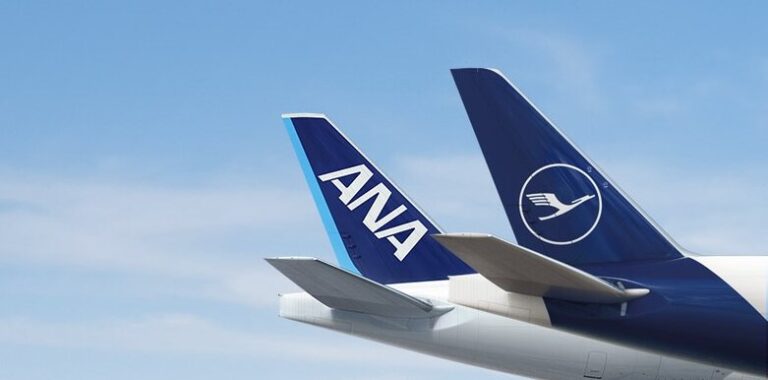
The route joint venture between ANA Cargo and Lufthansa Cargo is still alive and has not, as many had feared, faded away. In contrast, it is expected to be restarted at the end of Q1 2025. This was announced by Nicole Mies, Head of Communications and Corporate Social Responsibility at Lufthansa Cargo, when approached by CargoForwarder Global. The JV was suspended in SEP23, after nine long years, and has been dormant since then.
The reason for the suspension are the ongoing negotiations between the holding company of All Nippon Airways (ANA) and Nippon Cargo Airlines (NCA) about their planned merger. They include many confidential aspects such as sensitive data on the cooperation between the Japanese and German cargo airline.
The existing JV between the two cargo airlines will be revived – photo: courtesy ANA Cargo
Endless discussion ANA Cargo and Lufthansa Cargo have been cooperating for almost a year now, by means of an interline agreement. So, they are still in constant contact, albeit well below the JV threshold. This is likely to remain the case for another six or seven months, possibly even until April or May next year. The timing of the restart depends on when ANA and Nippon Cargo will finally ink their merger. The JV concept was developed by Karl Ulrich Garnadt, the former CEO of Lufthansa Cargo, and his team. It followed the disappointment of WOW, a cargo alliance set up in 2000 between Lufthansa Cargo, SAS Cargo, JAL Cargo and Singapore Airlines Cargo. WOW existed for 10 years and finally dissolved in 2010, due to the lack of compatible reservation systems, a joint sales strategy and internal competition for the transportation of shipments.
Metal neutrality concept replaces WOW Shortly after WOW was dissolved, Mr. Garnadt came up with a different plan: “We will form a completely new type of partnership with hand-picked carriers, which will include key requirements such as joint network planning, uniform pricing and coordinated sales activities as pillars of the pact,” the manager announced to media representatives at the time. That happened in 2013, and a year later, he kicked off the deal by announcing a joint venture between Lufthansa Cargo and ANA Cargo based on metal neutrality for standard freight shipments on flights between Europe and Japan. The biggest difference to WOW: the transport prices agreed between the two partners are not subject to antitrust law and can therefore not be questioned by regulators. In 2017, under the direction of Garnadt’s successor, Peter Gerber, the JV between United Cargo and Lufthansa Cargo on routes between the USA and Europe followed on the basis of metal neutrality.
Speed products will be included in the Cathay-Lufthansa-Swiss JV Next came the cooperation between Lufthansa Cargo and Cathay Pacific on flights between Europe and Hong Kong. It is based on the joint distribution of capacity, uniform pricing, coordinated handling activities of shipments and booking portals able to communicate with other. “The ‘metal neutrality’ covers almost the entire product range ex Hong Kong. With the exception of our most recent product, td.Zoom,” reports Nicole Mies. She went on to say: “Ex Europe, we are currently planning to expand the spectrum beyond General Cargo, to include the speed products, td.Pro and td.Flash.” In 2022, Swiss WorldCargo joined the alliance, giving the carrier access to the networks and capacities of Lufthansa Cargo and Cathay Pacific also by interlinking their booking systems. This is the current status. Meanwhile, negotiations between ANA and NCA regarding their takeover are continuing. There is no word on the duration of the talks.