More freighters, more capacity and tonnage flown – courtesy of Saudia Cargo
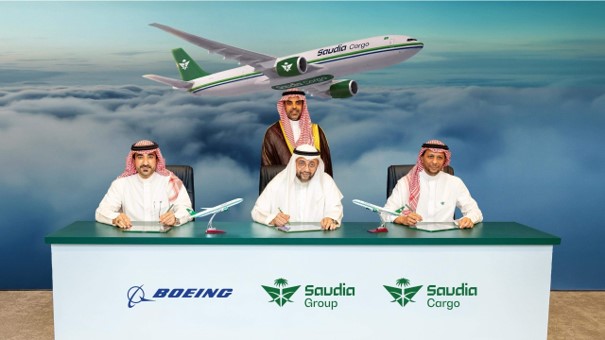
Saudia Group has ordered four Boeing 777-200 freighters to strengthen Saudia Cargo’s long-haul network and support Saudi Arabia’s ambition of becoming a global logistics hub under the Kingdom’s Vision 2030 strategy. The first aircraft is scheduled to enter service in the fourth quarter of 2026, expanding the carrier’s dedicated freighter operations across four continents and increasing capacity on key international trade lanes.
The fleet investment comes as Saudia Cargo continues to grow its global footprint, driven by rising demand for reliable cargo services between Asia, Europe, the Middle East, and Africa. According to the airline, the additional aircraft will enhance network flexibility while supporting the transportation of high-value, time-critical shipments, and strengthening Saudi Arabia’s role as a gateway connecting East and West.
“This agreement represents another important step in our long-term growth strategy,” said Ibrahim Al-Omar, Director General of Saudia Group. “Expanding our dedicated freighter fleet enables us to meet increasing market demand while contributing to the Kingdom’s ambition of becoming a leading global logistics hub.” Boeing described the order as further proof of the Boeing 777 Freighter’s strong position in the long-haul cargo market and highlighted its decades-long partnership with Saudia.
The investment builds on a period of strong operational performance for Saudia Cargo. The airline transported more than 1.15 million tons of cargo across 2024 and 2025 while maintaining an on-time performance of over 90%. With additional freighter capacity entering the fleet from late 2026 onwards, Saudia Cargo is expected to further strengthen its position on major intercontinental trade routes and support the continued expansion of Saudi Arabia’s logistics sector.
Maersk and Hapag-Lloyd have announced that their jointly operated AE15 service under the Gemini Cooperation will return to the Suez Canal after more than a year of rerouting vessels around the Cape of Good Hope. The move follows a comprehensive assessment of the security situation in the Red Sea and marks the first structural adjustment towards restoring Asia–Europe services via the shorter Suez corridor.
The revised rotation will connect Qingdao, Kwangyang, Ningbo, Tanjung Pelepas, Port Said, Damietta, Colombo, and Singapore, with the Majestic Maersk scheduled to be the first vessel to operate the new routing. By reintroducing the Suez transit, the carriers expect to shorten transit times, improve schedule efficiency, and reduce fuel consumption on one of the world’s busiest container trade lanes.
Despite the operational change, both shipping lines stressed that the return to the Suez route will be gradual and subject to ongoing security developments in the Red Sea. The companies confirmed they will continue to closely monitor the geopolitical situation and are prepared to revert individual sailings, or the service as a whole, to the Cape of Good Hope should conditions deteriorate. According to Maersk and Hapag-Lloyd, the safety of crews, vessels and customers’ cargo will remain the overriding priority as the Gemini network continues its phased transition back to the traditional Asia–Europe corridor.
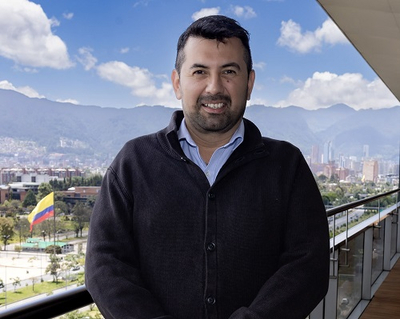
Every week, CargoForwarder Global’s ‘Spotlight On…’ shines a focus on a specific segment of the air cargo industry, to illustrate the wide variety of careers on offer within it. Airlines are obviously the absolute core component of air cargo, transporting all kinds of commodities across the world. In the case of this week’s airline, it contributes more than mere commodity transport since it is also a key player in the world’s Valentine’s and Mother’s Day plans, being one of the leading carriers of flowers shipments out of Latin America to the international flower markets, for example. And it is a people-centered airline, as is clear from Leonel Ortiz, Chief Operating Officer at Avianca Cargo, who talks about his role and shares thoughts and advice to those looking to enter the industry.
Sustainable performance starts with sustainable people. Image: Avianca Cargo
CFG: What is your current function and company? And what are your responsibilities?
LO: I lead cargo operations for Avianca Cargo, supporting operations for Avianca Cargo Mexico, and GOL’s international cargo business, overseeing a multi-country network across the Americas and Europe. My responsibility is to build safe, compliant, resilient, and efficient cargo operations across warehouses, freighter ramps, and ground handling partners. I also drive operational transformation, service reliability, and sustainable performance through strong teams, disciplined governance, and close collaboration with our partners and authorities.
CFG: What does a normal day look like for you?
LO: If there is such a thing as a ‘normal day’, nobody has sent me the SOP yet. One moment, we are discussing strategy, digital transformation, and how to make our operations safer and more efficient. The next, we may be coordinating humanitarian aid, transporting endangered species as part of conservation programs, moving critical oversized equipment, or solving an operational disruption somewhere across our network. That is what makes air cargo so fascinating – and slightly addictive. Every shipment has a purpose, and every day brings a different challenge. Fortunately, I have an exceptional team I can trust. In an industry that operates around the clock, knowing that capable people have each other’s backs is what allows us to respond, adapt, and deliver consistently.
CFG: How long have you been in the air cargo industry, and what brought you to it?
LO: I have spent 21 years in air cargo, and honestly, I never looked back. I have always loved aviation, travelling, and discovering new cultures, but what really attracted me was the idea of connecting people, businesses, and opportunities through logistics. Air cargo gives every flight a mission beyond the journey itself. I started in cargo sales, later moved into operations, regulatory compliance, and innovation, and today I lead cargo operations. Each role gave me a different perspective and helped me understand the business end to end – from the customer promise to what actually happens in the warehouse and on the ramp.
CFG: What do you enjoy most about your job?
LO: Solving problems that do not come with an instruction manual. Air cargo constantly presents situations nobody has faced before, and sometimes we only have one opportunity to get them right. What I enjoy most is seeing people across airlines, airports, authorities, ground handlers, and our own teams come together under pressure to find a safe and effective solution. I have also learned that leadership is not about having every answer. It is about building a team you trust, creating the conditions for people to make good decisions, and knowing that everyone will support each other when the operation gets difficult. No leader succeeds alone, and consistent results are always the product of a strong team.
CFG: Where do you see the greatest challenges in our industry?
LO: Technology integration remains one of our biggest challenges, but the issue is no longer simply the lack of technology. Our industry still operates through fragmented systems, duplicated processes, and different versions of the same information. Sometimes, digitalization adds another screen or another notification without actually simplifying the operation. The real opportunity is to integrate data, processes, and people. Technology should improve decision-making, reduce operational workload, strengthen safety barriers, and create better service – not add more complexity to an already demanding environment. The companies that achieve this will build safer, more scalable, and more resilient cargo networks.
CFG: What advice would you give to people looking to get into the air cargo industry?
LO: Stay curious, remain humble, and spend as much time as possible close to the operation. Visit warehouses, spend time on the ramp, and listen to operators, customers, pilots, authorities, and ground handling teams. Formal training – particularly IATA courses – provides an excellent foundation, but the operation will always be your greatest classroom. Build relationships and surround yourself with people you can trust. Air cargo is a team sport, and nobody succeeds alone. Finally, remember that while cargo operates 24/7, people should not try to. This industry is exciting, demanding, and sometimes addictive, so make time to disconnect, recharge, and prioritize yourself and the people who matter to you. Sustainable performance starts with sustainable people.
CFG: If the air cargo industry were a film/book, what would its title be?
LO: ‘No Autopilot’.
Because technology can support us, but air cargo ultimately moves through people: people who make decisions, solve unexpected problems, trust each other, and find a way forward when the original plan no longer works.
Thank you, Leonel!
If you would like to share your personal air cargo story with our CargoForwarder Global readers, feel free to send your answers to the above questions to cargoforwarderglobal@kopfpilot.at We look forward to shining a spotlight on your job area, views, and experiences.
The Middle East, normally an oasis of prosperous trade and transportation benefiting from favorable tax policies, is currently undergoing a fundamental crisis. The downturn is the result of hostile conflicts between the United States, Israel, and Iran. Which is not over yet as evidenced by recent U.S. airstrikes on Iran and drone attacks by the mullah regime on U.S. bases in Kuwait and Bahrain.
Shippers and their forwarders in Europe and the Far East are sharply reducing the transport of shipments by Gulf airlines. By doing so, they avoid transits of their goods in Doha, Dubai, or Abu Dhabi this way reacting to security alerts caused by military hostilities in the region.
The extent to which this clash is affecting Gulf airlines’ air cargo business is evidenced by IATA’s May figures. According to data, total demand, measured in cargo ton-kilometers (CTK), increased by 6.0% compared to May 2025 levels. Capacity, measured in available cargo ton-kilometers (ACTK), increased by 1.9% compared to May 2025.
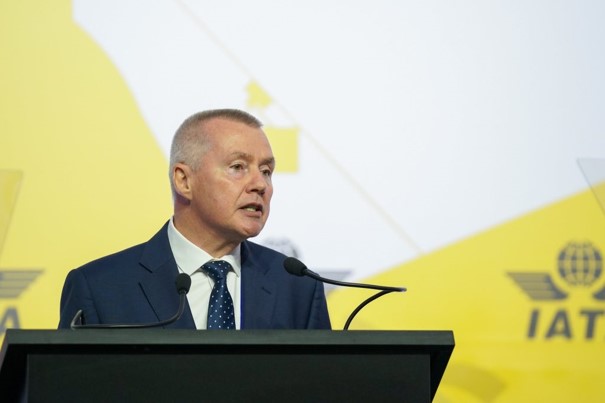
Willie Walsh presented his last monthly cargo figures before stepping down as IATA Chief and becoming CEO of Indian carrier Indigo – photo: credit IATA
8.9% down
Carriers in the Middle East, however, reported a combined contraction of 8.9% year-on-year as war-related impacts continued throughout most parts of May. Monthly data shows that this downward trend in air freight has been ongoing since 28FEB2026, following Operation “Epic Fury,” which Trump had authorized the day before. It was a massive attack in which more than 1,000 targets in Iran were bombed and shelled in the first 24 hours. The mullah regime responded with drone attacks on targets in the Middle East, also hitting airports in Dubai, Kuwait, and Bahrain. So it’s no wonder that the crisis in the Gulf region quickly began to affect the air freight business of local carriers. According to IATA, tonnage on the Europe–Middle East route plummeted by 19.8% between 01MAR26 and 31MAY26. On the Middle East–Asia route, the decline was 16.5%. This benefited Air France-KLM Cargo, Lufthansa Cargo, Singapore Airlines Cargo, and ANA Cargo – to name just four players – whose volumes increased significantly during the period in question.
Favorable global cargo climate
Aside from the weakness of Emirates Cargo and its Gulf peers, May offered a favorable outlook for the majority of cargo airlines. Global trade increased by 5.0% year-on-year, extending 25 months of consecutive annual growth. The Global Manufacturing Output Purchasing Managers’ Index (PMI) rose to 53.5, while the New Export Orders Index remained below the 50-mark at 49.6, suggesting that air cargo growth was driven by specific trade flows rather than a broad-based increase in global exports. “May’s strong performance coupled with macro-economic factors give cautious optimism for air cargo’s prospects over the remainder of the year. Trade and manufacturing output are both growing. Airlines have adapted operations to align with shifting demand patterns and supply chain needs. Meanwhile, yield growth and higher load factors are helping to recoup higher fuel costs. It’s still a tough year, particularly as Middle East uncertainties weigh heavily on parts of the industry, but robust demand and airline resilience are clear,” said Willie Walsh, IATA’s Director General.
Walsh goes, but who comes?
It was the last monthly freight report he presented and commented on. On 30JUN26, he will step down from IAATA’s top deck to take over as CEO of the Indian low-cost carrier Indigo one day after. However, his successor will have to tackle similar challenges to those Walsh had already on his agenda: transitioning aviation from the carbon era to a clean future, improving the industry’s profitability, and reducing the financial burden caused by ever-increasing government taxes and bureaucratic regulations.
There is a new name in the aviation industry ever since the transport logistic/Air Cargo China event, last month – and one with a mission to bring about a ‘new era in aircraft chartering and leasing’ and ‘become the most trusted and agile charter partner in the market, redefining how charter capacity is sourced, managed, and delivered through expertise, technology, and global reach,’ according to its Managing Director, Emir Ozdabak. CharterDesk is a full-service charter partner, based in Hungary, offering tailored air cargo, passenger, private jet charters and ACMI/leasing solutions for customers worldwide. CargoForwarder Global (CFG) wanted to know more from Emir Ozdabak (EO) about what gave rise to the launch of CharterDesk, how it operates and who the person behind the business is.
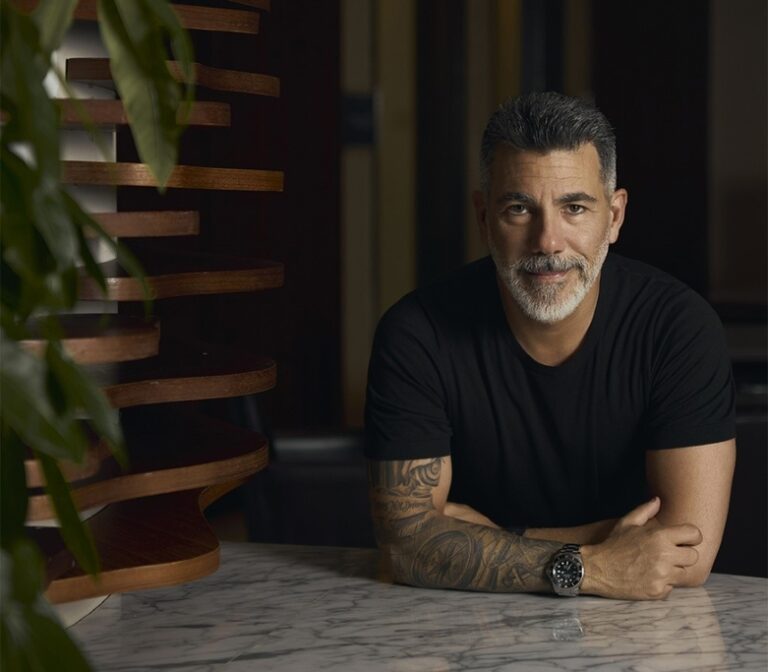
Bringing structure and quality to aircraft chartering. Image: CharterDesk
CFG: How was the CharterDesk launch accepted by the industry at Air Cargo China?
EO: Air Cargo China provided the ideal platform to introduce CharterDesk to the international air cargo community, and the response was extremely encouraging. We held valuable discussions with airlines, freight forwarders, charter specialists and logistics professionals, giving us the opportunity to reconnect with established contacts while building relationships with new industry stakeholders. These conversations also provided important insight into the evolving requirements of the global air cargo and aviation market. Launching CharterDesk at the event allowed us to clearly present our value proposition: senior-level expertise, tailor-made solutions, access to a diversified global network of operators, and a single accountable point of contact throughout the entire charter process, from the initial enquiry to final delivery. The positive reception confirmed that there is strong demand for a more personal, transparent and hands-on approach to air charter.
CFG: What gave you the idea to launch CharterDesk?
EO: The idea behind CharterDesk was shaped by more than 25 years of experience across ground handling, airline planning, charter brokerage and GSA operations. Throughout that time, one trend became increasingly clear: clients want solutions that are tailored to their specific requirements, supported by responsive communication and genuine senior-level attention. In larger organizations, heavy workloads, multiple internal handovers and junior-led enquiry processes can sometimes make it difficult to provide that level of focus. CharterDesk was created to set a new standard. Every enquiry is handled with the bespoke, hands-on attention it deserves, supported by experienced professionals who understand both the commercial and operational realities of aviation. Our objective is to simplify a charter process that can often appear slow, opaque and fragmented. By providing clear communication, carefully sourced options and one accountable point of contact, we aim to make chartering faster, more transparent and easier for our clients.
CFG: Are there enough aircraft to go around, particularly in cargo? How will CharterDesk stand out?
EO: Standard widebody freighter capacity remains available in the global market, but access can quickly become constrained by fleet shortages, geopolitical disruption, maintenance requirements and changing airline network priorities. Genuine outsize and super-heavy capacity is considerably more limited, with a relatively small, ageing and fragmented global fleet. At the same time, demand continues to grow across sectors including infrastructure, energy, mining, defense, humanitarian relief and project logistics. This makes strong operator relationships, market visibility and rapid sourcing increasingly important. CharterDesk works across the full freighter spectrum, from B737F and B757F aircraft through to B767F, B777F, A330F, B747F and An-124-class solutions. This enables us to assess each requirement independently and identify the most appropriate aircraft based on payload, dimensions, routing, availability and cost. Our differentiation lies in our diversified global operator network, rigorous supplier vetting, structured and data-driven sourcing, fast response times and senior-level involvement. Clients also benefit from one accountable point of contact and 24/7 operational support. By combining long-term operator relationships with disciplined sourcing and hands-on management, CharterDesk is positioned to secure dependable solutions even in complex or capacity-constrained markets.
CFG: Why was Hungary chosen as the business base?
EO: Hungary provides CharterDesk with a strategically valuable base at the heart of Europe. Its central European location and strong international connectivity offer direct access to major European markets and a broad network of aircraft operators, airlines and logistics partners. As a member of the European Union, Hungary also places CharterDesk within the EU’s established legal and regulatory framework. The location supports both our European activities and our wider international reach. From Hungary, we are well positioned to serve clients and manage charter operations across Europe, the Middle East, Asia, the Americas and Africa.
CFG: Is there a focus on sustainability within CharterDesk?
EO: We take a pragmatic and responsible approach to sustainability. While air charter has an environmental impact, we believe there are meaningful opportunities to reduce it through careful planning, efficient aircraft selection and collaboration with forward-thinking operators. One of the most significant factors within our control is right-sizing. By matching the correct aircraft to the payload, dimensions and routing, we can help clients avoid unnecessarily large or half-empty aircraft. This can reduce both operating costs and environmental footprint. We also focus on efficient routings, minimizing unnecessary positioning sectors and, where commercially and operationally appropriate, favoring operators with newer and more fuel-efficient fleets. As part of our tailored approach, CharterDesk can also support clients by sourcing SAF-capable operators and assisting with carbon offsetting, emissions reporting and other environmental requirements. Our role is to help clients balance operational urgency, commercial considerations and environmental responsibility, while ensuring that every charter is planned as efficiently as circumstances allow.
CFG: Do you foresee AI supporting CharterDesk’s operations in the future?
EO: Yes. Technology is already an important part of the CharterDesk operating model through structured internal systems, organized operator data and carefully managed pipeline tracking. AI and automation have the potential to support areas such as searches, pricing references, documentation and routine administration. Used correctly, these tools can make repetitive processes faster, more consistent and more efficient, allowing brokers to dedicate more time to clients and complex operational requirements. However, air charter remains a relationship-led and experience-driven business. Human expertise is essential when assessing operators, interpreting market intelligence, negotiating solutions and managing client expectations. Experienced brokers are particularly important when dealing with complex routings, permits, dangerous goods, outsize cargo, short-notice requirements and irregular operations. These situations require judgement, creativity and trusted industry relationships, not simply automated results. The CharterDesk approach combines intelligent technology with senior human expertise, enhancing speed, structure and efficiency while ensuring that judgement, relationships and complex problem-solving remain in the hands of experienced professionals.
CFG: Who is Emir Ozdabak outside CharterDesk?
EO: Aviation is more than a career for me; it is a genuine passion. After more than 25 years in the industry, I remain as enthusiastic about aviation as I was when I first started. Outside the business, one of my greatest passions is motorcycling. I own a Harley-Davidson CVO Road Glide and particularly enjoy touring foreign countries and experiencing the freedom of the open road. I am also a major sports fan, particularly football and basketball, and a devoted supporter of Fenerbahçe. Animals are another important part of my life, and I have a genuine affection for animals and pets of all kinds. I also love nature and the sea and have always enjoyed scuba diving, although the demands of business mean I do not have as much time for it as I once did. These days, my favorite escape is getting on the Harley, travelling with friends and discovering new places. It provides the perfect balance to the fast-paced and demanding world of aviation.
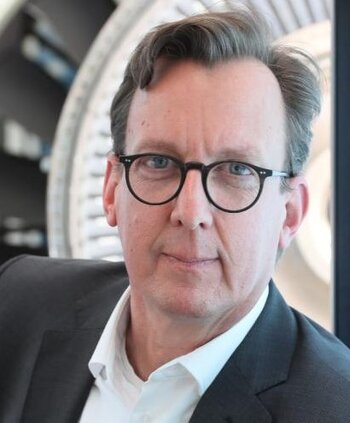
Both companies plan to build hydrogen-powered aircraft turbines. For this purpose, they have established a joint venture that is scheduled to begin operations in 2027. Airbus is thus building on its plans announced 2020 to develop a zero-emission, hydrogen-powered aircraft – dubbed ZEROe – and bring it to market by 2035. However, the aircraft manufacturer postponed the project in 2025 without specifying a new target date for an H2 aircraft. Through the frame maker’s collaboration with partner MTU, the project is experiencing a renaissance.
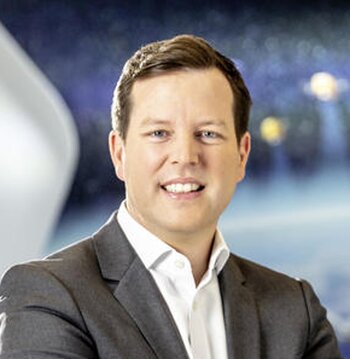
Bruno Fichefeux, courtesy of Airbus
The joint venture is driven by the partners’ shared ambition to achieve global technological leadership in this field and provide the first hydrogen-based fuel cell propulsion system to a commercial aircraft. The foundation for this was laid at the 2025 Paris Air Show, where the companies signed a memorandum of understanding (MoU). The MoU outlined the company’s ambitions to pool Airbus’ extensive commercial aircraft program knowledge, significant fuel cell propulsion and liquid hydrogen expertise with MTU’s multi-year fuel cell technology development and its recognized engine design, integration, validation and certification as well as maintenance expertise.
FFC will become a trailblazer also for long-haul flights For years, MTU has been a leader in developing propulsion concepts to reduce the climate impact of greenhouse gas emissions in commercial aviation. Their Flying Fuel Cell (FFC) was initially set to be deployed on short-haul routes in regional air traffic. However, as its efficiency improves, the FFC will expand to short- and medium-haul ranges within the next two decades.
The FFC does not produce any emissions of CO2 or NOx or particulates – its sole emission is water. Aircraft emissions of NOx have a relatively strong effect on the production of ozone (O3), a critical greenhouse gas. One potential option is to reduce flight altitudes of commercial aircraft – or H2 powered jetliners as now intended by Airbus and Aero Engines. This is confirmed by Bruno Fichefeux, Head of Future Programs at Airbus:
Stefan Weber, MTU Aero Engines, credit: MTU
“Our planned joint venture is the next logical step in our shared vision of a hydrogen-based propulsion concept for aviation. By pooling our respective technology and expertise into a dedicated entity, we are establishing a European powerhouse capable of transforming advanced research into industrialized, certifiable electric propulsion systems. This new company will help secure strategic sovereignty in the next generation of aviation technologies while strengthening our ability to achieve the long-term ZEROe ambition,” the executive states.
On way to carbon neutral aviation Both partner’s overarching aim is to pave the way for a newly developed, safe, reliable and economical propulsion system that will contribute to climate-neutral aviation. “This project is a crucial milestone on our path to the first hydrogen-powered engine – and this is true European technology leadership. To that end, we want to create a company that covers the entire life cycle of fuel cell powertrains – from development and testing through certification to commercialization,” remarked Stefan Weber, SVP Engineering and Technology at MTU Aero Engines.
Beyond the engine technologies, Airbus and MTU will continue to foster the emergence of a hydrogen aviation economy and the associated regulatory framework, which are also critical enablers to the advent of hydrogen-powered flight at scale.
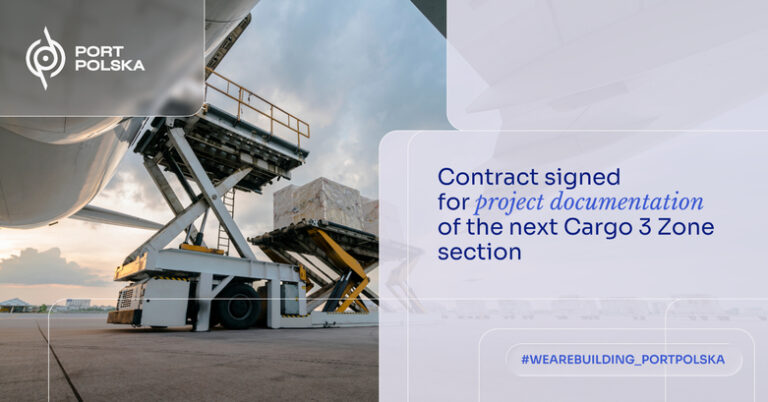
Port Polska’s cargo zone will be in operation by end 2031. Image: CPK
The new Polish airport’s first two cargo projects were mentioned in last week’s CargoForwarder Global article (https://cargoforwarder.eu/2026/06/28/polands-port-polska-plans-are-progressing/). Now Centralny Port Komunikacyjny (CPK), the company delivering the Port Polska investment program, announced that Industria Project has been contracted to design the Cargo 3 area of airport’s cargo zone. “The Cargo 3 project covers the development of a complex of facilities, together with supporting infrastructure, for a ground handling agent responsible for the comprehensive handling of cargo operations on the airport apron, including both export and import freight,” the press release states, revealing the net contract value of PLN 7 million/EUR 1.6 million, and explaining that “the design work for the cargo zone has been divided into three packages to reflect the scale of the project and the differing characteristics of the planned infrastructure. In line with the project schedule, the cargo facilities are expected to be ready for operation by the end of 2031.”
The cargo zones Cargo 1, 2, and 3 should be ready in 5 years’ time and will be designed in such a way as to allow for expansion in the future. Cargo 3 will be located in the central-western area of the airport, next to the air and landside zones for easy access from aircraft to delivery and vice versa. The cargo transfer facility will include a modern, efficient and secure warehouse allowing for transshipment and handling operations, as well as goods inspection and custom clearance.
All the big fish in air freight will be there. Image: Meantime Communications
On 12OCT26, seafood exporters, airlines, airports, freight forwarders, logistics providers, and supply chain specialists will descend upon Oslo, Norway, to attend the Air Cargo Seafood Forum 2026 and discuss the future of seafood air logistics. Organized by Euroavia International, the biennial conference is due to take place at the Quality Airport Hotel Gardermoen. The event comes at a time when growing global demand for fresh seafood is increasing pressure on supply chains to become more resilient, transparent, sustainable, and digitally enabled. Topics on the agenda include cold chain management, market developments, capacity constraints, digitalization, automation, artificial intelligence, and the role of air cargo in maintaining product quality and speed to market. Norway’s position as one of the world’s leading seafood exporters makes Oslo a fitting host city: according to Norwegian Seafood Council data, the country exported around 2.8 million tons of seafood worth NOK 180 billion last year, while Euroavia estimates that salmon flown from Norway reached around 160,000 chargeable tons between JAN-MAY26.
Lars-Gunnar Comén, Managing Director of Euroavia International, said: “The Air Cargo Seafood Forum has become an important meeting place for the seafood and air cargo industries. As a bi-annual event, it offers a unique opportunity for industry professionals to meet, share insights and discuss the latest developments shaping seafood logistics worldwide. [In recent years:] we have seen growing demand for supply chain transparency, increased use of digital tools, evolving trade patterns and a stronger focus on resilience and operational efficiency. The industry continues to adapt to changing market conditions while maintaining the high standards required for transporting fresh seafood. [Digital] technologies will help improve visibility, planning and decision-making across the supply chain [and] have the potential to increase efficiency, reduce waste and provide better control over the movement of time-sensitive products such as seafood. We are seeing progress in areas such as more efficient logistics planning, improved packaging solutions, greater transparency and initiatives aimed at reducing environmental impact while maintaining product quality and operational performance. Norway is one of the world’s leading seafood exporters and a global benchmark for quality, innovation and sustainability. Its seafood reaches markets across the world, making efficient logistics and air cargo connectivity essential to maintaining product freshness and value.”
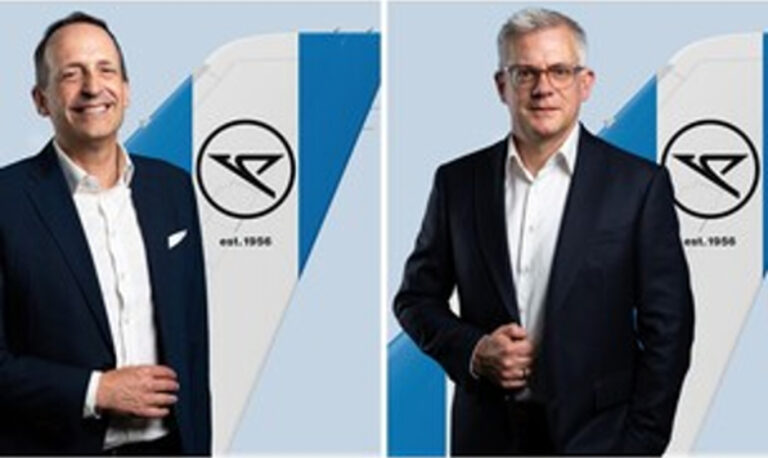
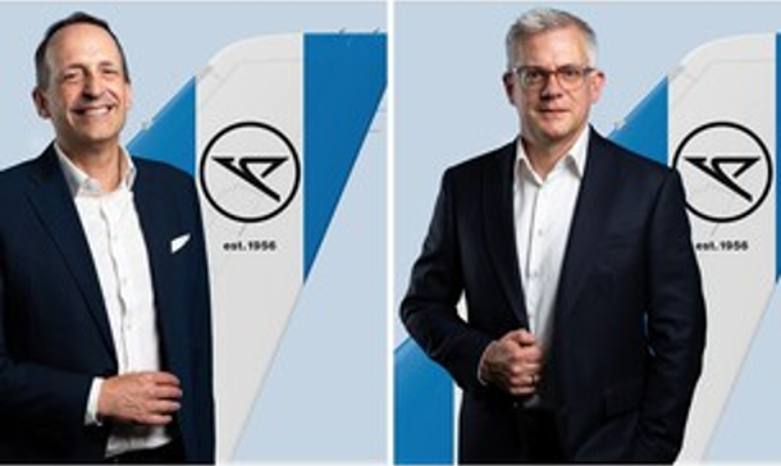
Dr. Pierre Dominique Prümm (left) and Dag Jessel. Image: Condor
Condor has published its new executive board effective 01AUG26, made up of Dr. Pierre Dominique Prümm as its new Chief Commercial Office (CCO), and new Chief Financial Officer (CFO – succeeding Björn Walther, who held the position since JUN22 and has left the company at his own request) Dag Jessel, alongside CEO, Peter Gerber, Christian Schmitt (COO), and Heiko Holm (CTO).
Peter Gerber, CEO of Condor, stated: “As Condor continues to evolve into a network airline through the expansion of its city network, the requirements for commercial management, coordination and strategic development are increasing significantly. For this reason, we decided to create the new position of Chief Commercial Officer. During the largest growth phase in Condor’s history, we are deliberately investing where additional management and decision-making capabilities can make a direct contribution to the success of our transformation. In addition to welcoming our new CCO, we are also pleased to welcome our new Chief Financial Officer. With Dr. Pierre Dominique Prümm and Dag Jessel, two highly experienced executives will join Condor’s Executive Management Board. Both bring extensive leadership experience and a deep understanding of the challenges associated with transformation and growth. They will provide important momentum for our continued development. We would also like to sincerely thank our departing colleague Björn Walther for his outstanding commitment and exceptional dedication as CFO. Björn has played a key role in strengthening Condor financially and paving the way for the company’s independence. We wish him all the very best for his personal and professional future.”
Dr. Pierre Dominique Prümm, commented: “The transformation into a network airline opens up numerous new opportunities and economic prospects for Condor. I am therefore very much looking forward to contributing to Condor’s strategic development and helping shape the airline’s commercial future in this new role.” Dag Jessel stated: “Over the past several years, Condor has established the strategic foundations necessary to continue its structural and economic development. Driving this progress forward is a responsibility I am very pleased to take on. In addition, aviation has accompanied me since the beginning of my professional career and remains a great passion of mine to this day.”
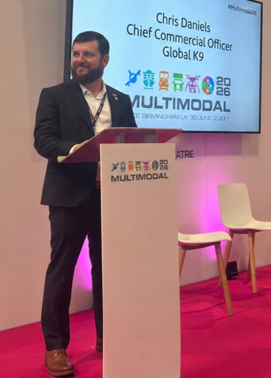
Chris Daniels, Global K9 CCO, urges UK regulators to update aerospace screening legislation. Image: Meantime Communications
Global K9 is calling on UK regulators to modernize aerospace cargo screening rules, arguing that current policy is adding unnecessary cost, emissions, and complexity to the air cargo supply chain. Speaking at Multimodal 2026 in Birmingham, Chief Commercial Officer, Chris Daniels said aircraft engines cannot currently be screened by certified canine teams in the UK, forcing shipments to be trucked to European airports such as Liège and Brussels, where this screening method is allowed. Once screened there, the cargo can then be accepted back into the UK as cleared freight. Global K9, which operates in the UK, Belgium, and the Netherlands and has Free Running Explosive Detection Dogs stationed at Heathrow, Gatwick, and Aberdeen, says a more collaborative approach between industry and regulators could maintain strong security while reducing cross-border transport. Daniels believes allowing certified canine screening for aircraft engines in the UK would improve efficiency, cut emissions, lower exporter costs, and strengthen the competitiveness of the country’s air cargo sector. Chris Daniels, Global K9’s (GK9) Chief Commercial Officer, shared: “Aerospace cargo in the UK currently goes on a costly and polluting detour. Despite canine screening for aircraft engines being adopted in other countries and supported by experienced screening providers, regulation has not yet caught up with operational capability. We need policy to reflect what is possible, and what is beneficial for the industry, while maintaining safety as the absolute priority. Logistics is one of the largest contributors to transport emissions. Where safe, secure alternatives exist that reduce unnecessary movements, we have a responsibility to explore them. Global K9 would welcome the opportunity to work alongside UK regulators to help deliver the safest, most effective, and most efficient cargo screening methods available.”


 2 JV" title="Airbus and MTU Aero Engines ink H