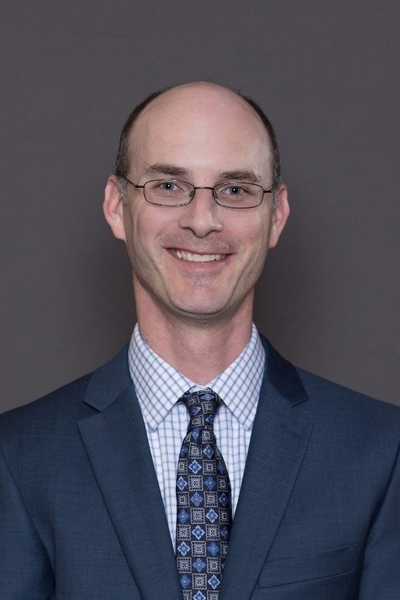
Zack Oakley, Executive Director, Chicago Rockford International Airport. Image: Meantime Communications
Chicago Rockford International Airport (RFD) is literally up and coming, having recently risen from 14th to 12th position in FAA’s newest ranking of U.S. cargo airports. This is the best result it has ever entertained thus far in the listing which evaluates U.S. airports according to their landed cargo weight. The airport states that this record ranking reflects the growing demand its efficient, flexible cargo operations – as demonstrated by the 3,433,741,432 lbs (1.56 million metric tons) of landed cargo weight in 2025. This was a 9.21% increase on its 3,144,024,639 lbs of landed weight in 2024. And 2026 may prove even more promising given the recent expansion of the airport’s partnership with DSV (CFG reported: https://cargoforwarder.eu/2026/06/28/rockford-and-dsv-launch-weekly-lux-rfd-service/), which will see the introduction of new scheduled weekly service between Luxembourg and Rockford. Zack Oakley, Executive Director, Chicago Rockford International Airport, explained: “This latest FAA ranking reflects the continued confidence airlines, freight forwarders, and logistics providers place in Rockford. Our focus has always been on delivering an airport built around the needs of air cargo, and as volumes continue to grow, we’re committed to providing the operational reliability, efficiency, and flexibility that our customers depend on. Our customers benefit from an operating environment that allows them to move cargo faster and more efficiently. With around-the-clock operations, dedicated cargo teams, available capacity, and the ability to scale alongside our partners, we’re able to provide a level of service that is increasingly difficult to find elsewhere. As we strengthen our position as a global cargo gateway connecting Europe, Asia, and the Americas, we remain focused on creating long-term opportunities for our customers and supporting the continued growth of international trade through Rockford.”
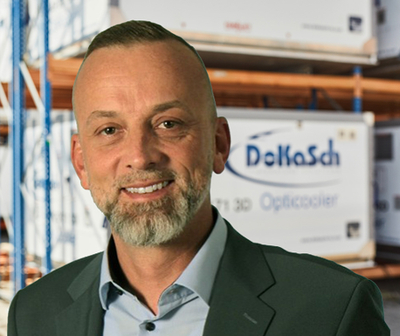
With effect 01JUL26, Kersten Drummer has been appointed Chief Commercial Officer (CCO) of DoKaSch Temperature Solutions. His responsibilities include commercial strategy, business development and key accounts. He reports to Managing Director, Andreas Seitz, and succeeds Edwin Visser, who takes on the position of Senior Vice President Strategic Alliances – also reporting to the Managing Director Andreas Seitz. This new role was created to strengthen DoKaSch’s further global strategy and growth. “Edwin Visser served with passion as CCO of DoKaSch Temperature Solutions for more than three years. We are grateful and appreciate that he will further dedicate his broad industry experience and network to DoKaSch in another important role,” the press release underlines.
“With more than 20 years’ experience in the air cargo industry, including over a decade dedicated to Life Sciences & Healthcare, and with in-depth expertise in the active container business, he brings a strong track record of connecting commercial strategy with operational execution. His background spans sales, product, and operations leadership, with a focus on building effective international teams and delivering results in complex environments,” the release continues.
Kersten Drummer, DoKaSch CCO, commented: “Logistics is ultimately a people-driven business, and consistency is what builds trust over time. Customers expect more than solutions; they rely on partners who stay close to their operations, anticipate challenges, and respond quickly when it matters most. My focus is on bringing teams together across regions, providing clear direction, and ensuring the consistent execution of our long-term strategy. Lasting partnerships are built on trust, reliability, and a shared commitment to delivering results every day.”
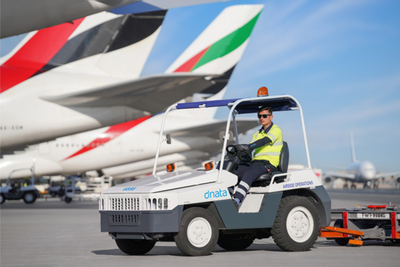
Securing ground handling at AMS for the next 7 years. Image: dnata
dnata has secured a new seven-year ground handling license at Amsterdam Airport Schiphol, following a competitive public tender. The global air and travel services provider can continue supporting airlines at one of Europe’s key aviation hubs, where it already delivers passenger, baggage, ramp, and cargo services for over 20 passenger and cargo carriers at Schiphol. There, dnata employs more than 1,200 people and handles around 16,000 flights and 500,000 tons of cargo each year. The renewed license strengthens dnata’s long-term position in Amsterdam and supports further investment in its local operations, including its EUR 70 million dnata Cargo City Amsterdam facility, which offers annual capacity of 600,000 tons. The company says it will continue working closely with Schiphol, airline customers, employees, and industry partners to ensure reliable, safe, and efficient operations during the next phase of the airport’s ground handling development.
Thiemo van Spellen, Managing Director, dnata Netherlands, commented: “We are proud to continue our ground handling operations at Amsterdam Schiphol. This award reflects the trust placed in our people, our operational capabilities and our commitment to delivering safe, reliable and consistent services for airlines and passengers. Schiphol is a critical hub in European aviation, and this is an important moment for the airport’s ground handling community. We look forward to continuing our close collaboration with Schiphol, our airline customers, employees, unions and industry partners as the airport enters its next phase. Together, we remain focused on supporting smooth operations, high service standards and a resilient operating environment.”
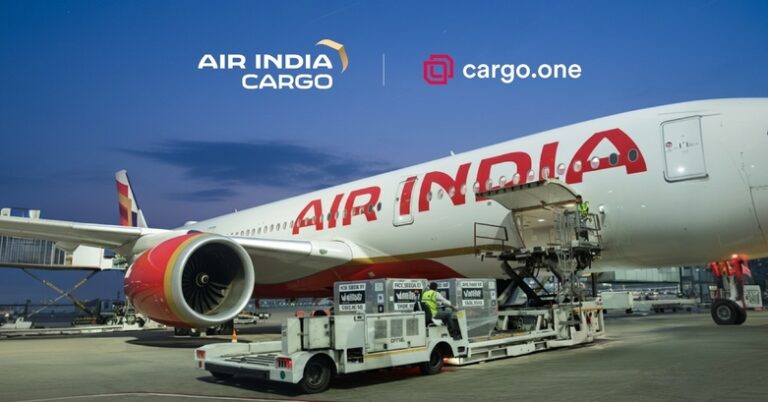
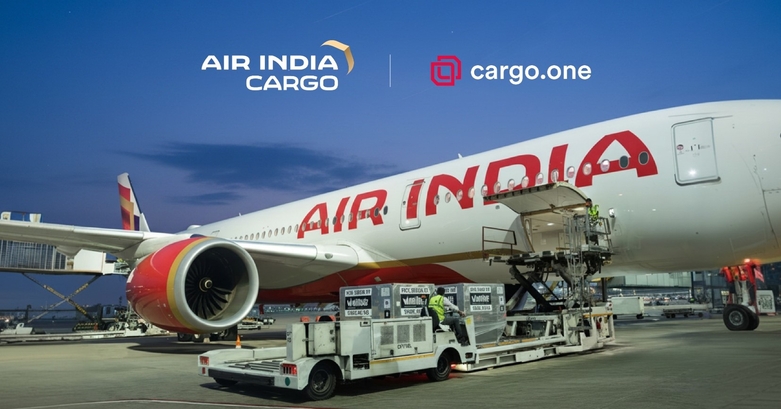
Already live and bookable on cargo.one. Image: cargo.one
Air India Cargo has taken a significant step in its digital sales strategy by partnering with cargo.one – the first digital channel it has chosen to collaborate with. This makes its capacity available for real-time quoting and self-service booking through the platform. The collaboration gives the thousands of freight forwarders using the digital platform, faster access to the airline’s global cargo network, including key routes from India/South Asia to major international gateways, while supporting the airline’s wider transformation and growth plans. Air India operates cargo services out of its hubs in Delhi, Mumbai and Bengaluru.
cargo.one users can already browse, quote and book general cargo up to 2500 kg on Air India’s international services between destinations in India and global gateways such as Frankfurt, Amsterdam, Zurich, New York, San Francisco, and Tokyo. This latest move by Air India is part of its major expansion strategy that includes upgrading and extending its fleet with 600 new aircraft in the coming years. cargo.one intends to support the airline in its growth plans by facilitating access to its capacity.
Ramesh Mamidala, Head of Cargo at Air India Cargo, said: “As Air India continues its transformation journey, enhancing digital capabilities and customer experience remains a key focus for our cargo business. Our partnership with cargo.one expands the digital accessibility of Air India’s cargo network and capacity to freight forwarders worldwide, enabling faster, more seamless booking experiences and improving ease of doing business across markets. This collaboration will help us strengthen our commercial reach while offering customers greater convenience, agility and efficiency.” Moritz Claussen, Founder & Co-CEO of cargo.one, enthused: “It is tremendously exciting to bring Air India Cargo’s significant capacity to our thriving global customer base. As forwarders apply agentic AI for optimized decision making, quoting and booking, it is imperative that carriers like Air India Cargo have their capacity fully integrated into these modern operating methods, particularly within large global forwarders who power their procurement and sales at scale with cargo.one.”
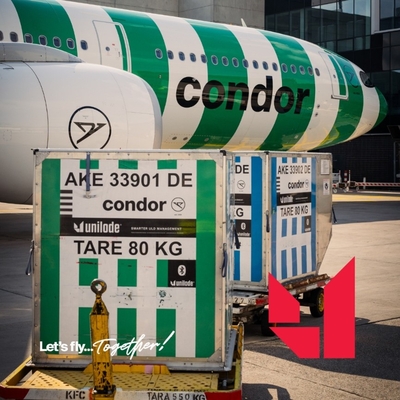
Happy with the first five years of partnership (the first partnership agreement was signed in MAR21), Unilode Aviation Solutions and Condor have renewed their contract – possibly for another 5 years – the press release does not disclose the details. It is a Full ULD Management renewal which means that Unilode will continue to support the airline with ULD provision in close accompaniment increasingly intelligent digital solutions, tracking capabilities and data-driven insights that help improve ULD performance.
Janis Balkens, Chief Operations Officer at Unilode Aviation Solutions, revealed: “We are proud to continue our partnership with Condor. This has been built on a strong foundation of trust and shared success. This renewal reflects the confidence in our ability to deliver reliable, high-quality ULD management services, while also supporting Condor’s future ambitions. Together, we look forward to further strengthening our collaboration, driving innovation through our digital solutions, and enabling continued growth.”
Dimitri Mougoyannis, Director Ground Operations, said: “Reliable ULD management is an essential part of efficient ground operations, particularly as Condor continues to grow its fleet and network. Unilode has been a trusted partner, consistently delivering high operational standards and tailored solutions to support our operational requirements. We are pleased to extend this partnership and continue working together to further strengthen the efficiency and reliability of our operations.”
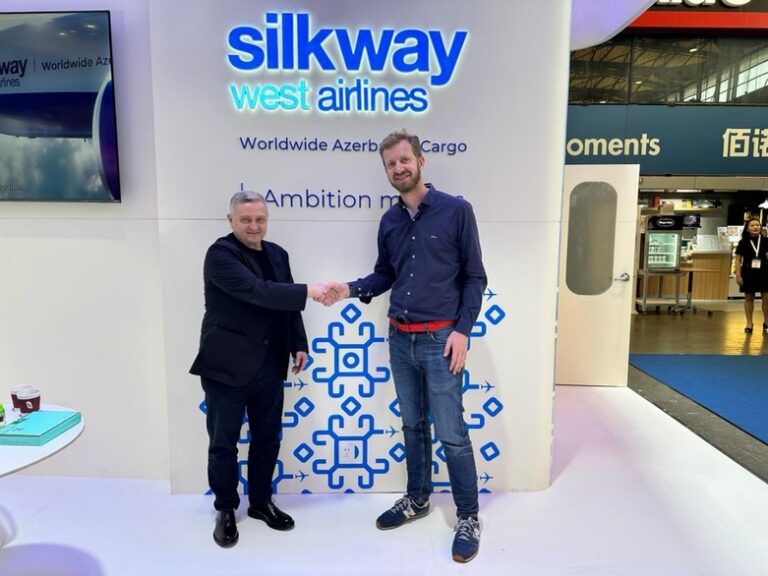
Wolfgang Meier and Matt Petot seal the deal in China. Image: CargoAi
Wolfgang Meier, President of Silk Way West Airlines, and Matthieu Petot, Founder and CEO of CargoAi used the backdrop of the Air Cargo China 2026 in Shanghai, to sign a partnership agreement that will see the airline plug its freighter capacity into CargoAi’s platform, giving freight forwarders around the world easier visibility into available rates and space. Booking directly through the platform is not yet live, but planned as a future phase.
The move is part of Silk Way West’s push to modernize how it does business — making its widebody freighter network (operating out of Baku to Europe, Asia, the Middle East, and the Americas) more accessible and transparent for customers through digital tools, rather than relying solely on traditional booking channels. Both companies frame it as a step toward broader digitalization of the air cargo industry as a whole.
Wolfgang Meier, President of Silk Way West Airlines, stated: “Partnering with CargoAi represents an important step in our digital transformation journey. By expanding our digital booking capabilities, we aim to offer freight forwarders greater visibility, faster access to capacity and a more seamless experience when connecting with Silk Way West Airlines across our global network. This collaboration reflects our commitment to embracing innovative solutions that create additional value for our customers and support the continued development of the air cargo industry.”
Matthieu Petot, Founder and CEO of CargoAi, commented: “We are pleased to welcome Silk Way West Airlines to the CargoAi digital ecosystem. Its extensive global network and dedicated widebody freighter capacity will provide freight forwarders with broader access to reliable cargo solutions. We look forward to supporting Silk Way West Airlines in making its services increasingly efficient, transparent and digitally accessible to customers worldwide.”
Electric trucks are still a rare species on European highways. However, latest developments show that, following rising sales of e-cars, operating electric trucks is also becoming an issue for an increasing number of forwarding agents.
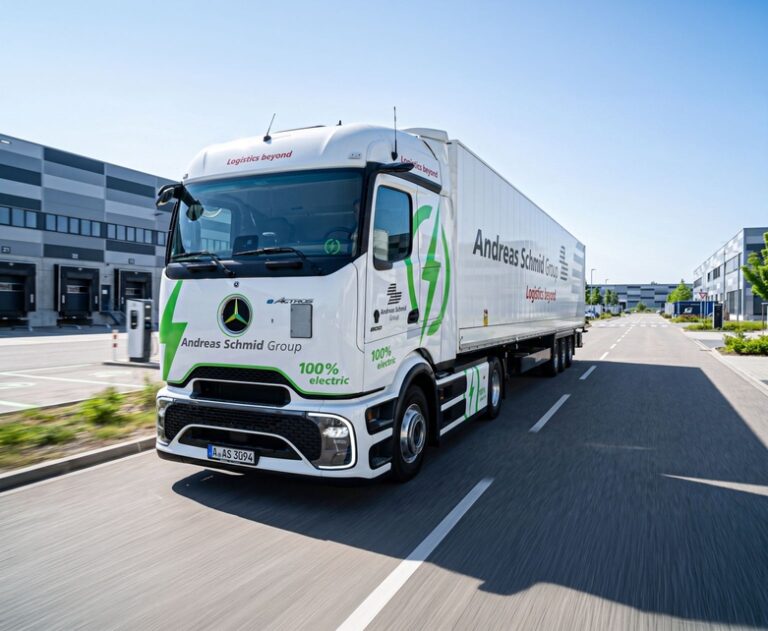
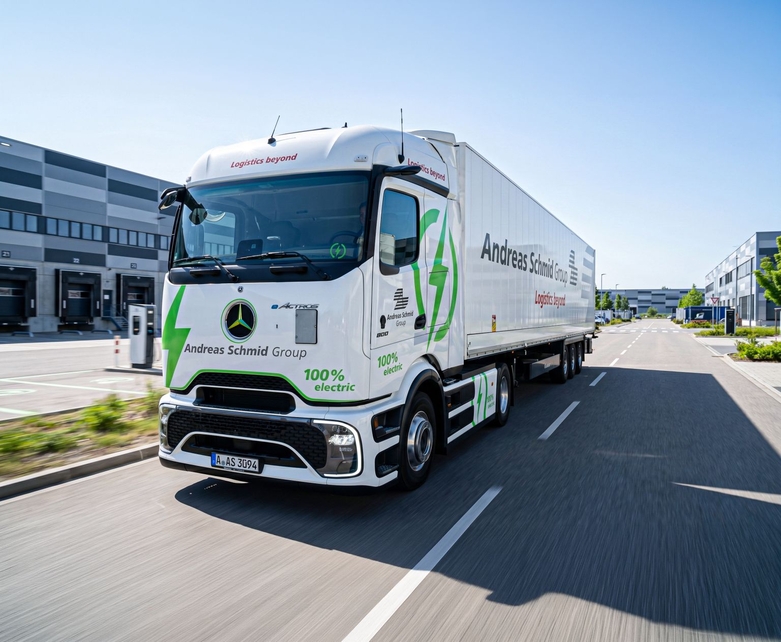
Latest example is the Andreas Schmidt Group from southern Germany. It has obtained two fully electric Mercedes-Benz eActros 600 trucks which they deploy on a route linking their headquarters near Augsburg in Bavaria and its hub in Neuenstein, Hesse. Both locations are 400 km aside, so as round trip adds to 800 km.
This is an ideal distance for electric vehicles, which, according to the manufacturer Mercedes, have a nonstop range of 500 km when fully charged. According to Managing Director, Konrad Wenninger, of the Andreas Schmidt Group, the vehicles are used for nighttime transport. He cites the government’s decision to stop imposing road fees for low-emission trucks as a key prerequisite, upping the attractiveness of e-mobility for the transport industry. The new regulation is in effect since fall 2025 and runs out on 30JUN2031. A timeframe that gives his company planning certainty when calculating operating costs.
Two Mercedes e-Actros are in service, five more are to come, confirms management of the Andreas Schmidt Group. Company courtesy
While electric trucks are significantly more expensive when buying than diesel vehicles – Wenninger cites price differences ranging from 120,000 to 300,000 or 400,000 euros per vehicle, depending on the manufacturer – they are already competitive in comparison when surpassing a driving distance of 12,000 km. Calculations have shown that on long-haul routes, the total cost per kilometer for electric trucks is 1.08 euros, compared to 1.21 euros for diesel trucks. However, the diesel costs are meanwhile significantly higher due to the general rise in fossil fuel prices caused by the price hike for crude oil following the total or partial closure of the Strait of Hormuz.
“The key question is no longer whether electric trucks work from a technical standpoint. The key question is where they can be used reliably and in a way that makes economic sense,” says Thomas Schledorn, CEO of the Andreas Schmid Group. “On specific long-haul routes, such as our night route from Gersthofen to Neuenstein in Hesse, we can now demonstrate that electric mobility in heavy-duty transport is predictable, practical, and increasingly economical.” As of the end of last year, road fees accounted for about a quarter of operating costs, says his colleague Wenninger. This cost burden is now a thing of the past.
However, a big stumbling block remains: The limited charging infrastructure along highways and major roads. It needs to be expanded rapidly to motivate forwarding agents to switch from diesel to e-trucks, manager Wenninger urges.
Meanwhile, the IDS Logistik Alliance has set up its own charging network by allowing its members to use all stations belonging to the club, which includes players such as the Andreas Schmidt Group, Kuehne + Nagel, the Geis Group, the Rieck Logistik and some other contenders. This network of charging stations significantly expands the operational possibilities of their electric truck fleets.
Although the transport of general cargo is the group’s core business, it is also active in air and ocean freight. However, of the 160 million euros in annual revenue, only 5 million come from air and ocean freight, says Manager Wenninger. His group primarily offers customized solutions to its customers. “Whenever one of our customers needs a special service in the area of air or ocean freight, we’re there to help,” says Wenninger. A dedicated business unit is responsible for this, serving as the central hub. As far as air freight is concerned, 70% of all the Group’s shipments are handled through Munich Airport, and 30% are processed through Frankfurt. For ocean freight shipments, the Andreas Schmidt Group uses the North Sea ports of Antwerp, Rotterdam, Bremerhaven, and Hamburg, as well as Genoa and Trieste for short-sea transport.
In total, the group operates 120 trucks and employs around 200 drivers. In addition to the two eActros 600s, the investment plan for the current year includes the purchase of five additional electric trucks.
The World Bank has bid farewell to its Lead Air Transport Specialist, Dr. Charles Schlumberger. After 27 years with the financial institution, he left on 01JUL26, to become head of the Guatemalan project developer, consulting firm, and agribusiness, Grupo Integral Basilea S.A. Symbolically, it is a leap from the lofty heights of the UN affiliate to the branches of Central American coffee bushes.
With Schlumberger’s departure, the World Bank loses one of its most profiled experts in air transportation and logistics. When he started his career in the late 1990s, there was no dedicated air transport practice at the World Bank. “Building and developing it into a recognized area of development work has been one of the great privileges of my professional life,” he says in retrospect, in a farewell letter to the staff and members of the press who have been in constant or occasional professional contact with him.
Welcome to Guatemala! Photo: CFG/hs
The World Bank relies on efficient cargo services
In SEP22, the Swiss-born executive illustrated the practical role that air freight plays for the World Bank in a presentation to members of the Frankfurt Air Cargo Community and the press. Without reliable and fast air freight transport of machinery, equipment, or instruments, some of the projects funded by the World Bank – such as infrastructure developments in Africa or Central Asia, as well as improvements to the water supply for people in arid regions – would come to a standstill. In this regard, the UN subsidiary has set a goal of creating a network by 2030, to ensure a secure supply of potable water for 400 million people in areas that are currently underserved. Without a network of functioning supply chains spanning continents, such projects would not be possible.
A multitude of projects
In the aviation sector in particular, the modernization of airport infrastructure is a key focus of the financial institute. For example, it funds a program enhancing the safety, security, and operational reliability of Rurrenabaque Airport (RBQ) in Bolivia. This regional hub, equipped with two runways, is located in the northwest of the country and provides passenger and cargo connectivity to other parts of the Andean state.
In Africa, one of the World Bank’s top goals is the decarbonization of the aviation sector through the scaleup of Sustainable Aviation Fuels. The initiative comprises three key components: (1) scoping SAF development opportunities and conducting deep-dives in selected countries using a robust screening methodology; (2) engaging stakeholders and building partnerships, particularly through support to ICAO’s net-zero goal and capacity-building platforms; and (3) assessing and bridging financing gaps, exploring both traditional and innovative mechanisms to mobilize investment in SAF infrastructure and policies.
A third example among many, illustrating Schlumberger’s world-spanning projects, is the modernization of Tajikistan’s aviation sector. There, the World Bank finances parts of the country’s reform agenda aimed at transitioning air traffic to an Open Skies regime. Building on a preceding diagnostic, this final phase focuses on liberalizing the market and enhancing sector performance through targeted reforms.
Taking a coffee break in Guatemala
Charles Schlumberger will monitor the results of this and many other World Bank programs in the aviation sector – which he has overseen or helped launch – from his office in Guatemala City, “where I will take over the management of Grupo Integral Basilea S.A., a company active in sustainable agriculture, tourism, and advisory services. While I may spend a bit more time around coffee plants than airports, I intend to remain professionally engaged and will continue to provide advice and support on aviation, connectivity, infrastructure, and development issues, whenever opportunities arise. After all, once aviation gets into your bloodstream, there is no known cure.” Christopher J. De Serio will succeed him as head of the World Bank’s Air Transport Team. Chris holds an MA in Transportation Policy, Operations and Logistics from George Mason University, Virginia and a BA in Political Science from Clemson University, South Carolina. So “the World Bank’s aircraft remains safely airborne, the flight plan is filed, and a highly qualified pilot is taking over control,” is stated in the last sentence of Schlumberger’s farewell letter.
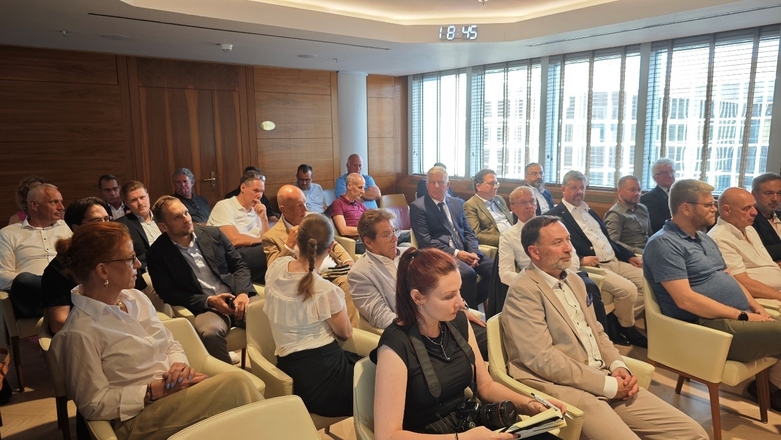
The topic presented by the Air Cargo Club Deutschland (ACD) sounded promising: “The Current Status of Road Feeder Services (RFS) in Germany.” Three executives took to the podium and briefed the approximately 40 ACD members attending the event on the current situation. And this was the outcome in short: Technical innovation and perseverance threaten the future of RFS providers if they are not prepared to change their mindset soon and actively address fundamental challenges.
And those pressing issues are robotics, AI, electric and – at a later stage – autonomous driving: Topics that will determine the future of European RFS actors. In China, for example, or to some extent in California/USA, these issues are already increasingly shaping the processes of air cargo road transportation. Not so in Europe, where, in comparison, development is happening at a snail’s pace. If this does not change, Chinese e-trucks, software and data networks will set the pace, and increase European dependence on Beijing.
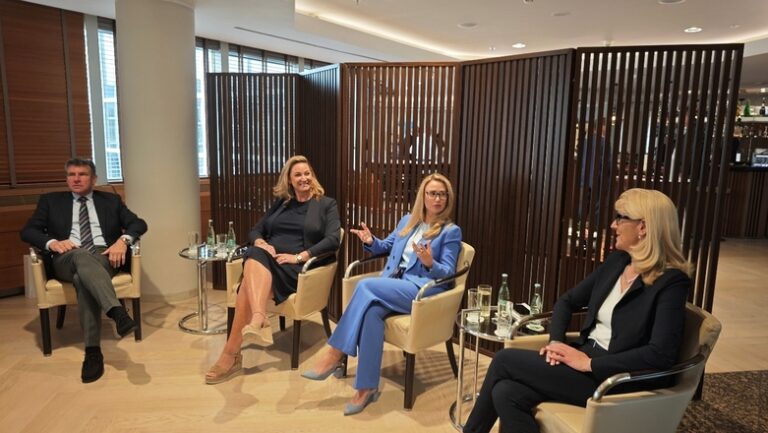
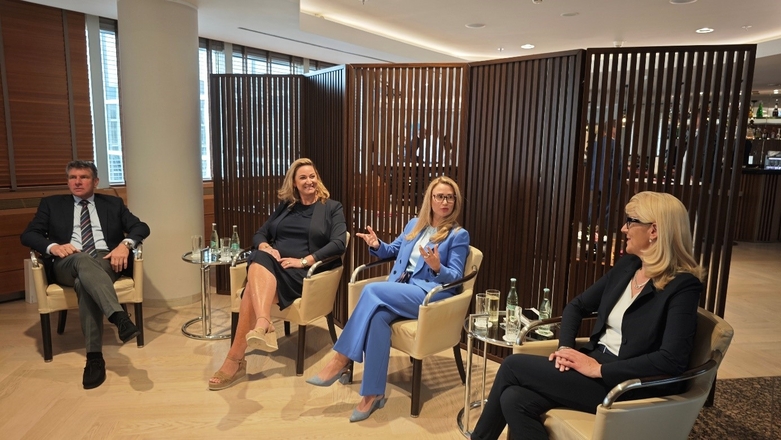
ACD panelists (l > r): Christopher Stoller, ACD, president / Sarah Scheibe, MD Total Cargo Expertise (TCE) / Nina Strippel, MD Wallenborn Germany & Poland / Christine Reischl, MD Georg Reischl Spedition. Far left: Christopher Stoller, ACD, president – photos: ACD
Major challenges, but few solutions
However, instead of tabling these pressing futuristic issues and presenting new concepts on how to deal with these challenges, the ACD discussion revolved around rising fuel prices, toll fees, bottlenecks in loading and handling processes, and the rapidly worsening shortage of truck drivers. “A big chance was missed,” resumed a participant following the event. One prominent topic for excessive government regulations discussed at the ACD meeting, was the so-called ‘gold-standard solutions’ favored by German authorities. This translates into 110% compliance with all government requirements, whether they come from Brussels or Berlin. “Why 110%? To my understanding 100% would suffice,” remarked Wallenborn executive, Nina Strippel.
The ACD’s event on RFS generated considerable interest.
Unlevel playing fields remain…
This referred to the use of explosives detection dogs (RAS) at airports and in freight terminals. In some EU countries, they are permitted to secure cargo, in others, not or to a very limited degree. Their deployment is particularly useful when screening reaches its technical limits. This includes large, dense, or airtight containers, liquids, powders, granules, or certain industrial goods. RAS dogs can detect whether explosives or drugs are contained within the packages. In Germany, however, where the ‘gold standard’ prevails, sniffer dogs may only be used under extremely limited conditions.
The situation is different in France, for example. This leads to the absurd situation wherein trucks from Berlin, Hamburg, or Nuremberg head to Strasbourg in France, where sniffer dogs secure the loads. Afterwards, the drivers return to Frankfurt, Düsseldorf, or Stuttgart to hand over the secured loads to their local airport handling partner. This is economic madness, the panelists criticized, since it is time-consuming and, due to the longer driving distance, increases the freight forwarders’ carbon footprint – not to mention, unnecessarily binds truck drivers in an industry struggling to cope with a growing lack of drivers.
Another obstacle holding the industry back is the issue of customs and data handling for consolidated air freight. Particularly with consolidated shipments, e-commerce, and shipment structures involving many house AWBs or individual shipments. Significant additional effort is required to reference, verify, and reconcile information in detail at the individual shipment level. In practice, this means more data reconciliations, more cases requiring clarification, more interface effort, and, in some cases, longer dwell and transit times. For time-sensitive air freight, this has a direct impact on a location’s attractiveness.
… although level playing fields are urgently required
Addressing the regulator, the panelists called for a level playing field within the EU, including external actors. Environmental requirements to decarbonize the transportation sector are one such issue. These regulations must be implemented and complied within all countries to prevent distortions of competition.
The EU must wake up. Its industry can no longer afford the current patchwork of regulations. Otherwise, it will fall further behind its aggressive international competitors, was a key takeaway from the evening, which also served as a call to action for policymakers.
“Europe is in the midst of a rapidly escalating economic and technical war initiated by the U.S. and China. But we still defend our interests with blunt weapons. The Romans were already more advanced 2,000 years ago, when they secured their empire over centuries very successfully,” one participant told CargoForwarder Global, summarizing his impressions of the ACD meeting after it concluded.
In summary
As things stand, the RFS issue receives little attention from the broader public. Given the outstanding economic significance of road feeder services in keeping supply chains running day in, day out, this is completely unjustified. Hence, closer cooperation among RFS industry stakeholders was a major claim voiced at the Frankfurt meeting. Another demand was the rapid formation of networks rather than siloed solutions, and a stronger media presence – aimed at specifically informing the general public about the industry’s importance for the daily availability of consumer goods and the air transport of key industrial products. Two major topics that were described as “highly desirable and worth being further developed at high speed in an alliance of like-minded players, including air carriers, ground handlers, forwarding agents, trucking firms, airport operators and customs authorities.”
The next ACD meeting will take place on 22SEP26, in Frankfurt. The topic will be: air freight and climate change.
Each week, CargoForwarder Global’s ‘Spotlight On…’ looks at a particular segment of the air cargo industry through the eyes of an individual working there. Freight forwarders are the logistics magicians of the industry, sourcing airline cargo capacity for a very varied range of shipper requirements and solving all the necessary steps from route planning to cargo consolidation, document and customs handling, to ensure timely, reliable delivery. By combining local market knowledge with global networks across Europe, Asia, the Americas and beyond, they help airlines optimize capacity utilization while giving shippers predictable transit times, compliance expertise, and a single point of contact for complex, cross‑border movements. João Mudo (JM), Airfreight Director, TIBA SMX Logistics, shares his responsibilities, views and advice.
The privilege of listening, exchanging ideas and learning. Image: João Mudo
CFG: What is your current function and company? And what are your responsibilities?
JM: I’m Airfreight Director at TIBA SMX Logistics, part of a Spanish group with more than 150 years of history and currently expanding its footprint across Latin America. In Brazil, our structure has been significantly strengthened with the acquisition of SMX Logistics – a young company that has grown rapidly over recent years and built a strong positioning, especially in ocean freight. Bringing this together with TIBA’s global platform, we aim to be recognized as one of the leading players in the LATAM market. My role is to build and develop the airfreight product – structuring teams, processes, and partnerships so we can deliver consistent solutions from origin to final destination. I oversee import and export operations at a national level, including Procurement, Pricing, Gateway, Operations, and Customer Service. A big part of my focus is also supporting growth across Latin America, paving the way for our regional sales teams to build tailored solutions for customers across diverse sectors – from standard cargo to complex shipments such as AOG, pharma, live animals, oversized projects and consolidated cargoes.
CFG: What does a normal day look like for you?
JM: Definitely there’s no such thing – and that’s exactly what makes our routines so interesting. One day, I’m working on internal improvements, systems, or team performance. The next, I might be with a customer in the Eje Cafetero (Colombia), developing a technical proposal and assessing the feasibility of moving a 15-meter self-propelled vehicle by air. At the same time, staying close to customers during my trips – through the privilege of listening, exchanging ideas, and learning from their local expertise – keeps every day dynamic and full of new discoveries.
CFG: How long have you been in the air cargo industry, and what brought you to it?
JM: I’m close to completing 28 years in the air cargo industry, and I’ve dedicated the past 14 years to developing sales initiatives and building strong partnerships with agents across the Americas, mainly in ECSA. I started at Viracopos Airport in Campinas – one of the world’s main cargo hubs and the perfect place to learn operations – where I built my foundation, first in road transport and then in customs brokerage, dealing with highly time-sensitive processes. Over time, I naturally moved into airfreight and was drawn to its dynamic and challenging environment. The combination of speed, complexity, and the need for customized solutions is something that truly connected with me. Building task-force teams for specific projects and developing new products also revealed capabilities I hadn’t fully recognized in myself at the beginning. What drives me today is solving problems – whether operational or strategic – and going deeper into understanding what the customer actually needs beyond the obvious.
CFG: What do you enjoy most about your job?
JM: I enjoy instigating my team – and myself – to deliver smooth and reliable operations, especially in complex scenarios. I strongly guide them on how to manage information through clear and refined communication. I encourage them to be agile and precise in their follow-ups, while staying pragmatic in their approach – not overcomplicating what is already complex in our day-to-day, which is constantly impacted by new variables. Although a large part of my time is spent traveling, in meetings, and at events, I also really value the time I spend at the office – interacting closely with the team, reinforcing our purpose, and keeping everyone aligned and focused on our deliveries – especially on the 10 weekly airfreight consolidation services we manage, which require balance, proactive and fast decision-making. And of course, customer (spontaneous) recognition is something we genuinely enjoy as part of our daily routine – it brings that personal sense of ‘mission accomplished’.
CFG: Where do you see the greatest challenges in our industry?
JM: In a world where predictability is one of the most valuable assets, information is our greatest ally. The real challenge lies in bringing together and aligning information from multiple stakeholders – airlines, authorities, partners, and specialized pricing and booking systems – into something reliable and actionable. We often hear colleagues across the industry saying that it’s no longer about being ready for ‘when’ but ‘where’ the next disruption will occur – whether regionally or globally. And that mindset is changing how we prepare ourselves. Technology, especially AI, is becoming a strong enabler of productivity. It allows teams to automate repetitive processes and tasks, and focus on what really matters: building relationships, strengthening networks, and deepening their knowledge across the logistics chain – all of which contribute to refining this very valuable asset: information. At the same time, having a strong local presence and trusted partners remains essential to understanding what is really happening on the ground and translating that into clear, transparent communication for customers.
CFG: What advice would you give to people looking to get into the air cargo industry?
JM: If you enjoy challenges and a fast-paced environment, this industry is definitely for you. It’s not for everyone – you either love it or you don’t. My advice is to stay curious, available and go beyond your role. This is not just about ‘thinking outside the box’ – it’s about having a holistic view of all sides of the box and understanding how you can improve the next step, even if it’s not within your direct responsibility. Add value beyond just looking for better rates or faster solutions. Build your understanding of the full logistics chain, and believe in your own potential – without being afraid to make mistakes.
CFG: If the air cargo industry were a film/book, what would its title be?
JM: ‘Make It Happen.’ That’s something I truly believe in and constantly reinforce with my team. Air cargo is all about people who make things happen every single day. When you build a strong environment based on trust, collaboration, and mutual support, even the most complex challenges become achievable.