Saudi Arabia to host the newest transport logistic event. Image: dmg/transport logistic
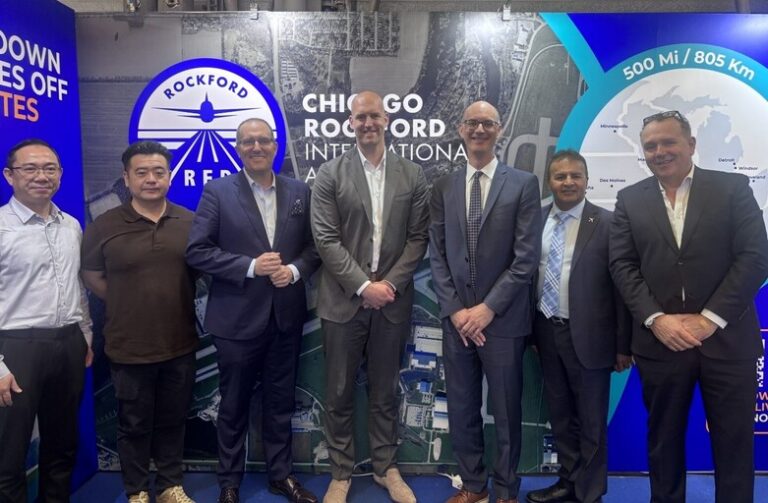
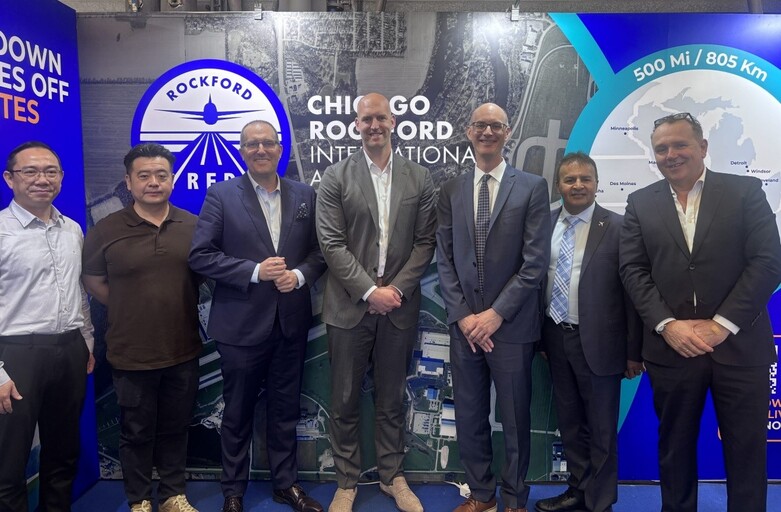
Apparently the world is not yet saturated with cargo events – or we are seeing a shift to more regional ones, which offer two large benefits: a clear focus on the region in question, and ‘closer to home’ locations for many of those interested, ultimately resulting in a larger, goal-oriented networking pool. The latest event to join the portfolio is transport logistic Middle East/air cargo Middle East and an additional project cargo Middle East. They will be held for the first time from 28-30SEP26 at the Riyadh Front 2 in Saudi Arabia and are being organized by dmg events in partnership with Messe München. Saudi Arabia is one of the world’s fastest-growing trade regions and its strategic Vision 2030 is to position itself as a key international logistics hub, ideally located between Asia, Europe and Africa. As its mother event in Munich, the upcoming logistics extravaganza will bring together representatives from the all transport sectors from logistics and freight forwarding, air cargo, project cargo, maritime logistics and ports, rail and multimodal transport, logistics IT and digital solutions, and infrastructure and industrial projects, drawing in freight forwarders, airlines, ports and terminal operators, EPC contractors, government authorities and free zone operators.
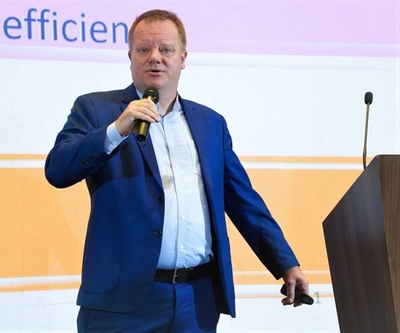
Stefan Rummel, CEO of Messe München, said: “With transport logistic Middle East and air cargo Middle East, we are expanding our globally established platform into a region of growing strategic importance for global trade. [..] Together with dmg events as a strong and experienced partner in the market, we are combining international brand strength with deep regional expertise to create a high-level platform for decision-makers and sustainable business growth for both exhibitors and visitors.” Matt Denton, President, dmg events, explained: “Saudi Arabia’s logistics sector is entering a decisive growth phase, driven by infrastructure expansion, industrial development and sectoral priorities. […We] are proud to bring transport logistic Middle East to the region in collaboration with Messe München. […] By combining Messe München’s global brand and international reach with our deep local knowledge, relationships and operational expertise in Saudi Arabia, we are creating a strong, sector-wide collaborative space that connects global suppliers with regional buyers and enables meaningful business growth for both exhibitors and visitors.”
Queen of the Skies set to fly to Seoul, three times a week. Image: AFKLMP Cargo
From the end of this month, on 30MAR26, and throughout the Summer season, Air France KLM Martinair Cargo will operate three weekly flights to South Korea. Deploying Boeing 747-400ERF or 747-400BCF aircraft on the route gives freight forwarders ample space to book all kinds of commodities from pharma to perishables, heavy or outsize cargo, high-value electronics, and general cargo. The new flight’s routing is Amsterdam Schiphol (AMS) to Seoul–Incheon (ICN) to Hong Kong (HKG) and back to Amstersdam. With the newest cargo destination addition, AFKLMP Cargo strengthens its Northeast Asia presence and brings back main deck capacity to South Korea, thus facilitating logistics between Europe and Asia. At the same time, AFKLMP Cargo is also increasing its dedicated freighter frequencies to Hong Kong from five to six weekly flights.
“Incheon’s addition to the freighter network reflects growing customer demand and the increasing strategic importance of South Korea as a global logistics and manufacturing hub. The new service provides dedicated, scalable main deck capacity independent of passenger operations, supporting high-value, time-critical, and specialized cargo flows between Europe and Northeast Asia,” the release states, going on to detail that: “From Europe, the new service is expected to carry high-value and specialized cargo such as high-tech and semiconductor equipment, aerospace parts, pharmaceuticals, and project shipments. From South Korea, key flows will include semiconductors, electronics, automotive and EV components, medical technology, and growing e-commerce volumes for European markets.”
Pierre-Olivier Bandet, Executive Vice President Cargo at Air France-KLM, stated: “The economic corridors between Europe and South Korea are among the most dynamic in the world. With this new freighter service, we reinforce our position in Northeast Asia and offer our customers increased reliability, flexibility, and access to dedicated main deck capacity.”
From left: KLS’ three co-founders, Rajesh Panicker (COO), Amar More (CEO), and Vineet Malhotra (Director). Image: Kale Logistics Solutions
The backdrop of the Air Cargo India event last week, served both as a party location as well as a launch platform. Kale Logistics Solutions (Kale), invited representatives from the 150+ air and seaports using its systems, to celebrate its 15th anniversary and – at the same time – revealing its new brand identity, designed to reflect how technology enables seamless collaboration.
The software solutions provider also launched a new product – one that solves an age-old problem which has become more urgent with the rise of e-commerce: piece-level tracking for individual packages or within consolidated shipments. The product’s name is AvSys, and it has been developed for airlines, e-tailers, shippers and consignees faced with having to manage individual or high-volume parcel shipments. AvSys’ piece-level tracking enables greater transparency, operational control, and regulatory compliance – particularly when it comes to cross-border customs requirements. The product name appears to stem from its original provider, AVLOG Systems. The specialist express and e-commerce logistics technology provider was recently acquired by Kale. AvSys supports real-time end-to-end operations, with a focus on the middle mile plus first and last-mile visibility, and allows airlines to offer and operate e-commerce-ready services; maximizing their point-to-point direct services instead of having to resort to expensive hub-and-spoke networks.
Amar More, Chief Executive Officer and Co-founder, Kale Logistics Solutions, commented: “The rise of e-commerce has created a need for modern piece-level parcel logistics that traditional airline air waybill-based systems alone cannot support. Legacy infrastructure was not built for the speed, scale, and transparency that e-commerce shippers now expect. It was based on a kilo-based system, not a piece level system that offers end-to-end control and transparency. With AvSys, airlines, ground handling companies, e-tailers, and relevant shippers and consignees can now deliver visibility at piece or parcel level while remaining fully compliant in either domestic or cross border situations.”
Real-time rates, capacity, and market trends, all-in-one. Image: aerios
CargoTech member and software solutions provider specialized in air cargo charter processes, Aerios, has again teamed up with market platform, CargoAi. This time, to launch a Commercial Pricing Insights module for charter operators. Earlier this year, the two launched a quoting module for charter operators (CFG reported: [INSERT LINK]). The latest solution combines real-time rate and capacity data with market conditions, so that charter operators can make intelligent decisions when pricing, enabling them to maximize their revenues. CargoAi’s live aggregated rate and capacity data serves as the market conditions. Since charter operators rarely have access to live commercial data when quoting, relying instead on experience or historical data, the new solution offers a large benefit. “Within larger carriers, charter sales teams often operate separately from the general airfreight sales team, so they don’t typically have access to live airfreight rates or up-to-date information on which lanes are currently served by airfreight or how often. All of which means quotes are often generated ‘in the blind’ and can result in inaccurate pricing, lost business opportunities, and missed revenue,” the release states. The new module is integrated in Aerios’ Carrier App quote builder and also offers users direct insights into how their quote compares to the wider market. They see the aggregated current market rate as well as historical and forecast trends. Matt Petot, Founder & CEO at CargoAi, said: “We welcome this partnership with Aerios, who joins a number of other players of the industry who are using our live aggregated data in their process. Getting real time visibility on the next few weeks in terms of rate trends and capacity change is a game changer for the industry who has been relying for a very long time only on past data with a significant delay.”
From left: Nico Le Roux, Business Development Director, PIK, Siddharth Malik, Consul General of India to the UK. Image: Meantime Communications
Glasgow Prestwick Airport (PIK) is anticipating potentials with the UK-India Free Trade Agreement set to come into effect in APR26, and – to that end – recently invited the Consul General of India, Siddharth Malik, to view the premises and discuss UK-India trade. The airport invested GBP 1 million in 2025 on dedicated cool chain facilities, including four chillers with 87-tonne capacity, high-volume metal detectors, and temperature tracking systems. Earlier, in 2024-2025, it spent over GBP 2 million on cargo infrastructure, adding cold storage from -30°C to +25°C, high loaders (20-35 tons capacity), a Rapiscan X-ray machine, heavy-duty tractors, and dollies. The India Consul General together with Kevin Braidwood, Deputy Chief Executive, South Ayrshire Council, and the local authority’s Business Development Officer, Calum McPhail, were shown around the airport, where they were briefed on Prestwick’s offering for Indian businesses and Scottish exporters, including onsite bonded warehouse facilities and operational flexibility. Subsequent discussions centered around the UK-India Free Trade Agreement, and opportunities for Scottish trade including Scottish salmon exporters, pharmaceuticals, life sciences, and other perishable goods.
Jules Matteoni, Operations Director, Glasgow Prestwick Airport, commented: “This was a great opportunity to show the Consul General just how unique our cargo operations are. With our fully integrated, in-house model and recent investment in cool chain infrastructure, we are exceptionally well positioned to support the additional bilateral trade expected when the new UK-India trade agreement comes into force this summer.” Nico Le Roux, Cargo Business Development Director, Glasgow Prestwick Airport, said: “We are grateful to the Consul General for the valuable insights he shared on trade opportunities and the business culture in India. As we engage with partners at Air Cargo India, I look forward to continuing discussions with the Indian High Commission in Mumbai and in London to further promote Prestwick’s unique cargo capabilities and the advantages we can offer to businesses looking to strengthen UK-India trade links.”
Total cargo management carried out by TCE. Image: SkyUp Airlines
Ukrainian low-cost carrier, SkyUp Airlines, which operates internationally out of Moldova’s Chișinău (RMO), is reentering the cargo business to serve as a hub for European cargo activities, and has selected Aerion’s air cargo experts, TCE, ECS Group and Global GSA Group as its representatives. The airline recently signed a strategic Total Cargo Management (TCM) agreement with TCE, which has subcontracted the GSSA partners, ECS Group and Global GSA Group, to carry out commercial operations. Since 05JAN26, TCE ensures that all cargo processes involved in transporting commodities falling under categories such as General Cargo, Dangerous Goods (DGR), Perishables (PER), Live Animals (AVI), Mail, and e-commerce, are carried out in accordance with the respective requirements. In selecting TCE’s TCM, SkyUp Airlines can look forward to a greater scope of products and efficient use of its cargo holds. “Coordination is led by Globe Air Cargo Ukraine on behalf of ECS Group, with technical support from TCE Germany, while SkyUp Airlines retains operational control at RMO”, the release states. The airline serves Spain, Greece, Cyprus, Turkey, Israel, France, Poland, Montenegro, Albania, and Moldova.
Sarah Scheibe, Managing Director of TCE, underlined: “Total Cargo Management today is about orchestrating networks […] This agreement reflects our hands-on approach, deeply embedded in operations, commercially focused, and designed to deliver value across every market. By leveraging the combined expertise of ECS Group and Global GSA Group, we are building a highly responsive and scalable cargo platform.”
Daria Alieksieienko, Director of Regular SkyUp Airlines, commented: “We are pleased to resume our cargo operations, which we began developing in 2020 as part of a long-term strategy to diversify our business. Partnering with TCE, with the strong backing of the commercial networks of ECS Group and Global GSA Group enables us to reenter the market efficiently and deliver reliable cargo solutions built on shared standards of quality and international expertise. This partnership brings together SkyUp’s operational capabilities and ECS Group’s global commercial reach, supporting the sustainable growth of our cargo business.”
Jean Ceccaldi, CEO of ECS Group, stated: “This partnership reflects the strength of our commercial platforms when deployed at scale. By mobilizing ECS Group’s global sales network alongside Global GSA Group’s strong local presence, we are ensuring consistent market execution and accelerated revenue generation for SkyUp Airlines across all regions.” Aytekin Saray, CEO of Global GSA Group, added: “This agreement highlights the power of coordinated GSA execution. Through our extensive local knowledge and close alignment with ECS Group and TCE, we ensure that SkyUp Airlines’ cargo product is positioned consistently and competitively across all markets.”
A pallet brought to you by Jettainer. Image: CMA CGM AIR CARGO
Three years on from its initial beginnings in 2022, the partnership between ULD management company, Jettainer, and the then 1-year-old CMA CGM AIR CARGO airline subsidiary of the well-known maritime logistics provider, has now been extended. The press release does not give a definite timeline, speaking only of an early extension for the ‘long-term’ and citing ‘additional requirements resulting from planned fleet expansion’ as the reason for the contract renewal. The ULD management provider will continue to provide comprehensive ULD management, maintenance and repair services to the airline, ensuring that a customized ULD fleet is always available, wherever in the world it is required. “Cutting-edge steering technologies are used to move all units as efficiently and sustainably as possible, to track them seamlessly and to provide the customer with comprehensive and transparent data on all ULDs in the network at all times via its unique IT solution JettwareNG,” the release underlines. CMA CGM AIR CARGO operates a fleet of eight aircraft: five Boeing 777F, one Airbus A330F, and two Boeing 747F. It is due to take delivery of a further eight Airbus A350Fs from next year onwards. Its fleet operates from strategic hubs in France, the United States, and Belgium, to ensure the most efficient connectivity across key global air cargo routes, as CMA CGM Group is focused on rapid, end-to-end supply chain solutions for e-commerce, perishables, and high-value goods. Dr Jan-Wilhelm Breithaupt, CEO of Jettainer, commented: “We would like to express our sincere thanks for CMA CGM AIR CARGO’s trust in our services. We are committed to providing our customers with the best possible ULD services each and every day. To this end, we are constantly innovating, such as in the area of digitalization, with the aim of fully exploiting the possibilities that the ONE Record standard offers for ULD management.”
Following the coordinated Israeli-U.S. air strikes on Iran, international airlines reacted within minutes by scrapping air services to the region or canceling overflights on routes between Europe and the Far East. Thousands of passengers stranded and masses of air freight remained at departure airports. Maritime shipping has also been similarly affected by the conflict, as Yemeni Houthi rebels have announced attacks on merchant ships in the Strait of Hormuz in support of the Iranian mullah regime.
Iran, Iraq, Israel, Syria, Kuwait and the United Arab Emirates all announced at least partial closures of their skies in the hours after smoke began rising over Tehran and Iran began retaliatory attacks in the region. In counterattacks, Iranian missiles hit capital cities around the wealthy Gulf region, killing at least one, as witnesses reported seeing warplanes and projectiles streaking through the skies.
Irans capital Teheran was targeted by coordinated military airstrikes from U.S. and Israelian forces. Courtesy: Majid Asgaripour/Wana news Agency
Massive flight cancellations Hong Kong’s Airport Authority confirmed that Cathay Pacific and its cargo arm suspended all flights to and from the Middle East on Saturday (28FEB26) in response to “Operation Epic Fury”, a massive and ongoing joint military assault by the U.S. and Israel against the Mullah regime in Iran. The step follows the announcement of the United Arab Emirates (UAE) and Israel to shut their airspace, and Qatar Airways Group cancelled flights to and from Doha. While planes en route to Israel, Dubai or Abu Dhabi were rerouted to other airports, flights by Emirates and Etihad were also affected by the UAE airspace closure, as both airlines cancelled flights until further notice and urged passengers to check their flight status online. The same applies to freight forwarders who had booked cargo shipments on flights to the UAE or beyond destinations. The General Authority of Civil Aviation in the State of Kuwait confirmed that the country’s international airport was struck by a drone on Saturday, resulting in “minor injuries to a number of employees”, in addition to “limited material damage” to the passenger building. A spokesman said that the authorities “immediately initiated the implementation of approved emergency procedures”, where the “incident was handled and the site was secured”. Kuwaiti carriers halted all flights to Iran indefinitely. Other Middle Eastern regional carriers, such as EgyptAir, suspended flights from Cairo to Kuwait, Dubai, Doha, Bahrain, Abu Dhabi, Sharjah, Qassim, Dammam, Erbil, Baghdad, Amman, Beirut, and Muscat because of the escalation.
Air freight supply chains are interrupted In Europe, German airline Lufthansa cancelled its flights until 07MAR to several Middle East destinations, including Tel Aviv, Beirut, Amman, Erbil and Tehran, due to “severe security concerns.” Additionally, flights to and from Dubai and Abu Dhabi are also suspended until 01MAR26. However, it is questionable whether LH will be able to meet this date, as observers expect the hostilities to continue into the coming week. This is particularly true given that Iran has responded to the bombings with massive counterattacks, as evidenced by missile and drone strikes in Dubai, Bahrain, Qatar, and Israel. The Dutch carrier KLM had already announced earlier in the week that it was suspending flights to and from Tel Aviv starting Sunday. Carriers including Air France, Air India, Turkish Airlines, Norwegian, Air Algérie and ITA Airways announced widespread cancellations. Meanwhile, British Airways said it halted air services to the region, including Tel Aviv, amid the escalation, and Virgin Atlantic cancelled its flight from Heathrow Airport in London to Dubai and said it would avoid flying over Iraq. The airline was already not flying over Iran. According to Virgin Atlantic, all flights would carry appropriate fuel in case they needed to reroute on short notice.
Even Russia stopped flying to Iran Syria closed part of its airspace in the south along the border, while Qatar Airways suspended all flights from Doha. Air India suspended flights to all destinations in the Middle East. And Pakistan International Airlines, the flag carrier of Pakistan, which borders Iran, said it had suspended flights to the United Arab Emirates, Bahrain, Doha and Kuwait. Even Russia, one of the Iranian theocrasy’s closest allies said in a statement that all commercial flights to Israel and Iran were cancelled “until further notice”. If this also includes military flights was left open by Moscow’s Aviation Authority. The hostilities between the U.S. and Israel on one side and Iran on the other are likely to have caused the most serious crisis for international civil aviation since the end of the coronavirus pandemic. And there is currently no end in sight.
The maritime sector is affected as well Commercial shipping is also affected by the conflict. Ships already operating in the region are expected to seek refuge in the territorial waters of neutral states, including Oman. Some may opt to exit the area entirely. Meanwhile, vessels en route to the immediate conflict zone are likely to delay entry until the security situation stabilizes. The announced Houthi attacks on commercial ships increase the risk for shipping companies whose container ships operate in the Persian Gulf or neighboring waters, prompting immediate operational and insurance repercussions across the global maritime sector.
The U.S. integrator becomes the first plaintiff from the transport and logistics industry to sue the Trump administration over tariff refunds, demanding return of all tariffs paid. The move follows the Supreme Court’s ruling that almost all of the tariffs imposed by Trump are illegal. Lawyers expect a tsunami of lawsuits against the Trump administration to be filed in the coming days with the aim of returning the money to their proprietors.
Lineup of FedEx freighters, company courtesy
FedEx said in a filing with the U.S. Court of International Trade that they have “suffered injury” from having to pay the tariffs and that the relief they’re seeking from the court would redress those injuries. FedEx sought an order from the trade court that would force Customs and Border Protection to refund all duties paid last year under the federal emergency powers law.
An emergency situation does not exist” “This Court has jurisdiction and authority to order remedial relief and refunds of IEEPA duties paid by importers,” FedEx wrote in its complaint, adding, “Plaintiffs have paid IEEPA duties to the United States and thus have suffered injury caused by those orders.”
The International Emergency Economic Power Act (IEEPA) provides the U.S, President broad authority to regulate a variety of economic transactions, including the collection of customs duties, following a declaration of national emergency. However, this emergency situation does not exist in the present case, which is why the tariffs imposed by Trump are illegal, the Supreme Court ruled last Friday (20FEB26).
“Supporting our customers as they navigate regulatory changes remains our priority,” a FedEx spokesperson said in a statement. “FedEx has taken necessary action to protect the company’s rights as an importer of record to seek duty refunds from U.S. Customs and Border Protection following the U.S. Supreme Court’s rulings,” he is quoted by business and financial news network CNBC.
Trump lacks the funds to finance his tax cuts Other companies have also launched efforts to recoup costs from the illegal tariffs, including large U.S. corporations like Wholesaler Costco and global beauty company Revlon, founded by Elizabeth Arden.
In a statement, the National Retail Federation said that the Supreme Court’s ruling provided certainty for U.S. businesses and manufacturers. “We urge the lower court to ensure a seamless process to refund the tariffs to U.S. importers,” it said. “The refunds will serve as an economic boost and allow companies to reinvest in their operations, their employees and their customers.”
According to official federal data, the Treasury had collected more than $133 billion from the import taxes the president has imposed under the emergency powers law as of DEC2025. Trump has vowed to collect tariffs through other means. He reached for a stopgap option immediately after his defeat Friday at the Supreme Court: Section 122 of the Trade Act of 1974 allows the president to impose tariffs of up to 15% for as long as 150 days. But any extension beyond that timeframe must be approved by Congress likely to object tax hikes as November’s midterm U.S. elections loom.
A tsunami of lawsuits is rolling toward the US. In addition, the Trump administration also faces recourse claims from external trading partners and industry associations that have fallen victim to his erratic tariff policy. They still seem to be waiting to see how things develop. Trump is known for his vindictiveness, as evidenced by his foul-mouthed tirade against three federal judges he appointed who declared his tariffs illegal in a 6-3 vote.
In any case, Brussels has put the previously consented EU-U.S. trade pact on hold until further notice. This means that U.S. imports into the EU will continue to be subject to tariffs. Originally, these were to be abolished, which would have made U.S. products cheaper in the EU.
Frankfurt Airport and Bangalore Airport signed a memorandum of understanding today (25FEB2026) at the Air Cargo India trade show, which runs until 27FEB in Mumbai. During the ceremony, both sides emphasized that the pact paves the way for far-reaching cooperation particularly in the air freight sector. Fraport had previously signed a similar agreement with Shanghai Pudong Airport.
Left to Right: Simone Schwab, Senior Vice President Aviation & Cargo Development (Fraport AG); Alexander Laukenmann, Senior Executive Vice President Aviation (Fraport AG); Girish Nair, Chief Operating Officer (BIAL)
Partnerships are significantly less demanding than financial participation concepts or even takeover maneuvers. The latter two strategies are pursued by Fraport, the French Vinci Group, and – most recently – the Mexican AZUR Group, among others. Last November, AZUR acquired 20 Brazilian airports in one fell swoop, as well as others in Curacao, Ecuador, and Costa Rica.
Roadshows paved the way It remains to be seen which strategy will be more successful in the long term: takeover or cooperation. Fraport Cargo focuses on cooperation rather than financial participation. This has become evident in Mumbai. Following the agreement on closer cooperation in the air freight sector between Shanghai Pudong and Fraport announced in NOV25, a similar agreement has now been signed by FRA Cargo and Bangalore International Airport (BLR). And, as in the case of Shanghai, the way for the deal was paved by a series of roadshows, at which Fraport Cargo managers highlighted the performance and development potential of the cargo business at Frankfurt Airport.
Assumptions were adjusted “During our discussions with local executives and air freight managers, we realized that it was not widely known that we are currently developing an area of 53,000 square meters that will soon be available for marketing,” says Denis Duarte, VP Cargo Development at Fraport. “They were also surprised to hear that we had signed a lease agreement with Kuehne + Nagel for a site measuring almost 17,000 square meters, where a 7,600-square-meter cargo terminal is to be builtand additional 1,100 sqm office space.”
Apparently, the prevailing impression in India was that Frankfurt Airport was operating at full capacity and had little to offer for a further ramp-up of pallets, containers or parcels. “We were able to clearly correct this impression during our roadshows and in subsequent negotiations with Bangalore Airport executives on an MoU,” Manager Duarte added.
Worldclass level According to him, talks between the cargo departments of both airports with the aim of close cooperation began as early as April 2025. During his stays he got an insight into how attractive Bangalore and the surrounding market is for the air freight business. He confirms that the semiconductor production, IT industry, and electronics sector are at a worldclass level. It is not without reason that Bangalore has a reputation as the “Silicon Valley of India,” i.e., the hotspot of the Indian technology industry. This is complemented by metal processing, the manufacture of life science products, and chemical products.
Well-developed infrastructure and efficient transport links In a nutshell: Value creation is characterized by an exchange of goods on an equal footing that does not follow the traditional pattern of international division of labor between raw material suppliers and industrial producers. “India has largely left this stage of development behind,” says Duarte. In the case of Bangalore, he also points to the excellent connection to the airport’s road network, which ensures the rapid delivery of goods and the onward transport of imported items to their final destinations.
Similar to Shanghai, Fraport Cargo intends to establish a gateway concept there. This is based on close cooperation between all parties involved: airport operators, freight carriers, customs authorities, ground handlers and forwarding agents. The Frankfurt Air Cargo Community, with its broad membership and coordinated processes, serves as a role model for this intent. By using a digital cargo community system, named FAIR&Link, complemented by an Allivate branded slot booking system, pick-up and delivery processes are fully automated, cutting dwell time substantially, speeding up cargo flows. According to Fraport Cargo’s vision, this gateway concept is to be implemented locally at BLR in close coordination with Kale Logistics, one of the top Indian cloud-based solutions providers.
Focusing on trade lane development “We will not be investing financially in Bangalore Airport, local warehouse projects or other facilities,” emphasizes manager Duarte. “Instead, we’ll fully focus on the development of trade lanes and hope to achieve growth through deeper and long-lasting cooperation.”
The prospects for this are favorable following the agreement between the EU and India on the creation of a free trade zone between the two markets, eliminating close tom 95% of current tariffs. “Once it comes into force, there will be a significant upturn in rule-based trade between the two signatory powerhouses.,” Denis enthuses. This should benefit both Bangalore and Fraport equally. Why the executive emphasizes the word “rule-based” needs no further explanation.