Home Blog Page 182

Exclusive – PIT is following LGG’s example

0

Coal and steel were the mainstay of the economy and prosperity of both Pittsburgh and Liège. Steel produced in Pittsburgh was once used to construct the Golden Gate Bridge. However, the industrial landscape has changed dramatically at both locations. In Liège, the transition towards new, clean technologies and modern transportation has already been accomplished.

Bryan Dietz is Pittsburgh’s Prince Charming who kisses the Sleeping Cargo Beauty awake – photo / image: courtesy PIT

In contrast, Pittsburgh, a city of two million, is in the midst of transformation with a new focus on life science, health care, high tech, pharmaceuticals and banking, among others.

The change in the macroeconomic environment is also affecting Pittsburgh International Airport (PIT). As a result, the management has placed air freight matters high on its agenda.

This has been confirmed by Bryan Dietz in an exclusive call with CargoForwarder Global. He is senior VP Air Service & Commercial Development at the Allegheny County Airport Authority, which operates Pittsburgh International (PIT) and Allegheny County Airport. Bryan must feel like Prince Charming in the fairy tale where he kisses Sleeping Beauty awake after an eternally long sleep, just that his Sleeping Beauty is Pittsburgh’s air freight business. That said, a targeted wakeup call is appropriate because PIT offers enormous potential for cargo throughput which would benefit the local economy, the industry in a wider sense, and secure jobs, outlines Mr. Dietz.

Sandwich situation
To start with, PIT faces a sandwich situation. Geographically, it is squeezed halfway between the giants New York (JFK) and Chicago O’Hare (ORD). However, Dietz and his team do not see these as direct competitors but as airports that have passed their zenith. Due to their size, operational hiccups, and sheer traffic volumes, they cannot offer the same level of service compared to agile, efficient, and fast airports such as Pittsburgh International. Thanks to its 4 runways, PIT is a congestion-free airport, has no slot problems and is operational 24/7/365.

Cheaper and more flexible
Then there is the cost difference as demonstrated by the landing fees that are roughly 50% cheaper than those that carriers have to pay at ORD or JFK. This is because the base costs at PIT are lower. It is a self-powered airport, thanks to the availability of abundant natural gas and a large number of solar panels – 9,000 in total – which supply clean energy. Agility combined with limited energy costs and lower charges are therefore selling points for Dietz and his team to place their airport on the international air freight map.

Market closeness
And the executive emphasizes a third aspect: “45% of the entire U.S. population lives within an 8-hour radius of Pittsburgh, measured in terms of truck driving times.” A truck needs 6 hours to NYC, 7 to 8 hours to Chicago, depending on traffic situations, and 4 hours each to Toronto and Washington DC, according to traffic statistics. “From wheels down to the onforwarding of goods, we need only a couple of hours, not days as the statistics of our larger peers evidence.”

“Cargo 4” will start in Q4, 2024
In order to meet the expectations of stakeholders in terms of infrastructure, management has initiated working groups with participants from all sectors of air freight, including forwarding agents, airlines, trucking companies, ground handlers, customs officials and regulators. The development of the project was strongly and long supported by advisor, Steven Verhasselt, who held a leading position at Liège Airport for many years. His experience gained there and during some other projects, among them Leipzig/Halle Airport, was valuable to develop cargo-friendly solutions for PIT.

The Cargo 4 project will enhance the airport’s ability to accept international freight and distribute it throughout the U.S. and North America – courtesy – PIT

The main result of consultations, discussions with stakeholders, and managerial decisions, is a 7,100 m2 state-of-the-art cargo terminal called Cargo 4, which is currently under construction and is scheduled to go online in Q4, 2024. It will be equipped with cutting edge technology to facilitate the fast throughput of freight and offer forwarders multiple truck docks for fast unloading or loading of their goods. The design of the warehouse allows for very flexible use, as it can be quickly adapted to changing market requirements. Bryan Dietz mentions criteria such as sudden increases in pharmaceutical shipments, a high volume of e-commerce or the need for fast handling of bulk cargo.

We are building and will lease the facility,” Joe Rotterdam, Director Air Service Development, Allegheny County Airport Authority explained to CargoForwarder Global. The executive thus contradicts earlier reports that a developer had secured the operations of the warehouse for at least a decade.

More intercontinental operations needed
All in all, management has set the course for leveraging the airport’s cargo position. However, the handling volumes are still very manageable, as seen by the throughput of 86,000 tons in 2023. What the airport lacks for achieving a critical volume, are long-haul connections. That is the biggest difference to the earlier mentioned Liège Bierset Airport in Belgium. Apart from occasional charter flights and domestic operations by UPS and FedEx, only British Airways operates scheduled intercontinental flights, connecting the Pennsylvanian city with London Heathrow six times a week, using a passenger B787 jetliner. Icelandair will follow suit in May, deploying a B737 MAX on flights to Reykjavik. The aircraft can accommodate 5 tons of cargo per flight, the bulk of which is transferred directly to flights destined to airports in continental Europe.

Finally, PIT’s management will also have to work on balancing the import/export ratio (20% / 80%). With exports only likely to increase if additional intercontinental airlines, especially European carriers, add Pittsburgh to their transatlantic network.

UPS is cutting back

0

The U.S. integrator confirmed earlier announced plans to ax 12,000 jobs. This is due to significant volume declines in the transportation of consumer goods in 2023 and a gloomy outlook for the coming months. The mass layoffs come only months after the delivery company averted a massive strike by agreeing to a new labor contract.

UPS operates 41 Boeing 747F, among them 13 B747-400F and 28 B747-8F – credit UPS

The package delivery company is facing headwinds for almost a year. In MAR23, The Wall Street Journal noted that a decline in e-commerce hit the companies’ payrolls. In a reaction other parcel-delivery companies, truckers and warehousing companies cut nearly 17,000 jobs in the U.S.  In the summer months, large retailers have cut back on orders to feed end-of-year peak shopping demand, which lowered transport volumes further. This in turn translated to less shipments, putting pressure on UPS but also some of its peers.

Drop in profits
Ever since, e-commerce demand hasn’t really improved, which continues suffering from low consumer spending. This has an impact on integrators in particular, who have to adjust their business plans downwards.  

In Q4, 2023, UPS suffered a drop in profits. Earnings fell to US$2.47 per share from US$3.62 previously, while revenue fell from US$27.0 billion to US$24.9 billion.

UPS CEO Carol Tomé said in a conference call that the job cuts are intended to save one billion dollars (roughly 920 million euros). The layoff of 12,000 employees is around 2.5% of UPS’s global headcount of nearly half a million employees. In addition to job cuts, there are also plans to divest unprofitable subsidiaries in order to reduce costs. One sales candidate could be the trucker Coyote, which UPS only acquired in 2015. Coyote is suffering from a sharp drop in transport prices that went south following the corona virus boom.

Analysts had expected higher sales
Last year, UPS also missed its earnings adjusted downwards several times since volumes kept declining. In addition, significant wage increases for employees have eaten up large portions of the profit. Concerning this year’s business prospects, Group CEO Tomé expects only a slight increase in turnover to around 92 to 94.5 billion dollars, she predicted during the conference call. This is below the 95.57 billion USD sales expected by analysts.

Last year, UPS turnover fell 9.3%, to USD 91 billion, while the adjusted operating profit plummeted by almost 29% to 9.9 billion dollars. At the bottom line, UPS earned 6.7 billion dollars, around 42% less than in the previous year.

In contrast, there was a slight increase in average revenue per parcel, however, it did not suffice to compensate for the decline in shipment volumes. Simultaneously, high inflation dampened consumer demand as did economic uncertainty. In addition, UPS customers were unsettled by strike warnings indicated by The Teamsters union, motivating them to migrate to competitors such as DHL Express and FedEx. Finally, UPS management reached an agreement with the transport workers’ union on wage increases.

No recession looming
The package delivery company joins a number of other major U.S. companies cutting jobs in 2024 amid forecasts for slower economic growth. Among them are Google that laid off hundreds of workers on its hardware, voice assistance and engineering teams to reduce expenditures. Others are Microsoft, eBay, Levis, Macy’s and Wayfair that plan to ax jobs as well.

However, most market analysts forecast that the U.S. will avoid a recession in 2024. Despite the layoffs at UPS and in the tech sector, the U.S. labor market remains very robust seen by 2.7 million new jobs created in 2023.

JALCARGO opts to go live on Webcargo

0

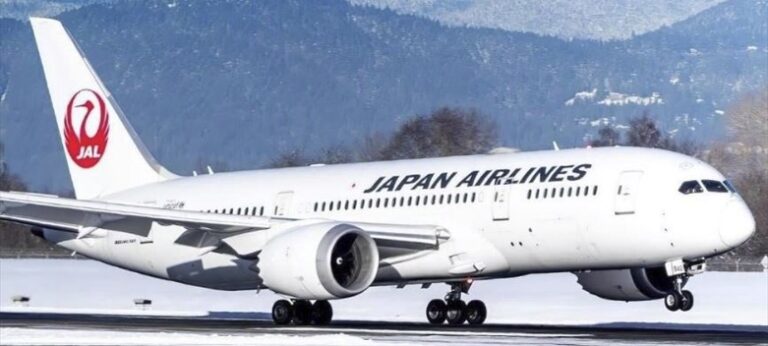
Under the title “NAVIGATING TOMORROW”, JALCARGO and WebCargo by Freightos announced the carrier’s welcome on the global digital booking and payment platform. Japan Airlines’ cargo arm is offering its network on the platform, among them Japan’s major cargo hubs in Tokyo. WebCargo’s many forwarding users can now select capacity on JALCARGO to selected routes among its 66 international destinations and 133 domestic destinations. JALCARGO serves Europe, UK, and a number of Asian countries out of Japan.

Bookable on WebCargo, now. Image: Japan Airlines

Yuichiro Kito, Executive Officer, Cargo and Mail at Japan Airlines, said “Digital transformation is key for JALCARGO’s growth. Offering capacity on WebCargo’s platform will help generate new business and enable us to provide all our clients with real-time rates on a platform that makes it easy to book and pay for cargo online.”

Manel Galindo, CRO of Freightos, commented: “With a network that spans hundreds of airports, JALCARGO is a wonderful addition to the cadre of leading world carriers offering air cargo capacity on WebCargo’s platform. Asia has been, and always will be, an integral market for WebCargo and our customers. With JALCARGO onboard, WebCargo can provide European and Japanese forwarders with access to 60% of global air cargo capacity online, efficient booking and quoting in just minutes, and wider trade lane coverage to key Asian markets. This partnership helps us continue to build Freightos’ vision of creating a truly vendor-neutral global freight booking platform that makes international shipping faster, more cost-effective, and reliable, and one that expands trade between the people of the world.

Tell it like it is, when it comes to emissions

0
Simon Kaye, CEO, Jaguar. Image: Meantime Communications

Since shippers are increasingly demanding emissions reporting, Jaguar Freight Services is the latest forwarder to choose Pledge’s emissions measurement platform which enables it to comply with Scope 3 emissions reporting regulations. Pledge gives a clear and detailed breakdown of how freight emissions are calculated at each leg of the shipment journey, so that forwarders and customers can easily comprehend what needs to be done to lower freight emissions. Pledge’s solution has been integrated into Jaguar’s Cyberchain logistics insight using the standardized integration and data exchange framework, Chain.io’s Open Connect. This allows the freight forwarder to share the emissions reporting with its customers’ own systems.

David de Picciotto, Chief Executive Officer (CEO) and Co-Founder, Pledge, explained: “Accessible emissions reporting tools are crucial to ensuring industry leaders can implement emissions reporting into their day-to-day operations, especially in light of mandatory reporting regulations, such as the EU’s Corporate Sustainability Reporting Directive, which came into effect this year.”

Simon Kaye, CEO, Jaguar, stated: “Integrating Pledge’s emissions reporting solution with our unique Cyberchain logistics visibility platform is an integral part of our ongoing Corporate Social Responsibility agenda and strengthens our efforts to promote more sustainable logistics practices.”

Challenge Group looks back on a year of success

0

The press release bears the title: ‘Challenge Group: an end-to-end solution for every 2024 challenge,’ and offers an optimistic outlook for the group, as it predicts a similar trend to 2023. ‘Challenge Accepted! Success delivered,’ it emphasized – a motto that is relevant for all of the group’s subsidiaries. Though the market was problematic last year, Challenge Group nevertheless welcomed its B767 fleet, uplifted a record number of tons, and increased its end-to-end and charter activities which hit 1000 charter flights in 2023. Challenge Handling and Challenge Technic each acquired new customers and expanded their service portfolios.

2023 saw the group achieve records and growth. Image: Challenge Group

This year will be just as active as the group focuses on strengthening internal collaboration and developing its industry USP: end-to-end logistics solution from a single source. Also on its agenda are: a new hangar and a new maintenance station for Challenge Technic, more new destinations and markets as the fleet continues to expand, Challenge Logistics’ investment in new technologies (e.g. the Project44 tool offering seamless visibility and transparency to customers), the deployment of electrical cars, electrical tractors and GPUs at Challenge Handling in Liège, a new digital sales channel, and sustainability initiatives.

Yossi Shoukroun, CEO of Challenge Group, commented: “Our DNA and value proposition are based on an end-to-end solution approach to supply chain requirements. We have become the partner of choice when it comes to complex verticals and specific/unique logistics needs, in terms of commodity and destination. Overall, we expect the complex vertical segment to grow, and predict that our certified expertise and known capabilities will gain us further market share. The most growth, however, can again be expected in e-commerce.”

Seeking excellence in food transports

0
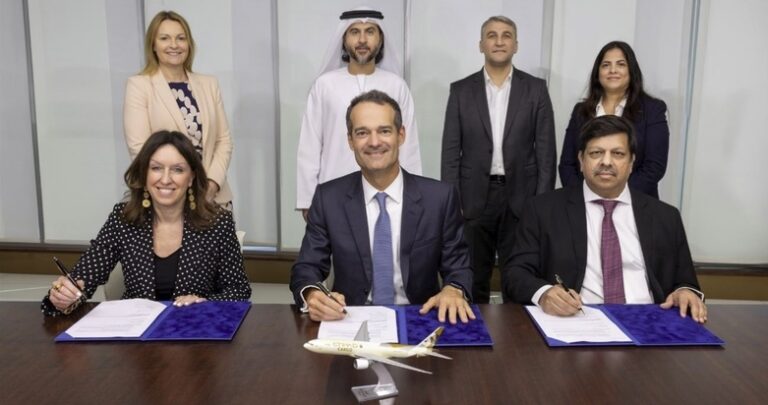
Preparing for the Fresh Corridor 2.0. Image: Etihad Cargo

Etihad Cargo, Abu Dhabi Airports and Abu Dhabi Food Hub – KEZAD, have come together to establish a Fresh Corridor 2.0, designed to firmly position the UAE on the global food supply chain map. The memorandum of understanding (MoU), was signed on 23JAN24. The airline, airport and the region’s largest and leading dedicated food wholesale market and logistic hub, will develop a fully compliant and transparent origin-to-destination perishable air corridor known as the ‘Fresh Corridor 2.0’. This will support the diversification of food sources, open up new trade corridors, and expand the choice and variety of products available for regional consumers. Knowledge exchange, handling, storage and logistics expertise, food safety, and hygiene, are all components of the plan, and the three will liaise government stakeholders, relevant facilitators, and key contributors from the food ecosystem to ensure seamless trade, and set new standards in commercial and operational excellence within the global food trade.

Antonoaldo Neves, Chief Executive Officer, Etihad Airways, underlined: “Etihad Cargo is committed to the UAE’s National Food Security Strategy 2051 and is proud to be an active partner in the launch of the region’s largest food wholesale market – Abu Dhabi Food Hub at KEZAD. Etihad Cargo customers will benefit from the expanded infrastructure as a strategic hub in the Middle East to the rest of the world.”

Elena Sorlini, Managing Director and Interim CEO, Abu Dhabi Airports, stated: “Our collective proposition to facilitate trade in and out of the UAE will further support the commercial development of the emirate as a global food center. […] The launch of the Fresh Corridor 2.0 will encourage 2-way food trade between the UAE and the rest of the world, bringing food products into the UAE but also taking our ‘Made in the UAE’ products to the world in a bold step towards diversification and growth of imports and exports.

Suresh Vaidhyanathan, Chief Executive Officer, Abu Dhabi Food Hub, commented: “This collaboration will indeed enhance our multi-modal capabilities as we seek to position the UAE as a leader in the regional food value chain. We are excited to support the global food players in accessing the regional consumer markets with integrated supply chain solutions and incorporating the most recent technologies and further be a key enabler in food trade diversification and UAE’s Food Security Agenda. Our vision is to create an unparalleled ecosystem of sellers and buyers from around the world.”

SASI World is now present in Latin America

0
SASI Chief Stan Wraight now offers his company’s services also in South America in close cooperation with Chile-based AirMann – credit: SASI

Santiago de Chile is the latest region to join SASI World, now, alongside its Canadian headquarters, and existing regional offices in the USA and UAE. And SASI World’s expansion is not yet complete. Earlier this week, the global aviation industry advisor announced its agreement with Santiago de Chile-based AirMann Inc., to offer air cargo logistics advice plus learning and development programs across Latin America. Stan Wraight, President & CEO of SASI World, said: “After recently opening our UAE office, further expanding the reach of SASI World into Latin America was a natural progression. Deciding to partner with AirMann was an obvious one due to the longstanding cooperation between the two companies. Discussions have been ongoing since the successful delivery of Safety and Security training to the Chilean DGCAA in 2022 and 2023 [with AirMann].

Eric Hartmann, CEO of AirMann stated: “This initial cooperation and engagement was the springboard for a broader discussion and approach in offering new value-added capabilities in Latin America, and we now look forward to the joint venture with SASI World bringing specialized support for products and strategies in Latin America for both companies vast customer base.” AirMann brings in depth knowledge of the Latin America air cargo logistics market that it has amassed over the years and offers training programs that complement SASI World’s portfolio. The two companies will now bring their services together and offer airlines and airports products such as SASI World Smart Cargo Airports ™ , Aviation Security Practices, digital and operational e-Commerce solutions, and educational programs aimed at addressing the challenges and opportunities of post-COVID supply chains.

Wizzing on over to Atlas Air Worldwide as SVP and CIO

0

It’s always a happy day when a passenger airline employee sees the light and comes over to the cargo side. This time, it is WIZZ Air’s Global Chief Digital Officer, Joel Goldberg, who will be joining Atlas Air Worldwide as its new Senior Vice President and Chief Information Officer on 26FEB24. He will report to Michael Steen, Chief Executive Officer, Atlas Air Worldwide, and also serve on the Executive Leadership Team.

From passenger to cargo – Joel Goldberg joins Atlas Air. Image: Joel Goldberg/LinkedIn

Goldberg looks back on almost 30 years’ worth of experience in digital transformation projects within the aviation, logistics and consumer industries. His responsibilities at Atlas will include leading its technology and digital strategies, enhancing airline operations support and digital transformation. Further, Atlas Air’s enterprise operations, infrastructure architecture, system and data architecture, cybersecurity, business service management, project management, information technology administration and compliance, also fall under his management.

Over at Wizz Air, Goldberg, who has been the airline’s Global Chief Digital Officer since 2018, defined and led the digital strategy and successfully executed the airline’s digital transformation. Before that, he was Senior Director of Technology for Nike in EMEA, and held positions at Maersk, G4S, DHL Express and FedEx.

Michael Steen, Chief Executive Officer, Atlas Air Worldwide, commented: “I’m thrilled to welcome Joel to lead our IT organization at such an exciting time of our Company’s transformation. Joel’s focus on leading the vision for our digital strategy, as well as continuing to deliver operational excellence, will be critical as we prepare for our next phase of growth. Joel brings a customer-centric mindset and proven track record for delivering a digital-first approach to serving customers and powering core operations. With his significant experience leading large, complex digital transformations across the aviation and logistics sectors, Joel will be a tremendous asset to our executive team.”

Joel Goldberg’s statement read: “I am excited to join Atlas Air Worldwide, the recognized leader in air cargo and aviation services, at this pivotal moment in the Company’s journey. Great work is well underway at Atlas, and I look forward to working with the team to accelerate the Company’s digital transformation. IT will be a critical enabler of the Company’s growth, and we have a tremendous opportunity to further leverage data, automation, and AI, and launch initiatives to best serve Atlas’ customers and employees.”

Philip Rauchhaus is LCAG’s new DACH & KAM EMEA Head

0

Philip Rauchhaus succeeds Achim Martinka as Head of Region HACH & KAM EMEA. Martinka had previously left Lufthansa Cargo on his own volition on 31OCT23. The press release states Rauchhaus’ official start as “the next possible date” an interesting formulation for a position that has already been vacant for almost three months. As they say in German, it would appear that “Gut Ding braucht Weil.” [“The best things come to those who wait”, would be a rough match in English.] Rauchhaus, who until now has held the position of Head of Sales Frankfurt, will then be responsible for Germany, Austria, and Switzerland, plus act as key account management for the regions of Europe, the Middle East and Africa. The European, Middle East and Africa sales regions will remain under the management of Oliver von Goetz and Dr. André Schulz, respectively.

The German sales department finally has a new face. Image: Lufthansa Cargo

Rauchhaus, who holds a degree in business administration, has been with Lufthansa Cargo since 2009, and has seen a rapid ascension on the career ladder. Starting out in sales, he soon took over the position of Head of Handling, Process and Quality Management Germany. Head of Revenue Management was his next post in 2014, after which he became Senior Director Market and Network Planning in 2017. He has held his current position of Senior Director Sales Frankfurt since 2022. Though he delivered no formal statement, his LinkedIn page has been full of well wishers and it is clear that he is delighted with the promotion.

Ashwin Bhat, CEO of Lufthansa Cargo, announced: “With Philip Rauchhaus, we are delighted to have gained an experienced manager for this position who knows the air freight industry inside out. Thanks to his expertise within the company and the experience he brings with him, he will provide new impulses in the marketing of our airfreight capacities and the cooperation with our customers, especially in our home market.”

Martin Kraemer is DoKaSch’s new Sales & Marketing VP

0
Doing what he enjoys, but over in a new company. Image: DoKaSch

The year, and Martin Kraemer’s new position is already four weeks old, but the official communication only came out this week. Kraemer is Dokasch GmbH’s new Vice President Sales & Marketing since 01JAN24. He came over from Jettainer, where he was Head of Marketing and PR since 2010: a logical move from a ULD management company to a ULD manufacturer. Dokasch is known for its high-quality air cargo equipment and related services, and is headquartered in Staudt, Rhineland-Palatine in Germany. Prior to Jettainer, Kraemer, who holds a master’s degree in management and economics, held a number of positions within the Lufthansa Group. He began with Lufthansa in Frankfurt in 1999, and then joined Lufthansa Cargo in 2000, posted in sales and marketing positions in Paris, Stockholm, Singapore, and Shanghai, before moving on to Jettainer in 2010.

Dr. Stefanie Dommermuth, Managing Director at Dokasch stated: “We are pleased that we welcome Martin Kraemer, a long-experienced expert in the airline and air cargo industry. His expertise in both sales and marketing will further strengthen our global market position and expansion.”