Home Blog Page 190

Qaptis decarbonizes truck rides

While many heads of state are currently haggling over concepts on how to limit global warming on the global stage at the climate conference in Dubai, resourceful companies are silently working on revolutionary, practical concepts to reduce greenhouse gas emissions. This is the case, for example, with Qaptis; a spin-off from the Ecole Polytechnique Fédérale de Lausanne (EPFL) in Switzerland. Its experts have developed a mechanism that can capture up to 90% of a freight truck exhaust’s emission and store the gases as liquid CO2 whilst the vehicle is en route.

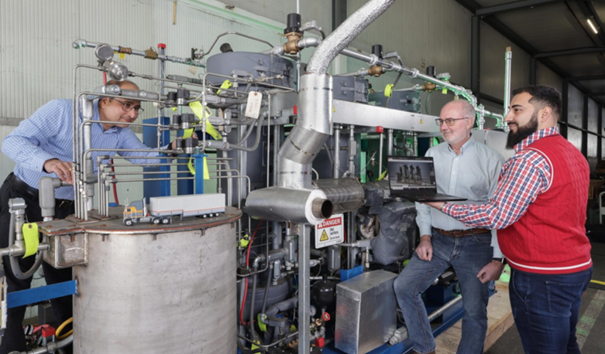
Research facility for collecting CO2 emissions from trucks – company courtesy

In 2022, according to official figures provided by the Swiss Federal Statistical Office, trucks operating in Switzerland emitted over one million tons of CO2. In the long term, this will likely go down as electric trucks will replace diesel-powered ones. Today, however, the number of electric trucks on the road is still very limited. In the first quarter of this year, a mere 600 e-trucks weighing more than 16 metric tons were registered in the entire EU, compared to 86,455 diesel vehicles.

From gas to liquid…
And this is where the start-up Qaptis comes into play. Its experts have developed a new decarbonizing mechanism which traps carbon gases coming out of the exhaust pipe and stores them in a liquid state. Following collection, the CO2 is cooled and separated from other gases such as nitrogen and oxygen, by passing over an absorbent powder. Once full, it is heated using the heat from the combustion engine. This releases the CO2, which high-speed turbochargers then compress into a liquid so that it takes up less volume. “We’ve finally completed the first step, which was transferring our core technology from the lab to industry,” says Théodore Caby, Qaptis Co-Founder and COO. “Now, we’ll focus on developing a device that can be installed directly in trucks.”

This said, much research and work are still to be done before conventional trucks are able to operate more sustainably and contribute to capping CO2 emissions. The first milestone was achieved in spring 2023, when a prototype produced the first drops of liquid CO2. The next technical challenge is to reduce the size of the device and shape it to fit different types of trucks. Once this has been accomplished, which is not a too herculean task, say the Qaptis experts, the liquid CO2 will be stored in a tank behind the cab, that can be drained when the truck returns to its starting point. “We initially plan to target local freight carriers that want to reduce their environmental impact,” says Caby.

… to fertilizer or carbon-neutral e-fuels
Next on the agenda is a recovery system allowing drivers to empty their CO2 tanks at gas stations, so that the technology can be employed more broadly. Industries in a variety of countries are currently developing and adopting carbon-capture technology, while others are concentrating on finding solutions for smart carbon utilization and storage. For instance, captured CO2 has applications in the production of food, fertilizer, energy, building materials and synthetic fuels.

Qaptis raised CHF 1.3 million (USD 1.5 million) from business angels and venture-capital funds in a successful funding round in spring. This has enabled the start-up to embark on its next phase of development. “We’re currently in talks with a large local freight carrier that would like to implement our technology soon,” says Caby. “We’ve also been contacted by businesses in Asia; but for now, we’re focused on the Swiss, German and Austrian markets.” One day, Qaptis’ technology could be used for other types of vehicles too, such as ocean vessels, he indicates.

Hellmann partners with shipzero
Meanwhile, 900 km north of Lausanne, the logistics company, Hellmann, based in northern Germany, has signed a partnership agreement with shipzero. That company specializes in measuring and reducing CO2 emissions in global freight transport. As part of the co-operation, shipzero supports the entire data management process and determines the CO2 emissions for Hellmann’s global road transportation. In doing so, shipzero also includes primary data from external logistics partners in the calculation, thus ensuring that the CO2 measurements are based on actual consumption data and not simply on extrapolations and average values, as has been customary in the market to date.

In order to determine precise emission volumes, data is exchanged between Hellmann and its transport partners via the shipzero platform. Consequently, exact Scope 3 emissions are collected per customer, shipment, and route selected. These are then integrated into the calculation of the corporate carbon footprint, external audits, and sustainability reports, thus supporting compliance with new regulatory requirements that will come into effect from 2024. The data-based processing and analysis of transport data enables Hellmann to identify specific decarbonization projects within the supply chain and implement them together with its partners.

Pledge co-hosts COP28 table to accelerate change

Around 80,000 [!] people have registered for the COP28 in Dubai, which began on 30NOV23 and runs through to 12DEC23. This will make it the largest COP summit yet in a host state that also happens to be one of the world’s top 10 fossil fuel exporters. However, leaving the recent controversy uncovered by independent journalists at the Centre for Climate Reporting aside, this COP28, attended by almost 200 heads of state, will be the first one to undergo a “Global Stocktake”, and take a serious look at how far the world has come in tackling the climate crisis and how much of a course correction is needed.

Encouraging industry discussion – Pledge Co-Founder David de Picciotto – Image: Pledge

It will also be the first time that climate tech specialist, Pledge, will co-host a round table with Smart Freight Centre (an international non-profit organisation focused on reducing greenhouse gas emissions from freight transportation), inviting shippers, freight forwarders, and carriers to share best practices and exchange ideas that can help accelerate the pace of decarbonisation in the industry. CargoForwarder Global (CFG) asked David de Picciotto (DdP), CEO and Co-Founder, of Pledge, to expand.

The OECD has predicted that global logistics emissions are set to increase 42% by 2050 – the same year the Paris Agreement has tasked the EU to achieve net zero carbon. If we’re going to meet this challenging goal, the industry needs to come together and collaborate.” – David de Picciotto, Chief Executive Officer (CEO) and Co-founder, Pledge.

CFG: I believe this is the first time that Pledge and Smart Freight Centre are hosting a table at COP28 on 06DEC23. What motivated the idea?

DdP: Indeed, this marks the first collaboration between Pledge and the Smart Freight Centre (SFC) in hosting a table at this prestigious event.

The motivation behind this initiative is rooted in our commitment to driving impactful change in the freight industry’s sustainability landscape. COP28 provides an opportune platform, bringing together public and private sector players to engage in meaningful discussions and collaborative efforts aimed at decarbonising logistics supply chains.

CFG: And how did the Pledge / Smart Freight Centre partnership come about? Have you collaborated before?

DdP: This collaboration between Pledge and the Smart Freight Centre (SFC) has evolved through a shared commitment to advancing sustainability in the logistics and freight industry. It initially stems from Pledge’s accreditation as a vendor adhering to the Global Logistics Emissions Council (GLEC) framework, promoted by the SFC. This framework has formed the basis of the recently published ISO 14083, a standard for the quantification and reporting of greenhouse gas emissions arising from transport chain operations.

The GLEC framework is a cornerstone in the industry’s efforts to standardise and enhance the measurement and reporting of logistics emissions. Pledge’s commitment to and compliance with this framework aligns seamlessly with the SFC’s mission to drive sustainable practices in global freight and logistics.

While this marks our first joint initiative in co-hosting an Executive Roundtable at COP28, our collaboration extends beyond this event. As an accredited vendor, Pledge has actively engaged with the SFC, contributing to the ongoing dialogue and efforts to promote sustainable practices within the industry.

CFG: How do you feel air cargo was positioned in previous COPs until now?

DdP: In previous COPs, the positioning of air cargo in the sustainability discourse has grown increasingly prominent, with a notable emphasis on addressing the environmental impact of aviation. The industry has recognised the imperative to navigate towards a more sustainable future, acknowledging its role in global emissions.

One significant aspect that has gained traction is the discussion around sustainable aviation fuel (SAF) and book & claim mechanisms to account for its use and reporting. Sustainable aviation fuel has emerged as a pivotal component in the industry’s commitment to mitigating its environmental footprint.

As the demand for air travel and cargo services continues to rise, SAF presents a tangible solution to reduce carbon emissions. Industry stakeholders, including carriers, are increasingly investing in, and exploring the integration of sustainable aviation fuels into their operations, both for freight and passenger transport. This shift signifies a collective commitment to fostering a more sustainable and environmentally responsible air cargo sector.

CFG: What will your main topics be for the table?

DdP: By bringing together key stakeholders, including industry leaders, policymakers, and experts, we aim to foster a dynamic dialogue focused on pressing topics such as data-driven sustainability, emission calculation methodologies, and the path forward for the decarbonisation of the industry. Our goal is to create a space where participants can share experiences, discuss challenges, and explore innovative solutions that contribute to a more sustainable future.

CFG: What do you hope will be the outcomes of the COP28?

DdP: From a business perspective, I hope to see elevated commitments from nations and industry stakeholders to prioritise sustainable practices that impact the freight sector, acknowledging its significant role in global emissions, particularly as freight is set to become the highest emitting sector by 2050 (20% of global emissions) – source: https://climate.mit.edu/explainers/freight-transportation#:~:text=Even%20as%20other%20energy%20sectors,highest%20emitting%20sector%20by%202050.

Additionally, I hope to see advocacy for policy advancements that specifically address the fossil fuel transition, incentivise climate action, support the adoption of innovative solutions, and foster the development of technologies and practices that reduce environmental impact in the freight industry.

CFG: Where do you see the biggest challenges for the air cargo industry with regard to Sustainable Development Goals?

DdP: Identifying and addressing challenges is crucial for the air cargo industry to align with Sustainable Development Goals (SDGs).

Mitigating carbon emissions remains a significant challenge, as achieving ambitious reduction targets while meeting the increasing demand for air cargo services will require innovative solutions over time. While innovations including alternative fuels as well as electric and hybrid aircraft pose challenges in terms of feasibility, scalability, and infrastructure development, it will be interesting to monitor their developments over the years.

CFG: Standardising data collection methods for emissions reporting is pivotal and indispensable. This not only ensures accuracy but also fosters alignment with Sustainable Development Goals across diverse industries, contributing to a unified and transparent approach to sustainability efforts.

DdP: Establishing consistent metrics and methodologies industry-wide is challenging but crucial for meaningful progress. This will necessitate collaboration across borders, aligning diverse stakeholders, including governments, carriers, and logistics providers.

Note that these points touch mostly on the environmental SDGs; besides these, the air cargo industry is also impacting social SDGs amongst others.

CFG: Smart Freight Centre does not seem quite so well-known in the air cargo industry – is this because it is mostly focused on road and sea? What are air cargo initiatives that we could highlight, or where we could encourage more involvement?

DdP: The GLEC framework does cover air as a mode of transport. Additionally, see the latest initiative: https://www.smartfreightcentre.org/en/our-programs/clean-air-transport/

CFG: What will Pledge and SFC be doing with the outcomes of the discussions at the table?

DdP: You’ll see soon enough! [Smiles]

Intriguiging. Thank you, David de Picciotto.

One outcome already, is Pledge’s latest data solution: Developed in accordance with Smart Freight Centre (SFC) guidance and launched on 30NOV23, its Accuracy™ feature furnishes forwarders with accurate Data Quality Indicator (DQI) emissions levels that they can share with shippers, so that these can make informed emissions-based supply chain decisions.

André Mohamed, Chief Product Officer and Co-Founder, Pledge, explained: “Shippers are looking for freight partners who can offer transparent and actionable insights into their supply chain emissions, and it’s becoming increasingly common for shippers to compare forwarders based on their ability to provide quality sustainability data when putting business up for tender. We’re the first accredited vendor to include a feature that helps forwarders and their clients understand the quality of their supply chain emissions calculations by providing SFC DQI levels for every multimodal end-to-end shipment.”

IAM becomes part of ECS Group

0
Another GSA joins the ECS Group family. Image: Lemon Queen

IAM is the acronym for Ireland’s largest GSSA: International Airline Marketing – a family business that was founded in Dublin, back in 1989, by Sean McCool. Now run by his son, Ian McCool, the GSSA is responsible for more than 25% of Ireland’s annual air cargo exports. Its central office is located in Stoneybatter, 15 minutes away from Dublin Airport, and near to Dublin’s main freight agents. IAM has Senior Sales Representatives in Cork (serving Cork & Shannon), and Belfast, and over the years has grown to include a trucking division (since the mid-1990s), as well as handling support and air cargo dangerous goods training (since early 2000’s). It began as an Air Canada representative and now serves more than 15 international carriers. IAM has well established connections to all freight agents across Ireland.

On 16OCT23, ECS Group and IAM signed an acquisition agreement, bringing IAM into the world’s leading GSSA network, and increasing ECS Group’s Irish market share to 30%. The press release emphasizes “The familiar faces that have been the bedrock of IAM’s success will remain at the forefront, ensuring a seamless continuation of relationships with both customers and suppliers, with the added bonus now of a direct link into a truly international and highly respected partner network offering new opportunities, products and services.”

Adrien Thominet, Executive Chairman of ECS Group, commented: “IAM is the absolute leader in the Irish market, with more than 30 years of experience and an outstanding reputation. It is the perfect example of a family business that has remained true to its founding credo of ‘Service excellence and continuous improvement through innovation and professionalism’ – one that very much aligns with our ECS Group philosophy. We share commercial synergies too, in the companies represented across our network, and similar business acumen. When two winners join forces, everyone wins – in this case, our joint customers.”

Ian McCool, Managing Director of IAM, stated: “Our rapidly changing air-cargo industry landscape demands a solid global presence and innovative and flexible service solutions. In ECS Group, IAM sees a partner with an international reputation as a market leader, and one that recognizes the importance of growing its global business via a network of well-established local market representative offices. We are proud to become part of a group that is forward-looking, technologically advanced, and known to be a highly supportive business partner that is committed to promoting sustainability in the industry.”

Menzies Aviation becomes IATA CEIV Pharma accredited… again

0
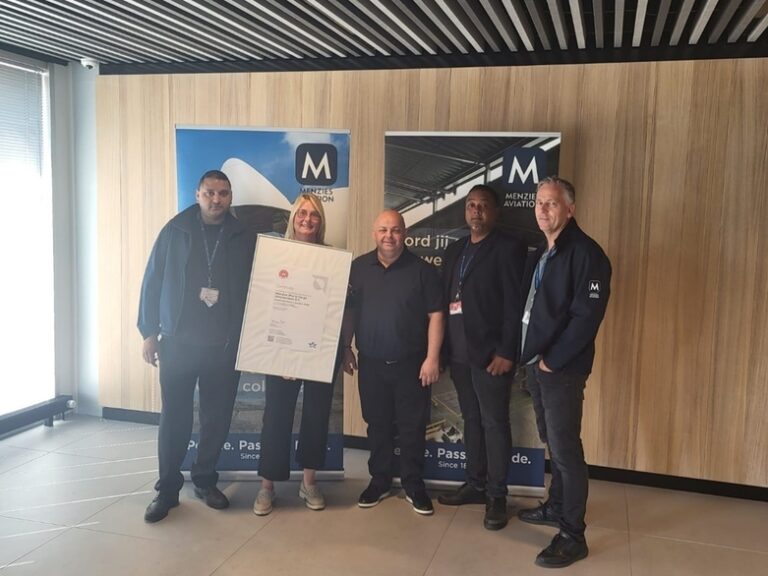
AMS is certified cool to IATA CEIV Pharma standard. Image: Menzies

Again, because this time it is the service partner’s cargo facility at Amsterdam Airport Schiphol (AMS) that was awarded the IATA Center of Excellence for Independent Validators in Pharmaceutical Logistics (CEIV Pharma) standards. certification on 28NOV23. AMS is now the fifth facility within Menzies’ international network to become IATA CEIV accredited. The other airport locations are: Sydney (SYD), Melbourne (MEL), London Heathrow (LHR) and Budapest (BUD) airports. All five locations have proven themselves capable of meeting the rigorous requirements outlined in the audit paper, that ensure the professional handling of high-value, time-sensitive, and temperature-controlled pharmaceutical products, thus ensuring their integrity and quality along Menzies’ responsibility within the overall supply chain.

AMS operates a team of 250 employees at its 37,000 m² airport cargo warehouse, and annually handles around 300,000 tons of cargo. As per CEIV Pharma, training, compliance to processes, and adequate equipment/facilities must be available and documented. “Prior to being awarded the certification, Menzies implemented a series of IT upgrades to ensure all relevant pharmaceutical checklists were digitized and correct handling was guaranteed. This ensures all Menzies operations meet the industry’s need for compliance, standardization, accountability, and transparency across the air transport supply chain,” the press release underlines.

Miguel Gomez-Sjunnesson – Executive Vice President Europe, Menzies Aviation, said: “Receiving the IATA CEIV Pharma accreditation is testament to our unwavering commitment to excellence in air cargo services, and recognition of our dedication to ensuring the utmost quality and integrity in every step of the supply chain journey. We’re delighted that Amsterdam joins the list of Menzies’ CEIV Pharma approved facilities. At a time when our cargo network is expanding globally, it’s important that our facilities and processes meet the high standards of pharmaceutical handling that this accreditation demands.”

More Maersk – this time over in the UK

0
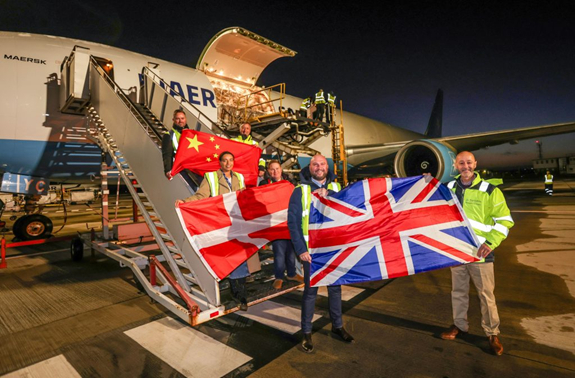
Maersk Air Cargo chooses Bournemouth for China-UK route trial. Image: Cargo First – Bournemouth Airport

… At the UK’s boutique airport, Bournemouth, that is working on carving a name for itself in the world of air eCommerce. And that is precisely the focus of Maersk Air Cargo’s China-UK flights. The carrier has opted for Bournemouth Airport (BOH) as its UK gateway in a pilot route from China, that will initially run until the end of 2023, and has been created to cover the seasonal peak, for now. Should it go well, the press release points to the “potential to continue thereafter”. Bournemouth, referred to informally as London’s seventh airport (after Heathrow, Stansted, Gatwick, Luton, Southend, and London City airport), given that it is located just 160 km southwest of the capital, has the benefit of not suffering the saturation that its larger international peers face. And it is this flexibility that the airport is seeking to exploit as it focuses on building up its cargo operation, marketing itself as an alternative gateway outside London. Together with Cargo First, which operates the Cargo First Logistics Park (set on a site that offers 93,000 m² of warehousing development potential) at the airport, Bournemouth Airport is part of the UK’s privately-owned Regional and City Airports (RCA) group.

Maersk Air Cargo has already begun operating weekly flights from Hangzhou Xiaoshan International Airport (HGH) in Zhejiang province to Bournemouth (BOH), deploying a Boeing 767-300 freighter which offers 45 tons of cargo capacity. It collaborates with BOH’s in-house air freight business Cargo First. “For Copenhagen-based Maersk, the route is part of its growing air freighter network between mainland China, Southeast Asia, Europe and the US,” the release states. A Hangzhou connection to Billund Airport (BLL) in Denmark was established in MAR23, followed by a Hangzhou to Chicago Rockford International Airport (RFD), US, service in APR23.

Gary Jeffreys, Managing Director of Maersk Area UK & Ireland, stated: “It’s fantastic to see Maersk Air Cargo landing in the UK. This represents our integrator strategy and demonstrates our product offering and capabilities across all modes of transport. Whether it be time critical, capacity challenges or product launches we have the capabilities to meet our customers’ demands.”

Steve Gill, Managing Director of Bournemouth Airport, said: “We’re delighted that Maersk has chosen Bournemouth for this new route as we grow our ambition to become the UK’s number one entry and exit point for time critical cargo. We now have 500 tons of weekly import capacity operating between China and Bournemouth as more customers take advantage of our location, lack of slot constraints and ‘One Team’ integrated approach across all airport and cargo handling operations.”

dnata wins Maersk Air Cargo business for CGN

0
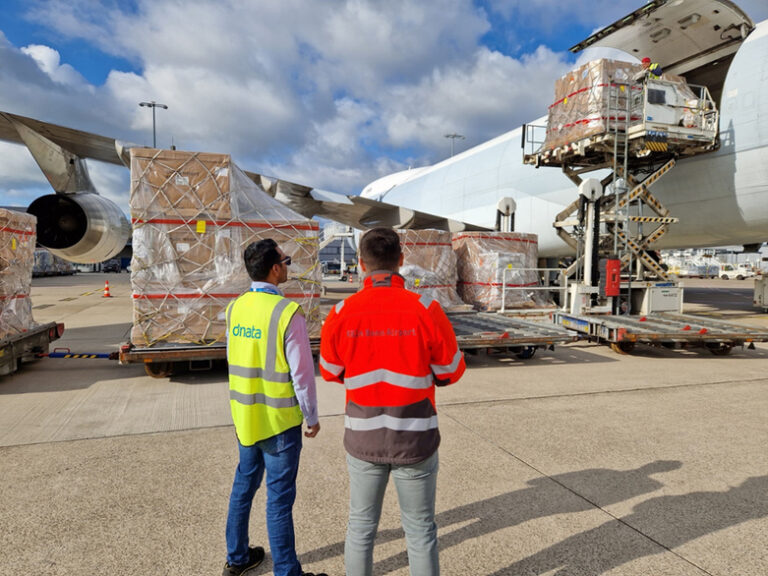
Serious shipping over in Cologne from a neo air cargo sea-freight giant. Image: dnata

Who would have imagined, back in 2019, that a sea freight giant would begin operating its own cargo airline at some point? And yet, here we are in 2023, and Maersk Air Cargo has been actively flying since just over a year and has now selected dnata to handle its cargo over at Cologne Bonn Airport (CGN). The multi-year cargo contract wherein dnata agrees to provide quality and safe cargo handling services to the airline at CGN, was signed on 30NOV23. Maersk foresees around 6000 tons of cargo on board of its weekly flights between Cologne and Greenville (GSP) in the USA. They are operated using a Magma Boeing 747-400F aircraft and are set to increase in frequency and thus also available market capacity, soon. No problem for dnata, which already handles around ten times that amount at CGN Airport, where it exclusively manages the 12,000 m² Cologne Bonn Cargo Centre. dnata acquired the center’s operator in 2022, and now employees a team of 100 staff to serve its 20 airline customers. Maersk will be served by its own dedicated dnata team at Germany’s third largest cargo airport. Like Maersk Air Cargo, the airport, too, has potential for growth and the good fortune to be allowed to operate 24 hours a day, offers a good road connection and is conveniently located (Northwest Europe) to serve a number of key markets.

Stef van Binst, Managing Director, dnata Belgium and Germany, said: “We are proud that Maersk has chosen dnata as its trusted provider for safe, reliable, and efficient cargo handling services. This significant contract win is a testament to our Cologne team’s hard work and unwavering commitment to service excellence. We look forward to a successful partnership with our newest customer in Germany.”

Dronamics scores a serious win with Qatar Airways Cargo

0

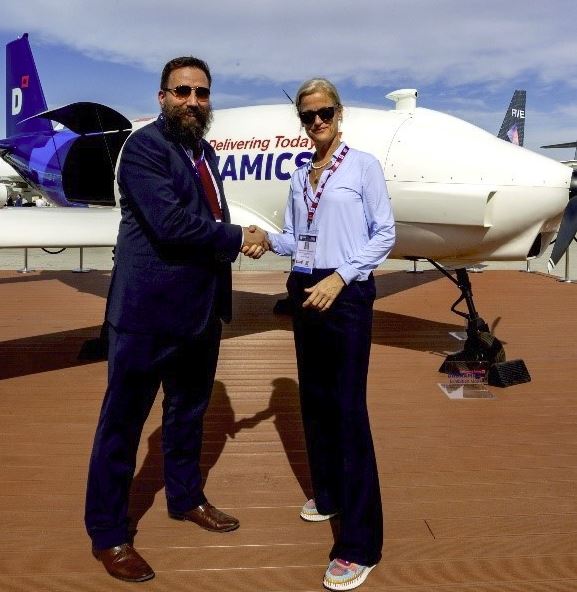
When the world’s largest international cargo carrier says yes to an interline agreement, then you’re literally starting at the top and working down. Dronamics is already making serious headway in its strategic plan to commence commercial operations from early next year (in Greece, to begin with), since it became the first cargo drone airline to obtain IATA & ICAO designator codes earlier this year. That step which puts it on an equal aviation footing with other international airlines, was the foundation to this one, now with Qatar Airways Cargo, since, as a registered and recognized airline, Dronamics may issue air waybills to enable seamless bookings with its airline partners. The signing of the world’s first cargo drone Interline Agreement with Qatar Airways Cargo, “is a crucial next step in Dronamics’ plan to establish a cargo drone airline network with worldwide reach,” the release emphasizes, going on to point out that “the partnership marks the first interline agreement between an international airline and a cargo drone airline. […] Dronamics can offer cargo services from any of its droneports, initially in Greece, to the wider Qatar Airways Cargo network – including destinations such as Singapore, China, including Hong Kong, and the United States (JFK). Qatar Airways Cargo is able to access remote locations that Dronamics serves, such as the Greek islands, on the Dronamics cargo drone network.”

One seriously big deal – Dronamics signs with world’s largest cargo airline. Image: Qatar Airways Cargo

Svilen Rangelov, Co-Founder and CEO of Dronamics, announced: “We’re very excited to have the world’s largest air cargo carrier as our partner for the first-of-its-kind interline agreement with our category-defining cargo drone airline. While currently less than 1% of global trade moves by air, the vast global reach of Qatar Airways Cargo and their world-leading capacity and service give us the perfect platform to massively expand air cargo accessibility to countless more communities worldwide, enabling same-day delivery for everyone, everywhere.”

Elisabeth Oudkerk, SVP Cargo Sales & Network Planning at Qatar Airways Cargo, commented: “As a part of our VISION 2027 5-year strategy, we are committed to remaining at the forefront of our industry by embracing new disruptive technology. It is also within our DNA to support young ambitious companies like Dronamics, and we are looking forward to seeing what the future holds for this exciting business. It is a significant milestone in the advancement of autonomous cargo drone transportation, and we are proud to be the first international airline to offer this service.”

Atlas Air: New freighters and new CFO

0
Another 777F joins the Atlas fleet. Image: Atlas Air

It is all systems go over at Atlas Air, which has been firing out press releases this week – notably one confirming the appointment of its new CFO, as well as first on 28NOV23 announcing an order for two new Boeing 777-200LRF to meet widebody freighter capacity especially from the e-commerce industry, and then on 30NOV23, publishing that it had taken delivery of one new 777F which it would be operating for MSC’s Air Cargo Solution. First to the two new 777 freighters: they are expected to be delivered in the second half of 2024. Michael Steen, Chief Executive Officer, Atlas Air Worldwide, announced: “We are excited to add these aircraft to our leading world-class fleet. These come at a time when retirements of older widebody freighters will significantly increase and when the introduction of new widebody freighter capacity will be limited. We have a deep pipeline of prospective customers interested in these 777 Freighters, and we’re confident in our ability to place them under long-term agreements.

The 777F that it took delivery of on 30NOV23, is the third in a 2021 order of four that Atlas Air placed based on a long-term ACMI (aircraft, crew, maintenance, insurance) agreement with MSC Mediterranean Shipping Company SA. The fourth 777 expected to be delivered this month. The new freighter will complement the existing weekly service and add an additional route from Hong Kong (HKG) to Dallas/Fort Worth (DFW).

Richard Broekman, Chief Commercial Officer and Head of Sustainability, Atlas Air Worldwide, commented: “The delivery of this new 777 Freighter is a proud moment for Atlas […] We are proud to support the ongoing expansion of MSC’s air cargo solution by providing additional speed, flexibility and reliability to their existing network.” Jannie Davel, Senior Vice President, Air Cargo, MSC, added: “This latest 777 Freighter delivery accounts for a strategic addition to our MSC Air Cargo fleet, enabling us to address the market’s constantly changing demands and reinforcing our commitment to enhancing trade connections for our clients.”

Atlas Air Worldwide appointed Artem Gonopolskiy as its Executive Vice President and Chief Financial Officer, effective 01DEC23, effective confirming the position since Gonopolskiy was serving as interim CFO since 15JUN23, already. An Atlas veteran of 18 years, he will now manage the company’s finance functions: strategic financial planning, accounting, reporting, internal audit, tax, treasury, and investor relations, and continues to report to Michael Steen, Atlas Chief Executive Officer.

Virgin Atlantic’s Virgin 100% SAF flight – an historic achievement

0
“We did it!” say Virgin Atlantic following the first 100% SAF flight. Image: Virgin Atlantic

Though not strictly an air cargo achievement, this aviation milestone is one to celebrate. A week after Emirates announced its first 100% SAF demonstration A380 flight (which actually turned out to be 1 of 4 engines running on SAF), Virgin Atlantic has now actually flown the world’s first 100% Sustainable Aviation Fuel commercial flight. The route: London Heathrow (LHR) to New York’s JFK Airport. The plane: a Boeing 787. The engines: Rolls-Royce Trent 1000 engines. The SAF: a unique dual blend of 88% HEFA (Hydro-processed Esters and Fatty Acids made from waste fats) supplied by AirBP, and 12% SAK (Synthetic Aromatic Kerosene made from plant sugars) supplied by Virent, a subsidiary of Marathon Petroleum Corporation. “SAK is needed in 100% SAF blends to give the fuel the required aromatics for engine function,” the release explains. The success is down to a Virgin Atlantic-led consortium of Boeing, Rolls-Royce, Imperial College London, University of Sheffield, ICF and Rocky Mountain Institute, all working together in partnership with the UK’s Department for Transport.

Shai Weiss, Chief Executive Officer, Virgin Atlantic, said: “Flight100 proves that Sustainable Aviation Fuel can be used as a safe, drop-in replacement for fossil-derived jet fuel and it’s the only viable solution for decarbonizing long-haul aviation. It’s taken radical collaboration to get here and we’re proud to have reached this important milestone, but we need to push further. “There’s simply not enough SAF and it’s clear that in order to reach production at scale, we need to see significantly more investment. This will only happen when regulatory certainty and price support mechanisms, backed by Government, are in place. Flight100 proves that if you make it, we’ll fly it.” Today, SAF represents less than 0.1% of global jet fuel volumes, and fuel standards allow for just a 50% SAF blend in commercial jet engines. However, Flight100 demonstrates the possibilities if industry and governments seriously focus on building up SAF production.

Sheila Remes, Vice President of Environmental Sustainability, Boeing, stated: “In 2008 Virgin Atlantic and Boeing completed the first commercial SAF test flight on a 747 and today we will accomplish yet another significant milestone utilizing a 787 Dreamliner. This flight is a key step toward our commitment to deliver 100% SAF-compatible airplanes by 2030. As we work toward the civil aviation industry’s net-zero goal, today’s historic journey highlights what we can achieve together.”

Saudia Cargo, Cainiao, and WFS drive e-Commerce

According to data published by market analyst, Transport Intelligence, in their latest Global E-Commerce Logistics Report, the global e-commerce logistics market is expected to grow by 7.9% in 2023, reaching a value of €451 billion.
In view of the upsurge of global e-trade, it is not surprising that the air freight industry is experiencing an increasing trend to new collaborations, with those involved wanting to secure as large a slice of the cake as possible. The recently announced alliance between Saudia Cargo, Cainiao, and WFS, is an expression of this dynamic business segment.

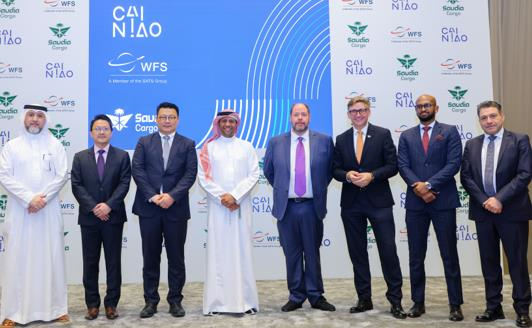
L > R: Marwan Niazi, VP Commercial, Saudia Cargo / Thomas Yu, Sr. Director, Global Hub Ops and Product Development, Cainiao Group / Eric Xu, VP of Cainiao Group / Eng. Loay Mashabi MD, Saudia Cargo / John Batten CEO EMEAA, WFS/SATS / Teddy Zebtiz, CEO Saudia Cargo / Mohanned Badri, VP Ops, Saudia Cargo / Assaad Sfeir, Key Account Director, Group Commercial, WFS/SATS  –  courtesy: Saudia Cargo.

Online shopping is increasingly replacing the traditional brick and mortar business. A walk through the centers of many European cities, illustrates this. Plenty of stores flocked to by shoppers in the past, are now closed. E-commerce can be blamed. And things are likely to get even worse for store owners, as more and more people are using the internet to shop and have their orders delivered to their doorstep by courier companies.

Business interests converge in Liège’s warehouse
What does this have to do with Cainiao, Saudia Cargo, and WFS? At first glance, nothing, but a closer look reveals – a lot. The three actors are the link between manufacturers and consumers, and their services ensure that online shoppers receive their goods as quickly, cheaply, and conveniently as possible. The close cooperation between the three companies that has now been announced, includes another player: Liège Airport in Belgium. The transportation giant, Cainiao, which was founded in Hangzhou in 2013 and belongs to the Chinese Alibaba Group, operates a large warehouse there. Saudia Cargo had its shipments handled there by Aviapartner but replaced the ground service provider by bringing in WFS. The Aviapartner successor now manages parts of the Cainiao warehouse and will significantly expand this activity by 50,000 tons per year through close cooperation with the other two partners. This is to take place from 01MAR24 onwards, when the contract concluded between Saudia Cargo, Cainiao, and WFS comes into force.

Paving the way for a seamless flow of shipments
In addition to its own freighter fleet, Cainiao will use the capacity of Saudia Cargo’s freighters for the transportation of e-commerce shipments ex Hong Kong, as part of the agreement now reached between the trio. The Saudi carrier serves Liège on average eight times a week, operating B747-400F or B777F, with the HKG flights routed via Jeddah or Riyadh. Thanks to 5th freedom rights, Saudia also connects Liège with New York. “Our collaboration ensures a seamless flow of e-commerce materials from Hong Kong to Liège. With high frequency flights on our Hong Kong to Liege route via Riyadh, we have a significant capacity exclusively dedicated to Cainiao. Utilizing a meticulous process involving pre-built ULDs, we facilitate an uninterrupted supply chain, supporting Cainiao in achieving their key performance indicators,” remarks Teddy Zebitz, CEO of Saudia Cargo.

Upgrading handling practices
In a statement, John Batten, CEO, Europe, Middle East, Africa and Asia (EMEAA) of SATS group member, WFS, pointed out that so far, e-commerce shipments have been processed within a traditional air cargo handling environment.With the growth projections for e-trade, the industry response must be more dynamic and tailored, he urged. “And this is what WFS/SATS aims to deliver in Liège working alongside Saudia Cargo and Cainiao,” the WFS executive stated. This three-party collaboration leverages operational excellence skills and requirements from the airline, cargo handler, and e-commerce logistics perspectives.It will exemplify our commitment to innovation, speed, and real-time information for the future of the e-commerce logistics ecosystem.”

The deal benefits all partners similarly
Eric Xu, Vice President of Cainiao Group, spoke of a win-win collaboration that willfurther reinforce Cainiao’s position as one of the world’s leading cross-border e-commerce logistics providers. “Through continuously equipping our Liège eHub with cutting-edge technology solutions, we managed to boost the efficiency of logistics operations while improving customer experience through greater transparency and traceability,” he remarked.

Incidentally, there are also numerous empty stores in downtown Liège.