
Home Blog Page 189

CHI: A Tech company that happens to do Logistics

In his welcome address at the Christmas party of ground service provider Cargo Handling International (CHI) last Thursday (14DEC23) near Frankfurt CEO Kai Domscheit pointed out that standstill is regression. This is no option because “we want to move forward and progress,” the executive exclaimed. Although remaining somewhat unspecific, he indicated that going beyond traditional cargo handling and becoming a tech company offering a broad spectrum of logistics services is the aim of the transformation. Following the party, we spoke with Kai about the management’s masterplan:

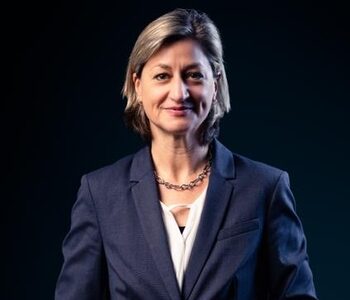
CEO Kai Domscheit intends to transforms ground handler CHI into a full logistics provider – video  screenshot: CFG/hs

Your staff and surely many customers would like to know what changes this new focus implies a) for your corporate strategy, and b) the daily working process? Kindly elaborate.

KD: For the last 30 years, we have been known as a small family-run business which might have been perceived as just a small warehouse handler of some freight forwarders located in Frankfurt. At our ‘Pick Your Christmas Tree’ event, we launched our new logo and with that we initiated our journey to transcend into a tech company that happens to do logistics. I certainly can’t reveal nor summarize our corporate strategy into one paragraph, but I can disclose two areas of focus that we are going to work on this year and after. With regard to our corporate strategy, we will not only intensify our HR policy initiatives by putting our people first, but also focus on more efficient processes and more scalable organizational structures. We see our employees as our extended family members. Hence, simultaneously on the daily working process, we must empower our employees through communication. Most managers understand communication as a one-time transfer of information, often top-down. We have recognized the beauty of a two-way communication, that we realized this year in our pilot workshop ‘to create our first digital warehouse of the future’. High executives, mid-level management, all the way to the warehouse employees came together and are still continuing to come together every 12 weeks, to identify barriers before they become the problems of tomorrow. This proactive identifying of barriers not only helps us to respond and dissolve process issues, but also created magical moments that we have not witnessed in our company’s culture in years. We saw leadership involve employees, who in return felt valued. …and let me tell you, when employees feel valued, they are more likely to embrace change and participate in making it happen, which, in return, yields to an amazing Christmas party with fireworks.

CFG: Sounds like you will need expert digital know-how to achieve your targets. However, qualified IT personnel is rare, at least in Europe. Any solution to overcome the bottleneck in order to make your visions come true?

KD: You are absolutely spot on in regard to the IT-personnel challenge. We have decided to entrust this to Bernd Mau, our CDO position. He joined our organization from HPC and has vast knowledge. This year alone, we hired 14 additional people, i.e. project managers, a business analyst, product owner, software developers, data analysts and engineers, as well as IT administrators, totaling now 31 IT employees and eight more will follow next year. This shows that we are investing in our IT strategy, and that our digital supply chain is more than just a buzzword. We have a comprehensive strategy covering the entire IT chain and it seems that we have succeeded in showing that we do take digitalization and automation seriously. We try to show people the potential and possibilities, and that there is plenty of room for creativity and ideas. We are seeking people who not only enjoy their work, but also excel and take pride in shaping the common future of our air cargo industry. Furthermore, we offer IT-people an increasingly professional environment in which we can grow together. At the same time, we offer a high degree of flexibility and personal responsibility, for which we simply request performance. Bernd Mau stated that he thinks “all of this together makes CHI an interesting employer for certain people, especially those prospective employees, who identify their work as more than just a job. We also know that we cannot achieve all of our projects on our own. Hence, we will also increasingly rely on models such as team extension with suitable near-shoring partners in the future.”

The motif of CHI’s new logo resembles an AKE container with a digital touch of a tech company – company courteys

CFG: … Doesn’t the new transformation strategy, ‘Beyond Cargo’, also require a change of mindset among many employees? Experience has shown that change always triggers fears. Did you sufficiently consider this aspect prior to your announcement?

KD: A long time ago, we gave up trying to make it right for everyone or trying to find the right timing. Obliviously, there will be people who either fear what is coming or might question the timing of the announcement. Some will do both. Therefore, we decided to tackle the traditional prejudice to change by making our upcoming transformation more compelling and exciting. Change management communication doesn’t have to be a fully mapped out and timed out plan in detail, that needs to be executed only by managers. I strongly believe that the utmost important part of a transformation strategy is that it addresses and communicates an authentic and prioritized purpose that is clear and consistent.

We want to become a tech company that happens to do logistics. We believe that by communicating our context to our why and what we change, our employees will also transform from “how does this change or impact my life and work” into employees with a much deeper and clearer understanding, who optimistically will simply ask: “How can I support this new avenue and become part of CHI’s transformation?”

CFG: In your Welcome Speech at the Christmas event, you emphasized that consolidation is not a threat, but might open up new avenues. So, are there any plans in the near future to merge CHI with another player? Or was this statement more a reflection of your entrepreneurial thinking?

KD: In the recent past, we already merged with other stakeholders such as the handling unit of Nuremberg Airport. We also widened our footprint from Munich all the way up to Hamburg. For the near future, we do not want to spoil the excitement, but we might give you a sneak-peak of what’s to come. The curiosity as to whether this is a statement that reflects entrepreneurial thinking or if mergers are on the horizon, shall remain a secret a little longer. But what I can state is that… people who do appreciate us, know and understand this is usually not a question about “if”, as it is more a question about “when”… Although, we do respect your curiosity as a journalist to shed some light into certain unanswered questions and as much as it is your responsibility as media to reveal…, but still, some things are better experienced as they just unfold. It is similar to a magician’s spell. Knowing how and when the trick is performed, and the magic is lost forever! I do not want to carry that burden 🙂

CFG: It would be interesting to know if there is any kind of time horizon for CHI’s Beyond Cargo Strategy – what will be changed and when will this be done?

KD: I hope that I made our Beyond Cargo Strategy and value preposition clearer and when it comes to change, respectively, achievements, I will repeat Arthur Ashe’s quote that I stated in our ACCF Hub-Performance Task Force. “Success is a journey, not a destination. The doing is often more important than the outcome.”

To be continued… I promise!

CFG: Kai, thank you for your statements. It doesn’t take much phantasy to forecast that more talks are to follow on CHI’s industrial transformation journey.


Happy Holidays and see you again soon!

We’re exactly two weeks away from the end of the year, and just days away from discovering whether we made it onto Santa’s Nice list or ended up on the Naughty one. Either way, CargoForwarder Global’s newsletter distribution list makes no such distinction – you’re all Nice in our eyes, and we thank you for your regular feedback, for sharing your news and our articles, and for sponsoring us.

May the future gift you health, happiness and success. Image: AI generator/CFG

Looking back over 2023, it has been a very mixed bag of experiences and a case of same-same, but different. Same-same being the unexpected challenges continuing, with a second geopolitical crisis coming onto the scene at the start of October, just as the market was finally starting to stabilize after months of sluggishness. While the war on Ukraine continues, the uncertainty of how the Israel-Gaza military offensive will pan out, particularly in light of the most recent Houthi attacks in the Suez Canal as a reaction and ocean trade being affected, means that ongoing resilience and adaptability are still required of the air cargo industry. There have been negative surprises, too, in various unexpected bankruptcies of air cargo stakeholders or feeder services this year.

Same-same, however, also with regard to industry image and circumstances. Given that passenger travel has returned with a vengeance, flooding the market with belly capacity, the simultaneous drop in general demand is far from helpful. [Specials, on the other hand, such as pharmaceuticals, are performing better than ever.] Air cargo is therefore normalizing back to the poor air cargo situation in 2019. And that appears to include its image. Are we really going to stand by and let air cargo be demoted to second fiddle again – or, more figuratively – return to being the tolerated uncle at the family party who isn’t taken that seriously? Where did the limelight and cargo hero image of the pandemic go? And are we being adequately represented by those associations created exactly for this purpose?

On the other hand, if we look at the industry buzzwords: Sustainability, Digitalization, Innovation, and the increased collaboration that began during the pandemic, then there were a number of positive developments this year. Sustainability has seen increasing partnerships and movement in procuring and using SAF, for example. Some companies are taking single-use plastics more seriously, whilst others are looking to digital support in their sustainability measures, and getting it, given the rising number of CO2 calculators and software solutions promoting process efficiencies, for example. Digitalization is moving at a faster pace, with greater collaboration within growing cargo communities as well as between software companies. Regarding innovation, there is a palpable tendency to more customer-centric, improved products and services, as well as an increasing willingness to invest in future-oriented solutions such as cargo drones, and in CEIV quality certifications. And there appears to be more focus on young talent and equality, though there is still much to do in these areas.

Last year, we wrote: “The prognosis for 2023, following the past six months of a softening global market, rising inflation, dropping rates, returning belly and ocean capacities, for example, is that the first half of the year will continue in much the same vein, with the market picking up again towards the end of next year.” CFG believes that we can pretty much repeat that sentence and just change the year to 2024, for it to be a correct prediction.

That said, the poll we ran on our CargoForwarder Global LinkedIn page last week, has shown that most of you are positive about the future: only one in eight expects that 2024 will be worse than 2023, 40% think it will be pretty much the same, and almost 50% are optimistic that it will be better than this year. Let’s hope they’re right!

Certainly, CFG will be poised, pen at the ready, to report on developments, your success stories, new products and partnerships, innovations, and events. We enjoy discovering even more about the industry through interviews and discussions with you, and again extend our thanks to all our readers, sponsors, guest authors, contributors, and media partners for your excellent support over this past year.

Our next edition of CargoForwarder Global will be sent on Sunday 06JAN24. If you have an idea for an article or opinion piece and would like to see your name in print, or if you would like to benefit from greater company visibility by advertising in our free, weekly newsletter, simply send us an email at hs@cgofor.eu

Wherever you may be these next couple of weeks – at work, home or on holiday, we wish you peace and relaxation, ready for a successful start into the new year.

Your CargoForwarder Global Team

New year, new Contract Logistics Head at DB Schenker

0
Niklas Wilmking will be new Global Board Member for Contract Logistics. Image: DB Schenker

All change on 01JAN24 over at DB Schenker. Its current Global Board Member for Contract Logistics and Supply Chain Management, Hessel Verhage (51) is stepping down on his own volition to return to his family in the USA. The release points out that Verhage is due to soon take up a new position, there, outside the logistics sector. The baton is now being handed to the company’s current CEO Asia Pacific, Dr. Niklas Wilmking (49) as the new member of the Global Board of Management for Contract Logistics and Supply Chain Management with the start of the coming year. Having joined the company in 2002, Dr. Niklas Wilmking brings 21 years of internal and international experience in a number of management positions across Germany and Asia, leading up to his current role as CEO Asia Pacific since JAN21. His extensive air cargo knowledge is underpinned by a PhD in Logistics from the Technical University of Berlin, following on from a Business/Economics degree from the University of Bayreuth.

Dr. Levin Holle, Chairman of the Supervisory Board of DB Schenker, commented: “In more than 20 years at DB Schenker, Niklas has impressed in every position and is an exemplary leader. We are delighted to be able to harness his many years of in-depth expertise and his great understanding of the needs of our global customers for the Management Board of DB Schenker.”

Jochen Thewes, Global CEO of DB Schenker, stated: “As Global Head of Air Freight and CEO Asia Pacific, Niklas has led his teams with outstanding expertise and prudence. He brings positive energy and the will to make the best of DB Schenker every day. We are proud that he has now been appointed to the Management Board from our own ranks.”

Dr. Levin Holl thanked Hessel Verhage for his work at DB Schenker over the past four and a half years, initially as Chief Executive Officer Americas Region from AUG19, and then taking over his current position in SEP22: “We regret this very much and thank him for his successful work in outstanding positions for DB Schenker, most recently as Board Member for Contract Logistics and Executive Vice President Global Strategy.”

Jochen Thewes added: “With his work, Hessel has made a significant contribution to consolidating DB Schenker’s market position as one of the Top 5 global logistics service providers through strategic adjustments and to continuously improving the company’s performance. We wish him all the best for his future professional development.”

GEORGI Handling joins VACAD

0
Diana Schöneich: Stronger together in an often over-looked segment. Image: GEORGI

Germany’s Association of Air Cargo Handlers – VACAD – (founded in Frankfurt/Main, in 2007), is another member stronger – this time industry heavyweight, GEORGI Handling. The air cargo handling company which has bases in Frankfurt and Leipzig, is the third big-name handler to join the organization this year, following in the footsteps of dnata and CHI Aviation Handling, and bringing VACAD’s member numbers up to 17.

GEORGI Handling currently handles around 130,000 tons of freight per year at its Frankfurt (Cargo City South) and Leipzig/Halle sites, employing around 150 employees to work at its 35,000 m² facilities. In addition to the DHL subsidiary European Air Transport Leipzig, its counts customers such as Vietnam Airlines and Air France-KLM.

Diana Schöneich, Managing Director of GEORGI Handling, commented: “VACAD gives a voice to the process segment of the supply chain that is relevant to us – air freight handling – and represents the industry in a solution-oriented and sustainable way. This is extremely important, because air freight handling plays a key role in the execution of the entire process chain and is still too often overlooked and undervalued in its importance due to the contractual constellations between forwarder and airline. Like all air freight handlers, we are constantly faced with the task of having to implement new legal requirements and, as a member of VACAD, we hope to be able to help shape the corresponding framework conditions in a practical way, but also to escalate and intervene at necessary points via the association. We are convinced that only together can we succeed in making the logistics export and import processes in Germany smart, transparent, affordable, and therefore attractive in commercial and procedural terms compared to other countries.”

Claus Wagner, Chairman of VACAD, said: “Whether it’s the duration of the background check, software problems with the Import Control System 2, or the discontinuation of the so-called special control procedure: our members all struggle with similar problems. Problems that we are working hard to solve. As an association, we want to and can make a difference. We are happy about every new member, and see our work confirmed by the addition of several new members this year.”

Atlas Air and Inditex will use Repsol SAF on cargo flights

0
Atlas Air partner Repsol advocates switching from linear to circular economy to establish a more sustainable production and consumption model – chart: courtesy Repsol

The global multi-energy company, Repsol, has been contracted by Atlas Air and Inditex to supply SAF for their cargo flights operating out of Zaragoza Airport in Spain. This is particularly notable news since not only is Atlas Air the first cargo airline to regularly deploy SAF in its freight transport flights out of Spain, but also Repsol is starting up its first plant dedicated exclusively to the production of advanced biofuels – one of the first plants of its kind in Europe – at its industrial complex in Cartagena (Spain). It has invested over 200 million euros in the project and aims to eventually produce around 250,000 tons of SAF and renewable diesel per annum, using old cooking oil and agricultural waste. That represents a CO2 reduction of around 900,000 tons/year. While Repsol already began supplying sustainable aviation fuel (SAF) to Atlas Air for use in all its Inditex flights since November (Atlas Air is initially incorporating 5% SAF in all its flights), the new plant is necessary to ensure adequate amounts of SAF in the coming years. “In 2022, total SAF production worldwide was 240,000 tons, according to the IATA. In 2025, approximately 120,000 tons will be needed in Spain to cover the 2% obligation of RefuelEU Aviation. Production of the new plant will be able to cover all the SAF demand in the Iberian Peninsula, complying with the obligation until the European mandate rises to 3%,” the release explains, point to that figure increasing to 6% in 2030 and 70% by 2050.

Óliver Fernández, Director of International Aviation at Repsol, commented: “With this agreement, we take another step in the decarbonization of aviation. We show that SAF is the future, but also the present. With the upcoming launch of our new advanced biofuels plant in Cartagena (Spain), we are ready to supply the sector with the SAF it needs to realize its decarbonization ambitions.”

Richard Broekman, Chief Commercial Officer and Head of Sustainability for Atlas Air Worldwide, said: “We are committed to contributing to the sustainability of the aviation sector and appreciate this opportunity to work with our valued partners at Inditex and Repsol. It is critical for our sector to work together in driving wider adoption and availability of SAF, which ultimately will have a positive impact on our industry and the environment.”

dnata’s DGR training receives IATA certification

0
Well trained staff can be the difference between life and death in air cargo. Image: dnata

When it comes to dangerous goods (DGR), there is no leeway for error as this can have serious effects on flight and human safety. dnata continuously invests in the training of its employees, as well as works to improve its daily airport operations processes. Its DGR global training program was recently awarded the International Air Transport Association’s (IATA) Corporate Certification for competency-based training and assessment (CBTA) for Dangerous Goods. A dedicated dangerous goods working group from across the company’s organization, spent 18 months reviewing exactly how dnata assesses and delivers all dangerous goods training requirements in order to comply with IATA’s framework approach. Its findings and solutions were implemented in JAN23, to ensure consistent quality and competency across the global dnata network. dnata was subsequently subjected to a formal and comprehensive IATA audit from MAR23-AUG23, which looked at all aspects of its Training Management Systems and how the Dangerous Goods CBTA program was being applied. This latest certification is another milestone in a longer improvement process. For example, in 2021, dnata became the first global air services provider to adopt IATA’s Dangerous Goods Autocheck (DG Autocheck) platform for the acceptance of dangerous goods shipments.

Steve Allen, CEO of dnata Group, said: “We are proud to continue to lead the way in the handling of dangerous goods across our operations. We persistently invest in our training program and implement the latest global best practices to deliver the highest standards of safety and quality. We will continue to work closely with IATA and our partners to consistently provide best-in-class services to our customers and their customers.”

Frederic Leger, IATA Senior Vice President Commercial Products and Services, stated: “The safe transport of dangerous goods is a priority for the industry, with training being a foundational element. We congratulate dnata on achieving IATA’s CBTA Center certification for Dangerous Goods across their entire network. This achievement underscores dnata’s dedication to upholding the highest standards in dangerous goods training and assessment. It also stands as a testament to their unwavering commitment to excellence. dnata’s customers can now have even more confidence, that their products are being handled with the utmost safety and expertise at every touchpoint.”

Rockin’ on for 45 years already

0
Without the logistics support of specialist Rockin’-It many concerts by world-famous musicians would not take place – company courtesy  

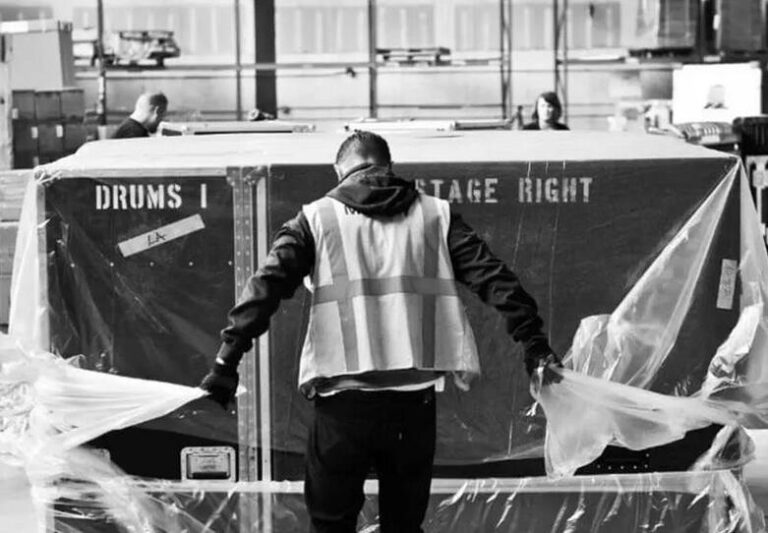
Long-standing logistics groupie, Rock-It Global, recently celebrated its 45th anniversary at a Welcome Party held on 06DEC23, during THE Conference Live at Lititz in Pennsylvania where it revealed it was rebranding back to its original Rock-it Cargo name. Rock-It is specialized in transporting equipment for huge music tours, sporting events, motor sports or theatrical productions. A lot has happened in 45 years, and the company took the occasion to reminisce on all the iconic events that were able to take place because of its logistical efforts. “Since 1978, Rock-it Cargo’s team has pulled together the logistical operations to make the world’s largest concerts possible – from Live Aid and Bruce Springsteen to Madonna and Lady Gaga. Whether it be bringing Billy Joel’s tour to the former Soviet Union in 1987, or helping Metallica become the first band to play all seven continents, Rock-it Cargo has been the logistical powerhouse keeping rockstars on-the-go,” the press release proudly gave as examples. Whilst its beginnings are rooted in Rock’n’Roll, its logistics portfolio has increased over the years to include live sporting events, motor sports, arena spectacles, and theatrical sets. Harry Potter and the Cursed Child, Cirque du Soleil, Walking with Dinosaurs, and Les Misérables, are just a small selection of theatre examples. The release continues: “Today, Rock-it Cargo has grown into a worldwide network of live event specialists that is growing in size and strength, with offices and boots on the ground across six continents.”

Daniel Rosenthal, Chief Executive Officer, Global Critical Logistics, said: “Over the past 45 years, Rock-it has created a legacy rooted in excellence and passion for the customer. We felt it was fitting that we should mark the occasion by going back to our roots and taking the best that Rock-it has to offer. This includes re-embracing the original name of the company, and relaunching a visual mark that so many employees and clients alike have fond memories and nostalgia for. For more than four decades, Rock-it has created a storied legacy growing to more than 600 employees operating on six continents and serving 7,500+ customers annually. Our team members are what differentiates us amongst our competition and what will take us to new heights as we look to the future.”

UPS ups hub handling services at HKG

0
UPS and the HKAA enhancing UPS services. Image: UPS

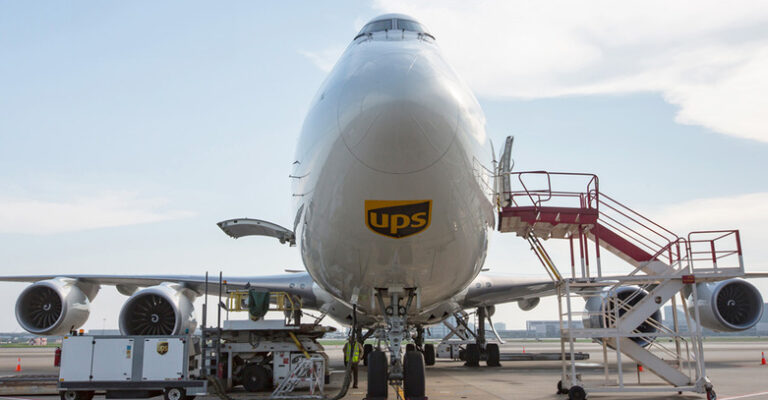
20,000 m², direct access to aircraft, capable of handling 1 million tons of cargo per year, and ready to go into operation in 2028: Those are the key points around a brand-new hub that UPS announced it will be creating over at Hong Kong International Airport. It signed an agreement with Hong Kong Airport Authority last week, designed to “to boost global trade with enhanced operations” at this new hub. Located at the airport and also close to the Hong Kong-Zhuhai-Macau Bridge, for improved and more reliable connectivity to Hong Kong, the Greater Bay Area1, the new hub facility is planned to become UPS Hong Kong’s main processing location for the growing Asia Pacific consumer market, handling all imports, exports, and transshipments to and from Europe, the U.S., as well as other parts of Asia. It will enable UPS to optimize its existing operations in Hong Kong (founded some 35 years ago) by streamlining some smaller and separately located facilities. Naturally, as is the case with most new-builds these days, the hub will be fully automated and include state-of-the-art sorting and scanning technology, alongside sustainable, environment-friendly features.

The release promises further growth and investment: “UPS will continue to invest in Asia Pacific to serve its customers with stronger cross-border connectivity, greater capacity, and an industry-leading customer experience. In recent years, UPS has made numerous network and facility enhancements across Asia, including Singapore, Japan, China, Vietnam, South Korea, and the Philippines. UPS also launched UPS Premier, a ‘white glove’ shipping service targeted at healthcare customers who require precision logistics for patient-critical, time- and temperature-sensitive products. UPS Premier is now available in seven countries in Asia, including Hong Kong, with more locations planned for launch next year.”

Daryl Tay, President of UPS North Asia District, stated: “Hong Kong continues to be an engine of growth and a critical part of UPS’s global smart logistics network. This new hub, along with our existing operations at Shenzhen Bao An Airport, demonstrate our continued commitment to Asia. We will continue to invest in areas of our network that bring unique value to our customers and create additional growth opportunities for UPS.”

Luxcargo to handle Luxair on ramp and in cargo warehouse

0

Cargolux announced last week that its subsidiary, Luxcargo Handling S.A. (LCH), had won the tender to carry out Luxair’s ramp and warehouse handling activities at Luxembourg Airport. It was awarded a license to also allow it to handle third party airlines.

Will the Luxcargo Handling operation start on time? Image: Cargolux

Richard Forson, Cargolux President & CEO, explained: “The takeover of Luxair’s ramp and warehouse handling services by LCH, is a great opportunity for Cargolux to strengthen its position in the air cargo industry and to further enhance its service offering to its customers. LCH also looks forward to continuing the relationship Luxair had with other airlines besides Cargolux. We look forward to commencing operations in 2024. Cargolux’ and Luxair’s cargo ramp and warehouse handling teams have been working hand in hand for decades and I am confident that the transition will proceed smoothly.

Interestingly, whilst Forson is convinced the transition will be smooth, the Luxembourg Times warned on the same day, of a possible delay in transition, since it was still not clear what would happen to Luxair staff. “Unions concerned after ministry awards cargo ground handling licenses,” was the title of the article, summarizing: “Transportation Minister Yuriko Backes has given licenses to Luxcargo Handling SA, a six-month-old subsidiary of state-owned freight airline Cargolux, and Goldair Handling SA [whilst] unions say some 1,200 employees at the [Luxair] cargo center continue to be completely in the dark about their future.” Should the situation continue, there is a risk that employees will strike [again]. The unions therefore want Beckes to intervene, since the State holds a share in both Luxair and Cargolux. Trouble has been brewing ever since SEP23, when Luxair stated that it would not be tendering for the for new ground handling cargo licenses, this time. Its staff are therefore waiting for answers as to their fate once the transfer of ground handling operations to Luxcargo Handling is complete.

LATAM Cargo refreshes its Fresh product

0

Due to formal restrictions, LATAM Cargo was not able to offer the market its FRESH and FRESH Active product on westbound flights taking from Europe to Latin America. However, the hurdles have been set aside now so the embargo is history, illustrates Jorge Carretero (JC), Sales Director Central Europe, LATAM Cargo. Hence, both products can now be booked on transatlantic flights operated by the Santiago, Chile-based cargo carrier.

Jorge Carretero, Sales Director Central Europe, LATAM Cargo, welcomes the rebranding of FRESH and FRESH ACTIVE. It increases transparency, he states – picture: courtesy of LATAM Cargo

CFG: Jorge, what was the problem with your Fresh product in Europe?

JC: We have offered FRESH in the past. But mentioning precise temperature data on the Air Waybill for perishables and other critical goods flying westbound was not permitted. Hence, in Europe we accepted and transported the consignments under the product name KEEP Cool.

But since 27NOV, customers can specify the required temperatures for their product on the AWB, i.e. 2C-8C or 15C-25C. This creates transparency and simplifies the processes for everyone involved. In line with this change, we have decided to rebrand this product segment, i.e. FRESH and FRESH Active.

CFG: What exactly is the difference between FRESH and FRESH ACTIVE? For outsiders, this double freshness sounds a bit confusing.

JC: The reason for the availability of two FRESH care options is because each of them caters to different needs. Also, they differ in the types of packaging that is required, comparable to shipments from the pharmaceutical and healthcare industries. To better explain this: When cargo is tendered in passive packaging, we provide FRESH 2C-8C or FRESH 15C-25C. This way, we offer a robust solution within the temperature range requested. Secondly, we minimize the times in which temperature sensitive cargo shipments may be placed outside of cool chambers or temperature-controlled areas, when processed on tarmacs, for instance.

However, when it comes to FRESH ACTIVE, the product requires that our clients ship their perishables on active temperature-controlled containers to ensure an uninterrupted cold chain. This we enable through our agreements with international container suppliers such as Envirotainer, DoKaSch, and CSafe.

CFG:  Can pharma shipments be booked as FRESH or FRESH Active respectively, or only in combination with Express?

JC: No, our FRESH care is specialized for the transportation of perishable cargo, following the IATA recommendations in the perishable cargo regulations (PCR). For the transportation of pharmaceutical and healthcare products, we offer our CEIV Pharma certified care options of PHARMA and PHARMA ACTIVE.

CFG: Understood. So FRESH Active shipments require a special container for transportation to ensure a constant climate during the entire trip. Does LATAM Cargo intend to purchase cool boxes, managing the ULD fleet on its own, or is leasing, implying additional fees, the preferred option fitting individual transport needs?

JC: In the case of FRESH Active, at LATAM Cargo we offer the alternative of managing the container lease by collaborating with the above-mentioned providers of cool boxes. The cost of the lease itself depends on the type of container and duration of the lease. These specifics are fully clarified with our clients before booking. So they can sit back and relax knowing that their product fits the cool box it requires for safe air transportation.

CFG: Are all international stations currently serviced by LATAM Cargo capable of managing the demanding FRESH Active product? After all, the ULD’s temperatures have to be monitored, batteries recharged, local handling personnel must be trained and certified, tarmac times must be held extremely limited etc.

JC: We offer this service at most of our stations within our international network. This depends on the local infrastructure, the capacity and the personnel whether they have been trained and certified for handling this demanding commodity. Hence, it depends on various factors as to whether we activate a station for the FRESH product. After all, we don’t compromise on safety and performance because we ensure our customers that we deliver a reliable and scalable transportation solution. To avoid mistakes, it is recommendable to visit the FRESH section on our website, where the stations are listed that handle the product.

CFG: In case of hiccups, active communication with customers is key. Is LATAM Cargo setting up a dedicated team always monitoring the transport of the cool boxes to prevent errors, mismanagement, and claims?

JC: At LATAM Cargo we strive to reduce temperature changes jeopardizing the integrity of a sensitive FRESH shipment to the best of our ability. In the case of contingencies, we have clearly defined processes to handle the hiccups right on the spot, this way limiting the time the goods are exposed to heat or frost. It goes without saying that in such a case the consignment is stored in a proper cooler while the contingency is resolved. Let me emphasize that our warehouses are technically also equipped to monitor any temperature deviations. This assures to keep the storage temperature within the required ranges and allows immediate action in case of deviations.

CFG: Cargo shipments travel one way. RAP or RKN cool containers must be brought back following a mission. How does LATAM Cargo organize the timely return of the boxes?

JC: Right at the booking process, the return of a cool box is taken care of by a dedicated team within LATAM Cargo. The client is informed about the estimated time the return process needs, so that he knows when the container is available again after the box has been thoroughly cleaned upon arrival. The entire return process is coordinated by our ULD team, whose experts are monitoring all container movements within our network. It is them who organize the return process of leased DoKaSch, Envirotainer or CSafe cool boxes utilized by LATAM Cargo for our FRESH products.

CFG: Jorge, thank you for your time and the information provided.