Home Blog Page 31

Obituary – Nol van Fenema

1

It is with great sadness that we learned that our former colleague and friend, Nol van Fenema, passed away on 11DEC25 in his home in Calpe, Spain. Nol was a highly respected doyen of cargo reporting with a long journalistic career, of which we at CargoForwarder Global are grateful to have also benefited from. He was an amiable, loyal, highly intelligent, and impressively well-informed personality, to whom the doors of corporate headquarters opened as soon as he announced his arrival for an interview or background discussion.

With his passing, journalism and the entire air freight industry have lost one of their brightest and most profound minds. His reporting was always based on facts, which he embedded in a larger context to give readers a holistic picture. He remained fair at all times, never indulging in any unsubstantiated rumors, and he frowned upon the spreading practice of copy-and-paste journalism.

Nol’s journalistic career was remarkable. He started out as a speaker for the former Dutch aircraft manufacturer, Fokker, before founding Payload Asia in Singapore in 1984, at a transformative time for Asian freight development. Still today, Payload Asia is a leading print and digital publication focused on air cargo news, analysis, and industry trends across Asia-Pacific, Middle East, Europe, Africa, and the Americas. Upon selling his publication, he joined CargoForwarder Global a decade ago where he became Senior Correspondent Asia.

After returning to Europe from Singapore, Nol and his wife, Joyce, moved into a chateau in the small French village of Autichamps. It was to be their retirement home. But after her passing, he left France and rented an apartment in Calpe, Alicante at the Spanish Mediterranean coast. “It’s warmer there and I can play pétanque with like-minded people all the time,” he once told me.

His former fellow players must now manage without him. As must all those who had the privilege of being his friends or media colleagues.

Nol, RIP. We will miss you. Heiner


The following lines were sent to us by Ram Menen, the former head of Emirates SkyCargo. He and his wife, Malou, had a particularly close relationship with Nol:
I am deeply saddened by the news of Nol’s passing. He was an extraordinary individual – both in his professional life and in his personal character – and his absence will be profoundly felt by all who knew and cherished him.

Nol was not only a highly respected journalist within our industry, but also a trusted confident and a true friend. Over the years, our bond grew into a genuine friendship, sustained by frequent conversations, the exchange of ideas, and countless moments of laughter.

In recent years, Nol faced multiple battles with cancer, meeting each one with remarkable courage and determination. He carried himself with dignity and strength, never allowing his spirit to falter, even as the challenges became more difficult. Despite his resilience and tireless efforts, he was ultimately unable to overcome the final illness.

With his passing, the industry has lost a gifted journalist and valued colleague, while those closest to him have lost a kind, loyal, and generous friend. Gentleman Nol will forever remain in our hearts – remembered for his wonderfully quirky habits, his sharp sense of humor, his unmistakable Dutchness, his vegetarian cooking, and his fondness for candied ginger.

Our heartfelt condolences go out to his children, siblings and their families during this difficult time. Nol will be remembered with deep affection and respect, and his legacy of warmth, integrity, and dedication will continue to live on in the hearts of all who had the privilege of knowing him. Dear Nol, Rest in Peace. Ram Menen


We received this personal contribution from his brother, Peter van Fenema:
Apart from a tumor on his lower lip, which had been successfully treated since June with immunotherapy at the AVL in Amsterdam, he also had a leaky heart valve that affected his body in many ways and caused him a lot of discomfort in recent months.

At the age of 84 his heart finally gave up. Fortunately, he had sufficient time to say goodbye to his beloved ones. He looked back with gratitude and satisfaction to an adventurous and often exciting life, culminating in his successful and rewarding (‘Payload Asia, Clean Asia, Photo Asia’) years in Singapore together with Joyce and their children Veronica and Carlos.   

On Monday, 15DEC25, he will be cremated in Spain in a small circle.

At the end of January, probably on the 25th, a gathering will take place in the Netherlands to give family and friends the opportunity to ‘celebrate the life of Nol’, as the English so beautifully put it.

Further details will follow. Warm regards, Peter van Fenema.

Spotlight on… Kaspar Andreas Nissen, Senior Manager, Air Cargo, Billund Airport

0

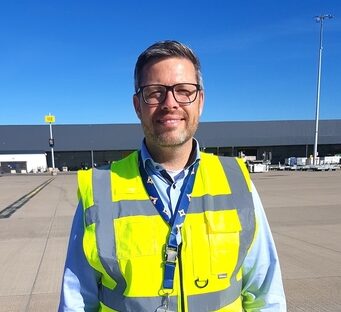
Each week, CargoForwarder Global’s ‘Spotlight On…’ looks at a different segment of the air cargo industry to demonstrate how broad its career palette. Airports form the essential backbone of the air cargo system, acting as interchange points between air and road transport, and offering dedicated cargo terminals and warehousing space, to ensure the safe, secure and efficient build-up, storage, and movement of goods going out and coming into the region. This week, Kaspar Andreas Nissen (KN), Senior Manager, Air Cargo, at Billund Airport, talks about his role and shares his views and advice.

It is a joint responsibility to keep the air cargo industry competitive. Image: Kaspar Nissen

CFG: What is your current function and company? And what are your responsibilities?

KN: I am Senior Manager, Air Cargo at Billund Airport and responsible for commercial cargo development, e.g. dialogue with freight forwarders, trucking companies and handlers, route development with airlines, participation in worldwide air cargo conferences, internal stakeholder management, etc.

CFG: What does a normal day look like for you?

KN: 3-4 office days per week, a few days per week from home office when it’s conference off-season. ‘Normal’ days are a lot of e-mails internal and external and videocalls to update and coordinate efforts with airline and industry partners. Also, spending quite some time on various analysis of market trends and how to market this to relevant customers and partners, and coordinating internally to align initiatives.

CFG: How long have you been in the air cargo industry, and what brought you to it?

KN: 15 years exactly. Five years with SAS Cargo, two years with Qatar Airways Cargo, a year with Danish freight forwarder, LEMAN, three years with Copenhagen Airport, and the past 4 years with Billund Airport. I guess what brought me to the industry is the fascination and passion for the aviation industry. My father’s family was brought up next to Copenhagen Airport (CPH) and aviation was therefore a natural part of the family.

CFG: What do you enjoy most about your job?

KN: I truly enjoy the responsibility that lies within my job. Driving and developing air cargo activity through Billund Airport with all that falls under this as earlier mentioned. I enjoy representing Billund Airport around the world at conferences and marketing the services the airport, the handlers and affiliated partners are delivering on a daily basis.

CFG: Where do you see the greatest challenges in our industry?

KN: In short: Uncoordinated efforts across the sector, both political and within the industry, to drive digitalization and easier legislation. General lack of cargo aircraft capacity and imbalanced trade lanes.

I believe customs authorities from country to country have very different ways of implementing European legislation. Some authorities are very liberal, and some are very restrictive, e.g., on e-Commerce imports from China and other Asian countries. Bilateral agreements are also very different within the European countries, some are very updated and fit for modern global trade, whereas some countries really suffer from slow political processes. Both these elements should be better coordinated and easier implemented on a European level, to create efficient and regional flows across Europe, ultimately boosting the competitiveness of European trade and the economy.

CFG: What advice would you give to people looking to get into the air cargo industry?

KN: I would advise future colleagues to focus on digitalization and AI, an area that will heavily transform our industry in the years to come. The major breakthrough has just not happened yet, though tremendous efforts have been done to accelerate it over the years.

AI and digitalization can transform operational processes such as cargo-build-up on ULDs, truck coordination to avoid empty capacity on roads, documents processing and AI data sharing, etc. So many areas could be way more efficient if the industry could actually get together to define standard processes and would be willing/able to invest in the necessary and not be so afraid of the immediate competition. In my view it’s a joint responsibility on behalf of the industry, to keep it competitive towards the much cheaper sea freight industry.

CFG: If the air cargo industry were a film/book, what would its title be?

KN: ‘The Day After Tomorrow.’ The operational logistics industry is just very much on a day-to-day basis. One day you can be on top of everything because the whole supply chain has delivered as promised, the next day can be a giant mess because of one missed deadline somewhere, however it’s normally fixed, rebooked or utilized anyway. Always just remember, it goes on and you never know what to expect the day after tomorrow.

Thank you, Kaspar!

If you would like to share your personal air cargo story with our CargoForwarder Global readers, feel free to send your answers to the above questions to cargoforwarderglobal@kopfpilot.at We look forward to shining a spotlight on your job area, views, and experiences.

IATA looks at 2025 and 2026

0

On 10DEC25, international air cargo journalists were invited to an online press conference held by IATA on the fringes of its larger, more passenger focused annual media event. Around 1.5 hours were dedicated to the state, specialties, and success of the air cargo industry in 2025 – despite the plethora of headwinds – and an outlook was given on IATA’s priorities and the year ahead.

Air cargo continues to fly into the future, coping with fast-changing demand – Image: IATA

Though Willie Walsh did not speak at the online event, a subsequent press release shared his summary: “The resilience in air cargo has been particularly impressive. As trade flows adapt to a protectionist U.S. tariff regime, air cargo has been the hero of global trade buoyed in part by robust e-commerce and semiconductor shipments to support the boom in AI investments. Notably, air cargo enabled front-loading to deliver products ahead of tariff deadlines, and it flexibly accommodated demand surges as tariffed goods normally destined for the U.S. found new markets. The critical role of air cargo is front and center as the global economy adjusts to new realities.”

Big figures
And certainly, despite all the worries projected at the start of the year and the almost constant threat and implementation of extortionate U.S. tariffs, (now at an average rate of 17% in 2025, almost matching its previous high of 20% way back in 1933, after decades of just 3%), air cargo, like water, has done what it always does: found a way around the problem and come up with alternative solutions. One man’s loss is another man’s gain, as they say. IATA forecasts cargo revenues of USD 155 billion this year, up from 151 billion in 2024, and looking to further increase to USD 158 billion in 2026, which works out at 2.1% growth next year. Overall, airline revenues are set to exceed USD 1 trillion for the first time this year, which would mean total revenue growth of 4.5% and, IATA says, net profit margins are stabilizing at 3.9%. Cargo’s steady revenue growth is mostly due to the ongoing increase in express and e-commerce volumes. While cargo ton kilometers grew by 3.1% in 2025, this will slow a little to 2.6% growth in 2026, and yields will continue to remain stable at their current 30% higher level than prior to the pandemic. Cargo volumes are expected to reach 71.6 million tons in 2026 (up 2.4% on 2025).

Shifting trade lanes and patterns
The impact of U.S. tariffs unsurprisingly led to a 15.4% decline in Chinese exports to the U.S., but it did not take long for Chinese goods to find alternative markets. The EU (7.7% growth, year-on-year), India (+12.7%), Thailand (+22.9%), Hong Kong (+10.9%), and Vietnam were the biggest winners from the major shifts in global trade in 2025. Julia Seiermann, Head of Industry Analysis at IATA, also underlined air cargo’s role as a key enabler of trade by value – though just 0.7% of the world’s transported weight travels on an aircraft, the value of those goods amount to 24.8% of all global trade value (based on a sample of 47 countries which together represent 37% of global trade in 2024.) “Far East – Europe traffic more than offsets weak Far East – North America,” was her conclusion as she presented the 15 largest traffic pairs in 2025.

Optimism and challenges
While the figures presented gave cause for optimism, a number of challenges continue to plague the air cargo industry, and in some cases such as slot allocation and aircraft upgrades, air cargo seems to have been pushed back into its Second Class Citizen role, in the shadow of passenger operations. Brendan Sullivan, IATA’s Global Head of Cargo, illustrated the slot restraints at some of the key cargo hubs – naming Bogota, Dubai, and Heathrow as examples – which can restrict cargo growth in areas such as e-commerce, for example. “Cargo must not be squeezed out of airports,” he urged. An additional problematic factor that was discussed, were the consequences of the huge backlog in aircraft deliveries which now totals some 17,000 aircraft – a record high. The knock-on effects are an aging fleet (the average age of a widebody freighter is now 19.6 years), which means higher maintenance costs and limitations in fuel efficiency gains. Similarly, capacity restraints are driving up aircraft lease rates, plus – because passenger aircraft are also being kept on longer – less feedstock is available for passenger to freighter conversions. Despite expected slight improvements in 2026, capacity will continue to remain constrained for years to come.

Agility is essential
The press was brought up to date on the current adoption status of ONE Record which has been endorsed as the preferred data sharing standard for all air cargo stakeholders as of 01JAN26 (around 70% of companies are aware, and almost 50% ready). They were presented presented information on e-commerce developments and requirements for other types of special cargo, taken through various IATA initiatives on the subject of air cargo security, and given an overview of the CO2 methodologies since 2008.

“Modernization and agility are not optional, they’re essential,” Brendan Sullivan underlined, pointing to the many areas of improvement still existing in the air cargo industry – the need to move away from paper-based processes to digital solutions, better data standards, a greater focus on security and safety, the removal of complexity in trade flows, more AI-driven smart facilities and automation. “Air cargo is not just a mode of transport,” he concluded. “It is a strategic enabler for global trade.”

Fraport: E-Commerce is going through the roof

0

The increase is phenomenal. While a total of around 400,000 e-Com shipments per month were handled at Frankfurt Airport last year, the current monthly average is a staggering 8 million parcels and packages. It would be unfair to attribute this rapid increase solely to Fraport’s head of cargo, Denis Duarte, as it is the result of the entire team’s efforts, but he has certainly played a major role in further boosting this product segment.

Denis Duarte heads Fraport Cargo since 01JAN2025 – picture: courtesy Fraport AG

As Max Conrady’s successor, the Brazilian-born executive has been responsible for the airport’s air freight business since 01JAN2025. In addition to the commitment of the airport’s cargo workforce, he particularly praises the local customs officials. “The cooperation works really smoothly, and shipments are cleared quickly, which cannot be taken for granted.”

Waiting for One Record
However, he sees room for improvement in another area: data consolidation. “We need to move away from isolated digital solutions and develop a digital highway that connects our FAIR&Link system with other messaging tools.” The platform is provided by the One Record data model, developed by IATA in collaboration with industry, which provides the air cargo players with a standard data structure that facilitates data integration with existing and new messaging services. According to Duarte, this is to be pushed forward in 2026 and will enable quick data consolidation. Once installed, it would increase the transparency of shipment flows and significantly speed them up.

Further to this, the manager announced additional roadshows and collaborations with other airports in the air cargo sector true to the Shanghai scheme for the coming year, CFG reported.

More partnerships to come
The roadshows serve to strengthen existing contacts and develop new business opportunities between the participating airports on the basis of common standards. Or, as Alexander Laukenmann, Senior Executive Vice President Aviation at Fraport AG, put it after his return from Shanghai: “Our partnership with Shanghai Pudong is part of the comprehensive Masterplan CargoHub, which provides for new cargo buildings and warehouses in order to further strengthen FRA’s competitiveness within Europe in air freight matters.”

His colleague Denis Duarte does not reveal which airport is next on Fraport’s wish list as a potential partner. However, he does hint at a target country: India. This would be the result of a series of cargo roadshows held in Bangalore, Mumbai, Delhi, and Hyderabad in April 2025. The aim of the Fraport Cargo delegation was to present its airport in a rapidly growing air freight market, promote its own interests, and, in discussions with Indian colleagues, shippers and forwarding agents, highlight the importance of FRA Cargo as a central European hub for pharmaceuticals, e-commerce, perishable goods, and high-tech items. In other words, a kind of first date meeting.

Followed by Air Cargo India
According to market experts, there are several reasons why a partnership between Indira Gandhi International Airport in Delhi and Fraport would make sense. Lufthansa and Star Alliance club member Air India connect both destinations nonstop. And even though the German airport sold its 10% stake in Delhi Airport to majority owner GMR Airports Infrastructure Limited (GIL) for USD 126 million in MAR2025, FRA remains involved in DEL’s business thanks to an operator agreement. Thirdly, there is a large Indian community in the Rhine-Main region surrounding Frankfurt Airport, which also stimulates demand for Indian products and air connections. In addition, India is an important manufacturer of pharmaceuticals, medicines, and hi-tech items, which have long been among the top products handled in Frankfurt.

If all goes according to plan, a partnership between Fraport and an Indian airport in the air freight segment could be concluded as early as next February. That is when Air Cargo India will take place in Mumbai, with more than 300 exhibitors already registered. Among them is Frankfurt’s Fraport AG.

Qatar Airways appoints Hamad Ali Al-Khater as Group CEO

0

In an unexpected move, Qatar Airways today (07DEC25) announced the appointment of Hamad Ali Al‑Khater as Group Chief Executive Officer, effective immediately. Al‑Khater succeeds Engr. Badr Mohammed Al‑Meer, who had been at the helm for only two years.

Hamad Ali Al-Khater succeeds Badr Mohammed Al-Meer – credit: QR Airways

The reasons behind this personnel change remain speculative, as the airline’s statement does not contain any information on this matter.

Al-Khater joins Qatar Airways Group from Hamad International Airport, where he has served as Chief Operating Officer. In that role, he was responsible for ensuring the safety and reliability of airport operations, while leading its strategic direction, operational excellence, infrastructure expansion, and the continuous enhancement of passenger experience.

Prior to his tenure at the Airport, Al-Khater held senior roles across QatarEnergy, driving business development, deal execution, and leading large-scale strategic and operational initiatives.

Qatar Airways Group Board of Directors Chairman, Saad Sherida Al-Kaabi, said: “Qatar Airways Group extends its appreciation to Engr. Badr Mohammed Al-Meer for his service. As we welcome Hamad Ali Al-Khater, we look forward to building on the strong foundations and expansive global network of Qatar Airways, anchored by our exceptional team in Qatar and around the world. With this leadership transition, Qatar Airways Group reaffirms its commitment to delivering world-class experiences, reliability, and innovation to travelers around the globe.”

Qatar Airways Cargo interlines on CargoAi’s CargoMART

0

Digitalization is all about simplifying workflows and making them more efficient. For decades, airlines have been interlining, however differing IT systems can make this a tricky business when it comes to booking and all the related admin. CargoAi has launched an Interline Module feature to speed things up in this area, and Qatar Airways Cargo has just gone live with it. The two companies, which have been partners since 2022, both speak of a major milestone achievement. “The launch of the Interline module enables Qatar Airways Cargo to further streamline its digital operations, offering customers faster and more efficient interline booking capabilities while continuing its ongoing collaboration with CargoAi to enhance connectivity and innovation in the air freight industry. CargoMART Interline allows airlines to instantly check and book interline capacity across multiple partners in real time, eliminating manual coordination often across different time zones and reducing operational complexity,” the release explains.

Making interlining in air cargo simpler. Image: CargoAi

More than 30,000 international bookings have been made on Qatar Airways Cargo flights, by forwarders using the CargoAi platform. These numbers are steadily increasing, and the latest module will trigger even more growth – not least in view of the joint global cargo business that Qatar Airways Cargo, IAG Cargo and MASkargo are planning and which they announced at the Munich transport logistic earlier this year. CargoMART Interline’s promise of greater efficiency, automation, and scalability is a firm step in the direction of smooth global cargo shipping.

Mark Drusch, Chief Officer Cargo at Qatar Airways Cargo, confirmed: “Digitalization remains a cornerstone of Qatar Airways Cargo’s strategic vision. Our continued collaboration with CargoAi and the introduction of CargoMART Interline reinforces our commitment to innovation, enabling us to optimize interline partnerships and deliver a seamless, efficient digital booking experience for customers across an expanded global network.”

Matt Petot, CEO of CargoAi, commented: “We are proud to celebrate three years of partnership with Qatar Airways Cargo, one of the early adopters of digital transformation in the industry. With the CargoMART Interline module, Qatar Airways Cargo can now scale its partnerships effortlessly and optimize interline revenue – a game changer for airlines seeking to maximize network synergies through technology.”

JD Airlines takes delivery of first A330-200P2F

0

The first has been delivered, the second is yet to come. Talk is of the two converted Airbus A330-200P2F that are set to join JD Airlines’ fleet. It’s new partner, Titan Aviation Leasing handed the first aircraft (MSN 832) to the Chinese cargo operator on 04DEC25. JD Airlines is the Nantong-based air cargo division of JINGDONG Logistics, known as JD.com, China’s largest retailer (by revenue). It provides dedicated domestic and international express and e-commerce cargo flights. Launched in SEP22, with its first international flight taking off a year later, the carrier is on a mission to expand its fleet with both narrow and wide-body freighters. It currently operates 10 converted Boeing 737 freighters and now one A330 freighter, with a second due to enter the fleet in the next six months. Its original plan, revealed by then CEO Yu Rui to Bloomberg in 2021, was to have at least 100 leased or owned aircraft in its fleet by 2030, “to support e-commerce and global expansion”. Whether it is still on track to achieve that is not known at present. However, the latest A330 freighter editions are placed under long-term operating leases by Titan, which will manage both aircraft.

Two Airbus freighters will join JD Airlines current fleet of 10 converted Boeing 737F. Image: Yubo Wang/JetPhotos

Brought in to meet rising cross-border e-commerce demand across Asia, and to support JD Logistics’ expansion in Asia-Pacific, Middle East, and Europe, the Airbus freighter offers a cargo uplift of up to 61 tons per flight. Its range of up to 4,200 nautical miles, as well as its reliability and fuel efficiency, lends it perfectly to deployment on long-haul flight routes.

Eamonn Forbes, Chief Commercial Officer, Titan Aviation Leasing, said: “We are pleased to announce the delivery of the first of two A330-200P2F aircraft to JD Airlines. This transaction aligns with Titan’s strategy of deploying capital into high-demand freighter segments with strong counterparties. Leasing these aircraft underscores Asia’s strategic importance in global trade and demonstrates our commitment to providing efficient, flexible freighter capacity to operators serving e-commerce and express markets.”

Awery and Cirium link up to bring data to Awery’s ERP platform

0

Data is gold and when it comes to aviation data and analytics, it’s what Cirium does best. After all, its experience dates all the way back to 1909. Rebranded in 2019, it today tracks over 465,000 aircraft and 26 million scheduled operations, covering 99.5% of global passenger flights, including cargo. Its aviation analytics provide schedule, routes, fleet data, real-time flight intelligence, and utilization for air cargo and logistics optimization. That global aviation intelligence is now going to be integrated into Awery’s ERP (enterprise resource planning) platform, bringing direct access to flight schedules, fleet information, aircraft utilization, and performance metrics to Awery’s users. They will be able to access up-to-date flight schedules and operational data, get information on fleet and aircraft utilization, analyze historic flight and performance trends, make informed decisions on costs and route planning, and benchmark operational performance using industry-wide metrics.

From left: Mila Assad, Account Exec & Strategic Sales Leader, Cirium, Vitaly Smilianets, Founder & CEO, Awery Aviation Software, Graham Chalmers, Sales Manager – Airports & Airlines EMEA, Cirium. Image: Meantime Communications

Vitaly Smilianets, Founder and Chief Executive Officer, Awery, said: “Integrating this data into our ERP increases the quality and depth of information available to our users. Access to Cirium’s trusted, regularly updated aviation data enables our users to make more accurate assessments, and improve performance tracking across all their operations.”

Rahul Oberai, Global Head of Sales, Cirium, stated: “Partnering with Awery brings Cirium’s data directly into the hands of airline professionals, where decisions are made in real time. By embedding Cirium’s intelligence within Awery’s ERP, we’re helping users see the full picture, anticipate challenges, and optimize performance across every flight and fleet.”

Unilode’s new MRO facility at EMA is now open

0

2,500 m² is the size of the new MRO facility that ULD management company, Unilode Aviation Solutions recently opened over in the UK’s East Midlands. Located in Unit 5b at Stud Brook Business Park in Castle Donnington, very close to East Midlands Airport (EMA), the new building has been constructed in accordance with BREEAM standards and is ‘state-of-the-art’. It runs on 100% renewable energy and its equipment and infrastructure ensure efficient, green operations. Hailed as ‘a significant milestone in Unilode’s ongoing investment in both regional and global operations’ in its press release, the MRO facility will enable Unilode to expand its support and repair services. The EMA site will support the airlines currently serving the region. Among them: DHL, West Atlantic, Singapore Airlines, Aer Lingus, Finnair, and TUI.

EMA Station Mgr, Andy Fallon, Unilode COO, Janis Balkens, Frank Steinert, Global Director Aviation Network Equipment at DHL Express. Unilode CEO, Ross Marino, and Unilode’s EMEA MRO Director, Chris Jenkins. Image: Unilode

Unilode already today manages the world’s largest digitized ULD fleet, number more than 200,000 ULDs (Unit Load Devices), and it offers the greatest global repair network serving over 90 airlines at more than 550 airports around the world. Its newest facility now joins a list of other recently opened or refurbished MRO locations in Hong Kong, Singapore, Newark (USA), and London-Heathrow (UK). The company follows a visionary global investment program centered around service excellence and the changing needs of airline and cargo operators around the world.

Janis Balkens, Chief Operating Officer at Unilode Aviation Solutions, said: “The Grand Opening represents an exciting step forward for our East Midlands team and our customers. Our new East Midlands MRO has been designed to enhance our service capabilities, support increased customer demand, and create a workplace that reflects our values and ambitions. This facility reinforces our commitment to sustainable growth. By investing in a modern, efficient operation powered by 100% renewable energy and aligned with BREEAM certification standards, we are ensuring our work benefits not just our customers but our people and the planet. Our East Midlands team has already delivered outstanding results, and this new facility enables us to grow our capabilities further, supporting our global growth and helping customers maximize performance throughout their operations.”

Bringer Air Cargo makes history with MIA-NVT freighter flight

0

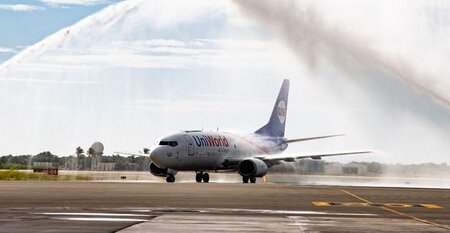
Bringer Air Cargo is proud to announce our new weekly direct CAO flight from Miami (MIA) to Navegantes (NVT) in Brazil. This route opens up a streamlined, high-capacity cargo corridor, enabling U.S.–Brazil trade and e-commerce flows like never before. […] We’re committed to delivering competitive pricing, efficient handling, and the reliability that our clients have come to expect — now with even greater geographic reach and faster door-to-door transit.” Those were the words on Bringer Air Cargo’s website recently, and on 26NOV25, the airline made true on its promise and made its mark on the history books: It operated “the first international wide-body freighter to land directly at Navegantes Airport (NVT)” in the State of Santa Catarina and one of Brazil’s most strategic import gateways. It serves an important industrial and commercial region. The Boeing 767-300F flight, operated in cooperation with LATAM Cargo (with which Bringer Air Cargo has a long‑standing block‑space/charter and program partnership, whereby LATAM-operated freighters fly capacity that Bringer sells and brands with its own 417 AWB prefix), took off from Miami (MIA) to then land early in the morning of 26NOV25 at NVT. And it is this MIA-NVT route that Bringer Air Cargo has now launched – initially weekly frequencies but looking to upgrade to three to four flights per week, as per market requirements. Each B767-300F flight offers a cargo uplift of up to 50 tons.

An historic routing has been launched: MIA-NVT. Image: Bringer Air Cargo

The historic routing links the United States directly with southern Brazil, and is a dream in the making since 2019. Plans were disrupted by the pandemic as well as regulatory difficulties. “Working closely with its aeronautical consulting team, Bringer conducted in-depth technical, safety, and infrastructure analyses at NVT, concluding that several airport upgrades were essential before wide-body operations could take place,” the release states, going on to list the upgrades: a 100m extension of the runway to accommodate long-haul freighters, widening of the emergency lane by 45 meters, and improvements to maneuvering and parking areas for safe Boeing 767-300F operations. Bringer Air Cargo collaborated with Motiva Airports, and PACLOG Cargo Terminals on these points.

This flight represents more than a new route – it’s a symbol of perseverance, collaboration, and our commitment to connecting markets with greater efficiency. We are proud to help open the door to new trade opportunities for Brazil’s fastest-growing import region,” a Bringer Air Cargo spokesperson noted.