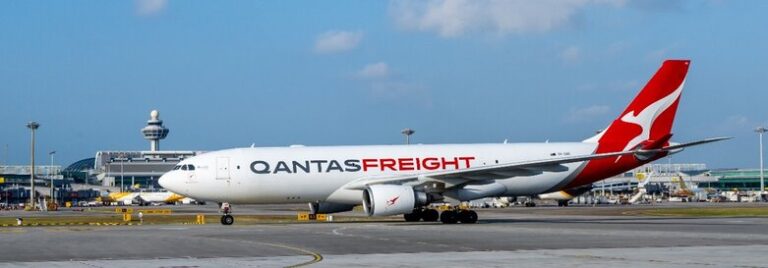
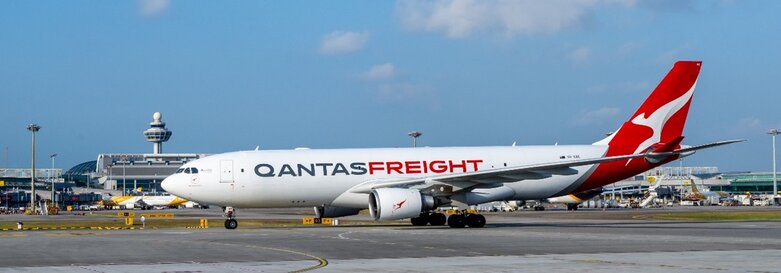
Qantas Freight has launched its first-ever dedicated freighter service into Singapore, marking a significant milestone for both the carrier and Changi Airport. The new twice‑weekly Sydney–Shanghai–Singapore–Sydney operation commenced on 03APR26. The flights depart every Friday and Sunday and are operated with an A330 freighter (A332P2F), which provides 50+ tons of cargo uplift per flight. This new service underscores Qantas’ growing commitment to Singapore as a key logistics hub in Asia, and strengthens connectivity across the Asia Pacific region. The Singapore stop builds on Qantas’ existing Sydney–Shanghai freighter services while adding fresh opportunities for shippers and freight forwarders through enhanced capacity, more routing options and schedule flexibility.
The airline’s first A330F dedicated SIN connection. Image: Qantas Freight
The addition of dedicated freighters also complements Qantas’ existing belly‑hold cargo capacity on scheduled passenger services and reflects rising demand for time‑sensitive air cargo across Asia, Australia, and beyond. With its strategic location and extensive global air cargo links, Singapore further consolidates its role as a major consolidation and transshipment hub for regional and intercontinental trade flows.
Lim Ching Kiat, Executive Vice President, Air Hub and Cargo Development, Changi Airport Group, commented: “The decision by Qantas Group to expand its freighter operations to Singapore is timely, as we continue to see stronger air cargo demand in Asia-Pacific and the region’s increasing importance as a key driver of global air cargo growth. The extended Singapore stop between Sydney-Shanghai will further cement Changi Airport’s role as a critical node facilitating air trade between Australia, China, Europe, and Southeast Asia.”
Igor Kwiatkowski, Qantas Freight Executive Manager, added: “Singapore is one of the world’s major cargo hubs and will play an important role in connecting shipments between Australia, China and Southeast Asia. The new stop gives freight forwarders greater routing options and flexibility, particularly for high-tech goods and e-commerce.”
Air cargo is being hit from three sides at once: capacity is collapsing, costs are rising, and demand is turning unpredictable. Jet fuel prices have surged from roughly USD 90 to nearly USD 200 per barrel at peak levels, forcing airlines to raise fuel surcharges by as much as 34% in some cases.
The conflict in the Middle East has disrupted operations through airspace closures, grounded fleets, and rising fuel and insurance costs, while demand volatility adds further pressure. Real-time visibility is still missing – and in a market like this, flying blind comes at a cost. Information is now the single, most important advantage.
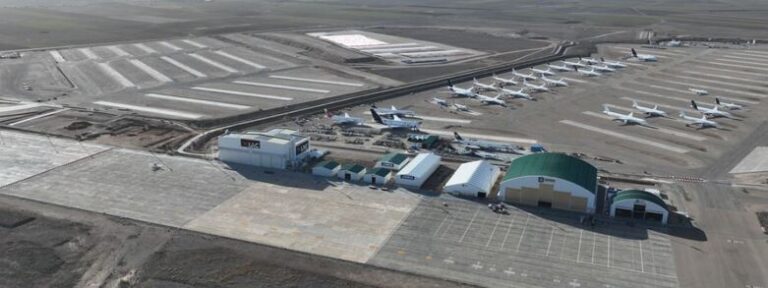
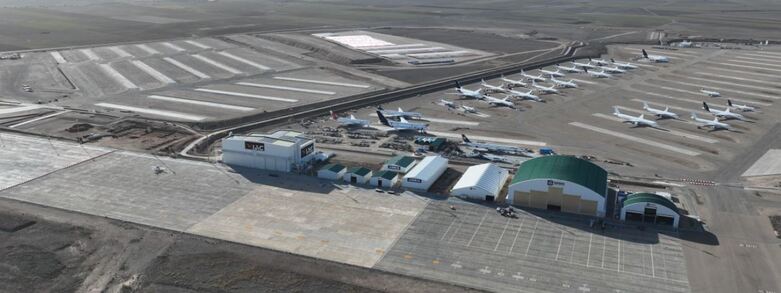
Teruel Airport in eastern Spain, a state-owned facility known as one of Europe’s largest aircraft maintenance and storage sites, company courtesy
COVID crisis revival Six years ago, the aviation industry faced what many believed would be its worst crisis. Airlines entered survival mode, with many forced into restructuring under Chapter 11, triggering longer sales cycles, more complex negotiations, and a sharp increase in stakeholder involvement.
During that period, airlines rapidly repurposed passenger aircraft for cargo operations – so-called preighters – in many cases removing seats to increase capacity. Carriers such as Turkish Airlines and Ethiopian Airlines were among the early adopters, with both emerging as clear winners as cargo operations offset losses in passenger traffic.
Not all carriers survived – but those that did, emerged stronger and, in many cases, more profitable than before. Today, the industry faces a different kind of disruption, and the question is no longer whether pressure will build, but how the market will respond – and where the opportunity lies.
Lower capacity The conflict involving the United States, Israel, and Iran, has led to targeted disruptions across key Gulf hubs, including Abu Dhabi, Bahrain, Kuwait, and Dubai, with airports and surrounding airspace still affected. These closures are directly constraining cargo flows to and from the region, with air freight experiencing the most immediate impact among all transport modes. Global air cargo capacity has dropped by roughly 22%, with Asia–Europe corridors via the Middle East down nearly 40% (Reuters).
At the same time, Emirates, Qatar Airways, and Etihad handle a significant share of global air cargo flows, with the Middle East region accounting for roughly 13% of global air cargo traffic (IATA), and a large portion of China–Europe traffic moving through their hubs. Even short-term movements have seen rates jump 5–6% within days on disrupted lanes. Their reduced operations have created a substantial capacity gap, pushing rates sharply higher across major trade corridors.
Around 20 QR aircraft have been relocated to Teruel because Gulf airlines report a drastic drop in pax demand due to the war in the Middle East – Credit: QR
Where are the planes? As operations contract, aircraft are not disappearing – they are being repositioned. Some airlines have moved planes to safer regions, while others have kept them parked in secondary airports or abroad to reduce risk exposure.
According to flight-tracking data from Flightradar24, around 20 Qatar Airways aircraft have been relocated to Teruel Airport in eastern Spain, a state-owned facility known as one of Europe’s largest aircraft maintenance and storage sites.
Teruel is a remote airport in rural Spain, which previously served as a major parking facility for grounded aircraft during the COVID-19 pandemic, when it hosted around 140 planes, according to Reuters. The move reflects the airline’s reduced flying schedule, with fewer aircraft needed as airspace restrictions limit operations from its hub in Doha.
Emirates did not move everything to one storage location. Instead, planes remain distributed across its network footprint, with many stranded globally, avoiding fleet concentration in a single high-risk location. On the other hand, Etihad keeps its planes closer to home, with most of its fleet parked in Abu Dhabi and a second cluster in Asia.
European key players – Lufthansa, Air France-KLM, and British Airways – after cutting or suspending Middle East routes, are redeploying capacity toward Asia as rising fuel costs and airspace disruptions force network adjustments. In the U.S., capacity cuts are not showing as long-term parked aircraft but rather as what can be described as ‘soft grounding’, with reduced utilization and fewer rotations.
As a result, a large portion of the global fleet is either idle, underused, or mispositioned as capacity cuts of over 20% ripple through the system.
Disrupted intelligence Right now, nobody in air cargo has a reliable real-time picture of which flights are actually operating, where capacity is available, which routes are at risk, or how prices are moving. Decisions are still being made based on outdated schedules – and sometimes on gut feeling.
The network becomes chaotic and reactive. Shipments sit at origin, get rolled last minute, or miss connections entirely. Ground handling teams are overwhelmed by unpredictable volumes, while capacity is either wasted or unavailable where it is needed most. Paradoxically, global cargo demand is still growing – up 5.6% year-on-year in early 2026 – while capacity is lagging behind at just 3.6% (IATA). Constant rebooking turns operations into firefighting.
Current data sources include Automatic Dependent Surveillance–Broadcast (ADS-B) flight tracking, NOTAMs (airspace restrictions), airline schedule changes, and unofficial airport congestion signals. What matters is not more data, but the ability to act on it.
Forwarders and airlines need to know which routes are about to fail, which lanes remain stable, and when to shift capacity before disruption hits. The advantage lies in deciding – early and with confidence – where to route cargo, which carrier to trust, and when to avoid a corridor entirely.
Even the major booking platforms – cargo.one, CargoAi, and WebCargo by Freightos – have digitized booking and rate aggregation, but they still lack predictive disruption intelligence and do not show, in real time, which carriers are actually operating reliably or where capacity is truly available.
Routing optimization engine The gap between quoted rates, booked rates, and actual executed rates is widening with rate movements of up to 70% on key lanes within weeks, making static pricing models increasingly unreliable. What is missing, is a system that can show the true market price – per lane, per day – along with price trends and airline price differences.
The highest leverage right now, lies in the ability to predict airspace closures, congestion spikes, and route instability. Traditional routes are broken, yet many still operate within outdated lane structures.
A system capable of suggesting alternative routings, including hybrid solutions such as air+truck or sea-air, would add immediate operational value. What is needed is a ‘Bloomberg terminal’ for air cargo – replacing long-term contracts with dynamic decision-making tools that reflect the reality of volatile markets.
The missing layer Today, most companies have data, but they neither share it nor monetize it effectively.
Pricing data sits in one system. Capacity signals in another. Disruption indicators are scattered across tracking feeds, NOTAMs, and operational updates. None of it connects fast enough to be useful.
Systems capable of delivering pricing intelligence, capacity reliability scoring, and disruption prediction – answering the question ‘what should I do now?’ – are still missing.
In a world of continuous disruption, the model itself needs to change. How data is collected, shared, and monetized will define the next phase of the industry and who captures the value.
This is the moment to rethink how data is shared in air cargo, not as isolated datasets, but as a real-time decision layer.
In an industry that moves roughly one-third of global trade by value, even small informational advantages translate into significant financial impact. The next winners won’t control aircraft. They’ll control information – and act on it faster than everyone else.
Amsterdam-based GSSA, Kales Airline Services, has gained Alaska Airlines and its group member, Hawaiian Airlines, as a new client. The Seattle-headquartered carrier (IATA code: AS) is the 6th largest U.S. airline and is about to serve transatlantic routes for the very first time since its founding 94 years ago. Rome and London are the two new European destinations listed on the carrier’s flight plan.
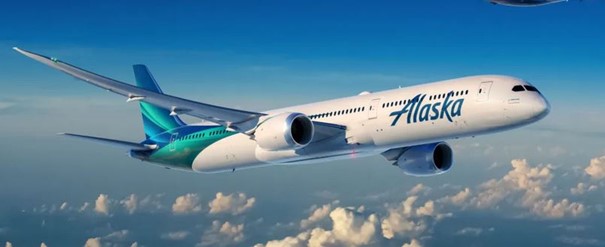
Alaska’s first 787 widebody aircraft in the carrier’s new global livery will be seen operating across Europe and Asia.
In its announcement, Alaska states that it intends to operate a brand new B787 on the two new routes. The Boeing long-haul passenger aircraft can carry between 15 and 20 tons of cargo per flight in its lower deck compartments, depending on passenger baggage volumes. The air cargo industry will have daily access to both intercontinental flights, to and from Seattle.
Daily flights Services between Seattle and Rome are set to commence on 29APR26, with Seattle- London offered as of 21MAY26. While Kales will manage the cargo business at Rome Fiumicino itself, in the UK, Alaska Airlines will be represented by Wexco, a fully owned subsidiary of the Kales Group. The Kales Group will also expand its network offerings with Alaska Airlines in important offline markets such as Turkey and India.
In a statement, Kales CEO, Sebastiaan Scholte not only highlights the importance of the new transatlantic routes for his company’s cargo clients but also hails Alaska Airlines’ extensive network beyond its main gateway, Seattle. The network is widespread in the greater Pacific region, hence attractive to European shippers and forwarding agents alike. “This exciting new cooperation with Alaska and Hawaiian enables our group to significantly expand our network. It allows us to offer our customers more destinations, not only across North America, but also onward connections to the Far East and Australia,” illustrates Scholte.
Nearly 100% capacity utilization On the westbound routes, he expects a stable product mix consisting of machinery parts, garments, luxury items, instruments, and perishables. Chemical products, automotive, aircraft parts, and household goods are likely to round off the airfreighted goods. “We anticipate nearly 100% capacity utilization on both westbound routes,” said Scholte. With Seattle and neighboring Vancouver, Canada, there are two economic hubs with high purchasing power. Furthermore, Seattle-Tacoma International Airport is excellently connected to the trucking network along the U.S. West Coast.
AS is responsible for eastbound cargo Ian Morgan, VP of Cargo at Alaska Airlines, is also convinced that a fruitful partnership between his airline and the Dutch GSSA will benefit both parties: “Having Kales represent Alaska Airlines in these new markets, will provide our customers a seamless experience when working with us. Kales and Alaska share a dedication to high quality service and will be strong partners as we grow in Europe.” On its eastbound flights to Rome and London, Alaska Cargo will manage the pallet and container operations on its own.
In addition to the extensive domestic U.S. network, Alaska and Hawaiian Air Cargo serve 14 destinations across the Far East, the South Pacific, Canada, and Mexico from its global gateways in Seattle (SEA) and Honolulu (HNL).
Asked whether the two transatlantic flights were part of a larger network expansion plan by Alaska Airlines, linking the U.S. Westcoast with Europe, Scholte said that this had not been discussed between Kales and the airline. “Our counterparts did not present us any plans in this regard.”
In today’s rapidly evolving global logistics landscape, freight forwarders are grappling with unprecedented challenges that threaten profitability and efficiency. As supply chain disruptions, rising fuel costs, and volatile freight rates reshape the industry, the need for innovative solutions has never been greater. In this guest article for CargoForwarder Global, Mike Hane, Director of Product Marketing, TMS at Descartes, explores how real-time air cargo visibility can empower forwarders to adapt, unlock new efficiencies, and safeguard their bottom line in the face of mounting pressures.
Freight forwarders are facing mounting pressure on profit margins in 2026. As Red Sea rerouting and intensifying Middle East conflict disrupt global supply chains and drive a sharp increase in fuel prices, forwarders are battling the escalating costs of transporting cargo for their customers. While shipping freight by air can help mitigate the impact of maritime disruptions, airspace restrictions and flight cancellations have removed approximately 13% of global air freight capacity, causing freight rates to surge on top of increasing fuel costs.
Despite increasing costs, air freight is in high demand. According to a 2026 analyst report, an escalation in pharmaceutical cold-chain logistics and accelerated supply chain needs for high-tech electronics are driving the growth of the air freight market.
In addition, explosive cross-border ecommerce demand has increased the need for smaller, more frequent shipments, with airlines adapting to this trend by optimizing belly capacity and increasing flight frequencies to fulfill the quick delivery promises.
While the demand for air freight remains strong (despite being the most expensive mode of transport) and volumes are increasing, freight forwarders are watching their margins take a hit. Indeed, rate and tariff volatility, unpredictable surcharges, and rising fuel and insurance costs pose a serious threat to the bottom line.
With profitability under siege, forwarders are seeking ways to unlock efficiencies in their air cargo operations and prioritize resilience in their supply chain to meet customer demands and ensure the timely and most cost-efficient delivery of goods.
Visibility matters As freight forwarders optimize their logistics strategies, systems, and technology with efficiency and cost savings in mind, end-to-end shipment visibility has become an invaluable strategic advantage in their toolkit. In fact, a recent global transportation management survey found that (for the eighth year running) supply chain leaders rank visibility as the top capability for managing, enhancing, and delivering value in transportation.
By adopting automated air cargo tracking tools, forwarders gain real-time visibility into the location, status, and estimated time of arrival (ETA) of their goods. They can easily track and trace air shipments, capture relevant data, and effortlessly transfer information between stakeholders. This level of visibility and transparency empowers forwarders to make data-driven decisions to lower costs, ensure timely delivery, and provide consistently strong customer service.
5 benefits of air shipment visibility As shipping volumes rise and manual tracking processes break down, automated air cargo tracking is the competitive differentiator forwarders need to build brand loyalty, boost customer retention, and protect margins. With real-time visibility into their air shipments, forwarders benefit from:
Lower costs. Replacing manual air cargo tracking with automated tracking technology enables forwarders to detect potential delays and exceptions earlier and reduce the risk – and expense – of any disruptions along the shipment journey. They can reroute freight or adjust delivery schedules in real time, preventing unnecessary costs linked to lost or delayed shipments (e.g., airport storage fees due to late pickups; last-minute expedited fees) and additional customer service interventions.
Data-driven decision-making. With accurate, real-time data, forwarders can proactively address any issues, such as delays, disruptions, or damages that occur during the transportation process. This visibility enables forwarders to act rapidly and minimize the impact on their operations and customer service. Plus, with nuanced insights into shipping performance through historical data analysis, forwarders can identify areas for improvement and refine their processes to increase efficiency and trim operating costs.
Enhanced customer experience. Air cargo tracking tools offer forwarders and their customers peace of mind, enabling them to monitor progress at every stage of the shipment journey in real time. Automated alerts notify forwarders of any changes in shipment status, such as delays, enabling them to take immediate action. This level of responsiveness and agility builds trust in the forwarder’s ability to deliver cargo on time and in good condition, translating to higher customer satisfaction and retention rates and driving top-line revenue.
Greater supply chain efficiency. Visibility into air shipments is essential for improving overall supply chain efficiency and decision-making. Real-time data on cargo location and status enables forwarders to make informed decisions – both in the immediate instance and long-term – regarding exception management, route optimization, and demand forecasting. Armed with real-time and historical visibility data, forwarders can optimize their network and operations to reduce transit time and minimize disruptions to increase the efficiency of their supply chain.
Risk mitigation. Real-time air cargo visibility significantly improves situational awareness and accountability throughout the shipping process, enabling early detection of any irregularities or potential security threats. This transparency strengthens customer trust and enhances overall risk management by reducing uncertainty, improving communication, and enabling faster resolution when issues arise.
Looking ahead Air freight transports more than USD $8 trillion worth of goods annually, according to the International Air Transport Association (IATA), and accounts for approximately 33% of world trade by value, with no signs of slowing down. With 95% of all purchases projected to be made through ecommerce by 2040, the need for fast cross-border shipments is on the rise. In fact, a recent global forecast estimated that express shipments will account for a quarter of all air cargo business by 2043, with ecommerce sales growth outpacing general cargo by a wide margin.
As consumer appetite for online shopping grows, freight forwarders will increasingly turn to air cargo to transport goods for their customers. But with the cards stacked against them – increased operating costs, shrinking margins, global supply chain disruption, intense competition, high customer expectations – they need to prioritize efficiency, transparency, and cost reduction in their air cargo strategy, processes, and technology choices.
Automated air cargo tracking delivers the competitive advantage they need to protect their bottom line while enhancing customer experience. With real-time shipment visibility, forwarders can accelerate and streamline their supply chain and make data-driven decisions to mitigate risk, curtail costs, and provide a higher level of customer service that ultimately boosts brand loyalty and drives recurring revenue.
Mike Hane, Director of Product Marketing, TMS at Descartes
Every week, CargoForwarder Global’s ‘Spotlight On…’ shows just how varied careers in air cargo can be, and how different the many business structures are. Company sizes can range from organizations employing over 100,000 people across the globe, to just a single person. What they all have in common is the fact that people are both the mesh and the motor of this industry – they ensure that it functions smoothly across all interfaces and geographical borders, and are the ones driving efficiency and innovation. Independent consultants highlight areas of improvement in specific industry segments or processes, develop projects to bring about the required changes, and maintain the focus their implementation and progress. This week, Michael Webber (MW), President of Webber Air Cargo, talks about his function and where he sees the greatest challenges in the industry.
Meeting in-person leads to higher quality interactions. Image: Michael Webber
CFG: What is your current function and company? And what are your responsibilities?
MW: Webber Air Cargo is a niche consulting firm focused on air cargo planning mostly for airport operators and civil aviation authorities. Effectively performing that work requires constant outreach to airlines, handlers, forwarders, trucking companies, regulators and commercial developers of cargo facilities. I am the sole employee of my firm.
CFG: What does a normal day look like for you?
MW: My workload depends on the nature of clients at the time. Some clients mandate weekly calls to monitor project progress. My clientele had been almost entirely airport operators, but in recent years, I’ve completed assignments for the World Bank, the Transportation Research Board (a division of the National Academy of Sciences in the U.S.) and similar institutions.
When starting a new airport project, I typically hold an on-site workshop for airport staff, on-airport cargo tenants (airlines, handlers, regulatory agents) and mostly off-airport cargo constituents (forwarders, trucking companies, major shippers and local economic developers). This often secures agreement of key cargo industry players to participate in individual interviews. It may seem outdated, but I still believe meeting in-person leads to higher quality interactions. Then in planning, I’ll integrate the subjective input from workshops and interviews with the more algorithmic elements of facilities planning.
CFG: How long have you been in the air cargo industry, and what brought you to it?
MW: My interest in logistics tracks to work-study curriculum completed while still at Tulane University (New Orleans). During and immediately after MBA School in the late 1980s, I worked on efforts with the World Trade Center of New Orleans, New Orleans International Airport, the Port of New Orleans, the New Orleans Consular Corps and the International Freight Forwarders & Customs Brokers Association of New Orleans (IFFCBANO). More than 35 years later, I am still in touch with mentors like freight forwarder John Hyatt, formerly of New Orleans-based Irwin Brown Corporation. In some cases, I even encounter the now-adult progeny of my mentors. Kristi App – recently appointed as Chief Commercial Officer of the Port of New Orleans – is the daughter of long-time New Orleans freight forwarding legend, Billy App, who was another of my mentors when he was with J.W. Allen & Company for so many years.
CFG: What do you enjoy most about your job?
MW: I started in the industry in my twenties and I’m now in my sixties. What I enjoy most is what I’ll miss most when I give it up – the people. Nothing about my upbringing in Kansas City would suggest I’d work on multiple projects in Latin America, Africa, the Middle East and Asia. I’ve thoroughly enjoyed the opportunity to experience such diversity of cultures. At a time when multiculturalism is under attack in some societies, I’m struck by how myopic one must be to regard the beauty of the melting pot as something threatening.
CFG: Where do you see the greatest challenges in our industry?
MW: Even in a global industry, many challenges are still national or regional. In the developing countries in the Southern Hemisphere – thinking mostly of Africa and Latin America – economic dependence on perishable exports creates trade imbalances, but more recently, has put those regions in the crosshairs of unanticipated debates. When comfortable people in the industrialized nations argue against the environmental impacts of freighters used to transport winter (in the north) fruits and vegetables, they seem to forget what losing those markets would do to producers in Africa and Latin America. Don’t get me wrong, I have kids and I worry about sustainability, but let’s not ignore potential unintended consequences. I believe that most of the answers derive from optimizing operations, rather than eliminating them. That’s true in the industrialized world, as much as the developing.
For a more U.S.-centric answer, we have squandered assets that made this country an incomparable economic powerhouse when we were able to leverage our large geographic size and population thanks to the transcontinental railroads and national highway system. Tragically, subsequent generations of Americans are conditioned to disregard the physical infrastructure, the social contract and other common forces that connected us physically and otherwise. Our collapsing bridges provide the perfect metaphor for our society at large.
CFG: What advice would you give to people looking to get into the air cargo industry?
MW: I occasionally am invited to speak to college students, and I am partnering with Purdue University on a research project, so I have given some prior thought to this question. Technology is evolving so rapidly that I’m not inclined to offer specific advice that could become outdated quickly. In a more timeless vein, choose mentors carefully and be comfortable asking a lot of questions. Our industry is full of people willing to share their experience. None of us knows everything, so just have the humility to ask questions and then pay it back when your experience eventually has people asking for your input.
CFG: If the air cargo industry were a film/book, what would its title be?
MW: The opening line (“It was the best of times, it was the worst of times”) of Charles Dickens’s ‘A Tale of Two Cities’ comes immediately to mind. None of us wants global tragedies like war and pandemics, but those crises consistently underscore how critically important our industry’s unmatched timeliness is and how proud we should be for how our industry responds.
Thank you very much, Michael!
If you would like to share your personal air cargo story with our CargoForwarder Global readers, feel free to send your answers to the above questions to cargoforwarderglobal@kopfpilot.at We look forward to shining a spotlight on your job area, views, and experiences.
Following IndiGo’s CEO, Pieter Elbers recent resignation, the next helmsman of an Indian carrier has quit his job: New Zealand-native Campbell Wilson. He steps down from his post at Delhi-based Air India after accomplishing the privatization and merger of four airlines under Tata ownership. Wilson will remain in office until a successor has been appointed by the supervisory board.
Campbell Wilson, outgoing CEO of Air India. Photo: courtesy of Air India
His decision does not come as a surprise, as the executive had previously announced his intention to step down in 2024 but remained in charge of ensuring a seamless transition of leadership: Wilson was appointed in 2022 after the Tata Group took over the loss‑making Indian flag carrier.
During his tenure, the merger of four airlines (Air India, Air India Express, Vistara, and AIX Connect) was executed, streamlining different work cultures rooted in public and private sectors.
A multitude of challenges Since the privatization of Air India in 2022, the Tata conglomerate has embarked on an ambitious fleet overhaul, ordering hundreds of aircraft to replace ageing and fuel-thirsty jetliners. Simultaneously, the intercontinental network was expanded.
Wilson led efforts to improve passenger and cargo services, modernize operations and integrate the group’s aviation businesses, but faced persistent headwinds, including aircraft delivery delays, airspace closures caused by the 2025 India‑Pakistan conflict, and disruptions linked to the war in the Middle East and Iran, causing widespread airspace closures that required longer flights on alternative routes.
Wilson’s most severe setback during his tenure came in JUN2025, when Air India Flight AI171, bound for London Gatwick, crashed right after takeoff from Ahmedabad Airport (IATA: AMD), killing all but one of the 242 people on board and 19 people on the ground. This fatal crash marked the first total loss of a Boeing 787-8 (Dreamliner) worldwide, bringing the carrier’s maintenance and safety schemes under scrutiny at a time of accelerated growth.
Leaving the red remains the primary goal Following the Ahmedabad crash, Air India strengthened its Safety Management System (SMS), upped its investment in technical infrastructure, and revised crew training and fatigue management. In the meantime, the airline is building an MRO facility and a training academy equipped with simulators for the Boeing 787 and Airbus A350 long-haul variants to manage the delivery of 570 Boeing and Airbus aircraft as part of its five year long transformational plan, with first deliveries taking place in 2027.
Campbell’s successor, whoever that may be, is likely to be judged primarily on the airline’s financial recovery. After all, the Indian flag carrier continues to incur significant losses. Improving the reputation of the company, which has been tarnished by numerous complaints about poor service, also remains a constant concern.
The theft of cargo shipments, including the hijacking of entire trucks, is a well-known scourge in Mexico. But the good news is that in most parts of the country, the number of cargo thefts has been declining sharply for months. This was triggered by the new Balam strategy introduced by the Sheinbaum government. However, Mexico City’s metropolitan area remains a criminal hotspot despite targeted government countermeasures.
NG Commander Hernán Cortés informed media about the latest drop of cargo thefts in major Mexican states – photo: gobierno de México
Despite this fact, the key message delivered during the press briefing was that twelve of the 31 Mexican states selected by the government for fighting crime in the transportation sector, have achieved significantly better security figures compared to a year before. The scheme, announced a year ago by President Claudia Sheinbaum, bundles regional and national security efforts to combat cargo thefts targeting transport operators in Mexico.
Balam strategy works National Guard commander, Hernán Cortés Hernández, who now presented the first results of the strategy to the press, stated that over the past seven months, theft has been reduced by 28% in 12 Mexican states, and the recovery of cargo vehicles has increased by 24%, compared to the same period last year.
According to Señor Cortés, the core elements of the Balam Strategy are as follows:
Increased personnel and technical resources for highway units, to boost on-the-spot inspections and patrols on vulnerable stretches of the transnational road network, such as between Mexico City and Puebla.
The establishment of field companies that serve as rapid-response forces in the event of incidents.
Increased deployment of manned and unmanned aircraft conducting reconnaissance missions and gathering intelligence.
Centralization of data to track criminal activities and their initiators and masterminds.
The Balam Strategy is rounded off by the deployment of 1,241 specialists, 23 investigative units, and the provision of 532 vehicles, 4 helicopters, and 37 drones.
In a nutshell: It is a data-driven, cross-provincial network of security experts who have been equipped, technically and operationally, by the central government, in accordance with their respective missions and tasks.
Alerts via app Hernán Cortés, who presented the interim results of the Balam scheme, illustrated that its core component is a command-and-control center, where incidents are monitored and responses are coordinated. Truck drivers can send alerts via an App on their cell phones, this way transmitting geolocation data directly to authorities. This activates highway patrol units closest to the incident to intervene immediately, supported by GPS-equipped vehicles and aerial surveillance capabilities. Monitoring centers operated by logistics companies also have become part of the Balam security network by continuously updating coordinates of their vehicles and sharing incident reports with authorities real-time.
Dark spots remain However, despite these security improvements, cargo theft remains highly concentrated in specific regions, particularly in Mexico City’s metropolitan region or along the routes to Felipe Angeles International Airport. Industry associations speak of critical last-mile corridors. This is confirmed by authorities that emphasize the necessity of targeted counter measures in the capital area.
Despite the regionally improved security regime, incidents continue to occur daily, indicating persistent exposure. Transport operators still face an average of up to three assaults each day.
Officials of the Mexican Association of Private Security and Satellite Industry Companies, speak of USD 386 million in annual losses caused by cargo theft across the state. These are provoked by structural and external factors such as cybercrime, social erosion, hijacking of vehicles, drug trafficking and organized crime activity.
DHL Global Forwarding has expanded its air freight capacity between Asia and Europe by launching new weekly Boeing 777F flights connecting Shanghai with Leipzig, and Hong Kong with Liège, this summer. The services which are operated within DHL Aviation’s network, will provide dedicated capacity for DHL Global Forwarding customers and deepen collaboration with DHL Express. This cross‑divisional approach enhances flexibility, reliability, and resilience across one of the world’s busiest trade corridors.
More cargo capacity on major Asia-Europe tradelane. Image: DHL Global Forwarding
Leipzig, home to DHL Express’s key aviation hub, serves as a central European gateway for shipments from Shanghai, enabling efficient processing and rapid onward distribution across the continent. The new Liège-Hong Kong route includes a stop in Tel Aviv, ensuring market continuity and offering selective cargo loading options. Cargo returning from Hong Kong feeds directly into DHL’s European network, further improving service integration and transit times.
These dedicated Asia–Europe rotations significantly strengthen DHL’s controlled capacity on strategic trade lanes, supporting customers through seasonal peaks and growing demand in e‑commerce and high‑tech industries. DHL Global Forwarding is also preparing additional network upgrades, including expanded transpacific services linking Southeast Asia and the U.S. later in 2026.
Henk Venema, Global Head of Air Freight DHL Global Forwarding, stated: “Expanding our controlled capacity on the Asia-Europe corridor reinforces our commitment to reliability, speed, and resilience for our customers. The demand on that trade lane continues to grow at an exceptional pace, and strengthening our network ensures that we stay ahead of customer needs.”
Travis Cobb, EVP Global Operations and Aviation DHL Express, said: “This cross-divisional collaboration demonstrates our commitment to supporting global trade flows. By joining forces across DHL Global Forwarding and DHL Express, we ensure that customers benefit from our combined strength as the world’s leading logistics provider.”
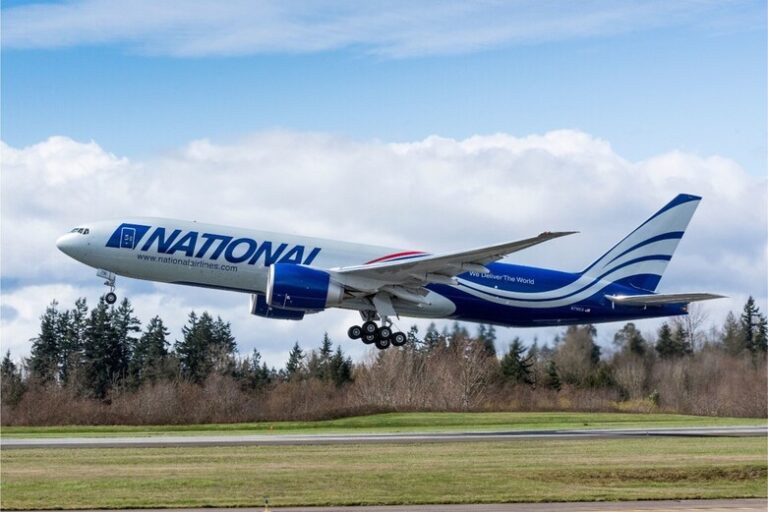
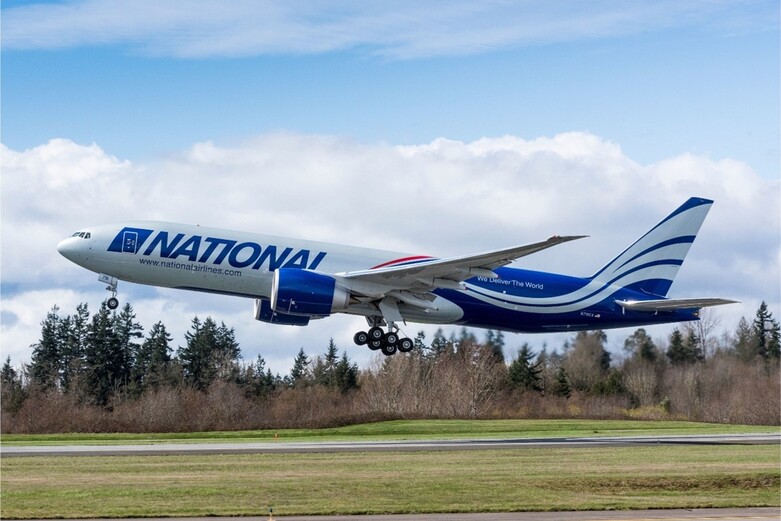
The US carrier, National Airlines, check-marked a major milestone in its fleet modernization program, recently, when test flights began for the first of its four ordered Boeing 777‑200 Freighters. Registration N791CA is currently undergoing mandatory flight and performance evaluation, which – if successful – will result in the aircraft beginning commercial operations this MAY26. Its other three 777‑200Fs will complete their own flight test programs later this year, marking a pivotal step toward expanding the carrier’s long‑haul cargo capabilities. They will add to National’s existing fleet of nine Boeing 747‑400 freighters and three Airbus A330 passenger jets and position the airline for continued growth in an industry driven by e‑commerce and global supply chain needs.
National Airlines’ Boeing 777-200F Aircraft (N791CA) during test flights. Image: National Airlines
The Boeing 777‑200F, one of the world’s most advanced and fuel‑efficient freighters, offers a payload capacity of over 102 tons and a range exceeding 9,000 kilometers. Its modern twin‑engine design and next‑generation avionics enhance precision, reliability, and sustainability on intercontinental routes, enabling National Airlines to meet growing global demand for fast, dependable air freight.
National Airlines Chairman, Christopher Alf, revealed: “We are excitedly waiting to see the Boeing 777-200 Freighter enter commercial operations, offering our customers an enhanced fleet option to support their evolving charter requirements. The induction of the B777-200 freighters marks a significant step in strengthening our global cargo network, enabling greater efficiency, reach, and operational flexibility. This milestone further reinforces our commitment to delivering world-class transportation solutions and consistently exceeding the expectations of our partners and customers worldwide.”
As it continues to invest in Asia Pacific as a key strategic region, and build up its global leadership, Avia Solutions Group’s air charter specialist, Chapman Freeborn announced last week, that it has appointed Latha Narayan to lead the region. As President APAC, effective 01APR26. Narayan will oversee strategic and commercial development in Asia Pacific, aiming to expand operations and harmonize the company’s cargo, passenger, and business aviation services.
Latha Narayan is Chapman Freeborn’s new President APAC. Image: Chapman Freeborn
Narayan joined the aviation industry in 1990 – initially in airport operations and retail sales for British Airways. Since then, she has gleaned experience in all aspects of commercial air cargo management with a strong focus on Asia Pacific, throughout. After 19 years with British Airways, she held various senior management positions at Etihad for more than a decade, before acting as an independent air cargo and aviation consultant, more recently. Her skill set includes commercial strategy, revenue management, transformation programs, managing complex markets, strategic development, network optimization and digital transformation. “She is recognized for her strong commercial acumen and ability to deliver measurable business outcomes,” the release states.
Saska Gerasimova, Group CEO at Chapman Freeborn, explained: “Strengthening our leadership in Asia Pacific is a key priority as we continue to scale our global operations. Latha brings a unique combination of strategic insight and commercial expertise, along with a proven ability to lead transformation and deliver results across international markets. Her appointment positions us strongly for the next phase of growth in the region.”
Latha Narayan, President APAC at Chapman Freeborn, commented: “I am honored to step into this role and bring my experience to an organization recognized for its excellence, integrity, and leadership in aviation. In an industry evolving at an extraordinary pace, Chapman Freeborn’s legacy is built on the strength of its people, and I am truly excited to work alongside such a talented team. My focus will be on accelerating growth, deepening collaboration, and delivering best-in-class solutions across cargo, passenger, and business aviation in this next phase. I look forward to leading with purpose and impact, redefining what’s possible in this space.”