Korean Air has partnered with Lödige Industries to carry out a major modernization of its cargo terminal at New York JFK. The project aims to boost service quality, operational efficiency, and sustainability at the airline’s U.S. East Coast hub – incidentally one of the biggest cargo terminals in the region. Opened in DEC20, the 17,065 m² facility handles around 200,000 tons of cargo annually and will now undergo a comprehensive technical upgrade. Key improvements include two fully automated Elevating Transfer Vehicles (ETVs) for higher ULD handling capacity and the introduction of Cargo Pallet Movers to replace fixed transfer vehicles, enhancing flexibility and space use. Fourteen workstations will be renewed, and major upgrades to the Cool Chain area will add a new refrigerated warehouse and modernized temperature-controlled storage systems. The four existing temperature-controlled warehouse areas will be equipped with new temperature controllers, roller conveyors, shutters and various other components, so as to increase reliability and efficiency. Overall, the makeover and renovation will improve productivity and provide for an even safer working environment.
Sleek and efficiently handled at JFK, thanks to modernization investments. Image: Korean Air
Junho Choi, Regional Manager, Cargo Office in New York, Washington and Boston, at Korean Air Cargo, said: “JFK is our gateway for cargo services along the East Coast and a key hub in our growing global network. By modernizing the terminal with state-of-the-art automation technology, we are ensuring long-term efficiency, higher safety standards, and increased sustainability of our operations.”
Jonathan Hardy, Managing Director North America at Lödige Industries, added: “Korean Air Cargo is renowned worldwide for its high-quality cargo service. With the modernized terminal, all requirements are met to satisfy the highest customer demands at JFK for years to come. As the airport plays an increasingly important role in global commerce, the modernized cargo center will further strengthen the airline’s leading market position.”
It isn’t all that long ago that KLM retired its well-known Boeing 747 passenger-cargo-combi-aircraft, and now a similar version on a smaller scale has taken to the skies. The inaugural flight of the world’s first Boeing 737-800NG combi was scheduled for 13JAN26, from Montréal to Kuujjuaq. This latest Boeing passenger and cargo combi aircraft belongs to Air Inuit – the wholly-owned airline of the Inuit of Nunavik [since 1978] and a subsidiary of the Makivvik Corporation. Newly reengineered and converted by KF Aerospace, and fully certified by Transport Canada, the Boeing 737-800NG combi will serve the people living in the Nunavik region, connecting them to the South. The aircraft has a forward cargo compartment that can hold five pallets, and seats 90 passengers in a cabin in the aft section. “This world-first is part of Air Inuit’s broader fleet-modernization strategy, which began with the acquisition of three Boeing Next-Generation 737-800s to eventually replace its 737-200 fleet. The new aircraft offer improved passenger comfort, inflight wifi powered by Starlink, better fuel efficiency, modern avionics, and increased passenger-cargo capacity to respond to the essential needs of communities in Nunavik and beyond,” the release reveals. Another combi conversion is due to be delivered next month – the third of three 737-800s acquired by Air Inuit in 2023.
Combi-aircraft are a thing again. Image: Air Inuit
Christian Busch, President and CEO of Air Inuit, commented: “Our investment in this next-generation combi reflects Air Inuit’s commitment to innovation that directly serves the unique passenger and freight needs of the communities and the people we serve. This aircraft allows us to modernize northern jet service while preserving the flexibility that is essential to our mission.”
Noah Tayara, Executive Chairman of Air Inuit, said: “Air Inuit plays a vital role in connecting and supporting the communities of Nunavik, and this new aircraft strengthens our ability to fulfill that mission.”
Pita Aatami, President of Makivvik Corporation, stated: “This achievement is another example of the people of Nunavik demonstrating the ingenuity that has been part of our story for millennia, ensuring our region continues to thrive and remain connected.”
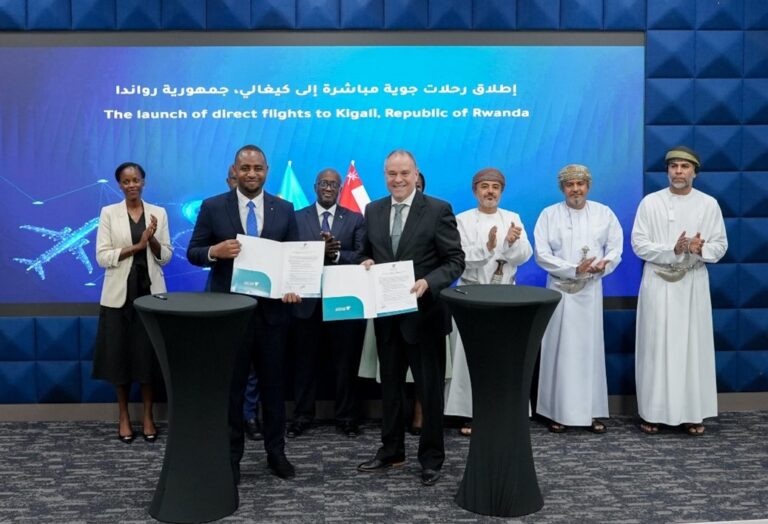
The new year kicked off with Oman Air announcing its expansion into East Africa. The airline will commence direct flight operations between Oman’s city of Muscat and Rwanda’s capital, Kigali. The 5.5-hour passenger service will begin in JUN26, connecting the two cities twice a week, using Boeing 737 aircraft. It is Oman Air’s first sub-Saharan connection and enables Oman Air Cargo to offer attractive freight links between East Africa, the Middle East, and Europe – particularly for perishables and time-sensitive commodities. The service is currently still subject to regulatory approvals.
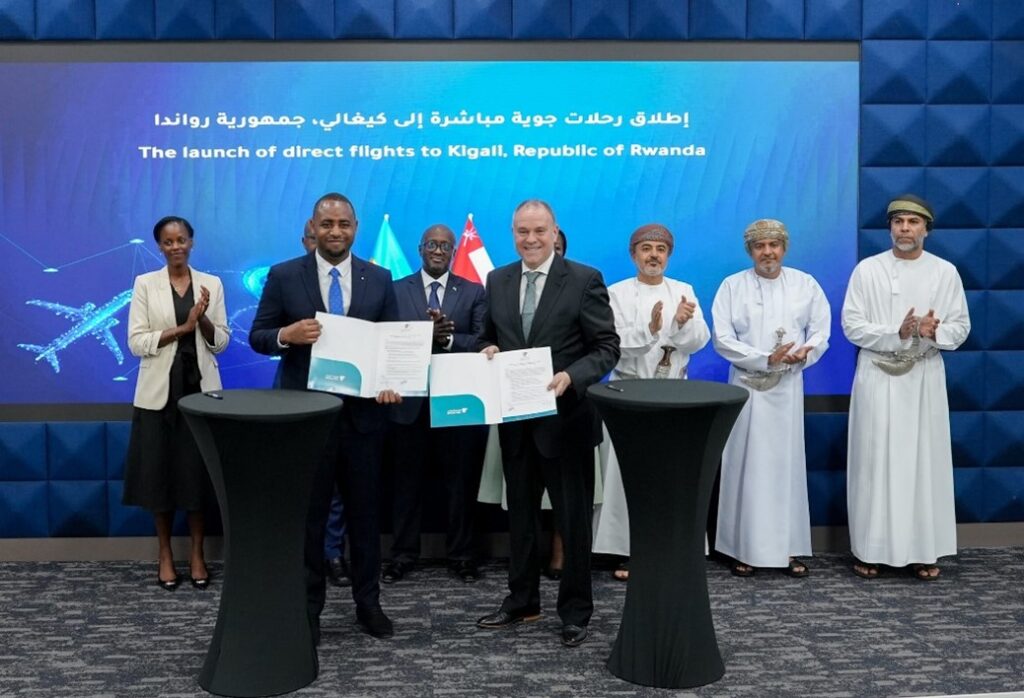
Oman Air will operate direct flights to Kigali, Rwanda. Image: Oman Air Cargo
The passenger version of the airline’s press release points out that: “Oman and Rwanda have shared diplomatic relations for over 28 years as well as a long-established trade relationship. Rwanda’s tourism and business travel market has expanded steadily in recent years with growing demand for the country’s eco-tourism and premium travel offerings. Kigali has also positioned itself as a regional hub for conferences and investment, supported by government-led initiatives to attract international events.” In addition to Oman serving as a “key regional aviation hub”, Oman Air Cargo, has been focusing on network expansion across the Middle East, Asia [Indian Subcontinent], and Europe, alongside the latest East Africa announcement. “The Muscat-Kigali service will support the movement of fresh produce, including fruit, vegetables, and flowers, alongside pharmaceuticals, general cargo, and express shipments originating in East Africa,” the cargo release states, underlining the many network connections out of Oman that position it “as an efficient transit hub for African exports destined for global markets”.
Michael Duggan, Head of Cargo, Oman Air, explained: “We are seeing sustained growth in demand between the Middle East and Africa, particularly for perishables and specialist cargo, and this new route allows us to respond with additional capacity and reach. By expanding our network into East Africa, we are providing exporters with reliable access to our global network and strengthening Muscat’s position as a dependable cargo hub.”
The heavily indebted Volga-Dnepr Group is to be taken over by the EAS Group (Evraz Avia Service LLC) during the course of Q1, 2026. It is a rescue plan to stabilize Russia’s largest cargo conglomerate. Volga-Dnepr became one of the main victims of the international sanctions imposed since 2022, following the Kremlin’s war on Ukraine.
Behind the EAS Group is Evgeny Solodilin, CEO of Red Wings Airlines and former head of Zhukovsky Airport, located east of Moscow. However, market experts are skeptical about whether the relaunch will be financially viable. The sanctions caused the Volga-Dnepr Group’s business model to collapse. This scheme was based primarily on scheduled flights operated by group member, AirBridge Cargo (ABC) between the Far East and Europe, with stopovers in Moscow or Novosibirsk, as well as charter missions using AN-124 freighters for oversized and heavy items, most of which were commissioned by non-Russian customers.
Under Solodilin’s leadership, the VD Group is to be given a new perspective – courtesy: Kommersant
Main task: driving debts down – fast Today, all 14 of ABC’s Boeing freighters have been grounded, and only three of the 11 AN-124 Antonov freighters are still operational. In addition, the group’s subsidiary, Atran, now operates only two AN-12 turboprop freighters. One of its former B737-800Fs is chained at Cologne Airport in Germany. Evgeny Solodilin has now been called in by the Kremlin’s aviation authorities that assigned him the role of a white knight, to save what can still be saved. His job is to draw up a restructuring plan that will reduce the huge amount of debt as quickly as possible. According to reports, the group owes more than USD 500 million to leasing companies. This mainly concerns nine Boeing B747-8 freighters owned by foreign leasing companies.
Fleet decision in favor of Russian aircraft Since the Western sanctions regime will remain in place for the foreseeable future due to Russia’s continued attacks on Ukraine, Solodilin intends to operate Russia-built aircraft, such as the Tu-204, Tu-214, and IL96. They are to serve domestic routes as well as flights to neighboring countries that belong to the Eurasian Economic Union. This alliance, founded in 2015, consists of Russia, Kazakhstan, Kyrgyzstan, Belarus, and Armenia. Cargo flights to China are also planned. However, Chinese cargo airlines now carry more than 90% of the tonnage transported by air between Russia and China. It is therefore likely to be difficult for Solodilin and his crew to regain their former market share. Prior to this, Volga-Dnepr founder, Alexey Isaykin, offered the Russian government to take over his aviation conglomerate in a patriotic, some say submissive step. However, Moscow’s Ministry of Transport turned down the proposal to prevent state property violating sanctions requirements. Should Solodilin’s contingency plan be successful, nearly 1,500 jobs will be preserved. And the technical viability of a fleet can be maintained – one that remains crucial to the Russian aviation industry.
DME for sale Moscow’s Domodedovo Airport (DME) will be put up for auction on 20JAN26, with a starting price of 132.3 billion rubles. The process involves the sale of 100% of the shares of DME Holding LLC and other companies in the group, the Russian agency, Interfax, reports with reference to the state auction information system. This sale comes amid an operational downturn for the airport. In 2025, DME handled 13.86 million passengers, representing an 11% decline compared to 15.6 million in 2024. Domodedovo management declined to comment on the sales process. According to the published terms, the purchase agreement will be signed within five business days after the winner is announced, and the transfer of ownership will be completed within a maximum of 30 days after payment. In 2025, Domodedovo Airport significantly expanded its cargo handling capacity, with an additional 15,600 m² of storage space. This more than doubled the terminal’s handling capacity to approximately 440,000 tons per year. However, exact throughput figures for cargo volumes handled in 2025 are not available. DME was completely closed down several times in recent months due to Ukrainian drone attacks as a reaction to Russian air strikes.
Liège Airport (LGG) takes its inspiration and ambitions from the Olympic Games. Just being part of the show is not enough; the aspiration is to stand on the podium. The Belgian airport, which focuses entirely on the cargo business, achieved this in the past financial year by becoming the fifth largest European airport in cargo handling. Among its many fathers, this success has one specific name: Torsten Wefers (TW). And he has his eyes on the bronze medal.
Wefers has been managing the air freight business at the Walloon airport for four years. Since then, volumes have been growing steadily and the number of airlines serving the airport has continued to increase. LGG is now number three in air freight throughput in Europe, with 1,324,579 tons handled in 2025 (+14% year-over-year). Just a few days ago, the airport gained another customer in the Chinese cargo airline, Suparna Airlines, which operates the Chongqing–Liège route with a B777F. CargoForwarder Global (CFG) spoke to the manager about the recipe for success at the airport in eastern Belgium.
Torsten Wefers and his LGG cargo team are doing their utmost to join the ranks of Europe’s top three cargo airports in terms of tonnage handled – photo: CFG/hs
CFG: Anyone working in the French-speaking part of Belgium should be able to speak French. How would you rate your knowledge of the language? TW: I would say my French is in progress, but at a rather low level. I can get by reasonably well with my French in everyday life. But since the lingua franca of the air freight industry is English, I don’t need French very much for work. Incidentally, Belgium has three official languages: French, Flemish, and German.
CFG: In a nutshell, what is the secret to LGG’s success? TW: It is based on several pillars: the demand-driven expansion of ground infrastructure, i.e.: a forward-looking ex ante rather than ex post strategy; the growing partnership with freight forwarders, which has greatly stimulated import and export volumes and has been and continues to be a magnet for cargo airlines; and our verticals strategy, especially for perishables, pharmaceuticals, and flowers. However, there are also other criteria that make the overall LGG package attractive for the industry. For example, we have worked closely with local authorities such as customs, to speed up shipment flows between the first and second lines of warehouses on-airport. We operate internationally under the brand name, Cargoland, which highlights our focus on air freight, our ambition to create a state-of-the-art cargo hub, and makes us better known. Finally, our handling agents have invested in temperature-controlled storage facilities and capacities, which increases the airport’s overall attractiveness.
CFG: Liège is open 24/7/365, so unlike Frankfurt, Amsterdam, or Luxembourg, air traffic is not limited by a night flight ban. Has the airport benefited from the slot discussion in Amsterdam? TW: First, let’s talk about night flights. We received our new operating and environment permit in 2024, which is valid until 2040, so this issue is settled for the next decade and a half. That said, we are increasingly focusing on the development of daytime traffic. As for Amsterdam, I don’t comment on competitors, but I will say this much: the controversial discussion about slot limitations at Schiphol has had a positive impact on our business.
CFG: e-commerce has been a key driver of growth in imports to date. Now, from 01JUL26, the EU wants to impose a duty of EUR 3 per item on Alibaba, Temu, Taobao, and Amazon e-commerce shipments valued below EUR 150, that do not originate in the EU. What impact do you expect these tariffs to have on your airport’s business? TW: It will have an impact, no question about it. This statement is in line with the predictions echoed by major trade associations. On the other hand, this is a tax that will be levied across the EU, so all airports from A to Z will be affected. The example of the Trump administration’s de minimis rule, which eliminated the USD 800 de minimis threshold for commercial shipments across all countries, shows that after a short-term decline in volumes, they quickly rise again. In any case, it is too early to discuss concrete impact scenarios, especially since the details of the planned regulation have not yet been communicated.
CFG: What are your primary goals for 2026? TW: There are three main goals: We want to significantly increase our export volumes; the 11% growth in 2025 – the highest at any major European cargo hub – was already an important step. Our strategic partnerships with the global forwarder powerhouses will certainly help us achieve this. This also applies – as our second priority – to the acquisition of additional network carriers so that we can offer hub-to-hub transport. Last but not least, we will intensify our verticals strategy, with a very strong focus on pharma.
CFG: Are you thinking of Air France-KLM-Martinair Cargo? TW: There are various options, but I don’t want to comment on that in detail. But I assume it will not be Lufthansa Cargo, although – as a German – I would like to see the ‘Kranich’ landing in LGG.
CFG: You are now number five in Europe in terms of cargo volumes. When will you be number three, i.e. win the bronze medal?TW: This is a clearly defined goal for us, and we are doing our best to achieve that. But the competition never sleeps, so it will be more of a long race, I believe.
Each week, CargoForwarder Global’s ‘Spotlight On…’ hands the mic to someone working in one of the many different areas that make up our air cargo industry, to illustrate the seemingly unlimited career paths it offers. As the world continues to turn and shipments are flown around it, technology, too, propels the industry forward. There are so many LogTech ideas, opportunities, and innovations out there, it can be difficult to keep up, fully understand, or safely try out solutions alongside the daily business of air cargo. That is where HAUS61 comes in as a logistics startup accelerator: it brings air cargo stakeholders together with LogTech startups, offering a space where use cases can be trialed in real environments, thus shortening the path from prototype to operational deployment and ultimately speeding up air cargo digitalization and process optimization. Jessica Stöber, Management Assistant at HAUS61, takes us through her multifaceted role, and shares her views and advice.
“Every person in the chain matters.” Image: Jessica Stöber
CFG: What is your current function and company? And what are your responsibilities? JS: I work at HAUS61, a startup accelerator and innovation platform based at Frankfurt Airport, focused on logistics and air cargo. My role as a Management Assistant is incredibly varied. I do everything from event planning and marketing to startup and partner communication. That can mean designing flyers and branding materials one minute and coordinating a 200-person gala dinner the next. I keep an eye on everything from social media to strategy and keep things running smoothly behind the scenes so the rest of my team can do their best work.
CFG: What does a normal day look like for you? JS: My day might include meetings with sponsors, writing newsletters, preparing social media posts, planning pitch events, booking venues, or catering, scouting new startups, or making sure the ice cubes at our event have the right size to melt our logo into them (true story!). I work across a wide range of tasks and love the challenge of pulling everything together. I also spend a lot of time connecting people: startups with sponsors, partners with innovators, experience with new ideas. That’s really at the heart of what we do at HAUS61.
CFG: How long have you been in the air cargo industry, and what brought you to it? JS: I’ve been in the industry for about 1.5 years now. My whole family is in logistics, so in a way, it feels like I was always meant to end up here. What fascinates me is how logistics touch every part of our lives and how many people are involved in the process. From parcels to life-saving stem cells, from urgent aircraft parts to your favorite chocolate bar. There are countless people and processes involved behind the scenes, many of them invisible unless you work in the field. I find that incredibly exciting. What made me stay was the openness to new ideas. I’ve seen industry veterans make time for small, new startups at a pitch event because they know innovation isn’t optional. They know the world is changing fast, and they want to be part of that change.
CFG: What do you enjoy most about your job? JS: I enjoy how creative and collaborative it is. We get to work with a wide variety of people and bring them all together in one room. Seeing a connection happen at one of our events and watching people from very different parts of the industry engage in conversation is really rewarding; even competitors come together around innovation. I do love well-running processes and there’s something magical about seeing months of preparation come together in one evening and knowing that we’ve created a space where innovation can meet the industry. It also helps that the people I work with are excited about their jobs, their ideas, startups, and new collaborations. Working with highly motivated people makes it easy to enjoy the job.
CFG: Where do you see the greatest challenges in our industry? JS: I think one challenge is remembering that every person in the chain matters. Logistics is often seen as a technical or process-driven field, but at its core it’s about people. From warehouse workers to CEOs, from drivers to developers, everyone contributes. In times of digitalization and automation, we need to innovate with people, not around them. Sometimes it can be challenging to balance the value of experience with the opportunities that come from new approaches and innovation. As young professionals, we can struggle in environments shaped by a “we’ve always done it this way” mindset, and at times we may underestimate the power of experience. But at the same time, we bring fresh perspectives, new ways of working, and critical questions that can truly drive a company forward and secure its competitive edge. The world is changing fast, and simply keeping up is no longer enough. Companies that succeed are those that can look back and draw lessons from experience while also embracing open mindsets and new ideas. When experience and innovation come together, that’s when real progress happens and it’s what allows a business to stay ahead of the curve. That’s our motto: HAUS61, where Innovation meets Industry.
CFG: What advice would you give to people looking to get into the air cargo industry? JS: One of the best things about logistics: There are so many routes in, and so many kinds of skills needed. Whether you’re into engineering, design, communication, business, operations, you name it, there’s space for you and your skills, knowledge, and experience, so don’t worry if your background isn’t ‘typical’. My advice is: be curious, be open, and don’t underestimate your own perspective. The industry is full of people eager to share knowledge and people who are excited about new perspectives, innovation, and you.
CFG: If the air cargo industry were a film/book, what would its title be? JS: ‘Everything Everywhere All at Once’ – It’s global, fast, and filled with opportunity for those bold enough to innovate.
Thank you, Jessica!
If you would like to share your personal air cargo story with our CargoForwarder Global readers, feel free to send your answers to the above questions to cargoforwarderglobal@kopfpilot.at We look forward to shining a spotlight on your job area, views, and experiences.
General sales agent Kales Airline Services acts, thinks and performs like a well-running airline, based on a close and confidential partnership relation. This translates to an extended role with the GSA managing the supply chain from origin to the shipment’s departure on board an aircraft. In other words, Kales will continue and extend the company’s Total Cargo Management (TCM) services to its mandate airlines, including possible new accounts.
This said, Kales’ Managing Director, Sebastiaan Scholte points to a remarkable development. While in 2021, GSSAs accounted for 24% of all cargo sales activities they now manage 27%. The demographic developments in the future will make it more difficult to get manpower due to the increased dependency ratio because of an aging population. This translates into an increasing number of airlines that have outsourced and will continue to outsource their air freight business, by handing it over to sales agents. In other words, carriers increasingly focus on their core business, the air transport of shipments, with GSAs taking care of the “rest.”
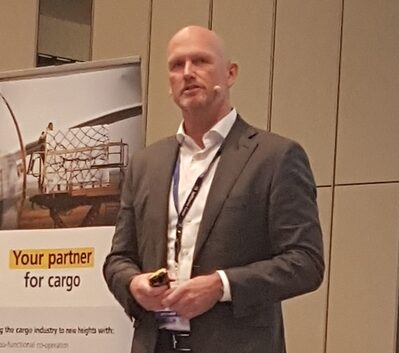
Kales CEO Sebastiaan Scholte is a welcome speaker at air freight events, such as here in Copenhagen – photo: CFG/hs
CEIV pharma certification pays off Kales benefits from the fact that the company became the first CEIV Cargo certified GSSA worldwide. This applies to Belgium, Italy, and Switzerland. The CEIV pharma certification also helped to acquire Finnair Cargo as customer for its freight business in Belgium, the European center of pharmaceutical production and distribution. The Nordic carrier was the first airline worldwide to achieve IATA CEIV Pharma handling certification in 2015 and has been re-certified multiple times since.
Satisfying results When asked about the 2025 results, Scholte speaks of a “good year” for his company. Although there are always seasonal fluctuations in the freight business, Kales outgrew the market despite some seasonal ups and downs. However, these ups and downs are leveling off, he says, “shown by the fact that we saw no real peak in the final quarter.”
Widening global network Kales also used the year to expand its global network, which includes 72 offices in more than 34 European countries, 13 offices in India, as well as stations in Toronto, Mexico City, Quito, and Bogota. In addition, there is a new branch in Almaty (Kazakhstan) and Katmandu, Nepal, while the station in Istanbul, which runs remarkably well was established two years ago. “In addition to the local market, Kazakhstan is also interesting for us because shipments from southwest China are transported there by truck and then flown out from Almaty.” As new cargo customers, Kales has acquired amongst others, Air Serbia in 2025, covering the Turkish, Polish, Italian, and Hungarian markets, DHL Aviation in Switzerland, and TAP Portugal serving Central America.
Human factor becomes increasingly important Asked about 2026, he is largely optimistic but sees global uncertainties as main risks, making forecasts making accurate forecasts impossible, Sebastiaan stresses. This said, he points out that the human factor will become more important, as the wave of retirements, especially in Europe, will leave gaps that will need to be filled. “In air freight, we have seen 30 months of continuous growth. Hence, a temporary slowdown is conceivable, although experience shows that air freight always thrives in times of crisis.”
Reopening of the Suez Canal might send rates south The reopening of the Suez Canal could also contribute to a cooling off, or rather to a modal shift and a fall in transport prices. Due to the shorter travel times for container vessels between the Far East and Europe, some goods are likely to be shifted from air to ocean. This will have an impact on rates, which are likely to fall, at least for a while, until prices on these core routes have stabilized again. However, given the current global political situation, other developments cannot be ruled out, says the manager. For the air freight industry, agility and flexibility are therefore essential in order to be able to react quickly to new situations. As Kales operates worldwide, Scholte has added key trade shows to his travel plans this year. These include Air Cargo India (February 25-27), the World Cargo Symposium in Lima, Peru (March 10-12), Air Cargo China in Shanghai (June 24-26), and the TIACA Air Cargo Forum in Miami Beach (November 12-14).
Karaganda (KGF): located at just seven hours’ flying time from Shanghai and seven hours to Frankfurt, it offers the perfect stopover, right in the geographical center. A major airport is currently being built there. Or rather, the existing airport is being modernized and greatly expanded. The dimensions are set out in a draft master plan, which includes the development stages and their financing. CargoForwarder Global has exclusive access to this plan.
These are the cornerstones of the new concept: The scheme foresees the gradual development of a variety of new cargo terminals that are directly connected to the aircraft stands on the adjoining apron. In total, the masterplan speaks of 10 warehouses, offering a 100,000 m² frontline with a handling and throughput capacity of one million tons of cargo per year. The cargo terminals are in the frontline of a 350-hectare Special Economic Zone, designed to support logistics distribution functions and (bonded) warehousing. In addition, management has secured space reservations for future growth, tailored to integrators’ requirements, thus offering players hub and gateway functions according to their individual demands.
Erlan Ospanov (left) and Franz van Hessen are driving forward the development of KGF into an air freight hub – courtesy: Olga Abdrakhmanova
Eying Multimodality In line with the projected growth, the runway capacity will be increased by initially adding taxiways and minimizing runway backtracking, and later by adding a second parallel runway. In the final design, runway capacity will allow well over 30-35 aircraft movements per hour. Further to the capacity-related investments, the design includes up to 3 additional MRO facilities, as well as a railway terminal connecting the airport to the transcontinental Eurasian railway system. “We are developing the airport as per a final, full-scale masterplan. Like any decent scheme, it compromises a phased, carefully considered airport design and capex program. This masterplan was approved by the Board in December 2025,” states Franz van Hessen, Managing Director of the German agency, Air Cargo Consultancy Global GmbH.
Negotiations with potential customers are underway According to Erlan Ospanov, Co-Owner and Chairman of the Board of Karaganda Airport (IATA: KGF), the cargo business is the centerpiece of the growth strategy. “The geographical location of the place, exactly halfway between Europe and China, is our unique selling point, something money really can’t buy,” Erlan stresses. Negotiations with some airlines and forwarding agents are under way, with some already well advanced, he says, not revealing names for reason of confidentiality since talks are still ongoing. “Some cargo carriers have expressed their interested in utilizing our airport for intermediate stops on route between the Far East and Europe, or the Middle East and the northern part of Africa,” he adds. “We are in talks with major strategic distribution partners, who have huge funds at their disposal.”
Privately financed The entire project is being financed from commercial sources, as the airport is privately owned, which is a major exception – not only in the greater region of Central Asia. Accordingly, the implementation of the development steps outlined in the masterplan is progressing rapidly, confirms Franz van Hessen of Air Cargo Consultancy Global GmbH. Following the submission of the masterplan, the Board decided to give him a two-year contract to support them in developing the airport and projected Cargo City. The Board recently extended his contract for another 24 months. However, one disadvantage of the airport is that it lacks a home carrier. This contrasts with Alat Airport, which is currently being built just south of Baku, Azerbaijan, and will have a prominent home carrier in Silkway West Airlines. Karaganda management wants to close this gap as quickly as possible, van Hessen confirms: “Currently, there are talks underway behind the scenes, regarding the set-up of a home carrier. We have an AOC at hand and are in discussion with various potential operators regarding aircraft, network options and the start of operations.” And Erlan Ospanov stresses: “Having a Kazakh home-based freighter operator is essential for our success.” Further, the executive underlines thatEurasia is home to 5.3 billion people, which has also made Kazakhstan an interesting marketplace for consumer and industrial goods in recent years. This has sparked the interest of foreign investors and prompted airlines to serve the country.
Kazakhstan is increasingly attracting investors Added to this, is the overarching factor of the geostrategic situation of the Central Asian state bordered by China and Russia, but which insists on its independence and is strengthening its economic ties with the West. This has attracted direct investments from EU-based companies, which are poured into the energy and raw materials sector, but are also increasingly targeting infrastructure projects (Middle Corridor), renewable energies, digitalization, and manufacturing. They are driven by Kazakhstan’s strategic importance for the diversification of European companies’ supply chains, triggered by their China Plus One strategy to minimize dependencies on Beijing. Growing passenger traffic is also part of KGF’s mid-term vision. The current passenger terminal has an official annual capacity of 3 million travelers, which will suffice to meet the projected growth outlined in the masterplan. However, should demand pick up faster than expected, additional facilities will be erected according to needs.
Just over half a year on since AERION’s launch (CFG reported), and the unique concept of a ‘collective profit engine for air cargo’ has gained significant traction. For the first time, the air cargo industry is being offered access to a complete, modular spectrum of air cargo support, service and solutions for every aspect of air cargo commerce; one that supports air cargo stakeholders in realizing their full potential. In Amsterdam, on 20NOV25, CargoForwarder Global (CFG) sat down with Adrien Thominet, Chairman of AERION, to discuss the organization’s journey, its industry reception, and the future of air cargo.
AERION’s mix of technology and commercial solutions is its true advantage. Image: AERION
From Launch to Lift-Off Reflecting on AERION’s first half-year, Thominet shared: “Everything has unfolded perfectly as planned. The timing of our launch at Munich’s transport logistic/Air Cargo Europe 2025 was ideal, even though we deliberately avoided making a splash straight away, as the concept itself is rather big. We initially focused on AERION’s consultancy and advisory activities, and structuring all the entities under the AERION umbrella.” The market response has been interesting. “Many airlines approached us for consultancy and audits. Our aim is to show that AERION is a commercial holding that is not only a one-stop shop, but a genuine partner that can help airlines bridge sales and technology. Any investment in CargoTech solutions, for example, is immediately converted into sales, so airlines are not simply buying a tech tool, but also the expertise and around it. By integrating IT and sales, we can show instant gains, and we can bring in specialized expertise in areas like pharma, mail and e-commerce,” Thominet explained. He added: “We guarantee success for the airlines in our portfolio, swiftly delivering on our promises. We want to develop and show that AERION is a solid solution with tangible business results and proven use cases”.
Industry reception and new partnerships Asked about AERION’s acceptance in the industry, Thominet observed: “A key part of our work is defining digital transformation for airlines. Even (and particularly) those with limited tech budgets can benefit from our cooperative approach – we integrate technology and drive business in other areas of their company, too. It’s a pragmatic partnership that guarantees commercial benefit”. He noted a “snowball effect” as the customer base grows. “We already have five or six concrete customers and a promising pipeline with several major airlines. Our GSAs [ECS Group and Global GSA Group] and CargoTech are performing exceedingly well on their own and, at the same time, they are also promoting AERION”.
Strategic partnerships and future focus “The real advantage of AERION is our mix of technology and commercial solutions. Airlines perceive less risk because they can see the benefits of our tech tools from within our organization. CargoAi, for example, is gaining market share daily compared to standalone platforms like WebCargo and cargo.one. Airlines appreciate the integrated solutions. Today’s GSA model cannot sustain itself independently. AERION offers access to more modern, global GSA solutions as well as a digital transformation strategy – just two products in our extensive portfolio which focuses on and aims to reflect the structure of a major airline: commerce, technology, and network.” AERION’s plans for 2026 include investing in technology tools and start-ups, further developing its TCM product on the operational side, and continuing to diversify. Pharma expertise was launched in 2025. Other specialization areas are to follow in the coming years.
Opportunities and challenges in air cargo When asked about the greatest opportunities in air cargo today, Thominet was clear: “The industry must continue its transformation – we’re really only at the beginning. There’s a need for more data, transparency, and to attract new generations by offering modern career paths, not just aircraft models. We’re committed to developing our own staff and giving younger people high-level opportunities. Retaining and attracting talent won’t happen through old stories – modernization is essential.” However, transformation is often met with hesitation. “People are afraid; it’s like having one foot on the accelerator and one on the brakes. While there are many new airline managers strongly driving transformation, the industry is still cautious. Digitalization is only just taking off, and without Covid, we probably wouldn’t even have reached this point. There are also generational and entrepreneurial gaps, and financial constraints mean airlines aren’t investing enough in cargo.”
What to invest in? Picking up on those financial constraints, CargoForwarder Global wanted to know what an airline should select if its budget is restricted to focusing on just one of the following areas: Sustainability, Digitalization, Network Expansion, People? Thominet replied: “Strategically, the focus should be digital, but pragmatically, it’s staff. The only real asset I have is my team – we care for them deeply, and without them, the company wouldn’t exist. Staff are more valuable than anything else.” He was also optimistic about the role of AI: “AI will change things and, I hope, accelerate productivity. If my legal department uses AI to read contracts and it can highlight issues in an hour – that’s cost efficiency. AI isn’t about replacing staff, but about boosting productivity and efficiency.” As AERION pushes forward, its blend of commercial acumen and technological innovation is set to steer the air cargo sector into the future.
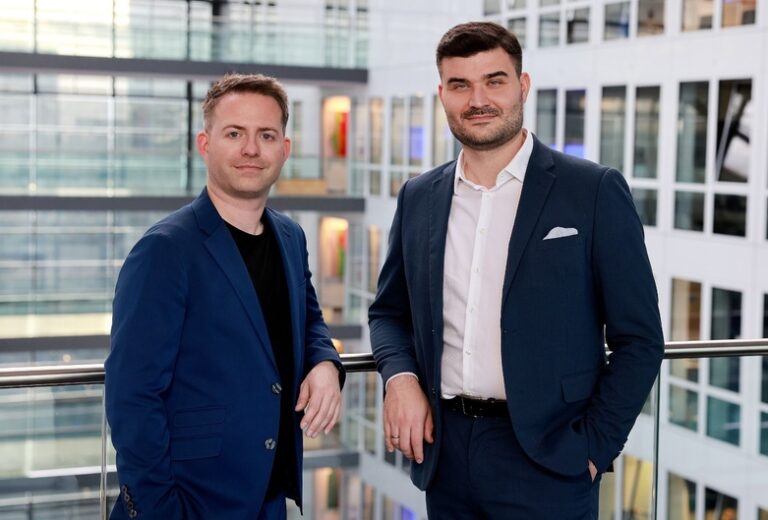
allivate’s new MD team: Matthias Hupka and Niklas Petri. Image: Fraport
Frankfurt-based IT specialist, allivate GmbH, has appointed Matthias Hupka and Niklas Petri as Joint Managing Directors. The two previously senior consultants at allivate, assumed their new positions on 01JAN26, taking over from Denis de Farias Duarte who had led the company in the interim, since Martina Schickorr’s departure in AUG25.
Hupka’s responsibilities include IT, project and product management, driving the technical and strategic development of the FAIR@Link platform, and integrating new digital modules and services. His background is in computer science, and he has held positions with Fraport, cimt, and WSP, thus he has accrued strong experience in both IT development, air cargo, and consulting.
Petri manages sales and the operational design of digitalized cargo processes, with a focus on market expansion, strategic growth, and new business/service models. An economist and qualified forwarding agent, he previously held roles at DB Schenker (air cargo) and DB Cargo (strategy and project management).
Both gentlemen will collaborate closely with DAKOSY and Fraport, allivate’s joint venture partners. Hupka liaises with DAKOSY on platform operation, while Petri connects with Fraport to leverage its airport network and cargo community expertise.
Founded in JAN24, allivate, a 50:50 joint venture between Fraport AG and DAKOSY AG, develops and operates digital air cargo systems, centering on the FAIR@Link Cargo Community platform supporting over 1,100 companies. The new managing director duo commented: “Our unique selling point is how we work closely with the community on the digital transformation to achieve the best possible result for the air cargo industry. We want to apply the very successful concept of an established and shared Cargo Community System that has been developed at FRA to other airports.”