Home Blog Page 52

TIACA has published a White Paper with Pharma.Aero

0
Sub-Saharan Africa is home to 1.6 bn people, but it receives only 2% of global air cargo availability. A mismatch that restricts access to essential medicines, is stated in the White Paper – Photo: courtesy Pharma.Aero.

Fake medicines kill almost 500,000 sub-Saharan Africans every year,” was the shocking statistic presented at TIACA’s Air Cargo Forum in Abu Dhabi in NOV25, when Glyn Hughes and Frank van Gelder talked about The Food and Farm for Health project. TIACA and Pharma.Aero have now published their White Paper on the topic, which warns that structural imbalances in global air cargo are restricting access to essential medicines and limiting Africa’s export potential. The ‘Food and Farm for Health’ report shows that Sub-Saharan Africa receives just 2% of global cargo capacity, despite exponential growth in population and pharmaceutical demand. Up to 90% of critical medicines (such as perishable vaccines and life-saving therapies) require air logistics for safe delivery, yet limited capacity hinders both healthcare delivery and limits the continent’s agricultural export capabilities.

Based on a decade of research, the study calls for coordinated action to expand Africa’s bidirectional air freight flows. Strengthening air cargo connectivity could boost rural incomes, improve medicine access, and enhance global supply chain resilience. Not to mention, avoid the distribution of fake medicines, which becomes a problem if real medicines are not adequately available. The paper is targeted at airlines, airports, freight forwarders, pharma companies, governments and economic agencies.

Frank Van Gelder, Secretary General of Pharma.Aero and project coordinator, revealed: “When we launched the Food and Farm for Health project, our aim was to understand the true power the air cargo industry could bring to both economic development and healthcare accessibility. Very quickly, our research pointed to Sub-Saharan Africa, where only 2% of global air cargo capacity is allocated. This imbalance limits access to essential medicines in a region where demand is accelerating, and it equally limits the continent’s ability to scale agricultural exports. By offering more air cargo capacity, we unlock a dual opportunity: helping Africa grow stronger local economies and ensuring healthcare products reach the populations that need them most. Today, other global players, particularly China and India, are already investing heavily in these trade lanes. If we fail to act, we risk missing not only an economic opportunity, but also the chance to meaningfully support the growth and health resilience of one of the world’s most dynamic regions.”

Glyn Hughes, Director General of The International Air Cargo Association, added: “This White Paper is a wake-up call. Sub-Saharan Africa receives just 2% of global air cargo capacity yet depends on airfreight for the majority of its essential medicines and for moving high-value agricultural products to world markets. These limitations are not just operational; they impact lives, livelihoods, and long-term development. Strengthening air cargo links between Europe and Africa is a clear opportunity to improve healthcare access, boost rural incomes, and build more resilient supply chains. But we can only achieve this through coordinated, cross-industry action. The time to act is now.”
Cargo iQ present two new awards: Team Up and Scale Up

0
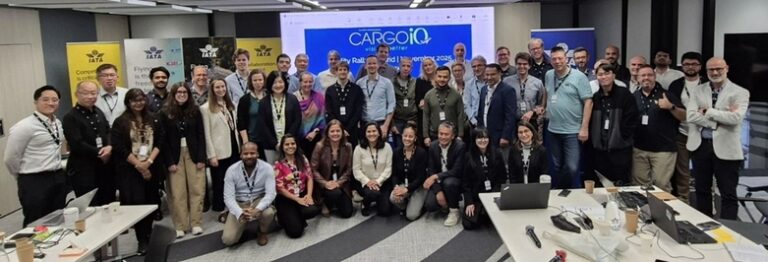
Participants gather for Cargo iQ’s Q-Rally. Image: Cargo iQ

Cargo iQ celebrated collaboration and data-driven improvement by presenting two new awards: ‘Team Up’ and ‘Scale Up’ – during its recent ‘Quality-Rally (Q-Rally)’ event in Madrid. The prizes spotlight projects that exemplify teamwork and innovation in tackling key air cargo industry challenges. Cargo iQ members were invited to share their initiatives that focus on enhancing operational quality and compliance with Cargo iQ’s framework. Best-practice presentations included success factors, lessons learned, and measurable outcomes – this transparency helps to educate all members.

Air Canada earned the ‘Team Up’ award for engaging cross-functional teams (operations, commercial, and IT) to deliver a 7% increase in ‘Delivered as Promised’ (NFD) performance. The airline strengthened its Quality Management System and improved data completeness, demonstrating how empowering internal teams with better tools translates into stronger reliability and operational consistency.

Kuehne+Nagel received the ‘Scale Up’ award for addressing discrepancies in air waybill route mapping. By collaborating with partner airlines, the forwarder enhanced ENCORE offset management, introduced PIMA (Participant Identification and Messaging Address) updates, and streamlined internal processes. These actions improved shipment evaluation accuracy, offering greater visibility for shippers and more meaningful performance comparisons across carriers.

Held during Cargo iQ’s Working Group sessions, the Q-Rally reinforces the organization’s mission to drive collective improvement and foster shared solutions that elevate quality across the global air cargo supply chain.

Marie Seco-Koppen, Executive Director, Cargo iQ, said: “Intentionally sharing the work done and articulating why it matters is part of raising operational quality. Introducing these two prizes encourages collaboration, rewarding the behind-the-scenes work that is driving industry standards forward.”

GEODIS committed to decarbonization

0
Marie-Christine Lombard, GEODIS, and Marc Benayoun, EDF. Image: Hugo Aymar

GEODIS published two press releases this week, both with a tangible focus on greener, cleaner operations. The first informed of the partnership that the logistics company entered into with EDF Group on 08DEC25, committing to decarbonizing its supply chains both in France as well as internationally. The aim is to significantly reduce the carbon footprint in GEODIS’ warehouses and global transport flows, by switching to low-carbon energy supply for GEODIS sites in France and abroad; optimizing the energy performance its logistics facilities; producing renewable energy locally; establishing a charging infrastructure for GEODIS’ light vehicles, utility vehicles, and heavy trucks; and converting some of its land assets into data centers.

GEODIS will also support EDF in logistics matters such as procurement, storage, and distribution of materials and equipment for energy production projects. An initial Strategic Steering Committee will be held to discuss and supervise projects.

Marie-Christine Lombard, Chairwoman of the GEODIS Executive Board, explained: “The signing of this agreement marks a decisive step for our Group and is fully aligned with our decarbonization roadmap. This partnership allows us to put our expertise at the service of EDF while opening new development opportunities for GEODIS. It reflects the determination of two French leaders to join forces and take concrete, sustainable action for the environment.”

Marc Benayoun, EDF Group Executive Director in charge of the Customers, Services & Territories Division, added: “As the logistics sector accounts for 16% of CO emissions in France (1), its decarbonization is a critical challenge. This partnership demonstrates EDF Group’s ability to support GEODIS, a global leader in transport and logistics, with a comprehensive range of solutions to improve its carbon footprint.”

The second release announced GEODIS’ pilot project involving Southeast Asia’s first cross-border trucking service running on renewable diesel: a dedicated Euro-5 truck will run from Singapore to the Thailand-Malaysia border using Neste MY Renewable Diesel™ (HVO produced from 100% renewable raw materials such as cooking oil and animal fat waste, offering up to 90% reductions in GHG), distributed and delivered by Singapore-based fuel solutions provider, Interion. GEODIS speaks of “a major milestone in the decarbonization of its regional road network”. The pilot will monitor fuel performance, cross-border operational feasibility, supply chain reliability, and carbon-reduction outcomes, and if successful, may be expanded to other routes in the Asia Pacific region.

Esther Cheong, Regional Sustainability Director, GEODIS Asia Pacific and Middle East, stated: “We are proud to embark on the first-ever ASEAN cross-border decarbonization trucking pilot powered by renewable diesel. Transitioning to renewable fuels is a critical part of our mission to build a more sustainable supply chain for our customers and communities. Together with our partners Neste and Interion, we are demonstrating the practical benefits of renewable fuels and setting the groundwork for broader adoption across the region.” Mario Mifsud, Vice President, Renewable Fuels Sales & Trading, EMEA & APAC, Neste, said: “We are pleased to support GEODIS with our Neste MY Renewable Diesel, enabling immediate and meaningful GHG emissions reductions. Collaborations like this showcase how renewable fuels can lower the climate impact of road transportation in Southeast Asia.

Insolvent carrier SmartLynx faces corruption charges

0

The Latvian Ministry of Transport has launched an extraordinary financial compliance assessment of the airline. At the same time, criminal investigations are reportedly being conducted against SmartLynx management who are on suspicion of repeated fraud.

SmartLynx aircraft will no longer grace the skies – company courtesy

On 25NOV25, the Latvian carrier, SmartLynx, filed for bankruptcy and ceased business operations. Shortly before that, all assets were transferred to a Netherlands-based investment fund, with CEO Edvinas Demeņus and CFO Mindaugas Kazakevičius acquiring a 5% stake each. As has now emerged from a leaked list of creditors, the airline owed its creditors €238.4 million at the time of its insolvency declaration, with additional unpaid claims amounting to €64 million. At that time, there were also outstanding invoices from the Latvian state amounting to €1 million, which the government will probably have to write off permanently due to the airline’s bankruptcy.

High debt load
In contrast to the parent company whose debt mountain is immense, the carrier’s subsidiaries are doing comparatively well. For example, the regional airline, SmartLynx Australia, which obtained a permit to operate flights in Thailand. According to a report aired by local TV station, Latvijas Televīzija, the move has raised suspicion in the industry and among officials of the financial controller, State Revenue Service, that the airline’s Latvian parent company’s business has been spun off to write off debts.

The outlined debt is likely to increase further due to claims from crew members amounting to several million euros, who are asserting unpaid wages.

Dubious personnel policy
In contrast, Agija Kola-Kanča, Chief Marketing & Communications Officer at SmartLynx Airlines Ltd, stated that the company owes nothing to its employees.

She holds that the posts were written by people who never stood on the airline’s payroll. Instead, they belonged to staffing companies. The same applies to another group: cockpit personnel, flight attendants, and technicians, who were not employed by the airline but belonged to private job agencies. “They have no social guarantees and are not protected by labor contracts, so cannot invoke safeguards.” commented Dace Kavasa, Head of the Latvian Aviation Trade Union, explaining the specifics of the industry.

ACMI strategy
According to the latest data available from the Register of Enterprises, SmartLynx Airlines had 382 employees before it went bankrupt. It specializes in ACMI leasing (aircraft, crew, maintenance, insurance) and was committed to lean operating models. However, this concept clearly did not work, as evidenced by the insolvency filing.

The carrier’s fleet consisted of Airbus aircraft, including A320 and A321 variants. It served a variety of destinations in Europe, the Middle East and the northern part of Africa, focusing on wet lease agreements. In 2024, 68,000 flights were performed by the carrier’s fleet, transporting 10,6 million passengers and 31,872 tons of cargo in the lower decks of the aircraft.

Hapag-Lloyd grows its fleet

0

The shipping line’s appetite for new boxships remains high. On Friday (12DEC25), the company ordered eight new dual-fuel methanol container ships. The units will each have a capacity of 4,500 TEU and are scheduled for delivery in 2028 and 2029. At the same time, the carrier has developed a new tool that informs customers about the exact arrival time of their sea containers.

More boxships, more tonnage, less greenhouse gas emissions – Hapag-Lloyd grows its fleet but reduces its CO2  footprint – photo: courtesy Port of Hamburg.

First, it is worth looking at the new ships. They are being built by the Chinese shipyard, CIMC Raffles. The total financial volume of the order amounts to over USD 500 million. Equipped with state-of-the-art dual-fuel methanol engines, they will be up to 30% more efficient than older generations of ships in the same size class, claims a press release. This way, operator Hapag-Lloyd will save up to 350,000 metric tons of CO2e per year when switching to methanol propulsion. The ships, which are part of Hapag-Lloyd’s first newbuild project involving this sustainable propulsion technology, will complement the growing portfolio of dual-fuel container ships in the company’s fleet: At present, a total of 37 dual-fuel liquefied natural gas (LNG) units that can also operate using biomethane, are in operation or planned, explains Hapag-Lloyd management.

Dual fuel propulsion
The order follows a decision announced in APR24, in which the shipping line assigned the Seaspan Corporation, a Singapore-based independent charter owner and operator of containerships, to equip five 10,100 TEU container ships with dual-fuel methanol propulsion between 2026 and 2027.

Furthermore, management decided that another 14 newbuilds in the size classes 1,800 TEU (4 units), 3,500 TEU (6 units) and 4,500 TEU (4 units) will be chartered on a long-term basis. These vessels will join the fleet between 2027 and 2029. As stated on 13NOV25, Hapag-Lloyd is thus investing in a total of 22 new boxships in the capacity segment of less than 5,000 TEU.

Following the airline’s hub and spoke concept
The vessels are mainly used in feeder traffic as part of the Gemini cooperation with partner, Maersk, which is based on the hub and spoke system in maritime transport between East Asia, Europe, and America. This has greatly boosted the punctuality rate of liner services, which now stands at 90%, as Hapag-Lloyd CEO, Rolf Habben Jansen told media people in a recent Teams call. In order to consolidate or even increase performance, it is necessary to transfer containers at central ports from larger vessels to smaller feeder ships that discharge the boxes at secondary ports. Gemini’s hubs are Rotterdam in the Netherlands, Cartagena in Central America; Lazaro on the west coast of Mexico, Tangier, and Port Said in the Mediterranean; Salalah in the Middle East; and Singapore in Southeast Asia, among some others.

Accurate arrival time predictions
Thanks to the high punctuality rate of the fleet achieved by the hub and spoke scheme and the trackers attached to individual containers, Hapag-Lloyd is able to inform customers precisely when their containers will arrive at final destination. The estimated time of arrival varies by a maximum of one day, says Leon Schulz from the shipping company’s Corporate Communications department. The liner’s new tracking and information service is part of the quality promise of Hapag-Lloyd’s strategy for 2030. The system is still in its infancy, so in the learning phase, but is expanded continuously, Leon Schulz told CargoForwarder Global.

Obituary – Nol van Fenema

1

It is with great sadness that we learned that our former colleague and friend, Nol van Fenema, passed away on 11DEC25 in his home in Calpe, Spain. Nol was a highly respected doyen of cargo reporting with a long journalistic career, of which we at CargoForwarder Global are grateful to have also benefited from. He was an amiable, loyal, highly intelligent, and impressively well-informed personality, to whom the doors of corporate headquarters opened as soon as he announced his arrival for an interview or background discussion.

With his passing, journalism and the entire air freight industry have lost one of their brightest and most profound minds. His reporting was always based on facts, which he embedded in a larger context to give readers a holistic picture. He remained fair at all times, never indulging in any unsubstantiated rumors, and he frowned upon the spreading practice of copy-and-paste journalism.

Nol’s journalistic career was remarkable. He started out as a speaker for the former Dutch aircraft manufacturer, Fokker, before founding Payload Asia in Singapore in 1984, at a transformative time for Asian freight development. Still today, Payload Asia is a leading print and digital publication focused on air cargo news, analysis, and industry trends across Asia-Pacific, Middle East, Europe, Africa, and the Americas. Upon selling his publication, he joined CargoForwarder Global a decade ago where he became Senior Correspondent Asia.

After returning to Europe from Singapore, Nol and his wife, Joyce, moved into a chateau in the small French village of Autichamps. It was to be their retirement home. But after her passing, he left France and rented an apartment in Calpe, Alicante at the Spanish Mediterranean coast. “It’s warmer there and I can play pétanque with like-minded people all the time,” he once told me.

His former fellow players must now manage without him. As must all those who had the privilege of being his friends or media colleagues.

Nol, RIP. We will miss you. Heiner


The following lines were sent to us by Ram Menen, the former head of Emirates SkyCargo. He and his wife, Malou, had a particularly close relationship with Nol:
I am deeply saddened by the news of Nol’s passing. He was an extraordinary individual – both in his professional life and in his personal character – and his absence will be profoundly felt by all who knew and cherished him.

Nol was not only a highly respected journalist within our industry, but also a trusted confident and a true friend. Over the years, our bond grew into a genuine friendship, sustained by frequent conversations, the exchange of ideas, and countless moments of laughter.

In recent years, Nol faced multiple battles with cancer, meeting each one with remarkable courage and determination. He carried himself with dignity and strength, never allowing his spirit to falter, even as the challenges became more difficult. Despite his resilience and tireless efforts, he was ultimately unable to overcome the final illness.

With his passing, the industry has lost a gifted journalist and valued colleague, while those closest to him have lost a kind, loyal, and generous friend. Gentleman Nol will forever remain in our hearts – remembered for his wonderfully quirky habits, his sharp sense of humor, his unmistakable Dutchness, his vegetarian cooking, and his fondness for candied ginger.

Our heartfelt condolences go out to his children, siblings and their families during this difficult time. Nol will be remembered with deep affection and respect, and his legacy of warmth, integrity, and dedication will continue to live on in the hearts of all who had the privilege of knowing him. Dear Nol, Rest in Peace. Ram Menen


We received this personal contribution from his brother, Peter van Fenema:
Apart from a tumor on his lower lip, which had been successfully treated since June with immunotherapy at the AVL in Amsterdam, he also had a leaky heart valve that affected his body in many ways and caused him a lot of discomfort in recent months.

At the age of 84 his heart finally gave up. Fortunately, he had sufficient time to say goodbye to his beloved ones. He looked back with gratitude and satisfaction to an adventurous and often exciting life, culminating in his successful and rewarding (‘Payload Asia, Clean Asia, Photo Asia’) years in Singapore together with Joyce and their children Veronica and Carlos.   

On Monday, 15DEC25, he will be cremated in Spain in a small circle.

At the end of January, probably on the 25th, a gathering will take place in the Netherlands to give family and friends the opportunity to ‘celebrate the life of Nol’, as the English so beautifully put it.

Further details will follow. Warm regards, Peter van Fenema.

Spotlight on… Kaspar Andreas Nissen, Senior Manager, Air Cargo, Billund Airport

0

Each week, CargoForwarder Global’s ‘Spotlight On…’ looks at a different segment of the air cargo industry to demonstrate how broad its career palette. Airports form the essential backbone of the air cargo system, acting as interchange points between air and road transport, and offering dedicated cargo terminals and warehousing space, to ensure the safe, secure and efficient build-up, storage, and movement of goods going out and coming into the region. This week, Kaspar Andreas Nissen (KN), Senior Manager, Air Cargo, at Billund Airport, talks about his role and shares his views and advice.

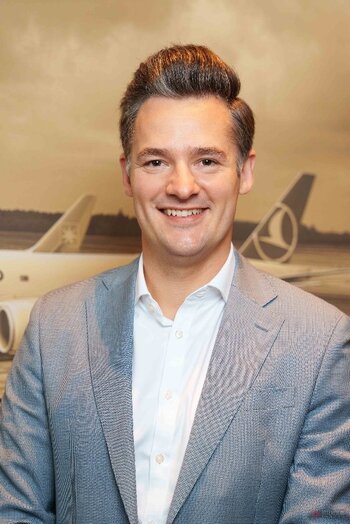
It is a joint responsibility to keep the air cargo industry competitive. Image: Kaspar Nissen

CFG: What is your current function and company? And what are your responsibilities?

KN: I am Senior Manager, Air Cargo at Billund Airport and responsible for commercial cargo development, e.g. dialogue with freight forwarders, trucking companies and handlers, route development with airlines, participation in worldwide air cargo conferences, internal stakeholder management, etc.

CFG: What does a normal day look like for you?

KN: 3-4 office days per week, a few days per week from home office when it’s conference off-season. ‘Normal’ days are a lot of e-mails internal and external and videocalls to update and coordinate efforts with airline and industry partners. Also, spending quite some time on various analysis of market trends and how to market this to relevant customers and partners, and coordinating internally to align initiatives.

CFG: How long have you been in the air cargo industry, and what brought you to it?

KN: 15 years exactly. Five years with SAS Cargo, two years with Qatar Airways Cargo, a year with Danish freight forwarder, LEMAN, three years with Copenhagen Airport, and the past 4 years with Billund Airport. I guess what brought me to the industry is the fascination and passion for the aviation industry. My father’s family was brought up next to Copenhagen Airport (CPH) and aviation was therefore a natural part of the family.

CFG: What do you enjoy most about your job?

KN: I truly enjoy the responsibility that lies within my job. Driving and developing air cargo activity through Billund Airport with all that falls under this as earlier mentioned. I enjoy representing Billund Airport around the world at conferences and marketing the services the airport, the handlers and affiliated partners are delivering on a daily basis.

CFG: Where do you see the greatest challenges in our industry?

KN: In short: Uncoordinated efforts across the sector, both political and within the industry, to drive digitalization and easier legislation. General lack of cargo aircraft capacity and imbalanced trade lanes.

I believe customs authorities from country to country have very different ways of implementing European legislation. Some authorities are very liberal, and some are very restrictive, e.g., on e-Commerce imports from China and other Asian countries. Bilateral agreements are also very different within the European countries, some are very updated and fit for modern global trade, whereas some countries really suffer from slow political processes. Both these elements should be better coordinated and easier implemented on a European level, to create efficient and regional flows across Europe, ultimately boosting the competitiveness of European trade and the economy.

CFG: What advice would you give to people looking to get into the air cargo industry?

KN: I would advise future colleagues to focus on digitalization and AI, an area that will heavily transform our industry in the years to come. The major breakthrough has just not happened yet, though tremendous efforts have been done to accelerate it over the years.

AI and digitalization can transform operational processes such as cargo-build-up on ULDs, truck coordination to avoid empty capacity on roads, documents processing and AI data sharing, etc. So many areas could be way more efficient if the industry could actually get together to define standard processes and would be willing/able to invest in the necessary and not be so afraid of the immediate competition. In my view it’s a joint responsibility on behalf of the industry, to keep it competitive towards the much cheaper sea freight industry.

CFG: If the air cargo industry were a film/book, what would its title be?

KN: ‘The Day After Tomorrow.’ The operational logistics industry is just very much on a day-to-day basis. One day you can be on top of everything because the whole supply chain has delivered as promised, the next day can be a giant mess because of one missed deadline somewhere, however it’s normally fixed, rebooked or utilized anyway. Always just remember, it goes on and you never know what to expect the day after tomorrow.

Thank you, Kaspar!

If you would like to share your personal air cargo story with our CargoForwarder Global readers, feel free to send your answers to the above questions to cargoforwarderglobal@kopfpilot.at We look forward to shining a spotlight on your job area, views, and experiences.

IATA looks at 2025 and 2026

0

On 10DEC25, international air cargo journalists were invited to an online press conference held by IATA on the fringes of its larger, more passenger focused annual media event. Around 1.5 hours were dedicated to the state, specialties, and success of the air cargo industry in 2025 – despite the plethora of headwinds – and an outlook was given on IATA’s priorities and the year ahead.

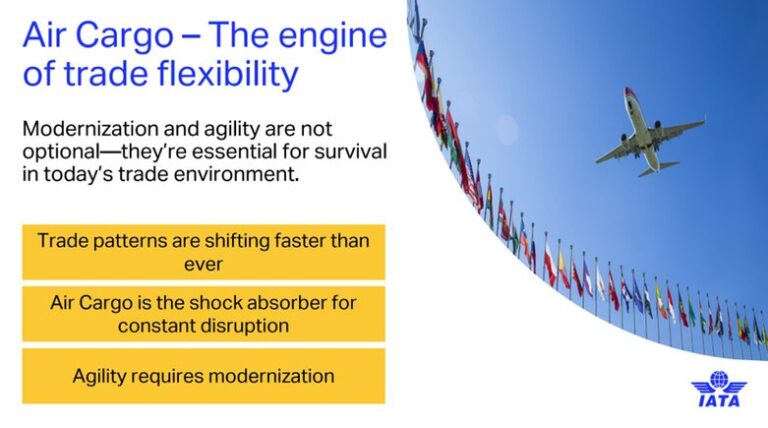
Air cargo continues to fly into the future, coping with fast-changing demand – Image: IATA

Though Willie Walsh did not speak at the online event, a subsequent press release shared his summary: “The resilience in air cargo has been particularly impressive. As trade flows adapt to a protectionist U.S. tariff regime, air cargo has been the hero of global trade buoyed in part by robust e-commerce and semiconductor shipments to support the boom in AI investments. Notably, air cargo enabled front-loading to deliver products ahead of tariff deadlines, and it flexibly accommodated demand surges as tariffed goods normally destined for the U.S. found new markets. The critical role of air cargo is front and center as the global economy adjusts to new realities.”

Big figures
And certainly, despite all the worries projected at the start of the year and the almost constant threat and implementation of extortionate U.S. tariffs, (now at an average rate of 17% in 2025, almost matching its previous high of 20% way back in 1933, after decades of just 3%), air cargo, like water, has done what it always does: found a way around the problem and come up with alternative solutions. One man’s loss is another man’s gain, as they say. IATA forecasts cargo revenues of USD 155 billion this year, up from 151 billion in 2024, and looking to further increase to USD 158 billion in 2026, which works out at 2.1% growth next year. Overall, airline revenues are set to exceed USD 1 trillion for the first time this year, which would mean total revenue growth of 4.5% and, IATA says, net profit margins are stabilizing at 3.9%. Cargo’s steady revenue growth is mostly due to the ongoing increase in express and e-commerce volumes. While cargo ton kilometers grew by 3.1% in 2025, this will slow a little to 2.6% growth in 2026, and yields will continue to remain stable at their current 30% higher level than prior to the pandemic. Cargo volumes are expected to reach 71.6 million tons in 2026 (up 2.4% on 2025).

Shifting trade lanes and patterns
The impact of U.S. tariffs unsurprisingly led to a 15.4% decline in Chinese exports to the U.S., but it did not take long for Chinese goods to find alternative markets. The EU (7.7% growth, year-on-year), India (+12.7%), Thailand (+22.9%), Hong Kong (+10.9%), and Vietnam were the biggest winners from the major shifts in global trade in 2025. Julia Seiermann, Head of Industry Analysis at IATA, also underlined air cargo’s role as a key enabler of trade by value – though just 0.7% of the world’s transported weight travels on an aircraft, the value of those goods amount to 24.8% of all global trade value (based on a sample of 47 countries which together represent 37% of global trade in 2024.) “Far East – Europe traffic more than offsets weak Far East – North America,” was her conclusion as she presented the 15 largest traffic pairs in 2025.

Optimism and challenges
While the figures presented gave cause for optimism, a number of challenges continue to plague the air cargo industry, and in some cases such as slot allocation and aircraft upgrades, air cargo seems to have been pushed back into its Second Class Citizen role, in the shadow of passenger operations. Brendan Sullivan, IATA’s Global Head of Cargo, illustrated the slot restraints at some of the key cargo hubs – naming Bogota, Dubai, and Heathrow as examples – which can restrict cargo growth in areas such as e-commerce, for example. “Cargo must not be squeezed out of airports,” he urged. An additional problematic factor that was discussed, were the consequences of the huge backlog in aircraft deliveries which now totals some 17,000 aircraft – a record high. The knock-on effects are an aging fleet (the average age of a widebody freighter is now 19.6 years), which means higher maintenance costs and limitations in fuel efficiency gains. Similarly, capacity restraints are driving up aircraft lease rates, plus – because passenger aircraft are also being kept on longer – less feedstock is available for passenger to freighter conversions. Despite expected slight improvements in 2026, capacity will continue to remain constrained for years to come.

Agility is essential
The press was brought up to date on the current adoption status of ONE Record which has been endorsed as the preferred data sharing standard for all air cargo stakeholders as of 01JAN26 (around 70% of companies are aware, and almost 50% ready). They were presented presented information on e-commerce developments and requirements for other types of special cargo, taken through various IATA initiatives on the subject of air cargo security, and given an overview of the CO2 methodologies since 2008.

“Modernization and agility are not optional, they’re essential,” Brendan Sullivan underlined, pointing to the many areas of improvement still existing in the air cargo industry – the need to move away from paper-based processes to digital solutions, better data standards, a greater focus on security and safety, the removal of complexity in trade flows, more AI-driven smart facilities and automation. “Air cargo is not just a mode of transport,” he concluded. “It is a strategic enabler for global trade.”

Fraport: E-Commerce is going through the roof

0

The increase is phenomenal. While a total of around 400,000 e-Com shipments per month were handled at Frankfurt Airport last year, the current monthly average is a staggering 8 million parcels and packages. It would be unfair to attribute this rapid increase solely to Fraport’s head of cargo, Denis Duarte, as it is the result of the entire team’s efforts, but he has certainly played a major role in further boosting this product segment.

Denis Duarte heads Fraport Cargo since 01JAN2025 – picture: courtesy Fraport AG

As Max Conrady’s successor, the Brazilian-born executive has been responsible for the airport’s air freight business since 01JAN2025. In addition to the commitment of the airport’s cargo workforce, he particularly praises the local customs officials. “The cooperation works really smoothly, and shipments are cleared quickly, which cannot be taken for granted.”

Waiting for One Record
However, he sees room for improvement in another area: data consolidation. “We need to move away from isolated digital solutions and develop a digital highway that connects our FAIR&Link system with other messaging tools.” The platform is provided by the One Record data model, developed by IATA in collaboration with industry, which provides the air cargo players with a standard data structure that facilitates data integration with existing and new messaging services. According to Duarte, this is to be pushed forward in 2026 and will enable quick data consolidation. Once installed, it would increase the transparency of shipment flows and significantly speed them up.

Further to this, the manager announced additional roadshows and collaborations with other airports in the air cargo sector true to the Shanghai scheme for the coming year, CFG reported.

More partnerships to come
The roadshows serve to strengthen existing contacts and develop new business opportunities between the participating airports on the basis of common standards. Or, as Alexander Laukenmann, Senior Executive Vice President Aviation at Fraport AG, put it after his return from Shanghai: “Our partnership with Shanghai Pudong is part of the comprehensive Masterplan CargoHub, which provides for new cargo buildings and warehouses in order to further strengthen FRA’s competitiveness within Europe in air freight matters.”

His colleague Denis Duarte does not reveal which airport is next on Fraport’s wish list as a potential partner. However, he does hint at a target country: India. This would be the result of a series of cargo roadshows held in Bangalore, Mumbai, Delhi, and Hyderabad in April 2025. The aim of the Fraport Cargo delegation was to present its airport in a rapidly growing air freight market, promote its own interests, and, in discussions with Indian colleagues, shippers and forwarding agents, highlight the importance of FRA Cargo as a central European hub for pharmaceuticals, e-commerce, perishable goods, and high-tech items. In other words, a kind of first date meeting.

Followed by Air Cargo India
According to market experts, there are several reasons why a partnership between Indira Gandhi International Airport in Delhi and Fraport would make sense. Lufthansa and Star Alliance club member Air India connect both destinations nonstop. And even though the German airport sold its 10% stake in Delhi Airport to majority owner GMR Airports Infrastructure Limited (GIL) for USD 126 million in MAR2025, FRA remains involved in DEL’s business thanks to an operator agreement. Thirdly, there is a large Indian community in the Rhine-Main region surrounding Frankfurt Airport, which also stimulates demand for Indian products and air connections. In addition, India is an important manufacturer of pharmaceuticals, medicines, and hi-tech items, which have long been among the top products handled in Frankfurt.

If all goes according to plan, a partnership between Fraport and an Indian airport in the air freight segment could be concluded as early as next February. That is when Air Cargo India will take place in Mumbai, with more than 300 exhibitors already registered. Among them is Frankfurt’s Fraport AG.

Qatar Airways appoints Hamad Ali Al-Khater as Group CEO

0

In an unexpected move, Qatar Airways today (07DEC25) announced the appointment of Hamad Ali Al‑Khater as Group Chief Executive Officer, effective immediately. Al‑Khater succeeds Engr. Badr Mohammed Al‑Meer, who had been at the helm for only two years.

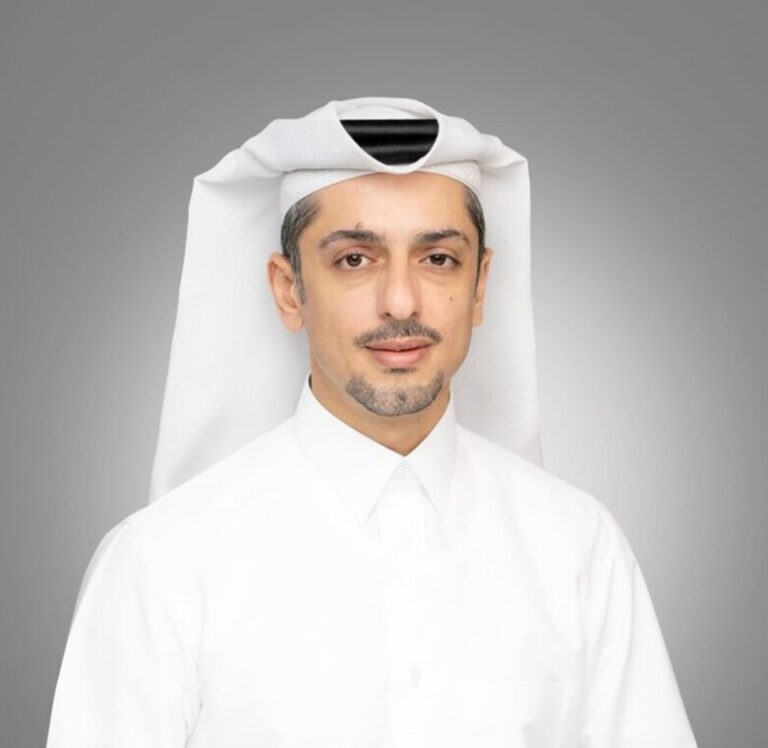
Hamad Ali Al-Khater succeeds Badr Mohammed Al-Meer – credit: QR Airways

The reasons behind this personnel change remain speculative, as the airline’s statement does not contain any information on this matter.

Al-Khater joins Qatar Airways Group from Hamad International Airport, where he has served as Chief Operating Officer. In that role, he was responsible for ensuring the safety and reliability of airport operations, while leading its strategic direction, operational excellence, infrastructure expansion, and the continuous enhancement of passenger experience.

Prior to his tenure at the Airport, Al-Khater held senior roles across QatarEnergy, driving business development, deal execution, and leading large-scale strategic and operational initiatives.

Qatar Airways Group Board of Directors Chairman, Saad Sherida Al-Kaabi, said: “Qatar Airways Group extends its appreciation to Engr. Badr Mohammed Al-Meer for his service. As we welcome Hamad Ali Al-Khater, we look forward to building on the strong foundations and expansive global network of Qatar Airways, anchored by our exceptional team in Qatar and around the world. With this leadership transition, Qatar Airways Group reaffirms its commitment to delivering world-class experiences, reliability, and innovation to travelers around the globe.”