Unilode will supply the ULDs required as THAI grows its fleet. Image: THAI Airways
THAI Airways has selected Unilode Aviation Solutions as its global provider for full-service Unit Load Device (ULD) management, repair, and digital tracking. The partnership represents a major step in THAI’s post-rehabilitation transformation, supporting the airline’s five-year plan focused on operational excellence, fleet expansion (it plans to almost double its fleet to approximately 150 aircraft by 2033), and digital innovation. Unilode will deliver end-to-end ULD management and maintenance services across THAI’s worldwide network, increasing asset utilization, streamlining operations, and improving reliability for both passenger and cargo services. Using Unilode’s shared asset pool will help THAI reduce raw material use and carbon emissions, supporting its sustainability goals. Centralized repair and refurbishment processes will further extend ULD lifecycles, aligning with circular economy principles.
Through Unilode’s digital platforms, THAI will gain real-time visibility and enhanced sustainability reporting. The collaboration is supported by Unilode’s Operations Control Centre in Bangkok and its global network of over 800 ULD specialists. Backed by Unilode’s ongoing investments in MRO facilities, digital tools, and training, the agreement strengthens both companies’ commitments to efficiency and environmental responsibility, positioning THAI as a leader in sustainable air cargo and aircraft operations.
Ross Marino, Chief Executive Officer, Unilode Aviation Solutions, said: “We are delighted and proud to become THAI Airways’ full ULD management service provider. Our partnership will deliver measurable results, improving efficiency, bringing digital transformation, and supporting Thai Airways’ sustainability ambitions. This collaboration also reflects how Unilode’s continued investment in our people, infrastructure, and technology is strengthening our position as the trusted partner of choice for airlines globally. Pooling and full-service management are increasingly recognized as the smarter, more sustainable way to manage ULDs across the aviation industry.” Veera-anong Pookgaman, Head of Cargo & Mail Commercial, THAI Airways, added: “Partnering with Unilode is an important step in our transformation strategy. Their expertise, global network, and digital solutions will help us streamline operations, strengthen reliability, and make tangible progress toward our sustainability goals. “THAI’s transformation is built on strong governance, innovation, and partnerships like this that enable us to deliver enduring value to our passengers, shareholders, and partners.”
Chris Paladino, President and Chief Executive Officer, BioNatur Plastics. Image: Meantime Communications
BioNatur Plastics has launched the European production of its biodegradable and 100% recyclable cargo stretch wrap, offering it at the same cost as conventional alternatives. The initiative eliminates the financial barrier to adopting sustainable packaging and supports the region’s eco-friendly logistics goals. Unlike traditional stretch films that can remain in landfills for up to 1,000 years, BioNatur’s version biodegrades completely within eight to twelve years under anaerobic landfill conditions. This is achieved through a 1% addition of a proprietary, food-safe organic polymer that enables bacteria to digest the plastic without producing microplastics. The product matches conventional wrap in strength, performance, and shelf life, ensuring no impact on cargo protection or handling quality. Its European launch also aligns with the EU’s stricter landfill plastic legislation, highlighting BioNatur’s early role in addressing regulatory and environmental shifts. The development positions BioNatur Plastics as a cost-neutral, sustainable solution for air cargo operators seeking greener materials without operational compromise. Chris Paladino, President and Chief Executive Officer, BioNatur Plastics, detailed: “Sustainable operations should not mean higher costs, and that was the driving force behind our decision to establish European production. By offering biodegradable and 100% recyclable stretch wrap at a competitive price, operators can make the straightforward decision to switch suppliers, confident they are improving their sustainability, limiting costs, and complying with European Union initiatives such as Scope 2 and 3 emissions reporting. European manufacturers exporting to the U.S. and Asia can be assured that, at no additional cost, the stretch wrap element of their logistics chain, which will inevitably end up in landfill, will not remain there for centuries.”
Radhesh Menon, Head of Cargo & Logistics Solutions at IBS Software, and Jan-Wilhelm Breithaupt, CEO of Jettainer. Image: IBS Software
Jettainer and IBS Software have entered a long-term strategic partnership aimed at revolutionizing unit load device (ULD) and cargo management through advanced digital integration. Jettainer’s next-generation system, JettWareNG, will be connected to IBS Software’s iCargo and iPartner Handling platforms via a modern API interface, enabling secure, real-time data exchange across the air cargo ecosystem. This integration, which will already be partially complete by the end of this year, will allow Jettainer’s intelligent ULD management tools to function directly within IBS’s digital cargo environment, enhancing planning accuracy, process efficiency, and data-driven decision-making.
Key benefits will include automated ULD move orders integrated into loading plans, reduced manual intervention, and improved transparency through real-time tracking and ONE Record data sharing. Airlines and ground handlers will gain faster access to operational information, supporting better asset utilization and responsiveness. “The partnership is designed as a long-term collaboration. The next step will see further integration: Jettainer customers who also use iPartner Handling will be enabled to access both services under the iPartner Handling umbrella. This eliminates the need for customers to operate with two systems,” the release states.
Dr. Jan-Wilhelm Breithaupt, CEO of Jettainer, said: “Partnering with IBS Software marks a key milestone in our digital strategy, which is dedicated to creating added value and efficiency for our customers. Integrating with the world’s most widespread air cargo handling system and a well-established digital ecosystem is a logical next step for us. IBS Software’s cargo management platforms are an ideal match, as we share the vision of leveraging digital opportunities to connect data in meaningful ways – driving the digital transformation of ULD management and cargo operations.” Radhesh Menon, Head of Cargo & Logistics Solutions at IBS Software, commented: “This cooperation not only represents an expansion of the IBS Software network. It’s another part of our efforts to invest in the development of advanced digital tools to enable airlines and ground handlers to become more competitive and successful. Together with Jettainer, we want to take ULD management to the next level. By linking JettwareNG, iCargo and iPartner Handling, we can provide customers with more and better data.”
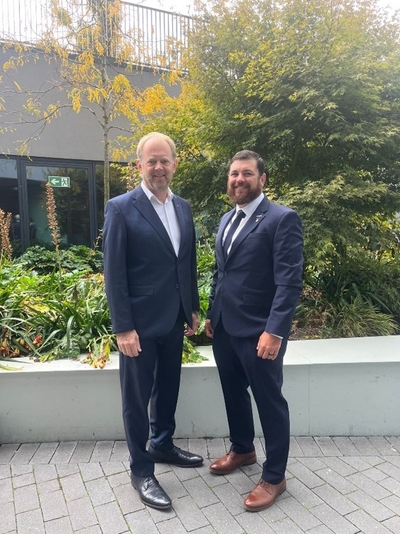
Kester Meijer, Director Operational Integrity, Compliance & Safety, KLM Cargo, and Chris Daniels, CCO, Global K9. Image: Meantime Communications
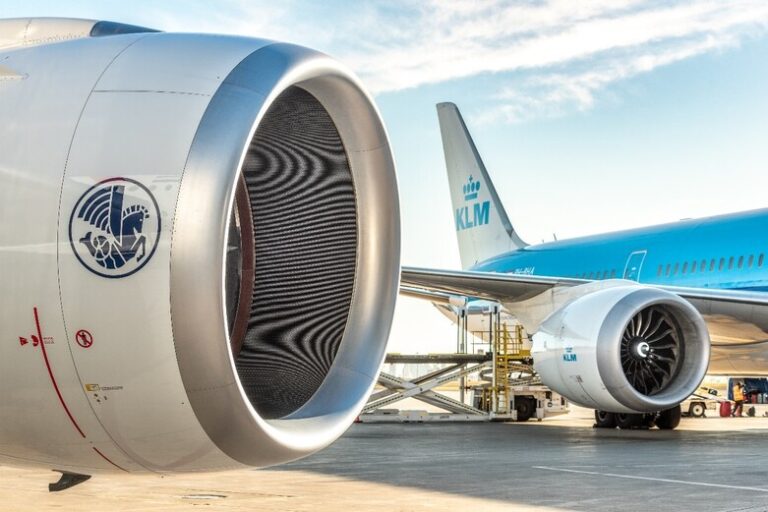
At the backdrop of the Aviation Connect 2025 in Copenhagen, Denmark, last week, Global K9 (GK9) signed its first partner agreement with an airline in Europe, solidifying its global expansion strategy. KLM Royal Dutch Airlines (KLM) has decided upon using free running explosive detection dogs (FREDDs) at its Amsterdam Airport Schiphol (AMS) hub. As a result, KLM Cargo now has access to four canine teams at the airport. The FREDDs will support KLM Cargo’s screening operations in compliance with EU and Dutch regulatory frameworks. As a next step, they will be trained in Remote Explosive Scent Tracing (REST), where dogs detect explosive traces in sealed or consolidated cargo without disrupting handling, on the basis of air samples.
“This latest agreement builds on GK9’s European expansion strategy, following a strategic partnership with a Dutch screening provider, and the acquisition of a UK-based canine training company in late 2024,” the press release emphasizes GK9’s European milestone. KLM joins a list of seven other airlines which, to now, have collaborated with GK9 across the US. They are: American Airlines, Delta Air Lines, DHL Aviation, LATAM Airlines, Lufthansa, United Airlines, and UPS Airlines.
Chris Daniels, Chief Commercial Officer, GK9, revealed: “We’ve been working closely with KLM’s compliance and safety team to develop a screening model that can seamlessly integrate within its cargo operations. Consolidated FREDD teams is a preferred screening option for high-throughput cargo environments such as KLM Cargo at Schiphol, and a necessary step in bolstering security at one of Europe’s busiest cargo hubs.” Kester Meijer, Director Operational Integrity, Compliance & Safety, KLM Cargo, said: “Our operations at Schiphol demand screening methods that can adapt to constant movement. GK9’s FREDD teams offer the mobility and responsiveness needed to do this at scale, without interrupting cargo flows, and, more importantly, while maintaining high security standards.”
With Costa Rica, TCE expands its global network to Central America. Image: TCE
TCE has expanded its global footprint to Central America with a new office at San José’s Juan Santamaría International Airport (SJO) in Costa Rica. This move follows the company’s recent launch in Casablanca, Morocco, further strengthening its worldwide network alongside its German headquarters. The Costa Rican office supports TCE’s mission to provide consistent, high-quality air cargo supervision and compliance services across continents.
The location decision was driven by the presence of TCE partner airlines in the region and the operational advantage of covering the European night shift, boosting efficiency and improving work-life balance for the existing team in Germany. Led by Rodolfo Paez, an eight-member team manages local operations, stakeholder coordination, customs reporting, customer service, and global flight oversight. The team underwent extensive hands-on training to align with TCE’s procedural and compliance standards.
JetSmart, the Chilean airline, will be the first to benefit from the new regional presence. With operational hubs now in Europe, Africa, and Central America, TCE reinforces its role as a global leader in air cargo operational services, offering uniform, round-the-clock support to airlines and logistics partners worldwide.
Sarah Scheibe, Managing Director of TCE, explained: “Our expansion is driven by a simple principle: to be where our customers need us, and to provide the same world-class service everywhere. Costa Rica is a key gateway to the Americas, and with a highly skilled local team led by one of our original TCE experts, Rodolfo Paez, we are perfectly positioned to support our partners’ growth in this dynamic market.”
Rodolfo Paez, Cargo Manager Americas for TCE, detailed: “SJO is a strategic hub with direct cargo links to North America, South America, and Europe, and it handles everything from perishables to general cargo and e-commerce. Our San Jose office will play a vital role in facilitating both regional and global trade, in line with TCE’s commitment to operational excellence worldwide.”
Each week, CargoForwarder Global’s ‘Spotlight On…’ highlights a specific segment of the air cargo industry to show just how many functions are involved in transporting freight from A to B. Air cargo would not exist were it not for pilots – an industry segment, however, that is seeing a growing shortage, whilst demand is ever-increasing. Pilots are vital to the air cargo industry because they ensure the safe, efficient, and timely transportation of all manner of goods across global routes. Aside from aircraft handling and flight navigation, their skills in route planning, weather assessment, and communication with air traffic control help optimize flightoperations, minimizing delays and fuel costs, for example. Inge Kelderman (IK), CP B777 for Lufthansa Cargo, takes us through her role and views.
Once a ‘Cargonaut’, always a ‘Cargonaut’! – image: Inge Kelderman
CFG: What is your current function and company? And what are your responsibilities? IK: I am a captain on the Boeing 777, flying for Lufthansa Cargo. It’s my job to bring the plane with its freight in a safe way to its destination, together with one or more colleagues.
CFG: What does a normal day look like for you? IK: There is indeed no ‘normal day’, but a working day starts with a briefing about the flight with the colleagues, at any time between 03:15 and 21:15. After about half an hour, we go to the plane to prepare it for the flight and then take off, flying for up to 14 hours on most flights, with a break of a few hours. Then you prepare for and execute the landing, go through immigration wherever you are, and are be picked up for the transportation to the hotel. After a resting period of 12 hours or more, you are picked up for the next flight. A few years ago, we had a lot of destinations with mostly 1 or more days off, but unfortunately that changed to, I think, 75% China with mostly just 1 day (or less) and sometimes 2 days off. You also have to do several checks and training during the year – for example: in the simulator.
CFG: How long have you been in the air cargo industry, and what brought you to it? IK: I have been flying for Lufthansa Cargo since 2005 (over 20 years now). I started as a co-pilot in 2000, on the A320, flying passengers for Lufthansa and, after 5 years, I wanted a change and began flying for Lufthansa Cargo. After 3 years, you have the possibility to return to passenger flights, but I liked it very much, so I stayed.
CFG: What do you enjoy most about your job? IK: The traveling and the colleagues are what I like most about the job, but I also very much enjoy the landings!
CFG: Where do you see the greatest challenges in our industry? IK: For me, it is to bring us, the freight and the plane safe and on time to the destination.
CFG: What advice would you give to people looking to get into the air cargo industry? IK: I can only give a recommendation for the flying job. You have to start flight training and get your license. Thereafter you can apply for a job at a cargo airline. You don’t have problems with passengers!
CFG: If the air cargo industry were a film/book, what would its title be? IK: Once a ‘Cargonaut’, always a ‘Cargonaut’.
… although rather modestly. Latest figures from the Latin American and Caribbean Air Transport Association (ALTA) evidence a slight growth of air freight volumes in most Latin American sub-markets. However, the tariffs announced by Trump are having a dampening effect particularly on exports to the United States, hurting some markets more than others.
In Brazil, Latin America’s largest air freight market by far, ahead of Colombia and Mexico, the volume of freight handled in JUL25 grew by only 0.8% compared to the previous year. In figures: around 75,000 tons were loaded or unloaded at Brazilian airports that month.
Trade with Europe, that accounts for roughly 35% of Brazil’s total international air cargo, expanded by 0.6% over the same month, with Spain registering the strongest growth (+26%). This was largely driven by imports into Brazil, which surged 47% year-on-year. Among the most dynamic import categories from Spain were iron and steel products (+68%), organic chemicals (+175%), plastics (+414%), and pharmaceuticals (+93%), reports ALTA in its market analysis.
Latin America’s economies are undergoing a consolidation phase. However, low productivity hampers long-term economic growth, warns the OECD – picture: OECD
Colombia… …showed a relatively steady performance, with air cargo volumes up 0.5% year-on-year in JUL25. The bi-directional corridor with the United States, the largest in the region, contracted by 2.3% year-on-year: exports from Colombia to the United States dropped by 9.1%, while imports from the United States grew 15.1% but with a significant imbalance between the volume of imports from and exports to the United States. Within exports, the steepest drops were observed in fresh-cut flowers for bouquets and ornaments (–24%) and fresh or chilled tilapia (–53%), resulting mainly from new tariffs imposed by Washington.
Mexico The region’s third-largest air cargo market handled 56.7 thousand tons in JUL25, a 1.2% year-on-year increase. Air trade with the United States rose by 8.3% year-on-year, with inbound flows from the United States to Mexico (+12.2%) showing greater momentum than outbound flows from Mexico to the United States (+3.4%). All in all, air cargo traffic to and from Latin America and the Caribbean, measured in metric tons carried, rose by 2.2% in JUL25 compared to the same month in 2024. International cargo accounted for roughly 85% of the total volume moved during that month.
Seeking new markets Peter Cerdá, ALTA’s CEO, commented on the figures with some relief, as Washington’s tariff effects have only caused manageable slowdowns. “July results confirm that air cargo in Latin America and the Caribbean continues to grow, although at a slower pace than in previous months. Tariff-related uncertainty remains a key factor in the months ahead, underscoring the importance of maintaining stable conditions that enable airlines in the region to fully capture global demand,” said the official. In this regard, Brazil, Mexico, and other Latin American countries are increasingly looking for new markets. These are primarily Europe and China/the APAC region. Martin Drew, Chief Strategy and Transformation Officer at Atlas Air, announced at the recent Caspian Air Cargo Summit on 23SEP25 in Baku, Azerbaijan, that his company will operate a B747-400 freighter between China and Lima, Peru, for the first time, offering the market three frequencies a week. Prior to that decision, the United States capacity provider had already reached agreements with Cainiao and LATAM Cargo on joint e-commerce shipments between China and several destinations in South America.
Secondary markets report mixed results Argentina and Panama which together account for around 10% of the region’s total air cargo volume, posted the largest year-on-year increases in JUL25, with Argentina’s volumes up 18.2%, surpassed by Panama’s 21%. This trend is contrasted by Chile, where international air cargo contracted by 8.4% year-on-year, with flows to the United States marking their seventh consecutive monthly decline (–10.5% year-on-year in JUL25). Further north, Peru recorded a 13% year-on-year increase, boosted by higher volumes from Colombia (+32%) and Panama (+96%). Ecuador remained virtually unchanged compared to JUL24, posting a marginal gain of 0.03% year-on-year. Costa Rica, the region’s second-largest market after Panama, posted a 27.4% year-on-year increase in JUL25, handling a total of 9,847 tons. El Salvador also grew, with volumes up 8.3% year-on-year to 3,500 tons.
Stable capacity provision In JUL25, cargo aircraft capacity to and from Latin American/Caribbean increased slightly compared to JUN25, with just over 887 million ton-kilometers (+0.3% year-on-year). B747Fs accounted for 37.1% of this capacity, while B767-P2Fs recorded the largest year-on-year increase (+64.3%), mainly due to LATAM Cargo’s decision to expand its fleet with additional B767 freighter aircraft. Currently, the carrier operates a uniform freighter fleet of 19 B763F.
Next Wednesday (22OCT25), Rhine-Main operator, Fraport AG, will commission 37,000 photovoltaic modules. They are prominently displayed in 2,800-meter-long rows along the Runway West. An eye-catcher for all passengers departing from Frankfurt Airport. This is because the panels are arranged vertically and not placed at an oblique angle like conventional systems. They are intended to supply a significant proportion of the electrical power required by the airport for everyday use.
The airport is taking the next step in decarbonizing its operations. As of next Wednesday, 37,000 solar modules will supply electric power, feeding Fraport’s power grid. The starting signal for this mega-project in solar energy provision will be given jointly by Fraport CEO, Stefan Schulte, and Hesse’s Minister of Transport and Economics, Kaweh Mansoori. Both will be accompanied by numerous VIPs and media representatives attending the event.
The new solar power system is a cornerstone of the airport’s journey to net zero – photos: courtesy Fraport AG
Combining two sources According to project manager, Nicole Keller, once activated, the panels will achieve a capacity of 17,400 kW. This is a tenfold multiple of the solar power produced by modules already existing on the roofs of warehouses, terminals, and office buildings. Since the modules are installed vertically, “they are alternately sunlit from two sides, in the morning from around 7:30 a.m. to 11:30 a.m. and in the afternoon on the opposite side from 1:00 p.m. until the evening hours,” illustrates Nicole. Only at midday, when the sun is directly above the plant, the yield is lower, she adds. But that is when other photovoltaic panels, already installed on the top of buildings, generate their highest output. “By combining these two sources, we have a steady flow of solar energy throughout the entire day,” she concludes. This is especially true for the months from April to September, when, according to long-term climate data, the sun shines 7.3 hours per day in Frankfurt. Including fall and winter, the annual average is 4.7 hours.
Fleet of e-vehicles continues to grow Overall, Rhine-Main’s energy requirements are very high as they are at airports of comparable size. Fraport provides a stable electric power grid for 560 companies belonging to its own group. They require 312 million kWh of electricity annually for the supply of terminal buildings, ensuring runway lighting, charging their own electric fleet of 806 vehicles, powering fire stations, among other things. There are 90 charging stations within the airport that can operate bidirectionally. This means that vehicles can not only charge electricity but also feed it back into the grid. This turns e-vehicles into mobile power storage devices. Due to its huge dimension and the rather unusual vertical solar walls, the project has already attracted a great deal of attention since the first panel was installed in FEB24. Managers from all major German airports showed up to get an impression and first-hand information. As did international delegations – for example from Brussels Airport and Singapore, driven by curiosity.
Great attention was paid to the natural habitat during the construction of the facility to protect local animals and plants, says manager Keller.
Protecting wildlife Fraport’s Flora and Fauna team had a major say in the scheduling and construction of the photovoltaic walls, stresses Nicole Keller. This was because ground-nesting birds could not be disturbed during the breeding season. It mostly affected the field lark, which enjoys a high population density at greenfield. The same applies to smaller reptiles and amphibians, for which the meadows are an ideal habitat because they are undisturbed by people and predators. To protect their populations, the planning and construction of the PV system took two years, as work was paused twice for six months during the breeding periods from spring to fall.
More e-walls on the horizon To store unused energy, Fraport intends to purchase high-performance storage systems. The large units will be accommodated in special containers that are frost and heat resistant. Also, airport management is already considering building a similar PV wall parallel to the north-west runway. When asked about the cost of the current project, Fraport officials remained tight-lipped. Even repeated inquiries voiced by CargoForwarder Global did not change their stance.
Another Aviation Connect has come to an end – held in Copenhagen, Denmark, 14-16OCT25 and, for the second time running, bringing together 6 streams: ASA and ULD Care on Day 1, Air Freight Pharma, GSE & RAMP OPS, RFS, and ACHL on Day 2, with all 6 joining together on Day 3. The event took place at the Comfort and Clarion Hotels, directly at Copenhagen Airport which, incidentally, celebrates 100 years of travel and transport this year. A spectacular Networking Dinner at Europe’s oldest circus on 15OCT25, rounded off the very varied program. CargoForwarder Global was there and these are the takeaways.
“I went to the circus and here’s what it taught me about the air cargo industry…,” might be the start of a LinkedIn post, these days. Well, CargoForwarder Global did go to the circus and to echo Aviation Connect’s Master of Ceremonies, Chris Notter, in his closing words on 16OCT25, talking about air cargo, it was and “will always be powered by Passion, People, Purpose – that has been on full display this week. […] The focus, content and enjoyment mix is what makes this conference so exceptional.” The pole artist at the start of the show at Wallman’s Circus, symbolized the flexibility, strength and agility that this industry requires. DynaMike’s juggling act with machetes and a chainsaw, and his supported unicycle display with four semi-voluntary audience members, demonstrated the challenges faced – often with dangerous goods – and the collaboration needed to make things happen, with clear communication to ensure safe delivery at all times. And the energetic medley of singers in various red PVC outfits, threw up all kinds of connections: “So, tell me what you want, what you really, really want!” is obviously the quest to understand customer needs – while at the same time, asking for absolute data transparency so that supply chains can run as efficiently as possible – otherwise it all boils down to sheer ‘Madness’…
Six streams, one voice – should be the ultimate aim. Image: CFG
Aviation Connect in numbers As always, the Aviation Connect/Air Cargo Handling Logistics (ACHL) Conference brought together airline executives, ground handlers, handling agents, airports, digital innovators, industry authorities and experts, RFS providers, ULD managers, Pharma specialists, and a whole host of stakeholders involved in the complex world of aviation and air cargo logistics. Around 650 attendees registered this time, with the greatest footfall at the 50+ exhibition booths being registered on the second day. Eva International Media once again delivered a well-organized event from beginning to end, with a convenient floor plan connecting company tables, exhibition hall and main conference hall together, while the individual streams had access to conference rooms in the adjoining hotel linked by a sheltered walkway. And great catering throughout.
Aviation Connect in topics As you would expect, recurring themes dominated the agenda; digitalization, automation and AI, attracting and retaining future talent, safety, standardization, collaboration, and sustainability. Chris Notter’s opening remarks on 14OCT25, celebrated the people as “the industry’s heartbeat, muscle, and engine room” since they are the professionals who “make the impossible look routine” – even under extreme conditions. Hassan Al Houry, Chairman of Menzies, noted that global aviation has largely recovered to pre-pandemic productivity levels, yet workforce strength and investment capacity remain constrained by thin margins, and called for “one industry, one voice”. CFG would like to see cargo being included more in next year’s industry development overview, since it appeared more as a byline in this year’s ASA/McKinsey update. Nevertheless, one positive step forward was Waleed Youssef marking the launch of the Accredited Training Accreditation Program (ATAP), which will enable staff mobility and standardized professional development across companies because training quality will be recognized. Swissport and Airport College were the first to become ATAP accredited, with Menzies also signed up and in the pipeline.
Digital Transformation and Data: From Legacy to Leadership Panels on digital transformation focused on the need to overcome legacy systems and fragmented data. The adoption of the IATA ONE Record protocol and AI-driven solutions was (again) identified as key to improving efficiency, transparency, and sustainability. Yet, success depends on data quality, interoperability, and a mindset shift towards collaboration: Outdated habits and siloed mindsets – not technology – are the main barriers. AI applications ranging from resource forecasting and irregularity prediction to customer analytics are already being tested, however, poor data quality threatens their scalability. University lecturers, Diarto Aalders and Mitch Beintema, presented research showing how AI-driven pricing and load optimization can boost cargo profitability by up to 15%, shifting operations from reactive to predictive planning. Both stressed that “AI will not replace people, but companies ignoring AI will be replaced.”
AI and visibility Two absolute premieres took place at this year’s Aviation Connect: the Women in Air Cargo Awards held at the Networking Dinner on 15OCT25, celebrating the inspiring women within our industry – and the use of an AI Jury and compere. Two finalists were shortlisted for each of the seven categories. Congratulations go to all nominees and the final winners: Airlines = Janet Wallace, Air Canada Cargo, Airports = Jaisey Yip, Changi Airport Group, Cargo Handlers = Noor Salman, dnata, Freight Forwarders / Integrators = Andrea Gruber, MSC Air Cargo, IT = Anna Balan, Awery Aviation Software, RFS / GSSA = Petra Justová, 4RCargo, and Supply Chain Partnership Award = Irma van Buuren, Unilode Aviation Solutions. Eva International Media had created an AI Jury to determine the final winners based purely on “facts, records and evidence”, and amazed the circus audience with a highly realistic AI compere on video, explaining the idea of the awards. Real people in the shape of sponsor WFS’s CEO, Inge Briand de Crèvecoeur, and Chris Notter, called and presented the awards.
From Compliance to Culture People remain at the heart of air cargo logistics, even as technology and automation accelerate – this was the clear message throughout. Panel discussions repeatedly stressed the need for transparent recruitment, fair remuneration, and positive culture. The panelists shared strategies for engaging younger generations, leveraging digital platforms, mentoring, and promoting women in leadership. Building clear career pathways and encouraging cross-network opportunities were seen as vital to attracting and retaining top talent in an increasingly competitive environment. And people need to operate in an open culture that see errors as a basis for learning. Speakers warned against bureaucratic overload in audit systems and urged managers to empower frontline teams to learn, not fear mistakes. “When people on the floor own their errors, that’s progress,” noted one panelist. Calls to reward problem reporting and simplify internal governance captured the spirit of pragmatic reform.
Safety, Standards, and Regulation Picking up an ACHL topic from the previous year, the panel on standardization illustrated the many variations that different airlines expect, which create complexity, compliance problems, and ultimately safety issues. The proliferation of audits was critiqued, with calls for more meaningful, risk-based oversight rather than box-ticking exercises. The introduction of new EASA regulations for ground operations was discussed, with a three-year window for implementation and a clear message: act now, standardize, and embed a just culture where frontline staff are empowered to learn from errors. IOSA and ISAGO programs were cited as examples of standardized audits that reduce redundancy and promote accountability. One action point to ground service providers, brought up by audience member, Kester Meijer from Air France KLM Martinair Cargo: “Please name 5 stupid rules that I, as an airline am imposing, so that I can remove these.”
And then there were… From the many panel discussions and presentations, other takeaways were: Sustainability is now viewed as both a business imperative and a license to grow. Airports such as Copenhagen (CPH) and Heathrow (LHR) outlined ambitious plans for electrification, SAF incentives, and waste recycling. Yet, financing these transitions remains challenging due to thin margins and uneven regulatory frameworks. Collaboration across the ecosystem – including airports, handlers, regulators and shippers – is essential for real progress. Handling agents: Debates between global handling giants and independent players revealed a nuanced landscape. While scale brings standardization and investment in digital systems, independence allows for agility and local expertise. Both models are needed: quality, reliability and customer-centricity consistently trumped cost in industry priorities. “Size will not define success – adaptability will,” was the outcome.
Looking Ahead: Purpose, Passion, and People
This year’s conference closed with calls to action: standardize processes where possible, reward those who raise safety issues, and keep the focus on people, purpose and passion. The future of air cargo will be shaped by those who combine innovation with collaboration, resilience with responsibility, and who remember that, even in a digital age, it is people who turn chaos (or a circus, in this case) into performance. The next Aviation Connect/ACHL conference is scheduled for 26-29OCT26 – this time in London, UK, to also mark Heathrow’s 80th anniversary – a fitting stage (having seen the airport’s future-focused cargo strategy) for the next chapter in air cargo’s ongoing evolution.
During the FlyPharma Amsterdam 2025, Air France–KLM Martinair Cargo (AFKLMP Cargo) revealed that its pharmaceutical and healthcare air transport segment continues to grow, and that this was also driving innovation in air cargo solutions. On a global level, pharma demand, projected to reach USD 1.77 trillion in 2025, with an annual 6+% expansion in temperature-controlled, high-value airfreight. Innovation in biologics, personalized medicine, and digital health, alongside broader patient access, are fueling this trend. At the same time, the sector faces ever-shifting trade flows and processes as geopolitical uncertainty and changing regulations require flexibility and adaptation. Certifications such as Good Distribution Practice (GDP) standards compliance or IATA’s CEIV Pharma help to identify those companies capable of delivering the care and quality that is crucial for pharma transport. AFKLMP Cargo, was among the first to become IATA CEIV Pharma certified and the airline group leverages dual hubs at Schiphol and Paris Charles de Gaulle for resilience and flexibility. It has invested in both hubs, equipping them with expanded cool-room capacity, IoT tracking, GDP-compliant processes, and sustainable refrigeration technology, to maintain on-time delivery and integrity. Innovation and sustainability play a key role for the group, too.
Investing in the future of pharma transportation. Image: AFKLMP Cargo
At the event, it stated that Amsterdam Airport Schiphol remains a critical global hub for pharma logistics, supported by advanced cold-chain infrastructure and a strong partner network. In 2024, the Netherlands exported USD 38.49 billion in pharma products, showing the sector’s economic importance. It also recalled Schiphol’s key role during the COVID-19 vaccine distribution, and detailed the country’s life sciences competitiveness, today.
GertJan Roelands, SVP Commercial, AFKLMP Cargo, commented: “For Air France KLM Martinair Cargo, growth in the pharmaceutical and healthcare segment has been a strategic priority over the past five years. We have invested significantly in our infrastructure at both hubs and key outstations, introduced new digital solutions, and optimized processes to enhance resilience and transport quality. In addition, we have trained and expanded our specialized pharma teams. These efforts are paying off – this year, our results in the pharmaceutical and healthcare segment reached a new record, and our market share has increased. Pharmaceutical logistics is not just about transportation – it is about trust, responsibility, and resilience. Our mission is to deliver healthcare products safely and reliably, adapting to new challenges while ensuring patients around the world receive the medicines they need.”