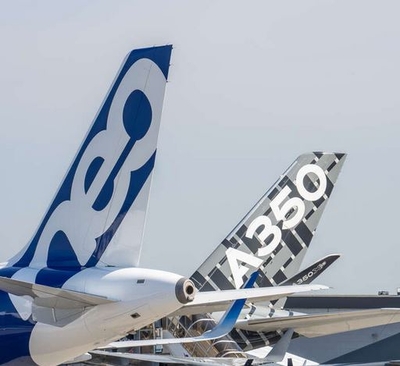
The European frame maker expects cargo flows to shift increasingly from traditional consumer markets in Europe and North America to the APAC region, including the Middle East. This is stated in the aircraft producer’s Cargo Global Market Forecast 2025-2044, published last Wednesday (22OCT25), and underpinned by data.
Namely China, India and Southeast Asia will become the main drivers of global cargo growth, predict Airbus’ market analysts in their forecast, presented to the media in Nashville, Tennessee. This will initiate a gradual shift in air cargo geography and the global air freight map while air freight growth continues, but at a slower pace. This trend has been evident for two decades now, characterized by very different regional growth rates in air freight.
While presenting its Cargo Global Market Forecast, Airbus announced the construction of a second production line for the A320 neo family in Tianjin, China – its tenth for narrow-body aircraft, following four in Hamburg, two in Toulouse, two in Mobile, and one in Tianjin – photo: Airbus.
Ex oriente lux It is striking that the USA has now lost its once dominant role to East Asian players. While in 2005, 40% of the total tonnage handled worldwide was loaded onto or unloaded from aircraft in Atlanta, Chicago, Miami, New York, or Los Angeles, the figure went south ever since and is now only 30% with a continuing downward trend. At the same time, cargo dispatched in the APAC region rose from 39% (2005) to 44% today, while Europe has largely stagnated, with a 1% decline in cargo handling over the past 20 years, declining slightly from 17% to 16% currently. In contrast, Africa and the Middle East belong to the rising stars, accounting for 9% of the world tonnage, up from 3% in 2005.
India on way to becoming a cargo powerhouse Based on GDP growth, in 20 years’ time, China and – to a lesser extent – the USA will be challenged increasingly by India on the country’s way to the top of the global freight hierarchy. Brazil will follow suit, ranking sixth in terms of GDP in 20 years’ time. Even geographically small Singapore will climb from its current 16th place to seventh place in terms of real GDP. In short, the market forecast presented by Airbus confirms a shift from the previous powerhouses to emerging markets, which mostly belong to the Asia-Pacific region.
Forecasts are only snapshots in time Growth forecasts for individual trade lanes vary accordingly. Intra-Asia – Pacific trade flows are at the top of the list, with Airbus market analysts predicting annual growth of 3.6%. However, traffic between Asia-Pacific and North America remains far ahead, with annual growth of 3.2% until 2044. Asia-Pacific – Europe/CIS follows closely behind with an increase of 2.6%. However, these forecasts are only a snapshot, as new customs tariffs or even regional crises, including military conflicts, could be dampening factors.
Moderate growth of freighter fleets predicted In terms of fleet development, there is a global demand for 2,600 freighters over the next two decades, consisting of 935 new-builds and 1,670 P2F conversions. This will increase the total number of cargo aircraft to 3,420 units by 2044, up from 2,345 aircraft today. The expected orders are dominated by smaller freighters with a capacity of up to 40 tons per flight, with an expected delivery of 1,120 aircraft. This is followed by 855 mid-size widebody freighters which offer a loading capacity of 40 to 80 tons, and 630 large widebodies which can uplift more than 80 tons per takeoff, such as the A350F or the B777F variants from Airbus competitor Boeing. Here, too, North America is slightly ahead of the APAC with 920 units, followed by Asia-Pacific (850) and Europe with 500 new builds or P2F conversions.
Every Sunday, CargoForwarder Global’s ‘Spotlight On…’ illustrates the huge variety of careers that exist in the air cargo industry, by picking out a specific segment and giving it the voice of an individual working there. Cargo is and always will be a people business, and commercial relationships are best built on the ground, through local branches. All airlines offering cargo capacity will have local representatives either through GSA services or own, inhouse sales teams – as is the case with Lufthansa Cargo, for example. This week, Kamilla Kasler (KK), Country Manager Hungary, Lufthansa Cargo, describes her role and shares her thoughts and advice on the air cargo industry.
Problem-solving is in my DNA. Image: Kamilla Kasler
CFG: What is your current function and company? And what are your responsibilities? KK: Country Manager Hungary at Lufthansa Cargo AG – representing Lufthansa Cargo towards authorities and external partners – mostly forwarders. My day-to-day job is to manage the sales team in Hungary and coordinate our sales activities with our Joint Venture partners. Also to implement the company’s strategy into local activities and translate customer needs into Lufthansa Cargo solutions.
CFG: What does a normal day look like for you? KK: Although I have a calendar scheduled well in advance, the air cargo business is about urgency and immediate actions. Change of plan is a daily routine. As a mother of 2, problem-solving is in my DNA. The only case where I do not respond to a call immediately is if I have a customer meeting. Of course, I have dedicated days for checking the results of the last week, having our staff meeting to discuss important developments, possible strategies and most importantly celebrate achievements. Nonetheless, as I have an open-door policy, colleagues can approach me any time for consultancy in finding the best suitable solution for our partners. As I have a very experienced team, we really concentrate on comprehensive cases where our customers cannot proceed via our online webpage. Sometimes it also means contacting our product experts in our HQ through Teams calls. So, as you can see, most of the days are different but fully packed with opportunities for development.
CFG: How long have you been in the air cargo industry, and what brought you to it? KK: I joined Lufthansa Cargo during my studies in 1994 [smiles]. I had no detailed information about the job itself. I was told that there will be some administrative tasks, and that the prerequisite was to speak German. The interview went well, and I found myself in an exciting environment. Very soon I recognized the great opportunity of working for an international company and as my superiors appreciated my contribution as well, they offered me a full-time position.
CFG: What do you enjoy most about your job? KK: The highlight of the day is having a meeting with our customers. We are in a privileged position to have long term partnerships thus even if the occasion is about an escalation, we always have a constructive discussion.
CFG: What do you see as the greatest challenges in our industry? KK: Increasing costs due to inflation and airspace restrictions over Russia. Shortage of manpower is also a widespread challenge for all stakeholders. Besides constantly searching for new talented colleagues, Lufthansa Cargo invests a lot in automation and AI solutions. Expectations about reducing the carbon footprint and being transparent about that are rising. With our Boeing 777F fleet, we are proud to operate the most efficient freighter available. Furthermore, with our Sustainable Choice add-on service, our partners can directly reduce emissions by purchasing SAF (Sustainable Aviation Fuel).
CFG: What advice would you give to people looking to enter into the air cargo industry? Any particular training they should aim for? KK: I couldn’t say that there is a training that people must have – at least not beforehand. Air cargo is a very volatile industry and colleagues should be flexible, ready for any change. It is also an advantage if they get energized under high time pressure.
CFG: If the air cargo industry were a film/book, what would its title be? KK: Challenge accepted.
Many thanks, Kamilla!
If you would like to share your personal air cargo story with our CargoForwarder Global readers, feel free to send your answers to the above questions to cargoforwarderglobal@kopfpilot.at We look forward to shining a spotlight on your job area, views, and experiences.
Last week, DHL celebrated its 40th anniversary at Brussels Airport with four staff-only parties as well as a book. As an airline, DHL boasts the longest uninterrupted air operation at Brussels airport. However, DHL was not the only company to celebrate, as five other players moved into their new premises in the historic center of BRUcargo.
DHL indeed touched down in Brussels in the fall of 1985, when it was still owned by the original founders, Adrian Dalsey, Larry Hillblom and Robert Lynn. In 2004, Deutsche Post (DP), which had acquired full ownership of DHL in 2003, wanted to develop the regional DHL Express hub into a European intercontinental platform, provided the number of night operations could be increased from 14,000 to 22,000 over the next four years to come.
The project met with severe opposition from and within the Belgian federal government. The then-minister for Public Enterprises, Johan Vande Lanotte (Socialist Party), was inclined to grant the project if Deutsche Post were willing to substitute the existing MD-11s with quieter aircraft.
According to DP, this was not possible in the near future. Eventually the discussion made the Environmental coalition partner quit the government two weeks before the elections.
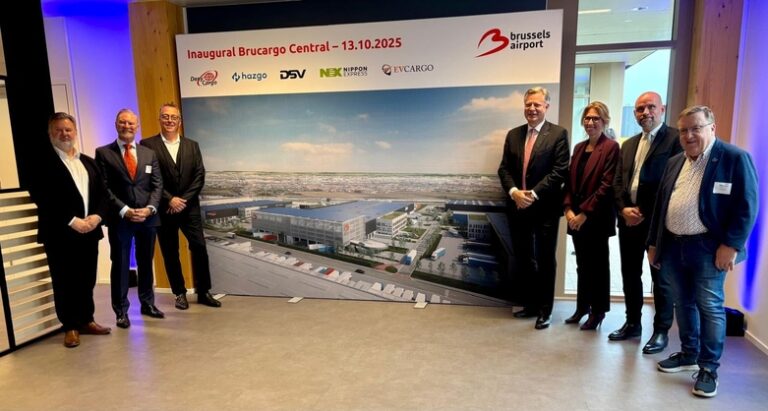
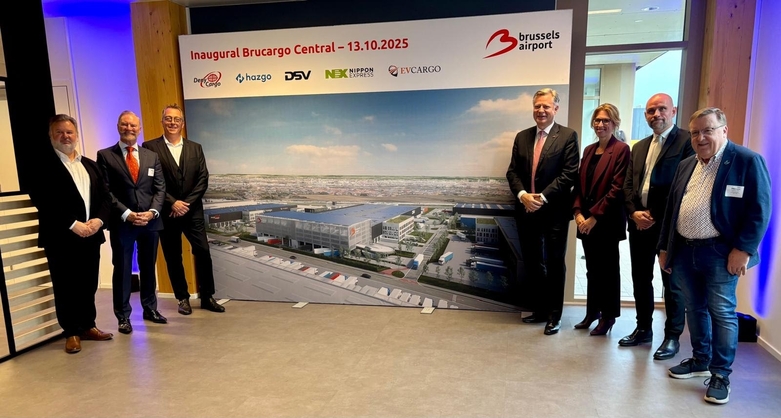
The inauguration of Brucargo Central marks the first phase in the redevelopment of the historic heart of the cargo village – picture: courtesy BAC
New distribution center opened in 2018 DP then decided to move the project to Leipzig, where the new hub was opened in 2008. Instead of bringing 1,400 additional jobs to Brussels, the downsizing of the hub cost up to 1,700 jobs. In 2018, DHL opened a new Brussels distribution center, tripling its handling capacity. Today, Brussels is the group’s fourth biggest air cargo center worldwide, employing around 1,600 people. In 2017, a state-of-the-art warehouse was opened, handling an average of 200,000 consignments daily. Six out of ten have their origin in Belgium or neighboring regions in France and the Netherlands.
Critical link “Over the last 40 years and especially since 2010, we have grown into a critical link in the processes of many Belgian companies. Some examples of time-critical consignments that we ship from Brussels Airport by air – the fastest way – are radioactive isotopes for cancer treatment, which lose their effectiveness quite soon, tailormade stents for heart surgery, and crucial spare parts for machinery sitting idle somewhere in the world,” says DHL Aviation’s CEO, Kirsten Carlier. The entire staff was given the opportunity to attend one of four staff parties, as time-critical consignments cannot be halted. Each co-worker was given a book written by one of the first-generation staff members, Michel Smout (Number 29 of the total of 1,600 employees now), in collaboration with the present Public Affairs Director, Lorenzo Van de Pol, one of the youngest in the company. The book is published in Dutch only, under the title ‘In het holst van de nacht: 40 jaar DHL op Zaventem (In the dead [or course] of the night: 40 of years of DHL in Zaventem).
BRUcargo Central redevelopment takes shape The anniversary of DHL was not the only cause for celebration at Brussels Airport. In the historical center of the cargo village, the 83,500 m²-wide BRUcargo Central, and three state-of-the art buildings totaling 34,000 m² of warehouses and offices, were officially inaugurated. Groundbreaking work started in 2023 as part of the redevelopment of the zone.The new constructions increase BRUcargo Central’s storage capacity by 30% and bring an additional 10,000 m² of temperature-controlled space. The three new buildings will house five major logistics companies, all already active at Brussels Airport, representing a mix of major international players and local SME: Nippon Express; DSV Air & Sea NV; Hazgo, part of SGS, the world’s leading testing, inspection, and certification company; EV Cargo, a global supply chain player that confirms its growth ambitions at Brussels Airport, and Deny Cargo, a pioneer in the cargo zone since the 1980s.
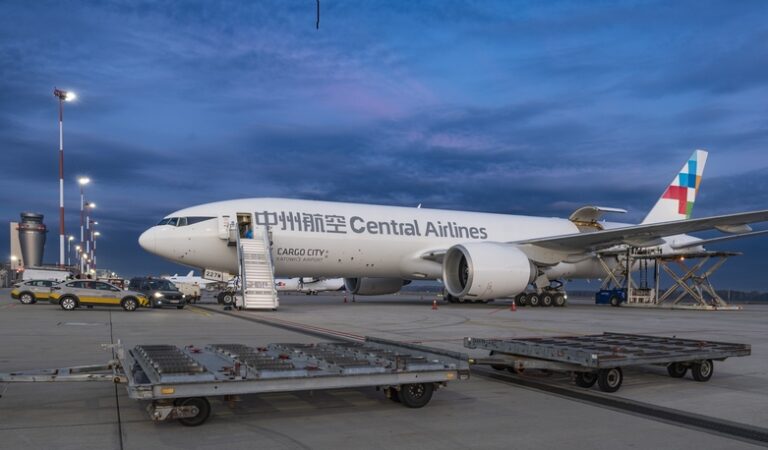
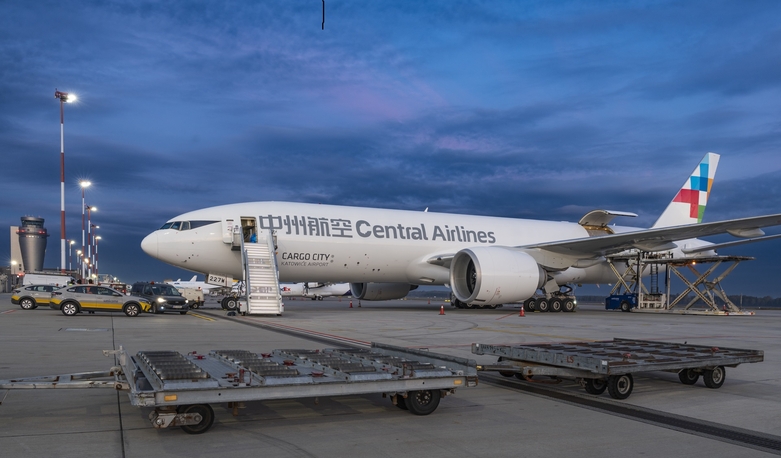
Last Tuesday (21OCT25), the Polish Airport Port Lotniczy Katowice (KTW) welcomed Chinese freight carrier, Central Airlines, as its newest customer. That maiden flight kicks off a chain of charter flights between Chengdu and Katowice that will be operated with Triple Seven freighter aircraft between 3 and 5 times a week. Central Airlines is the first Asian cargo carrier to land at Katowice, mainly driven by local e-commerce market demands.
The airport in the southwestern part of Poland has a well-developed ground infrastructure, an expressway system connecting it to the surrounding regions, and is centrally located in the densely populated border triangle between Poland, the Czech Republic, and Slovakia. It is a larger agglomeration area with residents whose purchasing power is trending upward.
Chinese carrier Central Airlines operates Boeing Triple Seven freighters several times a week to Katowice Airports – courtesy: KTW
Taobao, JD.com, Pinduoduo ante portas All these factors are favorable conditions for importing e-commerce shipments from China, as local demand for products from Temu, Shein, Alibaba, and similar e-trading platforms is the main reason for the new flight connection. This is confirmed by Jakub Mańka, member of the airport’s communications department. He points out that the air freight shipments are addressed to Polish customers but also transited to nearby European countries. He also illustrates that the airport has a 12,000 m2 cargo terminal at its disposal for the handling of shipments. Airlines can choose between three external service providers: Welcome Airport Services, Silver Cargo, and LS Airport Services. Katowice Airport itself does not operate its own ground handling unit.
Cargo plays second fiddle As far as passenger numbers are concerned, it is Poland’s fourth-largest airport after Warsaw, Krakow, and Gdansk. In 2024, 6.4 million travelers used KTW. The largest players are the low-cost carriers Wizz Air and Ryanair. Poland’s state-owned airline, LOT, also serves the airport. In terms of air freight, KTW is firmly integrated into the European networks of integrators DHL, FedEx, and UPS. Lufthansa Cargo also regularly serves the airport with A321P2F aircraft. Overall, air freight has played a rather minor role so far. This is illustrated by the annual turnover of 37,175 tons in 2024. However, thanks to Central Airlines’ flights, this volume is likely to increase significantly in the coming weeks, reaching around 45,000 tons by the end of DEC25, predicts speaker Mańka.
Fast throughput Artur Tomasik, President of the Board of The Upper Silesian Aviation Group (Górnośląskie Towarzystwo Lotnicze S.A. – GTL S.A.), also welcomes this development. On the occasion of Central Airlines’ maiden flight, he stated: “Our partners at Central Airlines made a good decision by choosing Katowice Airport as the place to which they will carry out cargo flights from China […]. We are open to cooperating with Chinese logistics operators, to whom we can offer the advanced infrastructure of Katowice Airport [including our proximity] to the most important motorways in this part of Europe.” The manager went on to say: “Our advantage is also the short time required for ground handling and customs clearance, thanks to good cooperation with handling operators and the National Revenue Administration.”
24/07/365 ops Management emphasizes that customs clearance of tens of thousands of shipments from a single all-cargo flight, only takes around six to seven hours, which is an excellent result compared to other European airports. In addition, Katowice Airport is available around-the-clock, without any restrictions, both in terms of operations (aircraft take-offs and landings) and cargo terminal accessibility: factors that are key from the perspective of freight operators and the e-commerce business. Katowice Airport further points out that construction of a second cargo circa 10,000 m² terminal is part of its infrastructure expansion program. Currently, the building is in its design phase. The terminal should be operational in the second half of 2027.
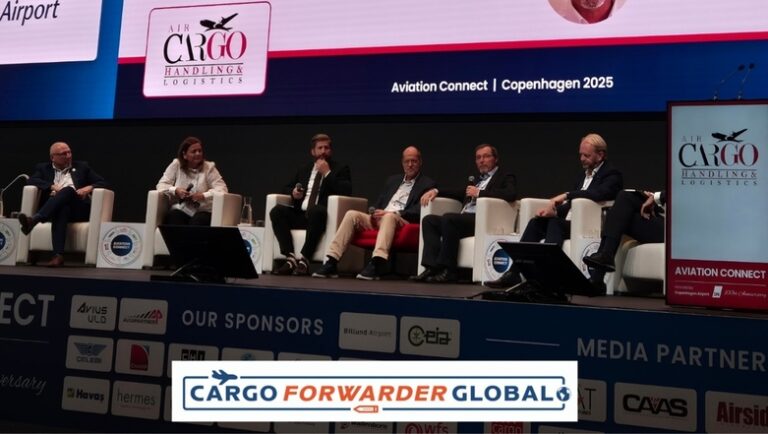
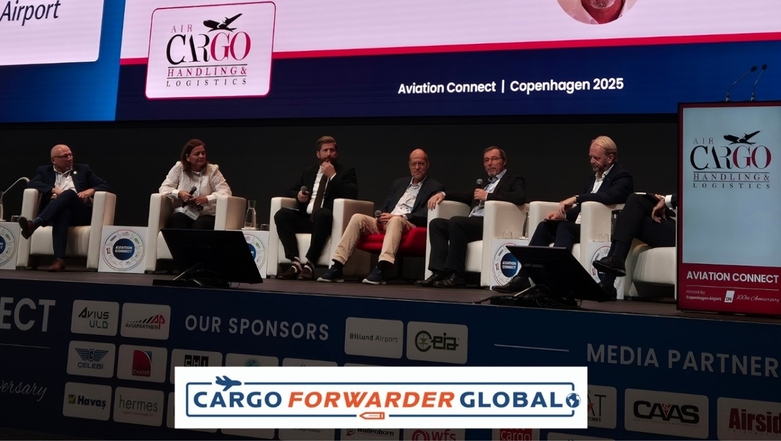
At the ACHL in Copenhagen, Denmark, the panel on 15OCT25, titled “Standardization for a Safer, More Efficient Industry and Improved Service” picked up where last year’s quest for minimum handling standards left off (CFG reported at the time) Again moderated by ACHL’s own Chairperson, Henrik Ambak, the panel included IATA’s Global Head, Cargo, Brendan Sullivan, TIACA’s Director General, Glyn Hughes, KLM Cargo’s Director Operational Integrity, Compliance & Safety – ISCM, Kester Meijer, Cargo iQ’s Executive Director, Marie Seco-Köppen, ASA World’s Director of Safety & Standards, Steve Otterway, and FIATA’s Director General, Dr. Stéphane Graber.
Setting the tone, Henrik Ambak highlighted the absurdity of what he called ‘11 different ways to cone a 777 aircraft’ – an example that had come up in last year’s discussion already, but that was this time illustrated with a brief video showing the variations both in cone numbers and cone placements according to different airlines – all for one and the same aircraft type. Despite ICAO technical instructions forming the basis for IATA regulations such as Dangerous Goods (DG), many airlines add operator variations that leave front-line personnel juggling multiple rulebooks. “The poor guy on the ramp has to remember individual airline differences,”he noted. The call for true industry-wide standardization echoed strongly across the panel stage over the next hour, as it tackled the complexity – and necessity – of harmonizing air cargo procedures.
Panel discussion at ACHL/Aviation Connect in CPH, 15OCT25. Image: CFG
Progress in practise… Common standards can and do work, Ambak said, citing ICAO, IATA’s ONE Record initiative as examples, as well as stating that Cargo iQ was one such perfect demonstration. He invited Cargo iQ’s Marie Seco-Köppen, to explain a little. She outlined how the organization’s Master Operating Plan (MOP) and quality management framework bring diverse actors together. “We challenge everyone [from the different parties involved] to bring their needs to the table,”she said. “It’s sometimes a big exercise, but it is important that everyone speaks.”
… and yet persistent gaps Steve Otterway drew from over a decade of experience helping to develop IATA’s Ground Operations Manual (IGOM). He acknowledged that the standardization debate had definitely matured, yet “significant differences still exist.” Through IATA’s operations portal, teams are now assessing every variation and identifying whether each can be realistically eliminated. The goal, Otterway said, is not only alignment in Dangerous Goods handling but also in safety-critical areas like load distribution. “There’s still not one standardized method for weight spreading among airlines,” he lamented. Brendan Sullivan, IATA’s Global Head of Cargo, reinforced that message. “Weight spreading, special loads, and specific aircraft – there’s incredible complexity,” he said. IATA aims to provide a reliable baseline through its manuals and guidance materials but, he emphasized, collaboration across the value chain is non-negotiable. “If ground handlers perform the processes, they need to be involved in shaping the standards.”
Need to be standards in tech and training, too Ambak pressed the question of whether forwarding partners face confusion when identical packages cannot be handled the same way for two different carriers. FIATA’s Director General, Stéphane Graber agreed that consistency also in technical and training standards is vital. “To transfer the right information, we need agreed definitions and aligned standards,” he said. He praised ongoing collaboration between FIATA, Cargo iQ, and IATA, particularly in revising the Cargo Handling Manual (CHM). It needs the involvement of all actors to agree on a standards masterplan, he said, echoing his fellow panelists.
“There’s one way to make a Big Mac” Representing TIACA, Glyn Hughes expressed exasperation with the industry’s fragmented approach. “We’re [the air cargo industry] over 110 years old – how can we have eleven best practices and two opposing practices as Steve Otterway pointed out before [talking about weight distribution]?” he asked. “Walk into any MacDonald’s anywhere in the world and there’s just one way to make a Big Mac.” While commending IATA and Cargo iQ for their coalition-building, he criticized the broader culture of differentiation. “It’s embarrassing that we haven’t done more standardization – instead, we’re deviating even more with each stakeholder apparently claiming: ‘I’m better than others.’” Coming back to the training point, Hughes warned that training variability under looming European Aviation Safety Agency (EASA) regulations could escalate costs and complexity if standardization lags – and that could result in safety risks. “If we don’t standardize in the next 2.5 years, people will start cutting corners,” he warned.
The Chaos of Complexity – and the ‘Coalition of the Unwilling’ KLM Cargo’s Kester Meijer acknowledged that historical baggage often drives complexity. “We had three manuals when our airlines [AFKLMP] merged,” he recalled. Variations arose from legacy procedures and differing customer or national requirements. A Doc Standards Manager was appointed to look at and remove the deviations. “We have great standards like ONE Record, but adoption is inconsistent across freight forwarders and countries,” he stated, also pointing out that freight forwarders deal with multimodality – not just air cargo. The gap between digital readiness and operational reality remains wide. “There’s a Coalition of the Unwilling to Change, right now,” he said. “If we don’t move, regulators will force us.” Graber echoed that FIATA successfully removed variations across countries when developing its F e-AWB approach. ONE Record, he said, offers another major opportunity if the industry aligns data input and transmission globally. “Standardized data at the source, transferred securely under defined conditions, is the way forward,” he said.
Turning standards into action Hughes cautioned against complacency: “A standard is no good if it sits on the shelf.” He cited IOSA as proof that alignment can be achieved when airlines commit collectively – a sentiment Sullivan reinforced: “Over 200 airlines are now aligned through IOSA and ISAGO. Audit times have dropped by 15% to 20%, with 100 new members joining within this and next years,” Sullivan said. That momentum, he suggested, can be replicated in cargo operations. “There are, however, sometimes good reasons for deviations. What is important, is that information is shared in a consistent fashion.” Meijer pointed to the tangible benefits of convergence. “The more we align with IATA manuals, the thinner our manuals become,” he said. Yet he questioned persistent bureaucratic excess. “What’s the safety value of two different safety audits? Why do we have multiple national interpretations of one European legislation?”
A call for Collective Will Ambak stated that many deviations were the due to incidents having taken place, and perhaps the approach should be to look at how the industry deals with incidents. Otterway emphasized that starting from a shared philosophy – ‘this is the same cargo and can be handled the same way’ – enables 80–90% standardization. “If you encounter stations says ‘yes, but you don’t understand…’, you get 50%.” Hughes concluded on a cautionary but motivational note: “Every day without a major safety incident raises the odds that one will happen. Complexity increases risk.” The audience, he said, must not only acknowledge this but act on it. Ambak closed the session with determination: “We should approach this from the standpoint of ‘WE CAN’ – and don’t give up.”
Anchorage, Alaska-based cargo carrier Ryan Air has placed a deposit-backed order for Beta Charge Cubes to be placed across its network. The airline, which serves 70+ rural communities across Alaska, aims to expand its network of e-driven cargo aircraft and improve operational reliability in regions where air service is often the only link for food, medicine, industrial supplies and other essential goods.
Ryan Air currently operates 24 aircraft out of eight hubs in Alaska, including electrically powered freighters. It was founded in 1953 by Wilfred Ryan and his wife Eva as Unalakleet Air Taxi and employs 180 staff. Today, the company, which despite the similarity in name has nothing to do with the Irish low-cost carrier Ryanair, is run by Lee Ryan, the third generation of the family.
ALIA CTOL e-freighters can uplift 570 kg per flight (1,250 pounds) – courtesy: Beta Technologies.
Reducing CO2 emissions Under his leadership and that of his management team, the course has now been set for a network served by electric-powered aircraft. To this end, the company has ordered 10 Charge Cubes to power the fleet of ALIA electric aircraft, obtained from pioneering U.S. firm, Beta Technologies. They will serve routes in the remote regions of the most northern U.S. state which are inaccessible by road and depend on air transport for supplies. These charge cubes deliver sufficient energy to repower a CTOL*** aircraft and are compatible not only with Beta freighters but also with other electric aircraft and ground vehicles, including cars, trucks and buses. This lowers the strain on the local electricity grids, many of which in rural Alaska continue to rely on greenhouse gas emitting diesel generators. “By leveraging Beta’s battery technology and infrastructure, Ryan Air – together with local partners – can help bring greater energy reliability and sustainability to even the most remote parts of our state,” stated president, Lee Ryan. The executive went on to say: ALIA’s batteries “can be repurposed at the end of their flying life, creating second-life applications that support rural Alaska.”
e-powered freighters are on the advance… Beta Technologies’ ALIA CTOL is able to accommodate up to 570 kg per flight (1,250 pounds) or five travelers in a passenger version. It is equipped with a proprietary H500A electric motor paired with Hartzell aircraft propellers engineered for electric and hybrid-electric propulsion. With a wingspan of 15 meters (50 feet), the ALIA achieves a range of 622 kilometers (336 nm) and a maximum speed of 285 km/h (153 knots). Its battery system allows power charging to 98% in less than an hour, which enables short operational stopovers.
… in Alaska and Scandinavia In SEP2025, an ALIA freighter completed its first flight in Scandinavia, taking from Stavanger to Bergen. CargoForwarder Global reported: https://cargoforwarder.eu/2025/09/21/menzies-world-cargo-expands-in-scandinavia/ . The trial is part of Norway’s international test arena for zero- and low-emission aviation, and the route was flown to simulate cargo service. Stavanger – Bergen will be serviced regularly throughout the entire duration of the test phase. ***In electric flying, CTOL stands for Conventional Take-Off and Landing. This indicates that an e-powered aircraft still requires a runway for operations, similar to traditional airplanes, this way contrasting Vertical Take-Off and Landing (VTOL) aircraft.
The logistics company has opened an office in Hanoi – its second in Vietnam after Ho Chi Minh City. Management speaks of very favorable business conditions since Northern Vietnam has developed into an industrial hotspot lately. Top companies have settled there, producing electronics, chips, computers, and accessories, among other high-tech items. Hence, an attractive location for logistics service providers.
The FDI ranking is: first Singapore… The who’s who of renowned companies is led by Sembcorp, Foxconn, Samsung, Bosch, and Canon, who have set up production plants in Hanoi or the surrounding region. The list of foreign funders is headed by companies from Singapore which invested USD 10.2 billion last year in the greater Hanoi region. This represents an increase of over 30% compared to 2023 levels.
… followed by South Korea… South Korean investors such as LG, Samsung, and Amkor, take second place. Together, Korean companies have turned Vietnam, and especially the northern part of the country, into a powerhouse for electronic products. Samsung alone produces 50% of its smartphones in Vietnam. By the end of 2024, Korean companies had invested over USD 92 billion in more than 10,100 projects in Vietnam, accounting for about 18% of Vietnam’s total registered Foreign Direct Investment (FDI).
.. and rounded up by China China ranks third among direct investors. Chinese companies accounted for 28.3% of all new foreign projects in Vietnam in 2024. Although Chinese investment currently lags behind Singapore and South Korea in terms of value, the country is exerting an increasingly greater influence on Vietnam’s economy due to its rapid growth and focus on industrial manufacturing. Currently, many Chinese firms are relocating production to the Hanoi area, with geographical proximity to southern China playing a role, enabling easy cross-border flows of goods, notes Tom Bayes, Vice President Asia, EMO Trans. Thanks to its growing GDP, Vietnam continues to post trade surpluses, with the northern part playing an in increasingly important role in exports. According to Bayes, these favorable business conditions are compelling reasons to establish a branch in Hanoi, complementing the existing EMO station in Ho Chi Minh City.
Gateway function Bayes reports that the export/import ratio for Hanoi is ~60% exports vs. 40% imports. The economic upswing benefits Hanoi’s Noi Bai Intl Airport (HAN), where high-value/time-critical electronics are the main cargo commodity. This is complemented by e-commerce shipments that continue to increase fast. “Air transport is vital for high-tech, pharma, and cross-border e-commerce,” states Tom Bayes.
Air freight is on the rise In Vietnam, 1.29 million tons of air freight were handled in 2024 (+21% YoY) with double digit growth rates being the norm for years. Most exports flown by air oversees end up in the U.S., Europe and the wider APAC region (South Korea, Japan, Taiwan, Hong Kong, Australia, and Singapore). Inbound cargo comes primarily from China, South Korea, and Singapore, complemented by machinery, aviation items or maritime components produced in the EU or the U.S. Ocean freight is trucked from Hanoi to the port of Hai Phong for transpacific transport, or to EU destinations such as Rotterdam, Hamburg or Felixstowe. In a nutshell, given the favorable economic conditions in northern Vietnam, EMO’s Hanoi pick seems to make a lot of sense.
From left: Sara van Gelder, Lionel van der Walt and Jean Verheyen from Nallian, Hassan El-Houry and Beau Paine from Menzies. Image: Menzies/Nallian
It is not every day you get to sign on the world’s largest aviation services company, and yet that is what happened at the recent Aviation Connect in Copenhagen, Denmark, on 15OCT25. Menzies Aviation has partnered with Nallian to deploy its Truck Visit Management (TVM) solution across its global cargo network, beginning with five major stations: Sydney, Melbourne, Auckland, Prague, and San Francisco. Those five stations alone handle more than 500,000 tons/year. The rollout will digitalize and standardize Menzies’ landside cargo operations, improving efficiency, safety, and service quality.
TVM enables digital slot booking, check-in, yard orchestration, and dock allocation, significantly cutting truck waiting times and improving predictability for forwarders and trucking companies. Integrated with Menzies’ MACH cargo management system, developed with Wipro, it will provide real-time coordination between warehouse and yard operations, enhancing workflow transparency and efficiency. By automating yard planning and communication, Menzies expects measurable gains in productivity and safety while reducing congestion and emissions. The initiative supports the company’s broader digital transformation strategy aimed at elevating operational performance and customer experience.
Beau Paine, EVP Air Cargo, Menzies Aviation, commented: “As we scale our cargo business globally, consistent, data-driven operations on both airside and landside are essential. Deploying Nallian’s TVM at priority stations will help us cut truck dwell time, smooth peaks and deliver a faster, more predictable experience for our customers. Native integration with MACH makes this a practical step in our digital journey and a foundation for wider rollout.” Jean Verheyen, CEO of Nallian, stated: “We’re proud to support Menzies Aviation with a proven approach to harmonizing landside flows. Starting with a focused, multi-region deployment ensures quick value and creates a replicable model that can scale across the network. Tight integration with MACH will provide unified data and control from the yard to the warehouse.”
Operated by an Airbus A330-243 (P2F), the inaugural flight marked the start of a four-times-weekly schedule. Image: Stewart Marshall
Glasgow Prestwick Airport has signed a new partnership with Beijing Capital Airlines, part of the Hainan Airline Group, to launch a four flights/week Airbus A330 freighter service linking Glasgow Prestwick Airport (PIK) and Zhengzhou Xinzheng International Airport (CGO). The inaugural Airbus A330-243 P2F flight landed on 16OCT25, marking the airport’s third new cargo route in six months. The service will transport e-commerce and general cargo inbound to the UK, while exporting premium Scottish products such as salmon, whisky, and other high-value goods to China. This regular connection enhances e-commerce capacity and strengthens export channels between Scotland, the wider UK, and Chinese markets. The collaboration further supports Prestwick’s cargo growth strategy, which aims to develop sustainable, high-frequency trade routes linking UK exporters with key global logistics hubs, building up its status as a major UK gateway for China trade. Ian Forgie, Chief Executive Officer, Glasgow Prestwick Airport, stated: “This third scheduled service underlines Prestwick’s position as one of the United Kingdom’s leading cargo hubs and demonstrates the strength of our e-commerce solution. Our new partnership with Beijing Capital Airlines expands capacity, increases frequency, and offers exporters throughout the UK a new destination in mainland China.”
The first airline to introduce real-time customs clearance status updates in ONE Record. Image: Cathay Cargo
Cathay Cargo has become the first airline to provide real-time customs clearance status updates through IATA ONE Record, eliminating uncertainty from manual customs reporting and enhancing operational transparency. The service is available to EzyCargo platform subscribers and customers with existing ONE Record API connections to Cathay’s systems. This pioneering integration incorporates customs authorities as active stakeholders in Cathay Cargo’s real-time customer communications. The system addresses critical approval requirements including PLACI (pre-load advanced cargo information) needed before shipment loading and post-arrival release authorizations from destination customs.
Current coverage includes customs authorities in Europe (ICS2 Import Control System), the United States, Canada, and the United Arab Emirates. Updates are delivered as ONE Record “Logistic Events,” providing customers with detailed status information – whether shipments are pending, under assessment, approved for loading, held for inspection, or cleared for collection. To date, this information required manual updates from ground handlers, creating delays and uncertainty. The real-time capability enables customers to take immediate remedial action or adjust operations around inspection delays. The innovation stems from Cathay Cargo’s partnership with Global Logistics System (HK) Company Limited, which also developed EzyCargo, EzyCustoms, and the Click & Ship booking platform.
James Evans, Cathay General Manager Cargo Commercial, commented: “At Cathay Cargo, we understand the importance of encouraging the participation of all stakeholders in the air cargo industry in IATA ONE Record, to increase the transparency and data connectivity of air cargo. Being able to see live updates from customs authorities adds another layer of transparency to the digital cargo journey. This extended ONE Record integration is currently available to Cathay Cargo customers who are subscribed to the EzyCargo platform, but this additional visibility will be integrated into the Cathay Cargo website for registered account holders in 2026.” Simon Ng, GLS Chief Executive, stated: “By leveraging the ONE Record-powered EzyCargo platform, Cathay Cargo’s forwarder partners can now access real-time customs clearance status the moment it is issued by customs to airlines. This minimizes the possible delay of message relays from the GHAs, and enhances operational efficiency for both our airline and forwarder partners.”