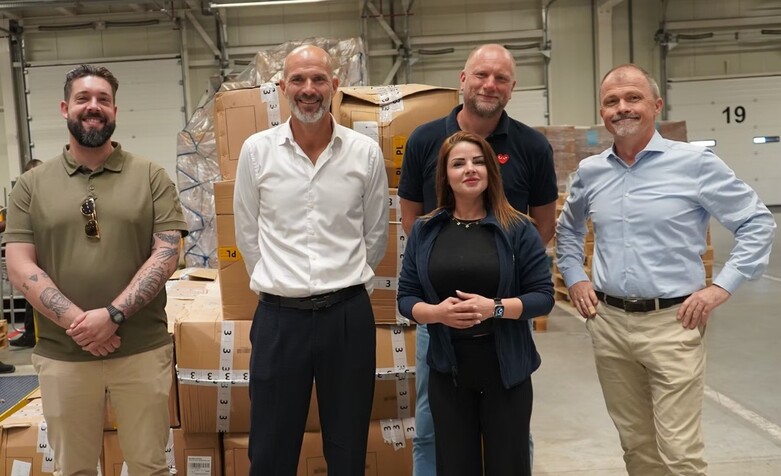
Air Charter Service recently inaugurated its 40th international office – this time in Spain’s city of Barcelona. The private and cargo aircraft charter founded in the UK in 1990 has seen rapid expansion – particularly in the last five years where it grew from 24 locations to today’s 40th. ACS puts its success down to being able to “benefit from several windfall years since Covid and so have had the opportunity to accelerate our strategy.” It has registered strong growth “with a six-year Compound Annual Growth Rate (CAGR) of 11% in revenue” since that time.
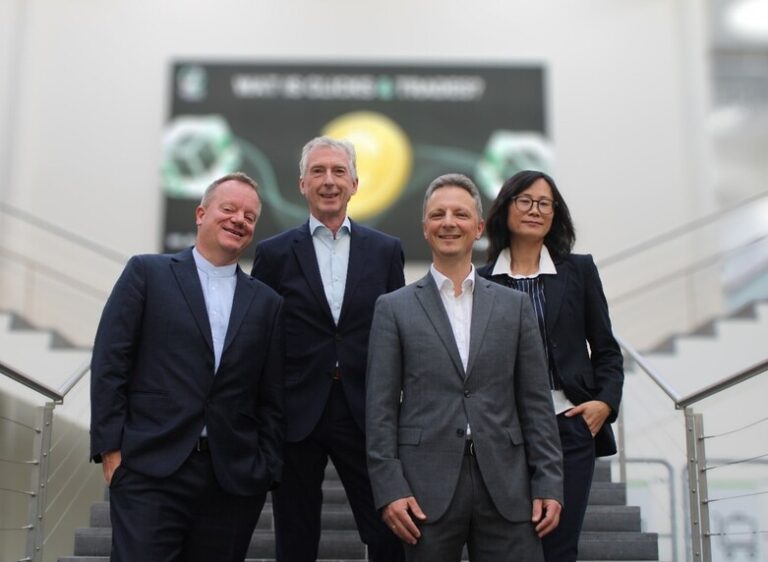
ACS Barcelona launch team (l-r Pilar Asenjo, Daniel Martin-Rodriguez, Andrew Summers, James Fitzgerald). Image: Air Charter Service
Justin Bowman, Group CEO, announced: “The opening of our 40th office is an amazing achievement, and comes straight off the back of opening up in Perth and Riyadh last month. We have had a presence in Spain since 2008, and our Madrid office is one of our most successful in our network. From there we have been serving a huge number of customers in Catalonia, so it was only a matter of time before we felt we needed a second operation in the country. The office will be headed up by the experienced Daniel Martin Rodriguez, who joined our Madrid office nine years ago. We have always felt that a local presence is of paramount importance, as each regional office allows our clients to deal with a local company, in their own language and their own currency, meaning a better service all-round for them. Both clients and airlines are also able to benefit from the network effect with our spread of offices around the globe – clients get better assistance when travelling to other regions, and operators can benefit from international clients being able to charter with them, through us. Having offices in more locations also helps ACS, as we can attract the best in local talent, furthering strengthening our global team. In terms of future expansion, we already have plans for more offices next year, some in countries where we don’t currently have a presence, bringing our service to even more clients.”
Ostend-Bruges Airport announced on 09OCT25, that it has appointed Johan Leunen as its Cargo Development Director. Leunen has a strong connection to the Belgian cargo market, having previously held the position of Senior Business & Development Manager Cargo at Brussels Airport for 12 years, until earlier this year. In total, he can draw from over 23 years of air cargo experience in cargo handling, forwarding, and airport development. His career began in 2000, in operations, and took him through customer support and sales management positions, including consultancy and auditing as an independent consultant, as well as business development responsibilities in the forwarding sector.
From left: Steven Verhasselt, Johan Leunen, Nathan De Valck, Rose Yiqian QIU. Image: Ostend-Bruges Airport
Together with Cargo Sales Director, Rose Yiqian QIU, and Egis Group Director of Cargo Strategy, Steven Verhasselt. Johan Leunen will work to attract new cargo airlines to Ostend-Bruges Airport, develop its cargo services, and be instrumental in implementing Ostend-Bruges Airport’s cargo growth strategy
Nathan De Valck, CEO of Ostend-Bruges Airport, stated: “We strongly believe in the opportunities that the air cargo sector holds for Ostend-Bruges Airport. Johan’s expertise, industry knowledge, and extensive network will be a great asset to our team. With his support, we are confident we can strengthen our position as a key cargo gateway and contribute to the economic development of the region.”
Silk Way Group’s subsidiary, Silk Way AFEZCO, and Luxaviation Group’s ExecuJet, have signed a partnership agreement wherein they intend to significantly advance business aviation in Azerbaijan. Together, they will develop a state-of-the-art Fixed Base Operation (FBO) at the upcoming Alat International Airport, located south of Baku. As part of this collaboration, ExecuJet will manage Silk Way AFEZCO’s new Gulfstream G500, which is the first of its kind to be registered and operated in Azerbaijan, marking Luxaviation Group’s entry into this market.
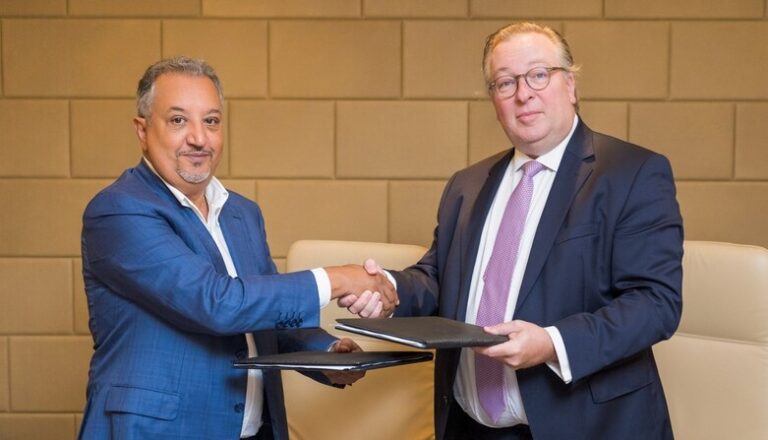
Jawad Dbila, CEO of Silk Way AFEZCO (left), and Patrick Hansen, CEO of Luxaviation Group. Image:Silk Way West
The partnership also includes a planned joint venture to create an aviation services hub within the Alat Free Economic Zone. This initiative aims to strengthen Azerbaijan’s role as a strategic link between Europe, Asia, and the Middle East, especially as energy, trade, and tourism in the region expand. Their Aircraft Management Agreement will ensure end-to-end support for Silk Way’s G500, covering operations, maintenance, flight planning, and crew management.
Work on the Alat FBO will begin before the end of this year, and the facility should be operational by early 2027. Its design is based on ExecuJet’s award-winning Dubai facility (at Al Maktoum International Airport), and will set new standards for quality and efficiency as business aviation demand grows in Azerbaijan.
Patrick Hansen, CEO of Luxaviation Group, announced: “This is a milestone partnership for Luxaviation and ExecuJet, as we expand into the Azerbaijan market. By combining Silk Way AFEZCO’s strong regional expertise with our global experience in premium FBO and aircraft management services, we are setting new benchmarks for quality, efficiency, and customer hospitality in the Caspian region.”
Jawad Dbila, Chief Executive Officer of Silk Way AFEZCO, said: “We are proud to partner with ExecuJet to elevate Azerbaijan’s role in global business aviation. The FBO at Alat International Airport and the joint venture at AFEZ will provide unmatched services for operators and passengers alike. Alongside the introduction of our new Gulfstream G500 under ExecuJet’s management, we are investing in the future of aviation in our country.”
SATS Group company, Worldwide Flight Services (WFS), is expanding its specialized e-commerce and freight forwarder handling (EFFH) services at Frankfurt Airport to meet the growth in the region. It recently signed a long-term lease for two warehouses at Europe’s largest cargo hub, which will come into effect in JAN26. Last year, cargo volumes in Frankfurt rose 6.2% year-on-year to 2.1 million tons, largely due to e-commerce. WFS has long been committed to developing business at Frankfurt Airport, in partnership with Fraport. Their joint subsidiary, Frankfurt Cargo Services (FCS), provides cargo handling services for airlines.
Marc Claesen. Image: WFS
Under the new lease agreement, WFS will take over two warehouses and two office buildings on a 24,000 m² site within the airport’s Cargo City South. The facilities will be equipped with ULD handling systems and volume and dimension scanners to speed up shipment processing. Once the facility is fully operational, WFS will be able to handle up to 100,000 tons of import and export cargo annually for e-commerce and freight forwarding customers.
Strategically located at the entrance to Cargo City South, the warehouse is ideally positioned to efficiently handle truck shuttle services between the front-line transshipment halls and the freight forwarders’ warehouses in the Cargo City area, as well as international transshipments – including those operating within WFS’s own European road transport network. WFS’s EFFH service prepares cargo for transport, records weight and dimensions, and provides crate packing, repacking, security checks, consolidation, shipping labeling, and transport between freight forwarders and handling agents. It also includes final consolidation of imports, sorting, preparation of shipments for customs clearance, and onward transport by road.
Marc Claesen, Senior Vice President Northern Europe & Africa at WFS, explained: “As a leading air cargo hub, Frankfurt is an important hub for global freight forwarders and large e-commerce shippers serving the German and European markets. As a pioneer in the development of a new range of services that address the increasing complexity of the air cargo value chain, WFS/SATS welcomes this opportunity to introduce our comprehensive EFFH services to our customers in Frankfurt. Freight forwarders and e-commerce shippers appreciate the efficiency, reduced number of touch points, and faster throughput for all parties involved that our EFFH solutions provide. We see strong growth potential in Frankfurt.”
Peter Nordstrom has been named Chief Executive Officer of the Rhenus Group’s Air & Ocean division in North America. In this role, he will guide operations across the region and ensure they align with the company’s overarching global strategy.
Peter Nordstrom, CEO of Rhenus Air & Ocean, North America. Image: Rhenus
Bringing over 25 years of international experience in freight forwarding, logistics, and supply chain management, Nordstrom has a strong history of driving transformation, boosting operational performance, and fostering growth in markets across the Americas, Europe, and Asia. His career includes senior leadership posts at Ceva Logistics, Geodis, Kuehne+Nagel, and, most recently, serving as Executive Vice President of Ocean Freight Americas at DB Schenker.
As North America CEO for Air & Ocean, Nordstrom will focus on strengthening the division’s presence in Canada and the United States, improving efficiency, expanding market share, and accelerating business growth. He will report directly to Jan Harnish, Member of the Board for Air & Ocean.
Jan Harnish, Member of the Board – Air & Ocean stated: “We are pleased to welcome Peter to the Rhenus Group to lead our North America Air & Ocean operations. North America is a vital region for the organization and plays an important role in our industry as it serves as a connection to global trade, especially in today’s market landscape. Strong leadership experience like Peter’s will enhance our market position across the region, driving the next phase of growth and new opportunities to develop. I’m confident he will continue to strengthen our market position and expand our footprint across the region.”
Peter Nordstrom, CEO of Rhenus Air & Ocean North America, commented: “I am honored to join the Rhenus organization and oversee its Air & Ocean division in North America. I look forward to strengthening and growing our market presence with our teams in Canada and in the United States, driving performance and identifying new opportunities. North America is a key region for the global supply chain. As customer expectations continue to evolve, we will remain focused on adapting and delivering solutions that meet the demands of today’s evolving market across the region.”
WCAworld Academy’s new Good Distribution Practice (GDP) Accreditation Audit Program has recorded its first success, with Embassy Freight London UK becoming fully GDP compliant. Designed for the highly regulated pharmaceutical and healthcare logistics sector, the program helps members align with international GDP standards, minimizing risks such as temperature excursions, product damage, theft, and threats to patient safety. It was launched to meet growing industry demands since the EU’s GDP guidelines came into force in 2013. The audit includes expert assessments, gap analysis, improvement guidance, and final accreditation. Accredited companies receive certification under EU and/or PIC/S standards, plus ongoing support and training to maintain compliance. Embassy Freight’s achievement underscores its commitment to safety and quality in handling sensitive healthcare shipments. With biennial renewal and continuous oversight, the program sets a rigorous global benchmark, enhancing operational efficiency and strengthening trust across the supply chain.
Image: WCAworld Academy
Sean Butler, Managing Director Embassy Freight, said: “Embassy Freight Services UK are thrilled to have achieved GDP accreditation. This is an important milestone that reinforces our commitment to maintaining the highest standards in the pharmaceutical supply chain. We would like to extend our sincere thanks to Leah McKenna and the WCA Academy for their invaluable assistance throughout this process.”
Leah McKenna General Manager WCAworld Academy, added: “It is wonderful to be able to offer this service to our members, it is something our members have requested and we are delighted we can now deliver. Embassy Freight’s achievement has already given them the opportunity to quote on new business and highlights the impact of our GDP Accreditation Program. This milestone reflects WCA world Academy’s commitment to raising global compliance standards and equipping members with the knowledge and tools to lead in pharmaceutical logistics.”
CB Customs Broker (CB), a Lufthansa Cargo subsidiary, recently announced its partnership with Rapid Logistics B.V. (Rapid), to manage cross-border e-commerce shipments at Amsterdam Airport Schiphol. Operating from a scalable 1,000 m² facility, Rapid will oversee logistics handling while CB manages customs clearance. This collaboration marks the next phase of CB’s European expansion, following the launch of its first international branch in Amsterdam in 2024. CB’s press release speaks of combining “German precision with Dutch digital expertise. Customs authorities across Europe require detailed parcel-level data. CB delivers this through proprietary software, licensed by German customs for the ATLAS Impost procedure for low-value goods under €150. The scalable system made integration with the Dutch DMS customs platform and DECO, the low-value assignment system, straightforward.”
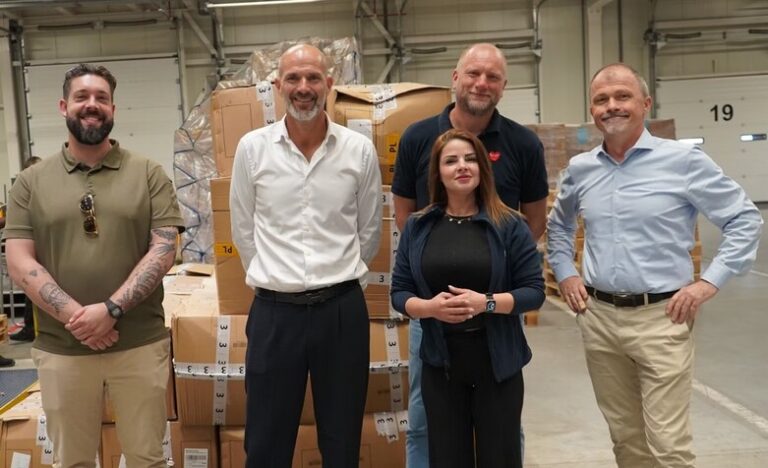
CB Customs Broker and Rapid Group. Image: CB Customs Broker
Rapid’s modern, BREEAM Excellent-certified warehouse at Schiphol Trade Park, opened in 2023, provides the ideal base for this operation. Renowned for agile, tech-driven processes, the company also offers value-added logistics and fulfillment services alongside air cargo handling.
Uwe Glunz, CB Customs Broker Managing Director, revealed: “We have been looking for a partner that shares our focus on digitalization, automation and efficient processes. With Rapid, we found the right match, and we are excited to grow together. The Dutch public administration has a strong digital mindset. This fits perfectly with our approach: we aim to leverage this mindset and automate and connect via API wherever possible. This is the only way to manage the surge in e-commerce flows. Amsterdam has also historically been a major e-commerce import hub. These are the reasons why we invested here early on and are now pleased to bring our software and expertise to the Netherlands.”
Rapid COO, René Hendriks, commented: “We are proud that CB Customs Broker has chosen us as a partner for the growing eCommerce business. The company brings strong expertise in digital import clearance from Germany, and we provide the infrastructure to match.”
When you ask ChatGPT a question or watch Gemini generate an image, it feels like pure digital magic. But here’s what most people miss: behind every AI conversation lies massive hardware that is built, shipped, and installed across the world — and much of it ships by air cargo.
Our author, Sabari Ramnath, Director for Travel and Transport Solutions, Unisys, sheds light on the topic.
The AI supply chain has created completely new trade flows, states Sabari Ramnath – image: private
The physical reality of Artificial Intelligence: We think of AI as software living in the cloud. The reality is far more tangible. Every time you interact with tools like Grok, Gemini, or ChatGPT, you’re actually connecting to massive data centers packed with specialized chips, working in perfect coordination to answer your query in seconds.
These aren’t ordinary computer chips. A single ChatGPT conversation might engage thousands of NVIDIA GPUs—processors like the A100 or H100—running trillions of calculations simultaneously. Each of these chips contains hundreds of gigabytes of ultra-fast memory and connects through specialized networks that move data at extraordinary speeds.
This infrastructure doesn’t materialize through software updates. It requires manufacturing capacity, global coordination, and time-critical logistics. The semiconductor industry posted 19.1% growth in 2024, with AI processors driving a market expanding at 23% CAGR toward $457 billion by 2030. These aren’t projections. These are purchase orders being fulfilled right now.
Thenewgeographyofcompetitiveadvantage The AI supply chain has created trade flows that didn’t exist a few years ago. Most AI chips begin their life in Taiwan, where TSMC fabricates NVIDIA’s cutting-edge processors. High-bandwidth memory chips are manufactured in Korea. These components then fly to assembly facilities and, ultimately, to data centers in the United States, Europe, and beyond.
This isn’t just any cargo. These chips represent some of the most valuable freight in the sky today. A single shipping container of AI processors can be worth tens of millions of dollars. More importantly, they’re time-sensitive. In the race to build AI capacity, every day matters. Companies can’t wait weeks for ocean freight. They need these components installed and running now.
Airlines reimagine their mission Smart airlines saw this coming and adapted quickly. They’re no longer just moving packages—they’re becoming critical infrastructure for the AI revolution.
Qatar Airways launched TechLift in 2024, a specialized service built specifically for microchips and electronics [Link]. The program uses shock-proof packaging and climate-controlled containers because these chips are extraordinarily sensitive. A temperature spike or a hard jolt can destroy millions of dollars of cargo.
Lufthansa Cargo became the first airline to join Silicon Saxony, Europe’s largest association of companies in microelectronics, semiconductors, and IT [Link]. DHL Global Forwarding Japan running dedicated charter flights for sensitive semiconductor equipment [Link].
These aren’t small adjustments. Airlines and Forwarders are redesigning supply chain, creating priority loading procedures, and expanding freighter fleets specifically to serve AI hardware demand.
Why this moment matters for the air cargo industry AI hardware has emerged as the new engine driving air freight expansion. This represents a fundamental restructuring of global trade patterns.
New supply chains have materialized seemingly overnight. Korean memory manufacturers ship to Taiwan, where components integrate with TSMC-fabricated GPUs, which then fly to American data centers. These routes didn’t exist five years ago. Today, they’re among the most valuable trade lanes in the world.
For executives across industries, the implications are profound. The companies building AI infrastructure today are reshaping logistics networks, creating new geopolitical dependencies, and demonstrating that digital transformation still requires physical movement at massive scale.
The Bottom Line: Every AI query connects you not just to code, but to a global supply chain of factories, cargo planes, and engineers. The intelligence may be artificial—but the supply chain powering it is very real. So, embrace the future—it’s already in motion.
A brighter future for Ostend-Bruges International Airport (OST)’s cargo business may be on the horizon, as part of a wider development scheme for the airport. A dedicated team of renowned air cargo veterans has been set up. CargoForwarder Global spoke with CEO, Nathan De Valck about the path forward.
Artist view of OST Airport in Flanders – photos: company courtesy
In April last year, still under the leadership of Nathan De Valck’s predecessor, Eric Dumas, Rose Yiqian Qiu was brought in as Cargo Sales Director for Ostend-Bruges. “Rose was recruited because she not only speaks Chinese, but she also has a great knowledge of the Chinese market,” says Mr. De Valck, himself a veteran of the air cargo industry.
On 09OCT25, Johan Leunen joined the team as Cargo Development Director (please view article in Short Shots). He entered the air cargo industry in 2000 and retired on 01JAN25 as Senior Business & Development Manager with Brussels Airport Company.
Working with the team is another reputed name in the industry, Steven Verhasselt. He has taken the position of Cargo Strategy on the management level of the Egis Group, which owns 14 regional airports around the globe including the 2 Flemish airports of Ostend-Bruges and Antwerp.
Steven admits that this position did not exist on the group level. “My task will be to identify the cargo related opportunities of the airports controlled by the group and bring added value to the network,” he says. That may include flows between the various airports, he adds.
Potential routes include those between Europe and Africa, where Egis operates airports in Abidjan (Côte d’Ivoire), Pointe Noire, and Brazzaville (Democratic Republic of Congo). Egis is also present in Cayenne, the main airport serving the Ariane space project.
More than cargo As for Ostend, cargo is one of the four business segments that Nathan De Valck would like to expand. Unlike Wallonia, which has separated Charleroi for passengers and Liège Airport for cargo, De Valck says Ostend-Bruges will not restrict itself to handling only cargo.
“We have a thriving passenger business with leisure airline TUI, for which we act as complementary to Brussels Airport. Secondly, we have a stable general and business aviation segment. Last September, we were able to attract the Maintenance, Repair and Overhaul (MRO) business of Dutch EASP Air.” (see here).
As for cargo, the airport boasts a completely renovated Apron 1 which has 6 freighter positions, the old warehouse formerly used by MK Airlines, as well as a brand new 16,000 m² facility built by local real estate group, Versluys. “In the long run, there is room for a fourfold expansion,” says the executive.
e-commerce and perishables Last month, Ostend-Bruges concluded a collaboration agreement with LeShuttle Freight, to set up a smooth line with the UK. “This allows your e-commerce to arrive at the London thresholds faster than through Heathrow,” Nathan De Valck is convinced.
Ostend-Bruges has ambitious growth plans, states CEO, Nathan De Valck
Once upon a time, Ostend Airport as it was then called, reached a tonnage of some 150,000 tons. For this year, a mere 25,000 tons are expected, management expects. “But with the present infrastructure, the 150,000 tons should be possible. My predecessor decided to surf along with e-commerce growth. It is the main driver of the Belgian air cargo industry, which is larger than the Dutch, by the way. Thanks to my colleague Rose, we can work on this market.”
“For decades, we have had Egyptair as a reliable partner for perishables, and this is another segment we want to develop further. One of Johan [Leunen]’s task will be working on Africa and some specific routes ex China.”
“What we want to offer is a round-the-clock airport serving a specific product of speed through fast handling times. Today, we have only Aviapartner to rely on, but eventually we want to attract a second handler.”
For Ostend-Bruges International Airport, Nathan De Valck thinks of controlled growth, with speedy handling as a quality. He thinks of volume doubling every year. “From 25,000 to 50,000 tons is not a giant leap. It may be a 100% growth ratio, but in absolute figures it does not mean so much. We need a strong logistic chain, and we have the knowledge needed to achieve this aim at our disposal. We are not very big, so our lead times are short, and we have the space to grow.”
Each week, CargoForwarder Global’s ‘Spotlight On…’ brings a different corner of the air cargo industry to the fore to illustrate just how broad the variety of career opportunities is in this field. Four factors play a vital role in ensuring safe and secure operations within our industry: safety, sustainability, quality, and risk management. External experts can help companies uncover blind spots in operational management, handling processes and compliance, for example, and identify and implement measures to improve any shortcomings. Benny Siu (BS), CEO and Founder of Amazing Ace Consultant Company Limited, shares his insights, responsibilities, and advice.
Every day is a fresh adventure in air cargo. Image: Benny Siu
CFG: What is your current function and company? And what are your responsibilities?
BS: I’m currently the CEO and Founder of Amazing Ace Consultant Company Limited. We’re a professional consultancy dedicated to providing auditing, training, and consultancy services in areas of safety, sustainability, quality, and risk management. As CEO, I find myself wearing many hats: forming project teams, sharing insights with the industry, and always striving to go above and beyond for our clients. Each day brings something new, and I’m energized by the opportunities to help our clients succeed and raise the bar of standard for our industry.
CFG: What does a normal day look like for you?
BS: Haha, well… “chameleon” should be a word that fits my daily routine! I juggle at least four professional disciplines – safety, sustainability, quality assurance, and risk management – while connecting with partners all over the world across time zones. My schedule is as dynamic as the air cargo industry itself; it keeps me on my toes and makes everyday a fresh adventure.
What’s more, adaptability to a wide range of people with different characters and languages is common in my routine, coz you know, as an auditor, trainer and consultant across the Asian region and sometimes online meetings with business fellows in Europe and America, I have to be agile and interactive for delivering my best.
CFG: How long have you been in the air cargo industry, and what brought you to it?
BS: My career journey actually began in the construction field, where safety was a top priority and became a passion of mine. I’m honored to be a Chartered Safety and Health Practitioner with IOSH (UK), a Registered Safety Auditor, and a Registered Safety Officer under the HKSAR Government – qualifications that laid a strong foundation for my move into aviation. The skills I developed in construction safety turned out to be highly transferable to aviation, and I spent 15 rewarding years at Hong Kong Air Cargo Terminals Limited (HACTL), one of the busiest air cargo terminals in the world.
Those were the days, I took on leadership roles and drove operational excellence, quality assurance, and safety initiatives at a large scale. Beyond my comfort zone, I became a Full Member of the Institution of Environmental Management and Assessment (IEMA, UK), a GRI Certified Sustainability Professional, and an IRCA Associate Auditor for Environmental, Energy, Occupational Safety & Health, and Quality Management. Combining this expertise with a Master’s degree in Environmental Management, I’ve contributed not just to aviation, but also worked with the Business Environment Council (BEC), Occupational Safety & Health Council (OSHC), and major impactful associations and contractors in Hong Kong. In recent times, I appreciated IATA and TIACA offering me many opportunities to share and deliver my profession for the whole air cargo industry around the world.
Throughout my journey, what really motivates me is the opportunity to connect and share views with industry peers, helping organizations adapt to new challenges like decarbonization and the drive for net-zero operations. I now focus on advising companies globally, supporting them in their sustainability, energy optimization, and compliance efforts. Each chapter has given me a broader view of the air cargo sector, and I’m excited to keep supporting innovation and positive change in our community.
CFG: What do you enjoy most about your job?
BS: What really brings me joy is working with aviation leaders and professionals from all over the world – including here my home, Hong Kong. Whether sharing best practices, tackling challenges, or simply making friends, it’s the connections and exchange of ideas that keep me motivated. There’s a special satisfaction in seeing how a “can do” attitude can spark breakthroughs and push the industry forward.
With more joy to come, because I am now working as an independent party, which breaks the horizons of company concerns and maybe any conflict of interests. Not just acting as giver for the provision of advice and sharing, but also as the taker of best practice, stringent SOP and state-of-the-art aviation infrastructure and equipment. Trusting the wider vision can boost the circulation of continuous improvement to motivate our industry moving forward.
CFG: Where do you see the greatest challenges in our industry?
BS: One of our biggest challenges is probably communication – sometimes best practices get stuck and aren’t shared as widely as they could be. I completely understand the pressures of competition and confidentiality, as the commercial side is vital to keep surviving and gaining market share. Yet, it also raises a question: Can the whole industry thrive with just a few standout companies? After all, we’re an interconnected supply chain. Perhaps it’s time to consider more collaborative “we-win” approaches. It’s an ongoing debate – should we lean into competition, or embrace collaboration for the next chapter of air cargo?
CFG: What advice would you give to people looking to get into the air cargo industry?
BS: Coming from construction field to air cargo industry, I experienced how to transit across the sectors. If you want to get into air cargo industry, I suggest you find a profession to develop as at the starting point. Take me as an example, “safety” was the topic I liked most, so I devoted myself to going for all kinds of safety management training. This can keep your momentum, otherwise you will quit in the long journey, especially as it takes years to accumulate your experience if you’d like be an expert.
Innovation training is another cup of tea, because we need new things to drive changes. We all enjoy the world of AI, robotics, autonomous equipment, digitalization, etc… but how to apply these technologies to give a new picture of air cargo industry? We need you.
Last but not the least, leadership training is the key to driving all technical initiatives. It’s a lifelong course for me as well, because as different companies from different backgrounds, we need an equilibrium to be flexible but still get the things achieved. Get yourself to be an all-rounder with nice personality, trusting the magic of teamwork by motivating people to march towards the same direction and goal is a gorgeous training outcrop.
CFG: If the air cargo industry were a film/book, what would its title be?
BS: That’s very funny question… I’d call it “EPIC: Embrace Possibilities, Inspire Changes.” The air cargo industry is at an exciting crossroads, with technology, AI, and sustainability creating endless opportunities. To turn possibility into reality, we need to embrace changes and inspire each other to make a bold impact.
In our air cargo industry, I think it’s the time to strive for achieving more breakthroughs. Now, it’s an era of AI, an age of technology, a world of talking about sustainability everyday… actually we have so many possibilities in our hands already, but it seems that we need more embracing power to grasp these opportunities for taking something tangible as our first/ice-breaking step.
With the embraced possibilities, we inspire each other in the whole air cargo industry around the world to create bold impact for driving a change together. It’s definitely not easy but that’s also the amazing part of such “film” – we can write our “beautiful ending” altogether, shall we?
Thank you, Benny.
If you would like to share your personal air cargo story with our CargoForwarder Global readers, feel free to send your answers to the above questions to cargoforwarderglobal@kopfpilot.at We look forward to shining a spotlight on your job area, views, and experiences.