
Home Blog Page 69

The GSSA is here to stay

0

Collaboration between the various partners in the supply chain was a key topic at the ACE Cargoland event in Liège from 08-10SEP2025. The tendency of the debate was that the specific role of each participant has to adapt along with the chain itself. The GSSA, for example.

In the session ‘Navigating the Future of Air Cargo Logistics’ Turkish Cargo’s Cargo Director for Western Europe Ekrem Rodoplu said that, for his company, that future development is threatened by the production delays of the new B777X freighters, of which Turkish has four on order. “We need to be able to adapt our capacity to the demands of the market, especially in Asia,” said Mr Rodoplu.

Discussed GSSA issues (l > r): Jacques Heeremans, Ekrem Rodolpu, John Gilfeather, Nicolas Simons and Christos Spirou (moderator) – photo: CFG/ms. 

More than a mere vendor
It was, however, Jacques Heeremans, owner of GSSA Inter Aviation Services (IAS) who steered the panel to the role division of the various partners in the supply chain. He said that it disappointed him to see how some people are looking down on the GSSA. “What does an airline want or expect from a GSSA?” he asked.
“We are supposed to be a commercial partner, but apparently some carriers expect us to be a mere vendor. In that respect I want to stress that it is not always possible to guarantee a constant basic load. We can only do things on behalf of the airline we represent. The way airlines work with GSSAs has to be flexible as well.”
According to Nicolas Simons, CEO & Founder of wholesaler EZ Cargo, the market can benefit from this type of approach as well. “We work in partnership with the airlines, and we find that the freight forwarders too sometimes encounter difficulties in this set-up. We have more and more customers that are non-IATA and we have more access to them as the market is getting more complicated.”
Jacques Heeremans stated that it is necessary that airlines and GSSA’s speak with both freight forwarders and shippers. “The only way forward is to work side by side but, at the end of the day, the airline decides what we can and will do. Opening up to the freight forwarder is the way forward.”

Booking platforms: curse or blessing?
Moderator Christos Spyrou, CEO & Founder of Neutral Air Partner, asked if booking platforms are a threat or an opportunity for the industry, especially for the GSSA. To which Heeremans replied that neglecting booking platforms would mean that GSSAs would dig their own grave. “The passenger business is a warning example, where the travel agency has all but disappeared. In contrast, GSSAs not only do bookings. We also provide cargo control services, road planning and manage the ground handling of goods.”
“Putting bookings into a system is simple, but there is still a whole life after the booking. If the airlines change, the GSSA will change too. The GSSA will always be an important partner,” he stressed.
John Gilfeather, VP UK, Ireland & Malta of Network Airline Services, said that there is no threat that GSSAs will become superfluous or even be eliminated completely. “Any change will be for the better. The GSSA still brings a lot of value to the airline, with the highest quality, the best quantity provided by professionals. We can also manage digital systems, adding even more value to our customers.”

Africa is on the rise
Asked about the biggest growth and opportunities in the air cargo landscape, both Ekrem Rodoplu and Nicolas Simons pointed at Africa. There, textiles are increasingly produced locally and exports from garments, supported by digital tools have picked up remarkably. So new routes are being developed.
Aided by Belgium’s colonial past on the continent, Liège Airport has developed into a transit point between China and Africa. “But I’m missing India,” concluded Jacques Heeremans. “A substantial number of companies are moving from China to India.”


LATAM Cargo ups flights to Europe

0

Five years ago, LATAM Cargo operated five weekly cargo flights between South America and Europe. The airline then increased its rotations to 12/7 and at the same time grew the number of destinations served between these two continents. Now it has added three more weekly flights with its B767P2F across the South Atlantic, totaling 15/7 per week.

This is a considerable increase in main deck capacity, as each flight ups the loading capacity by around 50 tons, meaning that LATAM Cargo is offering customers every week an additional 150 to 200 tons in total. The capacity push is based on strong demand, states Jorge Carretero (JC), Sales Director Central Europe.

Jorge Carretero heads the Sales Department Central Europe of LATAM Cargo – photo: CFG/hs

CFG: What is the current ratio between air freight imports and exports on routes between Latin America and Europe?  And in addition: Which role does belly cargo play in LATAM Cargo’s sales considerations?
JC: Trade flows between Latin America and Europe are well balanced, supported by a wide range of industries such as perishables, pharmaceuticals, automotive, and general cargo. This diversity not only stabilizes volumes in both directions but also underlines the relevance of this corridor for global supply chains. Europe is a key destination for many South American exports, while at the same time it is an important source of high-value imports into the region.
One of our main strengths in serving these markets is the flexibility of our business model. LATAM Cargo operates with a mixed fleet, combining dedicated freighters with access to the extensive capacity of LATAM Airlines’ passenger aircraft. This allows us to adjust capacity according to market needs, offer more routing alternatives, and ensure consistent service even in dynamic environments.

CFG: Although Viracopos remains being your main hub in South America as is Santiago de Chile, LATAM Cargo seems to decentralize its services successively. Following Florianopolis in Brazil, which LATAM Cargo started servicing last year, São José dos Campos in Brazil has now been added to your itinerary.  What prompted the marketing specialists to put this city on the route map?
JC:  São José dos Campos is a highly strategic industrial hub, located in the heart of the Vale do Paraíba and close to São Paulo’s main production centers. Until recently, cargo destined for this region had to arrive via Guarulhos or Viracopos and then be transported by road. By launching a direct route, we are reducing transit times, increasing efficiency, and providing a more competitive and reliable solution for our customers.
This decision is also part of a broader push to expand connections between Europe and South America. From October, LATAM Cargo will operate 15 weekly rotations between Europe and South America, using the B767 freighter fleet. This increase, which represents a 25% growth in capacity, will offer multiple European origins direct access to South American destinations, and vice versa, giving customers more frequent and convenient options while responding to the growing demand for trade between the continents.

CFG: Latam Cargo is also increasing its flights from Europe to Buenos Aires from 2 to 3 or even 4 per week. Has air transport demand on routes to/from Argentina doubled lately?
JC: As of October, we will be enhancing our Brussels–Buenos Aires route by increasing our service from two to three and starting in the winter schedule with even four weekly frequencies. This expansion reflects the growing importance of Argentina within our transatlantic network. Demand for direct connections to Ezeiza continues to rise, particularly from strategic industries such as pharmaceuticals and automotive.
With three weekly operations distributed across the week, we are not only adding capacity but also giving our customers greater flexibility and confidence in their planning. This step reinforces Buenos Aires as a key gateway in South America and strengthens our position as the cargo operator with the most robust and flexible network between Europe and the region.

CFG: Jorge, thank you for your insights.

UPU started mission to restore mail flows to the U.S.

0
Due to new U.S. customs regulations, DHL and other service providers have temporarily suspended the acceptance of small parcels and packages destined for the USA – photo: UPU

The Universal Postal Union (UPU), which is the United Nations agency responsible for global postal cooperation, has introduced a new solution to support postal services restart deliveries to the United States. The agency’s step comes after postal traffic to the country dipped more than 80% following the suspension of the duty-free de minimis exemption for shipments with a value below US$800 regardless of the country of origin of the products effective since 29AUG25.

UPU Director General Masahiko Metoki said, “Our mission is to ensure that mail can move freely across the world. We are working quickly to create a solution that will allow postal operators to send mail to the U.S. again.”

The impact of Washington’s policy change was immediate. Data from UPU’s electronic network showed that mail traffic from member countries to the U.S. fell by 81% on the very first day of the regulation, Friday, August 29, compared to the previous Friday, August 22. Additionally, 88 postal operators reported to the UPU that they had suspended some or all of their services to the US until a solution could be implemented. This highlights how widespread the effects of the U.S. regulation were on international mail and deliveries.

To restore mail flows to the USA, UPU presented a new solution named ‘Delivered Duty Paid’ (DDP) which will soon be integrated in its Customs Declaration System (CDS) platform, allowing a gradual roll-out by the 176 postal operators using this platform. Solutions to transfer the required data and to remit the amounts to the qualified third party will also be provided, and postal agencies will have at their disposal all the necessary technological tools to keep the mail moving. The UPU will support postal operators with the roll out of this complete solution, including adapting their internal procedures and training postal staff. UPU was established in 1874 as a specialized agency of the United Nations responsible for the postal sector. With its 192 member countries, the Bern, Switzerland-based  organization is the primary forum for cooperation between postal sector players, helping ensure a universal network of up-to-date products and services.

NX Group accelerates India’s semiconductor logistics push

0
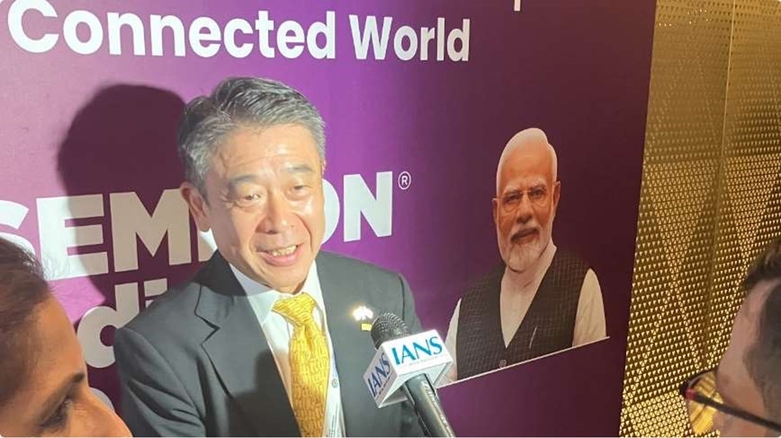
Katsuhito Kobayashi aims to triple NX Group’s India revenue come 2028 – company courtesy

NX Group (Nippon Express) highlighted its strategic roadmap for India’s semiconductor sector at SEMICON India 2025 in New Delhi. With the government targeting semiconductors as a national strategic industry, NX Group aims to triple its India revenue to USD 400 million by 2028.

The company operates 103 offices and 60 warehouses across 39 cities, covering 4.5 million sq. ft., offering end-to-end logistics services including inventory management, inspection, assembly, export packing, and shipping agency. Plans are underway to open dedicated semiconductor warehouses in Gujarat and Assam by 2027. NX Group is also exploring modal shifts via the government’s Dedicated Freight Corridor and coastal shipping.

Leveraging global experience from Japan, Taiwan, the U.S., and Europe, the company provides “Local × Global” solutions tailored to India, such as ultra-precision transport, temperature-controlled logistics, bonded inventory, WMS integration, and last-mile delivery. NX Group is active at all five major semiconductor sites in India and envisions a broader presence in the region through its “Pan-Indian Ocean Economic Zone.”

Katsuhito Kobayashi, Executive Officer and Regional General Manager, said: “The NX Group provides optimal solutions to address the logistics challenges of India’s semiconductor industry, accelerating its growth. By 2028, we aim to triple our India revenue to USD 400 million. As a trusted partner offering end-to-end logistics solutions to support the development of India’s semiconductor industry, we are committed to working together with India to shape its future under the slogan ‘Make in India, Move with NX.’”

UPS and American Express launch new offers for small businesses

0

UPS and American Express used the annual UPS Impact Summit on September 11th in Atlanta to announce an expanded partnership aimed at strengthening small and medium-sized businesses (SMBs). For the first time, both companies are introducing exclusive offers designed to help merchants save on shipping and payments during the peak holiday season.

Through the American Express Business Savings Suite, small and medium-sized businesses are now able to access discounts across UPS air, ground, and international services. Savings increase with shipping volumes, giving merchants a critical edge as they prepare for year-end demand. Card Members can also access additional perks via the Amex Offers platform, with more benefits set to roll out in the coming months.

The initiative responds to the rising logistical and financial pressures facing small businesses. Reliable shipping, cash flow management, and seamless payments are becoming increasingly vital as volumes surge. By combining UPS’s global logistics network with American Express’s financial expertise, the two companies aim to create a stronger ecosystem for business growth.

Matt Guffey, Chief Commercial and Strategy Officer at UPS, said: “UPS and American Express have both been trusted for over a century. Our collaboration creates a powerful ecosystem for small businesses.”

Colleen Taylor, President of U.S. Merchant Services at American Express, added: “During the critical holiday season, logistics and payments are the essentials that keep businesses running. That’s why Amex and UPS are teaming up to support SMBs during this make-or-break time of year.”

Ostend-Bruges Airport gets new hangars

0
OST wins new client and gets new hangars – courtesy: OST

The Belgian Airport and Amsterdam-based EASP Air BV have signed a letter of intent for the development of two hangars, including an office complex. The new facility will be centrally located on Apron 2 of OST. It will replace the existing, outdated buildings. The total surface area of the new site will amount to 4,900+ square meters. Each of the two hangars will be equipped with a three-story office complex.

The hangars are designed with ample capacity to accommodate larger aircraft, including the Bombardier Global 7500, during scheduled maintenance operations. Furthermore, the site will feature bonded warehousing, secure storage areas, and a dedicated shipments department to support logistical operations. 

“With this project, we are taking an important step in the renewal and modernization of our airport,” said Nathan De Valck, CEO of Ostend-Bruges Airport. “We are striving for sustainable growth by investing in multiple strategic pillars.” His new partner, EASP AIR, specializes in aerial maritime surveillance, Coast Guard support, and Search and Rescue (SAR) operations. In addition, beyond surveillance and patrol missions the company delivers airborne support for firefighting operations and special mission charters, including passenger and cargo transport, parachute drops, air mobility, and support for Special Operations Forces.

Thanks to its strategic location close to the North Sea and excellent facilities, Ostend-Bruges Airport offers an ideal base for such operations. For EASP AIR, the development marks a major milestone. “Our choice for Ostend is a deliberate one,” explained Pieter Voeten, CEO of EASP AIR. “We recognize the strong ambitions of Ostend-Bruges Airport, which align perfectly with our own growth strategy. Its strategic location and infrastructure make it the ideal base for our Special Mission Expertise Center.” The arrival of EASP AIR strengthens the airport’s position. “By investing not only in passenger and cargo flights but also in MRO activities (Maintenance, Repair & Overhaul), we are creating additional employment opportunities in West Flanders and enhancing the innovative and specialized character of our airport,” De Valck added. “Moreover, synergies are emerging with other airport partners, such as VIVES, in the context of technical training programs.

DHL acquires SDS Rx

0
Mark Kunar, CEO DHL Supply Chain North America (pictured left) and Drew Kronick, Founder, CEO & Managing Partner of SDS Rx  –  courtesy: DHL

Through the takeover DHL Supply Chain expands its Life Sciences and Healthcare capabilities and abilities to deliver integrated, end-to-end solutions across the full life sciences and healthcare company in 2025, value chain through the final mile. It is already the second acquisition of a healthcare specialist in 2025, following DHL Supply Chain’s purchase of CryoPDP, a leader in clinical trial logistics.

The strategic acquisition will further expand DHL’s healthcare logistics portfolio enhancing the company’s ability to deliver integrated, time-critical solutions across every stage of the Life Science & Healthcare sector. LSHC currently contributes €5 billion to DHL’s global revenue, underscoring its significance in the Group’s growth strategy.

To meet the demand, in APR25, DHL Supply Chain launched a new Pharma Hub in Singapore, a dedicated facility for pharmaceutical logistics. The €10 million facility is part of DHL Group’s €500 million investment into Asia Pacific to bolster its Life Sciences and Healthcare (LSHC) infrastructure across all business units. This strategic initiative reflects DHL Group’s global focus on the healthcare sector as part of its Strategy 2030, which introduced the new “DHL Health Logistics” sector brand to drive cross-divisional growth. “The life sciences and healthcare sector is projected to grow at a compound annual growth rate of 11% through 2030. Specialty pharmacy already accounts for approximately 50% of total prescription drug spending in the U.S., and the number of patients served by specialty pharmacies grew by 12% between 2018 and 20221.”  The executive went on to say: “Increasing demand for specialty pharma and healthcare solutions presents significant opportunities for DHL to leverage its scale, expertise, and commitment to operational excellence. With this acquisition, we are expanding our healthcare logistics capabilities, attracting a new segment of healthcare customers, and reinforcing our position as a trusted partner in building resilient and connected healthcare supply chains,” stated Mark Kunar, CEO of DHL Supply Chain North America. Drew Kronick, Founder, CEO & Managing Partner of SDS Rx noted: “Our mission is to enhance the quality of patient care with every delivery. As the demand for last mile delivery in healthcare continues to grow, we understand the importance of aligning with a partner who shares our patient-first commitment. Partnering with DHL represents a meaningful step forward, combining our strengths to improve the precision, reliability, and speed of delivery to patients most in need.”

Lodd Autonomous drones set to fly soon in the Gulf region

0
UAE launches drone program – courtesy: Lodd

The Abu Dhabi-based drone manufacturer and AI-driven logistics firm, Lodd Autonomous is set to begin parcel and broader air freight delivery services using unmanned aerial vehicles (UAVs). Their product is the first civilian aircraft ever built in the UAE at a larger scale. Operations are scheduled to commence during H2, 2026, offering air transport at a fraction of the costs charged today for similar services, claims Lodd. Currently, the first VTOLs (vertical take-off and landing) cargo drones are assembled. Following a thorough test phase, the aerial vehicles will be deployed in the UAE and across the Arabian Peninsula to transport goods by air to their destinations. The unmanned aircraft can lift up to 250 kilograms of cargo over a range of 300 kilometers and land almost at any place without needing a runway. For consumers, that could mean cheaper and faster deliveries, whether it’s e-commerce orders, medical supplies, express items or emergency shipments.

The UAE invests heavily in next-generation transport technologies, including both cargo and passenger drone developments. Main supporter of the Lodd project is the General Civil Aviation Authority (GCAA) which is actively collaborating with the company to provide the needed ground infrastructure and a regulatory framework for VTOL operations. By 2030, the UAE expects the logistics sector’s contribution to reach Dh200 billion (46.2 bn euros). “With our solution we are contributing heavily to reach that target,” stated Rashid Matar Al Manai, CEO of Lodd Autonomous, when presenting the drone program to local media. The executive went on to say: “In regard to establishing the UAE as an innovation hub, Lodd is a great example of how we can create jobs for highly-skilled people and combine their knowledge with local expertise to produce new technologies.”

Further to this, he confirmed that Lodd is in talks with numerous potential customers both within and outside the UAE for the use of the company’s flagship drone, Hili. The logistics sector is undergoing rapid transformation, driven by growing demand for faster, more flexible, and resilient delivery systems. Traditional logistics often face limitations due to infrastructure bottlenecks — particularly when linking major hubs to remote or regional locations. Lodd’s UAV technology aims to bridge that gap and modernize last-mile and cross-border delivery, writes Dubai-based digital platform, Khaleej Times in a comment.

Helsinki-Vantaa Airport is DHL’s newest gateway

0
DHL feels well at HEL – photo: courtesy DHL

The express giant has inaugurated a sorting and distribution center at the Finnish Airport capable of processing 6,500 packages per hour. It represents the largest investment in DHL Express’s history in Finland (100 million euros) and comprises of 16,000 square meters. 90 loading bays, equipped with electric charging points, facilitate seamless transfers of packages from the conveyer system to delivery vehicles. The state-of-the-art working environment not only enhances operational efficiency but also prioritizes the well-being of staff, offering a spacious and functional workspace with a focus on safety, environmental considerations, and quality amenities, emphasizes the integrator in a press release.  

The facility will be carbon-neutral, utilizing geothermal heating, solar panels, and energy-efficient technologies, alongside robust security measures including TAPA A certification and advanced X-ray scanning equipment for air freight handling. It will handle international, European, national, and local parcels transported via air or road, ranging from urgent to less urgent deliveries. Advanced building automation, energy-efficient construction materials, handling devices, and LED lighting are all part of the energy efficiency strategy. “The new gateway is designed to meet the needs of Finnish business. It enables more efficient and environmentally friendly operations and provides our staff with modern and comfortable facilities. This investment supports growth and helps Finnish companies reach international markets,” says Oktay Nuri, Managing Director at DHL Express Finland.

“This gateway is a major step in DHL’s mission: Connecting people, improving lives. Our DHL Trade Atlas 2025 research shows that global trade continues to grow, even as geopolitical tensions may lead to changes in trading relationships, transport flows and the regulatory environment. By investing in infrastructure, DHL Express is preparing to meet this growth by offering services that meet diverse customer needs – from the fastest options to more flexible ones. The investment in Finland reflects our confidence in the country’s and Europe’s economy,” says Mike Parra, CEO at DHL Express Europe. 

The first customer deliveries from the facility are set to begin in October 2025. Shortly before, FedEx started operations at its new global air transit facility at Istanbul Airport (IST). It strategically places the U.S. integrator at the crossroads of East and West, in a country rapidly emerging as a global air cargo powerhouse and a key hub for cross-border e-commerce. “This new facility in Istanbul is a strategic move for FedEx, further integrating our global air and ground networks and delivering the scale and flexibility our customers need in a dynamic trade environment,” stated Richard W. Smith, chief operating officer, International and chief executive officer, Airline, FedEx. “It is also a key step in unleashing the power of our combined networks to create long-term value and capture growth in the global air freight market.”

Britten-Norman appoints Ben Smith

0
Ben Smith joins Britten-Norman – company courtesy

As Head of Aftermarket, Ben will lead Britten-Norman’s global strategy across spares, repairs, upgrades, and operator support. His priorities include modernizing internal systems, boosting responsiveness, and delivering customer-focused solutions that maximize the lifetime value of Britten-Norman’s Islander fleet.

“Joining Britten-Norman at such a transformative time is a real privilege,” said the executive. “This is a brand with deep aviation heritage and an exciting future. I’m looking forward to working with the team to elevate the aftermarket experience, strengthen our relationships with operators worldwide, and help shape the next chapter of the Britten-Norman story.”

Smith is a licensed Private Pilot with a First-Class Honors degree in Aerospace Technology. He is also an alumnus of the RAF’s University of London Air Squadron, where he gained early exposure to military aviation and leadership. With his engineering background, flying experience, and commercial knowledge, Ben understands the challenges operators face and is focused on delivering practical solutions that meet their needs, states Britten-Norman in a release.

 “Ben’s appointment marks a key step in Britten-Norman’s commitment to delivering best-in-class support for our global operator community. His extensive understanding of avionics, strong operator relationships, and proven ability to implement customer-focused solutions will be instrumental as we upgrade our systems and expand our aftermarket offering. Our goal is clear: to make operating an Islander more efficient, sustainable, and valuable than ever before” commented Business Development Director, Lara Harrison. Supported by new investment, Britten-Norman is transforming its support offering to help operators unlock greater efficiency, reliability, and value from their aircraft.